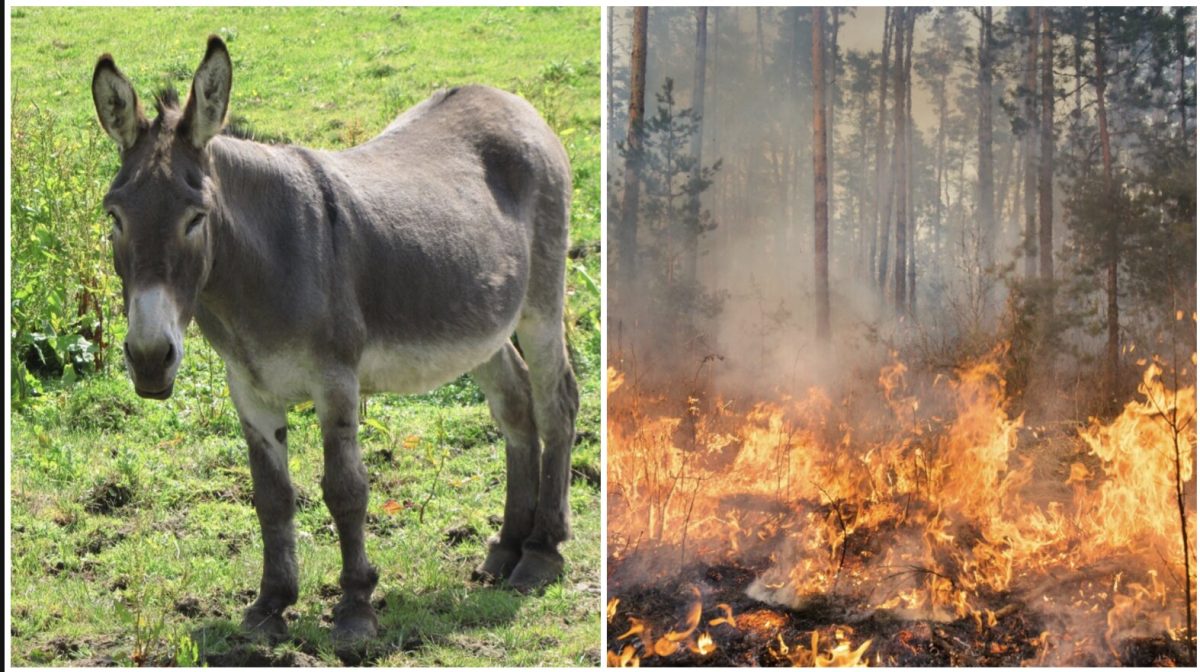
According to NASA, wildfires have doubled worldwide due to climate change. Throughout the globe, governments and environmentalists have been trying to find ways to curb the fires. One particular national park in Spain has found a solution that has been keeping them fire-free for over a decade: donkeys.
Since 2014, the Firefighting Donkey Battalion unit consisting of 18 donkeys has been preventing wildfires in Doñana National Park in Doñana, Spain. The mission these donkeys do is simple: eat the dry brush that usually sparks and fuels wildfires. The donkeys spend up to seven hours a day using their voracious appetites to graze and clear a 130 by 50 feet area of dried grass, scrub, and other vegetation.
Why donkeys?
While humans can do this type of clearing out of dry brush, using donkeys for this work is arguably more effective. While it is a slower process, it is consistent and thorough. Donkeys are able to quietly patrol in areas that are inaccessible to vehicles. In exchange for the feasting, the donkeys get about eight gallons of water and rest. No money or fuel needed.
The donkeys’ bodies are also pretty much built for this kind of environmental work, too. Their stomachs are built to eat the same rough and dry grass repeatedly without issues. These daily grazings slowly but surely remove potential origin sources for fires. As a bonus, the donkeys are naturally disposing of the dried vegetation whereas humans would have to find a different way to dispose of it.
Having donkeys or other livestock graze in such areas was once more common in agriculture prior to modern farming. Some argue that the machinization of farming and urbanization have reduced the number of grazing animals. This in turn allows more vegetation growth that become dry spots for more wildfires to occur.
The method expands
This method has been so successful that other areas of Spain have adopted it. In 2020, Tivissa launched the Burros Bomberos project with three donkeys to so much success they’ve expanded. They now have 40 donkeys grazing and clearing nearly 400 hectares of land.
The Andrea Association in Allariz uses a team of donkeys to clear and maintain nearly 1,000 hectares of a biosphere reserve. Using GPS to monitor the donkeys’ activity, the group of grazers travel 19 kilometers per day to feed. Similar initiatives have since started in Basque Country, Catalonia, and Galicia, too.
Other ways to combat wildfires
In the United States, California has been using goats in a similar function. The group Fire Grazers Inc. has been contacted throughout California to bring hundreds of goats to eat dried vegetation. Much like donkeys, goats are built to eat rough and dry brush. This includes certain plants such as star thistle that are painful for human hands to grab.
It’s important to note that donkeys or other animals that eat dry scrub are the primary solution to wildfires. The same folks behind these initiatives also advocate proper forest planning and land management. This includes reducing the amount of easily flammable species of plants and trees such as pine. It takes thought, care, work, and maybe a bunch of donkeys to make a difference.