Black’s motivation came from a place of empathy. During the height of the pandemic, he watched friends lose successful businesses overnight.
“I knew a lot of people who lost everything during the pandemic and they got really depressed,” he explained in a Nas Daily video. He wanted to document a blueprint for resilience, proving that it was possible to bounce back from absolute rock bottom.
The beginning was brutal. He faced immediate homelessness, relying on the kindness of a stranger who let him sleep in an RV. He slowly clawed his way up, selling free furniture on Craigslist to generate seed money. By day five, he had bought a computer. Within two weeks, he had secured office space.
But while his business acumen was sharp, his body was breaking down.
Four months into the challenge, tragedy struck. Black’s father was diagnosed with stage 4 colon cancer. The emotional toll of managing his father’s chemotherapy while trying to survive on the streets (or close to it) began to mount.
Simultaneously, Black’s own health collapsed. Viewers of his YouTube series didn’t know that between his hustle-focused uploads, he was secretly visiting doctors. He was eventually diagnosed with two autoimmune diseases that caused chronic fatigue and excruciating joint pain.
In a somber 2021 update, Black announced he was pulling the plug.
“I have officially decided to end the project early,” he told his followers. “Now, as much as it hurts me to do this, especially with just two months left, I feel like it’s the right thing to do.”
By the time he quit, Black hadn’t made a million dollars, but he hadn’t failed completely, either. Starting from zero, he had generated $64,000 in revenue—a respectable salary for ten months of work, though far short of his seven-figure goal.
Ultimately, the experiment taught a lesson different from the one he intended. He set out to prove that “hustle” conquers all, but he learned that health and family are the ultimate non-negotiables.
“We have been through a lot together,” Black said in his farewell to the project. “We walked miles together and spent late nights in the office… [but] health and family come first.”
The case against social media has gotten so well rehearsed that most people can easily merge it into ordinary conversation: It makes people lonely. It sorts them into camps. It hands them a room full of people who already agree with them and calls that a community.
I’ve given this speech myself, with feeling, having read my phone notifications in the host’s powder room 11 minutes earlier.
Simply put, our dependency on social media creates a deficiency disease. It’s not something toxic we’re ingesting; it is something our lives online have stopped us from receiving.
I figured out that cost while standing in a field in Harford Park with a dog leash wrapped around my ankles.
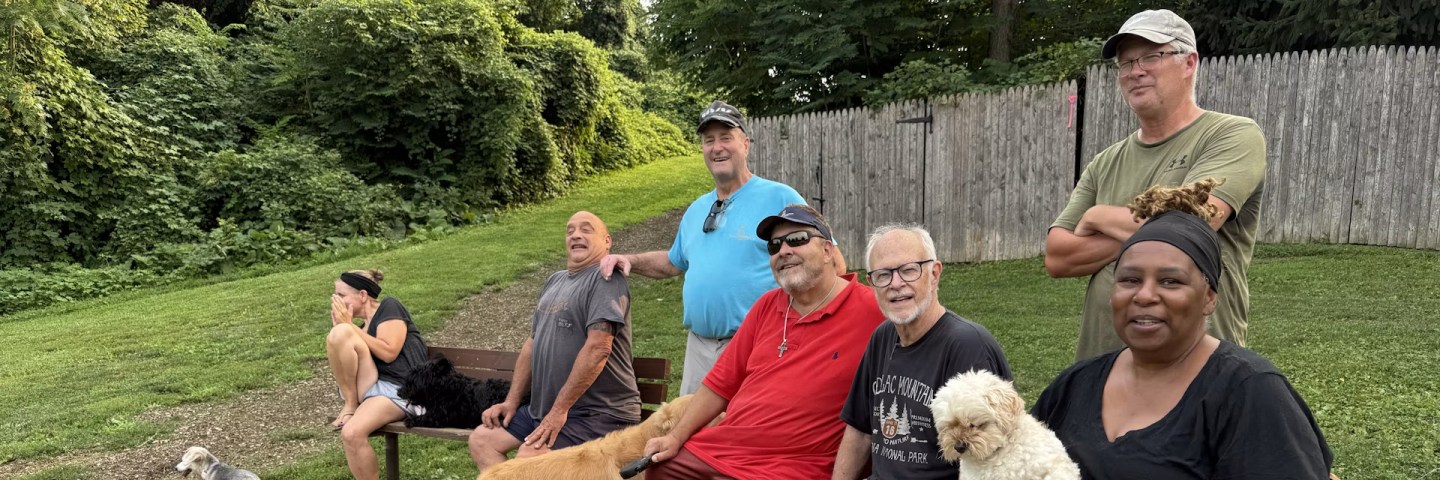
The author sits with Chaz, his soft-coated Wheaten Terrier.Kevin B. Johnson, CC BY-NC-SA
I go most afternoons. So do the same 15 or 20 people, which is how I ended up tangled in someone else’s very long leash on a Tuesday, concentrating hard enough on my own feet that I stopped talking and just listened.
Two conversations were running at once. In one, a regular who is having a rough year was getting gently harassed about the weight he’d put on against his doctors’ advice — first by me, then by three other people who piled on uninvited. In the other, someone was arguing about Dr. Anthony Fauci, and the regulars chimed in on both sides. Gossip, complaints and dogs greeting dogs became the backdrop.
As I worked to free my ankles, it clicked: The dog park, like the local knitting club or the Saturday pickleball group, does the job a corner bar used to do. There are regulars and running jokes, and once a person is known, a spot in the conversation is reserved for them.
What makes these places work is that a shared focus on one small part of a life opens into something fuller. Regulars may share a taste in dog breeds or beer, but they are not colleagues, political soulmates or relatives. They differ on favorite restaurants, income, age, religion, values and beliefs. They are together because a golden retriever and a nervous rescue mutt need to run in the morning, and there is a field nearby.
Chance encounters can increase empathy
Sociologist Ray Oldenburg called places like this third places and defined them as “public places that host the regular, voluntary, informal, and happily anticipated gatherings of individuals beyond the realms of home and work.” Oldenburg noted the erosion of places that once manufactured accidental encounters, such as main streets, neighborhood pubs, general stores and even the drugstore soda fountain.
The park is not a utopia. It’s a corner bar without the booze.
Thomas Pettigrew and Linda Tropp’s meta-analysis of 515 studies provides the best evidence for why these accidental connections matter. They found that contact between groups generally reduces prejudice, but the quality and circumstances of that contact matter. The more interesting finding came later, when they tested how it works: The effect runs less through learning facts about the other group than through reduced anxiety, more empathy and more perspective.
That is exactly what the park does. The man I disagree with about nearly everything hasn’t changed his mind, and neither have I. What changed is that his politics is now maybe the eighth thing I know and appreciate about him, behind his dog’s bad hip, his sense of humor, the awful year he had and his love of what Philadelphians call “wooder ice.”
That shift, from opinions to a person, is why “just show people the other side” keeps failing online. When sociologist Christopher Bail and colleagues paid Republicans and Democrats to follow bots representing the views of the opposite party on Twitter, the Republicans came out substantially more conservative than they went in. Democrats shifted slightly left, though not significantly. Exposure to opinions is not the same thing as exposure to a person. The feed gave people arguments. The corner bar gives people other people.
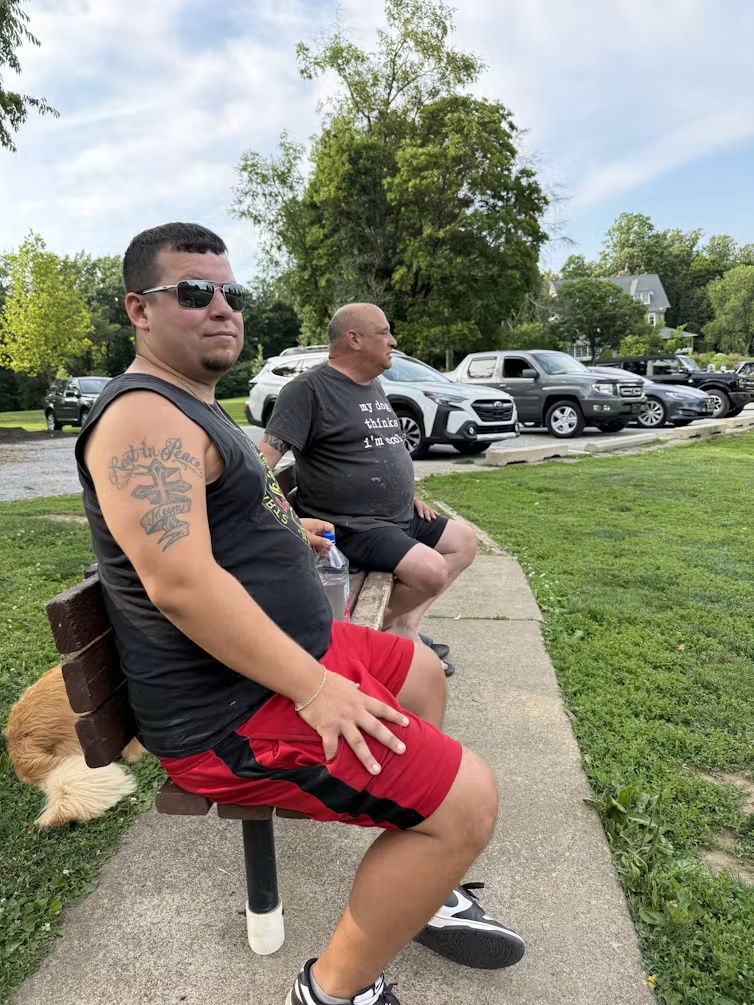
A dog park is a third place, like the neighborhood corner bar, where dogs instead of alcohol serve as a social lubricant. Kevin B. Johnson
Making room for tolerance and trust
If the places people gather shape their health, as a growing body of research suggests, then the shift from communities set by geography to communities assembled by algorithm creates a slow burn of intolerance and mistrust.
There are now decades of research on social media and anxiety, and a growing body of experimental work about what algorithmic curation does to what people see. Almost none of it treats the encounter pattern as a health exposure.
Social platforms have mastered what German American sociologist Herbert Gans called selective homogeneity. They sort people by interests, identities, tastes and grievances, then make it easy to stay among people who feel familiar.
They are like virtual Levittowns – the postwar suburban developments outside Philadelphia, among other places in the Northeast, where thousands of identical houses went up on farmland and were sold to buyers screened by price. In early Levittowns, covenants barred Black families outright.
In 1958, Gans moved into a Levittown in New Jersey and stayed two years doing research on its residents. He found that although original settlers and those who moved in by choice were happy, their rebellious teenage offspring, who had the fewest places to go and the least to do in those communities, were not.
This was an early, real-life sorting of the type that algorithms would make all too common 60 years later.
By contrast, repeated, low-stakes, in-person contact like the interactions between regulars at a dog park or corner bar creates room for tolerance and trust. People come back. They notice an absence. They share attention around a task, a place or a dog, rather than around presenting themselves or defending a position.
Deficiency diseases are easily treatable. Nothing has to be taken away; instead, something has to be given back.
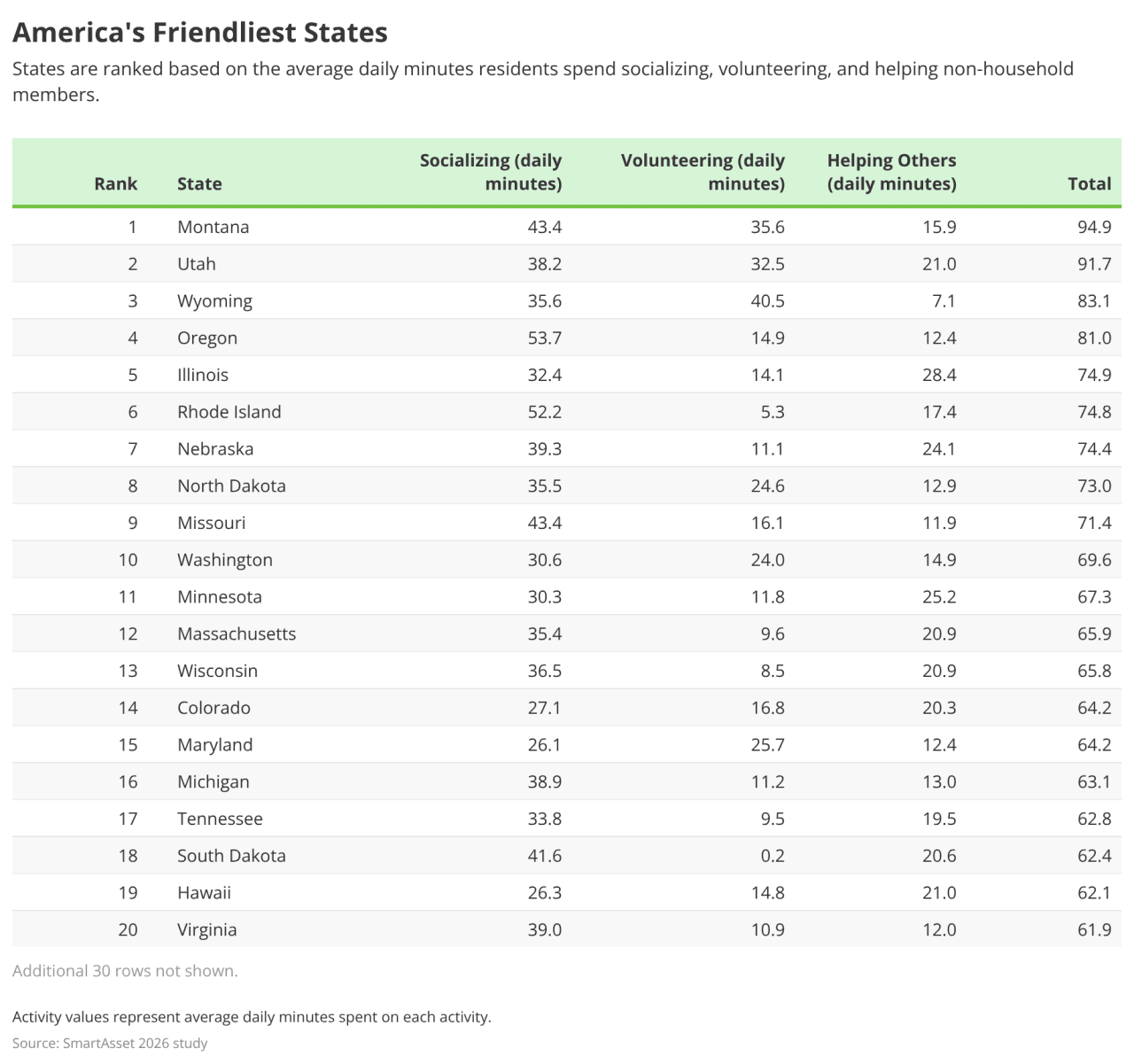
The ways in which Americans connect vary widely by state. A range of factors contribute to a place’s overall character, but the time residents spend socializing, volunteering and helping people outside their own homes can shape how friendly it feels.
SmartAsset analyzed the 50 states by the number of minutes per day residents spend on these three “friendly activities,” using time and action as measures of how communities connect. The results offer a behavioral snapshot of where residents spend the most time engaging with others in their communities.
Key Findings
The Mountain West leads the rankings. Montana (No. 1), Utah (No. 2), and Wyoming (No. 3) took the top spots in the study, with residents of Montana averaging a nation-leading 95 minutes per day socializing, volunteering and helping others.
Mountaineers are the most likely to help others. Although West Virginia ranked No. 24 overall, its residents spent more time than any others providing unpaid help to people outside their own homes, about 30 minutes per day.
Rankings challenge some stereotypes. Despite its reputation for “Minnesota Nice,” Minnesota ranked No. 11, just outside the top 10. Washington, home to Seattle and its “Seattle Freeze” reputation, ranked No. 10.
Three Northeast states in the top 20. Although residents of Northeastern states are not always seen as especially warm by outsiders, three states in the region made the top 20: Rhode Island, Massachusetts and Maryland.
The 20 Friendliest States
Montana
Average Minutes Spent Socializing (daily): 43.36
Average Minutes Spent Volunteering (daily): 35.62
Average Minutes Spent Helping Others (daily): 15.89
Utah
Average Minutes Spent Socializing (daily): 38.24
Average Minutes Spent Volunteering (daily): 32.46
Average Minutes Spent Helping Others (daily): 20.95
Wyoming
Average Minutes Spent Socializing (daily): 35.57
Average Minutes Spent Volunteering (daily): 40.49
Average Minutes Spent Helping Others (daily): 7.07
Oregon
Average Minutes Spent Socializing (daily): 53.74
Average Minutes Spent Volunteering (daily): 14.85
Average Minutes Spent Helping Others (daily): 12.36
Illinois
Average Minutes Spent Socializing (daily): 32.37
Average Minutes Spent Volunteering (daily): 14.12
Average Minutes Spent Helping Others (daily): 28.43
Rhode Island
Average Minutes Spent Socializing (daily): 52.15
Average Minutes Spent Volunteering (daily): 5.33
Average Minutes Spent Helping Others (daily): 17.35
Nebraska
Average Minutes Spent Socializing (daily): 39.3
Average Minutes Spent Volunteering (daily): 11.08
Average Minutes Spent Helping Others (daily): 24.06
North Dakota
Average Minutes Spent Socializing (daily): 35.5
Average Minutes Spent Volunteering (daily): 24.61
Average Minutes Spent Helping Others (daily): 12.88
Missouri
Average Minutes Spent Socializing (daily): 43.44
Average Minutes Spent Volunteering (daily): 16.05
Average Minutes Spent Helping Others (daily): 11.86
Washington
Average Minutes Spent Socializing (daily): 30.59
Average Minutes Spent Volunteering (daily): 24.04
Average Minutes Spent Helping Others (daily): 14.92
Minnesota
Average Minutes Spent Socializing (daily): 30.33
Average Minutes Spent Volunteering (daily): 11.75
Average Minutes Spent Helping Others (daily): 25.18
Massachusetts
Average Minutes Spent Socializing (daily): 35.38
Average Minutes Spent Volunteering (daily): 9.63
Average Minutes Spent Helping Others (daily): 20.91
Wisconsin
Average Minutes Spent Socializing (daily): 36.51
Average Minutes Spent Volunteering (daily): 8.46
Average Minutes Spent Helping Others (daily): 20.86
Colorado
Average Minutes Spent Socializing (daily): 27.08
Average Minutes Spent Volunteering (daily): 16.82
Average Minutes Spent Helping Others (daily): 20.31
Maryland
Average Minutes Spent Socializing (daily): 26.05
Average Minutes Spent Volunteering (daily): 25.72
Average Minutes Spent Helping Others (daily): 12.39
Michigan
Average Minutes Spent Socializing (daily): 38.9
Average Minutes Spent Volunteering (daily): 11.21
Average Minutes Spent Helping Others (daily): 12.98
Tennessee
Average Minutes Spent Socializing (daily): 33.82
Average Minutes Spent Volunteering (daily): 9.45
Average Minutes Spent Helping Others (daily): 19.53
South Dakota
Average Minutes Spent Socializing (daily): 41.61
Average Minutes Spent Volunteering (daily): 0.21
Average Minutes Spent Helping Others (daily): 20.61
Hawaii
Average Minutes Spent Socializing (daily): 26.3
Average Minutes Spent Volunteering (daily): 14.84
Average Minutes Spent Helping Others (daily): 20.98
Virginia
Average Minutes Spent Socializing (daily): 38.96
Average Minutes Spent Volunteering (daily): 10.92
Average Minutes Spent Helping Others (daily): 11.97
Methodology
This study uses data from the U.S. Bureau of Labor Statistics’ American Time Use Survey, extracted from IPUMS, over the most recent available four-year period. For each state, SmartAsset calculated the average daily minutes residents spent socializing, volunteering, and helping people outside the household. Those three measures were then equally weighted and summed to produce a total time value used to rank the states. Source data providers are not affiliated with, and do not endorse or sponsor, this study or its findings.
Citation: Sarah M. Flood, Liana C. Sayer, Daniel Backman and Annie Chen. American Time Use Survey Data Extract Builder: Version 3.3 dataset. College Park, MD: University of Maryland and Minneapolis, MN: IPUMS, 2025. https://doi.org/10.18128/D060.V3.3
As Americans flock to beaches this summer, their toes are sinking into some of the most hotly contested real estate in the United States.
It wasn’t always this way. Through the mid-20th century, when the U.S. population was smaller and the coast was still something of a frontier in many states, laissez-faire and absentee coastal landowners tolerated people crossing their beachfront property. Now, however, the coast has filled up. Property owners are much more inclined to seek to exclude an ever-growing population of beachgoers seeking access to less and less beach.
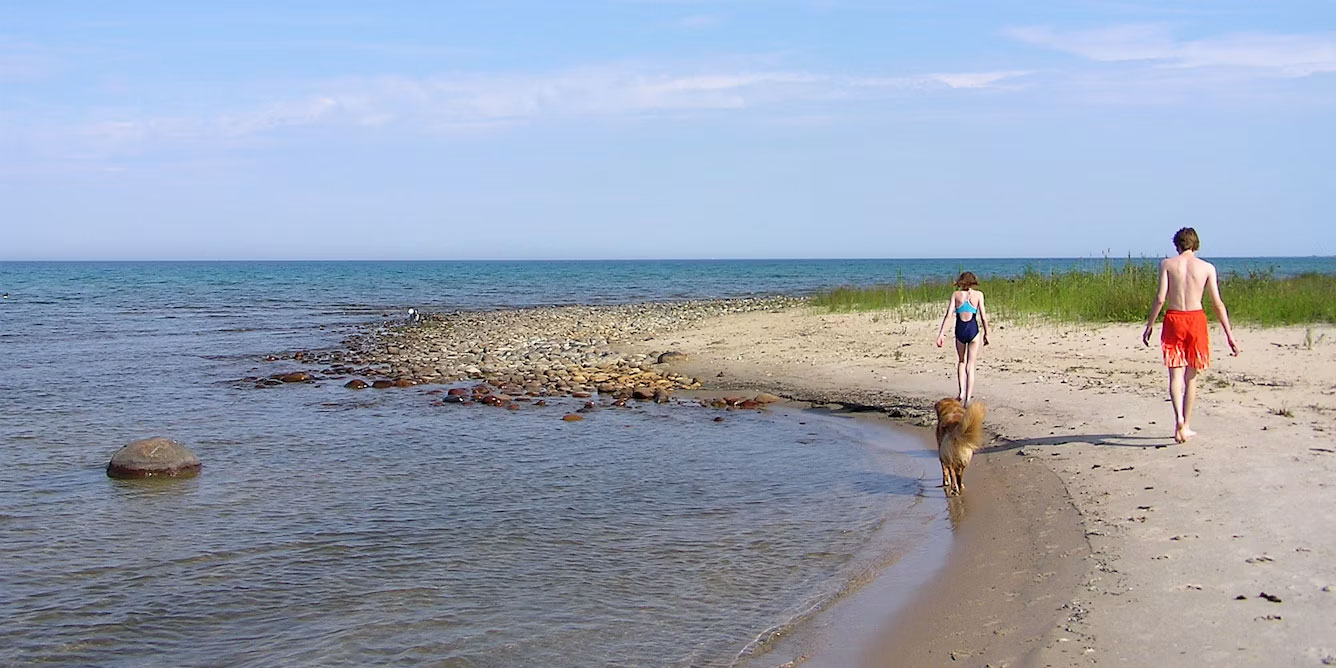
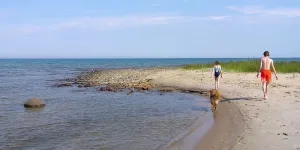
On most U.S. shorelines, the public has a time-honored right to “lateral” access. This means that people can move down the beach along the wet sand between high and low tide – a zone that usually is publicly owned. Waterfront property owners’ control typically stops at the high tide line or, in a very few cases, the low tide line.
But as climate change raises sea levels, property owners are trying to harden their shorelines with sea walls and other types of armoring, squeezing the sandy beach and the public into a shrinking and diminished space.
As director of the Conservation Clinic at the University of Florida College of Law and the Florida Sea Grant Legal Program, and as someone who grew up with sand between my toes, I have studied beach law and policy for most of my career. In my view, the collision between rising seas and coastal development – known as “coastal squeeze” – now represents an existential threat to beaches, and to the public’s ability to reach them.
Beachfront property law has evolved from ideas that date back to ancient Rome. Romans regarded the beach as “public dominion,” captured in an oft-cited quote from Roman law: “By the law of nature these things are common to all mankind; the air, running water, the sea and consequently the shores of the sea.”
Judges in medieval England evolved this idea into the legal theory known as the “public trust doctrine” – the idea that certain resources should be preserved for all to use. The U.S. inherited this concept.
Most states place the boundary between public and private property at the mean high tide line, an average tide over an astronomical epoch of 19 years. This means that at some point in the daily tidal cycle there is usually a public beach to walk along, albeit a wet and sometimes narrow one. In states such as Maine that set the boundary at mean low tide, you have to be willing to wade.
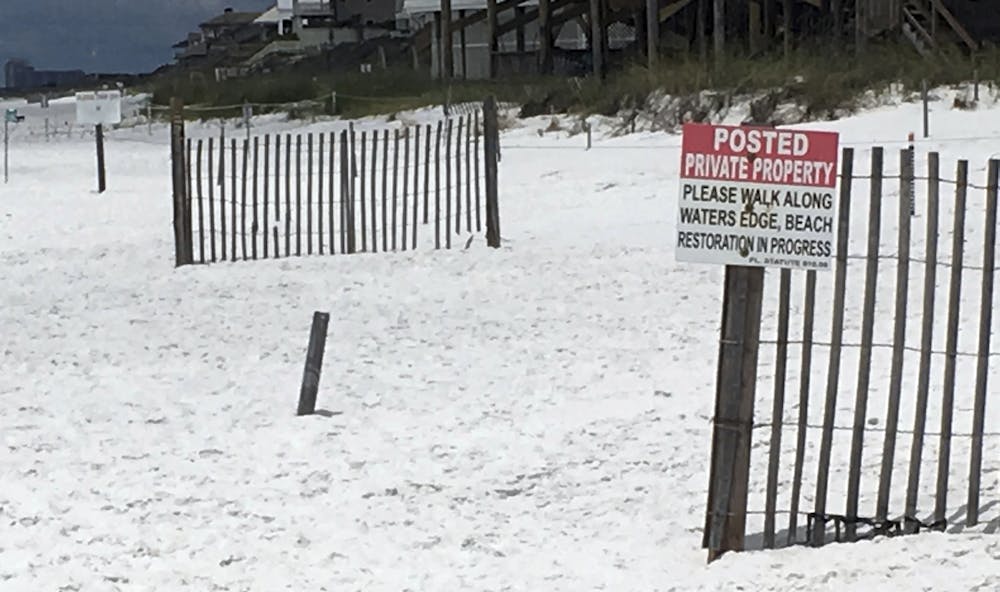
A sign marks the demarcation between public beach and private property in Santa Rosa Beach, Florida. AP Photo/Brendan Farrington
Everybody in!
Early beach access laws in coastal states were largely designed to ensure that workaday activities such as fishing and gathering seaweed for fertilizer could occur, regardless of who owned the beach frontage. Increasingly, however, public recreation became the main use of beaches, and state laws evolved to recognize this shift.
For example, in 1984 the New Jersey Supreme Court extended the reach of the Public Trust Doctrine beyond the tide line to include recreational use of the dry sandy beach. In a pioneering move, Texas codified its common law in 1959 by enacting the Open Beaches Act, which provides that the sandy beach up to the line of vegetation is subject to an easement in favor of the public.
Moreover, Texas allows this easement to “roll” as the shoreline migrates inland, which is increasingly likely in an era of rising seas. Recent litigation and amendments to the act have somewhat modified its application, but the basic principle of public rights in privately owned dry sand beach still applies.
Most states that give the public dry sand access on otherwise private property do so under a legal principle known as customary use rights. These rights evolved in feudal England to grant landless villagers access to the lord of the manor’s lands for civic activities that had been conducted since “time immemorial,” such as ritual maypole dancing.
Like Texas, North Carolina, Hawaii and the U.S. Virgin Islands all have enacted legislation that recognizes customary use of the sandy beach, and courts have upheld the laws.
Sand wars in Florida
Florida has more sandy beaches than any other state, a year-round climate to enjoy them, and a seemingly unbounded appetite for growth, all of which makes beach access a chronic flashpoint.
Along Florida’s Panhandle, pitched battles have erupted since 2016, with beachfront property owners and private resorts asserting their private property rights over the dry sandy beach and calling sheriffs to evict locals. When beachgoers responded by asserting their customary use rights, Walton County – no liberal bastion – backed them up, passing the local equivalent of a customary use law.
Florida’s Legislature stepped in and took away the local right to pass customary use laws, except according to a complicated legal process that only a few local governments have initiated. Critics argue that the law has made it harder for communities to establish lateral public access to beaches and has done little to resolve the ongoing disputes.
“To me, every single minute that beachfront owners have the right to throw up No Trespassing signs on our beaches is a minute too long. Prior to about five years ago, no one even thought about being excluded from any inch of this beach.”https://t.co/5tOBR6Ugsm
— Florida Beaches for All (@BeachesAll) March 6, 2020
What about just adding sand?
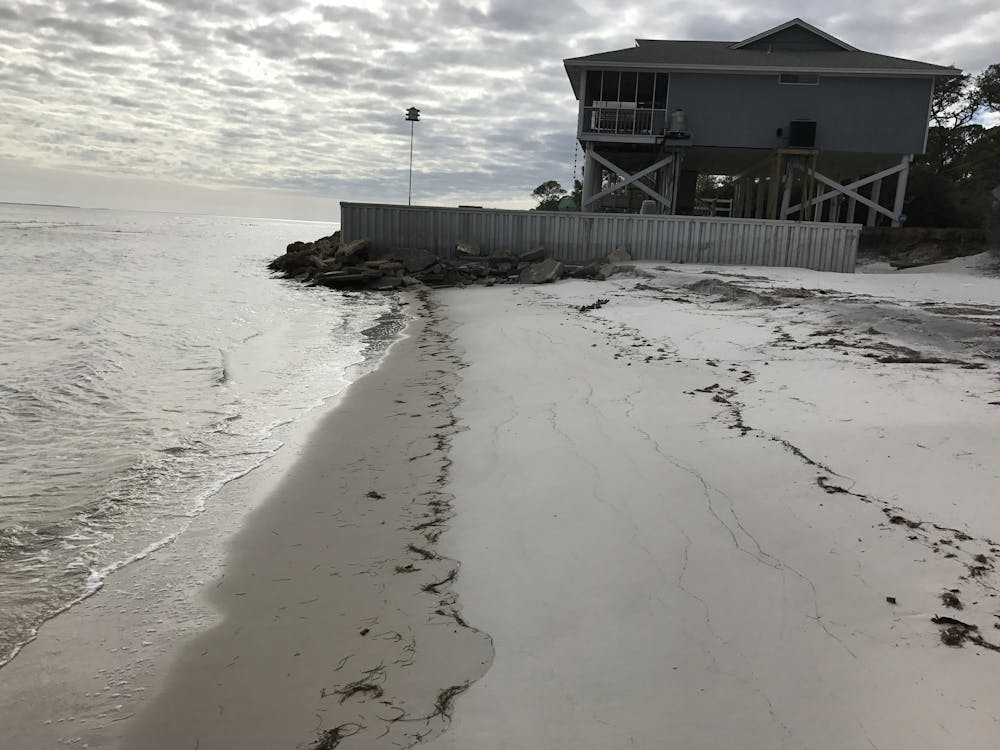
Erosion is both an enemy and a potential savior of beach access. As rising seas erode beaches, pressure to harden shorelines grows. But armoring shorelines may actually increase erosion by interfering with the natural sand supply. Adding more sea walls thus makes it increasingly likely that in many developed areas the dry sand beach will all but disappear. And what once was the public wet sand beach – the area between mean high and low tide – will become two horizontal lines on a vertical sea wall.
The sea wall around this Florida Panhandle beach house blocks public movement along the shore. Thomas Ankersen, CC BY-ND
One alternative is adding more sand. Congress authorizes and funds the U.S. Army Corps of Engineers to restore beaches with sand pumped from offshore or trucked from ancient inland dunes. States must typically match these funds, and beachfront property owners occasionally collectively pitch in.
But federal regulations require communities that receive these funds to ensure there is adequate access to nourished beaches from the street, including parking. And new beaches built from submerged shorelines must be maintained for public access until rising seas submerge them again.
This requirement, along with more arcane property rights issues, led landowners in Florida’s Walton County to fight a beach nourishment project that would have protected their property from erosion. They took the case to the U.S. Supreme Court and lost.
Beach nourishment, too, is a temporary solution. Good-quality, readily accessible offshore sand supplies are already depleted in some areas. And accelerating sea level rise may outpace readily available sand at some point in the future. Squeezed between condos and coral reefs, South Florida beaches are especially at risk, leading to some desperate proposals – including the idea of grinding up glass to create beach sand.