As Americans flock to beaches this summer, their toes are sinking into some of the most hotly contested real estate in the United States.

It wasn’t always this way. Through the mid-20th century, when the U.S. population was smaller and the coast was still something of a frontier in many states, laissez-faire and absentee coastal landowners tolerated people crossing their beachfront property. Now, however, the coast has filled up. Property owners are much more inclined to seek to exclude an ever-growing population of beachgoers seeking access to less and less beach.

On most U.S. shorelines, the public has a time-honored right to “lateral” access. This means that people can move down the beach along the wet sand between high and low tide – a zone that usually is publicly owned. Waterfront property owners’ control typically stops at the high tide line or, in a very few cases, the low tide line.

But as climate change raises sea levels, property owners are trying to harden their shorelines with sea walls and other types of armoring, squeezing the sandy beach and the public into a shrinking and diminished space.

As director of the Conservation Clinic at the University of Florida College of Law and the Florida Sea Grant Legal Program, and as someone who grew up with sand between my toes, I have studied beach law and policy for most of my career. In my view, the collision between rising seas and coastal development – known as “coastal squeeze” – now represents an existential threat to beaches, and to the public’s ability to reach them.

The beach as a public trust

Beachfront property law has evolved from ideas that date back to ancient Rome. Romans regarded the beach as “public dominion,” captured in an oft-cited quote from Roman law: “By the law of nature these things are common to all mankind; the air, running water, the sea and consequently the shores of the sea.”

Judges in medieval England evolved this idea into the legal theory known as the “public trust doctrine” – the idea that certain resources should be preserved for all to use. The U.S. inherited this concept.

Most states place the boundary between public and private property at the mean high tide line, an average tide over an astronomical epoch of 19 years. This means that at some point in the daily tidal cycle there is usually a public beach to walk along, albeit a wet and sometimes narrow one. In states such as Maine that set the boundary at mean low tide, you have to be willing to wade.

Sign directs beachgoers to walk along the water's edge.
A sign marks the demarcation between public beach and private property in Santa Rosa Beach, Florida. AP Photo/Brendan Farrington

Everybody in!

Early beach access laws in coastal states were largely designed to ensure that workaday activities such as fishing and gathering seaweed for fertilizer could occur, regardless of who owned the beach frontage. Increasingly, however, public recreation became the main use of beaches, and state laws evolved to recognize this shift.

For example, in 1984 the New Jersey Supreme Court extended the reach of the Public Trust Doctrine beyond the tide line to include recreational use of the dry sandy beach. In a pioneering move, Texas codified its common law in 1959 by enacting the Open Beaches Act, which provides that the sandy beach up to the line of vegetation is subject to an easement in favor of the public.

Moreover, Texas allows this easement to “roll” as the shoreline migrates inland, which is increasingly likely in an era of rising seas. Recent litigation and amendments to the act have somewhat modified its application, but the basic principle of public rights in privately owned dry sand beach still applies.

Most states that give the public dry sand access on otherwise private property do so under a legal principle known as customary use rights. These rights evolved in feudal England to grant landless villagers access to the lord of the manor’s lands for civic activities that had been conducted since “time immemorial,” such as ritual maypole dancing.

Oregon’s Supreme Court led the way in judicially applying customary use rights to beaches in 1969, declaring all the state’s dry sand beaches open to the public. Florida followed suit in 1974, but its Supreme Court decision has since been interpreted to apply on a parcel-by-parcel basis.

Like Texas, North CarolinaHawaii and the U.S. Virgin Islands all have enacted legislation that recognizes customary use of the sandy beach, and courts have upheld the laws.

Sand wars in Florida

Florida has more sandy beaches than any other state, a year-round climate to enjoy them, and a seemingly unbounded appetite for growth, all of which makes beach access a chronic flashpoint.

Along Florida’s Panhandle, pitched battles have erupted since 2016, with beachfront property owners and private resorts asserting their private property rights over the dry sandy beach and calling sheriffs to evict locals. When beachgoers responded by asserting their customary use rights, Walton County – no liberal bastion – backed them up, passing the local equivalent of a customary use law.

Florida’s Legislature stepped in and took away the local right to pass customary use laws, except according to a complicated legal process that only a few local governments have initiated. Critics argue that the law has made it harder for communities to establish lateral public access to beaches and has done little to resolve the ongoing disputes.

What about just adding sand?

Erosion is both an enemy and a potential savior of beach access. As rising seas erode beaches, pressure to harden shorelines grows. But armoring shorelines may actually increase erosion by interfering with the natural sand supply. Adding more sea walls thus makes it increasingly likely that in many developed areas the dry sand beach will all but disappear. And what once was the public wet sand beach – the area between mean high and low tide – will become two horizontal lines on a vertical sea wall.

House fronted by sea wall extending into the ocean.
The sea wall around this Florida Panhandle beach house blocks public movement along the shore. Thomas Ankersen, CC BY-ND

One alternative is adding more sand. Congress authorizes and funds the U.S. Army Corps of Engineers to restore beaches with sand pumped from offshore or trucked from ancient inland dunes. States must typically match these funds, and beachfront property owners occasionally collectively pitch in.

But federal regulations require communities that receive these funds to ensure there is adequate access to nourished beaches from the street, including parking. And new beaches built from submerged shorelines must be maintained for public access until rising seas submerge them again.

This requirement, along with more arcane property rights issues, led landowners in Florida’s Walton County to fight a beach nourishment project that would have protected their property from erosion. They took the case to the U.S. Supreme Court and lost.

Beach nourishment, too, is a temporary solution. Good-quality, readily accessible offshore sand supplies are already depleted in some areas. And accelerating sea level rise may outpace readily available sand at some point in the future. Squeezed between condos and coral reefs, South Florida beaches are especially at risk, leading to some desperate proposals – including the idea of grinding up glass to create beach sand.

This article originally appeared on The Conversation. You can read it here.

  • Why fatherhood matters more than ever before
    Photo credit: Xavier Desmier/Gamma-Rapho via Getty ImagesIn much of the industrialized world, daily life is increasingly organized around the nuclear family.

    Long gone are the days of the distant dad.

    According to some estimates, the average time dads spend caring for their kids each day has quadrupled over the past 50 years. Their attitudes about parenting are also changing. Today, men are about as likely as mothers to say parenting is a key source of meaning and a central priority in their lives. Roughly 85% of fathers identify parenthood as one of the most important aspects of their identity.

    As a parenting researcher who focuses on fathers, I’m pleased to see that dads are so invested in their kids. It correlates with better outcomes for kids, and it reduces pressure on moms.

    But there’s a less encouraging trend tucked into these gains. More is being asked of dads – and moms, for that matter – because the extended family and community networks that once supported childrearing have shrunk or deteriorated.

    Parenting alone

    In researching my new book, “Dad Brain: The New Science of Fatherhood and How it Shapes Men’s Lives,” I talked to an anthropologist named Barry Hewlett, who has spent his career studying hunter-gatherer fathers.

    One society he studies, the Aka Pygmies of the Central Congo, have been called “the best fathers in the world” for their dedication to childcare. Aka men are frequently observed within arms reach of their infants and take a lead role in raising them. Children are seen as central to men’s lives.

    However, if you compare the time Aka dads spent on childcare with recent data on American parents, as parenting writer Tomo Kumaki recently did, you might be surprised.

    According to 2024 American Time Use Survey data – considered the gold standard of evidence on how Americans are spending their time – American dads of infants are devoting about 125 minutes a day to what’s called “primary child care,” in which their main activity is tending to the child. They’re spending another 394 minutes on what’s known as “secondary child care,” which involves watching a child while doing something else, such as cooking dinner or straightening up the house.

    In contrast, according to Hewlett’s research from the field, Aka fathers of infants spend about 57 minutes a day on primary and 96 minutes a day on secondary childcare.

    The minutes American dads relayed should be taken with a grain of salt; it’s a stretch to compare an anthropologist’s direct observations with self-reported time diary data, which can often be subject to bias. Still, it’s striking to see how – based on these calculations, at least – today’s new dads are devoting far more time to parenting than a society described as having the best dads in the world.

    Children sit on the ground in various poses. Some cook and help with food prep. A man in a red shirt stands with his arms folded, watching.
    Among the Aka people, who are indigenous, nomadic hunter-gatherers native to Central Africa, men take a lead role in raising their children. Andia/Universal Images Group via Getty Images

    When I spoke with him about how fatherhood has changed, Hewlett told me he thinks the role of fathers has taken on more importance today than ever before – not just because mothers are more likely to have jobs outside the home, but because there are simply fewer childcare helpers around.

    When you’re surrounded by your kin and neighbors in a communal setting like the Aka, it’s easy to get assistance with kids. Fathers care for children, but so do lots of other people.

    A 2021 study of another hunter-gatherer society, the Agta, which lives in the mountains of the Philippines, found that fathers provided only about 7% of child care. Mothers, however, provided only about 25%. The rest came from siblings, grandparents, extended family, peers and other community members, who all pitch in.

    A class divide

    In much of the industrialized world, daily life is organized around the nuclear family, with relatives and neighbors playing a less central role than they once did.

    Today’s fathers contribute more to childcare than even the most hands-on hunter-gatherer dad, because there’s simply less of a village to support shared care.

    Even as men are being asked to take on a bigger role in childcare, it’s become harder for some men to do so. That’s because – in the U.S., at least – the time men are able to spend on childcare has become increasingly stratified by class.

    Journalists Derek Thompson and Aziz Sunderji analyzed multiple waves of U.S. data collected by the Multinational Time Use Study and were able to show that the significant rise in the time dads spend parenting over the past 60 years has primarily been driven by college-educated fathers.

    When the Multinational Time Use Study started in the 1960s, fathers with a college degree were devoting only a few extra minutes per day to childcare compared with noncollege-educated dads. But the gap has quintupled over that time span, such that college-educated dads are now spending 46 more minutes with their kids each day compared with noncollege-educated dads.

    So why the growing divide? In part, it’s because benefits such as universal paid paternity leave and stable, flexible work options are available only to dads with good jobs.

    Only about half of U.S. fathers take any paid paternity leave following the birth of a new baby, because many employers don’t offer it. In theory, most dads who can’t access paid leave should be eligible for unpaid leave through the 1993 Family and Medical Leave Act. However, since that legislation doesn’t apply to small businesses or many part-time or gig work situations, about 44% of workers are ineligible for it. Low-wage dads are also often reluctant to take leave because they can’t afford to lose income.

    The rise of what sociologists call intensive parenting among the most educated, affluent parents also helps account for some of the class divide in parenting time. As the wealth gap between the richest and poorest Americans has widened over the past 60 years, many parents have been eager to optimize their children’s success. Devoting extra time to children, including monitoring their schoolwork and enrolling them in enrichment activities that require time and money, has become one way for parents with privilege to give their children a leg up.

    In my view, hands-on parenting should not be a luxury good. Americans should be fighting for policies that empower all dads, no matter their income, to enjoy time with their children. The village could use some rehabilitation, too, since parents fare best when they have access to community support and stronger connections with their neighbors, friends and family.

    This article originally appeared on The Conversation. You can read it here.
  • Broken household items bring people to Repair Cafés but community keeps them coming back
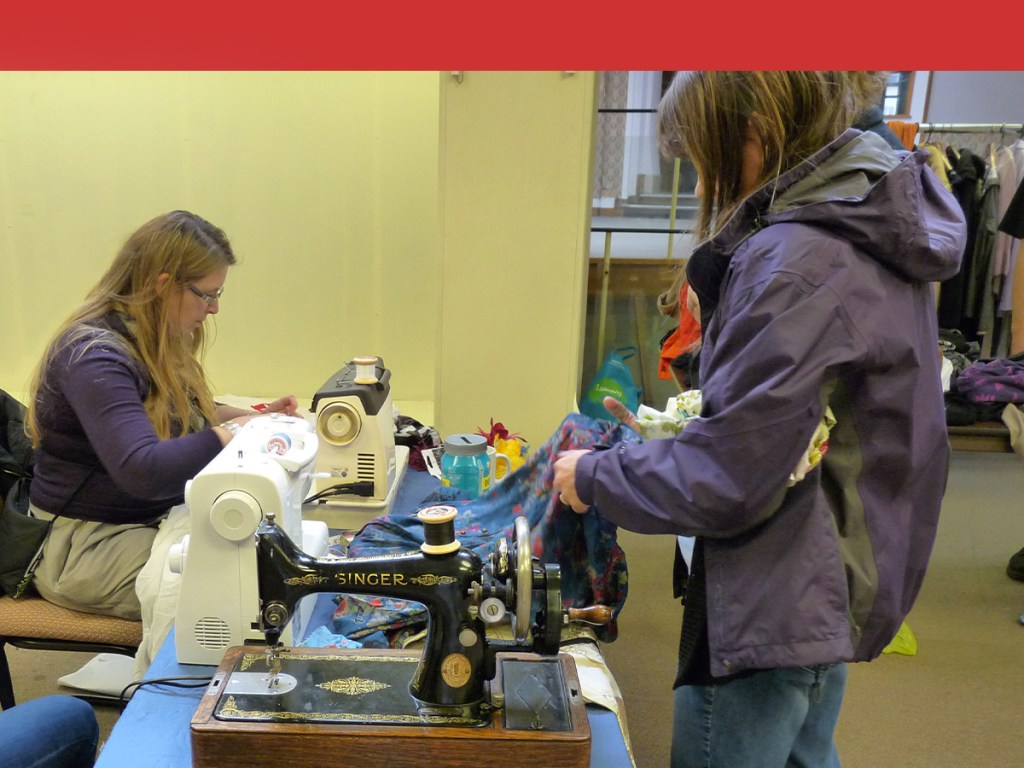
    Photo credit: Julian Paren/Wikimedia Commons (Cropped)Repair Cafe, Fortrose Free Church.

    The toaster oven burns everything, a lamp constantly flickers, or maybe a favorite coat has lost all its buttons. These random irritations around the home usually lead to a simple choice: throw it out, get a new item, or live with it.

    A growing number of communities have found a more productive solution called a “Repair Café.” People are bringing their broken household items and gathering around shared tables. Know-how volunteers offer a more environmentally friendly solution that has people coming back for more than simple repairs.

    Sewing, textiles, neighbors, communal bonding
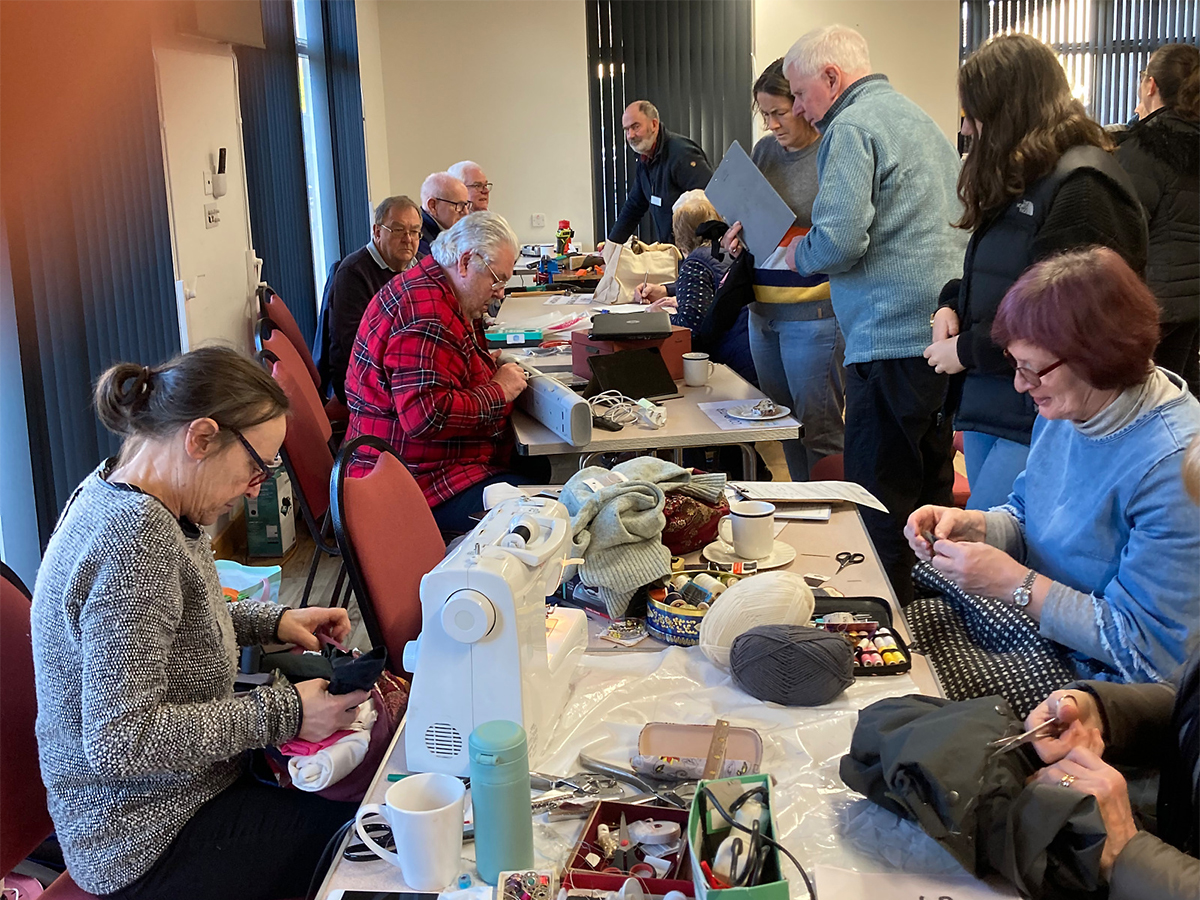
    Reading Repair Café – Textiles and Sewing Repairs.
    Karen Blakeman/Wikimedia Commons/(Cropped)

    Neighbors helping neighbors

    Repair Cafés are free community events where neighbors help neighbors fix the everyday objects that would probably end up in the trash. It’s a community-building opportunity that turns frustration into a shared, hands-on experience.

    The Associated Press reports that people arrive at a local church basement carrying blunt knives, malfunctioning zippers, and other things most don’t know how to fix themselves. The volunteers with repair skills open devices, test parts, sew torn fabric, and troubleshoot issues. There’s no charge, no appointment, and no expectation that everything gets fixed.

    The unique idea, according to the Repair Café Foundation, is a free meeting place where repairing things becomes something people do together instead of alone. Using shared tools and knowledge, items might get fixed and friendships might blossom.

    With rising concerns about the cost of living and growing frustration with disposable consumer habits, repair culture is gaining momentum. Rather than replacing broken items, people are looking to make them last longer. It’s a planet-friendly model for reducing waste and challenging “throwaway culture.” This is an active attempt at shifting the way people think about consumption.

    VCR, broken items, reducing waste
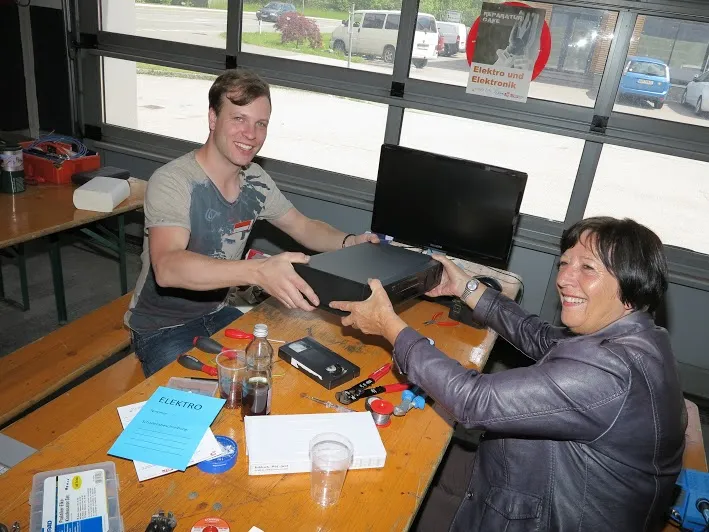
    Trying to fix a VCR.
    HellasX/Wikimedia Commons/(Cropped)

    Repair Cafés are building community

    While the concept is often framed as a way to save money and reduce waste, research suggests they serve another purpose as well. A 2024 study in Cleaner Production Letters found they also function in building community. Visitors are often motivated not only by the opportunity to fix things, but also to learn from others and engage in shared activities.

    People are finding a real sense of satisfaction that goes beyond whether the item is repaired or not. Sitting with strangers, asking questions, and learning small skills creates an engagement increasingly rare in modern lifestyles.

    In an article for the The Guardian, author Nyima Jobe quotes Sophie Heathscott, an arts magazine manager in London, saying, “There is a real joy in being able to fix something for someone, and then showing them how.”

    workshop, volunteer event, networking, engagement
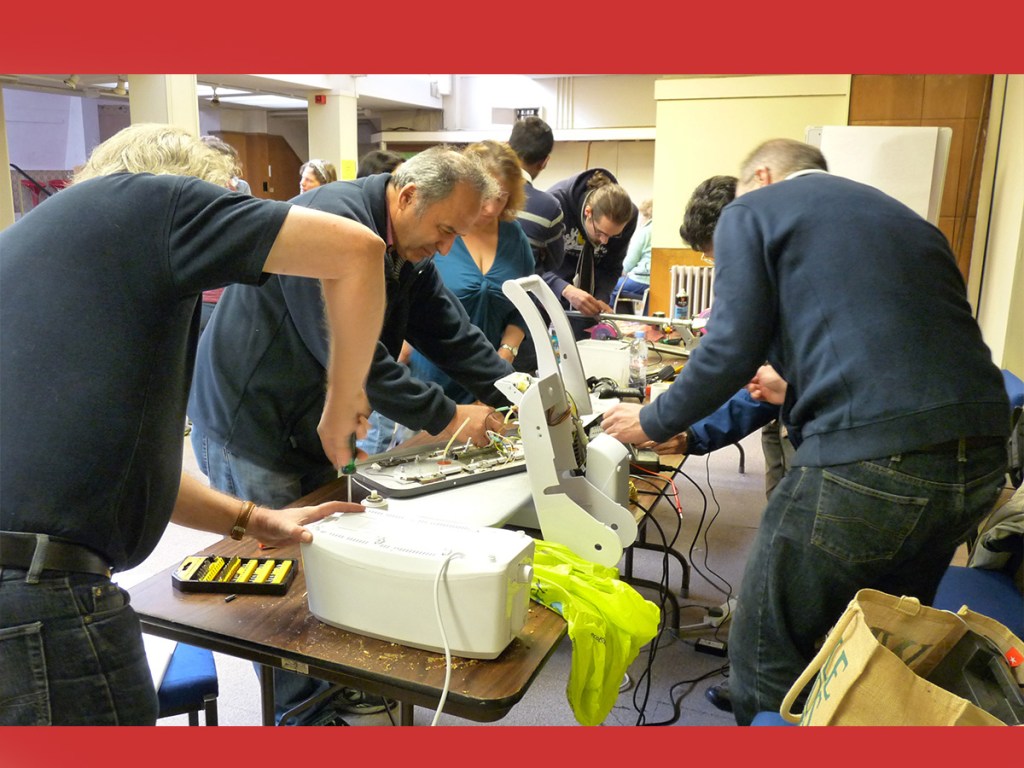
    Reading Repair Cafe – DIY workshop.
    Karen Blakeman/Wikimedia Commons/(Cropped)

    Working on a global scale, fixing thousands of items

    The concept has grown into a global network with thousands of locations across multiple countries. Through volunteer-led events, countless household items have been repaired instead of discarded. However, the appeal goes beyond practicality. It may be damaged things that bring people through the door, but a repaired lamp is rarely the only thing they take home.

    Repair Cafés offer something harder to find and impossible to manufacture. These gatherings give neighbors a chance to solve problems while working together on a common goal. Whatever the outcome, the main takeaway is communal connection.

  • The conversations people avoid may be the ones they would enjoy the most 
    Photo credit: CanvaTwo women enjoy some small talk.

    Before having a conversation with a stranger, many people assume the interaction will be boring, uncomfortable, or simply not worth the effort. A recent study found that people routinely underestimate how enjoyable and meaningful these interactions can be.

    In a recent paper, “Conversations About Boring Topics Are More Interesting Than We Think,” researchers suggest one of the biggest obstacles to human connection may be our own expectations. Across nine experiments involving 1,800 participants, talking on topics people expected to be boring turned out to be far more engaging than they predicted.

    human connection, anxiety, relationship science, conversation skills
    A good conversation.
    Photo credit Canva

    People unknowingly avoid meaningful conversations with strangers

    Elizabeth Trinh, a doctoral student at the University of Michigan and lead study author, placed people in conversations about topics that they identified as boring. Options varied from the stock market to cats to vegan diets.

    The study asked participants to predict how a conversation with unfamiliar people might go. Most participants expected less enjoyment, less connection, and less value from the exchange. The results suggest that people are surprisingly poor at forecasting their own social experiences.

    After the interaction with a stranger, the majority believed it went far better and was more engaging than they had predicted. In an American Psychological Association press release, Trinh said, “People consistently expected conversations about seemingly boring topics to be less interesting than they turned out to be.”

    The study indicates people might place too much emphasis on the topic and situation itself. Because once people start actually talking, the content matters far less than the interaction. “What really drives enjoyment is engagement,” explained Trinh.

    “Feeling heard, responding to each other, and discovering unexpected details about someone’s life can make even a mundane topic meaningful,” she added.

    psychology, interpersonal perception, social interactions
    Co-workers enjoy a good conversation.
    Photo credit Canva

    People opt out of potential connections

    The study shows that people may be opting out of potential connections because they assume that opportunity isn’t worth their time and energy. It also challenges the idea that meaningful conversations require a special chemistry or a pre-existing relationship.

    Instead, ordinary interactions with neighbors, coworkers, or people standing in a line may offer more emotional value than once believed. “Even a brief conversation about everyday life may be more rewarding than we expect,” said Trinh.

    Researchers have repeatedly found that people feel better after engaging with strangers, even when expectations of awkwardness are high. They report feeling happier and more connected. Responding to another person, sharing experiences, and discovering unexpected connections far outweigh the importance of a strong starting point.

    An epidemic of loneliness

    These findings offer a reassuring contrast to the belief that modern loneliness is a growing problem that may not be easily solved. Avenues for connection may be far more abundant than many people think.

    Several proposed solutions to loneliness and social isolation involve building new friendships through social groups and new hobbies. But Trinh’s research suggests a far simpler approach. People may be surrounded by opportunities that they routinely dismiss. Most of us assume boring, small talk won’t go anywhere, yet even a brief chat with a coworker or stranger may offer more social value than people realize.

    The basic, everyday exchanges people have been avoiding might actually be some of the most valuable. Rather than planning the perfect social outing, a willingness to talk with a stranger that we might otherwise avoid could lead to a more meaningful experience.

Explore More Society Stories

Society

Why fatherhood matters more than ever before

Society

Broken household items bring people to Repair Cafés but community keeps them coming back

Society

The conversations people avoid may be the ones they would enjoy the most 

Work

6 phrases to use to tactfully disagree with your boss and not jeopardize your job