
Long gone are the days of the distant dad.

According to some estimates, the average time dads spend caring for their kids each day has quadrupled over the past 50 years. Their attitudes about parenting are also changing. Today, men are about as likely as mothers to say parenting is a key source of meaning and a central priority in their lives. Roughly 85% of fathers identify parenthood as one of the most important aspects of their identity.

As a parenting researcher who focuses on fathers, I’m pleased to see that dads are so invested in their kids. It correlates with better outcomes for kids, and it reduces pressure on moms.

But there’s a less encouraging trend tucked into these gains. More is being asked of dads – and moms, for that matter – because the extended family and community networks that once supported childrearing have shrunk or deteriorated.

Parenting alone

In researching my new book, “Dad Brain: The New Science of Fatherhood and How it Shapes Men’s Lives,” I talked to an anthropologist named Barry Hewlett, who has spent his career studying hunter-gatherer fathers.

One society he studies, the Aka Pygmies of the Central Congo, have been called “the best fathers in the world” for their dedication to childcare. Aka men are frequently observed within arms reach of their infants and take a lead role in raising them. Children are seen as central to men’s lives.

However, if you compare the time Aka dads spent on childcare with recent data on American parents, as parenting writer Tomo Kumaki recently did, you might be surprised.

According to 2024 American Time Use Survey data – considered the gold standard of evidence on how Americans are spending their time – American dads of infants are devoting about 125 minutes a day to what’s called “primary child care,” in which their main activity is tending to the child. They’re spending another 394 minutes on what’s known as “secondary child care,” which involves watching a child while doing something else, such as cooking dinner or straightening up the house.

In contrast, according to Hewlett’s research from the field, Aka fathers of infants spend about 57 minutes a day on primary and 96 minutes a day on secondary childcare.

The minutes American dads relayed should be taken with a grain of salt; it’s a stretch to compare an anthropologist’s direct observations with self-reported time diary data, which can often be subject to bias. Still, it’s striking to see how – based on these calculations, at least – today’s new dads are devoting far more time to parenting than a society described as having the best dads in the world.

Children sit on the ground in various poses. Some cook and help with food prep. A man in a red shirt stands with his arms folded, watching.
Among the Aka people, who are indigenous, nomadic hunter-gatherers native to Central Africa, men take a lead role in raising their children. Andia/Universal Images Group via Getty Images

When I spoke with him about how fatherhood has changed, Hewlett told me he thinks the role of fathers has taken on more importance today than ever before – not just because mothers are more likely to have jobs outside the home, but because there are simply fewer childcare helpers around.

When you’re surrounded by your kin and neighbors in a communal setting like the Aka, it’s easy to get assistance with kids. Fathers care for children, but so do lots of other people.

A 2021 study of another hunter-gatherer society, the Agta, which lives in the mountains of the Philippines, found that fathers provided only about 7% of child care. Mothers, however, provided only about 25%. The rest came from siblings, grandparents, extended family, peers and other community members, who all pitch in.

A class divide

In much of the industrialized world, daily life is organized around the nuclear family, with relatives and neighbors playing a less central role than they once did.

Today’s fathers contribute more to childcare than even the most hands-on hunter-gatherer dad, because there’s simply less of a village to support shared care.

Even as men are being asked to take on a bigger role in childcare, it’s become harder for some men to do so. That’s because – in the U.S., at least – the time men are able to spend on childcare has become increasingly stratified by class.

Journalists Derek Thompson and Aziz Sunderji analyzed multiple waves of U.S. data collected by the Multinational Time Use Study and were able to show that the significant rise in the time dads spend parenting over the past 60 years has primarily been driven by college-educated fathers.

When the Multinational Time Use Study started in the 1960s, fathers with a college degree were devoting only a few extra minutes per day to childcare compared with noncollege-educated dads. But the gap has quintupled over that time span, such that college-educated dads are now spending 46 more minutes with their kids each day compared with noncollege-educated dads.

So why the growing divide? In part, it’s because benefits such as universal paid paternity leave and stable, flexible work options are available only to dads with good jobs.

Only about half of U.S. fathers take any paid paternity leave following the birth of a new baby, because many employers don’t offer it. In theory, most dads who can’t access paid leave should be eligible for unpaid leave through the 1993 Family and Medical Leave Act. However, since that legislation doesn’t apply to small businesses or many part-time or gig work situations, about 44% of workers are ineligible for it. Low-wage dads are also often reluctant to take leave because they can’t afford to lose income.

The rise of what sociologists call intensive parenting among the most educated, affluent parents also helps account for some of the class divide in parenting time. As the wealth gap between the richest and poorest Americans has widened over the past 60 years, many parents have been eager to optimize their children’s success. Devoting extra time to children, including monitoring their schoolwork and enrolling them in enrichment activities that require time and money, has become one way for parents with privilege to give their children a leg up.

In my view, hands-on parenting should not be a luxury good. Americans should be fighting for policies that empower all dads, no matter their income, to enjoy time with their children. The village could use some rehabilitation, too, since parents fare best when they have access to community support and stronger connections with their neighbors, friends and family.

This article originally appeared on The Conversation. You can read it here.

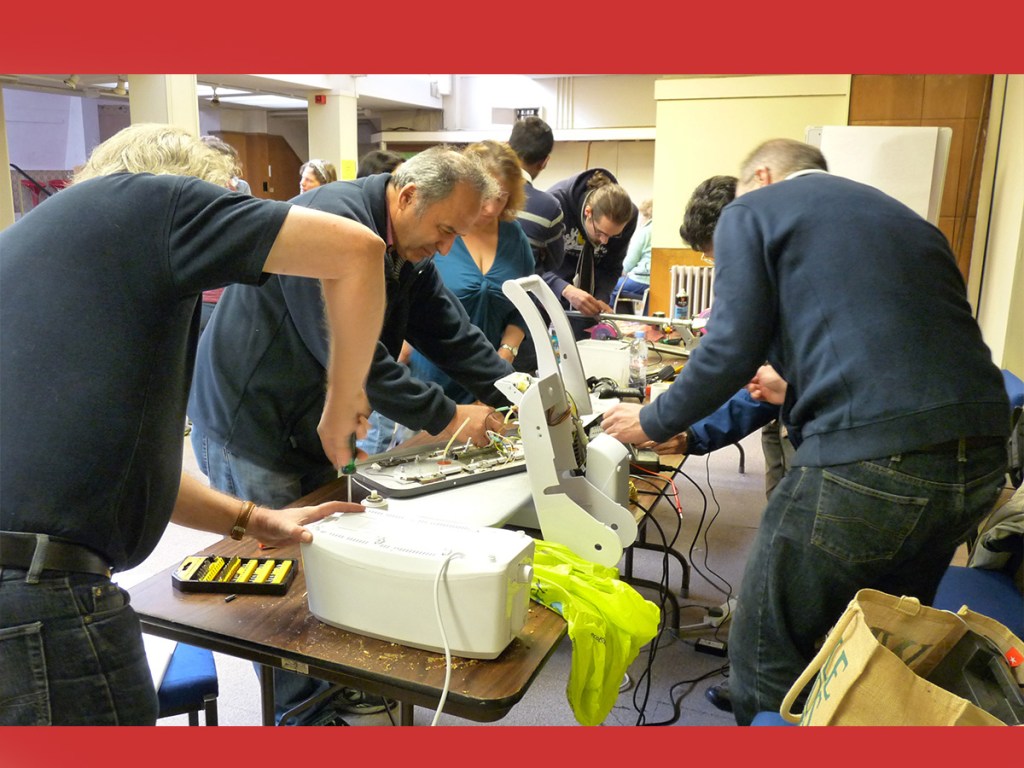
  • Broken household items bring people to Repair Cafés but community keeps them coming back
    Photo credit: Julian Paren/Wikimedia Commons (Cropped)Repair Cafe, Fortrose Free Church.

    The toaster oven burns everything, a lamp constantly flickers, or maybe a favorite coat has lost all its buttons. These random irritations around the home usually lead to a simple choice: throw it out, get a new item, or live with it.

    A growing number of communities have found a more productive solution called a “Repair Café.” People are bringing their broken household items and gathering around shared tables. Know-how volunteers offer a more environmentally friendly solution that has people coming back for more than simple repairs.

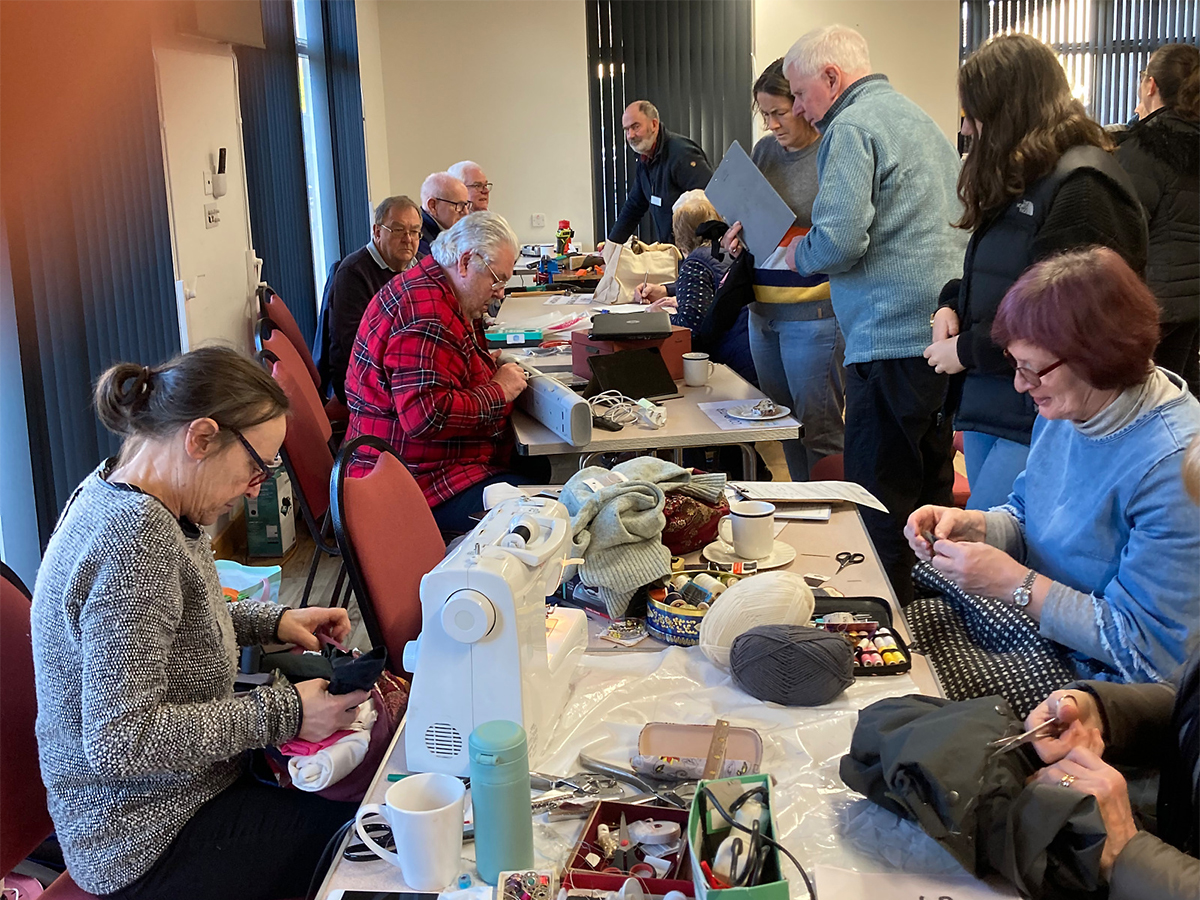
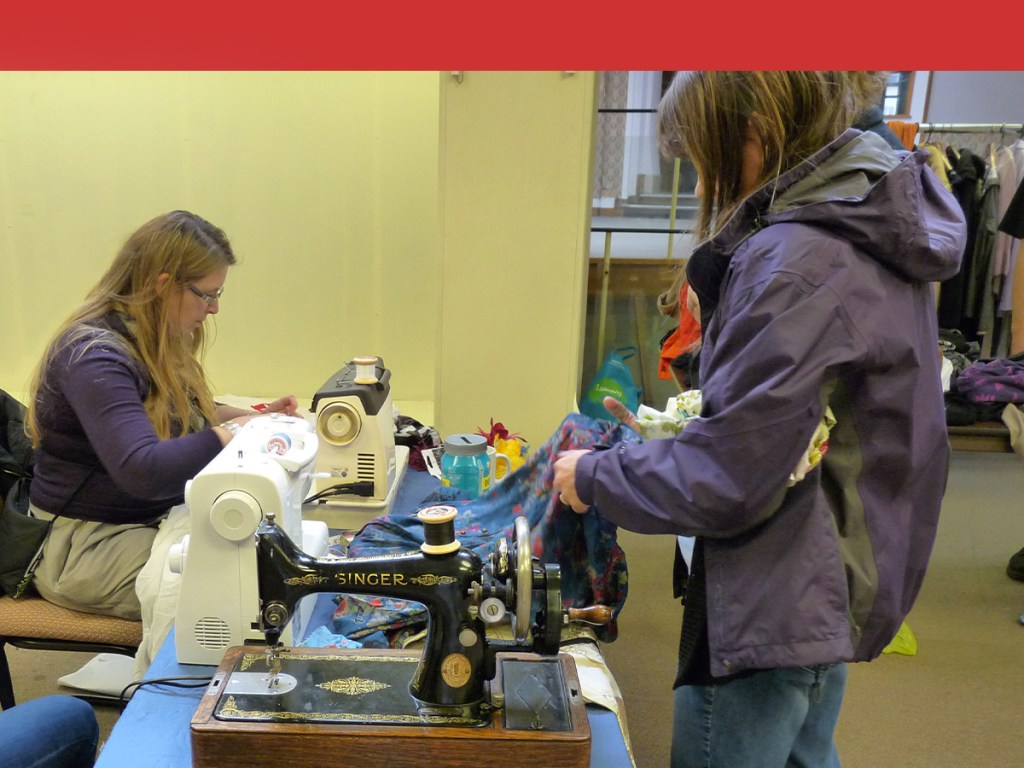
    Sewing, textiles, neighbors, communal bonding
    Reading Repair Café – Textiles and Sewing Repairs.
    Karen Blakeman/Wikimedia Commons/(Cropped)

    Neighbors helping neighbors

    Repair Cafés are free community events where neighbors help neighbors fix the everyday objects that would probably end up in the trash. It’s a community-building opportunity that turns frustration into a shared, hands-on experience.

    The Associated Press reports that people arrive at a local church basement carrying blunt knives, malfunctioning zippers, and other things most don’t know how to fix themselves. The volunteers with repair skills open devices, test parts, sew torn fabric, and troubleshoot issues. There’s no charge, no appointment, and no expectation that everything gets fixed.

    The unique idea, according to the Repair Café Foundation, is a free meeting place where repairing things becomes something people do together instead of alone. Using shared tools and knowledge, items might get fixed and friendships might blossom.

    With rising concerns about the cost of living and growing frustration with disposable consumer habits, repair culture is gaining momentum. Rather than replacing broken items, people are looking to make them last longer. It’s a planet-friendly model for reducing waste and challenging “throwaway culture.” This is an active attempt at shifting the way people think about consumption.

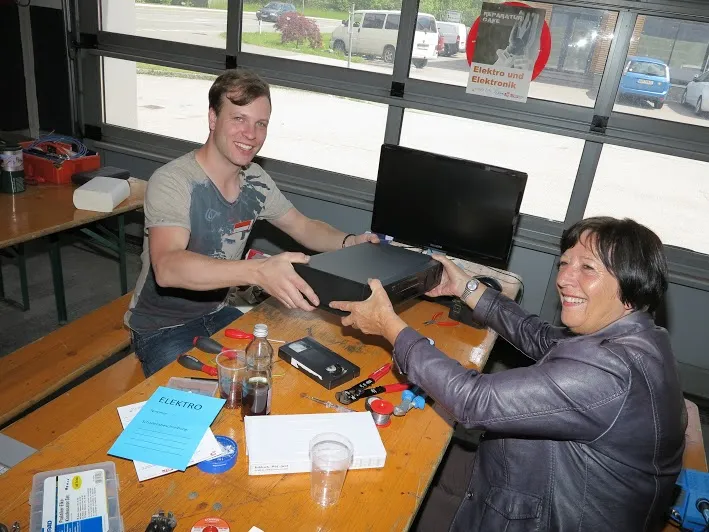
    VCR, broken items, reducing waste
    Trying to fix a VCR.
    HellasX/Wikimedia Commons/(Cropped)

    Repair Cafés are building community

    While the concept is often framed as a way to save money and reduce waste, research suggests they serve another purpose as well. A 2024 study in Cleaner Production Letters found they also function in building community. Visitors are often motivated not only by the opportunity to fix things, but also to learn from others and engage in shared activities.

    People are finding a real sense of satisfaction that goes beyond whether the item is repaired or not. Sitting with strangers, asking questions, and learning small skills creates an engagement increasingly rare in modern lifestyles.

    In an article for the The Guardian, author Nyima Jobe quotes Sophie Heathscott, an arts magazine manager in London, saying, “There is a real joy in being able to fix something for someone, and then showing them how.”

    workshop, volunteer event, networking, engagement
    Reading Repair Cafe – DIY workshop.
    Karen Blakeman/Wikimedia Commons/(Cropped)

    Working on a global scale, fixing thousands of items

    The concept has grown into a global network with thousands of locations across multiple countries. Through volunteer-led events, countless household items have been repaired instead of discarded. However, the appeal goes beyond practicality. It may be damaged things that bring people through the door, but a repaired lamp is rarely the only thing they take home.

    Repair Cafés offer something harder to find and impossible to manufacture. These gatherings give neighbors a chance to solve problems while working together on a common goal. Whatever the outcome, the main takeaway is communal connection.

  • The conversations people avoid may be the ones they would enjoy the most 
    Photo credit: CanvaTwo women enjoy some small talk.

    Before having a conversation with a stranger, many people assume the interaction will be boring, uncomfortable, or simply not worth the effort. A recent study found that people routinely underestimate how enjoyable and meaningful these interactions can be.

    In a recent paper, “Conversations About Boring Topics Are More Interesting Than We Think,” researchers suggest one of the biggest obstacles to human connection may be our own expectations. Across nine experiments involving 1,800 participants, talking on topics people expected to be boring turned out to be far more engaging than they predicted.

    human connection, anxiety, relationship science, conversation skills
    A good conversation.
    Photo credit Canva

    People unknowingly avoid meaningful conversations with strangers

    Elizabeth Trinh, a doctoral student at the University of Michigan and lead study author, placed people in conversations about topics that they identified as boring. Options varied from the stock market to cats to vegan diets.

    The study asked participants to predict how a conversation with unfamiliar people might go. Most participants expected less enjoyment, less connection, and less value from the exchange. The results suggest that people are surprisingly poor at forecasting their own social experiences.

    After the interaction with a stranger, the majority believed it went far better and was more engaging than they had predicted. In an American Psychological Association press release, Trinh said, “People consistently expected conversations about seemingly boring topics to be less interesting than they turned out to be.”

    The study indicates people might place too much emphasis on the topic and situation itself. Because once people start actually talking, the content matters far less than the interaction. “What really drives enjoyment is engagement,” explained Trinh.

    “Feeling heard, responding to each other, and discovering unexpected details about someone’s life can make even a mundane topic meaningful,” she added.

    psychology, interpersonal perception, social interactions
    Co-workers enjoy a good conversation.
    Photo credit Canva

    People opt out of potential connections

    The study shows that people may be opting out of potential connections because they assume that opportunity isn’t worth their time and energy. It also challenges the idea that meaningful conversations require a special chemistry or a pre-existing relationship.

    Instead, ordinary interactions with neighbors, coworkers, or people standing in a line may offer more emotional value than once believed. “Even a brief conversation about everyday life may be more rewarding than we expect,” said Trinh.

    Researchers have repeatedly found that people feel better after engaging with strangers, even when expectations of awkwardness are high. They report feeling happier and more connected. Responding to another person, sharing experiences, and discovering unexpected connections far outweigh the importance of a strong starting point.

    An epidemic of loneliness

    These findings offer a reassuring contrast to the belief that modern loneliness is a growing problem that may not be easily solved. Avenues for connection may be far more abundant than many people think.

    Several proposed solutions to loneliness and social isolation involve building new friendships through social groups and new hobbies. But Trinh’s research suggests a far simpler approach. People may be surrounded by opportunities that they routinely dismiss. Most of us assume boring, small talk won’t go anywhere, yet even a brief chat with a coworker or stranger may offer more social value than people realize.

    The basic, everyday exchanges people have been avoiding might actually be some of the most valuable. Rather than planning the perfect social outing, a willingness to talk with a stranger that we might otherwise avoid could lead to a more meaningful experience.

  • Psychotherapist explains why Gen Z slang may be harder to decode than previous generations
    Photo credit: CanvaGen Z attached to their phones.

    Phrases like “that’s mid” or “no cap, sus” are common forms of slang used by Gen Z. Even when words might be technically familiar, conversations with teenagers can feel like there’s a real barrier to entry.

    According to Duygu Balan, a psychotherapist and mother of a teen, Gen Z slang is harder for many adults to decode because the language is emotionally layered and evolves rapidly online. In a recent story for Psychology Today, Balan explained that slang serves as a social signal separating one generation from the previous one, but digital culture has accelerated the process.

    emotional slang, digital language, social media slang, youth language
    A woman is confused at her computer.
    Photo credit Canva

    Slang evolving in real time

    Every age group develops informal language to signal belonging and shared cultural understanding. But the way slang spreads and functions today has changed dramatically.

    Digital platforms like TikTok, Instagram, Discord, YouTube, and Snapchat have language transforming in real time. A phrase can appear in a viral post, be remixed by thousands of users, and shift definition within days. By the time it navigates to general consumption, the meaning might have evolved again.

    Speed is only part of the story

    The way slang quickly changes is only part of the story. What makes Gen Z slang even harder to decode is that it often compresses emotional meaning into short phrases. These terms do more than describe something. They signal how it feels.

    In fast-moving digital environments, where attention spans are short and communication happens through texts and memes, this kind of conversation becomes incredibly efficient,” shared Balan.

    A 2024 study in Springer Nature Link explained that with shrinking attention spans and the evolution of reaction-based commentary, complex messages are conveyed through shorter expressions.

    Gen Z slang compresses emotional reactions

    Young people use digital shorthand to express emotion quickly. Social media relies on fast interpretation, and specific slang allows people to share tone, identity, and attitude instantly.

    Many of these phrases are used to compress complicated feelings such as discomfort, anxiety, longing, sadness, and skepticism into bite-sized constructs that can be communicated in seconds,” Balan adds.

    Irony plays a major role in Gen Z slang. Expressions can blur sincerity, making it difficult to tell what is meant literally and what is meant playfully. A phrase can carry real emotional weight framed as a joke, allowing the speaker to maintain distance.

    The phrase “brain rot” captures how it feels when the mind becomes overly stimulated. “Delulu” is short for delusional, and it’s a playful way to describe a person’s hopeful thinking. Another common slang term, “low-key,” allows someone to agree without fully committing.

    Trying to interpret these terms can take time and patience since context means so much with them.

    These phrases are not meant to be clearly translated, so they aren’t. They stem from experiences that someone who wasn’t born with an iPhone in their hand will never fully understand,” explains Balan.

    slang psychology, complex feelings, compressed ideas, social media
    Gen Z plays for the camera.
    Photo credit Canva

    Slang that signals peer approval

    Historically, slang remained consistent long enough for people outside a generation to eventually understand. Today’s slang is far more situational, shaped by online culture and social context. Words like “radical” once meant something was cool. Meanwhile, a term like “sick” not only signals it’s good, but also conveys social meaning, such as admiration from peers.

    This helps explain why adults often find Gen Z slang harder to decode. The challenge is not only vocabulary, but the combination of context, irony, emotional layering, and rapid evolution. Slang words now mean looking past the surface of the reference and paying more attention to the weight of the feelings underneath.

Explore More Society Stories

Society

Broken household items bring people to Repair Cafés but community keeps them coming back

Society

The conversations people avoid may be the ones they would enjoy the most 

Work

6 phrases to use to tactfully disagree with your boss and not jeopardize your job

Society

People thought cats lay on laptops to get in the way. The real reason is surprisingly sweet.