When the unrest in Libya first began almost four years ago, newspapers and magazines reported about the explosion of art in the streets of Benghazi and Tripoli. Graffiti and murals covered every inch of bullet-ridden surface, lending the streets a visual vibrancy that matched the revolutionary fervor in post-Gaddafi Libya. Art exhibitions were being held for the first time. The international press regularly gave shout outs to Libyan artists, like sculpture artist Ali Wakwak and ceramicist Hadia Gana. International organizations like the Goethe Institute and the British Council invested in efforts to promote local cultural production, funding literary and arts events in Libya.

The passions that fuelled the revolution were soon replaced by disillusionment with the stagnating democratic process. However, a number of institutions have emerged recently to rekindle the creative energies unleashed by the 2011 uprising. Among them is Noon Arts, an arts collective helmed by Najlaa Alageli and Nesreen Gebreel, two Libyan women who’ve spent much of their lives abroad.


“I was really struck by, not just the firearms, but, to me, what was a cultural revolution,” said Gebreel. “All this burgeoning talent was just bursting out. All the street art, all the music, in the Benghazi headquarters, that’s all you could see.”

Many of the circumstances that kept Libyan art from flourishing under the Gaddafi regime and, prior to that, under the Italian colonization, persist today: a dearth of public and private art institutions, a lack of art education and the almost nonexistent art market. With no real institutional support, Libyan artists remain largely unknown, not just to the local public, but to the world at large. It’s part of the reason Alageli and Gebreel started Noon Arts.

“I go to exhibitions in London, and I see the Lebanese, I see the Palestinians, I see the Egyptians, everybody,” says Alageli. “And then I see nothing of Libya.”

Libya’s exclusion from the global consciousness around the visual arts can be traced back to the Italian colonization. The Italian authorities did little to encourage creative pursuits in Italy and even prevented most Libyans from pursuing secondary education.

“It was [Italy’s] fourth shore, and it was mostly for the land, to grow food for their starving people in Sicily,” says Hadia Gana, a conceptual artist from Tripoli who is represented by Noon Arts. For the Italians, Libya was culturally bereft—a perception that continues to pervade Western perspectives. In his 2011 book, The Arabs: A Journey Beyond the Mirage, journalist David Lamb disparagingly wrote of the country: “Take away the oil and the guns and Kadafi would be the leader of a cultural backwater ranking alongside the Dijiboutis and the Somalias and the other forgotten nations of the world.”

The political and social repression of the Gaddafi regime subdued artistic expression, especially for artists who were pursuing conceptual styles.

“There were art exhibitions and that sort of thing but it was very much controlled by the government,” says Gebreel. “So it was all propaganda.”

Says Gana: “You couldn’t go very clearly against the government and you couldn’t do things that were clearly nude, clearly sexual. Because you have the political taboo and the social or cultural taboo.”

Grafitti artist Aymen Ajhani, who began spraying his paint on Libya’s white walls anonymously in 2009, challenged these taboos head on with his signature stencil, a Hand of Fatima with the middle finger extended upwards. The Hand of Fatima, or Hamsa, is a hand-shaped amulet popular in the Middle East. Ajhani’s modern rendering of it was politically charged, a visual “screw you” to the powers-that-be. Ajhani had exploited an image very closely associated with Islamic mysticism and transformed it into a lewd gesture.

“It was getting crazy, because people were asking [about] who was making it,” says Ajhani, “They felt that I was insulting them.”

Ajhani encountered other challenges as well. He couldn’t purchase spray paint without showing his I.D., making it easy for authorities to track down dissenters who use the paint for anti-government art.

The Gaddafi government did, however, give Libyans unprecedented educational opportunities. Bashir Hammouda, Ali Wakwak, and Ali Gana, Hadia Gana’s father, are part of what is referred to by Libyan historians as the “first generation” of Libyan artists. They were artists of the 1970s who traveled abroad on scholarships and received their arts education in places like Rome and the U.K., where they were exposed to new alternative styles and mediums. Gana says part of the problem was lack of demand. Art was a luxury most Libyans could not afford.

“You didn’t have galleries. You had like, two, and from time to time, you had another because they can’t sell,” says Gana. “There’s no art market, that’s the main problem.”

The 2011 uprising provided Libyan artists with a market for the first time. The overthrow of the Gaddafi government meant no more institutionalized censorship. People exercised a new freedom of expression and produced adventurous forms of art. Ali Wakwak, who is also represented by Noon Arts, utilizes the remnant materials of war – bullet cases, military gear, gun barrels – to create sculptures. Gebreel says the Noon Arts collective has provided the artists with something else they have never had before: a platform for international critique.

“You can’t really improve unless you have critique,” says Gebreel. “We also have to work with artists that are looking to grow as well, whatever age they are.”

Noon Arts held their first exhibition in Tripoli, at the building of a popular architectural firm. More than 500 people attended, among them ambassadors and diplomats. It was a jubilant event that not only provided local artists with a platform to display their work, but a space where ordinary Libyans could view it for the first time.

“It created a lot of buzz and people were quite happy, because for 42 years there’s hardly been any exhibitions that are not attached to some kind of political propaganda,” Alageli says.

They’ve held several exhibitions since, including a wildly successful one in Malta where sculptor Mohammed Bin Lamin showcased sculptures he had produced from the remains of war. “To bring the artwork from Libya is a lot of work,” Alageli says. “We had sculptures that were made out of bullets. You need diplomatic passes to transport them.”

Despite the continued unrest in Libya, Alageli and Gebreel are planning a 2015 exhibition at London’s Shubbak Festival, which celebrates contemporary Arab culture. Ajhani will be there as well, showcasing his street art. Meanwhile, Libyan politics have once again descended into chaos. Violence characterizes life in the cities, while rival political powers have been jockeying for control through militia battles that take place in civilian areas. There is no clear governing power. The schools have been closed and there are constant electricity blackouts. Many artists, like Ajhani, who now works out of Copenhagen, have been driven out. But Alageli and Gebreel say that art is more important now than ever.

“’[Art] gives you hope, it gives you positivity,” Gebreel says. “People always need positivity. Sometimes, you know, if you look at history, the most creative times are during wars or during recessions.”
  • A woman complained to her upstairs neighbor about  a strange noise in the middle of the night. His wholesome response was perfect.
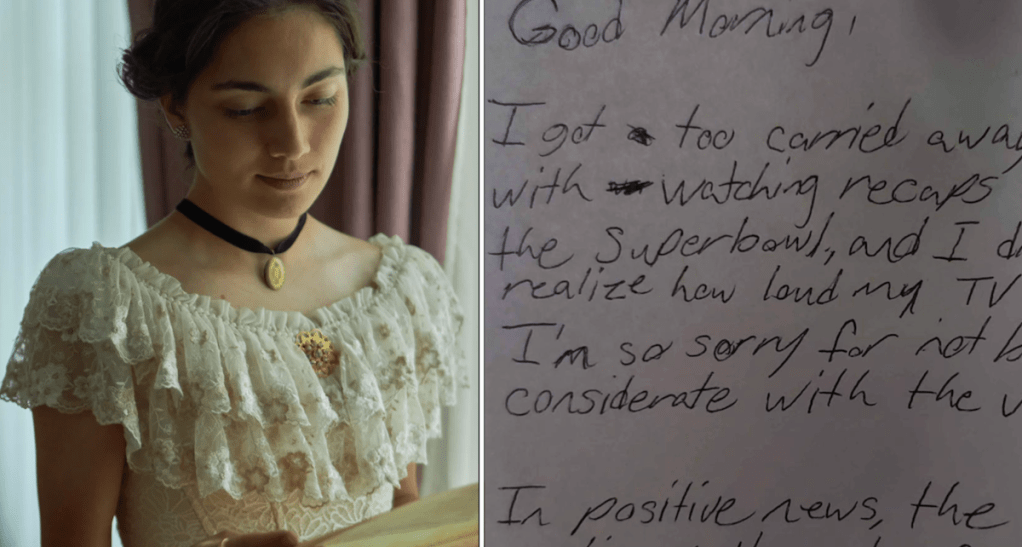
    A woman reads a note from her neighborPhoto credit: Canva

    She had never actually met the man who lived above her. She knew him only as the source of the noise coming through her ceiling at 12:30 in the morning, the night after Super Bowl LIX. She pulled herself out of bed, went upstairs, and asked him through his Ring camera to please turn it down. He was polite. She went back to sleep.

    The next morning, there was a bottle of wine outside her door.

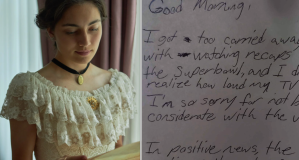
    The woman, who goes by u/operarose on Reddit, posted the photo to r/MadeMeSmile , and it pulled in 84,000 upvotes, as Newsweek reported. The caption was simple: “Had to get out of bed and go ask the upstairs neighbor (whom I’ve never actually met) to turn it down at about 12:30 am this morning. Found this outside my door when I woke up.”

    Attached to the bottle was a handwritten note. “I got too carried away watching recaps from the Superbowl and I didn’t realize how loud my TV was,” it read. “I’m so sorry for not being considerate with the volume. In positive news, the cookies you made for Christmas were amazing. Please allow me to return the favor.”

    That last part is what made the story. He already knew who she was. She’d baked Christmas cookies and apparently given some to neighbors she’d never formally met. He’d received them, remembered, and now here he was, months later, referencing them in an apology note attached to a bottle of wine.

    neighbors, kindness, apology, community, apartment living
    Plate of holiday cookies. Image source: Canva

    She reported back in the comments that the wine was good. “Never had this brand before, but I definitely recommend it,” she wrote.

    Etiquette expert Jo Hayes told Newsweek the neighbor had essentially done everything right. “A clear, sincere apology is necessary, and he did exactly this. Plus a kind word about the Christmas cookies. Plus a gift, as a token gesture of said apology, is the icing on the cake. This would have flooded the downstairs neighbor with warm fuzzies.”

    The comments filled with people who seemed almost relieved. “It’s insane just how hard it is to find people who can just be considerate and move on,” one user wrote. “Congratulations to both of you for spontaneously demonstrating how to be an adult,” said another. “This is how you neighbor,” someone summed up simply.

    The whole exchange took about two minutes of awkwardness and produced something neither of them had before the night started: a neighbor they actually know.

    This article originally appeared earlier this year.

  • He threw a message in a bottle into the ocean as a teen. It washed up 49 years later with a response.
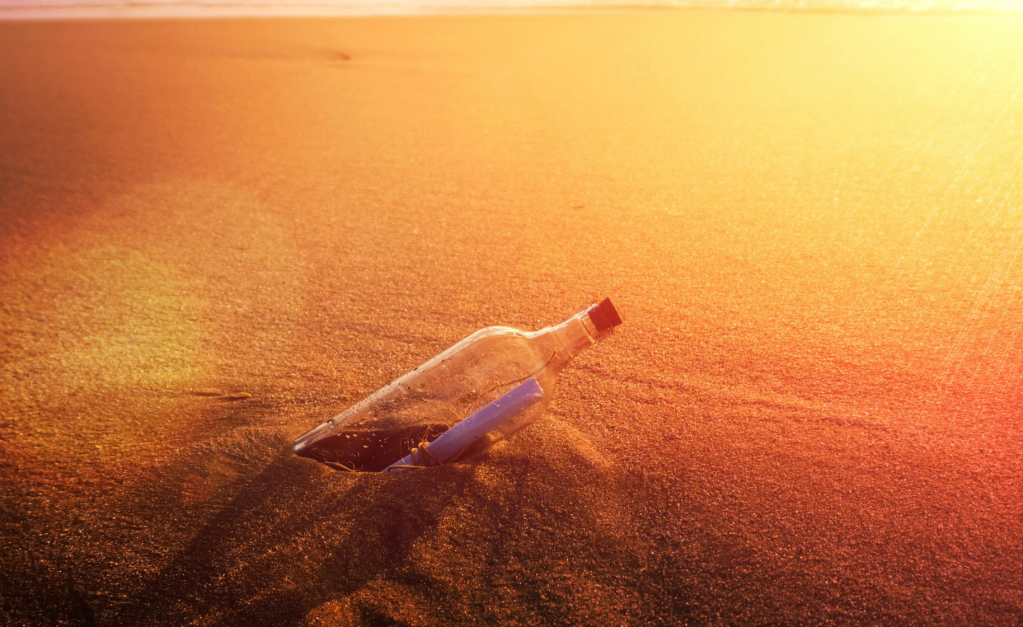
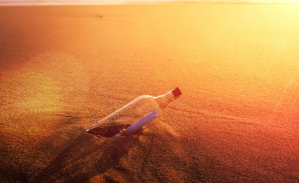
    A bottle with a message inside resting on a beachPhoto credit: Canva
    ,

    He threw a message in a bottle into the ocean as a teen. It washed up 49 years later with a response.

    Two beachcombing brothers nearly skipped the trip. On a remote Bahamian island, one of them found a sand-covered glass Pepsi bottle with a note inside from 1976.

    In May 1976, a ninth-grader named Peter R. Thompson sealed a short note inside a glass Pepsi bottle, handed it to the Coast Guard, and watched it get dropped into the Atlantic Ocean. The note asked whoever found it to write back with the date, location, and how they’d come across it. He was 14. He was doing it for an oceanography class at Pentucket Regional Junior High School in West Newbury, Massachusetts. He then, by his own admission, mostly forgot about it.

    The bottle drifted for 49 years.

    Earlier this year, brothers Clint and Evan Buffington had nearly canceled a trip to a remote out-island in the Bahamas after both came down with an illness. They went anyway. As Clint told WCVB, they were walking the beach on a beautiful sunny morning when his walkie-talkie crackled to life. His brother’s voice came through: “You’re not going to believe what I just found.”

    It was the bottle. Inside, the note was sand-covered and browned with age but still fully legible, more than 1,000 miles from where it had started.

    As reported by Boston.com, Clint Buffington is no casual beachcomber. He found his first message in a bottle in 2007 and has since found over 120 of them, documenting each one on his Message in a Bottle Hunter blog. He knew immediately this one was special. In a Facebook post that began circulating widely, he wrote about what the note meant not just as an artifact, but as a window into the mind of a kid from the 1970s with a science assignment and a big imagination: “Just think what it meant to the 14-year-old kid who sent it in the 70s! The dreams of where it would travel, where it might wind up, who might find it.”

    @clint_buffington

    Here’s the 1976 message in a bottle my brother found a few weeks ago! Y’all wanted to know what it says, so here you go 🙂 Now, to some, this may sound like a pretty “straightforward” message… No romance, no pirate treasure map. But just think what it meant to the 14 year old kid from West Newbury Massachusetts who sent it in the 70s! The dreams of where it would travel, where it might wind up, who might find it… Well, after who knows how many trips around the North Atlantic, drifting past whales and cargo ships, shimmering under the northern lights…it wound up on a very sparsely inhabited out-island of the Bahamas and rested in the sun as world leaders and wars came and went, music and clothing styles rose and fell. Somewhere in there, my brother (who found it) and I were born, grew up, went to school, got married, had kids…. And all that time, this message was waiting to be found. There’s way more going on with this message than you could ever imagine just by reading it! So, here’s hoping we connect with Peter R. Thompson of West Newbury, MA — And that wherever he is today, he still has that 14-year-old dreamer inside him, full of curiosity! #messageinabottle #westnewbury #massachusetts #beachcombing #beachcomber #beachcombingtreasure #treasurehunting #fun #happy #goodvibes #newengland #lostandfound #exciting

    ♬ original sound – Message in a Bottle Hunter

    He went on to describe the bottle’s imagined journey across the North Atlantic, drifting past whales and cargo ships, sitting on a Bahamian shoreline while decades of history rolled by, while he and his brother were born, grew up, got married, had kids. “And all that time,” he wrote, “this message was waiting to be found.”

    Clint posted a TikTok asking for help tracking down Thompson. It crossed one million views. Boston journalist Emily Maher, a reporter at WCVB, got there first. She found Thompson, now living in Leominster, Massachusetts, and put him on the phone with the brothers. “I have found someone that you’ve been looking for,” she told Clint. “I’m going to hand the phone over to Mr. Peter Thompson.”

    Thompson’s reaction, as he told WCVB, was simple and genuine: “It’s amazing. It’s almost 50 years later. It’s a big surprise.” He said he doesn’t remember writing the exact note, but he does remember the oceanography class. The Buffington brothers are planning to return the note to him in person.

    @clint_buffington

    Wow, you guys! Guess what? WE FOUND PETE THOMPSON!! The author of this 1976 message in a bottle!! My sweet brother, Evan, and I are still reeling from the outpouring of support and help we got through TikTok and @WCVB Channel 5 Boston News as we searched for Pete, who was about 14 when he sent the bottled note 49 years ago. Well, thanks to YOU all, we DID find him!!! I mean, really, we are just two goofy brothers, now dads in our 40s (where did the time go!) who have a weird hobby (finding messages in bottles) and we’ve never gone viral on TikTok, so we are a little overwhelmed and a lot grateful! Evan was FLOORED when we very luckily happened to be together this past week, and in the midst of this wild search for Pete, all of a sudden we received a phone call from WCVB’s Emily Maher who had Pete ON THE PHONE WITH US!!! We had a great little chat, all of us totally in shock, and we all STILL are! Pete still lives in the area and was deeply surprised to hear about his message in a bottle—at last check he was still combing through memories of his science / Oceanography class for recollections of making this message in a bottle. It’s amazing what one little scrap of paper in a bottle can do—the memories it can rekindle, the friendships it can spark. It’s so strange to think that this bottle was sent 6 years before Evan was born, and 8 years before I was. Every day of our lives, every little triumph or loss—graduations, meeting and losing friends, getting our drivers licenses, family vacations when we were tiny…every single breath we’ve ever breathed, and this message in a bottle was out there the whole time, just waiting… Sharing this with Pete is a great joy, and sharing it with all of you—who really seem to understand why we love this crazy hobby so much—has also been a total thrill. We have so many more unopened messages in bottles to investigate, and we will need your help! Each one is a portal into someone else’s life, into their world, and who knows where the next one will take us?! We really hope you stick around for the ride. So, from Evan, from me: Thank you, thank you, thank you. We could not have done this without you! As Evan says in this video, “It takes a village”!! Here’s hoping we can return Pete’s message to him! #messageinabottle #westnewbury #massachusetts #boston #newengland #bahamas #fun #happy #goodvibes #goodnews #beachcombing #beachcombingfinds #oceanography #grateful #gratitude

    ♬ original sound – Message in a Bottle Hunter

    Clint’s framing of what makes these discoveries meaningful applies as much here as anywhere: “I always think the most important thing about these messages is not how old they are or how far they’ve traveled. It’s the people on the other side.”

    Peter Thompson spent 49 years not thinking much about a bottle he threw into the ocean as a kid. Then two brothers nearly sick enough to stay home decided to go to the beach anyway, and suddenly the question he asked in 1976 finally had an answer.

    @clint_buffington

    Ahoy, New England!! My goonball brother EVAN found this 1976 message in a Pepsi bottle on a sparsely inhabited Bahamas island last month, 49 years after it was sent by a Peter R. Thompson who lived in West Newbury, MA at the time! He was a 9th grader at Pentucket Regional Junior High School. Yes, there are many Peter Thompsons on social media but we can’t seem to find the right one! Does anyone out there know the right Peter? And @pepsi – if you are looking to rack up some good karma, here’s a chance: Get out your megaphone! Let’s find Peter R. Thompson and COMPLETELY BLOW HIS MIND!! #messageinabottle #pepsi #westnewbury #massachussets #newengland #lostandfound #beachcombing #beachcomber #beachcombingaddict #beachcombingfinds #beachtreasure #trashtotreasure #found #exciting #fun #mystery #happy #goodvibes #goodnews #solvethis #whoareyou #bahamas #treasurehunter

    ♬ original sound – Message in a Bottle Hunter

    This article originally appeared last year.

  • Restaurant owner turns a fake 1-star tamale review into a social media frenzy
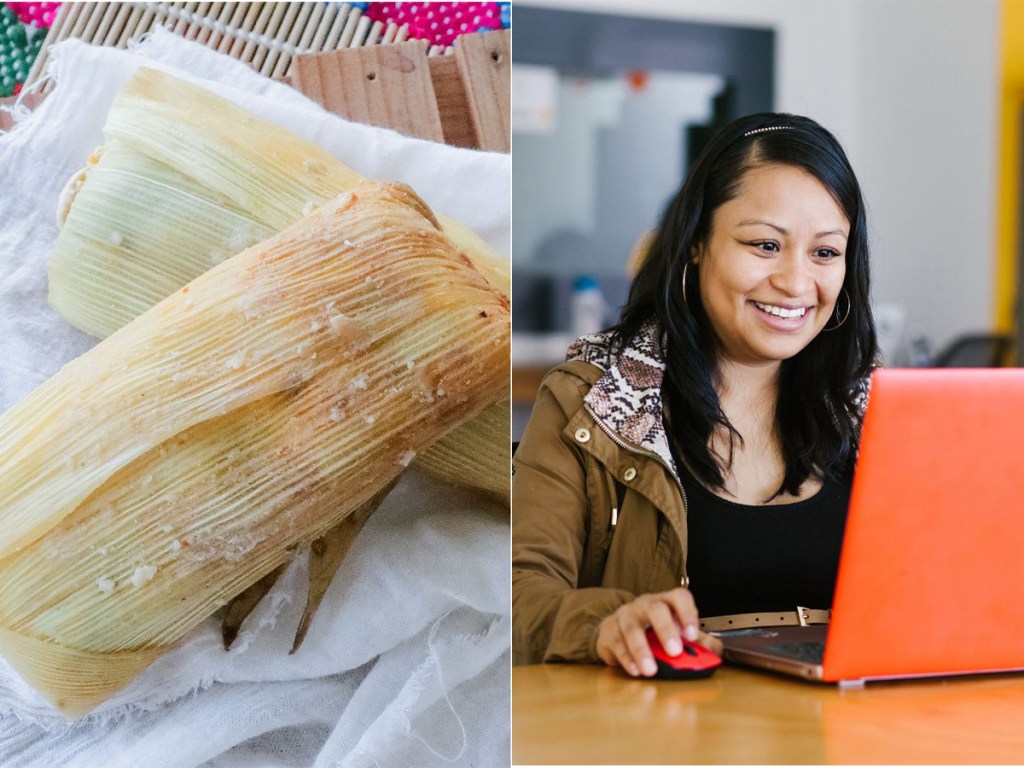
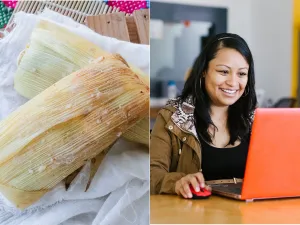
    (Left) Tamales in the corn husk. (Right) A woman works on a laptop. Photo credit: Canva

    A restaurant owner shared a strategic, fake one-star review that became a social media frenzy. Posing as Rebecca O., the first review described the tamale-eating experience as “absolutely awful tamale.” A second review followed, joking that Rebecca didn’t know to remove the husk before eating it.

    Restaurant owner Pauline Alvarado dreamed up the creative marketing tactic. She came up with the idea after a woman had expressed a similar experience just days before.

    One-star tamale review goes viral

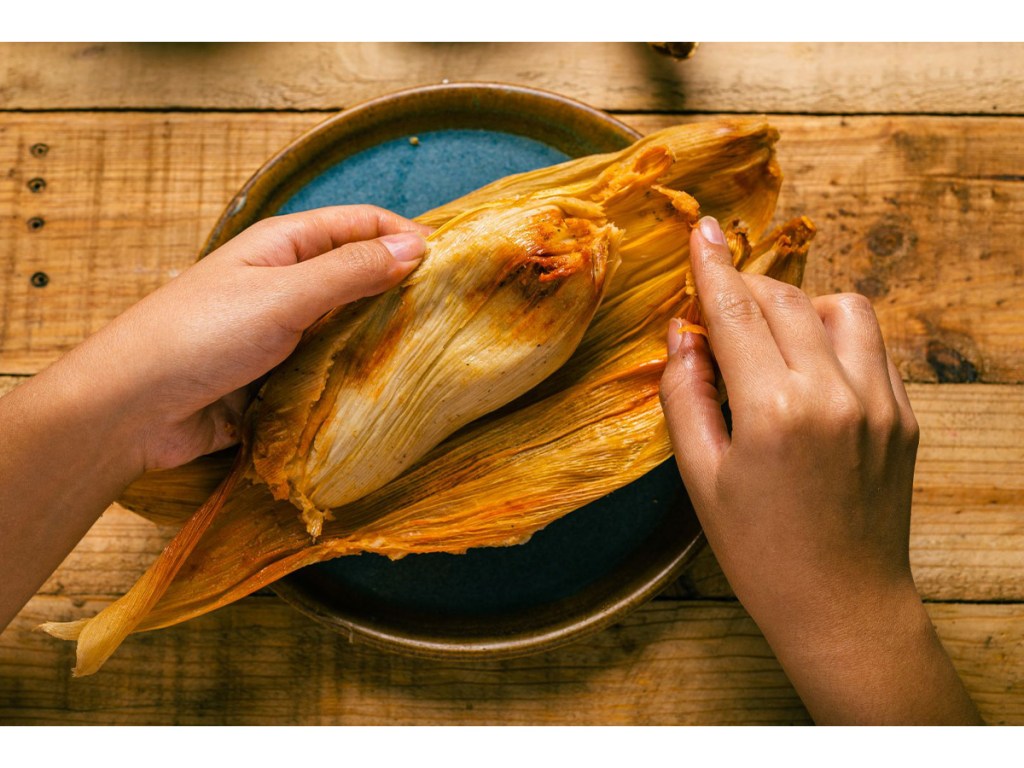
    Located in Phoenix, Arizona, The Tamale Store is a family-owned Mexican restaurant. After Alvarado craftily posted the first one-star review, the second earned a full four stars. It read, “OK, I was just told I’m not supposed to eat the cornhusk. That just changed the whole experience. Seriously the best thing I’ve ever tried omg. Sorry I don’t know how to delete my other review, my bad.”

    The review has gone viral on multiple platforms, including Instagram and Facebook. The Internet delivered thousands of comments and a flood of exposure for the restaurant—an excellent outcome for any successful marketing strategy.

    In a 2026 article in Newsweek, Alvarado shared the story behind her winning idea:

    “The idea came from a woman who purchased a hot tamale the day before and came back to complain. When I went to see which one she had been eating, I realized she had eaten part of the corn husk. We both laughed, and I gave her another tamale on the house so she could try again. That moment inspired the Rebecca character. In our 18 years in business, I cannot count how many Rebecca O’s we have had. I wanted to showcase that in a lighthearted and funny way!”

    tamale, restaurants, Mexican food, husk, food preparation, funny story
    Unwrapping a tamale from the corn husk.
    Photo credit: Canva

    People share their thoughts with Rebecca

    One of the reasons behind the success of the fake one-star review was its relatability. Here are some of the comments shared on one of the Instagram posts:

    “Welcome to the wonderful world of tamales, Rebecca.”

    “Had a friend from Ohio also eat the husk and was trying to be polite and still said it was good. Such a good laugh lol.”

    “Like when my dad said he didn’t like mango and come to find out it’s because he ate it like an apple”

    “They really should tell people or give instructions not to eat the skin I had my first one a couple years ago and I didn’t know either.”

    “I didn’t eat a tamale until I was almost 30 and I was so confused about this too”

    crowd, community, relatability, social interactions, social media, events, viral
    A crowd doing the wave. Photo credit: Canva

    Why relatability sells

    Alvarado isn’t the first business owner to craft a successful sales and marketing tactic through social media. Credibility and engagement are often tied to relatability.

    A 2025 study published on Springer Nature Link revealed that “authentic” influencers drive stronger engagement and significantly affect consumer response and purchases. Similarly, a 2025 engagement study found that increased user interaction on platforms like Instagram suggested relatable content influenced sales.

    When studies reveal that relatable, story-driven content drives engagement, it’s easy to see why Alvarado’s fake one-star tamale review was so successful. Turning confusion into comedy and connection created real buzz. The idea, based on real-life experience, was simple, human, and funny.

Explore More Culture Stories

Culture

He threw a message in a bottle into the ocean as a teen. It washed up 49 years later with a response.

Culture

Restaurant owner turns a fake 1-star tamale review into a social media frenzy

Well-being

These seven simple phrases could be the secret to deepening trust and romance in your relationship

Culture

Local governments provide proof that polarization is not inevitable