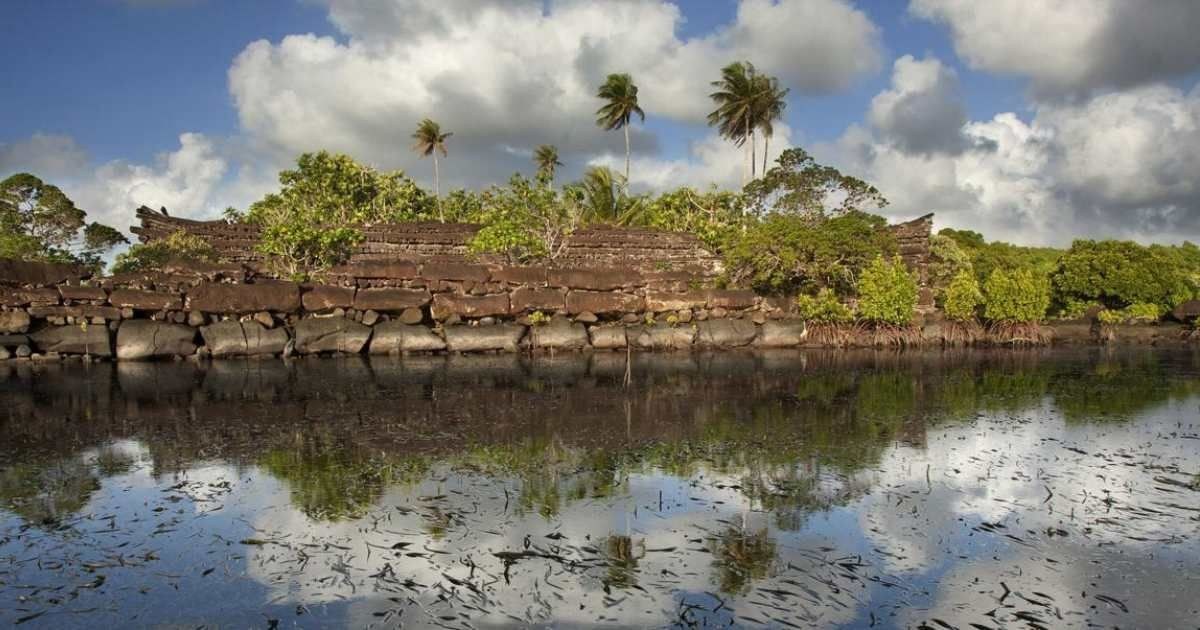
Discovering the remains of ancient cities hidden beneath the ocean is a rare event. Recently, a mysterious set of structures was found in the center of a lagoon on the remote island of Pohnpei, an independent nation in the western Pacific Ocean. According to the Science Channel’s series What on Earth?, a striking satellite image revealed the lost city of Nan Madol, often referred to as the “Venice of the Pacific” or “Atlantis.”
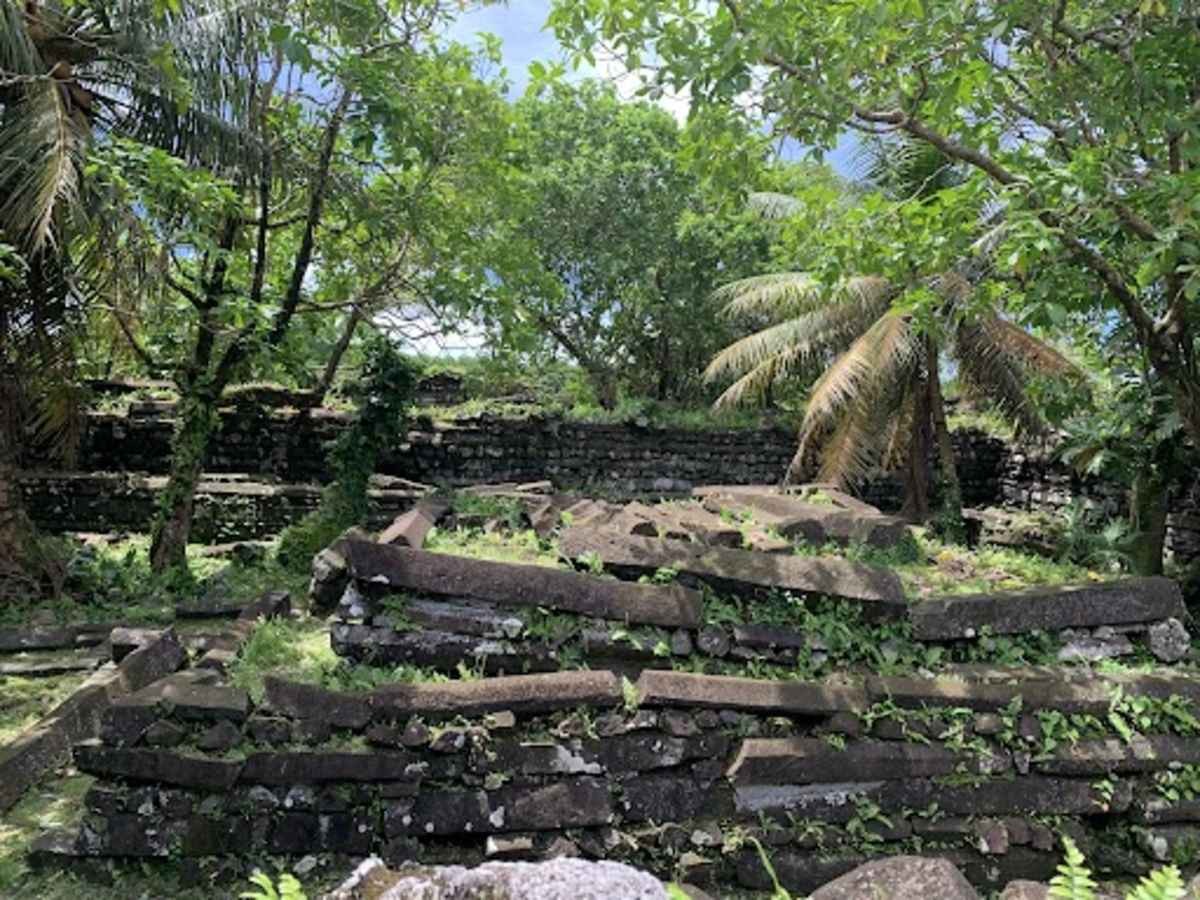
Image Source: Pohnpei State Government

In the satellite image, there are a series of mysterious canals and various stone foundations and ruins of ancient architecture. According to the Pohnpei State Government, Polish ethnographer and oceanographer John Stanislaw Kubary made the first detailed description of Nan Madol in 1874. According to the video on the Science Channel, the half-submerged city appears to be over a millennia-old and thanks to modern technology, a satellite mapping of the region has been made possible.
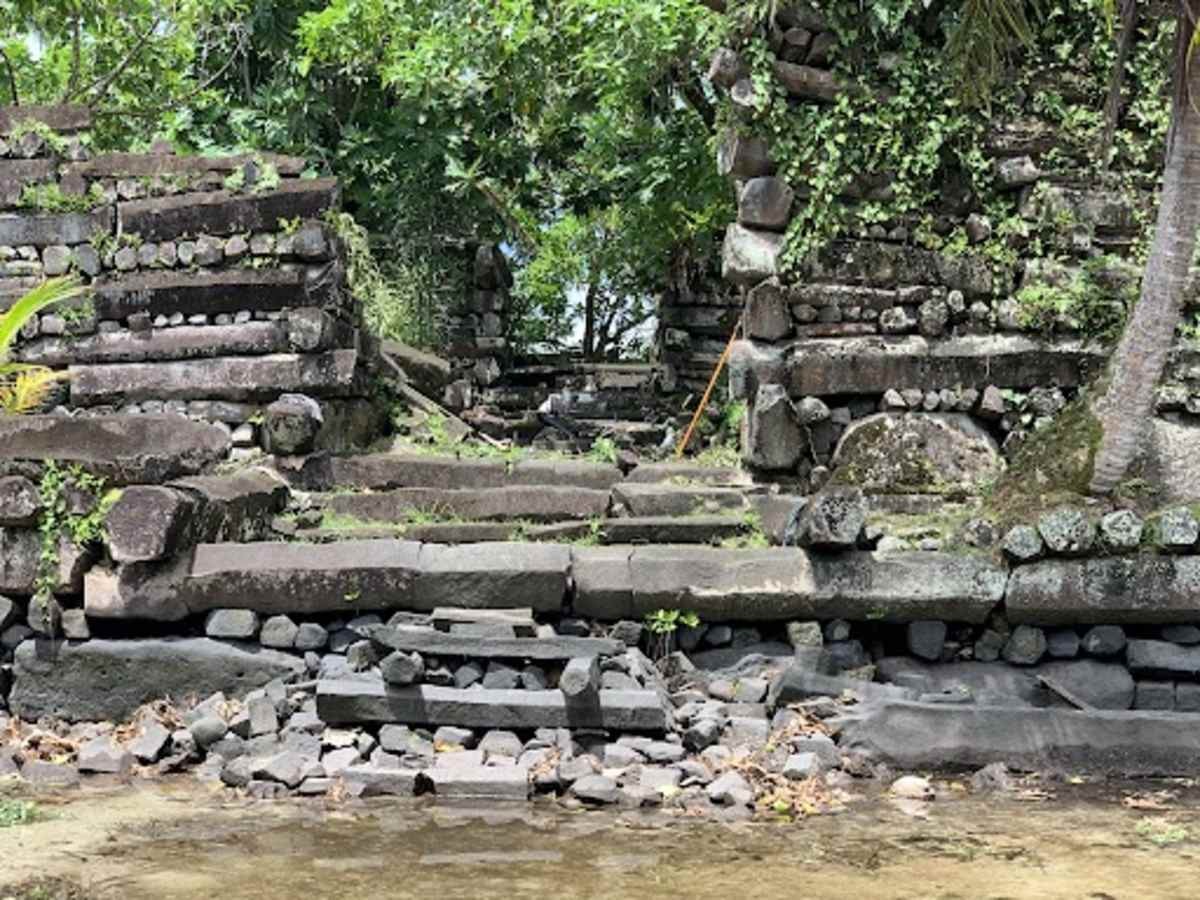
Image Source: Pohnpei State Government

The satellite images have brought up a compiled 97 geometrical structures that are similar in shape and located along the island’s coastline. No additional information about the inhabitants and the civilization of the Nan Madol has been disclosed yet. The local name of the area loosely translates to “the space in between” and it refers to the canals that joined the rectangular islets. “As amazing as this site appears from satellite imagery, coming down to ground level is even more astounding. There are walls which are 25 feet tall and 17 feet thick,” archaeologist Karen Bellinger explained in the YouTube clip.
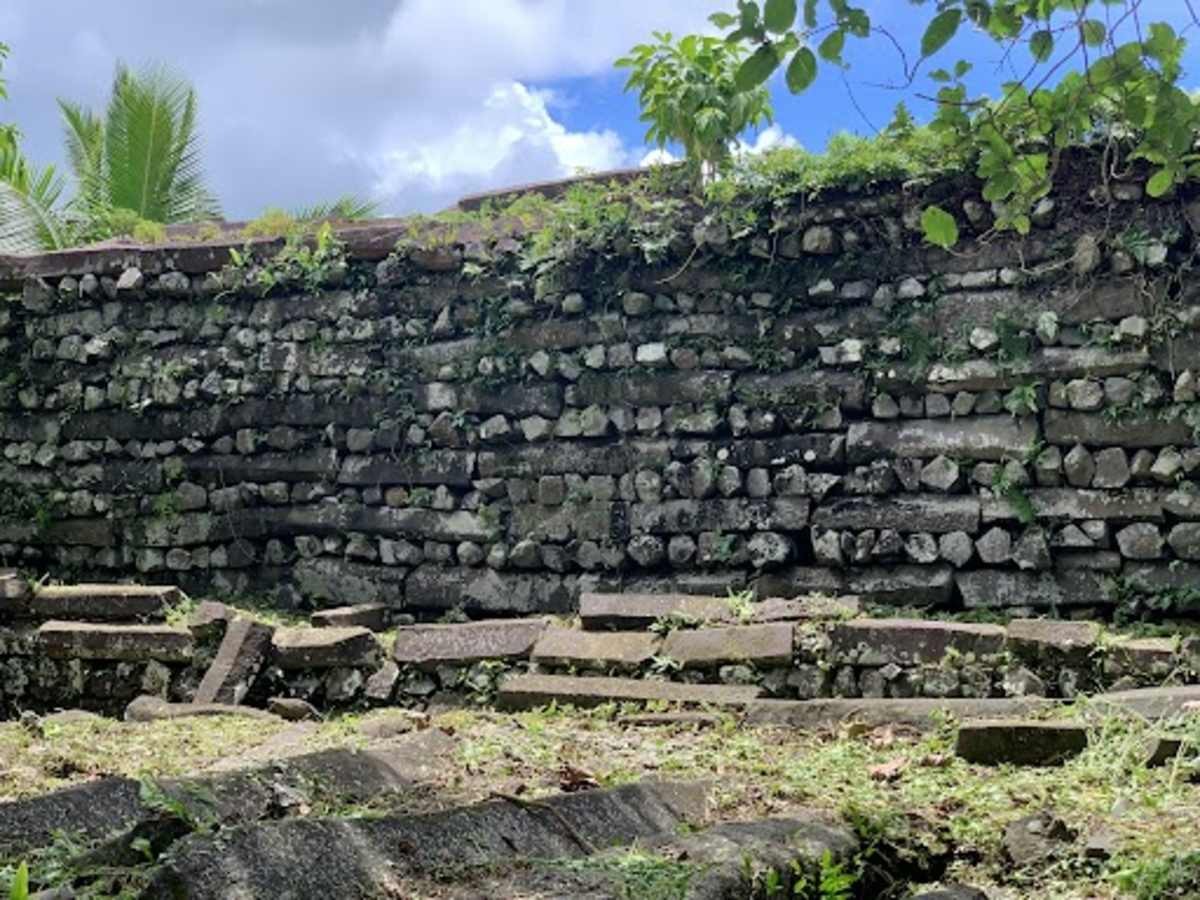
Image Source: Pohnpei State Government

“It now looks like Nan Madol represents a first in Pacific Island history,” Mark McCoy, an associate professor at Southern Methodist University in Texas told Fox News in 2016. “The tomb of the first chiefs of Pohnpei is a century older than similar monumental burials of leaders on other islands. To me, in its prime, Nan Madol was a capital. It was the seat of political power, the center of the most important religious rituals, and the place where the former chiefs of the island were laid to rest.” According to the Smithsonian Magazine, the island is a tad bit smaller in size compared to New York City. It is also a part of the Federated States of Micronesia and is practically built atop a strong network of coral reefs.


via GIPHY


“Nan Madol is one of the most significant sites not yet on the World Heritage List,” Richard Engelhart, an archaeologist and former UNESCO adviser for Asia and the Pacific, said, per the outlet. Nan Madol is also home to mangrove trees that cover 200 acres of the area. Rufino Mauricio, Pohnpei’s only archaeologist, mentioned that building Nan Madol might have required more effort than building pyramids. The people who built the region had to move 750,000 metric tons of rocks and that was an average of 1,850 tons a year for four centuries. “Not bad for people who had no pulleys, no levers and no metal,” Mauricio remarked. “We need to clear all this out in at least some of the islands so we can appreciate the extraordinary effort that was put into this construction.”



  • How much is a bat worth? Protecting these tiny insect‑eaters isn’t just good for farms – their deaths cost taxpayers and the wider economy
    Photo credit: Liz Hamrick/TVAA healthy bat hangs in a cave, resting up to eat its weight in bugs at dusk.

    Most Americans tend to think about bats only around Halloween, but the U.S. economy benefits from these furry flying mammals every day.

    Bats pollinate plants, including many important food crops, when they stop by flowers to drink nectar. Their guano is mined from caves for fertilizer. And they eat a lot of bugs – the kinds that bother people (think mosquitoes) and others that destroy crops that humans depend on for food.

    Sadly, bat populations are declining rapidly in North America. A driving force is a fungal disease known as white-nose syndrome, which has spread among bats throughout the United States. When a bat population crashes, fewer bats are around to eat bothersome insects. All those additional insects can do serious damage.

    So, when bats disappear, farms become less productive, and that has broad implications for the agricultural economyhuman health, rural governments and even financial markets.

    Bats love to eat the bugs that bother people

    First, consider how many insects bats eat.

    A reproductive female big brown bat can eat its body weight in insects every night in the summer, precisely when farmers are growing food.

    Hundreds of bats fly out of a cave.
    Mexican free-tailed bats head out of Bracken Bat Cave, near San Antonio, Texas, for an evening of feasting on insects. In summer, the cave is home to the largest bat colony in the world. Ann Froschauer/U.S. Fish and Wildlife Service

    One of those insects is the cucumber beetle, which matures from rootworm – a scourge of U.S. cornfields. Rootworm destroys more than 340 million bushels of corn across the U.S. Midwest and South each year, even as farmers spend US$1 billion annually on pesticides to control outbreaks.

    A colony of 150 big brown bats can consume 600,000 cucumber beetles in a single year. If each female cucumber beetle – assuming half are female – had 110 rootworm larvae, the typical brown bat colony would prevent the production of 33 million rootworms.

    Farmers experience economic damage when rootworm concentrations exceed about 0.5 per corn plant. Typical planting densities exceed 30,000 corn plants per acre in the Midwest. Therefore, the rootworms that would have hatched could damage more than 2,000 acres of corn – if bats weren’t around to eat the cucumber beetles first.

    That is a significant amount of pest control provided by bats!

    The disaster known as white-nose syndrome

    In the winter of 2006, the fungus that causes white-nose syndrome, the aptly named Pseudogymnoascus destructans, was first detected in the U.S. near Albany, New York.

    From there, it spread across the country, infecting 12 species of bats, three of which are listed as endangered under the Endangered Species Act. A 2010 study found white-nose syndrome had killed between 30% and 99% of the bats in infected colonies.

    A little brown bat with the telltale signs of white-nose syndrome
    A little brown bat with the telltale signs of white-nose syndrome, a fungal infection that saps the bats’ energy. Ryan von Linden/New York Department of Environmental Conservation

    As of March 2026, the fungus causing white-nose syndrome had been detected in 47 states, reaching as far west as California, Washington and Oregon. White-nose syndrome spreads primarily through bat-to-bat contact, though humans also contribute to the spread when cave explorers carry the fungus from one cave to another.

    Despite coordinated efforts by state and federal wildlife agencies to limit access to caves where bats live and slow the transmission, white-nose syndrome continues to spread rapidly. When bats get infected, they wake up early from hibernation and use more energy over the winter. This depletes their fat reserves and causes them to die of starvation, leading to plummeting populations.

    Bats’ role in food production

    After white-nose syndrome arrives in an area, the loss of bats has significant consequences for farmers.

    Yields fall as pests consume crops. To protect their crops, farmers purchase more chemical pesticides, so their costs rise as yields decline. The estimated agricultural losses from white-nose syndrome exceeded $420 million per year as of 2017.

    A bat hovers by a large flower as it feeds on nectar.
    A lesser long-nosed bat (Leptonycteris curasoae) feeding on an agave blossom in Arizona, spreading the flower’s pollen in the process. Rolf Nussbaumer/imageBROKER

    Greater pesticide use is also associated with human health problems that can be avoided if bat populations remain healthy.

    Losing bats hurts local governments financially

    The story does not stop at the farm.

    Counties in all U.S. states tax agricultural land based on its “use value” – in other words, based on how profitable the land is in agriculture. Without healthy bat populations, lower profits shrink the tax base, leaving county governments with less revenue.

    Those governments must respond by reducing services, raising taxes or increasing how much money they borrow – often at a greater cost of borrowing. The effect is especially pronounced in rural counties, where agriculture makes up a large share of property tax revenue.

    Our recent research finds that rural county governments lost almost $150 per person in annual revenue after the arrival of white-nose syndrome. For an average-size rural county, that is nearly $2.7 million in lost revenue each year.

    How losing bats can hit the bond markets

    The loss of county revenue makes municipal bond investors nervous. Buying a municipal bond is a bit like lending money to the county, and the interest rate is what the county pays you for taking on that risk.

    When bats disappear, the risk goes up, and the county has to pay about 11.47 hundredths of a percentage point more in interest. That may sound small, but it is 27% larger than the typical risk premium investors already demand from county governments.

    The higher interest rate raises borrowing costs for county governments. For example, the borrowing costs on a typical 15-year, $1 million bond would increase by more than $33,000.

    Two bats hanging in a cave.
    Bats snuggle up in a cave. Liz Hamrick/TVA

    Higher yields also mean lower bond prices for investors, including retirement funds. For example, our research suggests that investors would discount a $1 million bond issued by a rural county by nearly $14,000 if that county’s bats have become infected by white-nose syndrome.

    Economic benefits of saving bats

    The good news is that the benefits from healthy bat populations create opportunities to make money from bat conservation.

    Farmers can increase their incomes. Local governments can recover property tax revenue to fund public services, such as road maintenance, health infrastructure and public schools. Bond investors can earn financial returns from healthier bat populations.

    No silver bullet exists for protecting or restoring bat populations affected by white-nose syndrome, but promising efforts are underway.

    fungal vaccine is being tested by the U.S. Geological Survey and partners. Designing artificial roosts and adding cave protections can also help preserve healthy bat populations. Researchers are also working to better understand bat resistance to the disease to explore whether improving resistance alone can stabilize bat populations.

    As these solutions develop, opportunities will emerge for farmers, local governments and investors to earn financial returns through bat conservation. In other words, saving bats isn’t just good ecology – it’s good economics.

    This article originally appeared on The Conversation. You can read it here.

  • Pocket gardens: The tiny urban oases with surprisingly big benefits
    A pocket garden at Newark Beth Israel Medical Center in New Jersey.

    Matt Simon for Grist

    It’s not just easy to miss, but often downright hard to notice. A simple patch of greenery in a city may seem like a blip in the concrete jungle, but it’s an extremely powerful way to solve a bunch of problems at once: Studies have shown that green spaces improve urbanites’ mental health, make summers more bearable, and prevent flooding by soaking up stormwater.

    When these plots are planned — as opposed to letting vacant lots grow wild, which is valuable in its own right — they become extra powerful. You may have even enjoyed one without knowing it: the “pocket garden.” Tucked into spaces accessible to pedestrians, like sidewalks, hospital grounds, and campuses, they can be engineered to turn heat-absorbing concrete into air-cooling oases packed with vegetation and seating for people to escape the metropolitan bustle.

    “This increasing prioritization of creating green spaces in unexpected spots and underutilized spaces in communities is not only going to be making our communities more resilient, it’s going to be making people healthier,” said Dan Lambe, chief executive of the nonprofit Arbor Day Foundation, which promotes urban forestry. “A little bit of green goes a long way.”

    Pocket gardens aren’t gardens in the agriculturally productive sense, but ornamental grounds, Grist reports. (Though there’s nothing stopping a designer from adding a fruit tree or two.) Ideally, they’re host to native plant species, which bring several benefits. For one, they attract native pollinators like insects and birds, which get a source of food that powers them to go on and fertilize plants elsewhere, like crops in urban farms. And two, if the vegetation is adapted to a particular region or condition, it’s already used to the local climate — drought-tolerant varieties, for instance, won’t require as much water to survive. Furthermore, choosing native grasses that don’t need mowing can cut down on maintenance costs. And picking trees with big canopies will increase the amount of shade for people to use as refuge from the heat. (Sorry, palm trees, that means you’re disqualified.)

    Biodiversity — mixing tree species as opposed to planting 10 of the same kind — is key here. That attracts a broader range of pollinating animals, and builds resiliency into the system: If you only plant one variety of tree and a disease shows up, it can spread rapidly.

    And speaking of disease, trees have an additional superpower in their ability to scrub urban air of the pollutants that contribute to respiratory problems. In addition, the vegetation of a pocket park releases water vapor, bringing down air temperatures. This mitigates what’s called the urban heat island effect, in which cities absorb the sun’s energy all day and slowly release it into the night. Combined, reduced air pollution and temperatures improve public health.

    There’s also the harder-to-quantify bonus of people getting out of their cars and gathering in public spaces, no matter how diminutive. “It’s actually a transition toward the pedestrian — toward the person — and away from the vehicle,” said Eric Galipo, director of campus planning and urban design at the architecture firm FCA, which has integrated pocket gardens in its projects. “We may not spend as much time together as a society as we used to, and so these are great opportunities for that sort of connection to happen.”

    When the rains come, these verdant plots take on another role as an infrastructural asset. As the planet heats up, rainfall increases because a warmer atmosphere can hold more moisture. In response, cities like Los Angeles and Pittsburgh are getting rid of concrete to open up more green spaces, which absorb rainfall, allowing it to seep underground. This reduces pressure on sewer systems that are struggling to handle increasingly heavy deluges. These systems, after all, were designed long ago for a different climate than we’re dealing with today.

    When a city prioritizes green spaces, you can actually hear the difference. Barcelona, for instance, has been developing superblocks, which aim to improve city life by transforming car infrastructure into walkable spaces. That includes the development of “green axes” (the plural of “axis,” not the tool for chopping), full of vegetation and paths for strolling. A recent study found that after these spaces were pedestrianized and vehicles disappeared, average noise levels fell by 3.1 decibels. (For context, hearing a car traveling at 65 mph from 25 feet away would be 77 decibels.)

    While 3.1 may not seem like much, each increase of 10 decibels means a tenfold rise in loudness. And we have to consider not just the decibels but how the kind of noise changed as Barcelona developed green axes: Revving engines, honking horns, and even the occasional cacophony of a car accident were replaced with voices. As the built environment dramatically changed, so too did the way that folks on foot experienced their surroundings. “If people see green in general, the noise perception tends to change,” said Samuel Nello-Deakin, a postdoctoral researcher at the Autonomous University of Barcelona and lead author of the study. “You think that things are not as noisy as they actually are. So there’s also this interesting interaction, right, between sort of what you hear and what you see.” In addition, green spaces absorb city racket, keeping it from bouncing off of and between buildings and pavement, insulating residents from the din.

    With less commotion comes still more gains to public health. Noise pollution is an invisible crisis worldwide, as studies link the stress it causes not just to struggles with mental health, but physical problems like hypertension and heart disease. By contrast, pocket parks and other green spaces encourage people to ditch their cars and move their bodies. “There are also physical health benefits from walking, biking, and being outside that over a lifetime tend to have a cumulative positive effect on what our society spends in health care,” Galipo said.

    So as cities increasingly realize and utilize the power of greenery, the environmental, auditory, and social fabric of the urban landscape transforms. “There’s a gravity to this green space that brings people out,” Lambe said. “And all of a sudden, neighbors are connecting, generations are connecting, cultures are connecting. Trees are about the one thing that everybody can agree on.”

    This story was produced by Grist and reviewed and distributed by Stacker.

  • America’s next big critical minerals source could be coal mine pollution – if we can agree on who owns it
    Photo credit: Jake C/Wikimedia Commons, CC BY-SAAcid mine waste turns rocks orange along Shamokin Creek in Pennsylvania.

    Across Appalachia, rust-colored water seeps from abandoned coal mines, staining rocks orange and coating stream beds with metals. These acidic discharges, known as acid mine drainage, are among the region’s most persistent environmental problems. They disrupt aquatic life, corrode pipes and can contaminate drinking water for decades.

    However, hidden in that orange drainage are valuable metals known as rare earth elements that are vital for many technologies the U.S. relies on, including smartphones, wind turbines and military jets. In fact, studies have found that the concentrations of rare earths in acid mine waste can be comparable to the amount in ores mined to extract rare earths.

    Scientists estimate that more than 13,700 miles (22,000 kilometers) of U.S. streams, predominantly in Pennsylvania and West Virginia, are contaminated with acid mine discharge.

    We and our colleagues at West Virginia University have been working on ways to turn the acid waste in those bright orange creeks into a reliable domestic source for rare earths while also cleaning the water.

    Experiments show extraction can work. If states can also sort out who owns that mine waste, the environmental cost of mining might help power a clean energy future.

    Rare earths face a supply chain risk

    Rare earth elements are a group of 17 metals, also classified as critical minerals, that are considered vital to the nation’s economy or security.

    Despite their name, rare earth elements are not all that rare. They occur in many places around the planet, but in small quantities mixed with other minerals, which makes them costly and complex to separate and refine.

    A mine and buildings with mountains in the background.
    MP Materials’ Mountain Pass Rare Earth Mine and Processing Facility, in California near the Nevada border, is one of the few rare earth mines in the U.S. Tmy350/Wikimedia CommonsCC BY-SA

    China controls about 70% of global rare earth production and nearly all refining capacity. This near monopoly gives the Chinese government the power to influence prices, export policies and access to rare earth elements. China has used that power in trade disputes as recently as 2025.

    The United States, which currently imports about 80% of the rare earth elements it uses, sees China’s control over these critical minerals as a risk and has made locating domestic sources a national priority.

    The U.S. Geological Survey has been mapping locations for potential rare earth mining, shown in pink.
    The U.S. Geological Survey has been mapping locations for potential rare earth mining, shown in pink. But it takes years to explore a locations and then get a mine up and running. USGS

    Although the U.S. Geological Survey has been mapping potential locations for extracting rare earth elements, getting from exploration to production takes years. That’s why unconventional sources, like extracting rare earth elements from acid mine waste, are drawing interest.

    Turning a mine waste problem into a solution

    Acid mine drainage forms when sulfide minerals, such as pyrite, are exposed to air during mining. This creates sulfuric acid, which then dissolves heavy metals such as copper, lead and mercury from surrounding rock. The metals end up in groundwater and creeks, where iron in the mix gives the water an orange color.

    Expensive treatment systems can neutralize the acid, with the dissolved metals settling into an orange sludge in treatment ponds.

    For decades, that sludge was treated as hazardous waste and hauled to landfills. But scientists at West Virginia University and the National Energy Technology Laboratory have found that it contains concentrations of rare earth elements comparable to those found in mined ores. These elements are also easier to extract from acid mine waste because the acidic water has already released them from the surrounding rock.

    Metals flowing from acid mine waste make a creek look orange.
    Acid mine drainage flowing into Decker’s Creek in Morgantown, West Virginia, in 2024. Helene Nguemgaing

    Experiments have shown how the metals can be extracted: Researchers collected sludge, separated out rare earth elements using water-safe chemistry, and then returned the cleaner water to nearby streams.

    It is like mining without digging, turning something harmful into a useful resource. If scaled up, this process could lower cleanup costs, create local jobs and strengthen America’s supply of materials needed for renewable energy and high-tech manufacturing.

    But there’s a problem: Who owns the recovered minerals?

    The ownership question

    Traditional mining law covers minerals underground, not those extracted from water naturally running off abandoned mine sites.

    Nonprofit watershed groups that treat mine waste to clean up the water often receive public funding meant solely for environmental cleanup. If these groups start selling recovered rare earth elements, they could generate revenue for more stream cleanup projects, but they might also risk violating grant terms or nonprofit rules.

    To better understand the policy challenges, we surveyed mine water treatment operators across Pennsylvania and West Virginia. The majority of treatment systems were under landowner agreements in which the operators had no permanent property rights. Most operators said “ownership uncertainty” was one of the biggest barriers to investment in the recovery of rare earth elements, projects that can cost millions of dollars.

    Not surprisingly, water treatment operators who owned the land where treatment was taking place were much more likely to be interested in rare earth element extraction.

    A map shows many acid mine drainage sites, largely in the column from the southwest to the northeast.
    Map of acid mine drainage sites in West Virginia. Created by Helene Nguemgaing, based on data from West Virginia Department of Environmental Protection, West Virginia Office of GIS Coordination, and U.S. Geological Survey

    West Virginia took steps in 2022 to boost rare earth recovery, innovation and cleanup of acid mine drainage. A new law gives ownership of recovered rare earth elements to whoever extracts them. So far, the law has not been applied to large-scale projects.

    Across the border, Pennsylvania’s Environmental Good Samaritan Act protects volunteers who treat mine water from liability but says nothing about ownership.

    A map shows many acid mine drainage sites, particularly in the western part of the state.
    Map of acid mine drainage sites in Pennsylvania. Created by Helene Nguemgaing, based on data from Pennsylvania Spatial Data Access

    This difference matters. Clear rules like West Virginia’s provide greater certainty, while the lack of guidance in Pennsylvania can leave companies and nonprofits hesitant about undertaking expensive recovery projects. Among the treatment operators we surveyed, interest in rare earth element extraction was twice as high in West Virginia than in Pennsylvania.

    The economics of waste to value

    Recovering rare earth elements from mine water won’t replace conventional mining. The quantities available at drainage sites are far smaller than those produced by large mines, even though the concentration can be just as high, and the technology to extract them from mine waste is still developing.

    Still, the use of mine waste offers a promising way to supplement the supply of rare earth elements with a domestic source and help offset environmental costs while cleaning up polluted streams.

    Early studies suggest that recovering rare earth elements using technologies being developed today could be profitable, particularly when the projects also recover additional critical materials, such as cobalt and manganese, which are used in industrial processes and batteries. Extraction methods are improving, too, making the process safer, cleaner and cheaper.

    Government incentives, research funding and public-private partnerships could speed this progress, much as subsidies support fossil fuel extraction and have helped solar and wind power scale up in providing electricity.

    Treating acid mine drainage and extracting its valuable rare earth elements offers a way to transform pollution into prosperity. Creating policies that clarify ownership, investing in research and supporting responsible recovery could ensure that Appalachian communities benefit from this new chapter, one in which cleanup and clean energy advance together.

    This article originally appeared on The Conversation. You can read it here.

Explore More Environment Stories

Science

Pocket gardens: The tiny urban oases with surprisingly big benefits

Environment

America’s next big critical minerals source could be coal mine pollution – if we can agree on who owns it

Science

Don’t just plant trees, plant forests to restore biodiversity for the future

Environment

Plastic pollution in drinking water could be solved by a simple seed from a ‘Miracle Tree’