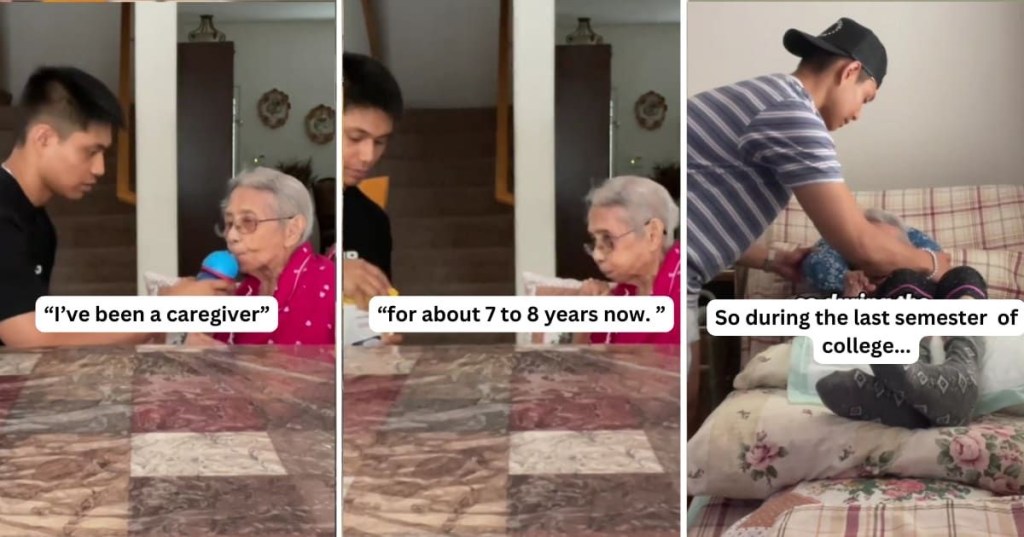
In times when people barely have a moment for their families, this grandma and her grandson are going viral on TikTok because the grandson is her full-time caregiver. In a recent Q&A video on TikTok, Chris Punsalan (@firstnamechris) answered some of the most frequently asked questions. Punsalan mentioned that he became his 97-year-old grandmother’s caregiver seven years ago when he had just graduated college. At 22, when he was in his last semester of college, Punsalan and his family realized that his grandmother would either need a full-time caregiver or would have to be sent to assisted living. Chris Punsalan wasn’t happy with either of these options. As he had not secured a job yet, he decided to become his grandmother’s full-time caregiver and assist her with everything.
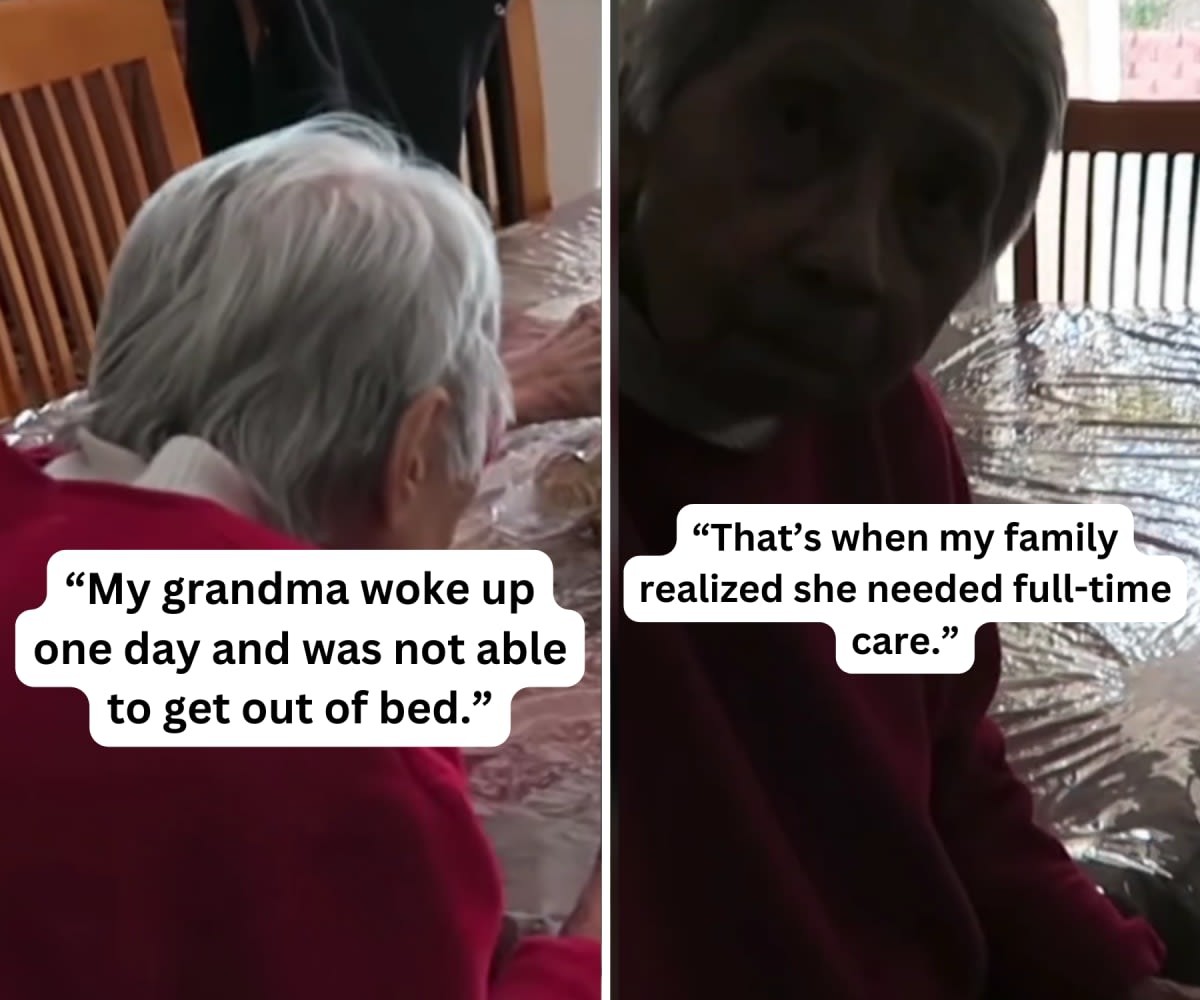
Image Source: TikTok | @firstnamechris


via GIPHY


Punsalan further shared that he helps his grandmother with pretty much everything. As his grandmother has both arthritis and osteoporosis, she needs help getting in and out of bed, with meals, her daily washcloth baths and her full Friday showers. Above everything, Punsalan ensures that his grandmother is as comfortable as possible. He believes that making an effort to keep his grandmother at home and not leaving her in the care of a stranger has been worth it.  Punsalan’s grandma was an elementary school teacher when she was younger and now makes TikTok videos along with her grandson. These videos feature everything from their conversations to the grandma’s birthday video. The account also has a following of over 2 million and over 72 million likes.
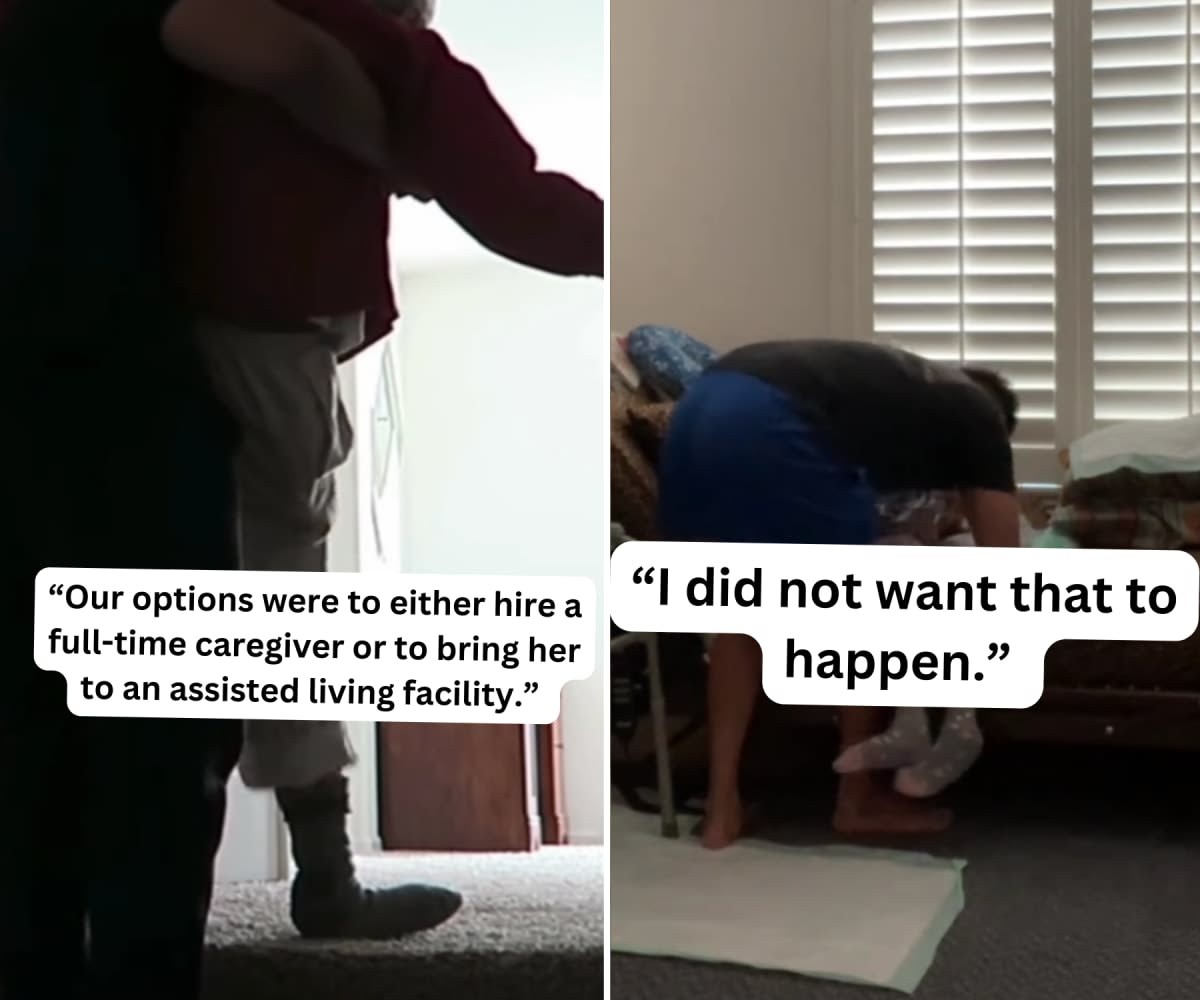
Image Source: TikTok | @firstnamechris


via GIPHY


Apart from the TikTok account, Punsalan also has a collective of designer pins called the Chooseday collective. Named after the way his grandmother pronounces Tuesday, it is also popular among his followers. The creator decided to make a collective of things that remind him of his grandma and people feel especially connected to these as they remind them of their grandparents as well. Recently, Punsalan introduced a pin with his grandma’s face in her signature red beanie. It has turned out to be his and several of his follower’s favorites. His grandma embodies a sort of comfort and people love to witness it or have a part in it.
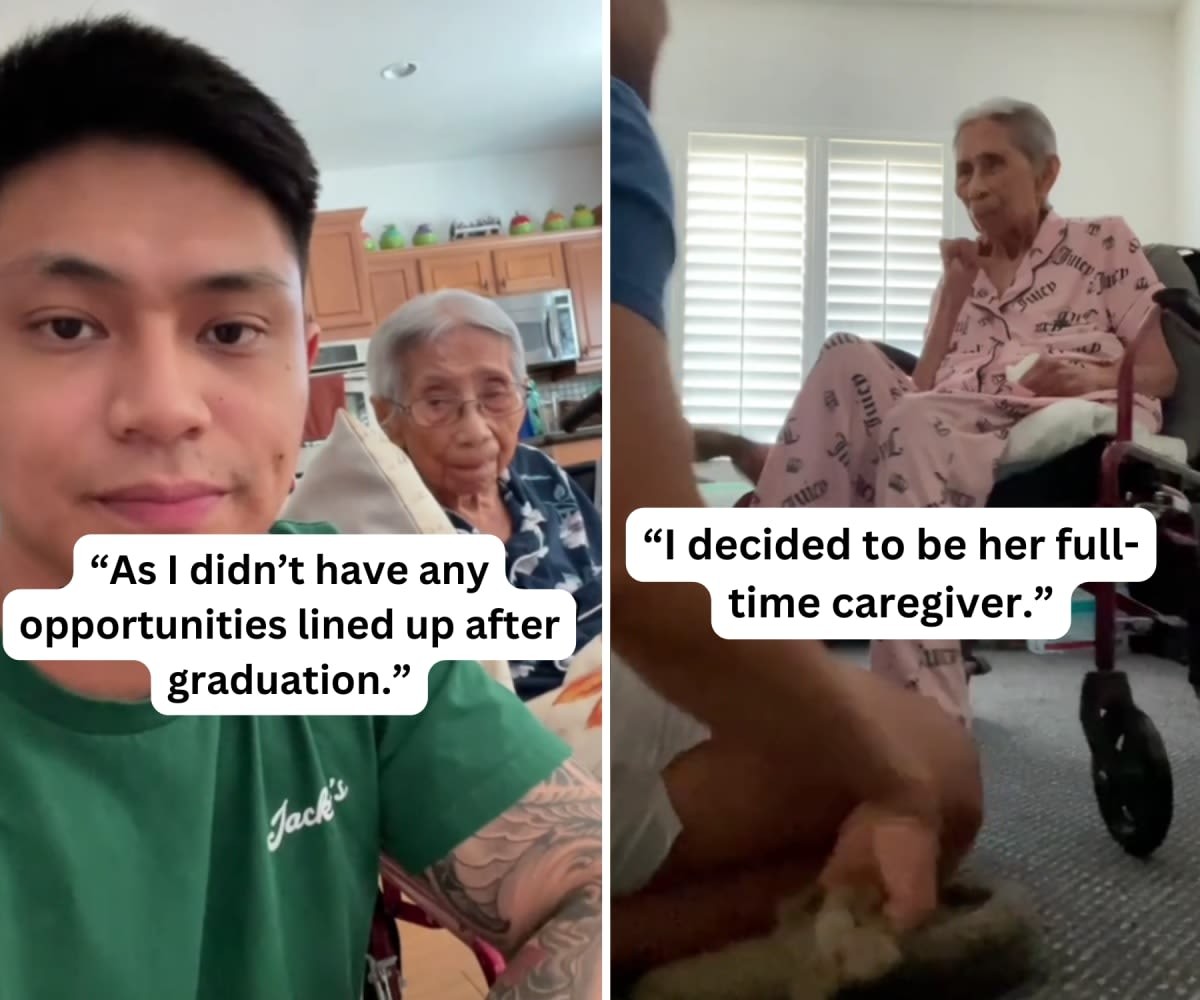
Image Source: TikTok | @firstnamechris

In one of the videos, the creator also shared that every time he posts something without his grandma, he gets comments asking where she is and if she’s okay. He continues to say that if people see him taking care of her, they feel a special connection with her. The creator also shared that whenever his grandma is not featured in his videos, he is making time for himself, an essential part of caregiving. He also expressed that he has a really supportive family that makes all of it possible. Along with the collective and the TikTok account, Punsalan gets to share memories with his grandma apart from the caregiving and cherish those memories for a long time to come. The account also encourages people to spend time with their grandparents and forge a strong bond with them. It might also help other primary caregivers feel appreciated and represented in a way.


  • 9-year-old girl asks Steph Curry why his shoes aren’t in girls’ sizes. The response was perfect.
    Photo credit: Wikicommons(L) A young girl's letter to Steph Curry asking about women's shoe sizes; (R) Steph Curry.
    ,

    9-year-old girl asks Steph Curry why his shoes aren’t in girls’ sizes. The response was perfect.

    “… it seems unfair that the shoes are only in the boys,” Riley Morrison wrote, starting a chain reaction of positive change.

    Nine-year-old Riley Morrison from Napa, California is a huge basketball fan. She roots for the Golden State Warriors and her favorite player is four-time NBA champion Steph Curry. Morrison loves to play basketball so she went online to pick up a pair of Curry’s Under Armour Curry 5 shoes, but there weren’t any available in the girls’ section of the site.

    But instead of resigning herself to the fact she wouldn’t be able to drive the lane in a sweet pair of Curry 5’s, she wrote a letter to the man himself. Her father posted it on social media:

    “My name is Riley (just like your daughter), I’m 9 years old from Napa, California. I am a big fan of yours. I enjoy going to Warriors games with my dad. I asked my dad to buy me the new Curry 5’s because I’m starting a new basketball season. My dad and I visited the Under Armour website and were disappointed to see that there were no Curry 5’s for sale under the girls section. However, they did have them for sale under the boy’s section, even to customize. I know you support girl athletes because you have two daughters and you host an all girls basketball camp. I hope you can work with Under Armour to change this because girls want to rock the Curry 5’s too.”

    “I wanted to write the letter because it seems unfair that the shoes are only in the boys’ section and not in the girls’ section,” Riley told Teen Vogue. “I wanted to help make things equal for all girls, because girls play basketball, too.”

    The letter got to Curry and he gave an amazing response on X (formerly Twitter).

    Many might be surprised that a megastar like Curry took a nine-year-old’s letter seriously, but he’s long been a vocal supporter of women’s issues.

    That August, Curry wrote an empowering letter that was published in The Player’s Tribune where he discussed closing the gender pay gap, hosting his first all-girls basketball camp, and what he’s learned from raising two daughters.

    In the essay he shared a powerful lesson his mother taught him. “Always stay listening to women to always stay believing in women, and — when it comes to anyone’s expectations for women — to always stay challenging the idea of what’s right,” he wrote.

    Curry clearly practices what he preaches because when a nine-year-old girl spoke up, he was all ears.

    Steph Curry and Under Armour didn’t just fix the girls’ sizing issue, they launched a special edition Curry 6 “United We Win” co-designed by Riley, created a $30K annual scholarship for girls, and shifted to unisex sizing across Curry Brand shoes.

    Since then, Curry has stayed active in promoting gender equity: he’s hosted girls’ camps, added girls to his elite training programs, mentored players like Azzi Fudd, and launched the Curry Family Women’s Athletics Initiative to fund 200+ scholarships at Davidson College.

    Riley and Steph bumped into each other at an event where they caught up and took photos. She is now a high school athlete at Vintage High School in Napa, still playing basketball. And yes, still rocking Currys.

    This article originally appeared seven years ago. It has been updated.

  • Licensed therapist shares 6 signs you’re doing a lot better than you think you are
    Photo credit: CanvaA woman in quiet contemplation.

    For many people, it’s easy to overlook progress because it often lacks clear milestones. There can be increased anxiety and stress from feeling like they’re still catching up or even falling farther behind.

    In a recent Instagram post, licensed therapist Jeffrey Meltzer points out six signs that people are doing better than they think. He breaks down a pattern of achievements that tend to be easily missed. How individuals interpret their past, how they presently handle their relationships, and even asking simple questions, reveal a very different story about where they’re at in their lives and where they’re going.

    Surviving the unsurvivable

    Meltzer begins, “You’ve survived everything that once felt unsurvivable. Every hard season, every moment you thought you wouldn’t get through. You did. That is no small feat. Your brain forgets those victories the moment they pass, but they still count.”

    Learning how to cope with life isn’t just about “toughness.” Resilience is a measurable, multi-layered process tied to effective coping strategies. A 2025 study in Psychology Today points out that rising above adversity isn’t the simple solution. Having support systems that function well enough means you don’t have to.

    Becoming what we desperately want

    “You’ve changed in ways you once desperately wanted. Think back to who you were three or five years ago. Some of the growth you desperately wanted back then, you’re living it now.” Meltzer adds, “However, your brain likes to move the goal post without telling you.”

    People constantly face an adjustment to satisfaction because expectations rise over time. A 2024 study in Springer Nature Link explored the hedonic treadmill. Even after massive achievements, the boost of happiness doesn’t last as long as people expect.

    personal preference, dislikes, self-awareness, secure attachment
    She doesn’t like it.
    Photo credit Canva

    Knowing what we don’t like

    “You know what you don’t want.” Meltzer continues, “That might sound like a consolation prize, but it’s actually hard-earned clarity. A lot of people waste years chasing the wrong things. But knowing what drains you, what doesn’t serve you, what you won’t settle for anymore, that’s actual progress.”

    Psychology emphasizes that self-awareness leads to better behavior and stronger emotional regulation. A 2023 review in the Annual Review of Organizational Psychology and Organizational Behavior found that this process brings a clearer sense of who we are and who we are becoming.

    An easy relationship to navigate

    “You have at least one relationship that feels easy. You’re at least one person that doesn’t require a performance from you. Someone who you can be a little bit of a mess around. You don’t need to be perfect around them, and it feels easy.” Meltzer explains the value, saying, “That kind of connection is rarer than people like to admit.”

    Strong interpersonal relationships are key predictors of mental health and well-being. A 2024 study in the National Library of Medicine found that secure attachment helps people experience fewer of the symptoms associated with anxiety and depression. Even one stable, supportive relationship is linked to long-term well-being.

    neuroplasticity, achievement, growth mindset, motivation
    Feelings of achievement.
    Photo credit Canva

    Learning something new

    “You’ve learned something in the last year.” Meltzer explains, “Whether it’s a skill, a perspective, a hard lesson, all of it counts. Remember, a brain that’s still learning is a brain that’s still growing.”

    The human brain remains capable of learning and adapting throughout a person’s life. A 2025 study published in MDPI found that brain neuroplasticity allows traits such as emotional regulation and awareness to be reorganized and improved over time.

    Asking better questions

    Lastly, Meltzer offers, “You’re asking the right questions. The fact that you’re reflecting and trying to see your life more clearly, that’s a sign of someone who hasn’t given up.”

    Believing that change is possible shapes emotional recovery and motivation. A 2025 study in Springer Nature Link showed that a growth mindset leads to better psychological outcomes and improves a person’s ability to adapt to new situations.

    appreciation, gratitude, reflection, mental health
    A woman enjoys the sunlight on her face.
    Photo credit Canva

    People are doing better than they think

    These six signs shared by Meltzer helped viewers understand that they’re doing better than they think. As people flooded the comment section, some seemed to struggle with #4, having that one reliable friend. Still, most were just appreciative.

    “This made me feel so much better”

    “i don’t have number 4 unless my dog counts”

    “all I need now is the 4th one, I’m working towards it by socializing more it’s challenging but I’m learning”

    “I’m winning despite feeling defeated”

    “I needed this right now.”

    “Does Mom count for #4?”

    “I’ll give myself credit, it been rough recently, 5 out of 6 is better than I expected”

    “This made me remember how far I have become even tho I still work on things, it’s so good to get these reminders this genuinely made my day”

    Meltzer tries to help people reframe their perspectives. Often, things look like they’re “not enough” even though the actual evidence suggests otherwise. Psychology reveals growth is incremental and easy to miss. The fact that a person wants to do better is the clearest sign that personal growth is already underway.

  • Career expert shares polite but effective way to reclaim credit when someone steals your idea
    Photo credit: CanvaYou can get the credit you deserve without looking defensive.

    Having your ideas stolen or not getting proper credit for your work brings on a terrible and sadly common feeling. It puts you in an awkward spot because you deserve the recognition or reward, but don’t want to come off as weak, defensive, or needy when trying to correct and reclaim what was yours. It’s frustrating. Fortunately, a former lawyer and career expert has a great solution.

    On social media, former attorney and business professional Dr. Shadé Zahrai shared a way to reclaim your idea with poise. It’s a great option for those times when you share an idea with a group that gets mostly ignored…until someone else gets the credit for repeating it.

    @shadezahrai

    How to reclaim credit for your idea when it was initially ignored.

    ♬ original sound – Dr. Shadé Zahrai

    How to reclaim credit for your idea and work

    First, she recommends “building forward” in the conversation. This means you continue going with the flow of the conversation, building onto it and transitioning while re-anchoring the idea to you without sounding territorial. 

    Next, Zahrai recommends becoming curious. Simply asking the person who took your idea where they came up with it allows them the opportunity to naturally return credit to you without being confrontational. It also provides space for them to add input or ideas onto your own. As a bonus, asking these types of questions can help others who have been overshadowed reclaim credit.

    Examples of how it can work for you

    Let’s say that colleague or friend, whether intentionally or not, repeated your idea. Let’s call that person “Hank.” Examples of Zahrai’s technique could look something like:

    – “Hank, it’s great to see we’re aligned with what I shared earlier. Maybe in addition we could…”

    – “You know, Hank, that’s what I brought up before and I’m glad we’re thinking alike. How about this…”

    – “That’s like I was saying earlier, Hank, what drew you to the same conclusion? Perhaps we can..”

    – “Great suggestion, Hank! That’s what I was saying before. Where did you come around to that idea? Maybe a way to extend that is…”

    – “Thank you, Hank, this is what I was talking about last week. Since you’re down for that, maybe we should..”

    – “Good thought, Hank. It sounds like what Lilith was talking about earlier. We could add to her idea by…”

    It’s a good method to get the credit you deserve without causing conflict. After all, the “Hank” in your situation could have accidentally taken your idea or unintentionally left you out. Plus, the focus on the conversation is now on your idea rather than you having the idea.

    @graceforpersonalityhires

    Replying to @Kristel Parsons you absolutely do not call it out now or later. You take note of it and use it as information to guide your steps and what you want out of a career #careeradvice #softskills

    ♬ original sound – grace mccarrick

    Other things to consider

    It’s also important to take a step back to see if your idea is actually stolen. For example, if your boss is taking credit for an idea you had, it may be smarter to let it go, especially if the idea was formed during a think-tank session at work. There may also be a clause in your job contract stating that any idea made at work is the company’s anyway, so you wouldn’t be credited in the first place.

    That said, there are ways to make your mark on your idea and possibly avoid the awkward credit conversation entirely. If you had the idea before a meeting or any form of public announcement, document it in some way via an email, written presentation, or other work with your name on it. Another way is to lead with your idea in conversation, and follow it up with execution methods that include your colleagues or friends.

    This means an idea like “Let’s order pizza from Franco’s” could be “Here’s my idea. Let’s order pizza from Franco’s. I have a coupon we can use, it’s near Aaron’s apartment, and it has gluten-free options for Linda.” The more specific and detailed the idea, the more likely others will remember that the idea was yours.

    A good idea is a good idea, and acknowledging your involvement matters.

Explore More Stories

Art

Why Michelangelo’s ‘Last Judgment’ endures

Ideas

Seeing women govern encourages support for women in politics – with no apparent backlash among men

Well-being

‘Bouncing back’ is a myth – resilience means integrating hard experiences into your life story, not ignoring them

Health

Trauma patients recover faster when medical teams know each other well, new study finds