This article originally appeared on Common Dreams on 3.3.21. You can read it here.


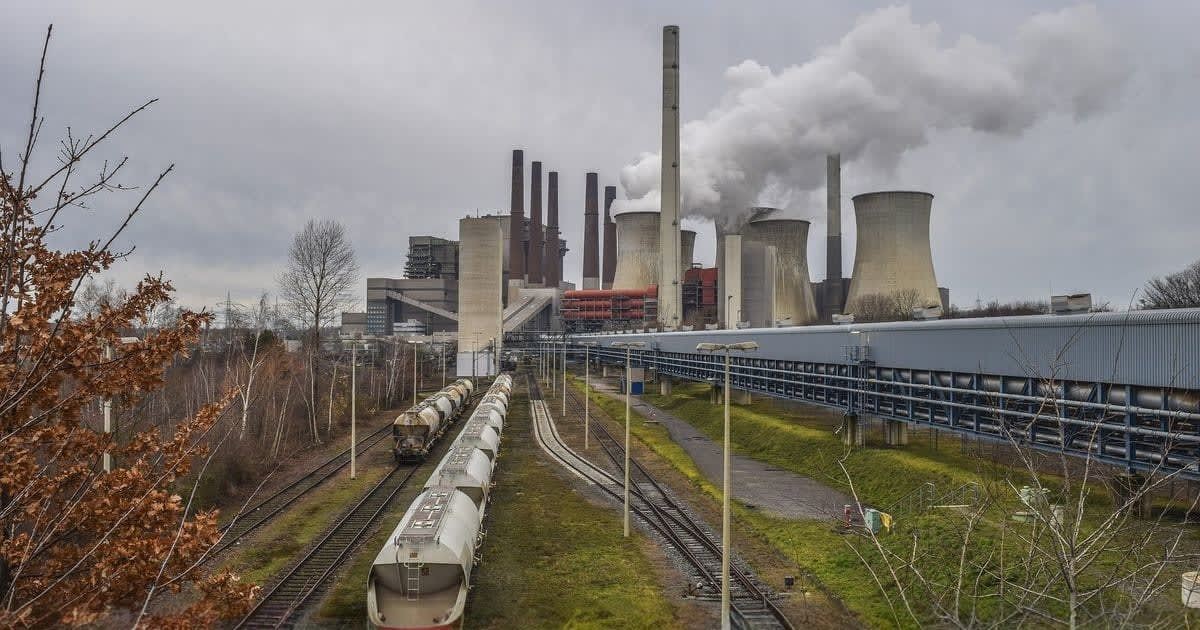
Emphasizing that the world still has a “fighting chance” to limit global warming with immediate and ambitious climate action, United Nations Secretary-General António Guterres on Tuesday urged governments and the private sector to cancel all planned coal projects, cease financing for coal-fired power plants, and opt instead to support a just transition by investing in renewable energy.

“Once upon a time, coal brought cheap electricity to entire regions and vital jobs to communities,” Guterres said in a video message at the virtual meeting of the Powering Past Coal Alliance. “Those days are gone.”


“Phasing out coal from the electricity sector is the single most important step to get in line with the 1.5 degree goal,” Guterres continued, referring to the policy objective of preventing planetary temperatures from rising more than 1.5 °C above pre-industrial levels. “Global coal use in electricity generation must fall by 80% below 2010 levels by 2030,” he added.

According to Guterres, meeting the 1.5°C climate target this decade requires eliminating “the dirtiest, most polluting and, yes, more and more costly fossil fuel from our power sectors.”

In his address, the U.N. chief outlined three steps that public authorities and companies must take to “end the deadly addiction to coal.”

  • Cancel all global coal projects in the pipeline;
  • End the international financing of coal plants and shift investment to renewable energy projects; and
  • Jump-start a global effort to finally organize a just transition.

Guterres called on the 37 members of the Organization for Economic Cooperation and Development (OECD)—a group of relatively rich countries with a greater historical responsibility for extracting fossil fuels and emitting the greenhouse gasses that are causing deadly pollution and destroying the climate—to “commit to phasing out coal” by 2030, while urging non-OECD countries to do so by 2040.

Urging an end to global coal financing, Guterres called on all banks and investors to redirect their funds into the renewable energy sector. “All multilateral and public banks—as well as investors in commercial banks or pension funds—to shift their investments now in the new economy of renewable energy.”

While stressing that “the transition from coal to renewable[s] will result in the net creation of millions of jobs by 2030,” Guterres acknowledged that “the impact on regional and local levels will be varied.”

“We have a collective and urgent responsibility to address the serious challenges that come with the speed and scale of the transition,” he continued. “The needs of coal communities must be recognized, and concrete solutions must be provided at a very local level.”

The U.N. chief urged “all countries to embrace the International Labor Organization’s guidelines for a just transition and adopt them as minimum standard to ensure progress on decent work for all.”

The coronavirus pandemic, Guterres noted, has “accelerated” the decline in “coal’s economic viability,” while recovery plans provide an opportunity to bring about a green transformation of the world’s infrastructure.

In many parts of the world, a just transition dovetails with guaranteeing universal access to energy, said Damilola Ogunbiyi, CEO and special representative of the secretary-general for Sustainable Energy for All.

Ogunbiyi told conference attendees that almost 800 million people worldwide still lack access to basic electricity, while 2.8 billion are without clean cooking fuels.

“Right now, we’re at a crossroads where people do want to recover better, but they are looking for the best opportunities to do that,” she said. “And we’re emphasizing investments in sustainable energy to spur economic development, create new jobs, and give opportunities to fulfill the full potential.”

More on Good.is

California officials calmly shut down Trump’s climate change denial …

Whales can help climate change – GOOD

Climate change is unearthing artifacts from melting glaciers – GOOD

  • Beyond birds and mice, free‑ranging cats eat a surprising number of insects
    Photo credit: SKashkin/iStock / Getty Images PlusDoes that look tasty?

    It’s pretty commonly known, and not very startling, that free-ranging cats eat birds and small rodents. But the degree to which they eat insects might surprise you.

    We are biologists who for many years have been trying to figure out what feral or outdoor-roaming pet cats eat outside.

    When domesticated cats – Felis catus – live freely in the wild or are allowed to hunt outside the homes where their owners live, they are an invasive species, which live in every ecosystem of the world except the continent of Antarctica. We wanted to know all of the species they eat – and to what degree free-ranging cats are eating endangered or threatened species.

    Examining reams of research

    Over the past two decades, we have evaluated hundreds of scientific findings, including searching through Google Scholar and Web of Science using the keywords “cat predation,” “feral cat,” “cat diet” and “Felis catus.” For each item we found, whether peer-reviewed or not, we evaluated whether it contained conclusive evidence of cat diet or predation. We also reviewed each one’s reference section for additional unique articles or databases pertaining to cat diet and predation, and included those in our search.

    Overall, we identified 533 unique publications – books, journal articles, theses and agency reports – that reported specific animal species consumed by cats. Cats’ plant-eating habits are occasionally, but haphazardly, noted in studies, so we did not include them in our analysis.

    Our initial work focused on an overall assessment of what free-ranging cats eat around the world. Published in 2023, this paper analyzed the 533 studies on cat diet or predation events published over more than a century and found that cats ate nearly 2,100 different species of animals, including invertebrates.

    Of those 2,100, the International Union for Conservation of Nature’s Red List of Threatened Species listed 347 as “near threatened,” “vulnerable,” “endangered,” “critically endangered” or “extinct” in 2023. Some of the species went extinct during the many decades covered by the data.

    Most of the species cats eat are not in danger

    Insects and the like

    Most of the species cats ate were vertebrates – mostly birds, followed by mammals and reptiles. But the data also indicated that at least 7% of the species cats eat are insects and other invertebrates, particularly beetles, and less frequently crustaceans, arachnids, centipedes, snails and slugs, and millipedes.

    Many of the cat studies we reviewed did not report on how many individuals of a given species cats ate, so it was unclear what the total amount of insects was or how many calories cats are deriving from insects.

    Invertebrates make up more than 70% of all terrestrial animal species and are important pollinators, predators and herbivores in virtually every nonmarine ecosystem. Many invertebrates are in decline globally due to urbanization, habitat destruction, increases in both light and pesticide pollution, and climate change. So we dug deeper into the data to understand what invertebrates cats are eating.

    While a little more than one-third of all the studies we analyzed included invertebrates as part of cats’ diet, most of those failed to identify specific species of invertebrates. But we were able to find identifications of 148 invertebrate species.

    Of those, two are considered endangered by the International Union for Conservation of Nature: the Aldabran grasshopper (Pternoscirtus aldabrae) in Seychelles and the Tasmanian giant freshwater crayfish (Astacopsis gouldi), which can grow up to 13 pounds (6 kilograms). Two others are considered vulnerable: wētāpunga (Deinacrida heteracantha), an insect native to New Zealand that can be about the size of a mouse, and the common yabby (Cherax destructor), a freshwater crayfish native to southeastern Australia. One other, the Canary Islands horned beetle (Arhopalus pinetorum), is listed as “near threatened.”

    A cat licks its lips while crouching over a dead mouse.
    Not surprising: Cat eats mouse. Julian Stratenschulte/picture alliance via Getty Images

    Effects on populations

    We have not found formal research evaluating how cats’ eating habits affect invertebrate populations. And for many species, they are likely not as significant a factor as wide-scale pesticide use.

    But it’s possible that cats could be significant contributors to the deaths of rare species or in specific locations.

    Cats require a large amount of protein, as much as one-third of their daily diet, and invertebrates are good sources of protein.

    In many places, invertebrates provide an easy source of food. Whether in an urban backyard or on a remote island, cats are unlikely to turn a blind eye to available prey. And some cats may find it entertaining to chase, catch and eat insects even if they don’t need their nutrition.

    A challenge of researching this question is that many invertebrates are relatively small, which makes direct observation in the field harder and can require more analytical approaches in the lab. And they have soft bodies, without distinguishing characteristics that could be easily recognized in scat or stomach contents.

    However, molecular technologies can identify species using trace amounts of DNA left in the environment by animals. Promising new studies are beginning to identify what cats eat by analyzing the DNA found in their stomachs and scat. That research may help explore in even more detail what cats are eating in the outdoors, and how it’s affecting various species and the environment as a whole.

    This article originally appeared on The Conversation. You can read it here.

  • The University of Cambridge found a way to reduce plastic waste and create clean hydrogen energy at the same time
    Photo credit: CanvaPlastic bottles, left, and an airplane.

    The world’s top environmental concerns come down to two basics: reducing waste and creating clean energy. Thanks to researchers at the University of Cambridge, we may be able to tackle both with a single solution.

    Inspired by a previous solar-powered reactor the team created that turned carbon dioxide and plastic waste into fuel and useful chemicals, the researchers developed a new device that uses sunlight to break down plastic into hydrogen.

    “Converting waste streams into valuable products using clean energy sources is…an attractive strategy to address both energy and environmental concerns,” the team wrote in Nature Chemical Engineering.

    How does this device work?

    The reactor is relatively simple compared to others of its kind. The researchers sprayed a light-absorbing material onto a glass panel. They then added a second layer of molecules containing zirconium and cobalt to act as the catalyst for the reaction. All told, the device measures about one square meter and was tested under natural sunlight.

    Under sunlight, the device was able to extract hydrogen from sliced-up plastic bottles. It also extracted hydrogen from glucose and cellulose. This means the device can produce hydrogen from both plastic and plant waste.

    Hit two problems with one device

    This could help reduce a rapidly growing problem. The world produces more than 359 million tons of plastic each year, much of which ends up in landfills. Most modern plastics take 100 to 1,000 years to decompose. Much of the plastic polluting our land and oceans comes from food packaging, including water bottles. This device can turn those plastics into a cleaner fuel source. It could also help address the growing problem of microplastics contaminating drinking water and soil.

    Hydrogen is a powerful fuel for trucks, ships, and airplanes, and demand for it is growing. Because it typically produces only water as a byproduct, it is a highly sought-after source of clean energy. While there are green methods for producing hydrogen using solar and wind power, a significant amount of the world’s hydrogen still comes from natural gas. In other words, while hydrogen itself is a clean source of energy, the way much of it is produced is not.

    Could this device work realistically on a global scale?

    The use of spray coating and relatively simple materials makes this new reactor easier to manufacture.

    “What surprised me was, after all the optimization, just how simple it is,” researcher Ariffin Bin Mohamad Annuar said in a press release. “We just have this huge panel, we spray our catalyst on it, put it into our solution, put it under the sun, and it produces hydrogen and other valuable chemicals just from plastic waste. It’s just simple and scalable.”

    The team says that before they can make the device commercially available, they hope to make it more durable and efficient. Time will tell whether it becomes a solution to both problems as it becomes more widely available.

  • Texas engineers develop a jacket that pulls fresh drinking water out of thin air
    Photo credit: @fascinatingonX/CanvaWearing this jacket could help keep people hydrated.

    For too many, access to clean drinking water is incredibly difficult. According to the World Health Organization, over two billion people live in water-stressed areas due to pollution, climate change, or population growth. However, engineering experts in Texas have developed a possible solution: just put on a jacket.

    The engineers and researchers gathered at the University of Texas at Austin developed a prototype jacket that can pull drinking water out of thin air. The jacket could help anyone frequently in areas where drinkable water is scarce. This could be used recreationally by campers, hikers, and runners—but it could also save lives. Emergency responders, soldiers, and agricultural workers could also collect water for themselves and others simply by wearing it.

    The technology behind the jacket is similar to the materials used in netting for water harvesting of air and fog. This time, however, the idea is to collect water while also being mobile.

    “Water harvesting from air is usually imagined as a stationary device such as a box, a panel or a large sorbent bed,” said Guihua Yu, chair professor of the Cockrell School of Engineering’s Walker Department of Mechanical Engineering and Texas Materials Institute. “Here, we wanted to rethink the form of the technology. If the fabric itself can collect water from air, it opens a new direction for personal and portable water access.”

    How does this jacket collect water?

    The textile used to create the jacket was derived from a device the same team created. That device was a specially engineered hydrogel fabric made from biomass-derived materials. This hydrogel fabric takes moisture from the air and then releases it as water via condensation when it’s heated by sunlight. The water can easily be collected.

    The jacket’s textile collects moisture from the air and funnels it into detachable harvesting units. The units can be placed into a foldable collector piece where they are heated to produce water. The material and system doesn’t just absorb water like other materials. Instead, it actively converts vapor into water while functioning as a piece of protective clothing.

    The jacket is able to produce between 400 to 900 milliliters of drinkable water daily. This is a vast improvement upon other similar inventions that yielded less water and were significantly bulkier to wear. The jacket’s material could collect and produce more water over time and testing, depending on the humidity of the terrain.

    Aside from creating clothing out of the material, the researchers hope to make backpacks, tents, emergency shelters, and other outdoor gear from it. The hope is that this could create more clean water access for disaster response units and everyday people living in water-stressed areas alike.

    How much hydration do you need in the heat?

    Until water-collecting jackets are commercially available, it’s important to have drinkable water nearby at all times, especially during the summer. When out in the heat, the Center for Disease Control recommends having a drink of water before working outdoors. Then drink a cup of water every 15 to 20 minutes. This can help keep your body cool and hydrated to prevent heat stroke. That said, stay alert and stay indoors if there is a heat warning in your area.

Explore More Science Stories

Technology

Texas engineers develop a jacket that pulls fresh drinking water out of thin air

Environment

Kenyan teens create award-winning, affordable car exhaust filters made with corn cobs and algae

Science

The drawer problem: Why so many of us can’t let go of our old electronics, and what we can do about it

Science

How window‑mounted heat pumps can give tenants efficient heating and cooling