Can silence drive us mad? This question arises from a unique room in Minneapolis, where visitors report eerie sensations and disorientation due to its profound silence. They often hear faint ringing in their ears, and so far, no one has lasted more than 45 minutes.
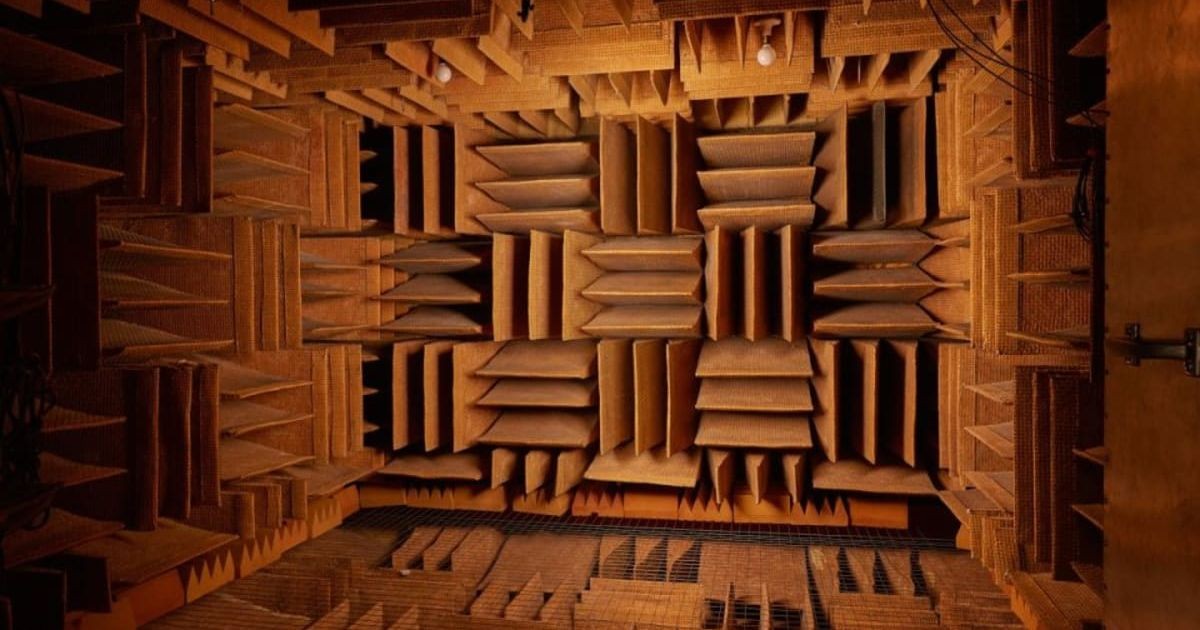
Holding the Guinness World Record for the quietest place on Earth, the anechoic test chamber at Orfield Laboratories has a background noise level of -24.9 decibels. The human audible range is from zero to 120 decibels, so a sound of negative decibels is inaudible by humans.
An anechoic chamber, meaning “no echo,” achieves profound silence through its design. Fiberglass wedges coat the walls, floors, and ceilings, absorbing any internal sounds, while thick layers of brick and steel reinforce the soundproofing. This meticulous design guarantees complete isolation from external noise.
The maximum someone has stayed inside this chamber is 45 minutes. The room is so quiet that a person inside it will hear their heartbeats, even the sounds of their organs, Steven Orfield, the lab’s founder, told Hearing Aid Know. “We challenge people to sit in the chamber in the dark – one person stayed in there for 45 minutes. When it’s quiet, ears will adapt. The quieter the room, the more things you hear,” he said, adding, “In the anechoic chamber, you become the sound.”
But the room isn’t designed for the sake of distressing or tormenting people. NASA regularly sends astronauts here to help them practice adaptability to the silence of space. Many people also visit the room to meditate, Orfield told CBS.
Yet, for most people, the room offers an eerie and unsettling experience, as it can disrupt one’s sense of balance and orientation. “How you orient yourself is through sounds you hear when you walk. In the anechoic chamber, you don’t have any cues,” Orfield said. “You take away the perceptual cues that allow you to balance and maneuver. If you’re in there for half an hour, you have to be in a chair.”
Like Orfield Laboratories, the Microsoft headquarters in Redmond, Washington is also an anechoic place. It is the previous Guinness World Record holder for being the “quietest place on earth.” The room is designed in an onion-like structure that isolates it from the rest of the building and the outside world. Here too, people cannot stand the silence for too long, not more than 55 minutes to be precise.
Explaining to CNN, Hundraj Gopal at Microsoft said that in the real world, our ears are constantly subject to some level of sound, so there is always some air pressure present on the ear drums. But when someone enters the anechoic room, this air pressure zips away due to the total absence of sound reflections. In a room like this, there is no interference of noise.
Ideally, silence is intended to pacify and soothe; however, its unsettling effect in these rooms is both uncanny and intriguing. For centuries, philosophers and poets have written that “silence is not empty,” and these anechoic rooms seem to provide evidence of this.
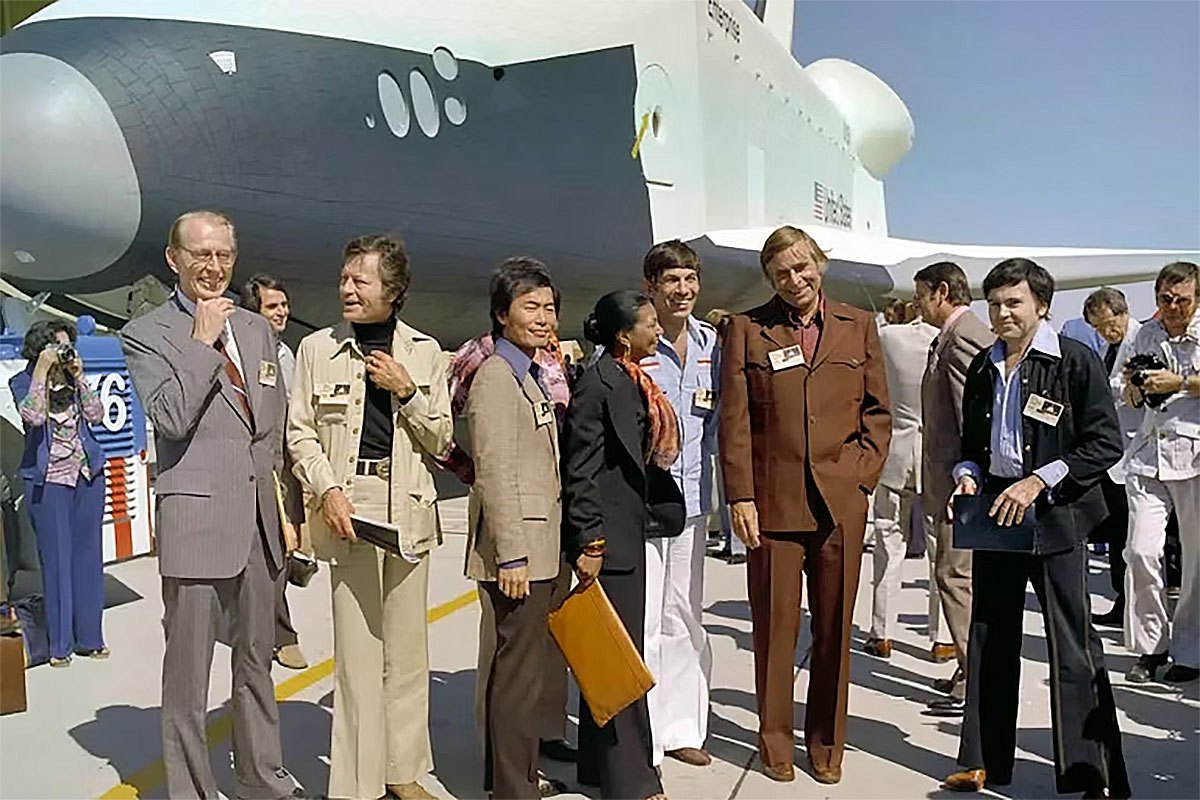
Photo credit: NASA – Gene Roddenberry, second from right, and Star Trek cast members visit the Space Shuttle Enterprise in 1976 with NASA Administrator James C. Fletcher, left. NASA
“Star Trek” is also unusual for its close connections to NASA, both in its storylines and in the real world. Decades of “Star Trek” adventures have ignited a love of spaceflight across generations, inspiring many who now work as space professionals.
I’m a cultural anthropologist who studies why people work in space exploration. I’ve interviewed astronomers, engineers, flight surgeons and astronauts. Although I focus more on science fact than science fiction, I’ve noticed in my interviews how much the two threads intertwine.
Because of this, I found myself at a “Star Trek” convention in early August 2026, just ahead of the show’s 60th anniversary on Sept. 8. The convention participants included people of widely different ages, appearances and identities. I was struck by just how much those gathered reflected the series’ values.
When NASA met Star Trek
In the original series, the show’s creator, Gene Roddenberry, came up with a philosophy held by the Vulcan people. He called it IDIC: infinite diversity in infinite combinations. It suggests that an ideal society is made up of many different types, all working together.
It represented Roddenberry’s rejection of conformity. It also explained why the Enterprise crew included a Russian alongside Americans, and Black, Japanese and female characters all in positions of responsibility and authority. While many ordinary viewers absorbed “Star Trek’s” lessons of camaraderie and acceptance, those involved in real space exploration also took notice.
The cast of ‘Star Trek: The Original Series’ included a diverse crew of characters. Walters Art Museum
Roddenberry established relationships with NASA personnel in the early days of his series. NASA provided photographs of planetary bodies and advice about the realities of spaceflight, as well as stock footage and access to certain NASA facilities.
Leonard Nimoy, who played the popular character Mr. Spock, was even brought to the National Space Club’s Goddard Memorial Dinner in 1967 as a special guest. Then-Vice President Hubert Humphrey gave the keynote speech. Afterward, though, it was Nimoy, not Humphrey, who found himself surrounded by the club’s members, including NASA employees, aerospace engineers, members of the military and government officials, all eager to meet the actor portraying the starship Enterprise’s first officer.
The relationship between NASA and “Star Trek” benefited the show by legitimizing the series. It also helped NASA by publicizing its work and depicting a positive future where its efforts to land on the Moon would eventually lead to visits to distant worlds – and amazing scientific advances like the show’s transporter and warp drive.
In 1977, actress Nichelle Nichols, who portrayed communications officer Uhura, was hired to recruit for NASA. The space agency had expanded its pool of astronauts to include scientists and other “mission specialists.” For the first time, an astronaut no longer needed to be a pilot to participate in a space mission.
NASA selected its first Black astronaut candidates and its first female astronaut candidates in 1978. While this move toward inclusivity may not have been directly influenced by infinite diversity in infinite combinations, it was compatible with it. “Star Trek” inspired many of NASA’s future employees. In interviews for my book “The Ultraview Effect,” a quarter of the space professionals I spoke with mentioned “Star Trek” as an influence.
Nichelle Nichols sits in the space shuttle simulator at the Johnson Space Center in March 1977. NASA
An Apollo astronaut I interviewed, for instance, said he believed humans would eventually “be able to go anywhere in the universe, just like ‘Star Trek.’”
A young engineer who had grown up in the 1990s told me his motivation came from the “opening line of ‘Star Trek’… to explore strange new worlds.”
A space shuttle mission specialist emphasized Roddenberry’s decision to make the starship crew multicultural, explaining: “Today I look at the diversity of it … he was setting the stage back when it wasn’t acceptable [in order] to be acceptable!”
A changing future
That influence has accompanied a changing astronaut corps.
Both the 2025 astronaut class, which for the first time included more women than men, and the crew of Artemis II, which sent the first woman, first Black astronaut and first Canadian on a lunar mission, resemble the future that “Star Trek” imagined.
The “Star Trek” fans at the convention I attended were even more diverse. It was clear to me that Roddenberry’s “infinite diversity in infinite combinations” isn’t just a concept from the series, but something that has become a defining value of contemporary Trek fandom.
NASA’s Spitzer Space Telescope captured a region of the galaxy that looks a little like the USS Enterprise, which NASA highlighted in a news release in 2016. NASA/JPL-Caltech
One such fan, Bjo Trimble, holds special status. She is credited with “saving ‘Star Trek’” when the series was almost canceled in 1968 after two seasons. Wearing a rainbow “IDIC” pin, she signed autographs at the SyFy Sistas booth, where T-shirts featuring Black “Star Trek” icons such as Uhura and Benjamin Sisko were on display.
However, with the Trump administration’s recent orders to dismantle all of NASA’s diversity, equity, inclusion and accessibility programs and policies, institutional support for “Star Trek’s” vision of acceptance and inclusivity, which flourishes in its fan base, is being undone. This rollback occurred just as NASA’s crews were reaching new milestones in representing the diverse future that “Star Trek” has encouraged for decades.
Sixty years later, some of the diverse future that “Star Trek” imagined has become part of everyday spaceflight. Other parts of that ideal remain unfinished.
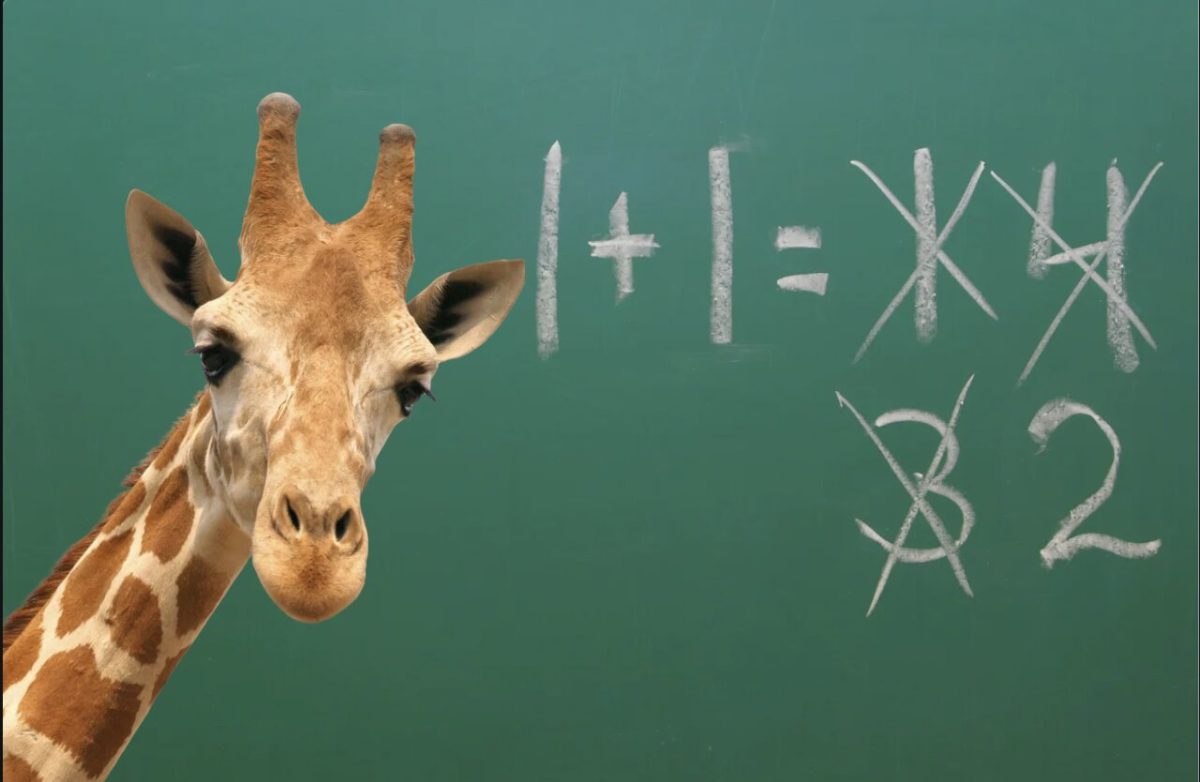
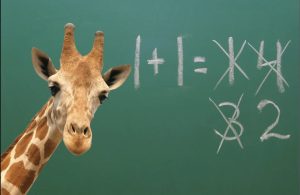
A group of researchers from the University of Leipzig, the Max Planck Institute for Evolutionary Anthropology, and the University of Barcelona published their study observing four giraffes at the Barcelona Zoo. The experiment involved the giraffes observing containers that had different amounts of carrot pieces inside.
The researchers showed each giraffe the two yellow containers and the amount of carrots within each one. After a few seconds, they closed the containers, keeping the carrots out of sight. They then showed each giraffe a green container which had extra carrots inside. Researchers took the carrot pieces from the green container and placed them into one of the closed yellow containers. They then let each giraffe independently choose which of the two closed yellow containers they preferred, without them seeing the total number of carrot pieces within each box.
The results found the giraffes would choose the container that had the most carrot pieces around 68% of the time. This suggests to the scientists that the giraffes were mentally adding the carrots up in each container before making their choice. After all, there have been past studies suggesting that other hoofed mammals, such as horses, had similar capability of basic quantity tracking.
The researchers did the experiment again. Only this time they subtracted the amount of carrots in each container. The giraffes were mostly unsuccessful at finding the container with the most pieces. So while giraffes showed signs of knowing addition, they don’t quite process all forms of arithmetic.
Math = Survival
Scientists believe that this understanding of addition helped giraffes survive in the wild. They cite that acacia trees, a dietary staple for wild giraffes, can be spread far apart in Africa. Being able to figure out which area has the most trees and the most leaves can help them decide where to graze next.
Giraffes also live in flexible groups that often change in size. One grouping can mix in with another group and then branch off or away. This means that the giraffes often have to keep track of those currently within their group and surroundings to survive.
Giraffes are just the latest animal species known to have some form of mathematical skill. Chimpanzees displayed similar abilities to count as giraffes in a similar experiment that involved them picking the bowl with the most chocolate pieces rather than carrots. Chickens and black bears also showed aptitude in quantity tracking, too.
Scientists theorize that most of the animals that can do this basic math through evolutionary survival. After all, the animal that can deduce where more food is tends to live longer.
One species that displays remarkable mathematical ability are Tunisian desert ants. An observation of their navigational skills of finding their way to food and back to their nest suggests they use the sun as a compass in combination with mentally keeping track of the number of steps they take in a three-dimensional space. In short, these desert ants possess basic geometric and trigonometry skills.
Childhood activities like playing house, superheroes and villains, the floor is lava, and the classic tea party all involve imagination. We create stories and worlds with rules and roles to play.
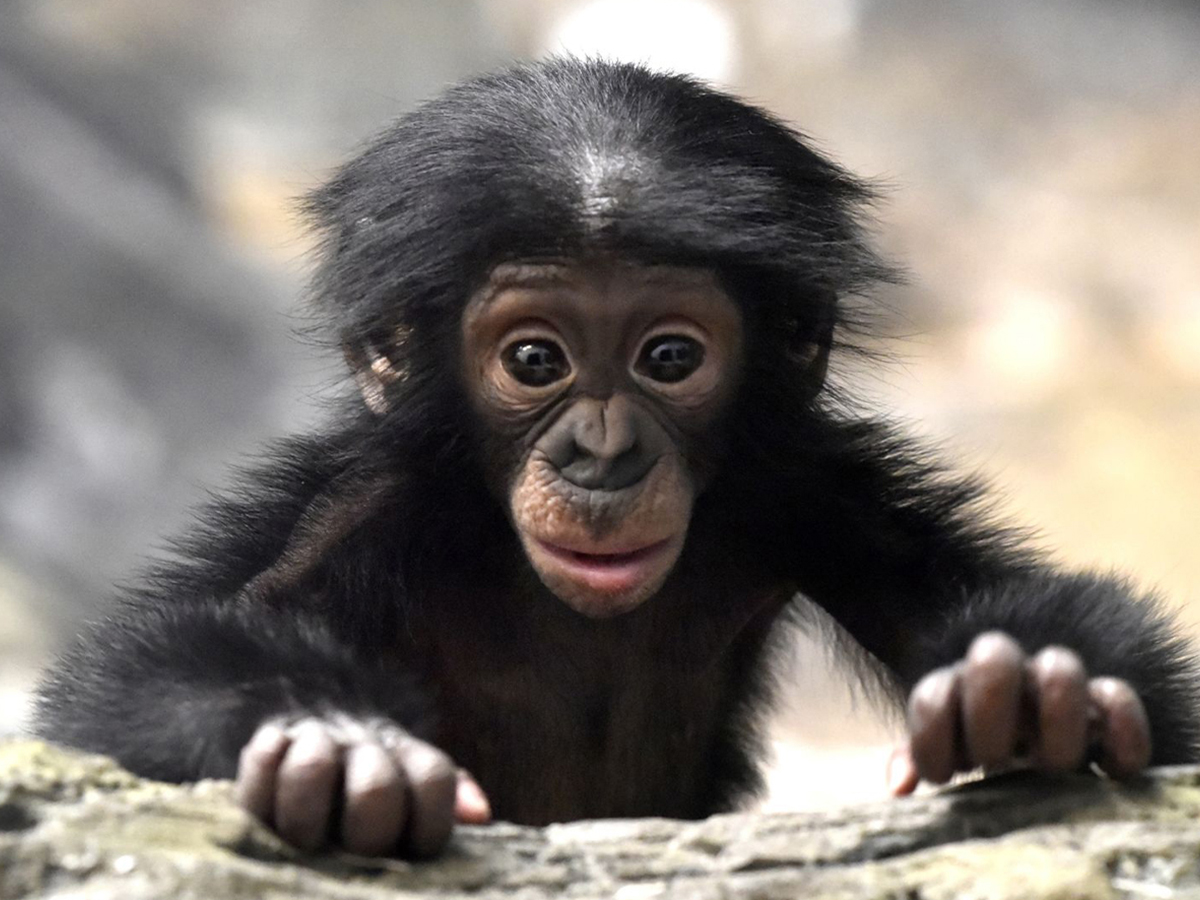
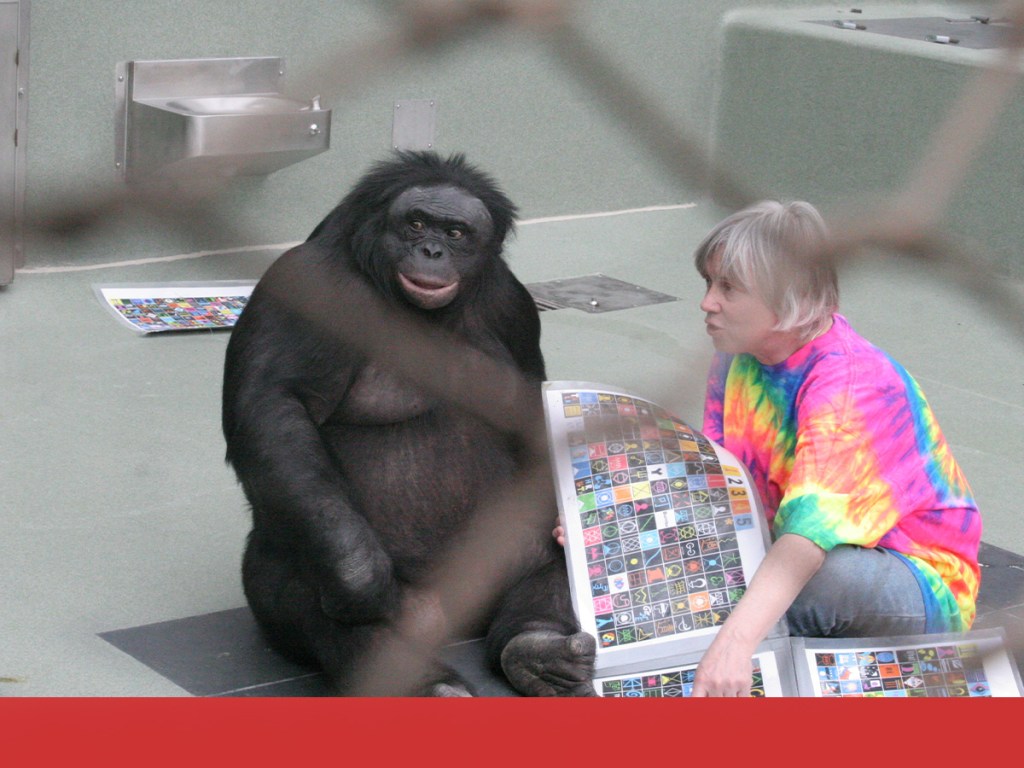
Humans want to believe that our creativity and art make us unique. But a bonobo named Kanzi was part of research that has scientists wondering how different we really are. In three evolving experiments, Kanzi correctly identified pretend objects, demonstrating that he could understand and engage in make-believe situations.
Kanzi associates words and symbols with Sue Savage-Rumbaugh. Photo by William H. Calvin, Phd/ Wikimedia Commons (Cropped)
Kanzi has a make-believe tea party
Researchers developed a simple setup using cups, a pitcher, and actions that began as real pouring and gradually shifted into pretend play. The first experiment used real liquids. The second had a combination of real and pretend liquids. The final scenario had no real liquids and relied entirely on imagination.
The scientists used gestures and make-believe to see if Kanzi would react differently depending on what he was being shown. He didn’t react the same way in each setup. His responses showed he was paying attention to more than just the objects, but also to the way the situation was presented.
Kanzi participates in an indoor test. Photo by William H. Calvin, Phd/ Wikimedia Commons (Cropped)
Animals engaging in fantasy
The experiment revealed that non-human animals can understand and follow along with imaginary situations.
“[It] shows that animals are capable of understanding pretence in a controlled experimental setting, which hadn’t been done before,” Dr. Amalia Bastos, first author of the research from the University of St Andrews, told The Guardian.
Scientists involved in the research are careful about how they describe it. They don’t treat it as proof that bonobos imagine things the same way humans do. Instead, they suggest that animals are capable of responding to situations where meaning is implied rather than directly shown.
Albert Einstein, one of the greatest scientific minds in history, is often credited with the idea that logic gets you from A to B, but imagination can take you everywhere. This study suggests that the more we learn about animals, the more it seems the difference between us may not be as great as we once thought.
Developmental research credits early social and cognitive growth in human children to imagining situations that aren’t physically present. A 2024 meta-analysis found that make-believe is not just entertainment but also directly linked to social understanding and real-world interpretation.
Researchers now describe animal play as more flexible than once believed. A 2025 study of ravens revealed that play included the manipulation of sticks, stones, and other items, suggesting social awareness and responsiveness to context rather than simple instinctive behavior.
Play and imagination may be versatile behaviors no longer seen as uniquely human traits. A broader cognitive toolkit shared across multiple species suggests the gap between humans and animals may be smaller than it once seemed. Things we’ve long believed to be uniquely human may instead exist along a spectrum of abilities expressed in different ways.