Music has long been appreciated as a powerful tool capable of strongly influencing emotional behavior. Scientists have recently discovered that listening to specific types of music shows measurable changes in brainwave activity. This provides evidence of a biological mechanism by which music can restore a mentally fatigued mind.
The restorative power of music on mental fatigue
A 2025 study on the effects of music on mental fatigue was published in Applied Psychophysiology and Biofeedback. The study placed 30 university students into two groups—the control group and the music group—and found that those in the music group reported a substantially greater reduction in fatigue than those tested in silence.
After placing electrodes on the scalp to record brainwaves, participants performed a demanding task, which decreased their alpha peak frequency. This frequency marker of alertness and cognitive efficiency at lower levels is a fatigue indicator. Participants who listened to a genre of relaxing Chinese folk music returned to their baseline, showing significant recovery. The control group listening to silence had no recovery.
Higher levels of delta, theta, and alpha brain wave patterns are associated with fatigue. These slow-wave patterns were decreased in the music group. The study concluded that people who listened to relaxing music after a mentally draining task recovered brain activity patterns associated with alertness and reported feeling physically less tired.
Music is therapeutic for the mind and spirit. Specific music choices can enhance mental and emotional health and have been used to treat depression, pain, and various health conditions. These are some music genres that can effectively help with mental fatigue and other biological mood regulators:
Chinese Folk Music — These pentatonic scales with flowing melodies create emotional balance while shaping a mindful calmness. A 2022 study in Scientific Reports found that those who listened to Chinese Folk music showed enhanced emotional regulation and faster recovery from mental fatigue compared to those who listened to pop or rock music.
Baroque and Classical Music — One of the largest influencers on mental fatigue is stress. The parasympathetic nervous system controls the heartbeat, breathing, and all the systems we don’t consciously control. A 2022 study in the National Library of Medicine found that this type of music was particularly effective at reducing stress and anxiety.
Nature-Infused Soundscapes — The magnitude of the effect varies by duration of exposure, sound type, and sound level. A 2021 study in MDPI found that natural soundscapes reduce sympathetic nervous system activity and improve mood. This fight-or-flight impulse, tied to heart rate and adrenaline, can align with the music toward a more recovered mind reset.
Acoustic and Folk Music — With simple melodies, natural instruments, and warm tones, nostalgic memories stimulate dopamine and oxytocin release. A 2025 study in MDPI found that this instrumental music reduced mind wandering and improved semantic decision-making. The predictable pattern supported sustained attention.
After a long work session, study marathon, or emotional stress, genres of music can be effective for recovery from mental fatigue. These studies highlight the importance of a person’s individual music preferences and why some tempos are better than others. The belief that music influences our mental health and emotional mood states is one thing, but science telling us that it’s actually true is another. Now, learning to incorporate music into our own rituals will be the next step in evolving into happier, more emotionally adaptable people.
You can watch this video by neuroscientist and professor Andrew Huberman to learn more about boosting your mood and improving learning through music below:
Earth still holds remarkable secrets beneath its surface—and sometimes beneath its oceans. In 2017, scientists confirmed the existence of a hidden continent beneath the South Pacific. Now known as Zealandia, this mostly submerged landmass was found hiding in plain sight and has since been dubbed “the eighth continent.” A study published in Tectonics helped solidify its status, offering a new perspective on Earth’s ever-evolving geography.
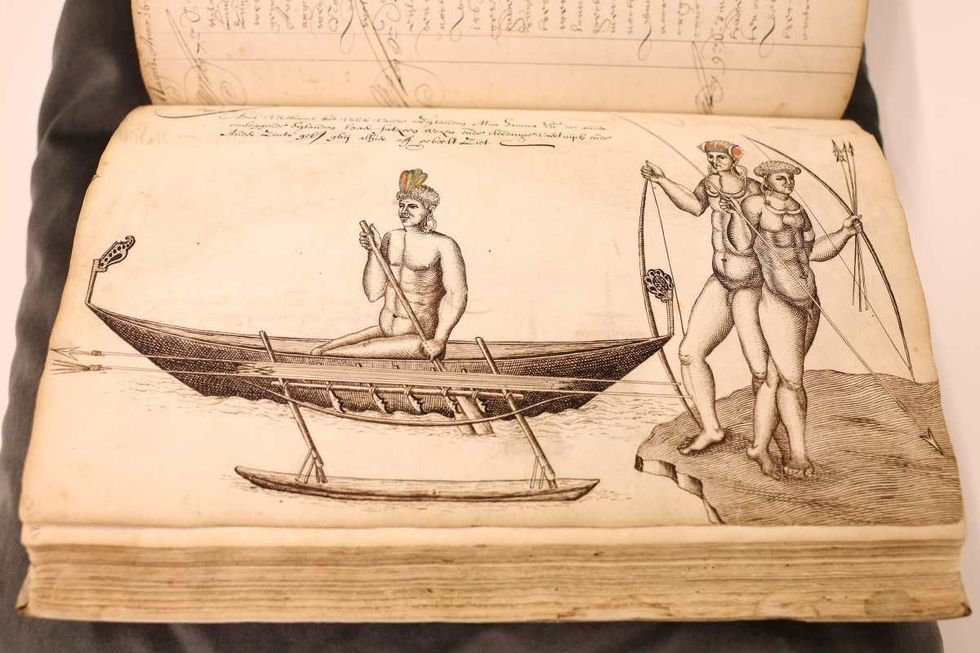
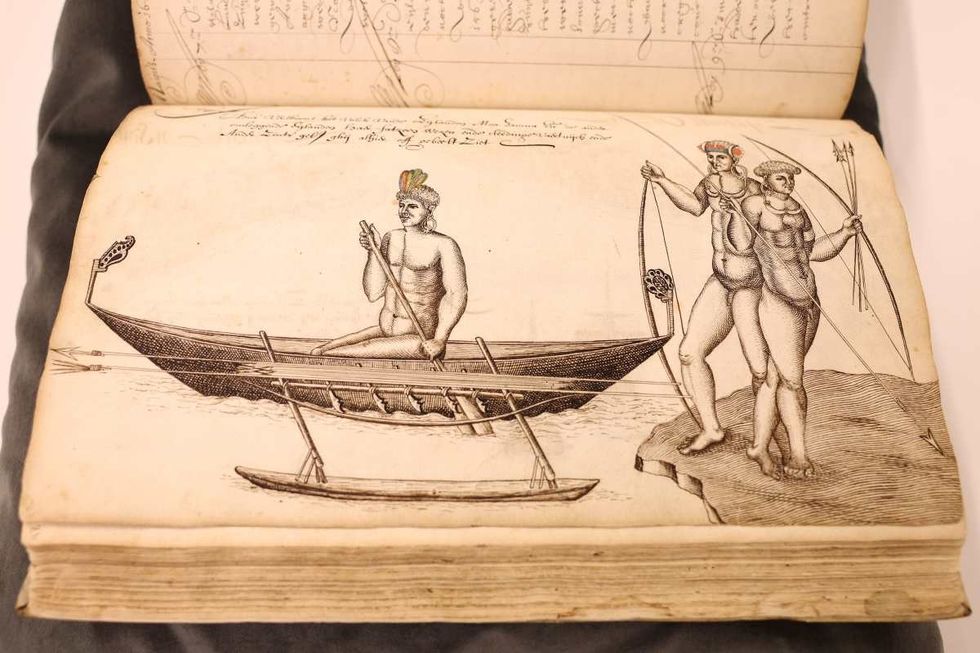
Although the researchers discovered this new continent in 2017, the hunt began almost 400 years ago. In 1642, Dutch captain Abel Tasman (seen in the above portrait), serving the East India Company, was ordered to explore a Southern Continent. On August 14, 1642, Tasman departed from Batavia with two ships sailing west to Mauritius in the Indian Ocean, according to Princeton University Library.
Tasman named the location “Moordenaers (Murderers) Bay,” and sailed home, never to return to this land, although he did believe that he had discovered a great new continent.
Naming and defining Zealandia
It was nearly 375 years after Tasman’s voyage that geologists stumbled upon this mainland. They announced the discovery by naming it “Zealandia,” based on the suggestion of American geophysicist Bruce Luyendyk who described this region in 1995. Zealandia is translated to “Te Riu-a-Māui” in the Māori language.
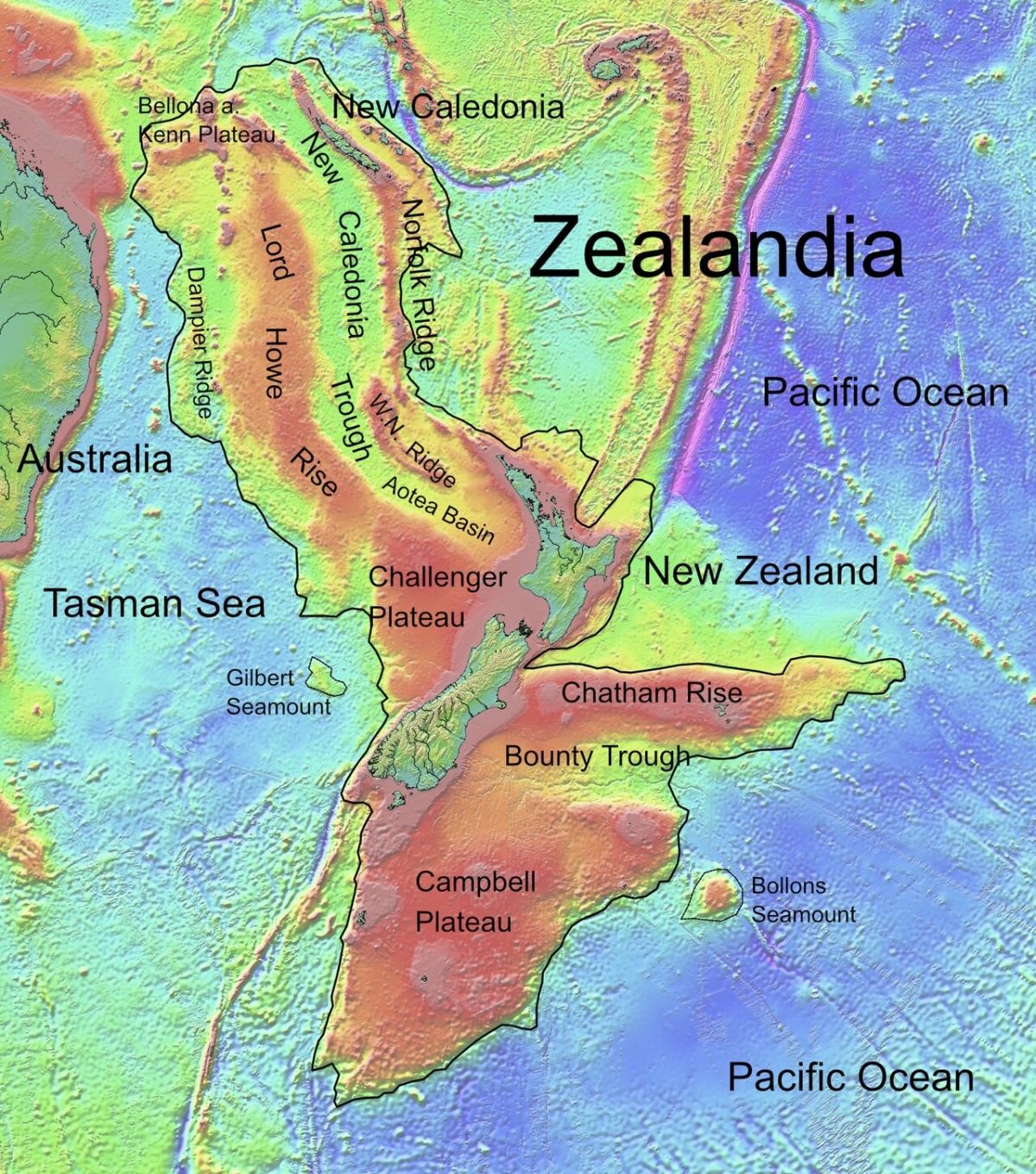
Zealandia lies mostly submerged off the east coast of Australia Public Domain
In a paper, researchers from GNS Science of New Zealand documented that they had to dredge rock samples from the Fairway Ridge to the Coral Sea to analyze the rock geochemically and understand the underwater makeup of Zealandia. Led by Nick Mortimer, they scanned the northern two-thirds of the submerged area, where they unearthed pebbly and cobbley sandstone, fine-grain sandstone, mudstone, bioclastic limestone, and basaltic lava from a variety of periods as concluded by their radiocarbon dating.
Ancient rocks with a story to tell
The rocks and stones were found to be roughly 95 million years old, from the Late Cretaceous period. The granite and volcanic pebbles were estimated to be 130 million years old, the Early Cretaceous period. The basalts however were newer, probably about 40 million years old, and from the Eocene period. “It is kind of cool,” said Mortimer, per BBC. Andy Tulloch, a geologist at the New Zealand Crown Research Institute GNS Science, who was part of the research team, added, “This is an example of how something very obvious can take a while to uncover.”
Mostly submerged, yet massive
Although Zealandia is a vast continent that spans an expanse stretched for 4.9 million square kilometers, around six times the size of Madagascar, most of it is submerged under the South Pacific Ocean. Only the area at the Ball’s Pyramid on Lord Howe Island rises above the water’s veil. It is the smallest, thinnest, and youngest of all known continents.
Usually, the continental crust is about 40 kilometers deep, thicker than the oceanic crust which is about 10 kilometers. The researchers proposed that since Zealandia ended up stretched too much, its crust became thinner, around 20 kilometers, and finally disappeared under the sea. With 95 percent of its territory submerged beneath the ocean’s depths, Zealandia prowls on planet Earth as a lair possessing an enigmatic charm of mysterious historical elements and ancient stories.
This article originally appeared last year.
This article originally appeared 1 year ago. It has been updated.
A commercial airplane crash can change how people behave long after the immediate tragedy. News outlets replay the images, people affected share their harrowing stories, and an extraordinarily rare event becomes easy to imagine. Some travelers cancel trips; others drive to their destination instead.
These choices may feel cautious. Statistically, the alternatives people switch to may come with greater risk.
Commercial airline crashes command attention because they are rare, catastrophic and beyond a passenger’s control. But the choice to avoid flying does not eliminate risk. As a new report from our research team at Embry-Riddle Aeronautical University outlines, skipping a flight and opting to drive instead is typically much riskier, even if it doesn’t feel like it.
Airline travel is safer than headlines suggest
People tend to respond strongly to events that are vivid, while paying less attention to familiar hazards – the risks of which manifest more frequently but less visibly. As a result, efforts to avoid one danger can create another.
In our recent peer-reviewed report, prepared with support from Embry-Riddle Aeronautical University’s Boeing Center for Aviation and Aerospace Safety, we compared fatality risk in U.S. commercial aviation with other transportation modes, recreational activities, household hazards and occupational risks. While the Boeing Center receives some funding from The Boeing Company, it operates independently.
We focused on commercial Part 121 airlines operating in the U.S. and analyzed data from 2016 through 2025. Part 121 carriers generally include large U.S. airlines and regional carriers that operate scheduled passenger service. Because fatal accidents are so rare, data from a single year would not have provided a stable risk estimate.
Across several measures of risk exposure, including distance traveled, individual boardings, hours spent traveling, annual risk and lifetime odds, the data consistently shows that U.S. commercial aviation is exceptionally safe.
For the same distance traveled, we estimated the fatality risk as about 626 times higher in a passenger car or truck than on a commercial airline. The risk associated with motorcycle travel was more than 22,000 times higher than commercial airline travel. Even highway bus travel, itself a relatively safe option, carried about nine times the risk of commercial airline travel over the same distance.
When risk is measured per passenger boarding, the numbers remain striking. From 2016 through 2024, the long-run estimate was approximately one passenger fatality per 97.7 million boardings on commercial airlines.
These numbers do not mean flying is risk-free, just that the risk is small enough that researchers need many years and enormous amounts of exposure to estimate it. Across the 10-year study period, 73 people died in accidents involving commercial airline travel in the United States.
These findings complement earlier research. A peer-reviewed 2013 study comparing U.S. transportation modes examined data from 2000 through 2009 and also identified commercial aviation as the safest way to travel. A 2018 study using data from the same period similarly ranked commercial aviation as the safest mode.
More recently, a 2022 study analyzed U.S. news coverage, travel patterns and accident data from 1996 through 2017. It found that increased news coverage of aviation accidents was associated with more road traffic and more fatal road accidents in subsequent months.
The 9/11 aftermath and the risk of avoiding risk
The aftermath of the Sept. 11, 2001, terrorist attacks provided a powerful example of how behavior can shift risk from one setting to another. Air travel declined sharply after the 9/11 attacks. Subsequently, researchers were able to investigate whether fear of flying led to additional deaths on the road.
Psychologist Gerd Gigerenzer analyzed traffic patterns for the final three months of 2001 and estimated 353 excess road deaths nationwide. He characterized many people’s decision to drive rather than fly as an attempt to avoid a “dread risk”: a low-probability event in which many people could die at once.
Transportation researchers Michael Sivak and Michael Flannagan later reanalyzed the period. They used road fatality trends from the first eight months of 2000 and 2001 to estimate how many deaths would normally have occurred during the final three months of 2001. They then compared that estimate with the number actually recorded in the past three months and calculated 1,018 additional road fatalities from October 2001 through December 2001.
But their findings complicated the idea that people who avoided flying merely drove to the same distant destinations. Much of the increase occurred on local roads, not interstate highways, and pedestrians and bicyclists experienced a disproportionate share of fatalities. This pattern suggests that travel behavior may have changed more broadly after the attacks, perhaps because people canceled longer trips, stayed closer to home or changed their daily routines.
It is hard to pin down how much of this increase was related to people changing their travel patterns in response to the 9/11 attacks, since these studies cannot track each individual’s transportation decisions.
But both studies suggest that a collective effort to avoid a highly visible danger can increase exposure to ordinary hazards whose victims are less visible. When more people choose to drive rather than fly, the roads become busier and the number of traffic deaths can rise.
The question shapes the risk estimate
One reason discussions about risk become confusing is that there is no single way to measure it. The answer to the question “Is it safe?” depends on what you measure.
How much risk does a person face for each mile traveled? What is the risk of one trip? How much risk accumulates during one hour of travel? What is the chance of dying from this cause in a year or over a lifetime?
These are legitimate questions, but to make a valid comparison, you need to look at the same measure of risk for both types of transportation. Comparing the risk of one flight with the annual risk of driving, for example, mixes unlike quantities.
A traveler deciding whether to fly or drive between two cities can compare the two modes over the same trip or distance. This comparison provides a clearer perspective than comparing a highly visible plane crash with a familiar daily routine.
Time matters too. In our estimates, an hour in a passenger car or truck carried about 74 times the fatality risk of an hour aboard a commercial aircraft.
Feeling in control is not the same as safety
Driving gives people a steering wheel, a brake pedal and the belief that their skill can protect them. Flying asks passengers to place control in the hands of pilots, airlines, regulators, air traffic controllers and a complex technical system. Psychological research has linked a stronger sense of agency – the feeling that people control their actions and their outcomes – with greater risk-taking. That difference in perceived control helps explain why a rare aviation disaster can feel more threatening than routine road travel.
Airline passengers don’t have the same sense of control over their vehicle as drivers, so flying can feel more uncertain and dangerous. AP Photo/Susan Walsh
Media attention also matters. A major airplane crash is treated as news of national or international importance. Road deaths occur across many locations and at different times, so the public does not see the cumulative toll.
The emotional intensity of coverage does not mean journalists are wrong to cover crashes. It just means audiences need context alongside the images.
Crafting better risk communication
Telling anxious travelers that flying is “safe” is rarely enough. Research on risk perception shows that people do not judge danger through statistics alone. Fear and vivid images also shape how risky an event feels. But providing more context about the risks from other forms of transportation can still help.
Effective communication about risk does not minimize tragedy or dismiss the real fear people may feel. But it can help people understand that when millions of travelers shift from one type of transportation to another, the risk moves with them.
For travelers, the practical question is not whether an option has zero risk. No option does. The question is whether a choice reduces their total exposure to risk or merely replaces a frightening, highly visible risk with a greater one that feels routine.
To put the rarity of fatal airline events into perspective, an average of 2.48 million travelers passed through TSA screening each day in 2025. Modern commercial aviation in the United States has achieved a safety record that is difficult to grasp precisely because fatal events are so unusual.
When fear leads people away from that system, the safest-feeling decision may not be the safest decision at all.
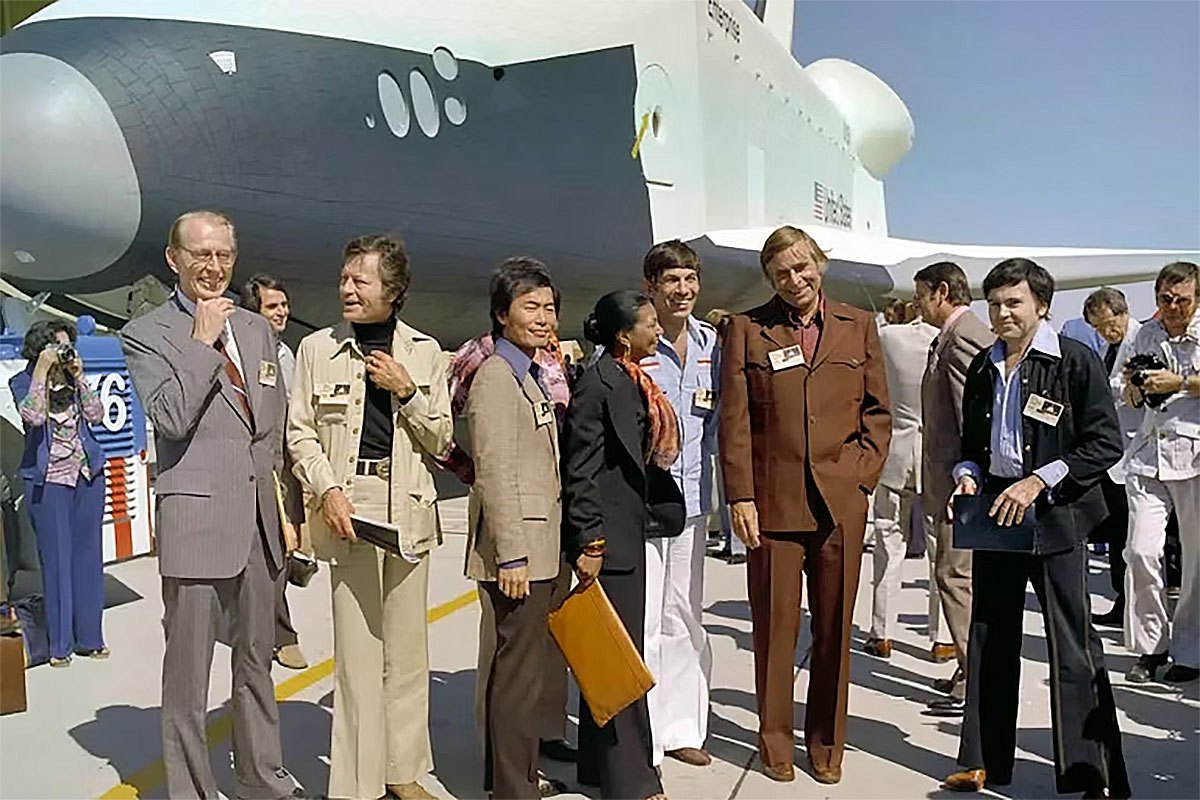
Photo credit: NASA – Gene Roddenberry, second from right, and Star Trek cast members visit the Space Shuttle Enterprise in 1976 with NASA Administrator James C. Fletcher, left. NASA
“Star Trek” is also unusual for its close connections to NASA, both in its storylines and in the real world. Decades of “Star Trek” adventures have ignited a love of spaceflight across generations, inspiring many who now work as space professionals.
I’m a cultural anthropologist who studies why people work in space exploration. I’ve interviewed astronomers, engineers, flight surgeons and astronauts. Although I focus more on science fact than science fiction, I’ve noticed in my interviews how much the two threads intertwine.
Because of this, I found myself at a “Star Trek” convention in early August 2026, just ahead of the show’s 60th anniversary on Sept. 8. The convention participants included people of widely different ages, appearances and identities. I was struck by just how much those gathered reflected the series’ values.
When NASA met Star Trek
In the original series, the show’s creator, Gene Roddenberry, came up with a philosophy held by the Vulcan people. He called it IDIC: infinite diversity in infinite combinations. It suggests that an ideal society is made up of many different types, all working together.
It represented Roddenberry’s rejection of conformity. It also explained why the Enterprise crew included a Russian alongside Americans, and Black, Japanese and female characters all in positions of responsibility and authority. While many ordinary viewers absorbed “Star Trek’s” lessons of camaraderie and acceptance, those involved in real space exploration also took notice.
The cast of ‘Star Trek: The Original Series’ included a diverse crew of characters. Walters Art Museum
Roddenberry established relationships with NASA personnel in the early days of his series. NASA provided photographs of planetary bodies and advice about the realities of spaceflight, as well as stock footage and access to certain NASA facilities.
Leonard Nimoy, who played the popular character Mr. Spock, was even brought to the National Space Club’s Goddard Memorial Dinner in 1967 as a special guest. Then-Vice President Hubert Humphrey gave the keynote speech. Afterward, though, it was Nimoy, not Humphrey, who found himself surrounded by the club’s members, including NASA employees, aerospace engineers, members of the military and government officials, all eager to meet the actor portraying the starship Enterprise’s first officer.
The relationship between NASA and “Star Trek” benefited the show by legitimizing the series. It also helped NASA by publicizing its work and depicting a positive future where its efforts to land on the Moon would eventually lead to visits to distant worlds – and amazing scientific advances like the show’s transporter and warp drive.
In 1977, actress Nichelle Nichols, who portrayed communications officer Uhura, was hired to recruit for NASA. The space agency had expanded its pool of astronauts to include scientists and other “mission specialists.” For the first time, an astronaut no longer needed to be a pilot to participate in a space mission.
NASA selected its first Black astronaut candidates and its first female astronaut candidates in 1978. While this move toward inclusivity may not have been directly influenced by infinite diversity in infinite combinations, it was compatible with it. “Star Trek” inspired many of NASA’s future employees. In interviews for my book “The Ultraview Effect,” a quarter of the space professionals I spoke with mentioned “Star Trek” as an influence.
Nichelle Nichols sits in the space shuttle simulator at the Johnson Space Center in March 1977. NASA
An Apollo astronaut I interviewed, for instance, said he believed humans would eventually “be able to go anywhere in the universe, just like ‘Star Trek.’”
A young engineer who had grown up in the 1990s told me his motivation came from the “opening line of ‘Star Trek’… to explore strange new worlds.”
A space shuttle mission specialist emphasized Roddenberry’s decision to make the starship crew multicultural, explaining: “Today I look at the diversity of it … he was setting the stage back when it wasn’t acceptable [in order] to be acceptable!”
A changing future
That influence has accompanied a changing astronaut corps.
Both the 2025 astronaut class, which for the first time included more women than men, and the crew of Artemis II, which sent the first woman, first Black astronaut and first Canadian on a lunar mission, resemble the future that “Star Trek” imagined.
The “Star Trek” fans at the convention I attended were even more diverse. It was clear to me that Roddenberry’s “infinite diversity in infinite combinations” isn’t just a concept from the series, but something that has become a defining value of contemporary Trek fandom.
NASA’s Spitzer Space Telescope captured a region of the galaxy that looks a little like the USS Enterprise, which NASA highlighted in a news release in 2016. NASA/JPL-Caltech
One such fan, Bjo Trimble, holds special status. She is credited with “saving ‘Star Trek’” when the series was almost canceled in 1968 after two seasons. Wearing a rainbow “IDIC” pin, she signed autographs at the SyFy Sistas booth, where T-shirts featuring Black “Star Trek” icons such as Uhura and Benjamin Sisko were on display.
However, with the Trump administration’s recent orders to dismantle all of NASA’s diversity, equity, inclusion and accessibility programs and policies, institutional support for “Star Trek’s” vision of acceptance and inclusivity, which flourishes in its fan base, is being undone. This rollback occurred just as NASA’s crews were reaching new milestones in representing the diverse future that “Star Trek” has encouraged for decades.
Sixty years later, some of the diverse future that “Star Trek” imagined has become part of everyday spaceflight. Other parts of that ideal remain unfinished.