“We have no women bartenders, where are all the women?” Lynnette Marrero remembered.

The decorated bartender and mixologist worked a cocktail festival many years ago where some 30 women put it together behind the scenes. But when it came time for a film crew to record female bartenders, they were at a loss. She didn’t want it to happen again and neither did fellow renowned bartender Ivy Mix. “It was an a-ha moment, of what can we do to showcase these women?”

Their answer became Speed Rack, the world’s first and only all-female and femme speed bartending competition–a speed rack is also part of a bar to place liquor for quick handling. Now in its thirteenth year, Speed Rack, featuring “Women shaking up the cocktail world,” is part of a larger movement ensuring nobody else wonders where the female bartenders are: they’re right there behind the bar. Marrero and Mix had witnessed too many women and femme identified individuals not getting the credit they deserved or not being able to break through into craft cocktails. Speed Rack became a way to help change that. “It was just about creating a platform and a pedestal for these women to be seen doing what they do every day,” Marrero says. Plus, all proceeds from every Speed Rack event support charities dedicated to breast cancer research like The Pink Agenda. Since it began, Speed Rack has raised over two million dollars for these organizations.
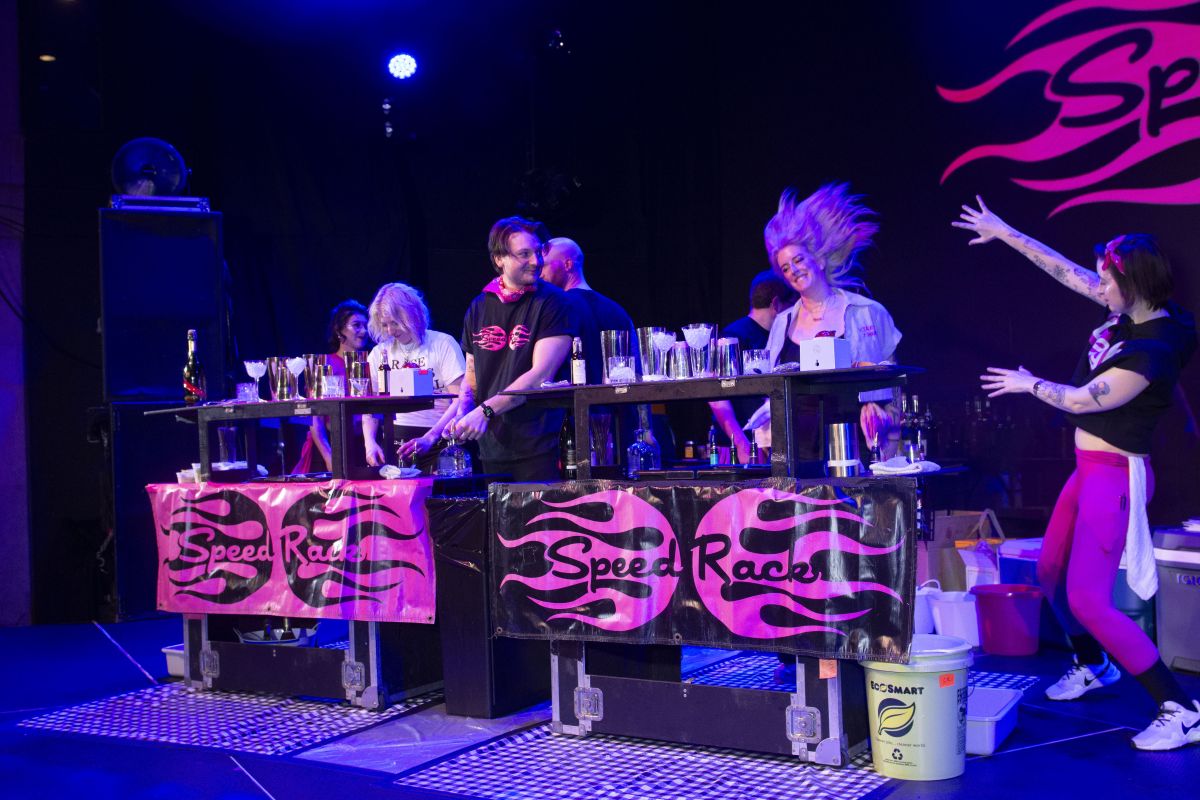
Competitors Sam Smagala, of the bar Joyface, and Miranda Midler, Head Bartender of Dear Irving's Broadway location,u00a0shake it off before Round 1 begins. Elyssa Goodman

On February 17 2025, the eight top bartenders in New York’s regional Speed Rack competition arrived at Melrose Ballroom in Queens for the city’s regional finals. By that point, the field had already been narrowed from some 85 online applications with video submissions to a preliminary competition of 20-25 to tonight’s eight participants. They came from across the city’s cocktail bars–Mister Paradise, The Crane Club, The Portrait Bar, and others–and had to be working at least four shifts a week to qualify.

In a round-robin, bracket-style competition, participants will have to make four perfect cocktails in a matter of minutes–it’s a competition that’s ultimately about speed and accuracy. The drinks will then be delivered to the judges, who will deliberate and give feedback–errors will add time to a competitor’s score. The winner of each round proceeds until there are only two left and a winner is chosen.

The winner will proceed to the National Finals in July at the annual Tales of the Cocktail conference, this year in New Orleans. There, winners from events in Chicago, Denver, Portland, OR, Washington, D.C., and Puerto Rico will join her, as will winners from Fast Track competitions in Nashville, San Francisco, Houston, Louisville, and Orlando. By the time finalists get to Nationals, they’ll have been training for at least two months, selected for teams sponsored by some of the biggest alcohol brands in the world.
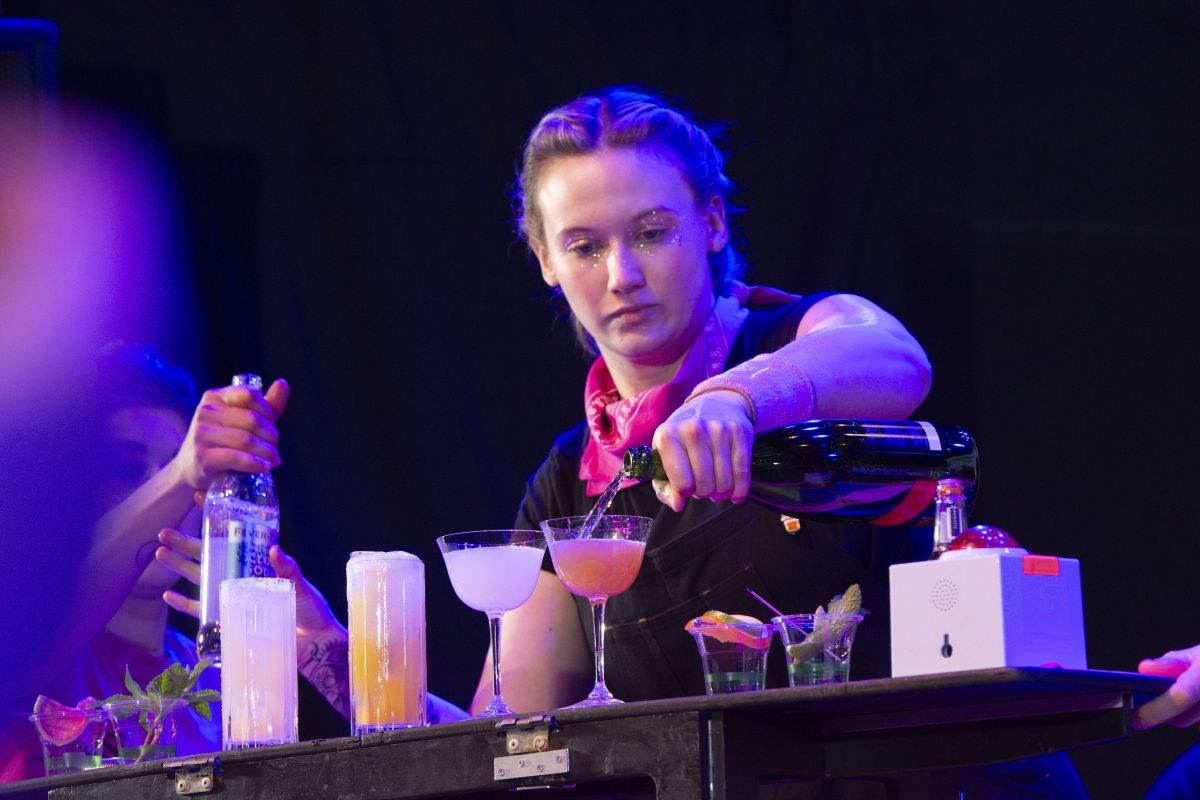
Competitor Hope Rice of The Crane Clubu00a0finishes up the final cocktail of her round, an Old Cuban, with a pour of G.H.Mumm Champagne. The Old Cuban is a drink created by legendaryu00a0bartender Audrey Saunders. Elyssa Goodman

At Nationals, between 16-18 people will compete for a scholarship to the Beverage Alcohol Resource’s 5-Day Program, featuring an opportunity for certification with the “Curriculum for the World’s Most Comprehensive Distilled Spirits & Mixology” held at once a year at the Culinary Institute of America in Hyde Park, New York, not to mention countless brand and networking opportunities. Marrero says that Mix usually speaks to contestants beforehand and reminds them that “everyone knows you competed.This is a job interview, so go out there and network, do your best, because whether you’re the winner or not, there’s opportunities that come from this.” Later this year, Speed Rack will also return to Canada and Australia.

Speed Rack becomes not just a way to bring awareness to the gender gap in bartending and the beverage industry, it’s how the gap starts to close. Build a community, reward people for doing a good job, and give them the resources to continue pursuing their education in the field. So it’s fitting that even before the audience starts to arrive at Melrose Ballroom, there’s something electric happening. What’s at stake is not just about cocktails.The venue’s two floors will eventually fill up entirely, and over $14,000 will go to charity. The hot pink fireballs of Speed Rack’s logo and matching pink lights cast a glow across the venue, where sponsors of the event, including brands like Cointreau and Patron, among many others, have set up booths and started mixing cocktails of their own for guests. It’ll be a night full of industry folks, though anyone is welcome to attend.
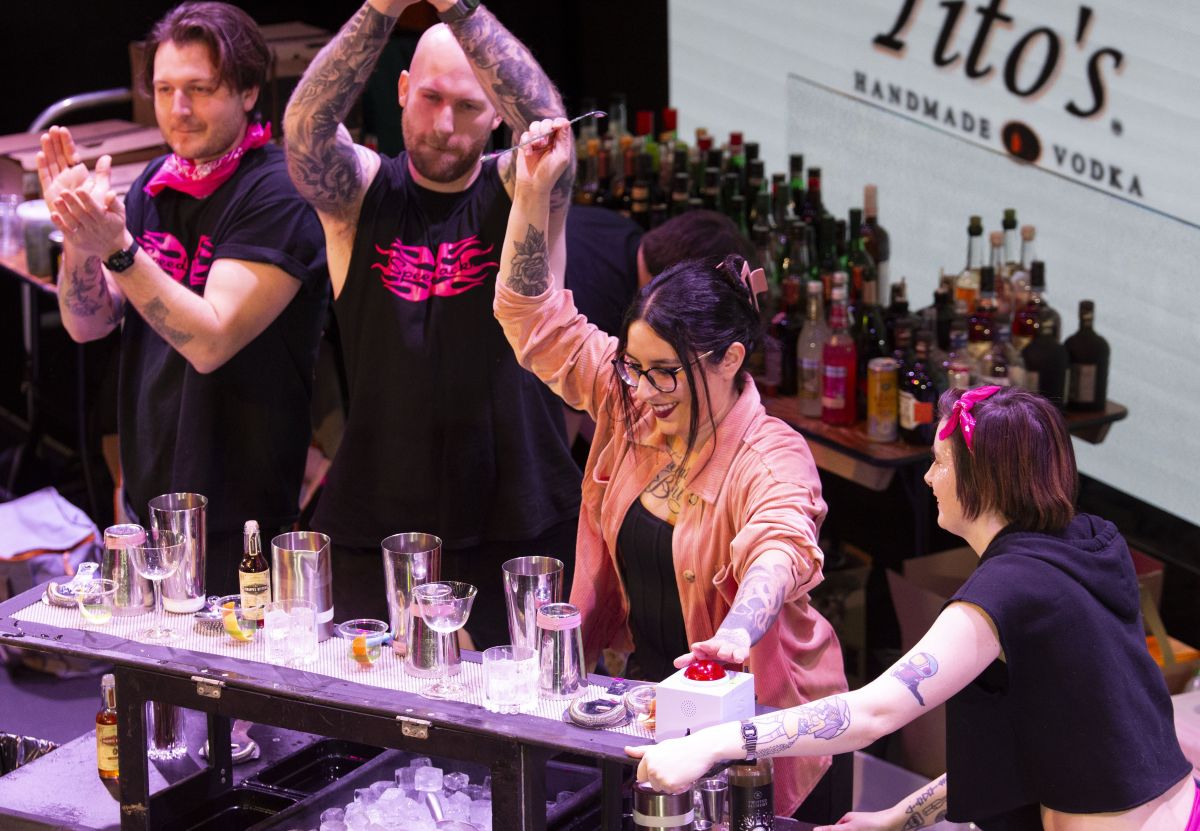
Competitor Ileana Hernandez just before her round begins. Ileana works at Greenwich Village restaurant Llama San. Elyssa Goodman

Contestants start to mill about the space–they’ve dotted their faces with pink glitter, tied hot pink Speed Rack bandanas around their necks, spotted clothing with pink rhinestones, painted on thick cat eye liner, donned olive cocktail rings, and more. Hugs are thrown with abandon.

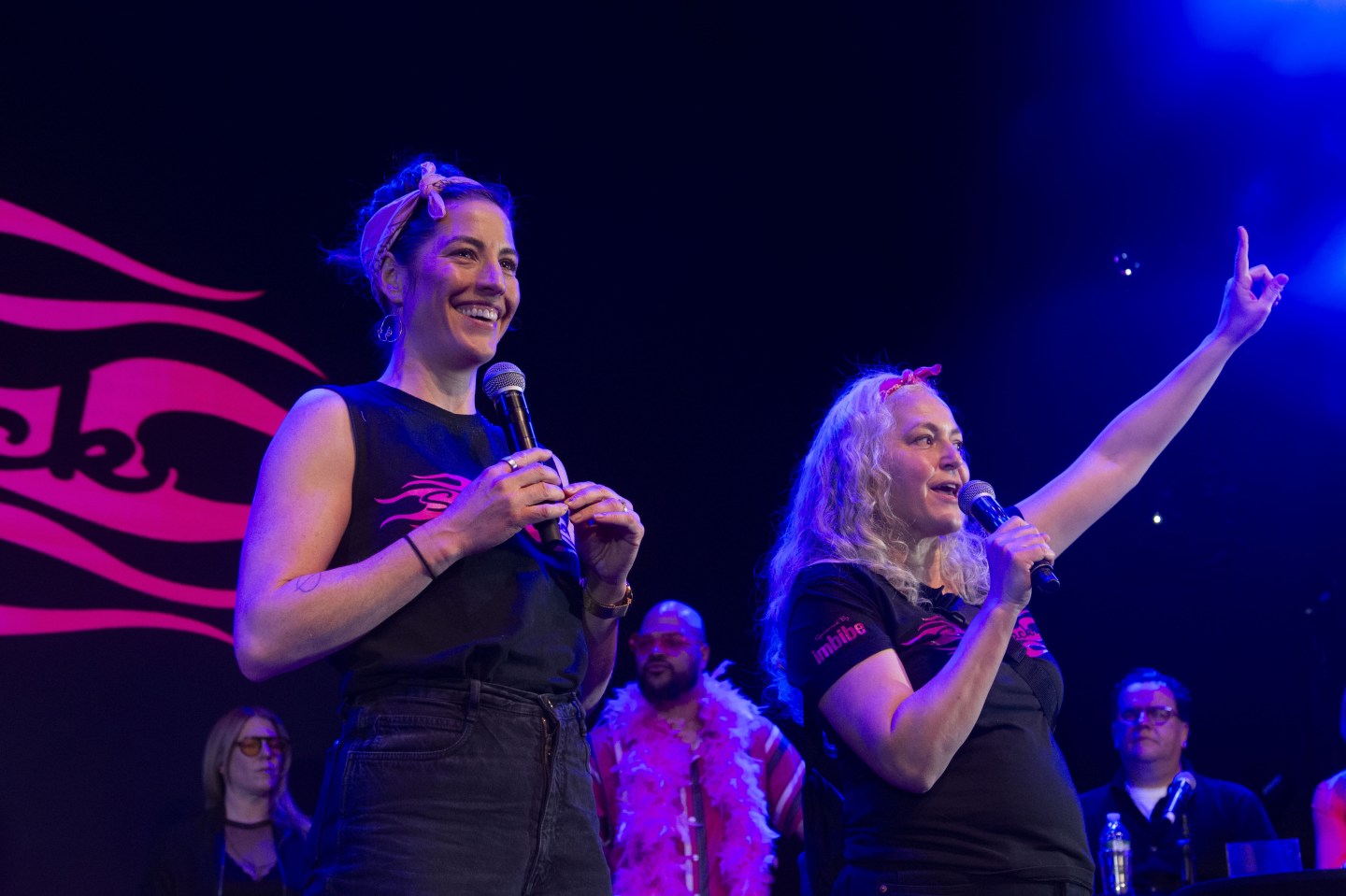
“We have so many fresh new faces, I just wanna let y’all know drinking culture in New York is in great hands,” Marrero says, to uproarious applause as she and Mix begin the event. With volunteer barbacks, the first contestants prepare their stations. Ice fills glassware, and sponsors’ bottles are lined up behind the bars for easy access. The host tonight is Vance Henderson, lauded National Brand Ambassador for Hendricks Gin, decked out in hot pink sunglasses and a matching feather boa. He introduces the judges, who are also deeply respected in the beverage industry: Ignacio “Nacho” Jimenez, Operating Partner of cocktail bar Superbueno; Iain Griffiths, co-founder of Bar Snack; Charlotte Voisey, Tales of the Cocktail’s Executive Director; and Amy Racine, Beverage Director and Partner of JF Restaurants.
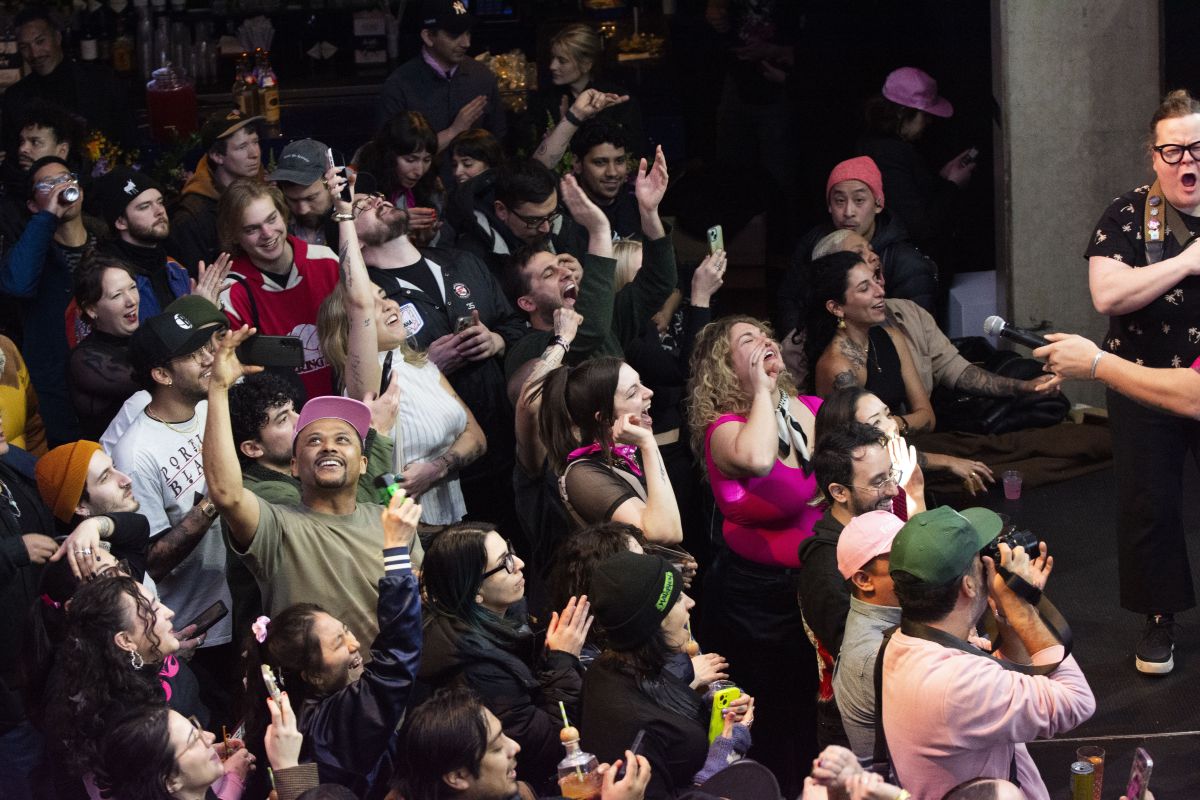
Full of friends and industry professionals, the audienceu00a0cheers for the annualu00a0New York Regional Speed Rack competition. Elyssa Goodman

I feel jitters just hearing their credentials, but it’s part of the bartenders’ presentation tonight to remain calm and poised. The event, Marrero says later, “showcases what happens on a Friday night, Saturday night, when you’re in a craft cocktail bar and you’re working service, and then four cocktail luminaries walk in and ask for a round, and you have to make that round perfectly, beautifully and fast, really fast.” The drinks must be “balanced, look beautiful and be made with grace behind the bars,” Speed Rack says in its competition notes. The event is intense–the opportunities it gives participants could really change their lives if they want it to–but the mood remains high: Henderson introduces each contestant not unlike fighters in a boxing match, and volunteer barbacks, also industry people, are personal hype folks throughout the night, waving fans and cheering on participants.

With each round, contestants will be given four classic cocktails to produce, one selected by each judge, and the round will be over in a matter of minutes–never longer than five, and even four would be pushing it. The bartenders become a choreography of shaking and stirring and pouring and tasting (and, at least once, egg separating) and when they’ve finished all four beverages, they slap a buzzer to stop their clock. Bensonhurst, Suffering Bastard, Whiskey Sour, Cosmopolitan, Nippon and other cocktails course over the bar through the evening, and soon the judges weigh in. Was it perfect? Too much tequila? Too herbaceous? Was the garnish placed appropriately? Did the drink need to be more diluted? While they wait for final scores, bartenders high five friends like they’re autographing headshots at a movie premiere, they pour shots into mouths, they can’t believe they did it again. With final scores, the winners advance.

As the night goes on, more and more people push toward the front. People cheer on their friends, bang on the stage, a flamboyant chorus of “WOOOOOOO” and “GIRLS! GIRLS! GIRLS!” and the girl next to me who looks a contestant dead in the eyes and says “Rachel, you’re a bad bitch. BAD. BITCHES. ONLY,” with a half-empty cocktail in her hand.
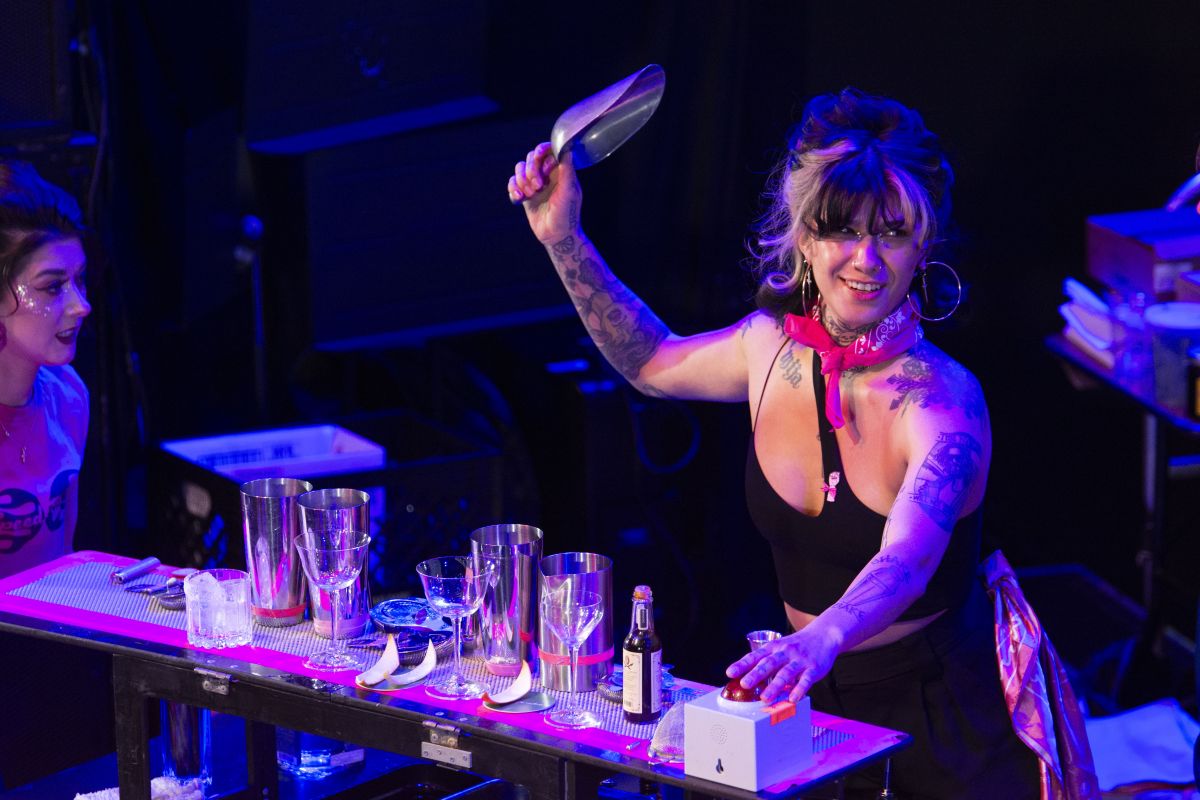
Competitor Rachel Prucha, of Mister Paradise and Hawksmoor,u00a0ready to take on her round. Elyssa Goodman

The music gets louder. In the last round, the finalists are indeed the aforementioned Rachel, Prucha of Mister Paradise and Hawksmoor, and Lana Epstein of The Portrait Bar. Taking their places behind the bar, all they have to do now is make four perfect cocktails while a few hundred of their closest friends and industry professionals scream and chant and applaud. It’s another dance, of whiskey and raspberries and straws and tonic and ice and god knows what else, into jiggers, into shakers, into mixing glasses, until that buzzer is banged for the last time and the cocktails are out, in front of the judges. The deliberation feels endless. It’s some four hours from when we started and nerves are askew. More shots! More cheering! Lana, Lana! Rachel, Rachel!

Lana wins, and then something amazing happens–a swirl of friends and bartenders who competed rush the stage to cheer her on, her name chanting from their lips as they embrace her in a giant hug and pink petals fall from the ceiling. People put her on their shoulders, they take pictures, they pour bubbly into her mouth like it’s the Super Bowl. The joy is genuine, and to me it’s the most moving part of the evening because it’s ultimately what Speed Rack is actually about: women supporting women.
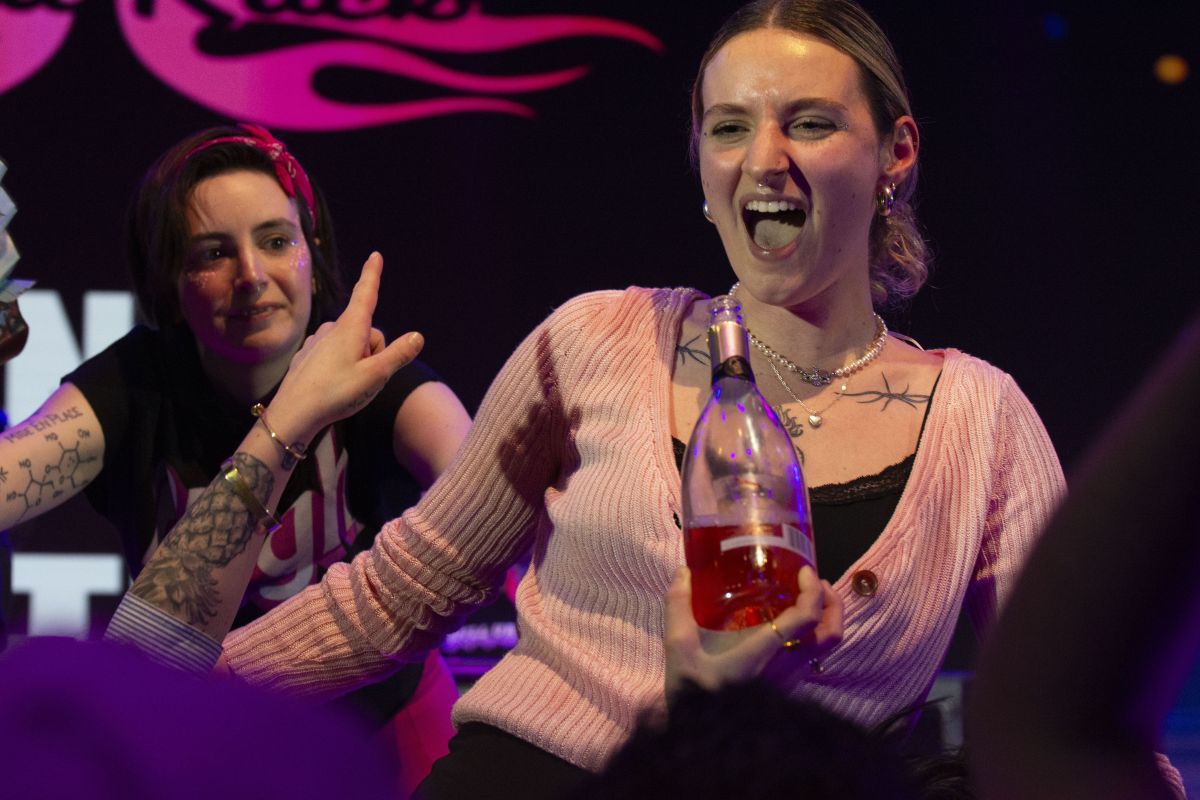
Bartender Lana Epstein, of The Portrait Bar,u00a0wins Speed Rack's New York Regional competition. Friends and fellow competitors raise her up and offer bubbly to celebrate. Elyssa Goodman

“The community vibe of, ‘it’s not just one of us, it’s all of us,’ is really important,” Marrero says. She believes Speed Rack can keep regenerating itself because it really is an event for the community. There’s an understanding that the platform represents inclusivity, she continues, giving basic training to everyone and sharing foundational knowledge, and this helps people move up in the industry and continue sharing.

Marrero doesn’t remember a lot of men helping her with this when she started–it was women. She hopes in the future there will be even more women and femme identified individuals in ownership, partnership, and leadership positions throughout the beverage industry. While she says many people come to the industry for a flexible work life as they pursue an artistic endeavor, she already sees Speed Rack’s impact making space for the next generation. “The future is in, the more people that we continue to recruit to stay in the industry,” she says. “The rest of us can then go on to get funding, open places, and give those folks a spot to grow and and really, light the world on fire one cocktail at a time.”

Stay up to date with Speed Rack on Instagram, and buy the Speed Rack cocktail book A Quick Drink: The Speed Rack Guide to Winning Cocktails for Any Mood, published in 2024. A portion of Marrero and Mix’s royalties also go to breast cancer charities.

And if you’re interested in competing, learn more here.
  • During one of Peter Gabriel’s final Genesis shows, a roadie got naked for one amazing prank
    A roadie got naked for a hilarious prank during one of Peter Gabriel's final shows with Genesis. Photo credit: Unknown photographer via Wikimedia Commons, Creative Commons Zero, Public Domain Dedication, cropped (left) / Canva (Africa images), cropped (right)

    The 1974 Genesis double-LP, The Lamb Lies Down on Broadway, is one of the most ambitious (and, to some, inscrutable) concept albums in rock history, following a character named Rael along a cosmic journey through the shadowy New York City streets, elaborate chambers of 32 doors, surreal cages filled with stalactites and stalagmites, underground rivers, and caves with spooky creatures. It was like a proggy Pilgrim’s Progress as envisioned by Alejandro Jodorowsky.

    When it came time to translate that vision to the concert stage, Genesis made a risky choice: debuting the entire 94-minute saga, front to back, with large chunks of the audience likely unfamiliar with the songs. (The first date of the tour, November 20, 1974 in Chicago, occurred two days before The Lamb hit stores.) The visual side of the project was as trippy as the lyrics, including scene-setting projections and a number of bizarre costumes for front man Peter Gabriel—like one particularly grotesque monstrosity, The Slipperman, that drummer Phil Collins later called an “inflatable dick.” (“It was all very Spinal Tap,” he said in an interview for the album’s 2007 reissue.) 

    If you ever wanted to appear naked onstage, this was probably the perfect time to do it—and one of the band’s roadies pulled off that hilarious prank as the tour neared its end. The silliness was especially notable, given the brooding atmosphere within Genesis—Gabriel, feeling constrained by the band’s schedule and eager to stretch his wings, had already informed his bandmates that he planned to leave following the Lamb tour. Perhaps the roadie, whom the band recalls being Geoff Banks, was attempting to add some levity. What we do know is that he made his nude cameo during one of the final shows, building on the suspense from a visual trick.

    “There was a point in The Lamb where Rael sort of splits, and we did that on stage,” Gabriel told filmmaker John Edginton in a full-band documentary interview. “I would be in the Rael outfit, and there was a dummy on the other side in exactly the same outfit. There wasn’t a lot of lighting, so it would explode, and you wouldn’t know [which was which]…Of course, for the crew, as we approached for the end of things—first of all, [Rael’s] jeans would have their flies undone with a banana hanging out. Gradually, they’d have more and more fun…”

    Keyboardist Tony Banks also talked about this infamous moment in a passage from the 2007 book Genesis: Chapter and Verse. “No one apart from the group, and the immediate circle of the group, knew that Pete was leaving and that this could well be our last tour ever,” he said. “And the roadies always had to have some fun. There was this moment in the show where Pete would be on one side of the stage with a dummy on the other side, and the strobe lights would flash on them so you couldn’t tell which was which. And, of course, for one of the last shows, one of the roadies got up there naked on the other side and took up the pose in place of the dummy…There were people watching this, my wife, for instance, practically in tears because they thought that it might be all over for Genesis, and we had a naked roadie on stage[—]was this how it was all going to end?”

    But all’s well that ends well, and Genesis managed to carry on after Gabriel’s departure by upgrading Collins to the dual role of drummer-singer. In a testament to their continued friendship, Genesis even reunited with their old singer in 1982 to help him escape mounting debts. 

    This article originally appeared last year. It has been updated.

  • 41 years ago Bono’s Live Aid stage antics ended up saving a female fan from being crushed
    U2 singer Bono embraces a fan pulled out of the crowd during the band's 1985 performance at Live Aid. Photo credit: Screenshot from YouTube / @LiveAid

    By July 13, 1985, U2 was a massively popular rock band: riding the wave of two successive chart-topping U.K. albums (War and The Unforgettable Fire), even being anointed the “Band of the ’80s” in a Rolling Stone cover story. But their definitive moment of that year was a performance at Live Aid, a benefit for Ethiopian famine relief staged before 72,000 at London’s Wembley Stadium and broadcast to well over 1 billion TV viewers. They were already larger than life, but now they had the perfect venue and grandiose crowd interaction to showcase it.

    Their short set featured a 12-minute version of their atmospheric 1984 song “Bad,” which they stretched out to include some quotes from The Rolling Stones’ “Ruby Tuesday” and, more famously, to accommodate the stage maneuvering of front man Bono. Halfway through the track, the singer gestured to the audience with a “come on”-type motion, eventually requesting a few female audience members be lifted out of the crowd by security.

    According to some accounts, including viral social media posts, this was some kind of “rescue” attempt, and while it’s unclear precisely why Bono took action, the story has become a staple of the U2 canon.

    In the above clip, you’ll see two fans guided to the apron area in front of the stage, where Bono briefly embraces them. But the most notable moment is when he jumps into the muddy area by the barricade, asking security to hoist over a teenager, with whom he slow-dances and offers a kiss on the cheek. Cameras, of course, caught the whole thing. Bono was a showman from day one, after all.

    Over the years, there’s been a lot of debate and discussion about this Bono-meets-fan moment. In a detailed breakdown of the performance, Rolling Stone reports that the third fan was 15-year-old Kal Khalique. Someone by that name shared their Live Aid memories with the BBC, writing that they weren’t even at the show to see U2: “My sister and I were desperate to see Wham!, so we had made it down to the front of the stage. Half way through the day U2 came on suddenly Bono was pointing to me in the crowd and after a [number] of other girls were pulled out, he finally jumped down and got the security guys to pull me out and danced and hugged me, and I even got a kiss. I’ve been a huge U2 fan ever since.”

    In 2011, The Guardian cited an article by The Sun, who apparently tracked down Khalique. “The crowd surged,” she reportedly claimed, “and I was suffocating—then I saw Bono.” But The Guardian also notes that Bono “had long made a habit of pulling girls out of the audience and dancing with them.” Was this just another example, only amplified by the drama of a hungry rock band playing the biggest stage imaginable? 

    Reasoning aside, it’s the kind of larger-than-life moment that came to define U2. It also happened at an ideal time, just ahead of their next album, 1987’s The Joshua Tree, a critically acclaimed and multi-platinum blockbuster that topped the Billboard 200 and spawned some of the bands most enduring singles, including “When the Streets Have No Name,” “With or Without You,” and “I Still Haven’t Found What I’m Looking For.”

    Live Aid also spawned one of rock’s most celebrated performances ever: Queen’s triumphant eight-track set featuring anthems like “We Are the Champions,” “Radio Ga Ga,” and “Crazy Little Thing Called Love.” That show was even etched into film history with an exacting recreation in the 2018 Freddie Mercury biopic Bohemian Rhapsody

    This article originally appeared last year. It has been updated.

  • Catherine O’Hara’s tear-jerking eulogy for John Candy was a master class in memorializing a true friend
    ,

    Catherine O’Hara’s tear-jerking eulogy for John Candy was a master class in memorializing a true friend

    Now that O’Hara has also passed, the beautiful words she spoke for Candy resonate in a new and painful way.

    The comedy world lost two of its great lights decades apart. John Candy in 1994, and Catherine O’Hara on January 30, 2026. But O’Hara left something behind from that first loss: a nine-minute eulogy that remains one of the most moving tributes one friend has ever paid another.

    Candy was the big-hearted comic-actor best known for his string of charismatic film roles in the 1980s and early 1990s, from Stripes to Planes, Trains, and Automobiles to Uncle Buck. He died at just 43 in 1994, following a heart attack. O’Hara, his close friend and collaborator from SCTV, Second City Toronto, and Home Alone, delivered the eulogy at his memorial service in Toronto, and in nine minutes she managed to capture everything that made him irreplaceable.

    She opened the beautiful eulogy by summarizing all of the ways he “enriched” other people’s worlds, including so many small acts of kindness.

    “I know you all have a story,” she says in the clip. “You asked him for his autograph, and he stopped to ask you about you. You auditioned for Second City, and John watched you smiling, laughing. And though you didn’t get the job, you did get to walk away thinking, ‘What do they know? John Candy thinks I’m funny.’ You walked behind John to communion. You carried his bags up to his hotel room, and he said, ‘Hey, that’s too heavy. Let me get that for you.’ And then he tipped you. Or was that a day’s pay?…you caught a John Candy scene on TV one night, right when you needed to laugh more than anything in the world.” 

    Meeting John Candy

    O’Hara also shares her own story of meeting Candy in 1974, when he was director of the Second City touring company.

    “When I joined him in the main cast, he drove us all the way to Chicago to play their Second City stage,” O’Hara recalls. “And I had a crush on him, of course, but he was deeply in love with [his wife, Rosemary]. So I got to be his friend, and I closed the Chicago bars with him, just to be with him. We did SCTV together. When we all tried to come up with opening credits that would somehow tell the audience exactly what we were trying with the show to say about TV, it was John who said, ‘Why don’t we just throw a bunch of TVs off a building?’”

    The whole eulogy is filled with lovely details, as O’Hara reflects on Candy’s graciousness, his collaborative spirit, and the overall sparkle of his comedy.

    “His movies are a safe haven for those of us who get overwhelmed by the sadness and troubles of this world,” she says. “As if he knew he’d be leaving us soon, John left us a library of fun to remember him by.”

    And she ends with a moving note to illustrate their closeness: “God bless, dear John, our patron saint of laughter. God bless and keep his soul. I will miss him. But I hope and pray to leave this world too some day and to have a place near God—as near as any other soul, with the exception of John Candy.” 

    The Candy legacy

    After the eulogy video resurfaced on Reddit, dozens of fans shared their emotions.

    “I was eight years old when he passed, and to this day no celebrity death has ever hit me harder,” one user wrote. “How could such a bright light be gone so early? She’s right, his films are a safe haven for the soft-hearted. RIP.” Another added, “John Candy died over 30 years ago, but it still stings like it was yesterday. He left such an incredible and rare cultural mark.”

    Candy was also the subject of the 2025 Amazon Prime documentary John Candy: I Like Me, directed by Colin Hanks and produced by Ryan Reynolds, in which O’Hara herself appears alongside other friends and collaborators. Conan O’Brien has talked frequently about how much he loved the SCTV star; he once talked to Howard Stern about his impactful meeting with Candy back in 1984, when O’Brien was a 21-year-old student at Harvard University (and president of the Harvard Lampoon).

    “We ended up hanging out,” O’Brien recalled, “and what I remember most clearly is that he was everything I wanted him to be. He was John Candy.” 

    This article originally appeared last year. It has been updated.

Explore More Culture Stories

Music

41 years ago Bono’s Live Aid stage antics ended up saving a female fan from being crushed

Culture

Catherine O’Hara’s tear-jerking eulogy for John Candy was a master class in memorializing a true friend

Culture

Second-grade teacher asks her students for marriage advice. Here’s their 7 best responses.

Internet

Teacher spots suspicious bare feet under a school bench, but the ‘lockdown’ scare has a surprising explanation