“We have no women bartenders, where are all the women?” Lynnette Marrero remembered.

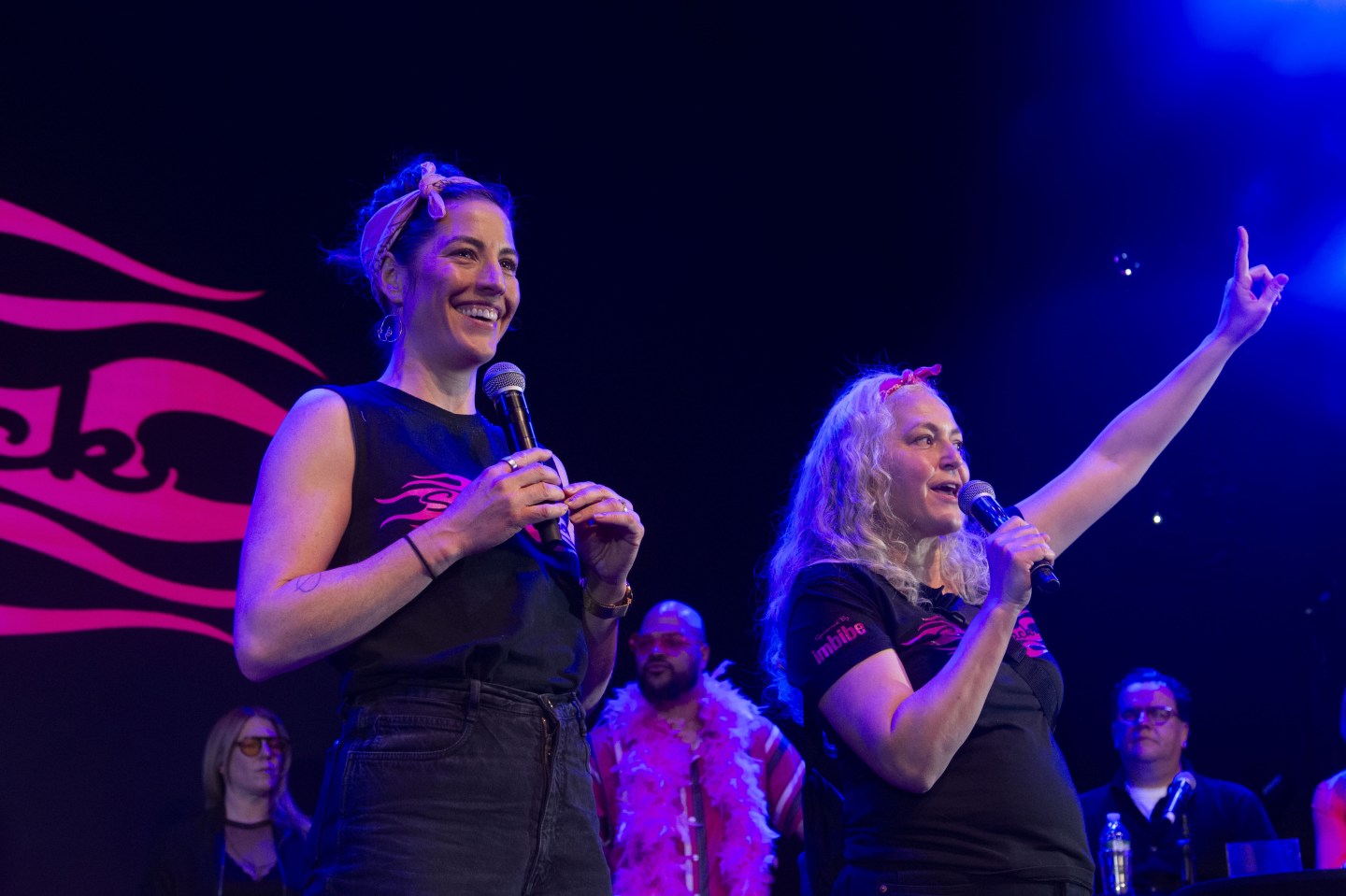
The decorated bartender and mixologist worked a cocktail festival many years ago where some 30 women put it together behind the scenes. But when it came time for a film crew to record female bartenders, they were at a loss. She didn’t want it to happen again and neither did fellow renowned bartender Ivy Mix. “It was an a-ha moment, of what can we do to showcase these women?”

Their answer became Speed Rack, the world’s first and only all-female and femme speed bartending competition–a speed rack is also part of a bar to place liquor for quick handling. Now in its thirteenth year, Speed Rack, featuring “Women shaking up the cocktail world,” is part of a larger movement ensuring nobody else wonders where the female bartenders are: they’re right there behind the bar. Marrero and Mix had witnessed too many women and femme identified individuals not getting the credit they deserved or not being able to break through into craft cocktails. Speed Rack became a way to help change that. “It was just about creating a platform and a pedestal for these women to be seen doing what they do every day,” Marrero says. Plus, all proceeds from every Speed Rack event support charities dedicated to breast cancer research like The Pink Agenda. Since it began, Speed Rack has raised over two million dollars for these organizations.
Competitors Sam Smagala, of the bar Joyface, and Miranda Midler, Head Bartender of Dear Irving's Broadway location,u00a0shake it off before Round 1 begins. Elyssa Goodman

On February 17 2025, the eight top bartenders in New York’s regional Speed Rack competition arrived at Melrose Ballroom in Queens for the city’s regional finals. By that point, the field had already been narrowed from some 85 online applications with video submissions to a preliminary competition of 20-25 to tonight’s eight participants. They came from across the city’s cocktail bars–Mister Paradise, The Crane Club, The Portrait Bar, and others–and had to be working at least four shifts a week to qualify.

In a round-robin, bracket-style competition, participants will have to make four perfect cocktails in a matter of minutes–it’s a competition that’s ultimately about speed and accuracy. The drinks will then be delivered to the judges, who will deliberate and give feedback–errors will add time to a competitor’s score. The winner of each round proceeds until there are only two left and a winner is chosen.

The winner will proceed to the National Finals in July at the annual Tales of the Cocktail conference, this year in New Orleans. There, winners from events in Chicago, Denver, Portland, OR, Washington, D.C., and Puerto Rico will join her, as will winners from Fast Track competitions in Nashville, San Francisco, Houston, Louisville, and Orlando. By the time finalists get to Nationals, they’ll have been training for at least two months, selected for teams sponsored by some of the biggest alcohol brands in the world.
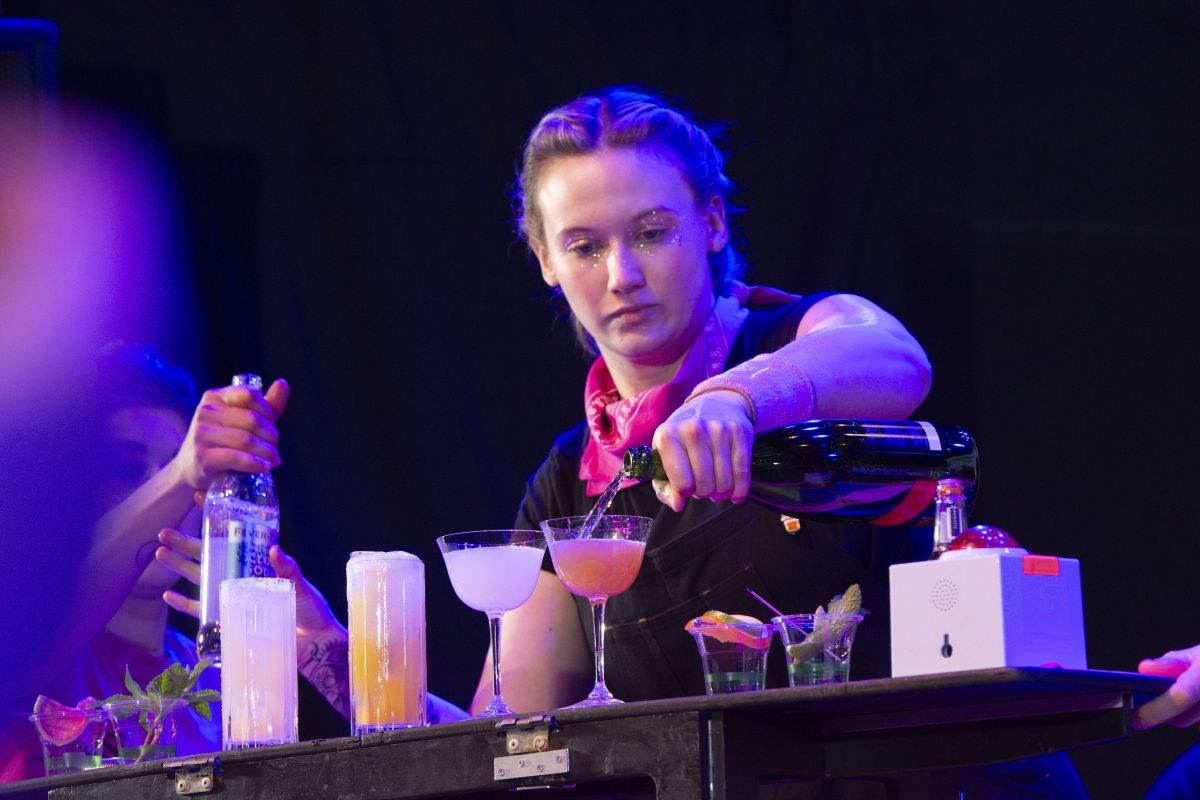
Competitor Hope Rice of The Crane Clubu00a0finishes up the final cocktail of her round, an Old Cuban, with a pour of G.H.Mumm Champagne. The Old Cuban is a drink created by legendaryu00a0bartender Audrey Saunders. Elyssa Goodman

At Nationals, between 16-18 people will compete for a scholarship to the Beverage Alcohol Resource’s 5-Day Program, featuring an opportunity for certification with the “Curriculum for the World’s Most Comprehensive Distilled Spirits & Mixology” held at once a year at the Culinary Institute of America in Hyde Park, New York, not to mention countless brand and networking opportunities. Marrero says that Mix usually speaks to contestants beforehand and reminds them that “everyone knows you competed.This is a job interview, so go out there and network, do your best, because whether you’re the winner or not, there’s opportunities that come from this.” Later this year, Speed Rack will also return to Canada and Australia.

Speed Rack becomes not just a way to bring awareness to the gender gap in bartending and the beverage industry, it’s how the gap starts to close. Build a community, reward people for doing a good job, and give them the resources to continue pursuing their education in the field. So it’s fitting that even before the audience starts to arrive at Melrose Ballroom, there’s something electric happening. What’s at stake is not just about cocktails.The venue’s two floors will eventually fill up entirely, and over $14,000 will go to charity. The hot pink fireballs of Speed Rack’s logo and matching pink lights cast a glow across the venue, where sponsors of the event, including brands like Cointreau and Patron, among many others, have set up booths and started mixing cocktails of their own for guests. It’ll be a night full of industry folks, though anyone is welcome to attend.
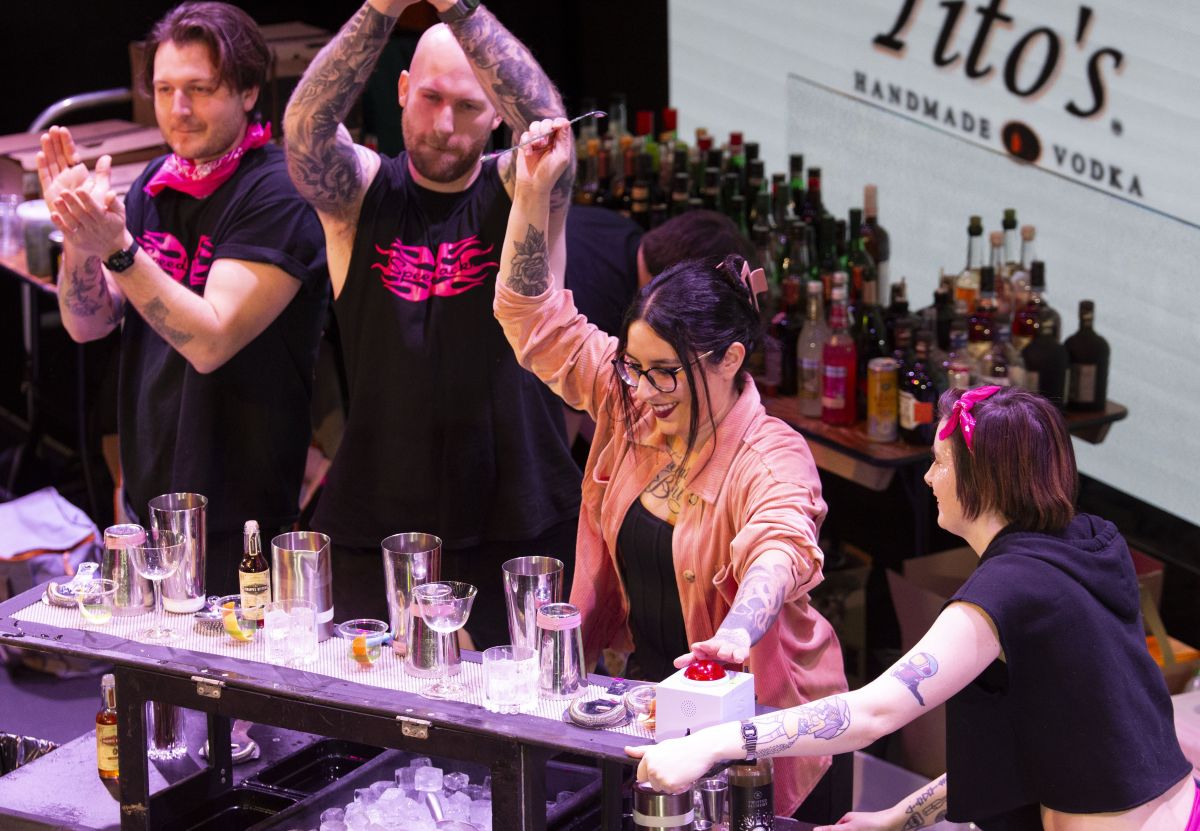
Competitor Ileana Hernandez just before her round begins. Ileana works at Greenwich Village restaurant Llama San. Elyssa Goodman

Contestants start to mill about the space–they’ve dotted their faces with pink glitter, tied hot pink Speed Rack bandanas around their necks, spotted clothing with pink rhinestones, painted on thick cat eye liner, donned olive cocktail rings, and more. Hugs are thrown with abandon.

“We have so many fresh new faces, I just wanna let y’all know drinking culture in New York is in great hands,” Marrero says, to uproarious applause as she and Mix begin the event. With volunteer barbacks, the first contestants prepare their stations. Ice fills glassware, and sponsors’ bottles are lined up behind the bars for easy access. The host tonight is Vance Henderson, lauded National Brand Ambassador for Hendricks Gin, decked out in hot pink sunglasses and a matching feather boa. He introduces the judges, who are also deeply respected in the beverage industry: Ignacio “Nacho” Jimenez, Operating Partner of cocktail bar Superbueno; Iain Griffiths, co-founder of Bar Snack; Charlotte Voisey, Tales of the Cocktail’s Executive Director; and Amy Racine, Beverage Director and Partner of JF Restaurants.
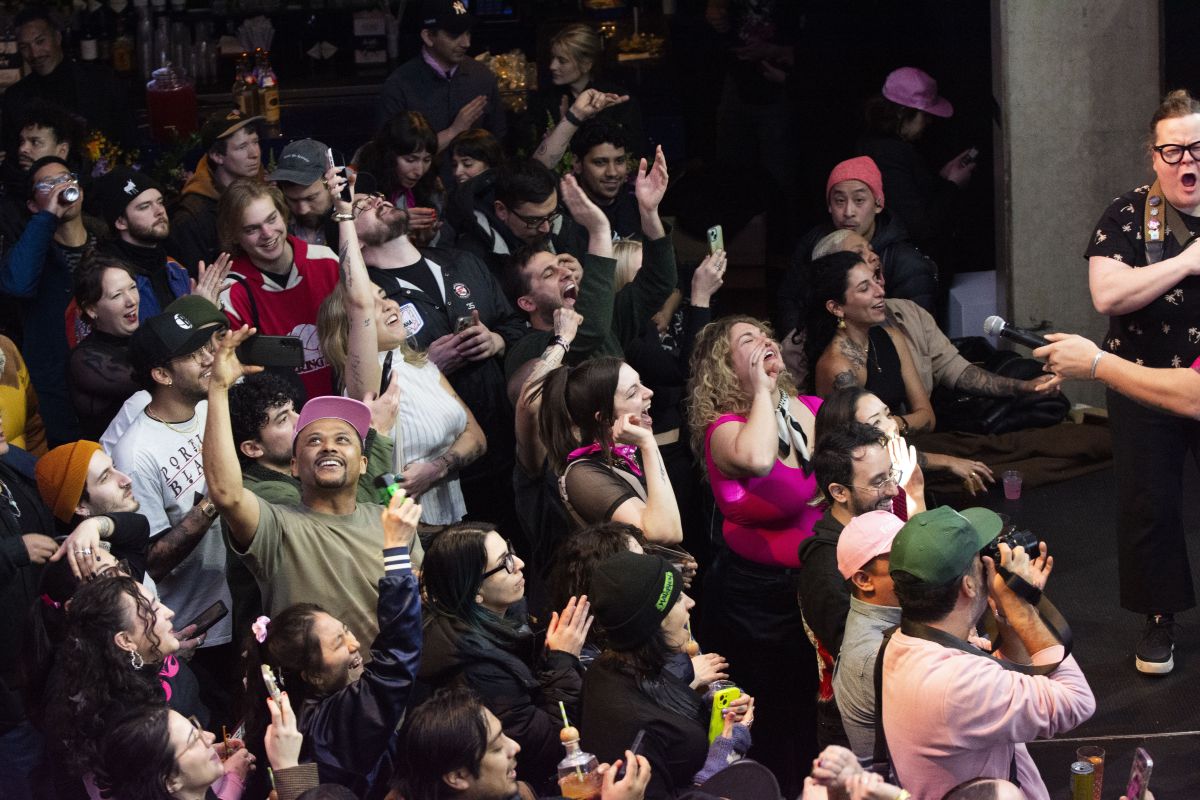
Full of friends and industry professionals, the audienceu00a0cheers for the annualu00a0New York Regional Speed Rack competition. Elyssa Goodman

I feel jitters just hearing their credentials, but it’s part of the bartenders’ presentation tonight to remain calm and poised. The event, Marrero says later, “showcases what happens on a Friday night, Saturday night, when you’re in a craft cocktail bar and you’re working service, and then four cocktail luminaries walk in and ask for a round, and you have to make that round perfectly, beautifully and fast, really fast.” The drinks must be “balanced, look beautiful and be made with grace behind the bars,” Speed Rack says in its competition notes. The event is intense–the opportunities it gives participants could really change their lives if they want it to–but the mood remains high: Henderson introduces each contestant not unlike fighters in a boxing match, and volunteer barbacks, also industry people, are personal hype folks throughout the night, waving fans and cheering on participants.

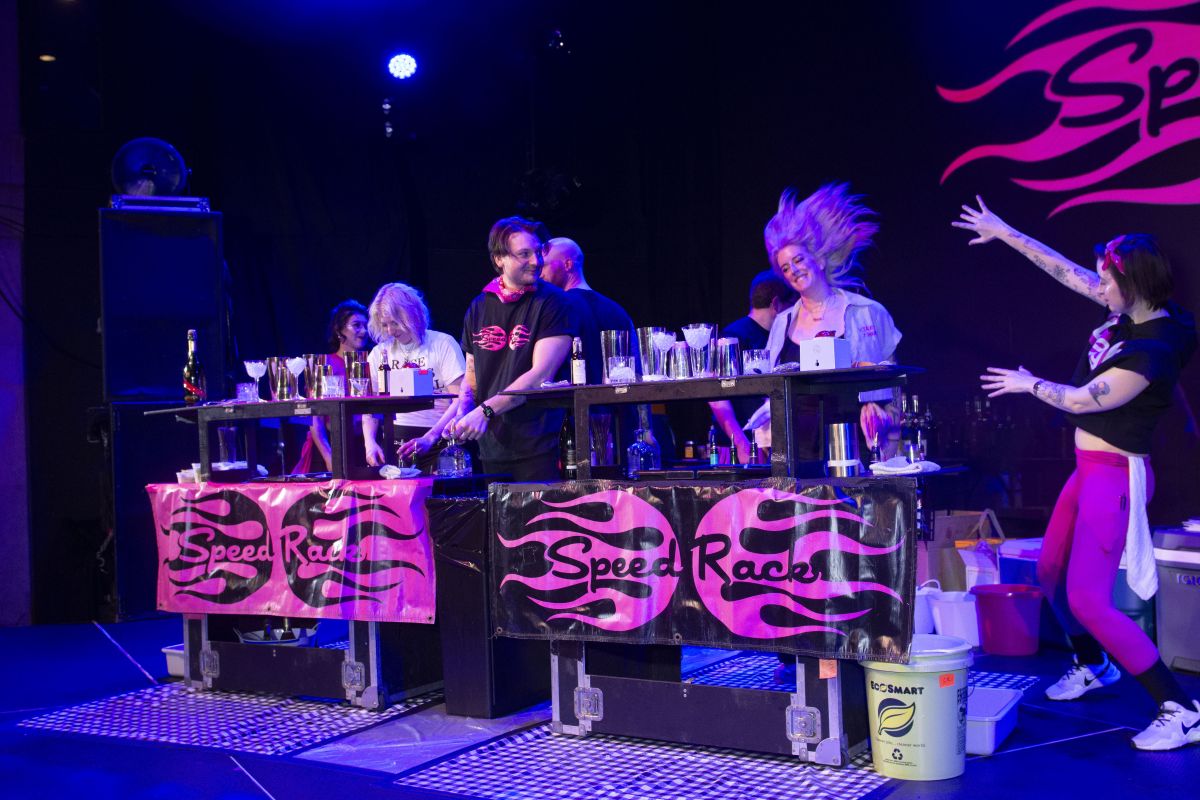
With each round, contestants will be given four classic cocktails to produce, one selected by each judge, and the round will be over in a matter of minutes–never longer than five, and even four would be pushing it. The bartenders become a choreography of shaking and stirring and pouring and tasting (and, at least once, egg separating) and when they’ve finished all four beverages, they slap a buzzer to stop their clock. Bensonhurst, Suffering Bastard, Whiskey Sour, Cosmopolitan, Nippon and other cocktails course over the bar through the evening, and soon the judges weigh in. Was it perfect? Too much tequila? Too herbaceous? Was the garnish placed appropriately? Did the drink need to be more diluted? While they wait for final scores, bartenders high five friends like they’re autographing headshots at a movie premiere, they pour shots into mouths, they can’t believe they did it again. With final scores, the winners advance.

As the night goes on, more and more people push toward the front. People cheer on their friends, bang on the stage, a flamboyant chorus of “WOOOOOOO” and “GIRLS! GIRLS! GIRLS!” and the girl next to me who looks a contestant dead in the eyes and says “Rachel, you’re a bad bitch. BAD. BITCHES. ONLY,” with a half-empty cocktail in her hand.
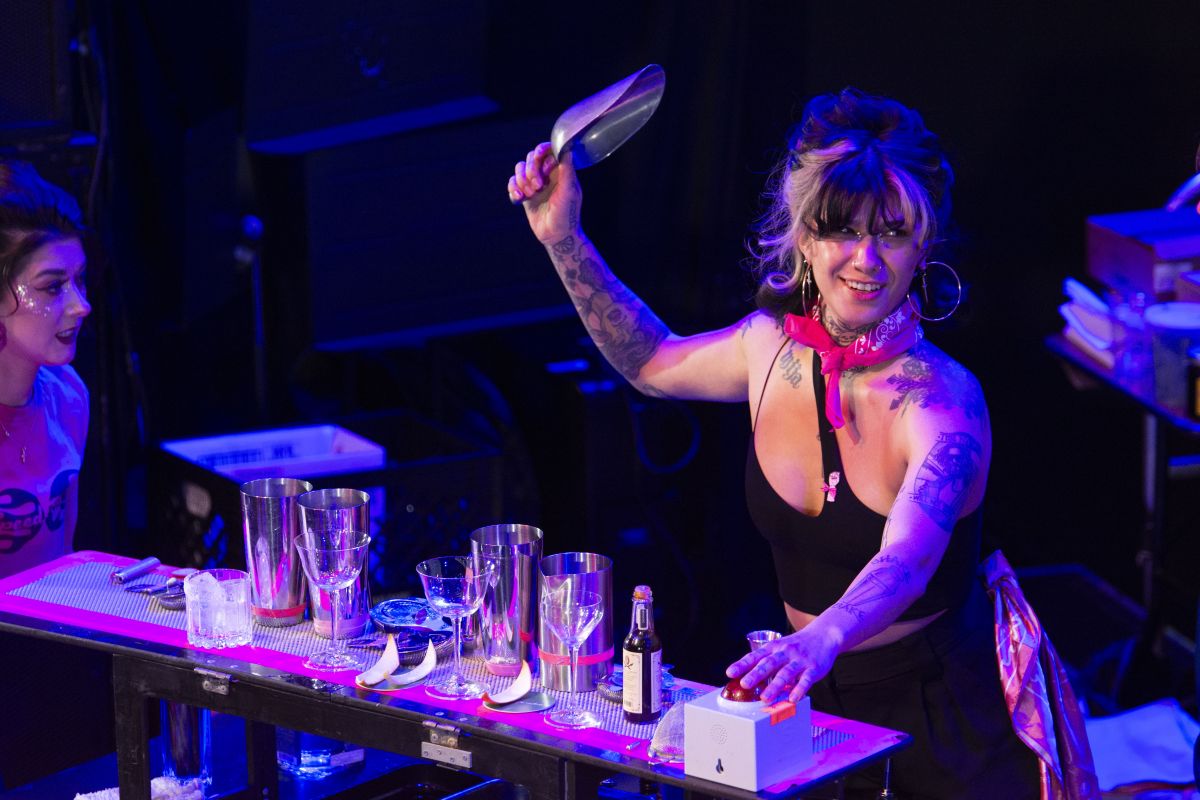
Competitor Rachel Prucha, of Mister Paradise and Hawksmoor,u00a0ready to take on her round. Elyssa Goodman

The music gets louder. In the last round, the finalists are indeed the aforementioned Rachel, Prucha of Mister Paradise and Hawksmoor, and Lana Epstein of The Portrait Bar. Taking their places behind the bar, all they have to do now is make four perfect cocktails while a few hundred of their closest friends and industry professionals scream and chant and applaud. It’s another dance, of whiskey and raspberries and straws and tonic and ice and god knows what else, into jiggers, into shakers, into mixing glasses, until that buzzer is banged for the last time and the cocktails are out, in front of the judges. The deliberation feels endless. It’s some four hours from when we started and nerves are askew. More shots! More cheering! Lana, Lana! Rachel, Rachel!

Lana wins, and then something amazing happens–a swirl of friends and bartenders who competed rush the stage to cheer her on, her name chanting from their lips as they embrace her in a giant hug and pink petals fall from the ceiling. People put her on their shoulders, they take pictures, they pour bubbly into her mouth like it’s the Super Bowl. The joy is genuine, and to me it’s the most moving part of the evening because it’s ultimately what Speed Rack is actually about: women supporting women.
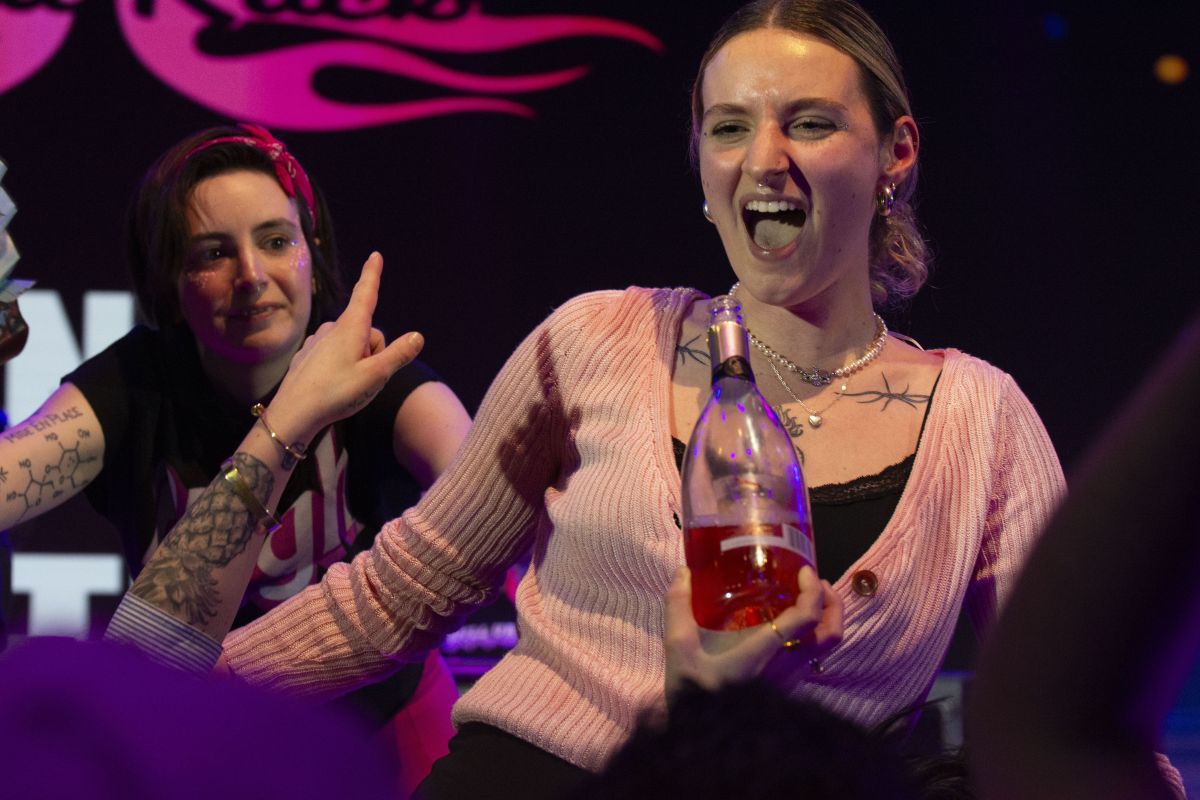
Bartender Lana Epstein, of The Portrait Bar,u00a0wins Speed Rack's New York Regional competition. Friends and fellow competitors raise her up and offer bubbly to celebrate. Elyssa Goodman

“The community vibe of, ‘it’s not just one of us, it’s all of us,’ is really important,” Marrero says. She believes Speed Rack can keep regenerating itself because it really is an event for the community. There’s an understanding that the platform represents inclusivity, she continues, giving basic training to everyone and sharing foundational knowledge, and this helps people move up in the industry and continue sharing.

Marrero doesn’t remember a lot of men helping her with this when she started–it was women. She hopes in the future there will be even more women and femme identified individuals in ownership, partnership, and leadership positions throughout the beverage industry. While she says many people come to the industry for a flexible work life as they pursue an artistic endeavor, she already sees Speed Rack’s impact making space for the next generation. “The future is in, the more people that we continue to recruit to stay in the industry,” she says. “The rest of us can then go on to get funding, open places, and give those folks a spot to grow and and really, light the world on fire one cocktail at a time.”

Stay up to date with Speed Rack on Instagram, and buy the Speed Rack cocktail book A Quick Drink: The Speed Rack Guide to Winning Cocktails for Any Mood, published in 2024. A portion of Marrero and Mix’s royalties also go to breast cancer charities.

And if you’re interested in competing, learn more here.
  • European Union enforces ban on destroying unsold fast-fashion clothing by major companies
    Photo credit: CanvaThe European Union hopes to reduce fast-fashion waste.

    A new rule adopted by the European Union is intended to reduce landfill waste while holding major clothing manufacturers accountable.

    Starting July 19, the EU prohibits large companies from destroying unsold clothing, accessories, and shoes under the Ecodesign for Sustainable Products Regulation (ESPR). The regulations will expand to cover medium-sized companies in 2030.

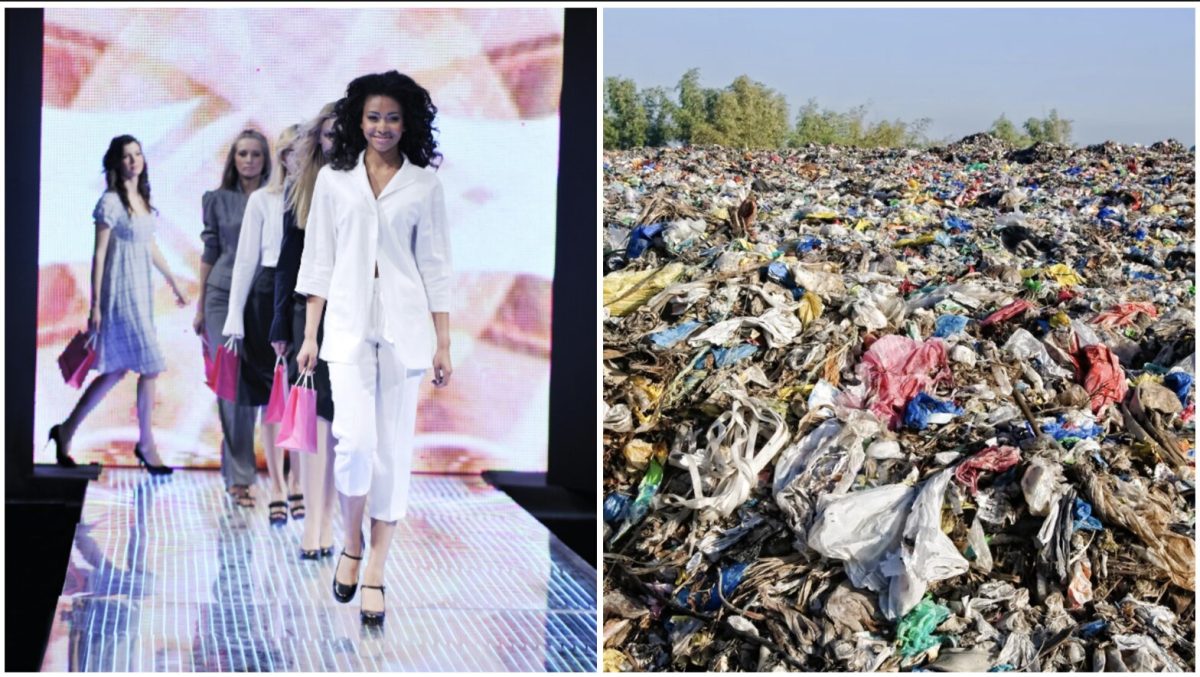
    Fast fashion has become a major environmental concern. As retailers rapidly cycle through trends, unsold clothing often ends up in landfills or is destroyed to make room for new inventory. Many garments are made from synthetic fibers that can release greenhouse gases as they break down and shed microplastics that may contaminate soil and waterways.

    What’s the ban’s purpose?

    The ban is intended to reduce the amount of unsold clothing that large manufacturers dispose of. According to the European Environment Agency, between 264,000 and 594,000 tonnes of unused textiles are destroyed across Europe each year.

    Instead of destroying unsold clothing, companies will need to find other ways to keep those products in use. That could mean selling excess inventory at a discount, donating it to charities or social enterprises, or preparing it for reuse through repair, refurbishment, or remanufacturing. When those options aren’t feasible, the materials can be recycled.

    While the regulation is primarily focused on reducing the fashion industry’s environmental impact, the EU also hopes it will strengthen the economy by encouraging more sustainable business practices. The ban incentivizes companies to design products that are more resource-efficient, durable, reusable, and easier to repair or recycle. In turn, consumers should benefit from higher-quality products that last longer and generate less waste.

    Companies may destroy unsold clothing and footwear only in limited circumstances, such as when the items are damaged, unsafe, counterfeit, infringe intellectual property rights, or have been rejected by charitable organizations. Businesses relying on these exemptions must provide supporting documentation, such as test results or other records, to justify the destruction. Even then, they must follow the EU’s waste hierarchy, which prioritizes reuse and recycling over disposal. Companies are also required to publish annual reports detailing the unsold products they have discarded.

    National authorities will enforce the ban and may impose fines on companies that violate its requirements, including failing to maintain records for at least five years to support inspections. To help reduce the administrative burden, businesses may use existing customs and logistics codes when reporting the products they discard.

    Why recycling isn’t enough

    Recycling clothing can be a complicated and labor-intensive process. It often involves separating fabrics, dyes, synthetic fibers, and natural textile materials before they can be reused. That’s not to say it isn’t worthwhile. Instead of ending up in a landfill, recycled textiles can be turned into new clothing, home insulation, carpet padding, and other products.

    Still, recycling isn’t a cure-all. The EU hopes the new ban will encourage companies to keep usable clothing in circulation for as long as possible through resale, donation, reuse, or refurbishment before recycling becomes necessary. In doing so, the regulation aims to create a more circular economy rather than allowing piles of unused clothing to continue growing.

    This movement hopes to encourage clothing manufacturers to produce higher-quality products and reshape the industry as a whole. Making clothing from higher-grade materials with durable stitching that’s easier to repair can help reduce waste. While critics argue that doing so could reduce the number of garments sold each year, many say better-made clothing is worth the higher price—especially if consumers end up buying fewer replacement items over time.

    What can you do with old clothing?

    There are plenty of things you can do with old clothing around your home. If an item is too damaged to donate, its fabric can be repurposed for crafts or used as cleaning rags. And if you’re handy with a needle, there are countless ways to upcycle old clothes into new outfits, accessories, or other useful items with a little inspiration from the Internet.

    Giant corporations and everyday people alike can do their best to make the most of the materials they have, helping save money and reduce waste.

  • European Broadcasting Union offers guide to reduce sexualizing camera angles of Olympic women athletes
    Photo credit: CanvaA new guide has been introduced on how to respectfully broadcast woman athletes.

    Being an athlete is tough, especially if you’re an Olympian. They sacrifice their time and bodies in order to achieve peak physical condition. There is also the mental pressure to compete against the best. The last thing they should worry about is being objectified and sexualized online. 

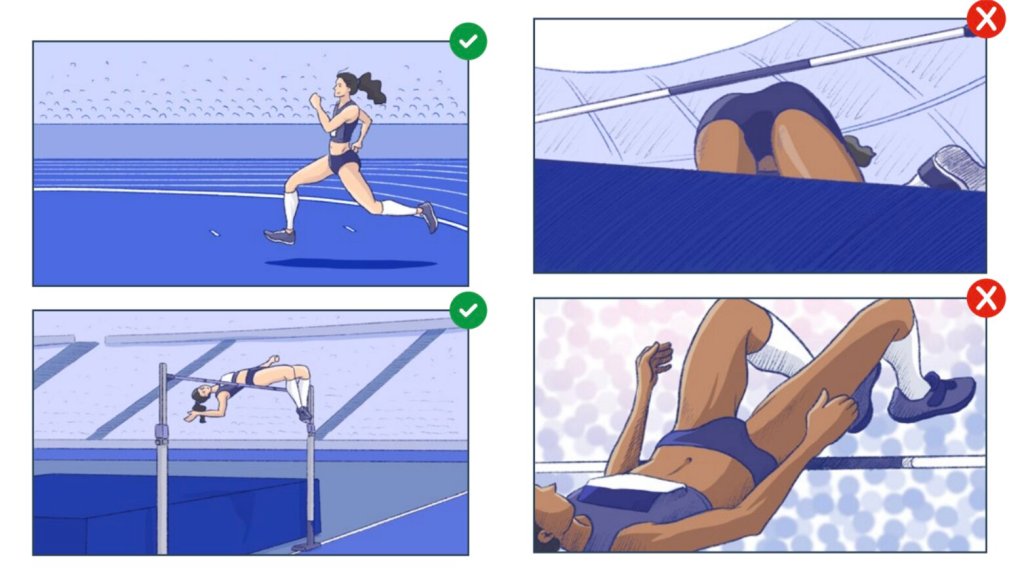
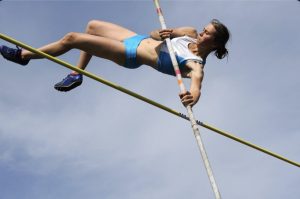
    With this in mind, the European Broadcasting Union wants to help. They offered a booklet to broadcasters titled Raising the Bar: Guidelines for respectful media coverage in women’s athletics. The 23-page guide shows how camera placement choices and editing could potentially compromise an athlete. It also offers broadcasters guidelines for how to set up camera shots and show slow-motion replays that won’t sexualize or present athletes in undignified poses. 

    athletes, infographic, olympians, guide
    Screenshot

    Focusing on the sport, reducing harassment

    These guidelines come as multiple stories about women athletes being harassed online have surfaced. Many misogynistic posts about athletes have come from slow motion footage focused on certain parts of the athlete’s body. 

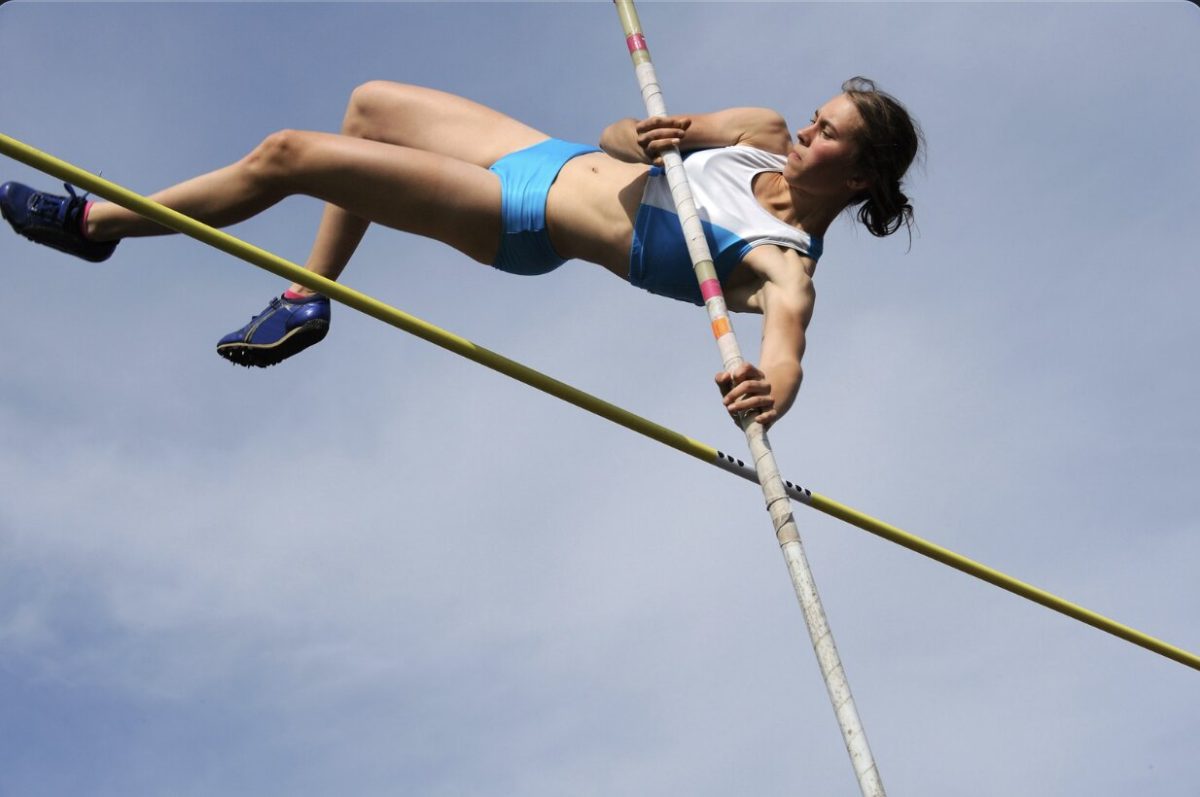
    “The sexualization of women athletes through selective camera angles and editing choices continues to be a significant concern across many sports broadcasts,” wrote Glen Killane, executive director of EBU Sport in the booklet. “Lingering shots on bodies, low-angle cameras that capture revealing views, and excessive slow-motion replays that serve no technical or storytelling purpose are among the issues observed in the media coverage of women’s athletics competitions today.”

    These new broadcast guidelines and suggestions are backed by Serbian long jumper Ivana Španović, British Olympic pole vaulter Holly Bradshaw, and Croatian high jumper Blanka Vlašić. Vlašić has spoken out regarding the equal visibility of women’s sports. Bradshaw has spoken out against the discomfort and sexualization of Olympic women athletes due to their tight-fitting uniforms.

    “I first-hand have received social media abuse and witnessed inappropriate videos online of myself and colleagues when slow motion content of us competing is captured,” wrote Bradshaw in the guide. “Athletes want to enjoy themselves doing the sport they love without feeling uncomfortable or anxious about the footage being shown live. Many athletes, myself included, have been in competitive scenarios where they are more focused on the cameras instead of their own performance.”

    What the guide provides

    The guide provides visual aids for broadcasters along with insights from the athletes to explain why certain shots would be preferred. Broadcasters are requested to avoid tight shots from the back of athletes. They’re also asked to avoid low camera angles from underneath. They recommend shots above the pelvis or ones that don’t linger onto commonly sexualized areas of the body. They recommend wider shots so the audience can see the technical ability being displayed by the athlete. Overall, the point is to focus on the athletic performance rather than close-ups of the athlete.

    Currently, there is no enforcement of these guidelines or penalties if a sports broadcast doesn’t adhere to them. However, there is value in knowing which broadcasts will focus on the athletic contests rather than an athlete’s appearance. This will help the competitors focus on how they do rather than how they look when the cameras are on.

  • The summer concert state rankings: Which states pack more festivals, shows, and tours in 2026
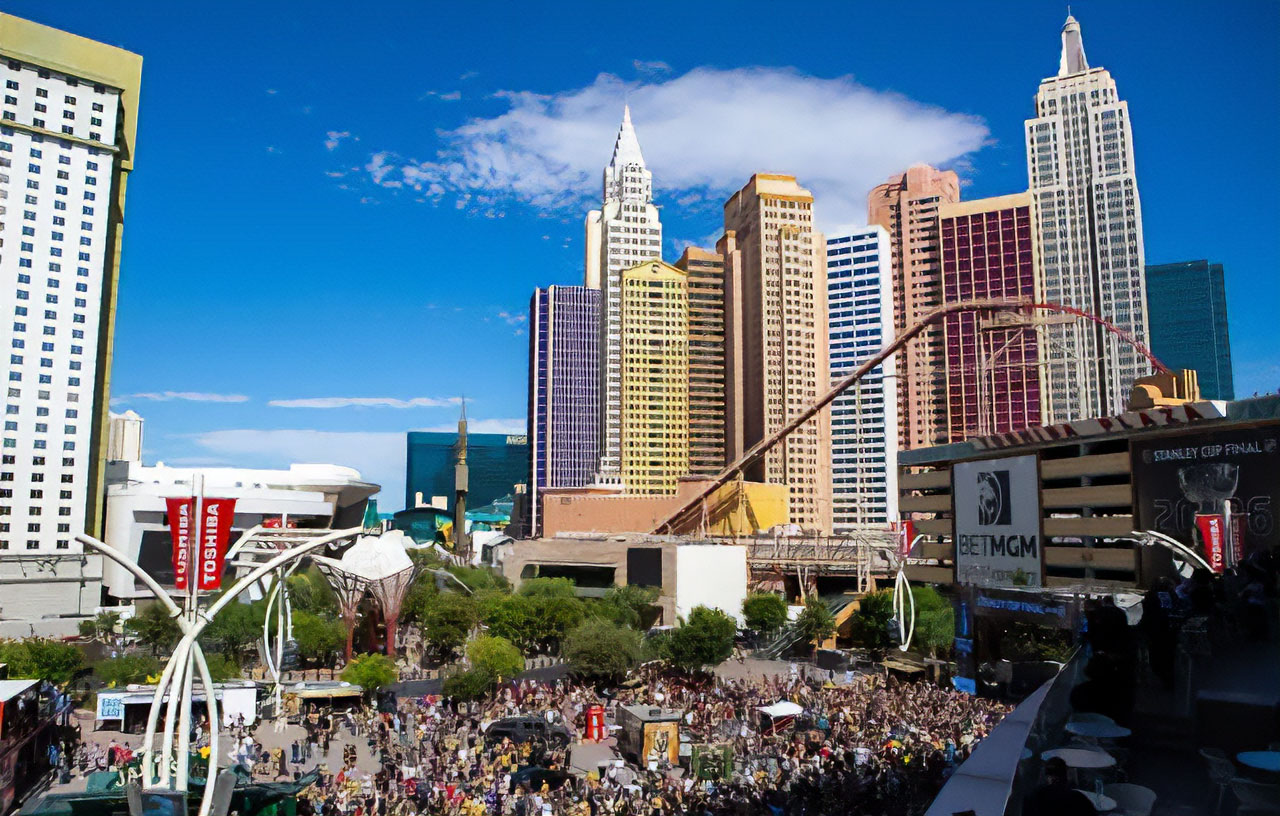
    Photo credit: Matthew Bolt // Icon Sportswire via Getty ImagesILLENIUM performs a free concert for fans prior to the start of Game 3 of the Stanley Cup Finals between the Vegas Golden Knights and the Carolina Hurricanes on June 06, 2026 at T-Mobile Arena in Las Vegas, Nevada.

    Trevor Mahoney

    Summer 2026 is shaping up to be one of the densest live music seasons in recent years. From packed festival calendars to a resurgent touring industry, a handful of breakout U.S. states are finally getting the traffic they deserve.

    Not all states are created equal when it comes to live music density, though. ThatsThem has compiled per-capita concert data, venue infrastructure metrics, and festival schedules from leading sources including the Recording Industry Association of America, Pollstar, and the National Independent Venue Association to create a list of 15 standout locations this summer.

    15 of the most concert-dense states in Summer 2026

    1. Nevada

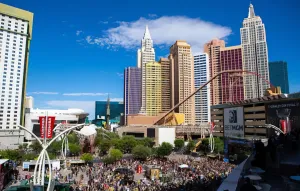
    Las Vegas leads the nation in concerts per capita in 2026. According to an analysis on the website of Princess Polly, a clothing brand, nearly 3,500 concerts are listed in Las Vegas alone, translating to approximately 150.67 concerts per 100,000 residents. This is undoubtedly the highest concentration in the country. The residency model means the Strip always has something major running, regardless of the season, but the Las Vegas Summer Concert series is the standout event.

    2. Tennessee

    Nashville ranks second in concert density nationally, with 6.76 venues per 100,000 residents. This is the highest venue density among top-ranked cities and equates to 1,148 concerts in 2026. Bonnaroo’s return to Manchester, Tennessee in June anchors their summer calendar on top of nonstop club and arena action across the entire state.

    3. California

    California dominates by sheer volume alone. Research from the Recording Industry Association of America counts over 80,433 music establishments in the state, with music contributing more than $51.4 billion to gross domestic product. The summer calendar alone includes Outside Lands in San Francisco, a dense SoCal arena circuit, and Coachella’s long tail of satellite events that carry into the fall.

    4. New York

    New York generated $24.9 billion in music industry value and supports 210,878 music jobs in 2020, which is the highest job count among all states. The summer festival circuit reflects this depth. The Governors Ball, featuring Lorde and A$AP Rocky as headliners per Variety, is followed by a packed arena season through Labor Day.

    5. Illinois

    Chicago’s Lollapalooza remains one of the best-attended urban music festivals across the whole country, with around 100,000 people turning up per day. The city’s venue ecosystem, from the Riviera to the United Center, also keeps the calendar full beyond just a single festival weekend.

    6. Texas

    Texas punches well above its weight on music infrastructure, with over 127,993 songwriters and $26.6 billion in annual music industry economic output. In fact, it’s second only to California nationally. ACL Fest’s October dates are the main headliner event, but Austin’s live music scene means something notable is happening every weekend.

    7. Colorado

    Denver ranks fifth nationally for concert density, with 1,766 concerts listed in 2026 and 59.41 concerts per 100,000 people. The real draw, though, is Red Rocks. The event calendar of this outdoor amphitheater boasts a summer schedule that many serious concertgoers are planning vacations around this year.

    8. Georgia

    Atlanta holds the title of “premier U.S. city for music aficionados” according to one 2026 study highlighted by Spin Genie, scoring more than 8.74 points out of 10. The city boasts 188 upcoming events and 577 musical artists per 100,000 residents.

    9. Florida

    Florida’s music economy supports 169,706 jobs and adds $9.3 billion to the U.S. GDP, fueled by Latin, pop, and Southern rock scenes. Welcome to Rockville in Daytona Beach is their signature event, while the Latin and pop circuit continues to run year-round.

    10. Washington

    Seattle ranks 10th among top U.S. concert cities with 1,304 concerts listed in 2026. The city’s venue density, anchored by Climate Pledge Arena and a dense club circuit in Capitol Hill, helps to keep national tours running even in the summer months.

    11. Louisiana

    New Orleans ranks second nationally in SCCG Management’s live music city analysis, and The Big Easy plays host to three major festivals in 2026. With 302 concerts planned and an average concert attendance of 74, the city’s extensive live music culture is on full display this year, anchored by the genuine local community engagement as opposed to tourist capture alone.

    12. Minnesota

    Minneapolis ranks third among U.S. cities for live music in 2026 per the same SCCG Management study, with two major festivals, 1,055 concerts listed, and an average attendance of 52. The Twin Cities’ independent venue scene, most famous for First Avenue, is truly unmatched.

    13. North Carolina: The first breakout state

    Asheville has emerged as one of the most-cited breakout music cities in 2026, with more than 61 upcoming concerts and festivals listed on music resource Bandsintown alone, including AVL Sounds Fest in August and MAJACE Festival in July. The city is small enough that shows still feel like unexpected discoveries..

    14. Pennsylvania

    Pennsylvania supports 114,731 music jobs and generates $6.3 billion in music GDP, ranking among the top six states nationally for music economic contribution. This is spread across Philadelphia’s festival-heavy summer season and Pittsburgh’s growing independent venue scene.

    15. Idaho: The second breakout state

    Boise is also one of the most-cited “rising” live music markets in the U.S., with 2025 setting concert attendance records and 2026 already tracking to match or exceed them. What makes the city notable isn’t its scale, but the fact that national tours are now coming through as a primary stop.

    The music map is changing nationally

    The traditional top tier states of Nevada, New York, California, and Tennessee are all holding strong at the top of the list of most-visited states for music. However, the story of summer 2026 is the states on the rise. Colorado’s Red Rocks circuit, Atlanta’s per-capita chokehold, and the emergence of Asheville and Boise as new hot spots show that the live music scene is shifting dramatically.

    This story was produced by ThatsThem and reviewed and distributed by Stacker.

Explore More Culture Stories

Film & TV

European Broadcasting Union offers guide to reduce sexualizing camera angles of Olympic women athletes

Culture

The summer concert state rankings: Which states pack more festivals, shows, and tours in 2026

Internet

The church fathers of early Christianity are showing their swag – on TikTok

Culture

Why Gen Z is falling in love with film photography