
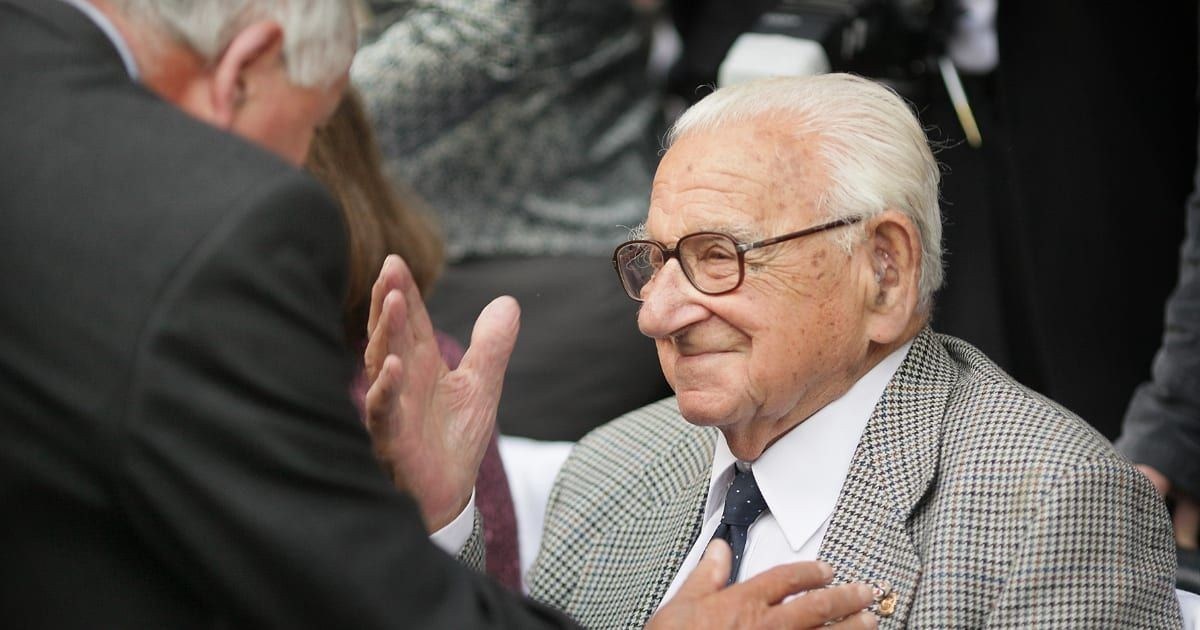
The Holocaust remains one of the darkest chapters in human history. It was a period marked by the horrific treatment of Jews, who were imprisoned in concentration camps and subjected to extermination in gas chambers by the Nazis. Despite these atrocities, many Jews managed to escape, some through sheer luck and others via organized escape routes. While figures like Irene Sendlerowa and Oskar Schindler are celebrated for their heroic efforts during this time, the remarkable story of Nicholas Winton is less well-known. Winton saved 669 children from potential Nazi execution by securing their safe transport to Britain.
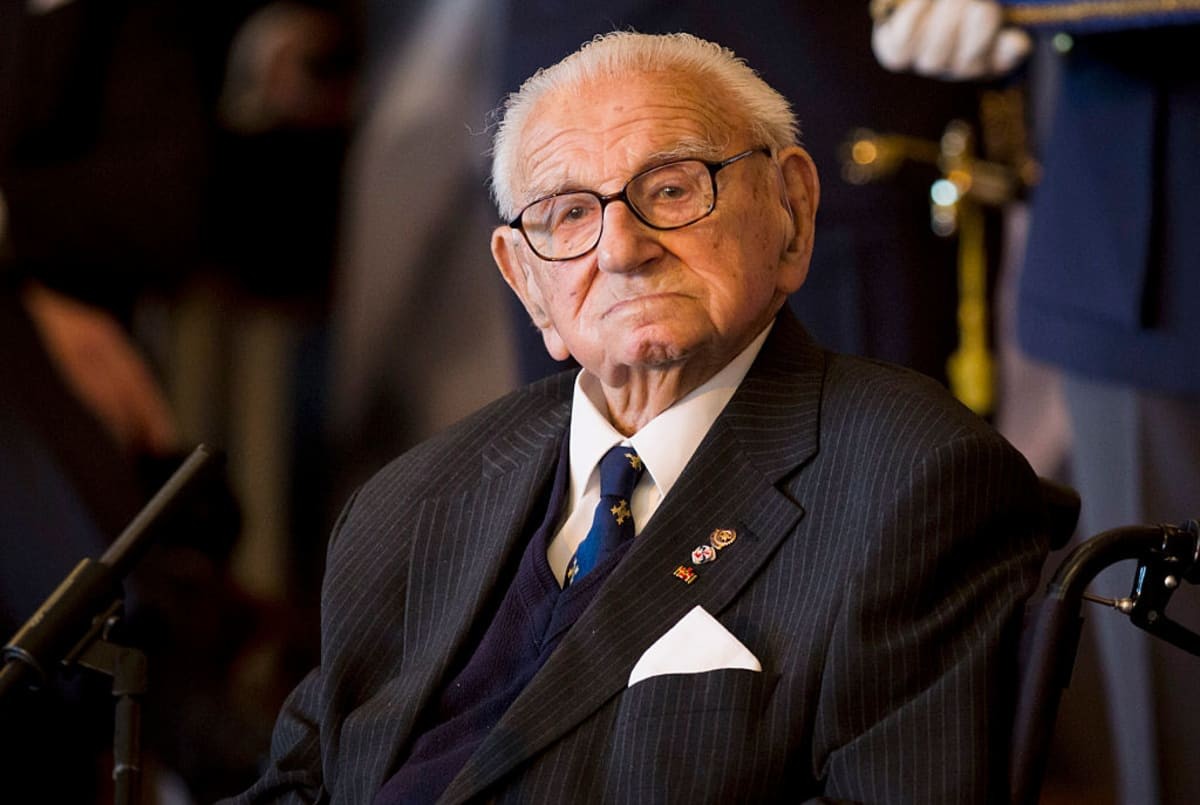
Image source: Sir Nicholas Winton while receiving the Order of White Lion, the highest order of the Czech Republic. 105-year-old Winton saved 669 mostly Jewish children by organizing their escape to Great Britain (Photo by Matej Divizna/Getty Images)

Interestingly, the world may have never known the valiant efforts of Winton had his wife not discovered a suitcase in the attic of their home that contained a scrapbook with full details of the names and photographs of the children he had helped escape, according to BBC. Winton was a British stockbroker by profession and was also a committed socialist with an interest in international affairs. He had a German connection as his parents were German Jewish, who had anglicized their name to integrate into British life. By 1938, through his family contacts, he was aware of the danger Jewish families in Nazi-occupied territories faced. 
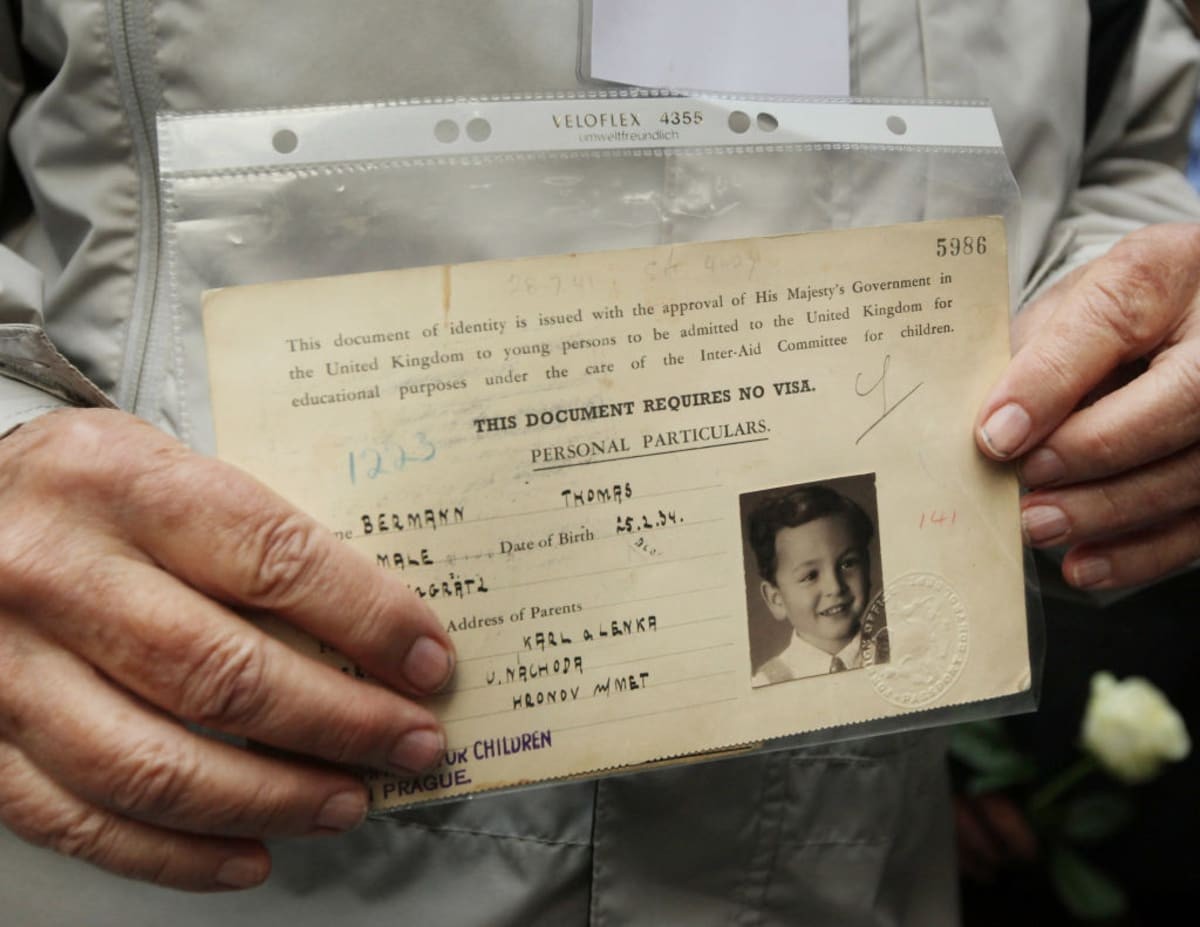
Image source: Evacuee Thomas Bermann holds his original British identity document at Liverpool Street railway station on September 4, 2009 in London, England. (Photo by Peter Macdiarmid/Getty Images)

With his friend, Martin Blake, he embarked on a mission to rescue refugees fleeing persecution before the start of World War II. As soon as he reached Prague, he witnessed a sudden rise in the Jewish population—all of whom were trying to escape the Nazis. During that period, the city became a refuge center for the Jews, many of whom belonged to Germany, Austria, and the Sudetenland, a part of Czechoslovakia that Hitler had annexed. He noticed the atrocious living conditions of the refugees in these overflowing camps and with the approach of winter, struggling to survive. Winton was distressed by the desperate plight of the many children there and had decided to help them. This is how the rescue operation came to be known as the ‘Czech Kindertransport.’
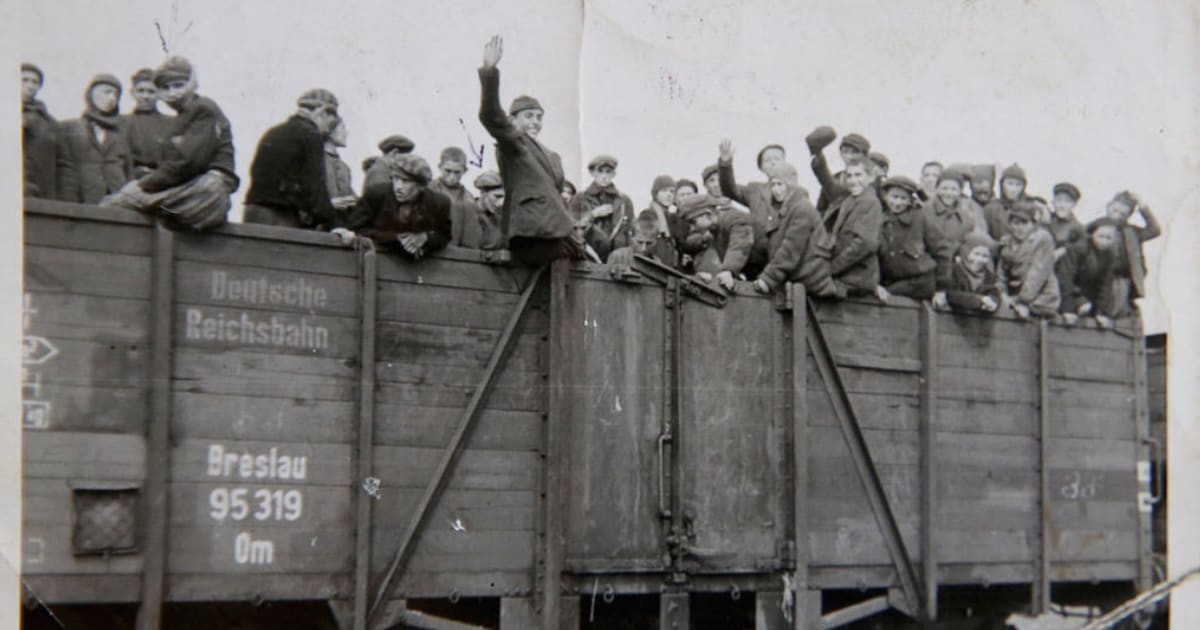
Representational Image Source : A photograph from the collection of Auschwitz concentration camp survivor Alexander Riseman (3rd-L) taken on a train, two days before the end of WWII is reproduced on December 1, 2014 in London, United Kingdom.(Photo by Christopher Furlong/Getty Images)
Image Source: A photograph from the collection of Auschwitz concentration camp survivor Alexander Riseman (3rd-L) taken on a train, two days before the end of WWII was reproduced in 2014. (Photo by Christopher Furlong/Getty Images)

Winton tirelessly worked day in and day out to secure help from other governments. Despite being an ordinary British citizen, he was confident that he could arrange the evacuation of these young refugees by train and find them a home in the UK. Desperate to find families for these helpless kids, Winton advertised in British newspapers, some of which included photographs of the children from Prague. Those haunting images helped secure their homes. His plan was successful, and he was able to place most of the children with good families.

Image source: An actress plays the part of an evacuee child at Liverpool Street railway station on September 4, 2009. A steam train carrying some of the original evacuees re-enacted the original journey. (Photo by Peter Macdiarmid/Getty Images)

Soon, the first train carrying child refugees left Prague on 14 March 1939. Between March and August 1939, Winton oversaw the transportation of 669 children from Prague to Britain, most of whom were Jewish with a few consisting of political refugees. Among the long list of children was a kid named Vera Gissing who, along with her sister, escaped Prague on Kindertransport in July 1939. Gissing narrated her story of separation from her family and thanked Winton for safeguarding his life.


In February 1988, Vera Gissing was introduced to Nicholas Winton in a BBC TV Studio show “That’s Life.” This program, hosted by Esther Rantzen, was conducted with Winton and some of the children he rescued from Prague. By the end, the audience is seen giving old Winton a standing ovation. In another episode of the program, Winton was present in the audience and Rantzen asked whether anybody in the audience was among the children who owed their lives to Winton, and in reply, more than two dozen people surrounding Winton rose, and applauded the great man.





via GIPHY


  • Australia produces so much solar power that they’re giving three hours of it away each day for free
    Photo credit: CanvaSolar energy surpluses during the day offers Aussies free energy.

    In a time when energy costs are rising, Australia is taking a different approach. The country has acquired so much solar power that they’re giving it away. In fact, those who sign up for the program will get three free hours of energy each day.

    This comes from a government-run offer dubbed Solar Sharer. It offers a free three-hour period for those who sign up. This period runs from 11:00 a.m. to 2:00 p.m. in Queensland, Victoria and New South Wales. The period runs from noon to 3:00 p.m. in South Australia. 

    Free, but not unlimited, power

    While the power is free for those who are eligible and have a smart meter, there is a daily cap of 24 kilowatt-hours (kWh). Any amount above that will be charged. However, the energy cap is based on the Australian Energy Regulator’s assessment of what a five-person household uses each day. 

    While that free period each day provides a great window to use major appliances or charge electric cars, there are some catches. Solar Sharer isn’t yet available to residents outside those areas, but energy brokers are making similar offers. There is also no guarantee that electricity rates won’t get higher outside of those free periods either.

    Who benefits?

    The program is designed for those who are a part of a solar power grid. It also benefits people who work from home the most. If the people in the household are at their job or the office, they likely won’t be able to take advantage of the deal.  

    While Energy Consumers Australia supports this offer, they are concerned about how governments and retailers relay the information to customers. In short, they don’t want people to be surprised if their electricity rates are charged higher during the non-free periods. They’re also concerned that, by their measure, only three in 10 eligible people were aware of this offer.

    “We don’t want to have people signing up to these plans assuming it will decrease their bills, when in fact it could do the opposite,” the consumer advocacy group said to The Guardian.

    There is a chance that rates won’t get higher if more people are able to take advantage of Solar Sharer. Since most electricity use is during the evening when more people are home from work, changing up the usage towards daytime hours can benefit everyone. It would still be an uphill battle as electric light is mostly used in the evening and nighttime when it’s dark.

    Similar programs elsewhere

    While there are catches, this isn’t the first program of its type. There are similar successful free energy programs in other nations. Areas such as Germany and the Nordic countries create so much green energy through wind farms that they make similar free power offers. California has also offered government programs for low-income households and farmworkers housing cheap-to-free solar energy.

    While kinks definitely need to be sorted out, creating so much generated energy to the point that it can be given freely is a good problem to have.

  • Motorcyclist trapped under a 3,300 pound car saved by Australian car salesmen
    Photo credit: @ACurrentAffair9 on YouTubeA man was saved from being crushed under a car.

    Tyler Wiebe was on his way to work on his motorcycle in Brisbane, Australia. Then a car approached in the wrong way in traffic, colliding with another car that then hit Wiebe. The accident threw Wiebe off his bike and under a car. He was trapped under the 3,300-lb. vehicle, doomed until a group of salesmen and onlookers came to his rescue.

    “I was being dragged and when it stopped, my head and chest were under the car,” Wiebe said to the Australian Broadcasting Corporation. The crash and being pinned down under the vehicle gave Wiebe several injuries. He suffered broken ribs, a broken collarbone, and a collapsed lung.

    But that would be diagnosed later. At the time, the car’s weight was crushing Wiebe to the point that he couldn’t breathe. His heart was also unable to beat, the pressure causing his eyes, mouth, and nose to bleed.

    “Initially it was ‘can I get out?’ and then it was ‘man I am dying, this is it,’” recalled Wiebe. “[My] wife and two kids are not here, and this is it.”

    Hope comes in the form of a car salesman

    After being stuck for two minutes under the car, help arrived from the nearby Auto Request Kedron, a used car dealership.

    “I was in the office at the time, so I heard the bang [and] came running to the doors,” Mick, one of the employees, said to A Current Affair.

    “I realized there was someone trapped under the car,” fellow employee Rob added.

    They rushed into action, recruiting other coworkers to help.

    “[I] saw Rob running and he was just whistling out saying, ‘Hey, boys, hurry up,’ ” Corbin recalled. “I remember seeing him, just like two legs. They weren’t moving at that time.”

    The salesmen tried to lift the vehicle up to get Wiebe to safety, but the car wouldn’t budge.

    “We tried to lift it off. We couldn’t, and then on the second attempt, we had a couple of other good Samaritans come and help us,” said Brian, another employee of Auto Request Kedron.

    Reportedly 15 people were finally able to lift the car and free Wiebe underneath. He was rushed to the hospital where he went under emergency operations. Under hospital care, Wiebe’s condition stabilized and he survived. Had he been under that car any longer, the worst would have happened.

    Wiebe was humbled and grateful to the salesmen and others who stepped up to save him.

    “I get more time with my daughters, I get more time with my family and a second lease on life, so just thank you, thank you,” Wiebe said in his hospital bed.

    Certified legends

    When he was discharged from the hospital, Wiebe set up a reunion with the employees of the used car dealership. He was able to introduce his family to his rescuers and thank them face-to-face. Wiebe presented them with matching t-shirts, each one with a logo reading “Certified Legend” on the front and an illustration of a person lifting a car over their head on the back.

    “You guys are legends, but now you’re certified legends,” Wiebe said to his heroes.

    A father and husband was saved thanks to the alertness and quick action of the nearby community.

  • Ohio local news viewers spring into action after seeing an elderly woman threatened with jail time
    Photo credit: News 5 Cleveland on YouTube/CanvaBeverly Thomas got an outpouring of support.

    Beverly Thomas was in trouble. The 79-year-old retired nurse in Willoughby, Ohio was summoned to court due to the state of her lawn. The judge told Thomas she could possibly be jailed for failing to maintain her property. Fortunately, Thomas was saved by people she never even met.

    Thomas has arthritis and tremors, making yard work incredibly difficult for her to do. She also lives on a fixed income, unable to afford either landscaping or legal bills. She had no idea what to do.

    “I went to court and heard [the judge] say that I can be put in jail over it, making it sound like a crime, then I got nervous and had trouble sleeping at night,” Thomas said to News 5 Cleveland.

    Local news viewers reached out

    After Thomas’ plight was reported on the local news, she had a knock on her door the following day. Standing right in front of her were the two people she needed most: a lawn care professional and an attorney offering their services.

    “They said, ‘We don’t know each other, but we just showed up at the same time.’ Wow, good people at that same time, amazing and reassuring,” Thomas said.

    The lawn care professional, Norburt Sanek, came across Thomas’ story while on Facebook. Since he was nearby and could do something, he felt compelled to act. He and the attorney weren’t alone.

    Dozens of people reached out to News 5 Cleveland to see how they could help Thomas. Sanek organized volunteers to help. Some even took the day off work to drive down to Thomas’ home to cut grass, pull weeds, and haul trash.

    The assistance goes national

    While significant progress had been made on Thomas’ property, Sanek knew that Thomas still needed more help that couldn’t be accomplished through human muscle. So, he set up a GoFundMe for Thomas.

    “We are asking for $6,000 to cover the cost of removing dangerous trees, a dumpster to haul away debris, paying her fines and court costs, installing a security system and building her a small garden that reflects her love of nature,” wrote Sanek on Thomas’ GoFundMe page.

    When the Western Reserve Area Agency on Aging caught wind of the story, they decided to chip in. The agency provides advocacy and assistance for senior citizens so they can live independently.

    “I know that she has a GoFundMe account going on right now and we’re actually willing to match it up to $3,000,” said Christopher Hall, the chief operating officer for the Western Reserve Area Agency on Aging.

    As of this writing, Thomas’ GoFundMe is a little over $5,000 of its $6,000 goal. Many of the donations came from locals and people across the country alike. Thomas was astounded that so many strangers would show up to help her, whether it was through volunteer work or donations.

    “I didn’t know there were kind people out there willing to help like this. I’m touched,” Thomas said. “I hope God blesses them for giving of their time to help somebody who can’t do it anymore. Thank you one and all.”

    How to help the elders in your community with their lawns

    If Thomas’ story speaks to you, you may notice a neighbor’s lawn growing neglected. It might be worth it to knock on their door and offer to mow or trim hedges. 

    If you’re not comfortable doing that or lack the tools, you can still help. Search online for volunteer groups in your area that can help this person. There are also national nonprofit organizations such as I Want To Mow Your Lawn Inc. that could provide the help your neighbor needs.

Explore More News Stories

Local

Ohio local news viewers spring into action after seeing an elderly woman threatened with jail time

Local

Iowa teen bike riders save injured elderly woman that was stranded outside for 16 hours

Local

‘But you already helped me’: Elderly woman floored as landscaper reveals $625K GoFundMe in her name

Local

While exploring trails, two friends rescue missing woman trapped in a mud puddle for 3 days