This July, the Dutch city of Rotterdam announced that it was considering a proposal to replace a stretch of its roads with what may become the world’s first all-plastic avenue. Proposed by KWS Infra, a subdivision of the Dutch firm VolkerWessels, the project, simply dubbed “PlasticRoad,” will use entirely recycled materials reclaimed from ocean dumps and incineration plants. The raw materials will then be used to create Lego-like building blocks, which the company claims may prove cheaper, easier to work with, and more durable than the asphalt used in existing boulevards. For the Rotterdam city council, PlasticRoad is just part of a broader climate initiative that includes and encourages innovative experimentation to help the densely populated Netherlands avoid undue pollution. If it takes off, KWS Infra’s project could revolutionize infrastructure across the world, simultaneously evening economic playing fields for developing nations and sparing the earth a huge chunk of pollution.


For many casual news readers, Rotterdam’s pending plastic road probably didn’t seem like such a big deal. After all, since plastics comprise up to a fifth of human waste by volume, we’ve been under pressure to develop new and innovative ways to recycle this near-immortal refuse for ages. In recent decades, we’ve managed to turn them into strong, lightweight, and cost-effective building materials (like polymeric timbers, used in many cheap modern tables and fences). Small, interlocking, and fully recycled plastic blocks have been on the mass construction market since the early 2000s, allowing almost anyone to incorporate such materials into their projects.

Over the past half-decade, especially, prefabbed plastic blocks have gone into vogue in home construction, where they’ve proven their merit again and again in increasingly public tests. By 2011, multiple companies had developed several variations on plastic bricks–some of which poured like concrete and others that stacked like it–often for use in low-cost and emergency housing. In China, Malaysia, and Taiwan, experimentation with these bricks proved that they cost up to 30 percent less than traditional construction materials, providing greater insulation, resiliency in the face of disasters, and reusability if a building was torn down. One company, angling to rebuilding housing in Haiti after the 2010 earthquake, boasted that its plastic wall slabs could turn into a house in just 45 minutes using basic tools. These plastic barriers could outperform concrete walls, then break down into a foot-and-a-half-high stack for rapid construction, potentially accelerating the nation’s recovery and revolutionizing wider housing markets in the process.

Plastic bricks became so ubiquitous and accessible that they managed to become a part of the DIY movement around the same time, with people making model houses for hundreds of dollars, building their own plastic brick-creating presses, and trying to promote the technology as a grassroots and simple solution for poor communities to develop themselves. Given the scale of use, simplicity, and proven utility of recycled plastic materials, anyone with half a brain might expect that someone would have incorporated them into roads years ago.

Yet while people have long made things like manhole covers out of recycled plastics, it appears that no one had made a wholly plastic road. Many companies, especially out of India, had started adding shredded plastic to asphalt to help local roads withstand the wear and tear of erosion in the early 2000s. But even partially plastic asphalt only recently became cost-effective, possibly helping to limit experimentation in plastic road technologies versus other construction uses. If KWS Infra manages to move from partially to fully plastic roads, this won’t be just a minor win for an expanding construction technology. It will be a major breakthrough in attempts to control one of the most insidious forms of human pollution, waste, and urban decay.

The building and repair of roads produces up to 1.6 million tons of carbon dioxide per year, almost two percent of total emissions. That’s only likely to increase as urbanization and infrastructure projects, especially in the (rapidly) developing world, skyrocket demand for asphalt. Roads aren’t just a one-shot drain on the environment, either. Under the pressure of cars, expansion and compression of extreme temperatures, and erosive power of water, roads break apart within two or three decades on average (although they’re supposed to last 50 years). Repairs and resilient additives are often expensive, meaning that roads usually decay for years, unfixed, causing polluting traffic and significant immediate risks to human life via collapse. Then in the end, they just have to be replaced entirely, compounding the pollution and waste of each new foot laid (by many times).

But, according to KWS Infra, recycled plastic materials have proven up to three times more durable than asphalt. They should be able to withstand temperatures from -40 to 176 degrees Fahrenheit without cracking, preventing erosion. Instead–as the roads will be hollow–they will provide space for safe water retention. All told, this should allow a plastic road to last three times as long as a normal road (surviving 50 years at least rather than at the outside). Since the roads will be constructed out of pre-existing plastics, their construction will put far less carbon into the air than asphalt and require less polluting maintenance in the long run. As they can be recycled again into a new road when they break down, the environmental cost of replacing them will be minimal. In the end, the technology could potentially eliminate the bulk of a major source of pollution.

KWS Infra’s plastic roads will be far lighter than asphalt, which means it will require less energy to transport and install. (There’ll be no need to lay a foundation of concrete over soft land, for instance.) This, plus the interlocking and prefabricated nature of the road, means it should only take weeks to install a new avenue, rather than months, and use less complicated tools. The same hollowness that helps to make them light will also make it easier to install fiber-optic cables, sewage mains, and other complementary pieces of infrastructure. This can even include high-tech road apparatuses, like heating blocks to prevent icing or load monitors to better record traffic data.

This ease of construction isn’t just a bonus for Dutch developers; it’s potentially a great equalizer for developing nations, for whom costly and time-consuming infrastructure projects are a necessary but slow-moving headache, holding back wider economic development. The ability to rapidly lay a road without pouring a foundation or leaning on excessive expertise, all on the cheap, with openings built into the prefabbed blocks for sewage or IT connections, could allow these struggling nations to rapidly accelerate the construction of new economic corridors, giving a swift and powerful boost to the development of their local economies and national wellbeing.

Unfortunately KWS Infra’s technology isn’t ready for the mass market yet. PlasticRoad is still in its conceptual infancy. The firm stresses that it needs to test the technique in a lab to make sure, among other things, that the surface won’t prove slippery when wet–and that it will be able to deliver on all of these awesome claims of environmental benefit and ease of assembly. Plus they still need to find partners in the recycling sector to provide them with the proper plastic excess.

Still, the firm’s confident that they’ll be able to start their experiment in Rotterdam within three years. The city’s already got a bicycle path in mind as a testing ground, and other cities have expressed interest in their technology as well. While KWS Infra has all of the backing and resources it needs to move forward, it’d be ill advised to hold our breath waiting for PlasticRoad rather than exploring other ways to cut down on asphalt pollution and help developing nations with infrastructural development. But the success of other plastic building materials and the positive reception to PlasticRoad in Rotterdam and elsewhere suggests that the project has a real chance of succeeding. And if it does, the fruits of the project could be phenomenal.

  • Overpackers love this simple ‘5-4-3-2-1’ packing rule that makes travel way easier
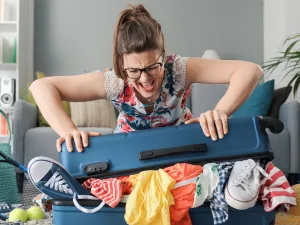
    An obvious overpack for travel.Photo credit: Canva
    ,

    Overpackers love this simple ‘5-4-3-2-1’ packing rule that makes travel way easier

    When it comes to travel, packing efficiently is a skill acquired through experience. Lifestyle and content creator Alison Lumbatis shares a helpful 5-4-3-2-1 method designed to take the stress out of packing for both seasoned travelers and first-timers. Trying to pack light while still remembering everything you need can feel a little daunting. A simple…

    When it comes to travel, packing efficiently is a skill acquired through experience. Lifestyle and content creator Alison Lumbatis shares a helpful 5-4-3-2-1 method designed to take the stress out of packing for both seasoned travelers and first-timers.

    Trying to pack light while still remembering everything you need can feel a little daunting. A simple trick is knowing exactly what’s necessary, making your bag lighter and more practical.

    @alisonlumbatis

    Calling all overpackers—this one’s for you! ✈️🧳 The 5-4-3-2-1 packing method is one of my favorites because it’s totally customizable. Prefer dresses? Swap a top and bottom for a dress. Love skirts? Sub them in for pants! These pieces should last you 1-2 weeks, depending on your access to laundry. 🔗’s to everything in bio! #outfitformulas #packinglight #styleconfidence #wardrobemadeeasy #travelcapsule #dailyoutfits #closetconfidence #vacationstyle #fashionover40 #smartstyle

    ♬ original sound – Alison Lumbatis

    Putting The ‘5-4-3-2-1 Packing Method’ Into Action

    In her trending TikTok post, Lumbatis shares a packing system she claims to be “as easy as it sounds.” Here are the basics of the 5-4-3-2-1 packing method:

    • 5 TOPS
    • 4 BOTTOMS
    • 3 SHOES
    • 2 LAYERS
    • 1 MISCELLANEOUS

    Lumbatis explains, “So all you got to do is pick out 5 tops, 4 coordinating bottoms, 3 pairs of shoes, 2 layering pieces, and 1 of anything else. Like a dress, pajamas, a hat, a belt, or any other accessories that you might need. And then of course pack as many undergarments and toiletries as you need.”

    The strategy isn’t just about simplifying and maximizing the number of items you bring on a trip. It’s also about function. “The key is to pick versatile pieces that can mix and match so you can pair them up for whatever activities you have planned for your trip.”

    minimalism, versatile pieces, functionality, packing
    Packing the necessary items
    Photo credit Canva

    Taking Pictures Can Help Plan Ahead

    Another helpful step is taking photos of your outfits to remember how everything fits together. Lumbatis offers, “You can even take pictures of the outfits with you wearing them or flat lays of the pieces and keep them on your phone or in your Notes App — So you can refer back to it on your trip.”

    Is the 5-4-3-2-1 packing method effective? These were some of the thoughts in the comments from readers hopeful to put the plan into action:

    “Great tip for me. Hate packing and never wear all the clothes I bring.”

    “Heading to Japan and I was just going to my closet to put it together. I overpack so this is sooo helpful.”

    “I’m dreading how to not over pack for such a variety of occasions, heat, and limited washing facilities. Ugh.”

    “I struggle with under packing so this is super helpful!”

    travel, adventure, alleviate stress, preparation
    Soaking up the adventure.
    Photo credit Canva

    The Science Behind Good Preparation

    Traveling is a great way to alleviate the stress and burdens of our daily lives. A 2025 study in Springer Nature Link showed travel helped people improve their long-term resilience by creating positive emotions while ecouraging self reflection. National Geographic found the benefits of travel begin even before the trip begins.

    However, preparation can have a powerful effect on the simple stresses a person might acquire during traveling. A 2025 study revealed that planning reduced anxiety and helped people prepare for delays or unexpected changes. Research in 2025 reported by AP News found that even making a simple checklist reduced anxiety and helped make for smoother trips.

    Lumbatis claims, “If you struggle with overpacking and want to create a great capsule wardrobe packing list, you’ve got to try this method.”

    People hope that traveling will relieve stress more than generate it. The 5-4-3-2-1 packing method offers a clear and simple way to pack just what you need. Careful preparation helps prevent last-minute chaos and produces a more enjoyable trip. Hopefully, this method can help you spend less time worrying and more time soaking in the adventure.

    Watch this YouTube video on incredible vacation destinations to inspire your next trip:

  • People are cheering woman’s refusal to accept the latest trend in hotel bathrooms
    Sadie has declared war on non-private hotel bathrooms.Photo credit: @bring_back_doors

    People are cheering woman’s refusal to accept the latest trend in hotel bathrooms

    “I HATE how hotels started thinking going to the bathroom is a shared experience.”

    It can be frustrating seeing change for change’s sake in the world. To be more specific, changes that are said to be done in the name of innovation and design, but are in truth ways for companies to save a buck.

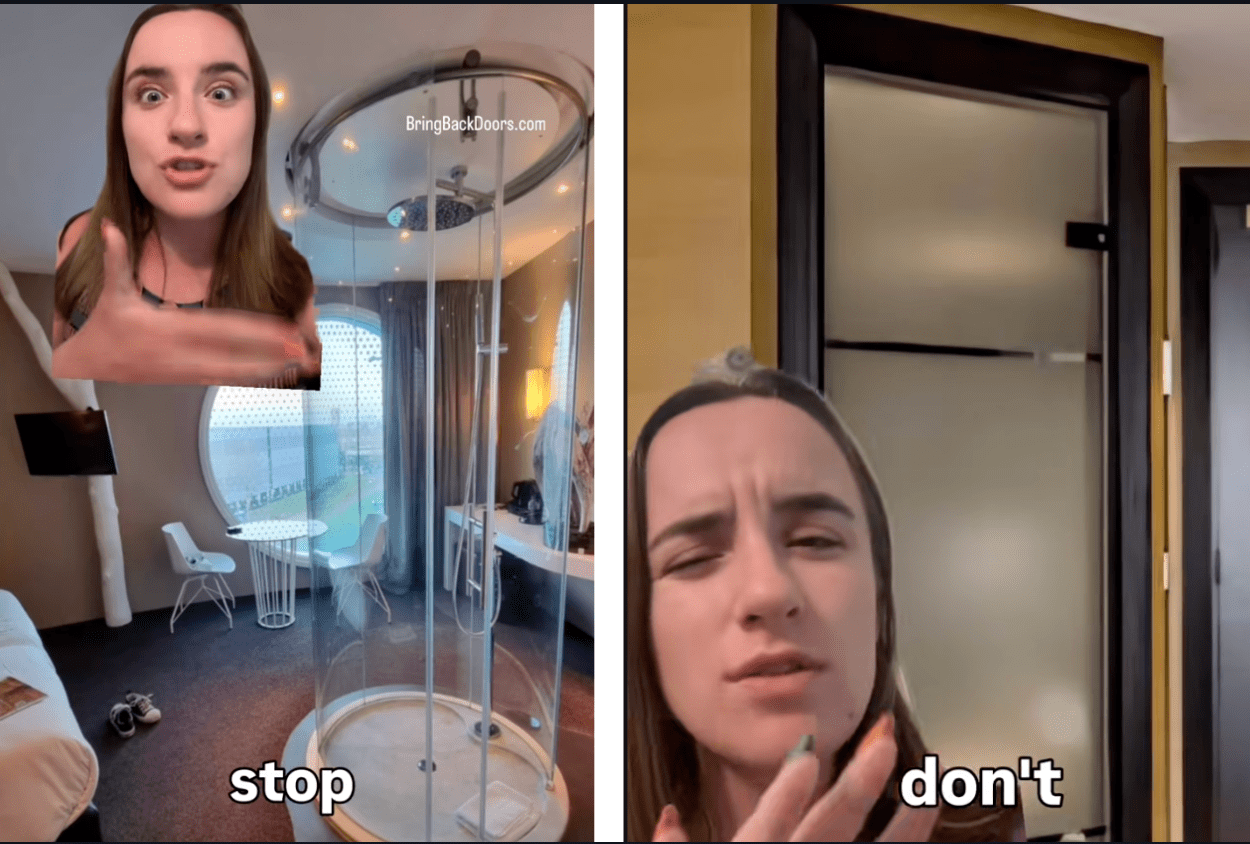
    One example that is getting attention is the bathroom doors in hotels… or the lack thereof, actually. One TikToker has had enough and has taken it upon herself to save regular bathroom doors in hotels and to point out why open-space bathrooms and glass doors just don’t cut it.

    On her @bring_back_doors TikTok account, Sadie has a collection of videos highlighting the flaws in hotel bathroom designs, with the most prominent being the lack of a regular door to the bathroom. In one viral TikTok, Sadie discussed a hotel that reached out to her, explaining that they have “foggy” glass doors to their bathroom to provide privacy. She was quick to point out that it still doesn’t provide adequate privacy. “Yes you can see through these,” Sadie said, adding that “glass doors do not close properly.”


    @bring_back_doors

    Hotel name: Alexander Hotel, Noordwijk aan Zee, Netherlands I need to be clear. Glass doors are not private. And making them foggy does not make them private. I am once again sitting here saying screw you to all bathroom doors that are not solid and close fully. And I am providing alternative hotels with guaranteed doors at bringbackdoors.com Check your hotels door situation before you book or risk your privacy. Door submitted by @mmargaridahb, DM me to submit your own bad doors. #bathroomdoors #hotel #travel #fyp Bathroom doors | bathroom design | hotel design | bad hotel design | travel fail | travel memories | travel inspo | door design | hotels with privacy

    ♬ original sound – Bring Back Bathroom Doors

    The comments rallied behind Sadie’s bathroom-door crusade

    The commenters joined in with Sadie, demanding the return of solid, closing, and lockable doors to bathrooms in hotels:

    “I HATE how hotels started thinking going to the bathroom is a shared experience.”

    “I hate how you can’t turn the bathroom light on without disturbing the other person in the room.”

    “The foggy ones are almost worse, you just get a hazy fleshy silhouette hunched over on the crapper like some kind of sack of ham.”

    “I just don’t get it, NOBODY wants this, even couples. I won’t be more likely to book two separate rooms for me and my friend/sibling/parent, I’ll just book another hotel.”

    “Love this campaign, I do not want a romantic weekend listening to the other person poo.”


    @bring_back_doors

    Hotel Names⬇️⬇️ Citizen M South Hotel (first pics) and Fletcher Hotel (third pic) both in Amsterdam. As part of this project, I’ve been emailing hotels around the world to put together an easy to reference list for people to find hotels with guaranteed doors at BringBackDoors.com And I did notice that in Amsterdam a lot of hotels were saying they don’t have doors. It wasn’t the worst city (that honor goes to Barcelona, so far I’ve only found TWO that have said yes to all doors), but it was still bad. Then I went into the comments. And kept getting people mentioning these hotels in Amsterdam. And I realized that clearly the city has a designer or architect on the loose who has a thing for test tubes. It’s horrible. Luckily, I was able to find 6 hotels in Amsterdam that all have bathroom doors in every room and have them all listed on BringBackDoors.com These hotels were submitted by so many people I couldn’t name them all. But to submit your own bad hotel bathroom send me a DM with hotel photo, name, and location! #hotel #bathroom #hoteldesignfail Bathroom doors | hotel bathrooms | hotel privacy | no privacy | travel problems | hotel issues | travel | hotel design | hotel design fail | hotel designers | design fail | hotel concept | bathrooms | Citizen M | Hotel Fletcher | Hotels in Amsterdam | Visit Amsterdam | Amsterdam

    ♬ original sound – Bring Back Bathroom Doors

    A great way to save a buck—er, I mean, ‘create a modern look’

    As many commenters asked, why do hotels have glass doors — or, worse, no doors at all—in their bathrooms? Well, this has been a growing trend in modern hotels over the past decade as a means to create a sleek aesthetic and to allow glass partitions to bring more daylight into otherwise darker sections of the room.

    At least that’s what’s being promoted to the customer. In reality, skimping on solid doors for glass ones or none at all gives the illusion that the room is bigger than it is while requiring fewer building materials. It does bring in more daylight, but mostly with the hope that you’ll cut down on electricity use for lights in an otherwise enclosed space. These reasons are also why some hotels don’t have solid walls around their bathroom areas at all.

    TikTok · Bring Back Doors

    TikTok u00b7 Bring Back Doors www.tiktok.com


    Tired of the lack of privacy? Check out the database

    To combat this trend, Sadie has developed a database at bringbackdoors.com for her and her followers to report which hotels have true, solid, private bathrooms in their accommodations and which ones do not, so people can properly plan where to stay and have true privacy during their most vulnerable moments.

    “I get it, you can save on material costs and make the room feel bigger, but what about my dignity?,” Sadie wrote on her website. “I can’t save that, when you don’t include a bathroom door.”

    Over time, the hope is that sanity and dignity can be restored as hotels realize that their glass “features” don’t have any real benefit when they don’t allow basic privacy.

  • MIT’s super-fast camera can capture light as it travels
    ArrayPhoto credit: assets.rebelmouse.io

    MIT’s super-fast camera can capture light as it travels

    It has a resolution rate of one frame per trillionth of a second.

    A camera developed at MIT can photograph a trillion frames per second. Compare that with a traditional movie camera which takes a mere 24. This new advancement in photographic technology has given scientists the ability to photograph the movement of the fastest thing in the Universe, light. In the video below, you’ll see experimental footage of light photons traveling 600-million-miles-per-hour through water.

    The actual event occurred in a nano second, but the camera has the ability to slow it down to twenty seconds. For some perspective, according to New York Times writer, John Markoff, “If a bullet were tracked in the same fashion moving through the same fluid, the resulting movie would last three years.”


    It’s impossible to directly record light so the camera takes millions of scans to recreate each image. The process has been called femto-photography and according to Andrea Velten, a researcher involved with the project, “There’s nothing in the universe that looks fast to this camera.”


    This article originally appeared seven years ago.

Explore More Design Stories

Culture

Overpackers love this simple ‘5-4-3-2-1’ packing rule that makes travel way easier

Design

People are cheering woman’s refusal to accept the latest trend in hotel bathrooms

Design

MIT’s super-fast camera can capture light as it travels

Articles

Kelsey Wells’ Side-By-Side Photos Prove That Weight Doesn’t Equal Health