Just like the body needs food to maintain a daily supply of nutrients, the eyes need fresh morning sunlight to function efficiently. Behind them, eyes hide a thin layer of nerve tissue called the retina which contains zillions and zillions of photoreceptor cells. When the eyes are deprived of these photons that come from the sunlight, it affects the retina’s ability to use energy from light to regulate the circadian rhythms of the body, and hence, overall health. Emphasizing how light is so important for human bodies, Stanford neuroscientist, Dr. Andrew Huberman (@HubermanLabClips) uploaded a short clip from an episode of his popular Huberman Lab podcast. In the clip, he calls the morning sunlight a “foundational power tool” for health.

Representative Image Source: Man opening curtains in the morning (Getty Images)

“I wake up in the morning and I want to reach for my phone,” says Huberman in the 2022 clip. “but I know that even if I were to crank up the brightness on that phone screen, it’s not bright enough to trigger that cortisol spike, and for me to be at my most alert and focused throughout the day and optimize my sleep at night. So what I do is that I get out of bed, and I go outside.”


[iframe https://giphy.com/embed/6e77MdPb39H9YBrv71 allowfullscreen=”allowfullscreen” class=”giphy-embed” frameborder=”0″ height=”100%” style=”position: absolute;” width=”100%”]

via GIPHY


Huberman goes on to explain that even though each day is different and each day has different amounts of sunlight, getting outside is the most important thing. If it’s a bright, clear day, and the Sun is at a low angle in the sky, it’s the perfect time to have a quick sunbath. If there’s cloud cover and the sun is not visible, then it becomes especially important to get out in the Sun because the body needs extra energy from light around this time.

Representative Image Source: Portrait of young woman on beach (Getty Images)

Another helpful point that Huberman churns out about the “morning sunlight viewing” process is the intensity with which one should gaze at the Sun. “If it’s a very clear day, I do not need to stare directly into the Sun,” he suggests, “If it’s very low in the sky, I might do that, because it’s not going to be very painful to my eyes. However, if the Sun is a little bit brighter and a little bit higher in the sky, sometimes it could be painful to look at.”


via GIPHY


The crux, he says, is to not look at any light, sunlight or otherwise, if it appears too bright or painful to the eyes. But as far as the morning sunlight is concerned, it’s best to not look at it through a car’s windshield, a window, or even sunglasses. It’s however, okay to wear contact lenses or eyeglasses. “So try and get outside, ideally in the first five minutes of waking, or maybe it’s 15 minutes, but certainly within the first hour after waking,” explains the neuroscientist.


Proceeding further in the podcast, Huberman explains that this thing about morning sunlight viewing is not some “biology woo-woo,” but rather a solid concept grounded in the core of human physiology. Early morning light viewing, he said, is the “most powerful stimulus for wakefulness throughout the day and it has a powerful, positive impact on your ability to fall and stay asleep at night.”


via GIPHY


What if someone wakes up before the Sun is out? Huberman recommends turning on artificial lights in the home environment. However, as soon as the Sun is out, one should go out and soak up its light.

Representative Image Source: Pexels | Pixabay

Although the light seeping from artificial lights can’t replace sunlight, it is bright enough to “disrupt your sleep if you look at them late at night.” Studies have revealed that “the effect of morning light is that it ‘advances’ the clock, while evening and night light ‘delays’ the clock.” So spending too much time under artificial lights and too little under the Sun can be harmful to health. Plus, lack of sunlight can also lead to mood disorders, depression, social withdrawals, and psychological conditions like these.


Huberman details how much time one needs to remain under the sunlight on different types of days. On clear days, for example, one usually needs light exposure for about five to seven minutes. On cloudy days, it can be about ten minutes, given the lower intensity of the Sun. And on days when the sky is dark and rainy, Huberman recommends at least twenty to thirty minutes of exposure to trigger the cortisol as well as other bodily mechanisms. Ultimately, it’s the body’s retina that processes and distributes the light energy to govern the 24-hour clock. Receiving it from a natural source ensures that eyes have as much spectral diet as they need to function efficiently.


https://youtube.com/watch?v=WDv4AWk0J3U%3Fsi%3DnHpQ-Xzx7rMaCYdQ

  • Men were stunned when asked the same types of career questions women regularly face
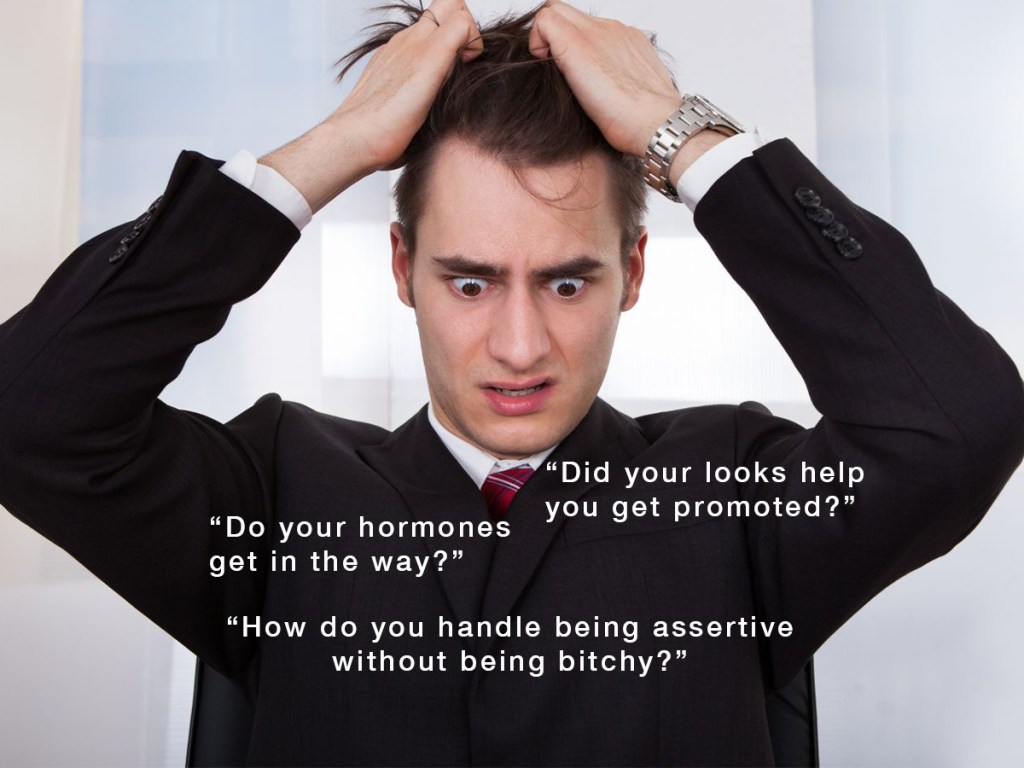
    Photo credit: CanvaUncomfortable man gets questions women often face during a job interview.

    “How much do you think your looks helped you get promoted to your position?” Unfortunately for many women, this isn’t a shocking question. Interviews, performance reviews, and typical professional interactions can reveal a double standard and workplace bias.

    In a social-experiment-style reel by lifestyle creator @bol.lifestyle, these questions were instead asked of men. Their discomfort and disbelief reveal why the standards women face regarding credibility are impossible to ignore.

    An experiment to reveal a double standard

    In the video, men are placed in an interview-style setup and asked a series of questions. Hearing these skewed questions for the first time, their expressions shift quickly from curious to confused and uncomfortable.

    Host: Have you ever been asked to just smile and look pretty or smile and say nothing in a meeting with a customer?

    One man appears somewhat shocked and uncomfortable. He quickly responds, almost dismissive at even being asked the question, “No.”

    Host: Do you think that your looks helped you getting promoted or moving up to your current position?

    Another man reflects and appears unable to answer the question.

    Host: Looking so good. By the way, I do love the shoes. Are these designer or your particular brand that you really like?

    A third man awkwardly smiles and vents some air, almost as if the ridiculous question doesn’t feel fitting at all. He doesn’t answer.

    Host: Do your hormones sometimes get in the way?

    A fourth man responds, “Hormones?” He awkwardly laughs and adds, “I don’t, I don’t know.”

    Host: Do you sometimes wonder whether you’ve been chosen for this position because you’re a man?

    Man 2 responds definitively, “No, not because I was a man.”

    Host: How do you handle in your job being assertive without being perceived as aggressive or bitchy?

    Man 1 tilts his head back and reflects on the question. “That’s uh, that’s a question that I find it very hard to relate to.” He then adds, “Because it’s not a situation I’ve been in.”

    women, career questions, role reversal, double standards
    Many microphones are held in front of a man.
    Photo credit Canva

    Real questions women face

    After this first series of questions, the video presents titles claiming: These were real questions asked to our female leaders throughout their careers.

    The host goes on to ask the men how they feel about this particular line of questioning. Their response is predictable.

    “It really, really, really feels uncomfortable. And I also feel it in my body,” said Man 3.

    “When hearing these things still happen, it makes me also feel that, hey, maybe I am more privileged than I thought I was,” added Man 1.

    At the end of the interview, the men seemed a little upset and surprised by the double standard. They collectively hoped for change, and some suggested they themselves were responsible for helping things get better.

    change, equality, career advancement, bias
    A man writes the word “change.”
    Photo credit Canva

    People advocate for change

    People seemed to really respond to the video. With over 6,000 comments, there was a consensus confirming the experience and advocating for change.

    “Men, our male privilege is real. How we use it is up to us, and hopefully we use it to protect and improve the experience of the women in our workplace.”

    “If you have sons, please prepare them to improve the way the world treats women.”

    “The man that felt it in his body… welcome to the life of a woman”

    “Perhaps the greatest privilege is never having to notice your own privilege.”

    “Oh my God. I have heard ALL of these questions. And more.”

    “Well done. We have to show a different way and we can do it with grace! We have to do it different.”

    “It’s not what we perceive , it’s what is .”

    “THIS experiment should be undertaken in workplaces all over the world…”

    perspective shift, workplace culture, office bias, normalized
    Women and men working together.
    Photo credit Canva

    It’s not about finger-pointing

    It can be easy to get lost in finger-pointing. Although at times the comments might feel like a pile-on, the success of the video lies in its simple setup. It takes a familiar experience and shifts the perspective so that people might hear it a little differently.

    Certain assumptions or expectations can become so normalized that people, maybe mostly men, stop noticing them altogether. Is it possible for workplace conversations to be more thoughtful, fair, and aware than they have been or, in some circumstances, still are?

    The intent of the video seemed less about provoking a fight. It demonstrated that some basic reflection and small shifts of awareness can lead to better experiences for everyone. There’s a familiar proverb that comes to mind: walk a mile in my shoes. These men seemed to gain some real perspective from the opportunity.

  • Young boy struggles through painful stutter until his singing videos change everything 
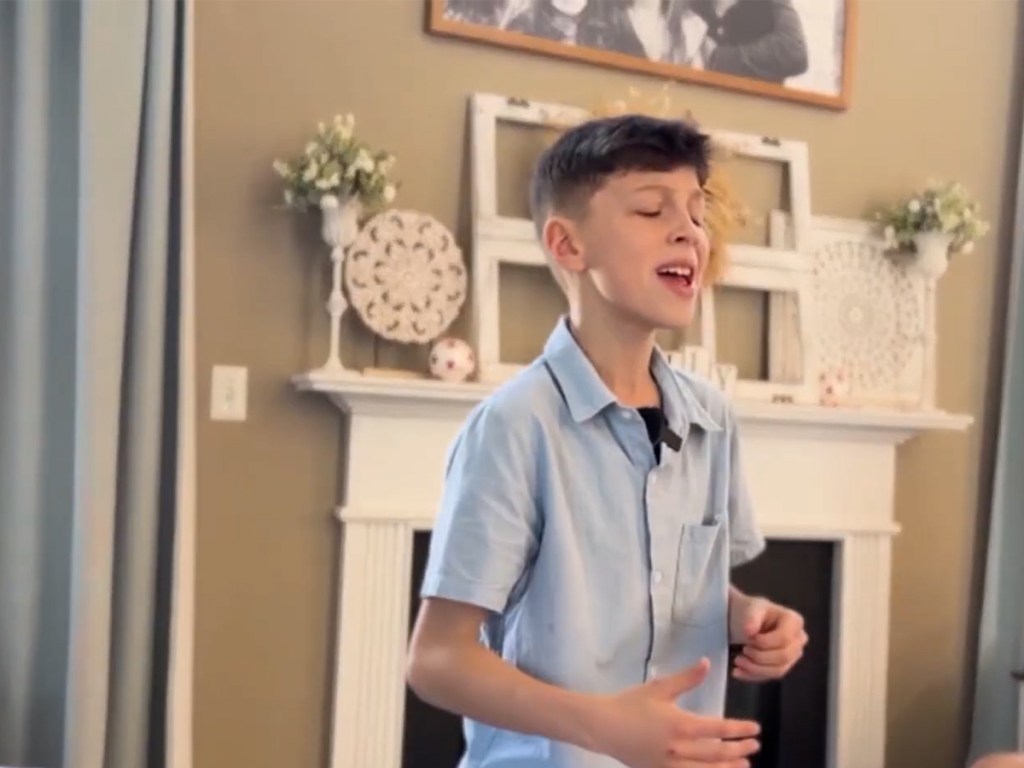
    Photo credit: WQAD News 8/YouTubeLando sings.
    ,

    Young boy struggles through painful stutter until his singing videos change everything 

    “One kids courage to show up, speak up, and sing his voice free.”

    A boy named Lando is gaining attention online after people started sharing and liking the two very different kinds of videos he creates. In one, he candidly speaks with a severe stutter. In the other, he sings smoothly, without the same pauses and repetitions that appear when he talks.

    Perhaps it’s the dramatic contrast that has people liking and clicking. For whatever reason, as Lando shares on his website, #stutterfreelando, he’s created an awareness movement around stuttering “born from one kid’s courage to show up, speak up, and sing his voice free.”

    The young entertainer is easy to like

    Finding a young person navigating his speech difficulties so charismatically and confidently is admirable. He’s not wavering under the spotlight. He’s shining.

    His family shares about their experience and the methods they’ve found helpful with his stutter on their website:

    “This is a family journey. We’re one of millions of families around the world navigating stuttering to learn what works, what doesn’t, and figuring it out as we go. Some of what we share helps Lando. Some might not. We’re learning that every stutterer is different. No more hiding.”

    Facing a severe stutter can be more complicated than practicing with a speech therapist.

    Traditional therapy hasn’t given us the breakthroughs we need. Therapists are trying. We are trying. But we refuse to sit quietly and hope it clicks. So we built this, a movement where our family shares what we’re learning out loud. Real strategies. Real techniques. Lando’s good days and the hard ones. Not a highlight reel. Not a gofund me. Real life.”

    It feels good to join a winning team

    After watching any of his videos, it’s clear why so many people keep coming back.

    In one clip, Lando talks about reaching 50,000 followers on Instagram and an upcoming interview with a local news outlet. The message expressed with gratitude and happiness is simple, but it takes time for him to get there. That process draws people in.

    “Congratulations on your followers, add one more”

    “Great work buddy!”

    “Ah Lando, I’m really enjoying your videos”

    “That excitement is so cute! I love how supportive everyone has been!”

    “Great job little man keep it going. You inspire a lot of people with the same problem.”

    “thankyou for sharing, your super cool.”

    Singing allows his words to come out in a continuous flow

    The difference isn’t subtle. In speech, words can stall and be difficult to get out. In song, they move by the rhythm that reduces stops. These are some of the comments you can find on just one of his singing videos posted above:

    “GOD BLESS YOU LANDO!!!!! YOU ARE ABSOLUTELY AMAZING!!!!!”

    “The eyebrows at the end was fire.”

    “You are an inspiration”

    “Brilliant buddy”

    “… sounding smooth.”

    “Lando with the great voice!!!”

    “Now … this kid has charisma!!!”

    A courageous little showman

    Lando’s videos stand out not just for singing or stuttering, but because both are available, openly shared, without one being hidden or edited out of view. There’s no attempt to turn it all into a single narrative of struggle or success. Instead, what people see is a boy using his voice as it is.

    There is something instinctive about the way people rally around a kid like Lando. Sharing the hard parts and the moments that come more easily gives everyone a clear way to respond. Cheering him on, leaving a positive comment, or even just watching and listening allows each of us to take a small part in that effort.

    It’s less about celebrating the win and more about recognizing the work and the courage to keep going. Lando is talking and singing it out loud.

  • Homeowners swear by this simple ice cold hack that thoroughly makes your toilets cleaner
    Photo credit: CanvaMany believe cleaning the toilet properly starts by filling it with ice cubes.

    Most people welcome a new cleaning hack, especially if it involves the bathroom. Cleaning the toilet isn’t a fun task and getting it thoroughly spotless can get stinky real quick. However, there’s one hack that many homeowners say gets their toilets cleaner with less elbow grease. It involves emptying your ice tray.

    There are experts who recommend putting ice cubes down the toilet whenever it is time to clean.

    Toilet cleaning starts with your freezer

    This understandably sounds weird. Many people might remember flushing ice cubes down the toilet as a superstitious ritual during the winter months to “summon” a snow day from school. But to clean the toilet? That sounds like just as much as a myth. 

    But there is a logic to it and many homemakers suggest it. First, let’s get this out of the way and say that ice cubes aren’t being flushed to replace regular toilet cleaner. It’s actually being used to help the cleaner be more effective.

    So…how could ice help clean my toilet?

    Ice in the toilet bowl acts as a support for the toilet cleaner. Often, toilet cleaner drips down the side of the toilet bowl into the water and down the pipe. The ice allows the cleaner to cling to the bowl and its sides for longer, penetrating filth and disinfecting it more effectively.

    Here’s the gist on how it works: first, take a bowl of ice cubes and pour them into the toilet. Make sure you’re not filling it to the brim. Next, take your preferred toilet cleaning solution and pour/spray it onto the ice. Let the mixture sit for about 15 minutes to allow the cleaning solution to cling and disinfect the bowl. After that, use a toilet brush to stir and agitate the ice, ensuring that it is scraping all sides of the bowl. By this time, the ice should have melted enough to flush. 

    There are additional bonuses to using ice with toilet cleaner. The ice can also act as an abrasive pumice stone in addition to your toilet brush, scraping off mildew, mineral build-up, or other yucky things that could be stubbornly clinging to the bowl. The flushed ice could help clean the pipe similarly, dislodging filth and grime in conjunction with the toilet cleaner on its way down.

    Another benefit is reducing odor. Ice is known to absorb smells and could make cleaning a little less smelly. It’s one of the reasons why many restaurants, clubs, and bars put ice in men’s urinals.

    Many people who frequently travel and live in an RV also recommend flushing ice down their toilets. This is not just to clean the bowl, but to have the ice jostle and scrape the nasty stuff out of the black tank. While this method’s effectiveness in cleaning a black tank is put into question, critics still say that ice can help reduce smells and keep water in the black tank during hot days.

    Final tips (specifically “don’ts”)

    If you plan on giving this hack a try, be sure not to overflow your toilet with ice. Along with that, while most forms of ice work (cubes, crushed, or chips), putting larger blocks of ice in the toilet won’t do any good and could clog things up if they’re too big.

    It’s also important to use one cleaning solution and not mix a bunch together. Mixing cleaning products together could create fumes that are dangerous to inhale. It’s best to use your preferred cleaner and choose a different one next time if you’re getting the results you want.

Explore More Ideas Stories

Impact

Men were stunned when asked the same types of career questions women regularly face

Voices

Young boy struggles through painful stutter until his singing videos change everything 

Ideas

Homeowners swear by this simple ice cold hack that thoroughly makes your toilets cleaner

Ideas

Facebook group helps families without a ‘village’ find surrogate grandparents