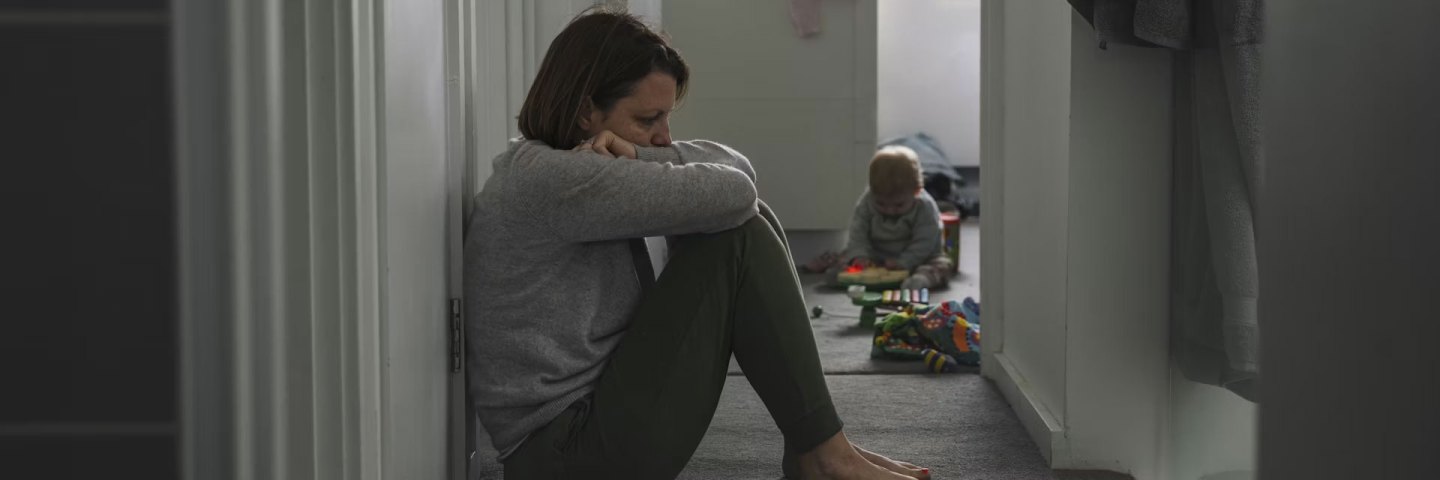

About 1 in 5 women will experience depression and anxiety during pregnancy or in the year after giving birth. If untreated, a mother who has these conditions has a higher risk of birth complications, overall poorer health, impaired bonding and nurturing of her infant, and a higher risk of death by suicide.

But a new treatment moving through the Food and Drug Administration clinical trials process may be key to treating, or even curing, depression and anxiety in postpartum people. It is a newly named psychedelic, luvesilocin. It functions like psilocin, the psychoactive chemical within psilocybin mushrooms. It may be able to positively affect the unique hormonal shifts, brain changes and disconnection that can lead to these conditions like no existing treatments.

In prior studies of psilocybin, researchers have observed rapid improvement in symptoms – and sometimes a cure after a single dose – of conditions such as major depression and PTSD. In a recent FDA Phase 2 study of luvesilocin, we found similar improvements in postpartum depression.

I was the site investigator for the University of Colorado, one of 35 participating sites across the U.S. The study enrolled 84 postpartum women who were within a year of giving birth and ended in May 2025.

I have spent my career as a board-certified obstetrician-gynecologist contemplating how the prenatal experience shapes lifetime health. I have also followed the psychedelic data closely. I’ve been eager to find evidence-based pregnancy and postpartum applications of psychedelics, given these drugs’ promise in treating other mental health conditions.

Depression and anxiety’s impact on moms and babies

One drug that has been studied and enhanced our understanding of the way psychedelics work is MDMA, which is commonly known as ecstasy and causes a euphoric high.

According to peer-reviewed research published by Bessel van der Kolk in 2024, MDMA can lead to improvements in individuals being able to identify, describe and feel their feelings. Other improvements resulting from MDMA assisted therapy include more self-compassion and a broader desire and capacity for connection with others.

Connection, especially the earliest one between a mother and infant, plays one of the most significant roles in providing the foundation for humans to grow and flourish. Postpartum depression is often defined by disconnection and impaired bonding.

Children born to mothers with untreated depression and anxiety have a higher risk of falling behind on early developmental milestones. They may also have behavioral concerns, such as hyperactivity or ADHD, and are more likely to withdraw from social activities. They tend to report somatic complaints, such as body aches and pains in early childhood.

Children of mothers who had depression or anxiety during pregnancy are also at risk of these same conditions as they enter their teenage years. They have nearly twice the risk of these conditions compared to teenagers whose mothers did not have untreated depression and anxiety. This pattern means depression and anxiety can become a multigenerational cycle. But this cycle can be interrupted with adequate treatment and support.

Increased levels of the hormone oxytocin were found by researchers in the blood of depression study participants who were given MDMA, LSD and mescaline, which are all psychedelic drugs. The increase in oxytocin led to more feelings of trust, empathy and connection.

Oxytocin is a hormone produced in the part of the brain called the hypothalamus and is released from the pituitary gland into the bloodstream. It plays a critical role in birth and infant feeding. It also aids in the wiring and formation of human social brains.

Oxytocin is important in maternal bonding with an infant. Conversely, early childhood stressors, such as a mother suffering from mental illness, reduces oxytocin levels in children. This may be a contributor to adverse mental and physical health outcomes later in life.

In depression studies that involved men, psilocybin did not have as great of an impact as other psychedelic medications on oxytocin production. But there is reason to believe that oxytocin may play a greater role in postpartum patients because it’s levels are higher during birth and lactation than in other phases of life.

FDA study of psilocybin-like medication

In February 2026, the FDA granted luvesilocin breakthrough therapy status. This status is used to speed up the development of promising new medications for serious or life-threatening conditions. The drug received this status because our research found meaningful and rapid reductions in depression scores in those who received the treatment.

In the Phase 2 study, 77% of postpartum women who received a psychedelic dose, 30mg of luvesilocin, had significant improvement in their postpartum depression. Overall, 71% had no symptoms of postpartum depression seven days after the psychedelic session.

The purpose of an FDA Phase 2 study is to determine the effectiveness of an experimental medication on a particular disease or condition. In this case, the study is evaluating luvesilocin’s effect on postpartum depression scores and symptoms. In the group that received the placebo, a microdose of the drug, more than half experienced an improvement in their symptoms, but most still had some symptoms after seven days.

These are much higher response and remission rates than trials of the existing medications used for postpartum depression treatment. Existing treatments include selective serotonin reuptake inhibitors, known as SSRIs, and a medication called zuranolone. The latter is the only medication to have specific FDA approval for postpartum depression.

Access to psychedelic treatments

In 2023, the Colorado legislature passed the Natural Medicine Health Act. It offers a legal pathway for people to receive natural psychedelics, such as psilocybin mushrooms, in therapeutic settings. The first natural medicine healing centers opened in early 2026. Some locations advertise treatments for everything from postpartum depression to birth trauma.

Oregon has a similar state-regulated program. Numerous other states have different pathways toward legal psychedelic-assisted therapies and decriminalization of psilocybin-assisted therapy. Nationally, there was a recent federal executive order to accelerate action on treating serious mental illnesses. The order included mention of the use of psychedelic therapies.

Looking forward

By the end of 2026, Phase 3 of the luvesilocin trial for postpartum depression is slated to begin. Phase 3 trials are conducted to confirm the effectiveness and further evaluate the overall risks and benefits of a new medication. Each phase is an important regulatory step before a medication can be approved and available in clinical settings.

In Phase 3, 200 participants with postpartum depression will be recruited across participating sites. While I’m optimistic about the potential of this research, I believe its value can be established only through rigorous blinded clinical trials, objective data analysis, and conclusions and approval that are fully supported by the evidence.

Phase 3 will also include participants who are still breastfeeding. A study of luvesilocin during lactation in healthy volunteers demonstrated very low levels passed from the mother into breast milk. Thus, this medication would be considered safe for breastfeeding.

Luvesilocin may become a game-changing postpartum depression treatment medication in just a couple more years. On a much larger scale, psychedelic medicine could elevate our collective well-being and happiness, replacing systemic cycles of depression, anxiety, trauma and isolation with connectedness and compassion. These drugs could literally rewire our approach to trauma, addiction and how we relate to one another.

This article originally appeared on The Conversation. You can read it here.

  • As a major heat wave grips the eastern US, here’s how to stay safe – and the heat stroke warning signs to watch for
    Photo credit: AP Photo/Adam GrayExtreme heat can become lethal quickly. A woman fans herself while waiting in line to buy Broadway show tickets during a heat advisory in New York’s Times Square in May 2026.

    Millions of Americans are facing dangerous heat and humidity going into the July Fourth holiday as a major heat wave spreads across large parts of the central and eastern United States.

    For many people, this is the time of year for cookouts, beach trips and other outdoor activities. Soccer fans are packing into stadiums for World Cup matches. But summer also brings the risk of dangerously high temperatures in many parts of America.

    Cities as far north as Chicago and Detroit experienced a heat index over 100 degrees Fahrenheit (37.8 Celsius) in early July, and large parts of the East Coast, including New York and Washington, D.C., were bracing for similar conditions on Independence Day. Washington, D.C., and Philadelphia both canceled Independence Day parades and shortened or delayed outdoor gatherings, including the Great American State Fair on the National Mall, because of the extraordinary heat risk.

    Map shows the heat risk forecast with extreme heat in large parts of the Midwest and Mid-Atlantic region and at least major heat in the rest of the West.
    The NOAA Weather Prediction Center’s heat forecast, released July 1, 2026, shows the maximum heat risks states can expect to see at some point through Sunday, July 5. NOAA Weather Prediction Center

    I study health risks in a warming climate as a professor of public health, and I’ve seen heat become a growing concern. In the U.S., hundreds of people succumb to heat-related illnesses each year. Older adults and people in areas that historically haven’t needed air conditioning tend to see the highest rates of illnesses during heat waves, as Chicago saw in 1995 when at least 700 people died in a heat wave.

    Here are some of the key warning signs to watch for when temperatures rise – and ways to keep cool when the heat and humidity get too high.

    Heat-related deaths in the US

    Heat-related illnesses occur across a spectrum, and mild heat stress can quickly progress to life-threatening heat stroke if a person is exposed to dangerous conditions for too long.

    Mild forms of heat-related illness include heat cramps and heat rash, both of which can be caused by extensive sweating during hot conditions. Cooling the body and drinking cool fluids can help.

    When heat-related illnesses progress into heat exhaustion, the situation is more serious. Heat exhaustion includes symptoms such as dizziness, nausea, excessive sweating, feeling weak, thirst and getting a headache.

    A construction worker sits and puts his head down, still in the hot sun.
    Construction workers are often out in the heat for long periods of time, including during this heat wave in Los Angeles in July 2024. Etienne Laurent/AFP via Getty Images

    Heat exhaustion is a signal that the body is losing its ability to maintain a stable core temperature. Immediate action such as moving to a cool, ideally air-conditioned space, drinking liquids, loosening clothes and applying wet cloths are some of the recommended steps that can help keep heat exhaustion from progressing to the most dangerous form of heat-related illness, heat stroke.

    Heat stroke is a medical emergency. At this point, the body can no longer maintain a stable core temperature. A body with heat stroke can reach 106 degrees Fahrenheit or higher rapidly, and that heat can quickly damage the brain, heart and kidneys.

    An illustration showing symptoms associated with heat exhaustion, such as dizziness, heavy sweating, nausea and weakness; and with heat stroke, including confusion, dizziness and passing out.
    Signs of heat exhaustion and heat stroke, from the National Weather Service and Centers for Disease Control and Prevention. NOAA/CDC

    Typically, someone suffering heat stroke has exhausted their reserves of sweat and salt to stay cool, so sweating eventually stops during heat stroke. Their cognitive ability fails, and they cannot remove themselves from danger. Heat stroke can cause seizures or put someone into a coma as their core temperature rises. If the condition is not treated immediately, and the core temperature continues to rise, heat stroke becomes fatal.

    Because heat exhaustion can lead to heat stroke, addressing heat-related illnesses before they progress is vital.

    How to tell when the heat is too high

    Heat risk isn’t just about temperature – humidity also increases the risk of heat-related illnesses because it affects how well sweating will cool the human body when it gets hot.

    Instead of just looking at temperature when planning outdoor activities, check the heat index, which accounts for heat illness risk associated with temperature and relative humidity.

    It doesn’t take very high temperatures or very high humidity for the heat index to enter dangerous territory.

    A chart shows how humidity and temperature combine for dangerous conditions. For example, 86 degrees F at 80% humidity is a heat index of 100. 94 degrees at 45% humidity is also a heat index of 100.
    A heat index chart shows how heat and humidity combine for dangerous conditions. NOAA

    However, the heat index is still a conservative measure of the impact of heat on humans, particularly for outdoor workers and athletes at summer practices. This is because temperature measurements used in weather forecasting are taken in the shade and are not exposed to direct sunlight. If someone is outside and exposed to the direct sun, the actual heat index can be as much as 15 F higher than the heat index chart indicates.

    A more sophisticated measurement of heat effects on human health is what’s known as the wet-bulb globe temperature, which takes into account other variables, such as wind speed and cloud cover. Neither takes into account a person’s physical exertion, which also raises their body temperature, whether working at a construction site or playing soccer.

    Tips for staying safe in a heat wave

    How can you stay cool when heat waves set in? The answer depends in part on where you are, but the main points are the same:

    • Avoid strenuous outdoor activities in high temperatures if possible. If you start to feel symptoms of heat-related illnesses, drink fluids that will hydrate you. Find shade, rest, and use cool, damp cloths to lower your body temperature. If you see signs of heat stroke in someone else, call for medical help.
    • Be careful with fans. Fans can be useful if the temperature isn’t too high because they wick sweat away from the body and induce evaporative cooling. But at very high temperatures, they can accelerate heat buildup in the body and lead to dangerous conditions. If indoor temperatures reaches 95 degrees or higher, using fans can actually be dangerous and raise the risk of heat-related illnesses.
    • Find a cooling center, library or community center where you can get inside and rest in an air-conditioned space in the hottest hours. In places such as Phoenix, where high temperatures are a regular hazard, cooling centers are typically opened in summer. Northern cities are also opening cooling centers as heat waves occur there more frequently than they did in the past. Urban areas with a lot of pavement and buildings – known as heat islands – can have temperatures well above the city’s average.
    • Hydrate, hydrate, hydrate! Drink plenty of fluids, and don’t forget about the importance of electrolytes. Heat-related dehydration can occur when people sweat excessively, losing water and necessary salts from the body. Some sports drinks or rehydration fluids restore electrolytes and hydration levels.

    Older adults and people with disabilities often face higher risks from heat waves, particularly if they can’t easily move to a cooler environment. Communities and neighbors can help protect vulnerable populations by providing cooling centers and bottled water and making regular wellness checks during high heat.

    Summer can be a season of fun. Just remember the risks, keep an eye on your friends and neighbors when temperatures rise, and plan ahead so you can beat the heat.

    This article originally appeared on The Conversation. You can read it here.

  • Every dog has its day, but it’s not the Fourth of July
    Photo credit: Leigh Prather/Shutterstock.comDogs often react with great fear to July 4th celebrations. Border collies such as this dog are especially sensitive to loud noises.
    ,

    Every dog has its day, but it’s not the Fourth of July

    How to protect anxious pups from holiday booms.

    The Fourth of July can be a miserable day for dogs. The fireworks make scaredy-cats out of many canines.

    That’s because dogs, like humans, are hardwired to be afraid of sudden, loud noises. It is what keeps them safe. Some dogs, though, take that fear to the extreme with panting, howling, pacing, whining, hiding, trembling and even self-injury or escape. And, unlike humans, they don’t know that the fanfare on the Fourth is not a threat. Dogs hear the fireworks and process it as if their world is under siege.

    How a dog responds to noises may be influenced by breed, with German shepherd dogs more likely to pace, while border collies or Australian cattle dogs are more likely to show their fear by hiding.

    While we veterinarians don’t know exactly why some dogs are afraid of fireworks and others not, many dogs that react to one noise often react to others. Therefore, early intervention and treatment are essential in protecting the welfare of these terrified dogs. Here’s how you can protect your dog from fireworks.

    • Take your pet to the vet. If your dog is afraid of fireworks, the first step is to have your veterinarian evaluate him or her, especially if your dog’s noise sensitivity is relatively new. One 2018 study found a link between pain and noise sensitivities in older dogs, indicating that muscle tension or sudden movements in response to a loud noise may aggravate a tender area on the body and thus create an association between the loud noise and pain, causing fear of that particular noise to develop or escalate.
    • Create a “safe haven” in your home with a secure door or gate, preferably away from outside windows or doors. Close the blinds or curtains to reduce outside noises, and play some classical music to help reduce stress by creating a relaxing environment for your dog during the show. A white noise machine or box fan may also help reduce anxiety, along with a pheromone like Adaptil sprayed on bedding, a bandanna, a collar or from a diffuser plugged into the wall.
    • Consider noise-canceling headphones such as Mutt Muffs to muffle the sounds and further reduce noise sensitivities.
    • Find a food your pet will love. This could be cut pieces of boiled chicken or squeeze cheese. Sit with your pet and feed him with each boom. You can also use a long-lasting food-dispensing or puzzle toy to release food continuously during the show. This is to help your dog make a positive association with the noises for the future.
    • Consider anxiety wraps, fabric wraps that exert a gentle pressure on your dog’s body. These may help to lower heart rate and other clinical signs of fear and anxiety, operating on the belief that they swaddle a scared animal and thus calm its fears. These work best, however, in conjunction with a complete behavior treatment plan including medication or behavior modification, or both.
    • When it comes to comforting your dog, the jury is still out. It is difficult, however, to reinforce an emotional response with comfort. Therefore, it is OK to pet your dog when frightened by a noise event so long as the dog appears to be comforted and not more distressed by the attention.

    This article originally appeared on The Conversation. You can read it here.

  • Pollen is getting worse, but you can make things better with these tips from an allergist
    Photo credit: Alex Cofaru/Shutterstock.comA girl in a field of flowers.

    Blooming flowers signal the beginning of spring, but for millions of people, they also signal the onset of the misery: allergy and asthma season. Itchy, watery eyes; sneezing, runny nose; cough and wheezing are triggered by an overreaction of the body to pollen.

    Every spring, trees and grasses release billions of buoyant pollen granules into the air, using the wind to disperse across the countryside in an effort to reproduce. It’s all about survival; plants that release more pollen have the survival advantage.

    As an adult and pediatric allergist-immunologist in the Midwest, the onset of spring signals my busy season treating hundreds of patients for their seasonal allergy and asthma symptoms. If you suffer through the season, know that you are not alone. Throughout history, pollen has taken the fun out of spring for many. In modern times, however, medical science has identified practices and treatments that help.

    Older than the dinosaurs, as wide as the world

    Fossilized specimens of pollen granules have been found predating dinosaurs and alongside Neanderthals.

    And, sinus and asthma symptoms and treatments are documented throughout history and across the globe. People just didn’t know exactly how to treat the symptoms, or exactly what was causing them.

    For example, over 5,000 years ago, the Chinese used the berries of the horse tail plant, ma huang (Ephedra distachya), to relieve congestion and decrease mucous production associated with “plant fever” – a condition affecting people during the fall.

    In Egypt, the “Papyrus Ebers,” written around 1650 B.C., recommended over 20 treatments for cough or difficulty breathing, including honey, dates, juniper and beer.

    Although Homer’s “Iliad” describes the loud noise of breathing in battle as “asthma,” Aretaeus of Cappadocia of the second century A.D. is credited with the first clinical description more consistent with modern understanding of this condition. He wrote of those who suffered that:

    “They open the mouth since no house is sufficient for their respiration, they breathily standing, as if desiring to draw in all the air which they possibly can inhale… the neck swells with the inflation of the breath, the precordia (chest wall) retracted, the pulse becomes small and dense,” and if the symptoms persist, the patient “may produce suffocation after the form of epilepsy.”

    Tobacco leaves
    Tobacco leaves were exported to Europe for experimentation in treating the symptoms of spring time coughing and sneezing. Jeep 2499/Shutterstock.com

    By the time Columbus landed, indigenous populations in Central and South American were utilizing ipecacuanha, a root found in Brazil with expectorant and emetic properties and balsam, which is still used in some cold remedies today. Coca and tobacco leaves, used medicinally by the Incas, were later exported to Europe for additional experimentation for the treatment of rhinitis and asthma.

    Aside from the “plant fever” described in China, the first written description of seasonal respiratory symptoms is credited to Rhazes, a Persian scholar, around 900 A.D. He described the nasal congestion that coincided with the blooming of roses, termed “rose fever.”

    Symptoms noticed, but no cause identified

    As scientific advancement was stifled during the Middle Ages, in large part due to the plague, it wasn’t until 900 years later, in 1819, that Dr. John Bostock published a description of his own seasonal allergies. But he didn’t know what was causing them.

    Having suffered from “summer catarrh” since childhood, Bostock persisted in his study of the condition, despite an initial lackluster response from the medical community.

    In the nine years between his first and second publications, he found only 28 additional cases consistent with his own seasonal allergy symptoms, which perhaps demonstrates the lower prevalence of the condition at the time. He noted that nobility and the privileged classes were more often afflicted by seasonal allergies. This was thought to be the consequence of wealth, culture and an indoor life.

    Societal changes with their roots in the Industrial Revolution, including increased exposure to air pollution, less time spent outdoors, increased pollen counts and improved hygiene, all likely contributed to the increased prevalence of allergies that we continue to see today. They also helped form the hygiene hypothesis, which states that in part decreased exposure to particular bacteria and infections could be leading to the increase in allergic and autoimmune diseases.

    The source of seasonal symptoms at the time was also thought to be caused by the smell of new hay. This led to the coining of the term “hay fever.”

    Bostock instead suspected the recurring symptoms were triggered by the summer heat, since his symptoms improved when he spent the summer on the coast. It would later became common for nobility and aristocrats to spend allergy season in coastal or mountain resorts to avoid bothersome symptoms.

    Identifying the true culprit

    Through methodical study and self-experimentation, Dr. Charles Blackley identified that pollen was to blame for allergy symptoms. He collected, identified, and described various pollens and then determined their allergic properties by rubbing them into his eyes or scratching them on his skin. He then noted which ones resulted in redness and itching. This same technique is used in skin prick testing by allergists today.

    Inspired by discoveries related to vaccination, Dr. Leonard Noon and John Freeman prepared doses of pollen extracts for injection in an effort to desensitize patients with allergic rhinitis in the early 1900s. This effective treatment, called allergy immunotherapy, also known as allergy shots, is still used today.

    Antihistamines first became available in the 1940s, but they caused significant sedation. The formulations with fewer side effects that are used today have only been available since the 1980s.

    Pollen counts likely to grow

    Pollen on a street in Atlanta
    Pollen on a street in Atlanta, March 31, 2019. Lynne Anderson, CC BY-SA

    Though recognized by ancient civilizations, seasonal allergic rhinitis and allergic asthma have only increased in prevalence in recent history and are on the rise, now affecting 10 to 30 percent of the world’s population.

    Fueled by warmer temperatures and increased carbon dioxide levels, pollen seasons are longer, and pollen counts are higher. Many experts believe this will worsen in the coming years due in large part to climate change.

    To keep you and your loved ones safe from pollen, close windows and change out of clothes exposed to pollen as soon as you come indoors.
    To keep you and your loved ones safe from pollen, close windows and change out of clothes exposed to pollen as soon as you come indoors. Monkey Business Images/Shutterstock.com

    What can you do? Often, those who are allergic need a multifaceted approach.

    • Find out what allergens are causing your symptoms. Take note of when your symptoms start by making a note in a calendar or planner.
    • Minimize exposure to allergens. Track pollen counts. When pollen counts are high, keep the windows closed at home and in the car. After spending time outdoors, shower and change clothing to prevent ongoing exposure to pollen.
    • Take a pro-active approach to treating symptoms. Starting medications before symptoms develop can prevent symptoms from getting out of control. This can also decrease the amount of medication needed overall. Long acting non-sedating antihistamines are helpful for itching and sneezing. Nasal corticosteroid sprays are more helpful for stuffy noses.
    • Consider a visit to see a board certified allergist/immunologist. She or he can help you determine which particular pollens maybe the source of your symptoms.
    • Explore the role of immunotherapy with your doctor. Immunotherapy changes the immune response through administration of small regimented doses of allergens over time. This induces a state of tolerance, eventually helping people become less allergic over time.

    While pollen season is coming, taking a multifaceted approach can provide much needed relief from the symptoms that have plagued humankind throughout the millennia.

    This article originally appeared on The Conversation. You can read it here.

Explore More Health Stories

Health

Every dog has its day, but it’s not the Fourth of July

Health

Pollen is getting worse, but you can make things better with these tips from an allergist

Care

22-year-old gives out toothy smiles by providing free 3D-printed dentures to those in need

Health

First new US sunscreen ingredient since 1999 approved by FDA – a skin scientist explains how bemotrizinol works