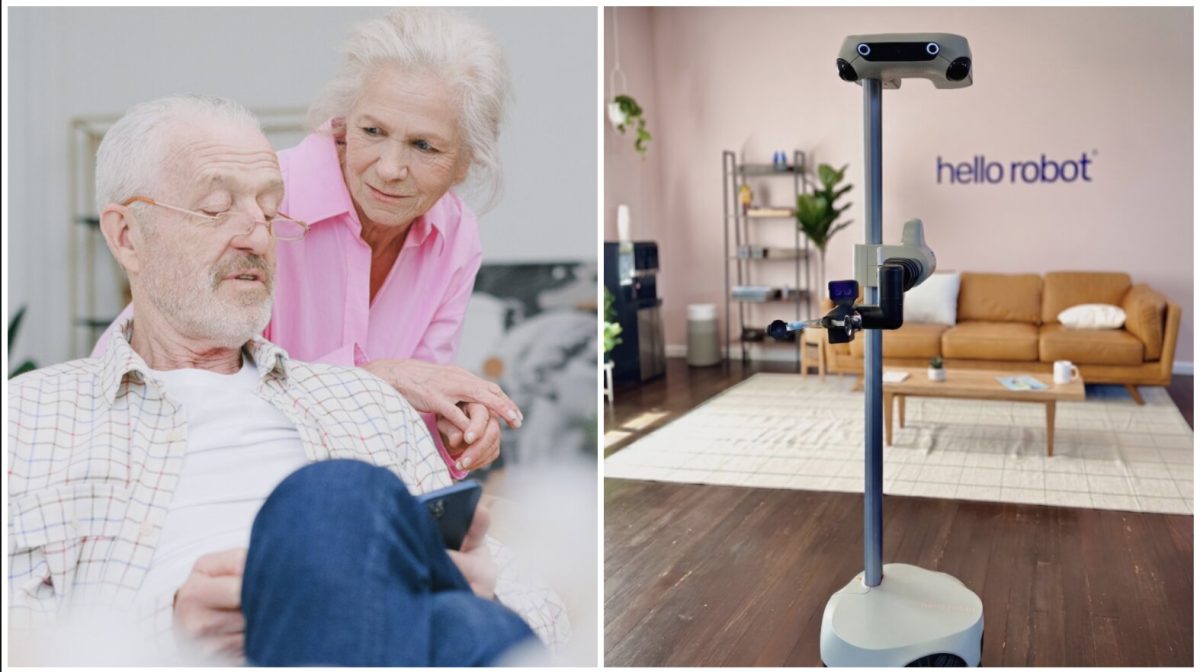
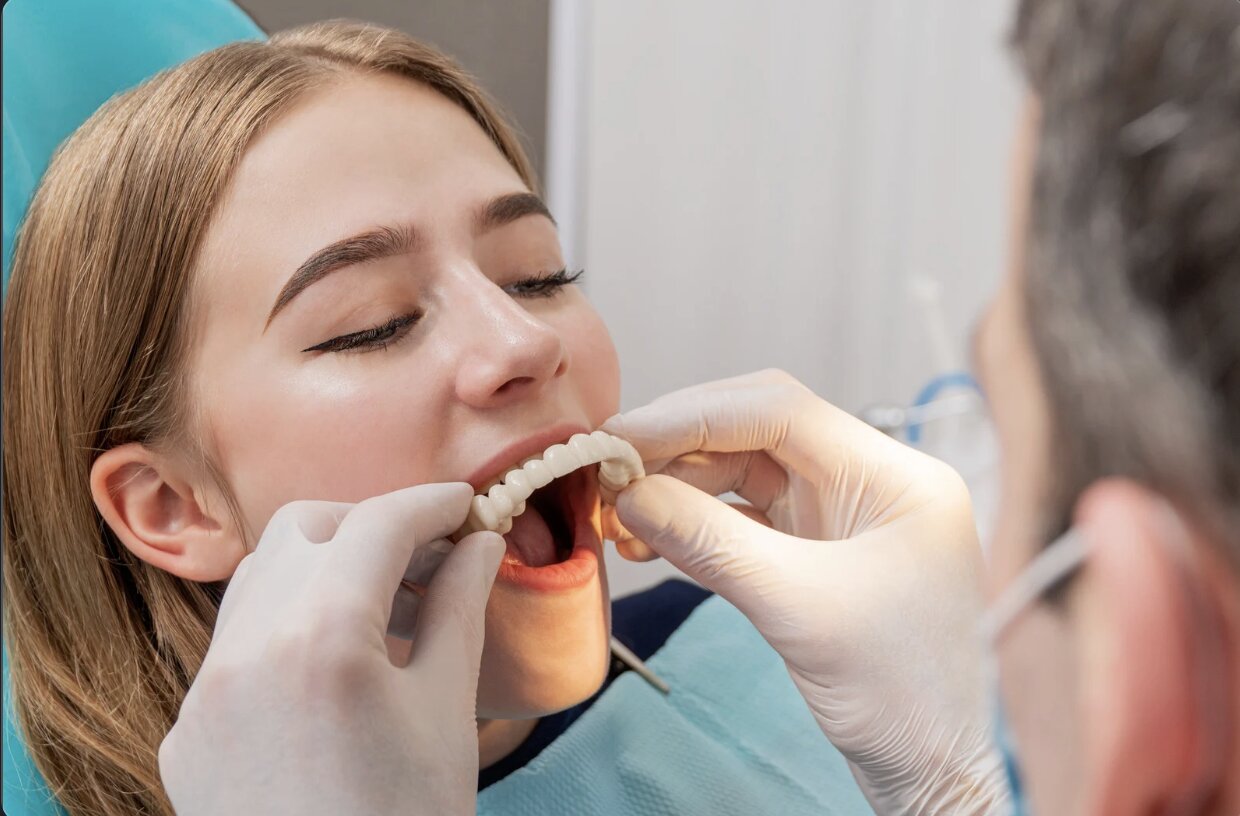
Much like anything else, the cost of dental care has risen as need grows. A report from the American Dental Association found that, in 2024, dental spending grew by $7 billion from 2023. A young engineer is making a difference, though. He has helped put a smile back on the faces of folks in need by providing free dentures made with 3D printers.

Connor Gibson isn’t a dentist or even an expert on 3D printers. He’s a Tennessee community college student who wants to help people. While studying engineering at Walters State Community College, Gibson volunteered with Remote Area Medical (RAM). RAM is a nonprofit that provides mobile clinics offering free medical, vision, and dental care through volunteers. 

An issue that bites

A common issue the clinics found was that many people needed dentures. The cost of dentures can be very pricey, ranging from $452 dollars to over $6,500 depending on the patient’s needs and their insurance coverage. Another issue was availability. Even if a patient could afford dentures, it could take weeks or even months before they could be delivered. 

But Gibson had an idea. He thought that if he could 3D print pairs of dentures, it would save money and time. After all, having a 3D printer on-site would allow the dentures to be made within hours rather than weeks. A patient could get a free set of dentures the same day as their visit.

Great idea…but how?

There was a setback: Gibson had no experience in dentistry or 3D printing at all. In spite of his inexperience, Gibson used his engineering and design skills to teach himself how to use a 3D printer. He also got dental experts to teach him how to make dentures the old fashioned way. This way, he was sure to accurately recreate every detail via 3D printing. After taking an impression, Gibson was then able to design specific dentures per patient.

“Honestly, if you told me three years ago this is what I would be doing, I would have called you crazy,” Gibson said to CNN. “I made it my mission and studied up like I was doing a test, studying up on videos and documents — anything I could find on how to make a denture using this specific software and how to 3D print it.”

After Gibson successfully completed a pair of 3D-printed dentures for the first time, he knew it was something special. Seeing the tears of joy on the patient’s face was enough to confirm he was doing the right thing.

“That first delivery was really a huge eureka moment,” Gibson said. “To see that raw, human emotion and just know that I played a change in this person’s life… it’s very humbling, and I’m beyond blessed.”

Gibson has since been helping RAM develop more denture mobile clinics that can quickly develop dentures for patients who drop in.

How to find low-cost dental care near you

If you or someone you know needs low-cost to free dental care, there are options. In addition to Medicare, Medicaid, and CHIP, you can find local and state programs online. You can also dial 2-1-1 for information.

Another option dental schools and dental hygiene schools that provide supervised, low-cost care from their students.
  • Student with severe facial burns from a frat house fire healed through new innovative treatment
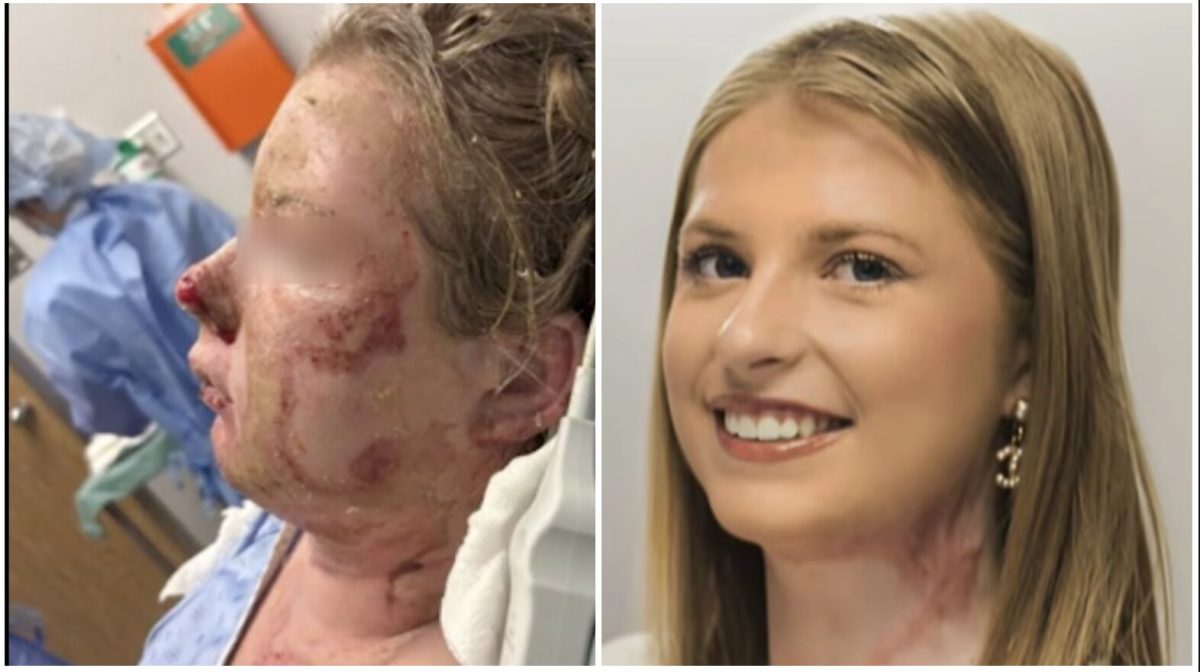
    Photo credit: Hamilton Health SciencesExosomes helped heal severe facial burns with less scarring.
    ,

    Student with severe facial burns from a frat house fire healed through new innovative treatment

    Exosomes could change how we treat various maladies and disease.

    A university student who suffered severe facial burns has remarkably healed thanks to what is being called a world-first biological treatment.

    On December 2, 2025, 18-year-old Kaitlyn Jeffrey was caught in a fire at the Pi Kappa Alpha frat house at Western University in Canada. The fire was caused after rubbing alcohol had been thrown onto a lit torch. Kaitlyn was one of the five people rushed to the hospital for injuries. She suffered serious burns after her face and hair had been set ablaze.

    A new treatment

    Usually, treatment for such burns would require a skin graft, but the burn unit at Hamilton Health Services wanted to try something different. While skin grafting is helpful, the end result isn’t always ideal. Skin grafting can be a slow process that ends with scarring and often a patch-like appearance on the patient.

    “My vision for Kaitlin was to avoid skin graft surgery to her face and neck at any cost,” said Dr. Marc Jeschke, medical director of the hospital’s regional burn program and vice-president of research and innovation at HHS. “You can do the best graft on the planet, but you won’t return the skin to normal.”

    With Kaitlyn’s and her family’s permission, Dr. Jeschke sent an urgent application to Health Canada for a new type of treatment. After Health Canada approved, the doctors proceeded to give Kaitlyn an exosome treatment for her facial burns. The results were a rousing success.

    What are exosomes?

    Exosomes, or extracellular vesicles (EcVs), are present in almost all cells, tissues, and body fluids. They’re tiny vesicles released naturally by nearly all types of cells, carrying proteins, lipids, and genetic material. They essentially carry these “packages” of material and send signals from one cell to another to regulate their behavior. They’re not only being tested for medical applications like this one, but are a part of a skin care trend as well. While exosomes had been studied for burn research, they haven’t been tested on humans before.

    One trillion exosomes were collected and injected into Kaitlyn’s injured areas over the course of two treatments. This helped her cells coordinate in rapidly healing and repairing her facial tissue. The treatments also significantly reduced inflammation. 

    Astounding healing and new possibilities

    After she had healed, Katilyn was amazed and grateful at the result.

    “It’s honestly a miracle,” she said. “Being injured in the fire has also had a deep impact on my mental health, and it’s something I’m continuing to deal with. But having such good results, particularly to my face, is helping me move forward.”

    Exosomes are still being researched for other potential medicinal applications. They are being tested to see how well they could modulate immune responses and deliver biomarkers. This could help combat cardiovascular disease, neurological disorders, and cancer among other ailments. Time and research will tell whether exosomes can help those patients like they helped Kaitlyn.

  • A dementia patient and his wife got their lives back thanks to a ‘coat rack-like’ robot
    Photo credit: Canva/Hello RobotStretch 4 could be one of many options for advanced senior care.

    Brenda and Brian Marquis are part of a growing senior population with mental and physical ailments. In particular, Brian has dementia from a brain injury he sustained in 2012. Brenda would help Brian remember to wash himself, eat lunch, and other tasks. On top of that, both live with other physical, cognitive, and emotional disabilities that make day-to-day living difficult. Then came “Robbie.”

    “Robbie” is the robot that helps the Marquis family with their daily routines at home. Resembling a coat rack, the robot was presented to the Marquis family after Brenda sent an email to the University of New Hampshire inquiring about robotic service dogs. Booker T. Bones, the family’s service dog, had passed away and Brenda was looking for similar support. The university saw this as an opportunity for its computer science center to experiment with “socially assistive” robots.

    “Our goal is not to replace a human caregiver but to use technology such as robots to provide complementary care,” Sajay Arthanat, a professor in UNH’s Department of Occupational Therapy told WMUR. “We know that caregivers often have to perform a lot of repetitive, mundane tasks.”

    What exactly is “Robbie”?

    “Robbie” is a Stretch 4 robot model invented by Hello Robot. While a very simple in design, the robot is able to help Brian with a number of tasks. It reminds him to eat meals at specific times, fetches items such as water bottles out of the fridge, reads the fine print of prescription medications, and more. Stretch 4 also has prompts that activate when he enters certain rooms of the home, such as the bathroom.

    “I was never into technology,” Brian Marquis said to Sentinel Colorado. “Then I realized I can’t remember to wash my face and my armpits. So, it just really kind of set me free almost.”

    Robbie hasn’t just helped Brian live more independently, but Brenda as well. She doesn’t have to be by Brian’s side 24/7. Now, she can go out and play mahjong with her friends without worrying about leaving Brian alone for several hours.

    A growing issue for older Americans

    Per the Department of Health and Human Services, the majority of older adults are projected to need long-term care and service. This could range from basic needs to extreme health cases. In addition, a 2025 report released by the Bureau of Labor Statistics found that 38.2 million people provided unpaid elder care. Around 28% of those people provided nearly four hours of unpaid elder care per day.

    The number of people who need such help is projected to grow exponentially. By 2030, the number of Americans over 65 is expected to surpass the number under 18 for the first time in U.S. history. The number of Americans over 65 years old is projected to reach 82 million, a 40% growth from 2022.

    This is, in part, why there has been such massive investment in robots and A.I. specializing in caring for elderly people. It’s not just to ensure that the elderly have the assistance they need for day-to-day tasks. Eldercare robots also boost their patient’s confidence by allowing them to live as safely and independently as they can. In addition to task-oriented robots like Stretch 4, there are also robots to assist with mobility.

    Robotics are helping improve the lives of the elderly as a new and exciting care option. With the help of medication, personal care from a human, community, and more, the growing elderly population can thrive through their golden years. For more eldercare resources, visit the National Institute on Aging.

    Whether through use of a robot or not, finding solutions to aid and care for our older populations ultimately benefits society as a whole.

  • Who are hospital ethics consultants, and why should you care?
    Photo credit: LPETTET/E+/Getty Images End-of-life decisions can be complicated, and ethics consultants may help families and care teams navigate them.
    ,

    Who are hospital ethics consultants, and why should you care?

    Helping families face the hardest medical choices.

    Imagine the following scenarios:

    A surgeon prepares to amputate a patient’s foot to save his life, but the patient refuses the procedure. His decline in thinking and memory raises doubts about his ability to consent, and he has no family or friends to help with the decision.

    A 17-year-old declines a liver transplant, while her mother insists on going forward with the lifesaving surgery.

    Siblings stand divided at the bedside of their 85-year-old mother with dementia, one rejecting a feeding tube, the other calling it a basic human necessity.

    I am a hospital ethics consultant, and these are the kinds of situations my colleagues and I regularly encounter. Yet many people are unaware that hospital ethics consultants even exist – or that they can ask for one.

    Who are hospital ethics consultants?

    Healthcare ethics consultants are trained to help patients, families and clinicians navigate difficult medical decisions.

    They could be called in situations where healthcare staff struggles with providing procedures such as cardiac resuscitation that are unlikely to benefit the patient and might even cause more pain and suffering. They could also be called when it is unclear who has authority to consent for a patient’s care, or when end-of-life decisions are complicated and resources are limited – such as ICU beds and ventilators during COVID-19.

    Ethics consultants come from a range of disciplines: physicians, nurses, social workers, chaplains, lawyers and philosophers who have specialized training and experience in clinical ethics. Since 2018, ethics consultants are increasingly pursuing formal certification through the American Society for Bioethics and Humanities.

    What is their origin?

    The modern field of bioethics emerged from the 1947 Nuremberg Doctors’ Trial, where Nazi physicians were prosecuted for conducting brutal medical experiments on imprisoned people.

    This led to the 1947 framework outlining ethically acceptable human research called the Nuremberg Code, written by a panel of American judges. The 1979 Ethical Principles and Guidelines for Protections of Human Subjects of Research, called the Belmont Report, followed the Nuremberg Code. The Belmont Report turned the ethical ideals of respect for persons, beneficence – to do good – and justice into a regulatory framework to protect vulnerable and marginalized medical research participants in the U.S.

    In the 1980s, many of these ethics protections moved from the research lab to the patient bedside. During this time, lifesaving technologies such as the ventilator, dialysis machine and organ transplantation created new, difficult ethical questions: When should life support end? Who decides? And what happens when there aren’t enough resources?

    A series of court cases and laws expanded patients’ rights, with the Patient Self-Determination Act, a 1990 law which upheld patient rights to refuse or accept medical treatment, marking the key turning point.

    A ventilator connected to a patient shows vital readings on a blue screen in a hospital room.
    Lifesaving technologies have revolutionized medicine, but they also raise ethical questions about who receives care when resources are scarce. Jackyenjoyphotography/Moment via Getty Images

    High-profile court cases exposed the ethical dilemmas around end-of-life care and patient self-determination. The 1976 case, In re Quinlan, involved Karen Ann Quinlan, a young woman in a persistent vegetative state whose family sought permission from the court to withdraw her ventilator.

    Following In re Quinlan was the 1990 case, Cruzan v. Director, Missouri Department of Health, which affirmed that adults have the right to refuse life-sustaining treatment.

    Both cases became touchstones for how ethics consultants and care teams navigate the life‑and‑death decisions that have become routine in an era of life‑sustaining technology.

    Today, most hospitals have some formal process for addressing ethical concerns in patient care.

    What do ethics consultants actually do?

    A member of the healthcare team usually requests an ethics consult when they face conflict or uncertainty about the care of a patient. Patients and families can also request an ethics consultation, but in reality, few know this option exists or feel empowered to use it.

    The ethics consultant’s first task is to gather as much information as possible from everyone involved to understand the full context of the case. Importantly, ethics consultants do not make treatment decisions; they assist the people who do.

    Imagine a loved one with advanced dementia who is in the intensive care unit with respiratory failure and is on a ventilator. The physician believes further treatment will prolong suffering; the family is not willing to let him go.

    An ethics consultant would be called by the family or healthcare team to slow things down, provide space to reflect, and help navigate the situation. The ethics consultant will often meet with everyone involved to ensure that all voices are heard and that the patient’s wishes remain central to the discussion.

    As part of the ethics review, the ethics consultant would draw on their knowledge of policies, laws and ethical precedent about withdrawing life-sustaining treatment to provide some guardrails for the situation. In this case, a legal guardrail might be that the physician cannot remove the ventilator without the family’s consent.

    Rather than making a decision, the ethics consultant would then outline the ethical options available from which the patient, family, and healthcare team can choose.

    Why are ethics consultants a valuable resource?

    Ethics consultants are trained to help people work through not just the medical facts, but the deeply human questions beneath them: What counts as an acceptable quality of life? How do we weigh hope against suffering? How can we know what a patient would want if they cannot speak for themselves?

    In these moments, decisions can feel urgent and heavy, and communication can easily break down. Ethics consultants don’t take decisions away from patients or families, and they don’t replace the role of clinicians. Instead, they help ensure that everyone understands the situation, that different perspectives are heard and that the conversation stays grounded in the values and goals of the patient.

    They also bring something that families often don’t realize they need until tensions rise: a calm, measured presence. By clarifying misunderstandings, naming sources of conflict and guiding difficult conversations, they help families and care teams find a way forward together.

    The choices may still be painful – and there may be no perfect answer – but with the right support, those decisions can feel more thoughtful, more shared and more aligned with what matters most.

    This article originally appeared on The Conversation. You can read it here.

Explore More Care Stories

Care

Student with severe facial burns from a frat house fire healed through new innovative treatment

Care

A dementia patient and his wife got their lives back thanks to a ‘coat rack-like’ robot

Health

Who are hospital ethics consultants, and why should you care?

Health

Is rubbing your eyes bad for you? 2 eye specialists explain what’s behind the urge to rub and what to do about it