This article first appeared on ProPublica. You can read it here.

ProPublica is a nonprofit newsroom that investigates abuses of power. Sign up to receive our biggest stories as soon as they’re published.

When Kim Dine took over as the new chief of the U.S. Capitol Police in 2012, he knew he had a serious problem.

Since 2001, hundreds of Black officers had sued the department for racial discrimination. They alleged that white officers called Black colleagues slurs like the N-word and that one officer found a hangman’s noose on his locker. White officers were called “huk lovers” or “FOGs” — short for “friends of gangsters” — if they were friendly with their Black colleagues. Black officers faced “unprovoked traffic stops” from fellow Capitol Police officers. One Black officer claimed he heard a colleague say, “Obama monkey, go back to Africa.”

In case after case, agency lawyers denied wrongdoing. But in an interview, Dine said it was clear he had to address the department’s charged racial climate. He said he promoted a Black officer to assistant chief, a first for the agency, and tried to increase diversity by changing the force’s hiring practices. He also said he hired a Black woman to lead a diversity office and created a new disciplinary body within the department, promoting a Black woman to lead it.

“There is a problem with racism in this country, in pretty much every establishment that exists,” said Dine, who left the agency in 2016. “You can always do more in retrospect.”


Whether the Capitol Police managed to root out racist officers will be one of many issues raised as Congress investigates the agency’s failure to prevent a mob of Trump supporters from attacking the Capitol while lawmakers inside voted to formalize the electoral victory of President-elect Joe Biden.

Already, officials have suspended several police officers for possible complicity with insurrectionists, one of whom was pictured waving a Confederate battle flag as he occupied the building. One cop was captured on tape seeming to take selfies with protesters, while another allegedly wore a red “Make America Great Again” hat as he directed protesters around the Capitol building. While many officers were filmed fighting off rioters, at least 12 others are under investigation for possibly assisting them.

Two current Black Capitol Police officers told BuzzFeed News that they were angered by leadership failures that they said put them at risk as racist members of the mob stormed the building. The Capitol Police force is only 29% Black in a city that’s 46% Black. By contrast, as of 2018, 52% of Washington Metropolitan police officers were Black. The Capitol Police are comparable to the Metropolitan force in spending, employing more than 2,300 people and boasting an annual budget of about a half-billion dollars.

The Capitol Police did not immediately respond to questions for this story.

Sharon Blackmon-Malloy, a former Capitol Police officer who was the lead plaintiff in the 2001 discrimination lawsuit filed against the department, said she was not surprised that pro-Trump rioters burst into the Capitol last week.

In her 25 years with the Capitol Police, Blackmon-Malloy spent decades trying to raise the alarm about what she saw as endemic racism within the force, even organizing demonstrations where Black officers would return to the Capitol off-duty, protesting outside the building they usually protect.

The 2001 case, which started with more than 250 plaintiffs, remains pending. As recently as 2016, a Black female officer filed a racial discrimination complaint against the department.

“Nothing ever really was resolved. Congress turned a blind eye to racism on the Hill,” Blackmon-Malloy, who retired as a lieutenant in 2007, told ProPublica. She is now vice president of the U.S. Capitol Black Police Association, which held 16 demonstrations protesting alleged discrimination between 2013 and 2018. “We got Jan. 6 because no one took us seriously.”

Retired Lt. Frank Adams sued the department in 2001 and again in 2012 for racial discrimination. A Black, 20-year veteran of the force, Adams supervised mostly white officers in the patrol division. He told ProPublica he endured or witnessed racism and sexism constantly. He said that before he joined the division, there was a policy he referred to as “meet and greet,” where officers were directed to stop any Black person on the Hill. He also said that in another unit, he once found a cartoon on his desk of a Black man ascending to heaven only to be greeted by a Ku Klux Klan wizard. When he complained to his superior officers, he said he was denied promotions and training opportunities, and suffered other forms of retaliation.

In an interview, he drew a direct line between racism in the Capitol Police and the events that unfolded last week. He blamed Congress for not listening to Black members of the force years ago.

“They only become involved in oversight when it’s in the news cycle,” said Adams, who retired in 2011. “They ignored the racism happening in the department. They ignored the hate.”

The department’s record in other areas of policing have drawn criticism as well.

In 2015, a man landed a gyrocopter on the Capitol lawn — top officials didn’t know the airborne activist was coming until minutes before he touched down. In 2013, when a lone gunman opened fire at the nearby Navy Yard, killing 12 people, the Capitol Police were criticized for standing on the sidelines. The force’s leadership board later determined its actions were justified.

Last month, days after a bloody clash on Dec. 12 between militant Trump supporters and counterprotesters, Melissa Byrne and Chibundu Nnake were entering the Capitol when they saw a strangely dressed man just outside the building, carrying a spear.

He was a figure they would come to recognize — Jacob Chansley, the QAnon follower in a Viking outfit who was photographed last week shouting from the dais of the Senate chamber.

They alerted the Capitol Police at the time, as the spear seemed to violate the complex’s weapons ban, but officers dismissed their concern, they said.

One officer told them that Chansley had been stopped earlier in the day, but that police “higher ups” had decided not to do anything about him.

We don’t “perceive it as a weapon,” Nnake recalled the officer saying of the spear.

Chansley told the Globe and Mail’s Adrian Morrow that Capitol Police had allowed him in the building on Jan. 6, which would normally include passing through a metal detector, although he was later charged with entering a restricted building without lawful authority, violent entry and disorderly conduct on Capitol grounds. As of Tuesday, he had not yet entered a plea.

For Byrne and Nnake, their interactions with the “QAnon Shaman” on Dec. 14 highlighted what they perceive as double standards in how the Capitol Police interact with the public.

Like many people who regularly encounter the force, Nnake and Byrne said they were accustomed to Capitol officers enforcing rules aggressively — later that day, Nnake was told that he would be tackled if he tried to advance beyond a certain point. “As a Black man, when I worked on the Hill, if I forgot a badge, I couldn’t get access anywhere,” he told ProPublica.

Congress, which controls the agency and its budget, has a mixed record of oversight. For the most part, Congress has been deferential toward the force, paying attention to its workings only after serious security failures, and even then, failing to meaningfully hold its leaders accountable.

Rep. Eleanor Holmes Norton, a Democrat from D.C. who is a nonvoting member of Congress, told ProPublica she believes a national commission should be formed to investigate what occurred at the Capitol on Jan. 6, similar to what followed 9/11.

“Congress deserves some of the blame,” she told ProPublica. “We have complete control over the Capitol Police. … Long-term concerns with security have been raised, and they’ve not been dealt with in the past.”

The force has also suffered a spate of recent, internal scandals that may prove pertinent as Congress conducts its investigation.

Capitol Police officers accidently left several guns in bathrooms throughout the building in 2015 and 2019; in one instance, the loaded firearm was discovered by a small child.

The agency has been criticized for a lack of transparency for years. Capitol Police communications and documents are not subject to the Freedom of Information Act and, unlike many local law enforcement agencies, it has no external watchdog specifically assigned to investigate and respond to community complaints. The force has not formally addressed the public since the riot last week.

“All law enforcement is opaque,” said Jonathan M. Smith, executive director of the Washington Lawyers’ Committee for Civil Rights and Urban Affairs. “At least most local police departments are subject to some kind of civilian oversight, but federal police agencies are left to operate in the shadows.”

The agency’s past troubles have rarely resulted in reform, critics said.

After the April 2015 gyrocopter incident, Congress held a hearing to examine how 61-year-old postal worker and activist Doug Hughes managed to land his aircraft after he livestreamed his flight. Dozens of reporters and news cameras assembled in front of the Capitol to watch the stunt, which was designed to draw attention to the influence of money in politics. Capitol Police did not learn of the incoming flight until a reporter reached out to them for comment, minutes before Hughes landed.

Dine defended the force’s response to the incident, pointing out that Hughes was promptly arrested and no one was hurt.

Former Rep. Jason Chaffetz, a Republican from Utah, then the chairman of the Committee on Oversight and Government Reform, harshly criticized the department and other federal agencies for what he perceived as an intelligence failure.

“The Capitol Police is terrible and pathetic when it comes to threat assessment,” Chaffetz told ProPublica in an interview. “They have a couple people dedicated to it, but they’re overwhelmed. Which drives me nuts. … It’s not been a priority for leadership, on both sides of the aisle.” He said he is not aware of any serious changes to the force’s intelligence gathering following the debacle.

Norton, who also pressed Dine at the hearing, told ProPublica the intelligence lapses surrounding the gyrocopter landing should be considered a “forerunner” to last week’s riot.

“For weeks, these people had been talking about coming to the Capitol to do as much harm as they can,” Norton said. “Everyone knew it. Except the Capitol Police.” Reports show the force had no contingency plan to deal with an escalation of violence and mayhem at last week’s rally, even though the FBI and the New York Police Department had warned them it could happen.

Law enforcement experts said that the agency is in a difficult position. While it has sole responsibility for protecting the Capitol, it must work with other nearby federal law enforcement agencies, Washington’s Metropolitan Police and the National Guard in case of emergencies.

In an interview, Nick Zotos, a former D.C. National Guard commander who now works for the Department of Homeland Security, said that the roughly two dozen agencies responsible for public safety in Washington can cause territorial disputes, finger-pointing and poor communication.

“This is not a D.C. thing, necessarily, although it’s probably the worst in D.C.,” Zotos said. “Police departments just don’t play with each other nicely.”

Blackmon-Malloy told ProPublica that divisions within the Capitol Police could be just as dangerous, not only for Congress but for Black officers themselves. “Now you got to go to work on the 20th,” she told ProPublica, alluding to the inauguration. “And stand next to someone who you don’t even know if they have your back.”

Dara Lind, David McSwane and Kirsten Berg contributed reporting.

  • Woman documents her nephew’s late night culinary quests as the viral ‘Midnight Chef’
    Photo credit: @midnightchef_amir on InstagramAmir Jackson's late night cooking is going viral.
    ,

    Woman documents her nephew’s late night culinary quests as the viral ‘Midnight Chef’

    A 15-year-old cooking late night snacks is inspiring the Internet.

    One night in Apple Valley, California, Morgan Graham rose in the middle of the night. A smell had woken her up. It was pleasant, but at 11:28 p.m. she wasn’t expecting to smell delicious cooking. She went down into the kitchen to see her 15-year-old nephew, Amir Jackson, baking cookies.

    This was the first of several viral videos of Graham’s nephew cooking up a storm late at night. Jackson, who has been staying with his aunt during the summer, is taking advantage of her kitchen to whip up some sumptuous snacks.

    Birth of a Midnight Chef

    Nearly every night, Graham wakes up around midnight to the smell of cookies, cornbread, tacos, or whatever her nephew wants to prepare.

    “I don’t care,” said Graham in the initial video. “He’s very responsible. He’s not gonna burn the house down, so therefore, cook whatever you want.”

    Graham further explained in the video that Jackson looks at recipes daily. He also rummages through her pantry during the day to search for ingredients for his nightly cooking fest. 

    “In his world, he’s having the time of his life. In my world, I just want to stop waking up close to midnight to the smell of food,” Graham joked.

    Graham’s videos featuring her nephew have racked up millions of views on TikTok and Instagram. The commenters soon bestowed the nickname “Midnight Chef” upon Jackson, to general delight. In another video, Jackson explained he liked the peace and quiet of the night while preparing his dishes.

    “I was like, ‘Man, I could go for some cookies right now.’ I saw they had cookie dough, so I started just making them, just randomly,” Jackson told TODAY. “I was trying to make sure nobody was up. My thought process was just like, ‘Man, why not?’”

    Graham is encouraging her nephew to keep cooking even though it wakes her. In fact, Graham set up Jackson’s own Midnight Chef Instagram page for him to post his latest recipes.

    “I just want to experiment while I still got the chance to experiment. I’ll maybe like branch into different fields,” said Jackson. “Explore what I can do while I still got time to.”

    Why do we indulge in late night snacking?

    Jackson’s popularity has brought up a commonly asked question: Why do we crave food randomly in the middle of the night?

    Well, there’s actually a bit of science behind it. Turns out that late night snacking is a result of our circadian rhythm system. As part of our now-defunct survival mechanism, our ancestors would eat large meals at night to store energy in times of famine. This is also why most midnight snackers crave foods higher in fat, salt, and sugar compared to what they’d usually eat during the day. While there’s nothing inherently wrong with late night snacking, it could curb certain health goals if a person is trying to trim down.

    If you find yourself getting up in the middle of the night with a hankering for a snack, it may be worth taking a peek at Jackson’s videos. Who knows what kind of late night cooking it can inspire? Perhaps you’ll become a Midnight Chef yourself.

  • European Union enforces ban on destroying unsold fast-fashion clothing by major companies
    Photo credit: CanvaThe European Union hopes to reduce fast-fashion waste.

    A new rule adopted by the European Union is intended to reduce landfill waste while holding major clothing manufacturers accountable.

    Starting July 19, the EU prohibits large companies from destroying unsold clothing, accessories, and shoes under the Ecodesign for Sustainable Products Regulation (ESPR). The regulations will expand to cover medium-sized companies in 2030.

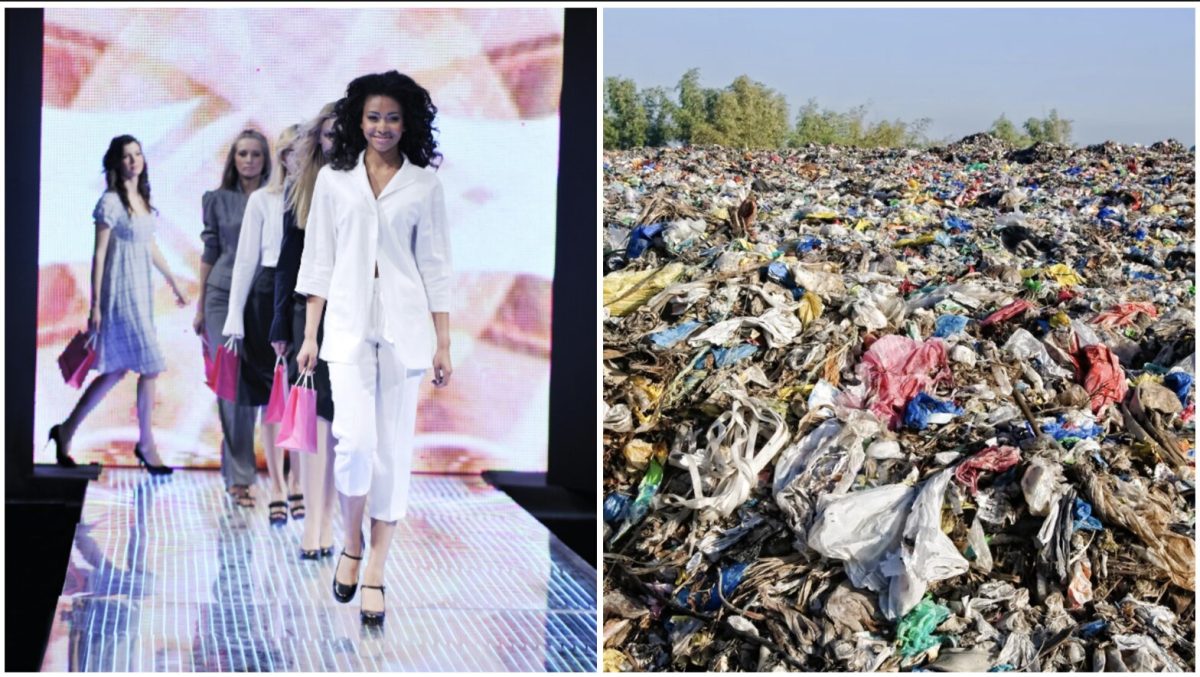
    Fast fashion has become a major environmental concern. As retailers rapidly cycle through trends, unsold clothing often ends up in landfills or is destroyed to make room for new inventory. Many garments are made from synthetic fibers that can release greenhouse gases as they break down and shed microplastics that may contaminate soil and waterways.

    What’s the ban’s purpose?

    The ban is intended to reduce the amount of unsold clothing that large manufacturers dispose of. According to the European Environment Agency, between 264,000 and 594,000 tonnes of unused textiles are destroyed across Europe each year.

    Instead of destroying unsold clothing, companies will need to find other ways to keep those products in use. That could mean selling excess inventory at a discount, donating it to charities or social enterprises, or preparing it for reuse through repair, refurbishment, or remanufacturing. When those options aren’t feasible, the materials can be recycled.

    While the regulation is primarily focused on reducing the fashion industry’s environmental impact, the EU also hopes it will strengthen the economy by encouraging more sustainable business practices. The ban incentivizes companies to design products that are more resource-efficient, durable, reusable, and easier to repair or recycle. In turn, consumers should benefit from higher-quality products that last longer and generate less waste.

    Companies may destroy unsold clothing and footwear only in limited circumstances, such as when the items are damaged, unsafe, counterfeit, infringe intellectual property rights, or have been rejected by charitable organizations. Businesses relying on these exemptions must provide supporting documentation, such as test results or other records, to justify the destruction. Even then, they must follow the EU’s waste hierarchy, which prioritizes reuse and recycling over disposal. Companies are also required to publish annual reports detailing the unsold products they have discarded.

    National authorities will enforce the ban and may impose fines on companies that violate its requirements, including failing to maintain records for at least five years to support inspections. To help reduce the administrative burden, businesses may use existing customs and logistics codes when reporting the products they discard.

    Why recycling isn’t enough

    Recycling clothing can be a complicated and labor-intensive process. It often involves separating fabrics, dyes, synthetic fibers, and natural textile materials before they can be reused. That’s not to say it isn’t worthwhile. Instead of ending up in a landfill, recycled textiles can be turned into new clothing, home insulation, carpet padding, and other products.

    Still, recycling isn’t a cure-all. The EU hopes the new ban will encourage companies to keep usable clothing in circulation for as long as possible through resale, donation, reuse, or refurbishment before recycling becomes necessary. In doing so, the regulation aims to create a more circular economy rather than allowing piles of unused clothing to continue growing.

    This movement hopes to encourage clothing manufacturers to produce higher-quality products and reshape the industry as a whole. Making clothing from higher-grade materials with durable stitching that’s easier to repair can help reduce waste. While critics argue that doing so could reduce the number of garments sold each year, many say better-made clothing is worth the higher price—especially if consumers end up buying fewer replacement items over time.

    What can you do with old clothing?

    There are plenty of things you can do with old clothing around your home. If an item is too damaged to donate, its fabric can be repurposed for crafts or used as cleaning rags. And if you’re handy with a needle, there are countless ways to upcycle old clothes into new outfits, accessories, or other useful items with a little inspiration from the Internet.

    Giant corporations and everyday people alike can do their best to make the most of the materials they have, helping save money and reduce waste.

  • European Broadcasting Union offers guide to reduce sexualizing camera angles of Olympic women athletes
    Photo credit: CanvaA new guide has been introduced on how to respectfully broadcast woman athletes.

    Being an athlete is tough, especially if you’re an Olympian. They sacrifice their time and bodies in order to achieve peak physical condition. There is also the mental pressure to compete against the best. The last thing they should worry about is being objectified and sexualized online. 

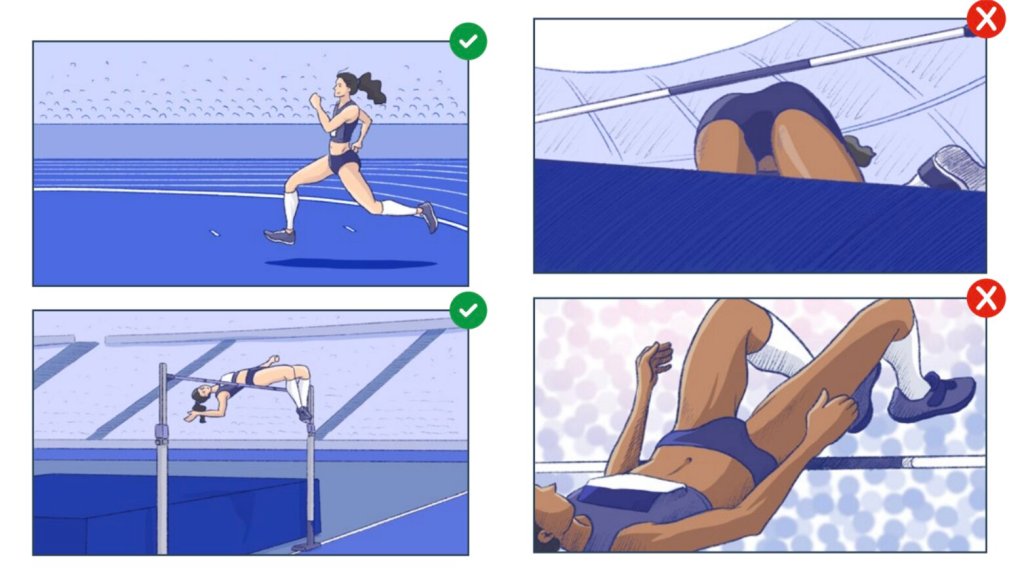
    With this in mind, the European Broadcasting Union wants to help. They offered a booklet to broadcasters titled Raising the Bar: Guidelines for respectful media coverage in women’s athletics. The 23-page guide shows how camera placement choices and editing could potentially compromise an athlete. It also offers broadcasters guidelines for how to set up camera shots and show slow-motion replays that won’t sexualize or present athletes in undignified poses. 

    athletes, infographic, olympians, guide
    Screenshot

    Focusing on the sport, reducing harassment

    These guidelines come as multiple stories about women athletes being harassed online have surfaced. Many misogynistic posts about athletes have come from slow motion footage focused on certain parts of the athlete’s body. 

    “The sexualization of women athletes through selective camera angles and editing choices continues to be a significant concern across many sports broadcasts,” wrote Glen Killane, executive director of EBU Sport in the booklet. “Lingering shots on bodies, low-angle cameras that capture revealing views, and excessive slow-motion replays that serve no technical or storytelling purpose are among the issues observed in the media coverage of women’s athletics competitions today.”

    These new broadcast guidelines and suggestions are backed by Serbian long jumper Ivana Španović, British Olympic pole vaulter Holly Bradshaw, and Croatian high jumper Blanka Vlašić. Vlašić has spoken out regarding the equal visibility of women’s sports. Bradshaw has spoken out against the discomfort and sexualization of Olympic women athletes due to their tight-fitting uniforms.

    “I first-hand have received social media abuse and witnessed inappropriate videos online of myself and colleagues when slow motion content of us competing is captured,” wrote Bradshaw in the guide. “Athletes want to enjoy themselves doing the sport they love without feeling uncomfortable or anxious about the footage being shown live. Many athletes, myself included, have been in competitive scenarios where they are more focused on the cameras instead of their own performance.”

    What the guide provides

    The guide provides visual aids for broadcasters along with insights from the athletes to explain why certain shots would be preferred. Broadcasters are requested to avoid tight shots from the back of athletes. They’re also asked to avoid low camera angles from underneath. They recommend shots above the pelvis or ones that don’t linger onto commonly sexualized areas of the body. They recommend wider shots so the audience can see the technical ability being displayed by the athlete. Overall, the point is to focus on the athletic performance rather than close-ups of the athlete.

    Currently, there is no enforcement of these guidelines or penalties if a sports broadcast doesn’t adhere to them. However, there is value in knowing which broadcasts will focus on the athletic contests rather than an athlete’s appearance. This will help the competitors focus on how they do rather than how they look when the cameras are on.

Explore More Culture Stories

Fashion

European Union enforces ban on destroying unsold fast-fashion clothing by major companies

Film & TV

European Broadcasting Union offers guide to reduce sexualizing camera angles of Olympic women athletes

Culture

The summer concert state rankings: Which states pack more festivals, shows, and tours in 2026

Internet

The church fathers of early Christianity are showing their swag – on TikTok