Apart from the origin of the universe, different theories have also been proposed about the end of the world. The universe is not just made of this visible matter, but a form of mysterious matter called “dark matter” which constitutes almost 73% of the universe’s energy density. In the latest study published on the Arxiv server, scientists have stated that the force of this dark matter is so monstrous that it could soon stop the expansion of the universe, leading to a “long freeze,” slowly sending the cosmos into an eternal sleep.
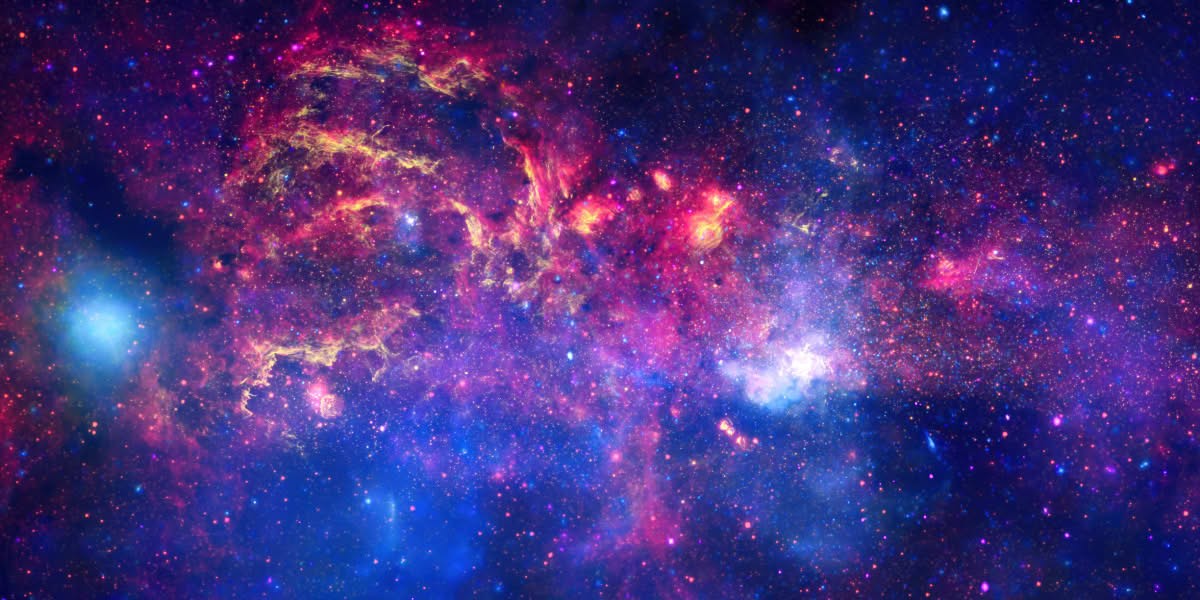
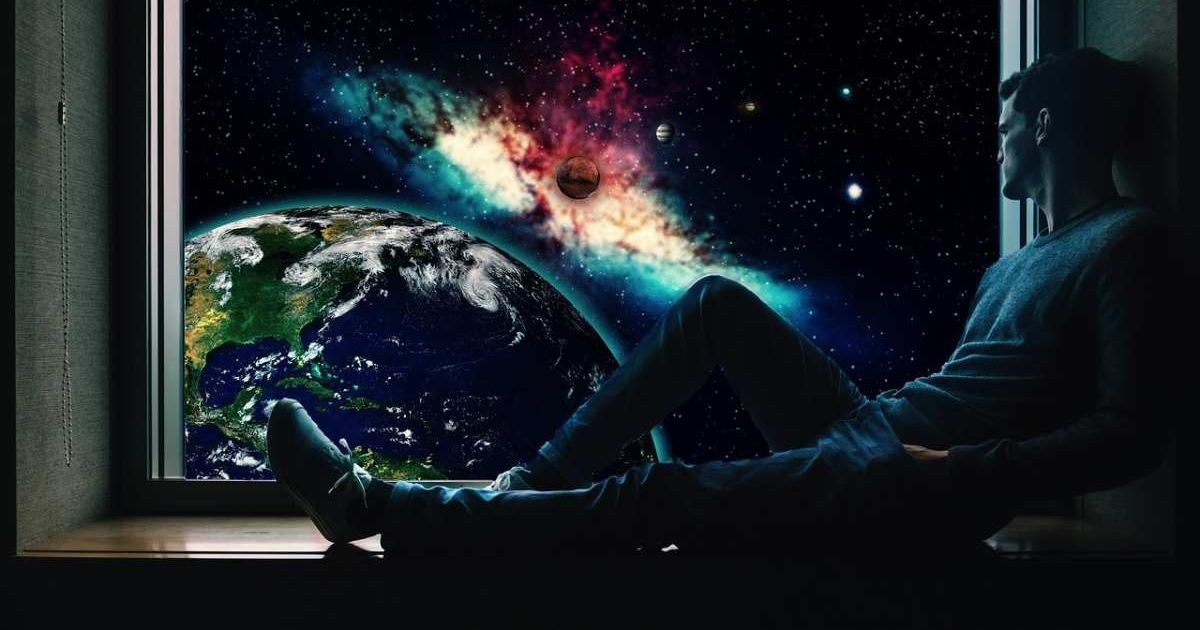
The Milky Way. Elements of this image furnished by NASA (Representative Image Source: Getty Images | Roberto Machado Noa)

When conditions are right, the universe will expand and expand before it freezes, and existence collapses. Based on previous studies, cosmologists know that the universe’s expansion is accelerating continuously due to the influence of dark matter. But they still don’t have an exact idea of what this dark matter is. In the findings of the research, scientists have proposed that this so-called “holographic dark matter” could make the universe stretch to a finite size, and then turn everything so cold that it would eventually cease to exist.


According to NASA Space News, the “holographic dark energy model” explains that dark energy is not just a force embedded into the fabric of the universe. It is the innate, phantom force that creates the concepts of time, space, and gravity, without which these concepts are mere illusions. The holographic model also states that the Earth that humans observe is just a hologram projected by a 2D structure, and the expansion of the universe could just be an array of processes unfolding inside this massive 2D object. Everything humans see or experience is an illusion, according to this theory.


via GIPHY


As a result, the end of the universe was initially attributed to a process scientists called by names like “Big Freeze,” “Big Crunch,” “Big Rip,” or “Big Chill.” Explaining this process in a TED-Ed video, Venus Keus, from the University of Helsinki, said, “Imagine two objects representing galaxies with a short, tight rubber band holding them together – that’s gravity. Meanwhile, two hooks are pulling them apart – that’s dark energy – and it is expanding the universe.”
Design composed of nebula, stars and colors as a metaphor on the subject of astronomy, science, space and religion (Representative Image Source: Getty Images | AGSAndrew)

She elaborated that if someone copies this system over and over again, the outcome of the battle between these two forces of push and pull will determine how the universe will end. “The Big Freeze scenario is what will happen if the force pulling the objects apart is just strong enough to stretch the rubber band until it loses its elasticity.” If this happens, then stars would just die, galaxies would separate, and the subatomic particles would drift apart, resulting in a dark, cold, freezing, stagnant universe.


via GIPHY


“We have demonstrated that, under very general assumptions, the HDE [Holographic dark energy] model can lead naturally to a long freeze, in which the scale factor asymptotically approaches a constant,” study authors concluded in the paper. Fundamentally, the crux of the study is that the universe is a big, ballooning bubble that will eventually pop and burst, which in cosmological terms, would be the last hush before the “Long Freeze,” and all consciousness would dissolve into a silent stillness.

https://youtube.com/watch?v=aV0bwBm20vw%3Fsi%3DvLI5sdFG3hdA9b9S

  • A Spanish park has been free of wildfires for over a decade thanks to 18 donkeys
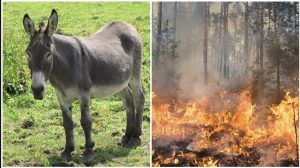
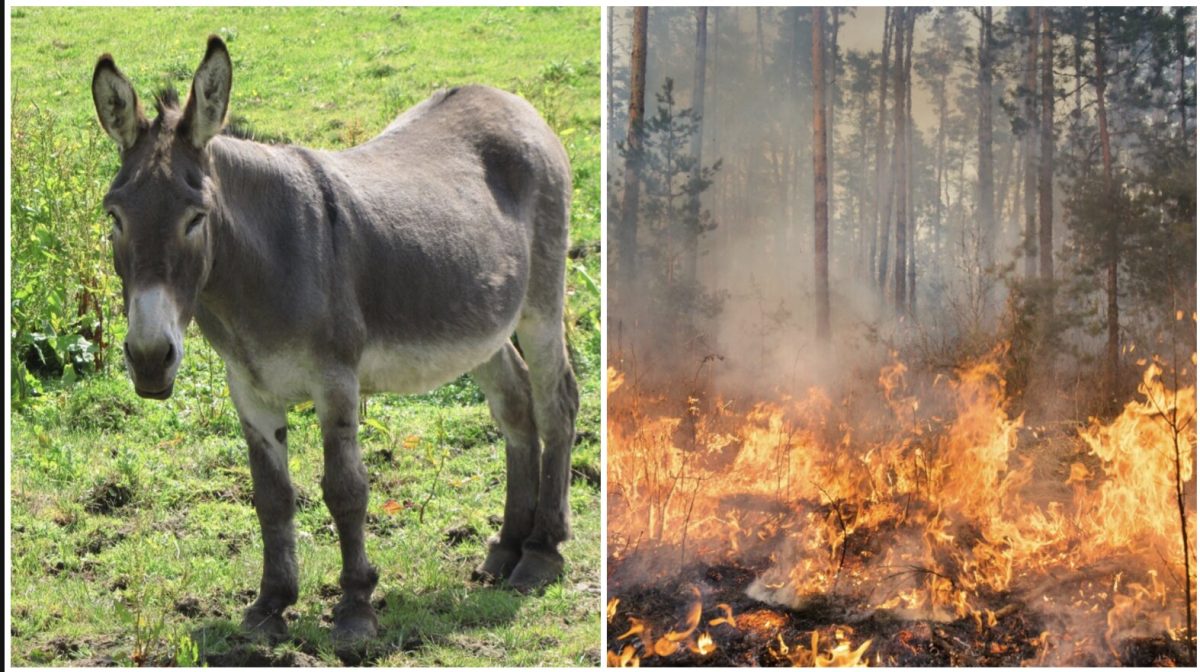
    Photo credit: CanvaDonkeys and other livestock could help prevent mass wildfires.

    According to NASA, wildfires have doubled worldwide due to climate change. Throughout the globe, governments and environmentalists have been trying to find ways to curb the fires. One particular national park in Spain has found a solution that has been keeping them fire-free for over a decade: donkeys.

    Since 2014, the Firefighting Donkey Battalion unit consisting of 18 donkeys has been preventing wildfires in Doñana National Park in Doñana, Spain. The mission these donkeys do is simple: eat the dry brush that usually sparks and fuels wildfires. The donkeys spend up to seven hours a day using their voracious appetites to graze and clear a 130 by 50 feet area of dried grass, scrub, and other vegetation.

    Why donkeys?

    While humans can do this type of clearing out of dry brush, using donkeys for this work is arguably more effective. While it is a slower process, it is consistent and thorough. Donkeys are able to quietly patrol in areas that are inaccessible to vehicles. In exchange for the feasting, the donkeys get about eight gallons of water and rest. No money or fuel needed.

    The donkeys’ bodies are also pretty much built for this kind of environmental work, too. Their stomachs are built to eat the same rough and dry grass repeatedly without issues. These daily grazings slowly but surely remove potential origin sources for fires. As a bonus, the donkeys are naturally disposing of the dried vegetation whereas humans would have to find a different way to dispose of it.

    Having donkeys or other livestock graze in such areas was once more common in agriculture prior to modern farming. Some argue that the machinization of farming and urbanization have reduced the number of grazing animals. This in turn allows more vegetation growth that become dry spots for more wildfires to occur.

    The method expands

    This method has been so successful that other areas of Spain have adopted it. In 2020, Tivissa launched the Burros Bomberos project with three donkeys to so much success they’ve expanded. They now have 40 donkeys grazing and clearing nearly 400 hectares of land.

    The Andrea Association in Allariz uses a team of donkeys to clear and maintain nearly 1,000 hectares of a biosphere reserve. Using GPS to monitor the donkeys’ activity, the group of grazers travel 19 kilometers per day to feed. Similar initiatives have since started in Basque Country, Catalonia, and Galicia, too.

    Other ways to combat wildfires

    In the United States, California has been using goats in a similar function. The group Fire Grazers Inc. has been contacted throughout California to bring hundreds of goats to eat dried vegetation. Much like donkeys, goats are built to eat rough and dry brush. This includes certain plants such as star thistle that are painful for human hands to grab.

    It’s important to note that donkeys or other animals that eat dry scrub are the primary solution to wildfires. The same folks behind these initiatives also advocate proper forest planning and land management. This includes reducing the amount of easily flammable species of plants and trees such as pine. It takes thought, care, work, and maybe a bunch of donkeys to make a difference.

  • Beyond birds and mice, free‑ranging cats eat a surprising number of insects
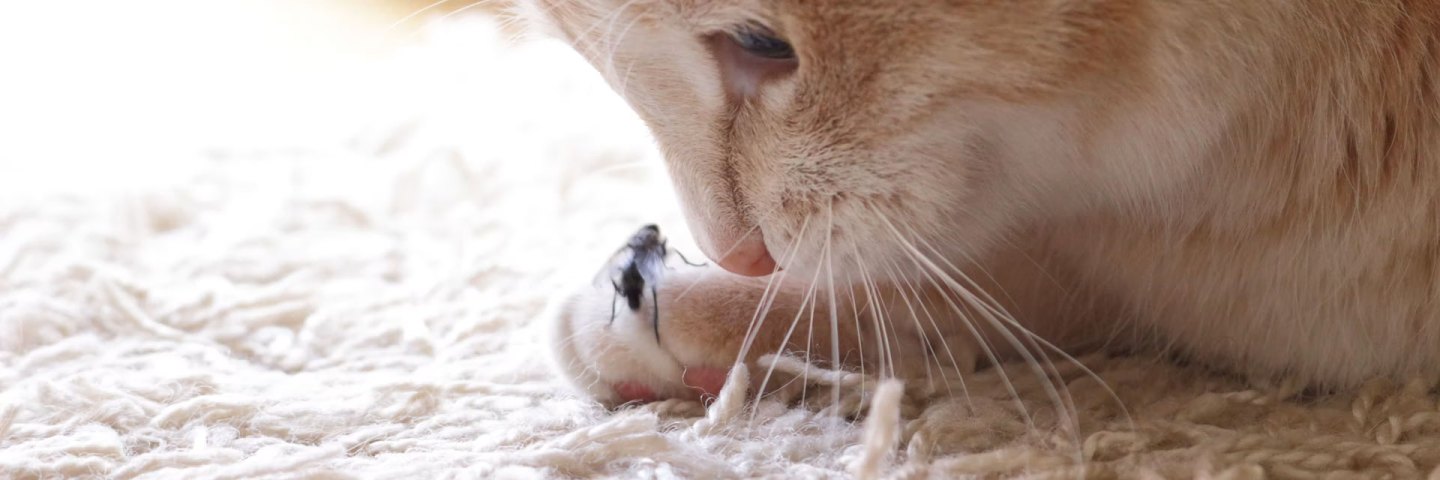
    Photo credit: SKashkin/iStock / Getty Images PlusDoes that look tasty?

    It’s pretty commonly known, and not very startling, that free-ranging cats eat birds and small rodents. But the degree to which they eat insects might surprise you.

    We are biologists who for many years have been trying to figure out what feral or outdoor-roaming pet cats eat outside.

    When domesticated cats – Felis catus – live freely in the wild or are allowed to hunt outside the homes where their owners live, they are an invasive species, which live in every ecosystem of the world except the continent of Antarctica. We wanted to know all of the species they eat – and to what degree free-ranging cats are eating endangered or threatened species.

    Examining reams of research

    Over the past two decades, we have evaluated hundreds of scientific findings, including searching through Google Scholar and Web of Science using the keywords “cat predation,” “feral cat,” “cat diet” and “Felis catus.” For each item we found, whether peer-reviewed or not, we evaluated whether it contained conclusive evidence of cat diet or predation. We also reviewed each one’s reference section for additional unique articles or databases pertaining to cat diet and predation, and included those in our search.

    Overall, we identified 533 unique publications – books, journal articles, theses and agency reports – that reported specific animal species consumed by cats. Cats’ plant-eating habits are occasionally, but haphazardly, noted in studies, so we did not include them in our analysis.

    Our initial work focused on an overall assessment of what free-ranging cats eat around the world. Published in 2023, this paper analyzed the 533 studies on cat diet or predation events published over more than a century and found that cats ate nearly 2,100 different species of animals, including invertebrates.

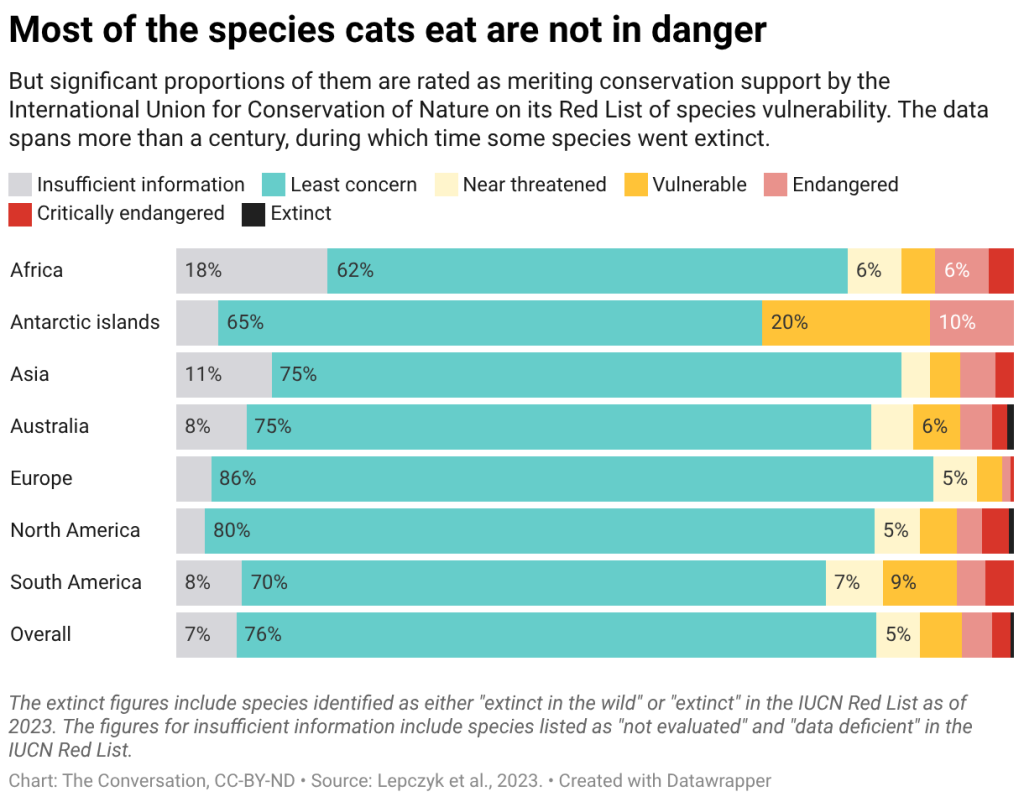
    Of those 2,100, the International Union for Conservation of Nature’s Red List of Threatened Species listed 347 as “near threatened,” “vulnerable,” “endangered,” “critically endangered” or “extinct” in 2023. Some of the species went extinct during the many decades covered by the data.

    Most of the species cats eat are not in danger

    Insects and the like

    Most of the species cats ate were vertebrates – mostly birds, followed by mammals and reptiles. But the data also indicated that at least 7% of the species cats eat are insects and other invertebrates, particularly beetles, and less frequently crustaceans, arachnids, centipedes, snails and slugs, and millipedes.

    Many of the cat studies we reviewed did not report on how many individuals of a given species cats ate, so it was unclear what the total amount of insects was or how many calories cats are deriving from insects.

    Invertebrates make up more than 70% of all terrestrial animal species and are important pollinators, predators and herbivores in virtually every nonmarine ecosystem. Many invertebrates are in decline globally due to urbanization, habitat destruction, increases in both light and pesticide pollution, and climate change. So we dug deeper into the data to understand what invertebrates cats are eating.

    While a little more than one-third of all the studies we analyzed included invertebrates as part of cats’ diet, most of those failed to identify specific species of invertebrates. But we were able to find identifications of 148 invertebrate species.

    Of those, two are considered endangered by the International Union for Conservation of Nature: the Aldabran grasshopper (Pternoscirtus aldabrae) in Seychelles and the Tasmanian giant freshwater crayfish (Astacopsis gouldi), which can grow up to 13 pounds (6 kilograms). Two others are considered vulnerable: wētāpunga (Deinacrida heteracantha), an insect native to New Zealand that can be about the size of a mouse, and the common yabby (Cherax destructor), a freshwater crayfish native to southeastern Australia. One other, the Canary Islands horned beetle (Arhopalus pinetorum), is listed as “near threatened.”

    A cat licks its lips while crouching over a dead mouse.
    Not surprising: Cat eats mouse. Julian Stratenschulte/picture alliance via Getty Images

    Effects on populations

    We have not found formal research evaluating how cats’ eating habits affect invertebrate populations. And for many species, they are likely not as significant a factor as wide-scale pesticide use.

    But it’s possible that cats could be significant contributors to the deaths of rare species or in specific locations.

    Cats require a large amount of protein, as much as one-third of their daily diet, and invertebrates are good sources of protein.

    In many places, invertebrates provide an easy source of food. Whether in an urban backyard or on a remote island, cats are unlikely to turn a blind eye to available prey. And some cats may find it entertaining to chase, catch and eat insects even if they don’t need their nutrition.

    A challenge of researching this question is that many invertebrates are relatively small, which makes direct observation in the field harder and can require more analytical approaches in the lab. And they have soft bodies, without distinguishing characteristics that could be easily recognized in scat or stomach contents.

    However, molecular technologies can identify species using trace amounts of DNA left in the environment by animals. Promising new studies are beginning to identify what cats eat by analyzing the DNA found in their stomachs and scat. That research may help explore in even more detail what cats are eating in the outdoors, and how it’s affecting various species and the environment as a whole.

    This article originally appeared on The Conversation. You can read it here.

  • The University of Cambridge found a way to reduce plastic waste and create clean hydrogen energy at the same time
    Photo credit: CanvaPlastic bottles, left, and an airplane.

    The world’s top environmental concerns come down to two basics: reducing waste and creating clean energy. Thanks to researchers at the University of Cambridge, we may be able to tackle both with a single solution.

    Inspired by a previous solar-powered reactor the team created that turned carbon dioxide and plastic waste into fuel and useful chemicals, the researchers developed a new device that uses sunlight to break down plastic into hydrogen.

    “Converting waste streams into valuable products using clean energy sources is…an attractive strategy to address both energy and environmental concerns,” the team wrote in Nature Chemical Engineering.

    How does this device work?

    The reactor is relatively simple compared to others of its kind. The researchers sprayed a light-absorbing material onto a glass panel. They then added a second layer of molecules containing zirconium and cobalt to act as the catalyst for the reaction. All told, the device measures about one square meter and was tested under natural sunlight.

    Under sunlight, the device was able to extract hydrogen from sliced-up plastic bottles. It also extracted hydrogen from glucose and cellulose. This means the device can produce hydrogen from both plastic and plant waste.

    Hit two problems with one device

    This could help reduce a rapidly growing problem. The world produces more than 359 million tons of plastic each year, much of which ends up in landfills. Most modern plastics take 100 to 1,000 years to decompose. Much of the plastic polluting our land and oceans comes from food packaging, including water bottles. This device can turn those plastics into a cleaner fuel source. It could also help address the growing problem of microplastics contaminating drinking water and soil.

    Hydrogen is a powerful fuel for trucks, ships, and airplanes, and demand for it is growing. Because it typically produces only water as a byproduct, it is a highly sought-after source of clean energy. While there are green methods for producing hydrogen using solar and wind power, a significant amount of the world’s hydrogen still comes from natural gas. In other words, while hydrogen itself is a clean source of energy, the way much of it is produced is not.

    Could this device work realistically on a global scale?

    The use of spray coating and relatively simple materials makes this new reactor easier to manufacture.

    “What surprised me was, after all the optimization, just how simple it is,” researcher Ariffin Bin Mohamad Annuar said in a press release. “We just have this huge panel, we spray our catalyst on it, put it into our solution, put it under the sun, and it produces hydrogen and other valuable chemicals just from plastic waste. It’s just simple and scalable.”

    The team says that before they can make the device commercially available, they hope to make it more durable and efficient. Time will tell whether it becomes a solution to both problems as it becomes more widely available.

Explore More Environment Stories

Environment

The University of Cambridge found a way to reduce plastic waste and create clean hydrogen energy at the same time

Environment

Kenyan teens create award-winning, affordable car exhaust filters made with corn cobs and algae

Science

The drawer problem: Why so many of us can’t let go of our old electronics, and what we can do about it

Environment

Solar-powered boat feasts on trash and could solve the ocean’s plastic waste problem