Cats are incredibly popular pets all around the globe. Interestingly enough, there’s been some talk about a connection between cats and schizophrenia. A recent study in the Schizophrenia Bulletin from Oxford Academic found that cats might actually influence schizophrenia symptoms in the people who care for them.
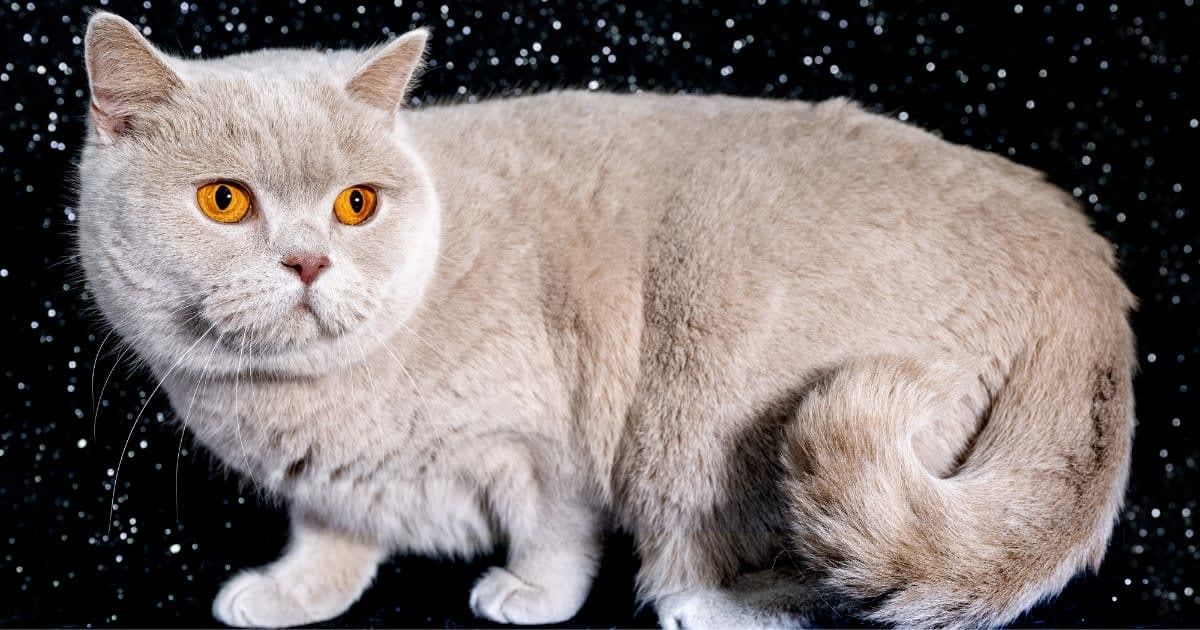
Image  Source : Nova, a thorn British Shorthair cat is seen in a portrait session during GCCF Shropshire Cat Show on February 03, 2024 in Walsall, England. (Photo by Shirlaine Forrest/WireImage)
Image Source: Nova, a thorn British Shorthair cat is seen in a portrait session during GCCF Shropshire Cat Show on February 03, 2024, in Walsall, England. (Photo by Shirlaine Forrest/WireImage)

Australian researchers analyzed 17 studies published during the last 44 years and found a link between owning a cat and developing disorders related to schizophrenia, according to Indy100. Researchers from the Queensland Centre for Mental Health Research, in their study published last December, said, “We found an association between broadly defined cat ownership and increased odds of developing schizophrenia-related disorders.” The origins of this investigation date back to a 1995 study that shed light on the exposure to a parasite called Toxoplasma gondii —suggested as the cause. 
Representative Image Source: Pexels | Sam Lion

In some studies, it has been found that during childhood cats could make a person more likely to develop schizophrenia, but not all studies have seconded this. Other studies linked cat exposure to high scores on scales that measure traits related to schizophrenia. But, again, other studies didn’t show such a connection.
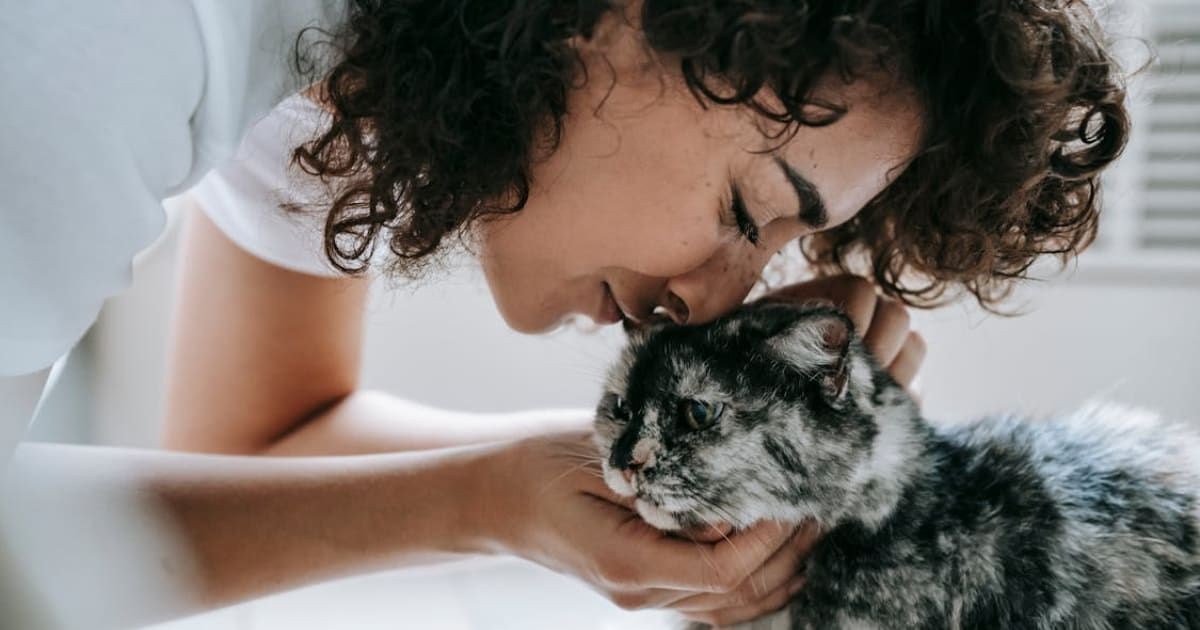
Representative Image Source: Pexels | Helena Lopes

So, to better understand, researchers reviewed and analyzed all the research on cats and schizophrenia. The parasite, T. gondii, can be transmitted through a bite or the feces of an infected cat. People can get infected without symptoms, but research found more strange effects the infection may have. If it enters the body, T. gondii can infiltrate the central nervous system and influence neurotransmitters. The parasite has been linked to personality changes and some neurological disorders, including schizophrenia.


All in all, 17 studies found “a significant positive association between broadly defined cat ownership and an increased risk of schizophrenia-related disorders.” The research team has elaborated, “After adjusting for covariates, we found that individuals exposed to cats had approximately twice the odds of developing schizophrenia.” According to the report, past studies have found mysterious ties between having a cat and possibly developing symptoms of schizophrenia down the line. Therefore, the possibility of getting infected can’t be ruled out.


via GIPHY


The studies, however, did have their shortcomings, as some of the information wasn’t conclusive enough to give a definitive answer. According to the journal, the report’s findings remain complete, and the statement reads, “There is a need for more high-quality studies in this field.”
via GIPHY


  • One man’s bad day led to a legacy of love from the ‘Kissing Tree’ for the whole Victoria community
    Photo credit: CanvaSneak a kiss while walking the sidewalk.

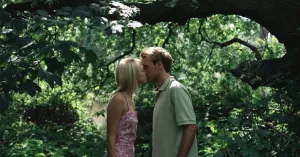
    There is a spot dedicated to love in Victoria, British Columbia. In it, a billowing tree grows from a woman’s yard into the sidewalk with an arch-like opening. For decades, couples have shared sweet moments under the shady green privacy of the “Kissing Tree.” Not only that, but children have been making wishes and new parents bring their babies to enjoy the quiet tranquility under the tree. Oddly enough, though, the creation of the Kissing Tree wouldn’t have happened if not for a violent riot.

    The story of Victoria’s Kissing Tree actually starts in New York City. In 1972, Bronx native Brian O’Reilly got his car stuck in the middle of a crowd waiting for a Rolling Stones concert. A riot broke out, forcing O’Reilly to protect himself with the only thing he had in his car: a tape recorder.

    “I wasn’t recording on purpose,” O’Reilly explained to CTV News. “I just had the microphone in my hand, and I had my arm up like this to defend myself and I was asking why he was hitting me.”

    Moving toward love

    O’Reilly was so upset at the encounter that he moved away from the United States to settle in British Columbia. That was where he met and befriended Bonnie. Over the years, the two became close. Then, Brian made his move.

    “He said, ‘I don’t want to date you. I want to marry you,’” Bonnie recalled to CTV News. “It felt amazing and wonderful because I had fallen in love with him.”

    They embraced under what is now known as the Kissing Tree.

    That one bad day in New York turned into 38 years of marriage in Victoria. While Brian has passed away, Bonnie has kept the tree the two of them enjoyed kissing under ready and available to all.

    “If you can come here and have an ‘aha!’ moment, isn’t that wonderful? Wouldn’t you like to do that for everyone?” Bonnie said.

    tree, foliage, British Columbia
    Screenshot

    The legacy of the Kissing Tree

    Over the last few decades, the Kissing Tree’s branches have created a natural arch from Bonnie’s yard over the sidewalk. After seeing several couples make a stop to kiss under the privacy of nature, Bonnie hung some lights under the tree to create a more intimate, cozier space.

    Thanks to the O’Reillys, couples have gotten engaged under the tree. Many resident couples have spent years making it a point to kiss under the tree whenever they pass through. That love has extended to children whispering wishes to the tree’s trunk. Pet lovers and new parents also have a nice quiet place for their dogs and babies to enjoy the shade.

    Other ‘Kissing Trees’ in North America

    There are other legendary “Kissing Trees” throughout North America, labeled as such for different reasons. In San Marcos, Texas, a large oak was dubbed “The Kissing Tree” after Sam Houston kissed the cheeks of the women who stitched him the state flag as a gift when he was running for governor.

    The Kissing Trees/Love Trees of St. Augustine, Florida have a legend of their own. These trees are typically an oak and a palm tree that grow intertwined together, symbolizing connection. Legend has it that if you were to kiss under one of these trees, your love will last forever.

    Whether it is imprinting magic onto a landmark or not, it is great to see how something as simple as a tree can connect people across time.

  • 11-year-old Kentuckian rescues man drowning in apartment complex pool
    Photo credit: CanvaA young hero rises to the occasion.

    An 11-year-old boy in Kentucky is being praised for rescuing a man from drowning in a pool at an apartment complex.

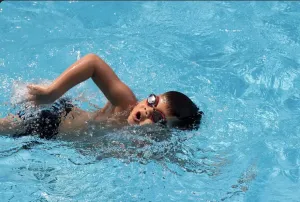
    Avory Woolery spotted the man at the bottom of the pool. The man appeared distressed and that’s when Woolery dove into action.

    “There was this man in the pool, like unconscious underwater, almost shaking, maybe, and my adrenaline kicked in,” Woolery told WKYT-TV.  “I went underwater, I grabbed him up, his friend, I believe, put him on the floor and started doing CPR on him to try and save him the best he could, until somebody called 9-1-1.”

    ‘He’s a human being’

    When asked why he took initiative, Woolery said that he dove in to get the man because no one else appeared to notice the drowning man’s plight.

    “No one was doing anything, so I put on my goggles. I went underwater,” Avory said. “I grabbed him up and I just felt really bad because there was no way that I was going to let another man die today. He’s a human being. He should be treated as such.”

    As Woolery noted, another person performed CPR on the man until paramedics arrived. The Lexington Fire Department said the man was taken to a local hospital and is still in serious condition. While still hospitalized, worse could’ve occurred if young Avory didn’t intervene.

    Fatherly pride

    Sean Woolery, Avory’s father, was proud of how his son was able to calmly and quickly react to the situation.

    “I’m proud of him. Somebody, when I was walking up here, somebody said, ‘Thank you, you taught him how to swim,’” he said.

    A life was saved thanks to young Avory being able to notice signs of drowning and staying calm under pressure during a dangerous situation.

    How to spot a drowning victim

    While many public pools and beaches have lifeguards, it’s still important to recognize the signs someone is drowning so you can get them the proper help. After all, that’s what Avory did.

    But the signs of someone drowning don’t necessarily match the ones that are seen on television or film. Many drowning victims are unable to yell for help, loudly splash, or grab attention since water is gathering into their lungs.

    The Red Cross offers some more accurate signs of someone drowning along with tips to help them. A distressed swimmer/drowning victim will look like they’re having trouble making forward progress in the water. They’ll likely appear vertical and unable to tread water. They may look like they’re struggling to keep their mouth and nose above water. They could also appear motionless and face down in the water.

    What to do if you see someone drowning

    Should you see these signs, yell at the person to see if they can respond. Alert the lifeguards (if present) and have someone call 911 immediately. If there is no lifeguard, it’s recommended to get the person out of the water the safest way possible without going in. This means offering flotation devices like life jackets or buoys for the drowning person to grab. 

    There’s a reason why it’s usually not recommended to swim to rescue a drowning person. It’s because if they are conscious, the drowning person could instinctually grab at you. They could accidentally pull you down underwater with them. While Avory did swim to save that man, the victim was unconscious. It was an extreme situation in which trained professionals weren’t present. 

    If swimming is the only option, it’s recommended to swim to the victim with a flotation device in hand for them to grab onto without touching them. This can allow you both to stay afloat with less struggle. That said, it is always best to wait for water safety professionals to act first if at all possible. The Red Cross has some other water safety tips to follow that could save lives and prevent common drowning incidents.

  • Australia produces so much solar power that they’re giving three hours of it away each day for free
    Photo credit: CanvaSolar energy surpluses during the day offers Aussies free energy.

    In a time when energy costs are rising, Australia is taking a different approach. The country has acquired so much solar power that they’re giving it away. In fact, those who sign up for the program will get three free hours of energy each day.

    This comes from a government-run offer dubbed Solar Sharer. It offers a free three-hour period for those who sign up. This period runs from 11:00 a.m. to 2:00 p.m. in Queensland, Victoria and New South Wales. The period runs from noon to 3:00 p.m. in South Australia. 

    Free, but not unlimited, power

    While the power is free for those who are eligible and have a smart meter, there is a daily cap of 24 kilowatt-hours (kWh). Any amount above that will be charged. However, the energy cap is based on the Australian Energy Regulator’s assessment of what a five-person household uses each day. 

    While that free period each day provides a great window to use major appliances or charge electric cars, there are some catches. Solar Sharer isn’t yet available to residents outside those areas, but energy brokers are making similar offers. There is also no guarantee that electricity rates won’t get higher outside of those free periods either.

    Who benefits?

    The program is designed for those who are a part of a solar power grid. It also benefits people who work from home the most. If the people in the household are at their job or the office, they likely won’t be able to take advantage of the deal.  

    While Energy Consumers Australia supports this offer, they are concerned about how governments and retailers relay the information to customers. In short, they don’t want people to be surprised if their electricity rates are charged higher during the non-free periods. They’re also concerned that, by their measure, only three in 10 eligible people were aware of this offer.

    “We don’t want to have people signing up to these plans assuming it will decrease their bills, when in fact it could do the opposite,” the consumer advocacy group said to The Guardian.

    There is a chance that rates won’t get higher if more people are able to take advantage of Solar Sharer. Since most electricity use is during the evening when more people are home from work, changing up the usage towards daytime hours can benefit everyone. It would still be an uphill battle as electric light is mostly used in the evening and nighttime when it’s dark.

    Similar programs elsewhere

    While there are catches, this isn’t the first program of its type. There are similar successful free energy programs in other nations. Areas such as Germany and the Nordic countries create so much green energy through wind farms that they make similar free power offers. California has also offered government programs for low-income households and farmworkers housing cheap-to-free solar energy.

    While kinks definitely need to be sorted out, creating so much generated energy to the point that it can be given freely is a good problem to have.

Explore More News Stories

Local

11-year-old Kentuckian rescues man drowning in apartment complex pool

World

Australia produces so much solar power that they’re giving three hours of it away each day for free

World

Motorcyclist trapped under a 3,300 pound car saved by Australian car salesmen

Local

Ohio local news viewers spring into action after seeing an elderly woman threatened with jail time