People with Alzheimer’s disease and their families often require support. According to the Alzheimer’s Association, one in nine people aged 65 and older has the disease. Nearly 12 million Americans also provide unpaid care to those with Alzheimer’s and other dementias. With that in mind, a tech company is hoping to help through a simple pair of glasses.

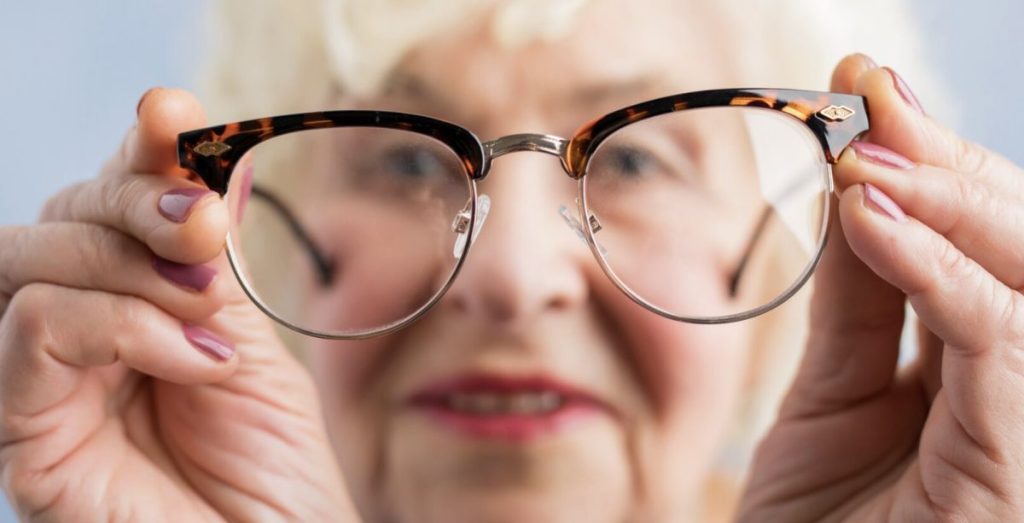
CrossSense, a British technology company, has developed AI-driven smart glasses designed for people experiencing cognitive decline. Using a camera built into the frame, the glasses can identify and label objects directly in the lenses. They also feature an AI assistant, dubbed “Wispy,” which can gently ask questions, provide reminders, and adapt to a user’s needs.

The purpose of these lenses is to help people with cognitive disabilities live more independently. The AI helps those with Alzheimer’s disease remember steps in a sequence and labels the items they are looking at. This can give patients a sense of confidence while also easing the burden on those who care for them.

The creators spent more than a decade developing prototypes of the glasses. They trained the AI on everyday activities such as household chores and preparing basic meals. The glasses are designed to work with a patient’s prescription and hearing aids, allowing the AI to learn more about the user’s surroundings. Over time, this can help identify unusual discrepancies for the wearer.

According to CrossSense’s website, the glasses will check in with the user about items on their schedule, such as appointments and medications. They can also help users remember the names and appearances of people they frequently interact with. The glasses can keep track of conversations users have had, along with items they’ve interacted with throughout the day. The built-in battery allows the glasses to operate for an hour, but a portable power bank can extend use throughout the day.

Initial results look promising

The technology is still being thoroughly tested to ensure safety and quality, but it has already made an impression. CrossSense’s glasses were awarded the Longitude Prize on Dementia from the Alzheimer’s Society and Innovate UK. The prize included £1 million to help fund research and production of the glasses. CrossSense hopes to make the glasses available to the public by 2027.

For the few patients with Alzheimer’s disease who have tested these smart glasses, the support the gadget provides has been game-changing.

“For people with the condition like mine who’ve got cognitive impairment, it’s just an amazing thing,” Carole Greig, an Alzheimer’s patient and smart glasses tester, told The Guardian. “How fantastic that we can be given some more independence, that we’re going to be able to cope on our own and not be a burden. And not only that, it’s not just [not] being a burden, it’s enjoying your life.”

A neurologist weighs in

Dr. Rab Nawaz, a board-certified neurologist in the United Kingdom, spoke to GOOD about the smart glasses and their potential uses.

“The most promising use is real-time cueing,” he said. “In early-stage dementia, people often struggle not just with memory, but with sequencing, word-finding, visual-spatial processing, and carrying out familiar multistep tasks.”

He added, “A tool like these glasses could help by labeling objects, prompting the next step in an activity, and reducing the panic that comes when someone knows what they want to do but cannot bridge the gap in the moment.”

However, Nawaz is hesitant to see this technology as an end-all, be-all solution.

@minutewomenhomecare

Here are five simple activities to engage your parent living with dementia to help jog their memory, bring some joy and be engaged with them. #homecare #dementia #boston #caregiving #alzheimers ♬ original sound – The Memory Care Guy

“My biggest concern is overpromising,” he said. “These glasses are exciting, but they are not a treatment for Alzheimer’s and they will not work equally well for every patient, especially as dementia becomes more advanced or if someone has paranoia, hallucinations, poor vision, major hearing impairment, or trouble tolerating wearable devices.”

With continued testing over time, there will hopefully be further advances in both technology and medicine to support patients with Alzheimer’s disease now and in the future.

  • Scientists ‘bottle the sun’ with a liquid battery that stores sunlight for use at night
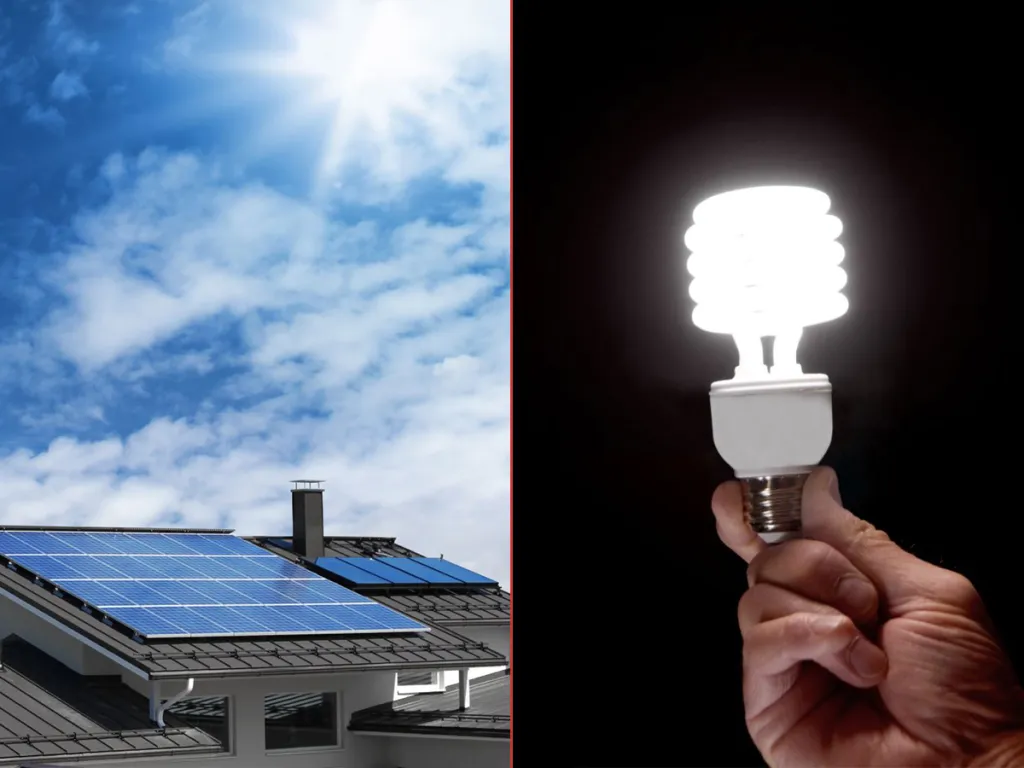
    (LEFT) Sun shines on solar panels and (RIGHT) a light bulb glows at night.Photo credit: Canva
    ,

    Scientists ‘bottle the sun’ with a liquid battery that stores sunlight for use at night

    This could help solve one of the fundamental challenges of solar energy.

    Every day, the sun shines more energy on the world than we could ever need. Yet the moment it sets, that power supply disappears—a limitation that challenges green energy sources like solar to keep the lights on after dark.

    Scientists at the University of California, Santa Barbara, now say they can “bottle the sun.” They have developed a new molecule that could free solar power from the constraints of bulky batteries. The tiny structure twists open and closed, allowing sunlight to be stored and later released as heat.

    the sun, eclipse, sunlight, sunshine, solar system
    Photo credit: Canva

    Molecule absorbs light and releases heat

    The major challenge of solar energy has been storage. Massive battery systems, which are inefficient at storing energy over long periods, have posed a costly problem. Researchers reported in Science that they looked to DNA chains to recreate a molecule that changes shape when exposed to sunlight.

    The team of scientists created a synthetic structure that stores and releases energy reversibly. The new material captures sunlight, stores it in chemical bonds for extended periods, and then releases it as heat when needed.

    The molecule acts like a mechanical spring, twisting into a high-energy shape when exposed to sunlight. Even after long periods, it can untwist into its relaxed state, releasing energy as heat.

    “With solar panels, you need an additional battery system to store the energy,” study co-author Benjamin Baker, a doctoral student, told Futurity. “With molecular solar thermal energy storage, the material itself is able to store that energy from sunlight.”

    green energy, forests, green cities, clean energy, alternative energy,
    Photo credit: Canva

    Moving toward green energy

    Around the world, the shift to clean energy isn’t slowing down. Over the next five years, global renewable energy capacity is expected to double, according to the International Energy Agency (IEA). As global energy demand rises, so does the urgency to expand clean energy. The Center for Climate and Energy Solutions found that 32% of electricity was generated from renewables in 2024. Wind and solar are the fastest-growing energy sources in the United States.

    Solar energy has seen massive expansion in Asia, Europe, and emerging markets. It’s driven by global demand, not just wealthy nations. In 2025, more than 30 countries installed record levels of solar in a single year.

    solar panels, alternative energy, science, solar farm
    Photo credit: Canva

    The need for efficient energy storage

    Solar energy output can fluctuate dramatically. Sunny days may generate around 45%, compared to roughly 10% on cloudy days. Storage capacity must scale to meet demand. A 2025 study in the International Journal of Energy Studies reports that solar growth is outpacing our ability to store it.

    There is a growing demand for new and emerging ways to capture and store renewable energy. Systems that store energy as heat, such as hydrogen and thermal-hydro storage, are in high demand. Efforts to develop more efficient and reliable battery solutions remain a key focus of research.

    Life on Earth has always depended on the sun. When it comes to energy, science is working toward a future that doesn’t fade into the night. These emerging technologies are bringing renewable energy storage from the promise of tomorrow into the reality of today.

  • British engineer uses 500 disposable vape batteries to power up electric car
    Combined vape pen batteries can deliver real horsepower.Photo credit: Chris Doel/YouTube

    A British engineer-turned-YouTuber turned heads with a recent invention he created from trash. After building power banks and powering e-bikes with discarded disposable vape pens, Chris Doel transformed 500 vapes into a power source capable of driving a car up to 40 miles per hour.

    On his YouTube channel, Doel documented the experiment. He recovered 500 discarded vape pens and used 3D printing to combine their batteries into a single 50-volt, 2.5-kilowatt battery pack. He then modified it to power a Reva G-Wiz, an early-2000s low-powered electric car. The vape battery pack didn’t just start the G-Wiz; it powered the car enough to travel 18 miles and reach speeds of up to 40 mph.

     “I can’t believe this car has just accepted this crazy Frankenstein battery that I’ve just slapped in it,” Doel said in the video.

    The engineer points out a problem with single-use electronic products

    Doel’s feat wasn’t just a display of ingenuity; it also highlighted a growing problem—specifically, the mounting burden of landfill waste. According to a 2024 report by Wired, 137 billion pounds of e-waste, including vape pens, are generated each year. Only one quarter of that waste is recycled.

    As Doel pointed out, much of this waste isn’t just metal and materials going to waste, but also a loss of reusable energy.

    “Unfortunately we seem to live in some crazy dystopia where buying these single use devices and then chucking them away is totally normalized, despite them having fully rechargeable lithium ion cells inside them,” Doel said.

    @sustainabilitymattersva

    E-waste will continue to become a bigger issue in the future. Be sure to do you part to mitigate the problem by properly disposing of your old electronics📱 #ewaste #landfills #landfill #waste #trash #recycle #wastedisposal #electronics

    ♬ original sound – Sustainability Matters

    Cumulative e-waste isn’t just environmentally harmful; it also poses risks to human health. The World Health Organization warns that much of this waste releases toxic chemicals and materials into soil and water. Prolonged exposure can negatively affect the health of children, pregnant women, and others.

    To reduce the amount of e-waste filling landfills, it’s important to dispose of these products properly. After deleting all personal information, consider donating your electronics to a friend or an organization. Items with lithium-ion batteries, such as vape pens, shouldn’t be thrown in the regular trash.

    You can search online to find a proper e-waste facility in your area. More information on how to properly dispose of or recycle e-waste is available on the United States Environmental Protection Agency website.

  • Scottish children are helping penguins find mating partners with these tiny, painted stones
    Scottish kids are helping penguins get a date.Photo credit: Edinburgh Zoo on Instagram
    ,

    Scottish children are helping penguins find mating partners with these tiny, painted stones

    “I would cry if a penguin picked MY pebble 😭 It’s a life goal”

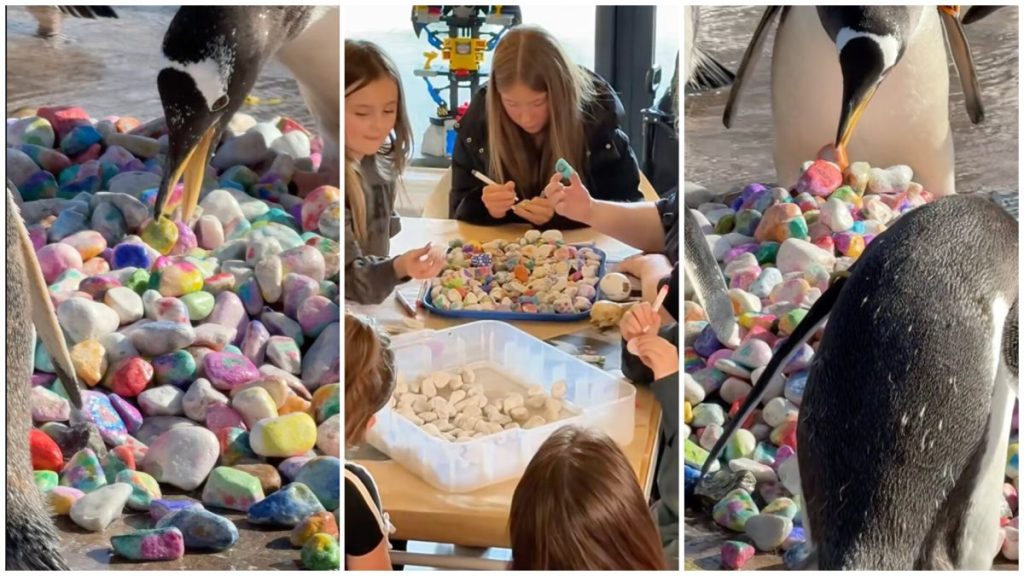
    During mating season, male gentoo penguins are tasked to find pretty and smooth rocks to present to prospective mates. This is meant as a gesture to woo them and to be used to build a nest with them, too. Well, this season, the penguins at the Edinburgh Zoo in Scotland got some help.

    Kids being supported by the Edinburgh Children’s Hospital Charity gathered together to paint pebbles with vibrant colors for the penguins. The hospitalized children do this every year with the first stone traditionally placed in the penguin enclosure. The children often watch a livestream of the gentoo penguin enclosure to see the penguin pick their favorite rocks that they’ve painted.

    Commenters sound off on the penguins’ pebbling

    The Edinburgh Zoo posted this year’s pebbling pickings on Instagram, delighting the commenters:

    “I would cry if a penguin picked MY pebble 😭 It’s a life goal lol.”

    “This is just brilliant! How wonderful to see a creative health initiative that actively connects the children with a purpose like this!”

    “This is heartwarming ❤️❤️❤️”

    “This is brilliant for the penguins and the children! Can’t wait to see the beautiful nests.”

    “My grandson painted a pebble he’s hoping it gets picked.🤞🤞🤞”

    “Penguin pebble pilfering season is upon us! So pleased it makes so many people (and penguins) happy.”

     “Oh no, now I’m questioning if penguins have favourite colours.”

    “Any that aren’t picked would make an awesome rock garden that kids visiting the zoo could pick from!!”

    “This is the cutest thing I have seen probably ever.”

    Pebbling practices for human relationships

    As mentioned, this mating ritual called “pebbling” is a gesture made by male penguins to their mate to not just build a nest. It’s their version of saying, “I saw this and I thought of you.” In fact, psychologists and couples therapists recommend adopting a version of pebbling for human relationships.

    Now to “pebble” in dating or married relationships doesn’t literally mean giving your partner rocks (unless they’re a geologist that would love that sort of thing). For humans, pebbling your partner means to share or give a small gift like a flower, toy, or object that has some meaning to one or both of you. It doesn’t always have to be a gift either, but it could be a photo, social media post, or a meme you can text them. It’s essentially anything that conveys “I saw this and thought of you” in order to showcase affection to them and initiate closer conversations.

    Pebbling isn’t just for romantic couples either. Many autistic people find it more difficult to navigate socially due to high anxiety, sensory sensitivities, or having trouble interpreting social cues. By texting a GIF to a friend, giving a small flower to their parent during a walk, or other such pebbling, it allows some autistic people the ability to communicate their affection and connection without the pressure of using words.

    Whether it’s a colorful rock or something else, pebbling can be a valid form of communication between friends, partners, or potential mates. It all depends on who you choose to build a nest with.

Explore More Technology Stories

Technology

British engineer uses 500 disposable vape batteries to power up electric car

Technology

Want to be more likable? Experts say stop asking ‘how are you?’ and use this playful tactic

Technology

Her company spied on her with RAM-hogging software. Her ‘uno reverse’ was brilliant.

Technology

Only 17% of people can pass this 3-question IQ test on the first try. Can you?