Just before graduating college, I was invited to dinner by a friend’s sister, Kristen, who had recently finished her Peace Corps service in Guyana. We sat around the table eating hummus and flatbread with her handsome Guyanese husband, and she told me stories about speaking pidgin English and the little boat she used to travel to and from her site. She came back brighter and worldlier somehow.
I had been thinking about the Peace Corps. After that dinner, a clear vision formed in my head: me, living in an African hut, playing with a group of beautiful children, and carrying water from a long distance wearing some kind of loose-fitting batik dress. Of course, I knew there was more to it than that. But Kristen’s story really spoke to me about how big the world was and how I might go about finding my place in it. Today I’m proud to call myself a returned Peace Corps volunteer, having finished my service four years ago as a youth development volunteer in Peru.
This week the Peace Corps turns 50, and veterans of the program are getting together in my hometown of Washington, D.C. to celebrate. These 50 years have brought over 200,000 American volunteers to 139 different countries. With an annual budget of around $400 million to support 8,655 current volunteers whose goals are simple: providing technical assistance, educating other countries about the United States, and learning about other countries to bring that knowledge back home. For its volunteers, the Peace Corps experience also promises personal transformation and through it, the promise of a brighter, more connected America.
“I think it’s a wanderlust combined with the sort of glamour of having done it,” says my friend Mia Farber, who was the volunteer who lived 30 minutes down the road from me and would cook me lunch when I needed to escape from my little village. “People really revere returned Peace Corps volunteers. There is just nothing bad you can ever say about it.”
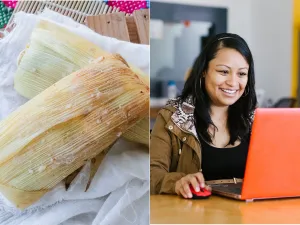
The reality of what really happens in the field is so much harder to explain. Even through photographs, it’s difficult convey the beauty of the Peruvian village where I lived and worked for two years. My village of 35 families is nestled in the Andes, under a giant white-capped mountain that turned incredible colors in the late afternoon sun. My neighbors were a mix of Quechuan older ladies, who dressed traditionally in thick felt skirts and big straw hats, and the younger generations, who spoke Spanish and were trying to find their way out of the farming lifestyle. They all stared and giggled at me when I first arrived, and never really stopped. I was a signpost from a different world, a tall gringa who ate their simple meals of rice and potatoes and helped their children organize a business that sold homemade tamales on Sunday mornings.
The sunsets and the potatoes are easy to talk about. Then there are the things that are really hard to fit into a story. How I had to stop working with certain schools because the teachers regularly did not show up for class. How I came to realize there was nothing I could do to save some children’s education. How I had to leave my first host family the night before my 23rd birthday because the father beat up his two daughters for talking to boys on the porch when he wasn’t home. Or how a month before I finished my service, I was sexually assaulted by someone I trusted. How nothing was ever really done about it because after telling my Peace Corps doctors, I was too exhausted to do anything else.
Near the close of my service, I was asked to speak to the incoming group of volunteers about best practices in youth development. After my presentation, a few of them came up to me, asking questions and telling me what they wanted to do in their sites. I kept saying, “It’s really hard. It takes time. You have to get to know people before jumping in.” They looked at me bright-eyed, and I recognized myself when I had first gotten there and thought I could do anything. I had the funny urge to push them down to the ground and then pick them up and hug them close to me, just to warn them of the cycle that would soon start.
With time to reflect, knowing these extremes is what helped me to develop a deep love for Peru. The extremes helped me see my own culture more clearly, both the strength of my optimism in the hard places and the depth of my materialism, which I used to get me through those places. Eventually, around month 18, I fell into a somewhat comfortable place in the deep crack between these two cultures. I leaned heavily on my Peace Corps friends, who were the only ones who really understood the divide. I wasn’t asked to choose a side until I came home to the United States, which proved to be a harder adjustment than when I moved to Peru. I wandered around the grocery store, puzzled by my tears over a whole aisle dedicated to breakfast cereals, and wondered if I would ever feel normal again. I did, but it took a while.
Losing and then having to find your culture again is a circuitous route to becoming a better citizen. I wonder if this is what Kennedy had in mind when he first gave that speech in 1961 at the University of Michigan. He was looking for Americans who were ready to serve their country by showing a kind, giving face to people abroad, yet ended up attracting many who were frustrated with America’s own international policy. Gloria Levin, who served in Peru from 1966 to 1968, in the thick of the Vietnam War, said there were members of her group who refused to swear the Peace Corps oath, which asks volunteers to support and defend the U.S. Constitution. She says that she joined for her own personal development and as “an antidote to the U.S. government’s military incursions in southeast Asia.”
Jill Meeks, who served in Guinea Bissau, West Africa in the late 1990s, showed her town that being an American can take on different forms. “I felt like I was representing the United States, and just by being in the country taught people about how Americans could be from different ethnicities and they weren’t all white,” says Meeks, “although they definitely considered me ‘white’ I was constantly explaining I was Latina.”
My Peace Corps experience was also about expanding horizons—both my own and those of my community. I often think that one of my biggest successes of Peace Corps was telling the girls in my host family that the domestic abuse was so bad that I could no longer stay with them.
It’s easy to see where Peace Corps can grow as an organization. Most of its volunteers are fresh out of college and lack the job skills needed to create infrastructural change. Combine that with cultural and language difference, plus little to no outside funding, and long-lasting development can be challenging to say the least. It’s difficult to track progress in a meaningful way. I’ve always heard that much of the effect of having a Peace Corps volunteer in a site can’t be seen until the next generation steps up to leadership. When I went back to visit my town last year, I found all the teenage girls I had worked with were graduating from high school, thinking of post-graduate options, and most important to me, not pregnant. I have no idea if this is a result of me being there or not, but I celebrate it as if it’s my own victory.
With 50 years to reflect on, it seems that our willingness to go far into the unknown is the most important part of being a Peace Corps volunteer. In an NPR interview, one of the first volunteers, Bob Klein, said that when he was starting out in Ghana, “the head of faculty said to us, ‘Don’t let anyone come out from Washington and let anyone tell you what it means to be a Peace Corps volunteer. Because you’re all they have and you’ll decide what it means to be a Peace Corps volunteer.’”
When I told Kristen that night at dinner that I was thinking about joining the Peace Corps, she replied, ”Do it. You don’t want to be one of those people who says “I wish I had done the Peace Corps.” She was right. Now when anyone asks me about going, I tell them to just go and worry about the details as they come up. I tell them that they will be richly rewarded in ways they will not be able to predict. I tell them it will be a little like that vision they have in their head, but so much more.
I tell them all of this because it’s true, but I also tell them for selfish reasons. I believe that a long-term cultural immersion will make them a kinder, more sensitive human being—the kind of American I want to surround myself with.
Photo courtesy of Gracy Obuchowicz.