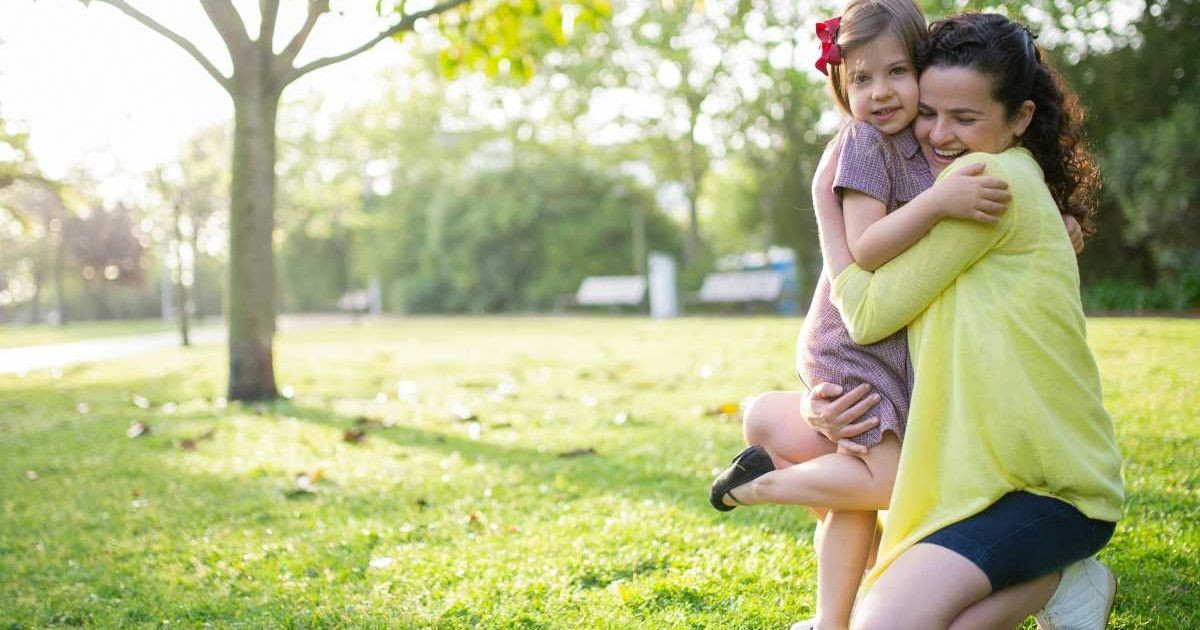
Imagine a mom shopping with her toddler. She turns around for a moment, only to find her child missing. Moments later, she discovers them in a toy store, captivated by the colorful displays. Research shows that toddlers often wander off, drawn by bright colors or unusual sounds, as they explore their surroundings and assert their independence. For them, it’s an adventure; for parents, it’s a heart-stopping moment. While wandering is a natural behavior, parents can use certain tricks to find their kids faster. Krista Piper (@krista.piper), a mom from Ohio, shared a viral “looking loudly” hack on TikTok that’s helping parents everywhere.
Representative Image Source: Pexels | Anastasia Shuraeva

 In March 2023, Krista, a wedding photographer and BookToker, posted a video about an incident at the Center for Science & Industry (COSI) in Columbus. She was there with a friend and her children when her daughter Lily wandered off and went missing. “I lost my 3-year-old today in a play place and thank god for TikTok,” she wrote, explaining that she had learned the hack from another TikTok video about a year earlier.


She said that she had never lost any of her kids in the 7 years, and that time the unexpected had happened. “The play place has a lot of little nooks and crannies, and she was going back and forth between one of the barns,” Krista said in the video, adding that she was talking to another mom just when her toddler dawdled away. “She was probably missing for about a minute or a minute and a half, but for me, it felt like an eternity,” she said.

Representative Image Source: Pexels | Liza Summer

When she couldn’t find Lily, Krista, at first, thought that she might have gone to some water table or something because the kid loved the water. But she wasn’t there either. “At that point, I am starting to panic,” she recalled. “So I started calling her name. And, a little bulb went on in my head. I remembered a TikTok that I had seen, probably a year ago.”


via GIPHY


She said she had watched the video of a mom who had lost her kid at a grocery store and instead of yelling out his name, she was yelling out her kid’s description, what her child was wearing, and she was able to find her kid way faster. “So that’s what I did. I stopped calling her name. And I started ‘Little girl, pink shirt, Minnie Mouse!’ I am sure people thought I was a little crazy.” Soon, she heard that, behind her, other moms were repeating the same phrase, “Little girl, pink shirt, Minnie Mouse.” At last, someone heard the description and pointed the mom toward her kid. Her video has been viewed by 697,000 people and shared nearly 8,000 times with 69,000 likes.
Representative Image Source: Pexels | Yankrukov

At the end of the video, she advised parents, “If you ever lose your child, or dog or anything, yell out their description and raise your voice. I found my kid really fast this way.” One reason why her method worked was, that instead of expecting the child to respond to her name being called, the method directed other people, mostly adults, to track down the child.

Representative Image Source: Pexels | Shkrabaanthony

People congratulated Krista and many shared similar personal experiences of losing their kids in places like Walmart and Disney. “I am so glad you found her so quickly! My son jets away so quickly. At Barnes and Noble, they did a code Adam and locked the store down because my son,” commented @msvaljohnson. @m4ngel1xz shared another wonderful trick to find a missing kid, “My mom always told us (we were 3) that if we got lost to go to a specific place in the site. For example, the entrance, or bathroom. My dad just whistled us.”


Image Source: TikTok | @katiedotcom

Image Source: TikTok | @wild_larkspur

Later that day, Krista decided to share her experience in a TikTok so other parents could also get some help from the “looking loudly” method. “I knew I wanted to at least tell parents, ‘Hey, this is what you do,’ just because I knew that I had seen that TikTok over a year ago and that is what helped me on that day. So I wanted to let more parents know, just in case they hadn’t seen that TikTok,” the 35-year-old mom told Good Morning America.


According to GMA, COSI thanked Krista in a statement, “As an institution that celebrates lifelong learning, we are grateful for Krista being vulnerable and posting her experience, sharing knowledge that may be of assistance or value to other families. It is through this exchange of experience that we can all participate in our educational and inspirational ecosystem, all the while ensuring a safe, secure, and enriching experience for us all.”


You can follow Krista Piper on TikTok and Instagram for more videos related to lifestyle and books.

This article originally appeared 4 months ago.
  • How to be grateful to someone – even when you really don’t want to
    Photo credit: Focus Pixel Art/Moment via Getty ImagesAt times, feeling personally grateful to someone can feel like a big ask – but there are other forms of gratitude.
    ,

    How to be grateful to someone – even when you really don’t want to

    A change in perspective can make gratitude easier.

    There are few greater feelings than the sense of heartfelt gratitude to another human being who has done you a solid. Sincere thanks and reciprocation are part of the glue that binds us in human relationships.

    But sometimes you’re just not feeling it. You know that you have benefited from what someone has done for you, but you don’t really feel grateful to them for doing it. Most teenagers go through this period with their parents. Maybe you take your partner or colleague for granted.

    For me, 14 years ago, it was my mother-in-law. She had upended her life to move from South Dakota to California to live with my wife and me to assist with childcare after our daughter was born; no other source of childcare fit with our demanding work schedules and my commute. She made a huge sacrifice that transformed our lives, but there were moments when I really struggled to feel grateful.

    Since that time, I’ve come to devote much of my research as a philosopher to studying how the way that we interpret each other as people shapes our relationships. That work has helped me to understand why I struggled to be grateful – and taught me a little bit about how to do better.

    Personal gratitude

    I’ve found that the hardest part of feeling grateful to someone is the “to” part. It is one thing to be impersonally grateful that something happened and another thing to be personally grateful to someone for doing it. These are not the same.

    Both forms of gratitude require seeing something as a benefit. And they both require a humble recognition of how easily things could have been otherwise. When the rain ends a drought, an atheist can feel grateful that the tomatoes will survive. But the atheist isn’t grateful “to” anyone for the rain.

    A line of around a dozen men wearing white sarongs stand in waist-high water, holding their hands up in prayer.
    Priests offer prayers to Varuna, the Hindu god of rain, as they stand in the Osman Sagar on the outskirts of Hyderabad, India, on July 16, 2013. AP Photo/Mahesh Kumar A

    Personal gratitude requires more than impersonal gratitude. It is an example of what the philosopher Peter Strawson calls a “participant” attitude: an attitude that we have toward people, but not toward things. And a large theme in my work is that participant attitudes such as gratitude involve giving someone credit for what the attitude responds to.

    But which benefits we give people credit for is complicated. As philosophers such as Tony Manela have argued, actions motivated primarily by money, self-interest or insecurity don’t merit personal gratitude, even when they benefit you. Actions motivated by love, generosity or concern, on the other hand – or other “pro-social” motives – do.

    Sometimes people fail to feel gratitude because they take someone for granted, not noticing how easily they could have done otherwise. This wasn’t my problem with my mother-in-law. It was obvious that she didn’t have to move across the country to live with us.

    But it was hard to avoid noticing that she had always wanted to live in California. Sometimes it is hard to feel grateful because of how we interpret someone’s motives. They could have done otherwise, but we don’t think their action was really “about us.”

    Bad motives are easy to find

    Sometimes ungenerous motives can help people to be generous. Your child’s kindergarten teacher isn’t a volunteer. They may be a naturally generous person – but still, they probably wouldn’t be working with your child on spelling, arithmetic and handling adversity if they weren’t getting a paycheck.

    It’s still appropriate to be grateful to them. Their financial incentive to show up for work enables their generosity, rather than competing with it.

    A row of young children sit on the floor, clapping, as they face a seated teacher in a striped yellow shirt.
    Your child’s teacher might be generous, but their job enables them to act on that generosity every day. svetikd/E+ via Getty Images

    Elementary school teachers are not alone. After all, people’s decisions are often driven by many factors: some that merit gratitude and others that don’t. So if you go looking for selfish motives, you are bound to find some.

    Take your partner, for example. They do something that benefits you: buying you flowers, filling your tank with gas or finally taking their turn to wash the dishes. They are partly motivated by generosity, love or communal spirit. But, as in any close relationship, sometimes they may be hoping to get something out of it: reciprocation, maybe, or getting you off their back.

    It matters which of these you interpret as their “true” motive: Seeing it one way opens you up to gratitude, while the other precludes it.

    What are ‘true’ motives?

    The distinction between someone’s “true” motive and the other motives that enable it looks like the distinction between causes and enabling conditions. For example, when you drop a wine glass, the fragility of the glass enables the drop to cause the break, but it isn’t itself a cause of the break – the drop is.

    In the case of the falling glass, there’s a clear, objective answer to what caused the break and what merely enabled it. But I believe that relating to people is deeply different than understanding physical things.

    The key question in whether to be grateful to someone isn’t about which motives count as “causes.” It is about which cause we need to bring into focus in order to see the other person more clearly for who they are.

    See it their way

    In other words, it’s at least partly a matter of perspective. If someone does you a favor, but you know they’re hoping for something in return, you can see that as their “true” motive. But you don’t have to see it that way. Instead, you could see that motive as the condition they need for their generosity to thrive.

    Shifting perspectives isn’t easy. When you’re doubting someone’s motives, their lack of generosity can feel obvious. But it helps to remember that people tend to believe they’re acting generously. If you want to respond with gratitude, try seeing them as they see themselves.

    What if that doesn’t work?

    Well, the next best thing to being grateful to someone is being grateful for them. Starting there is a good way to remind yourself of why you value this relations

    This article originally appeared on The Conversation. You can read it here.

  • Men were stunned when asked the same types of career questions women regularly face
    Photo credit: CanvaUncomfortable man gets questions women often face during a job interview.

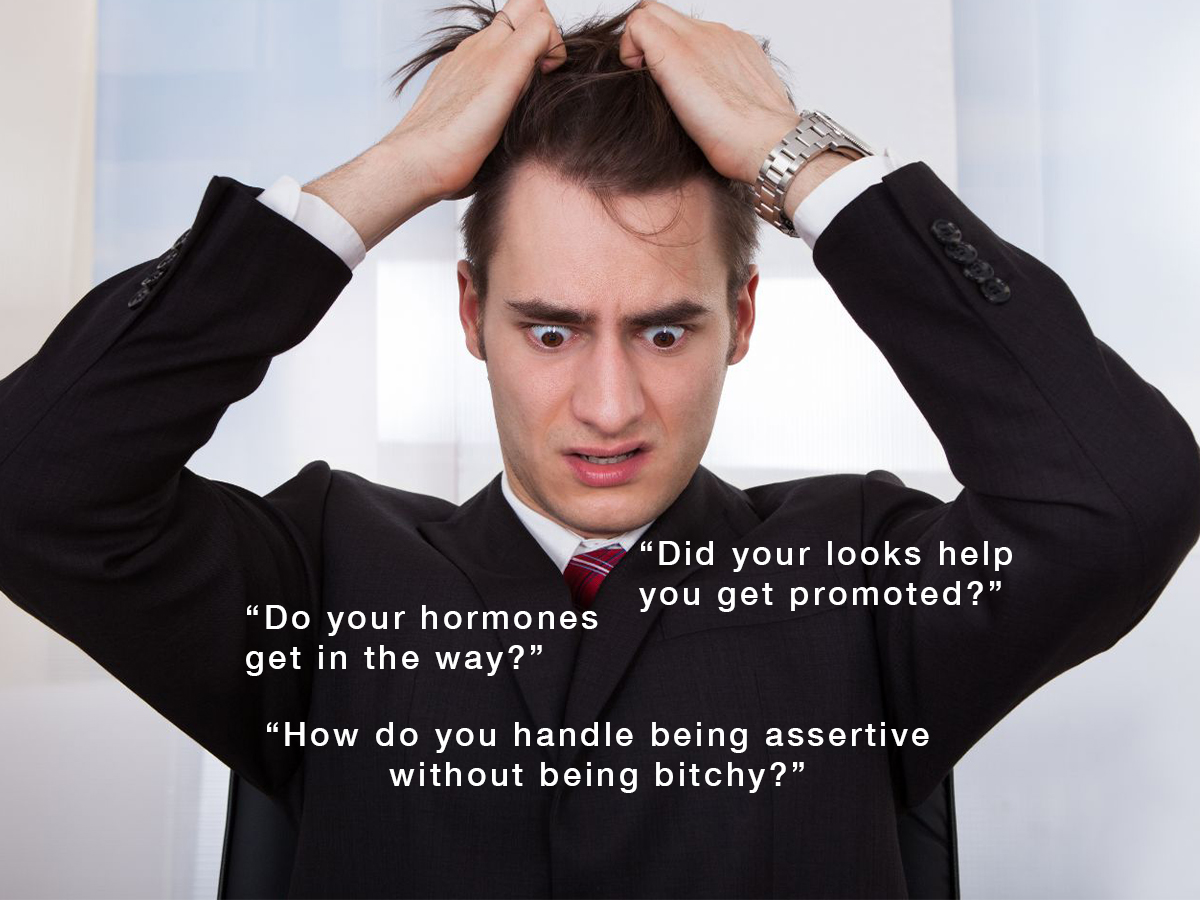
    “How much do you think your looks helped you get promoted to your position?” Unfortunately for many women, this isn’t a shocking question. Interviews, performance reviews, and typical professional interactions can reveal a double standard and workplace bias.

    In a social-experiment-style reel by lifestyle creator @bol.lifestyle, these questions were instead asked of men. Their discomfort and disbelief reveal why the standards women face regarding credibility are impossible to ignore.

    An experiment to reveal a double standard

    In the video, men are placed in an interview-style setup and asked a series of questions. Hearing these skewed questions for the first time, their expressions shift quickly from curious to confused and uncomfortable.

    Host: Have you ever been asked to just smile and look pretty or smile and say nothing in a meeting with a customer?

    One man appears somewhat shocked and uncomfortable. He quickly responds, almost dismissive at even being asked the question, “No.”

    Host: Do you think that your looks helped you getting promoted or moving up to your current position?

    Another man reflects and appears unable to answer the question.

    Host: Looking so good. By the way, I do love the shoes. Are these designer or your particular brand that you really like?

    A third man awkwardly smiles and vents some air, almost as if the ridiculous question doesn’t feel fitting at all. He doesn’t answer.

    Host: Do your hormones sometimes get in the way?

    A fourth man responds, “Hormones?” He awkwardly laughs and adds, “I don’t, I don’t know.”

    Host: Do you sometimes wonder whether you’ve been chosen for this position because you’re a man?

    Man 2 responds definitively, “No, not because I was a man.”

    Host: How do you handle in your job being assertive without being perceived as aggressive or bitchy?

    Man 1 tilts his head back and reflects on the question. “That’s uh, that’s a question that I find it very hard to relate to.” He then adds, “Because it’s not a situation I’ve been in.”

    women, career questions, role reversal, double standards
    Many microphones are held in front of a man.
    Photo credit Canva

    Real questions women face

    After this first series of questions, the video presents titles claiming: These were real questions asked to our female leaders throughout their careers.

    The host goes on to ask the men how they feel about this particular line of questioning. Their response is predictable.

    “It really, really, really feels uncomfortable. And I also feel it in my body,” said Man 3.

    “When hearing these things still happen, it makes me also feel that, hey, maybe I am more privileged than I thought I was,” added Man 1.

    At the end of the interview, the men seemed a little upset and surprised by the double standard. They collectively hoped for change, and some suggested they themselves were responsible for helping things get better.

    change, equality, career advancement, bias
    A man writes the word “change.”
    Photo credit Canva

    People advocate for change

    People seemed to really respond to the video. With over 6,000 comments, there was a consensus confirming the experience and advocating for change.

    “Men, our male privilege is real. How we use it is up to us, and hopefully we use it to protect and improve the experience of the women in our workplace.”

    “If you have sons, please prepare them to improve the way the world treats women.”

    “The man that felt it in his body… welcome to the life of a woman”

    “Perhaps the greatest privilege is never having to notice your own privilege.”

    “Oh my God. I have heard ALL of these questions. And more.”

    “Well done. We have to show a different way and we can do it with grace! We have to do it different.”

    “It’s not what we perceive , it’s what is .”

    “THIS experiment should be undertaken in workplaces all over the world…”

    perspective shift, workplace culture, office bias, normalized
    Women and men working together.
    Photo credit Canva

    It’s not about finger-pointing

    It can be easy to get lost in finger-pointing. Although at times the comments might feel like a pile-on, the success of the video lies in its simple setup. It takes a familiar experience and shifts the perspective so that people might hear it a little differently.

    Certain assumptions or expectations can become so normalized that people, maybe mostly men, stop noticing them altogether. Is it possible for workplace conversations to be more thoughtful, fair, and aware than they have been or, in some circumstances, still are?

    The intent of the video seemed less about provoking a fight. It demonstrated that some basic reflection and small shifts of awareness can lead to better experiences for everyone. There’s a familiar proverb that comes to mind: walk a mile in my shoes. These men seemed to gain some real perspective from the opportunity.

  • Young boy struggles through painful stutter until his singing videos change everything 
    Photo credit: WQAD News 8/YouTubeLando sings.
    ,

    Young boy struggles through painful stutter until his singing videos change everything 

    “One kids courage to show up, speak up, and sing his voice free.”

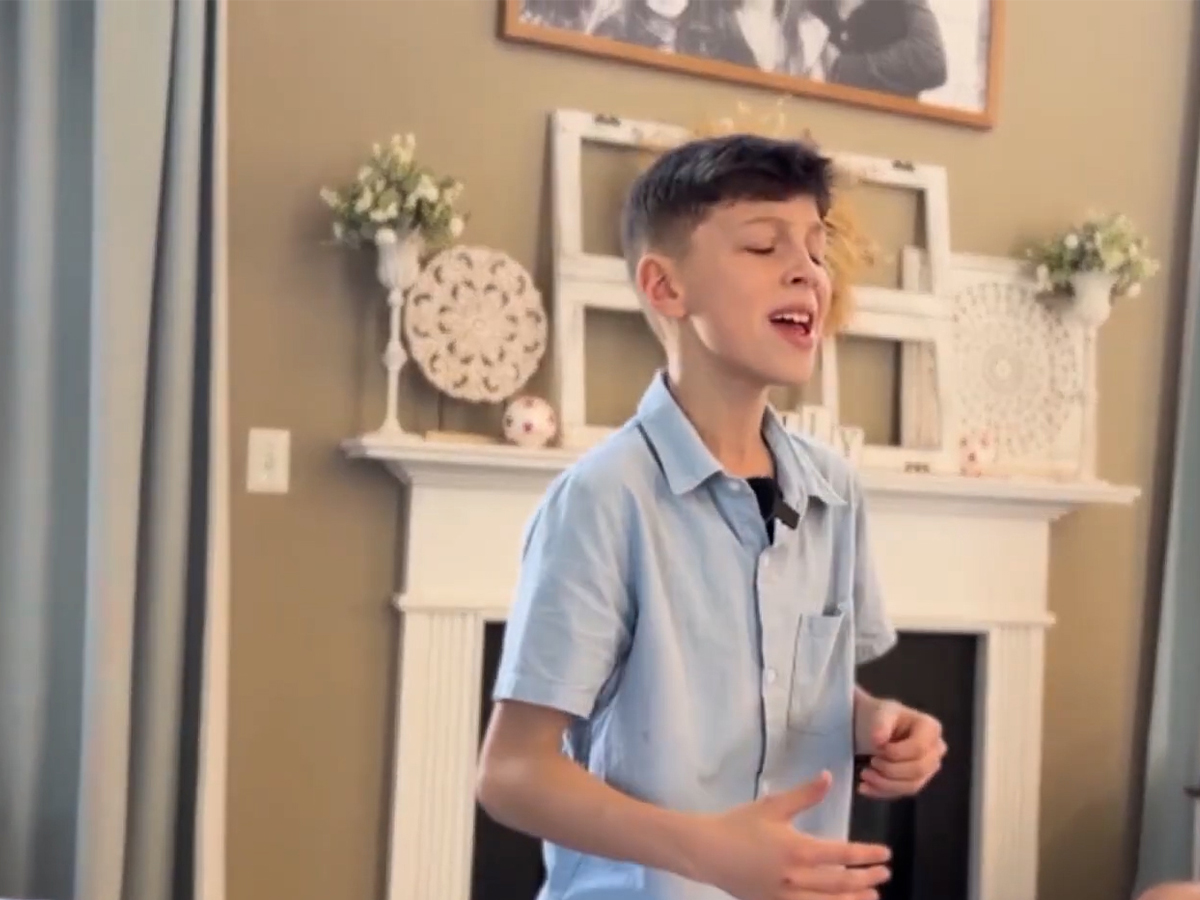
    A boy named Lando is gaining attention online after people started sharing and liking the two very different kinds of videos he creates. In one, he candidly speaks with a severe stutter. In the other, he sings smoothly, without the same pauses and repetitions that appear when he talks.

    Perhaps it’s the dramatic contrast that has people liking and clicking. For whatever reason, as Lando shares on his website, #stutterfreelando, he’s created an awareness movement around stuttering “born from one kid’s courage to show up, speak up, and sing his voice free.”

    The young entertainer is easy to like

    Finding a young person navigating his speech difficulties so charismatically and confidently is admirable. He’s not wavering under the spotlight. He’s shining.

    His family shares about their experience and the methods they’ve found helpful with his stutter on their website:

    “This is a family journey. We’re one of millions of families around the world navigating stuttering to learn what works, what doesn’t, and figuring it out as we go. Some of what we share helps Lando. Some might not. We’re learning that every stutterer is different. No more hiding.”

    Facing a severe stutter can be more complicated than practicing with a speech therapist.

    Traditional therapy hasn’t given us the breakthroughs we need. Therapists are trying. We are trying. But we refuse to sit quietly and hope it clicks. So we built this, a movement where our family shares what we’re learning out loud. Real strategies. Real techniques. Lando’s good days and the hard ones. Not a highlight reel. Not a gofund me. Real life.”

    It feels good to join a winning team

    After watching any of his videos, it’s clear why so many people keep coming back.

    In one clip, Lando talks about reaching 50,000 followers on Instagram and an upcoming interview with a local news outlet. The message expressed with gratitude and happiness is simple, but it takes time for him to get there. That process draws people in.

    “Congratulations on your followers, add one more”

    “Great work buddy!”

    “Ah Lando, I’m really enjoying your videos”

    “That excitement is so cute! I love how supportive everyone has been!”

    “Great job little man keep it going. You inspire a lot of people with the same problem.”

    “thankyou for sharing, your super cool.”

    Singing allows his words to come out in a continuous flow

    The difference isn’t subtle. In speech, words can stall and be difficult to get out. In song, they move by the rhythm that reduces stops. These are some of the comments you can find on just one of his singing videos posted above:

    “GOD BLESS YOU LANDO!!!!! YOU ARE ABSOLUTELY AMAZING!!!!!”

    “The eyebrows at the end was fire.”

    “You are an inspiration”

    “Brilliant buddy”

    “… sounding smooth.”

    “Lando with the great voice!!!”

    “Now … this kid has charisma!!!”

    A courageous little showman

    Lando’s videos stand out not just for singing or stuttering, but because both are available, openly shared, without one being hidden or edited out of view. There’s no attempt to turn it all into a single narrative of struggle or success. Instead, what people see is a boy using his voice as it is.

    There is something instinctive about the way people rally around a kid like Lando. Sharing the hard parts and the moments that come more easily gives everyone a clear way to respond. Cheering him on, leaving a positive comment, or even just watching and listening allows each of us to take a small part in that effort.

    It’s less about celebrating the win and more about recognizing the work and the courage to keep going. Lando is talking and singing it out loud.

Explore More Ideas Stories

Ideas

How to be grateful to someone – even when you really don’t want to

Impact

Men were stunned when asked the same types of career questions women regularly face

Voices

Young boy struggles through painful stutter until his singing videos change everything 

Ideas

Homeowners swear by this simple ice cold hack that thoroughly makes your toilets cleaner