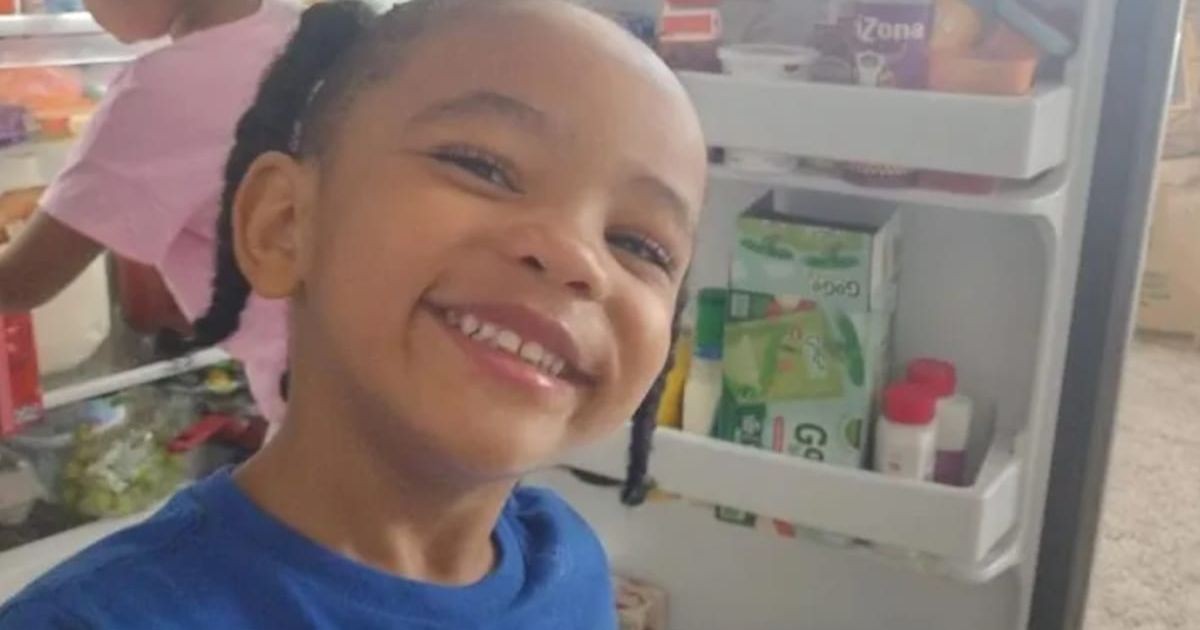
When 4-year-old Cartier McDaniel was admitted to a Colorado hospital and his heart suddenly stopped beating, doctors lost hope, saying his life-support machine wouldn’t keep him alive for much longer. Cartier’s parents, Destiny Anderson and Dominique McDaniel, were devastated, clinging to a thread of hope. But in a miraculous turn of events, Cartier’s heart started pumping again as unexpectedly as it had stopped.

Image Source: The Children's Hospital Colorado. (Photo by Marc Piscotty/Getty Images)

This miracle made the Denver couple feel that their prayers were answered by a higher power. Speaking to NBC News, they said doctors couldn’t provide a scientific or medical explanation for how Cartier’s heart began beating again after being stopped for over 14 hours. Dominique said he believed, “it was God.”


via GIPHY


It all began on April 8 of this year when Cartier showed signs of a fever. Destiny thought giving him Tylenol would help. “I thought it was a cold and would go away,” she said. But she was wrong. The fever didn’t go away. On the contrary, the little boy’s condition worsened by the next day. His limbs became cold, he was sweating profusely, and his breathing was difficult. Later that day, he wet his bed, which was uncommon.

Representative Image Source: Pexels | mart production

Destiny took him to Children’s Hospital Colorado, where doctors told her that Cartier had gone into cardiac arrest. Emergency treatment for cardiac arrest includes cardiopulmonary resuscitation (CPR) and shocks to the heart with an automated external defibrillator (AED). The doctors began CPR. “The doctors were pressing on his chest,” she said. “I started crying and getting hysterical.”

Representative Image Source: Pixabay |  Sasin Tipchai
Representative Image Source: Pixabay | Sasin Tipchai

Doctors then placed Cartier on a life-support system, where blood was pumped through an artificial lung that added oxygen and removed carbon dioxide. But this treatment was temporary. “It was the worst moment of my life. The whole hospital room was spinning. I was shaking. I couldn’t believe it was happening,” Destiny recalled with a shiver.

Representative Image Source: Physician's Assistant in the emergency room of the non-profit Children's Hospital in Aurora, Colorado. (Photo by John Moore/Getty Images)

When Cartier was moved to the ICU, their hopes sank. “At that point, we’re just praying for the best,” said Destiny. Doctors declared that it was unlikely that the kid would survive. “He was on life support but it was only a matter of time before the machine stopped working,” the doctors told his parents.
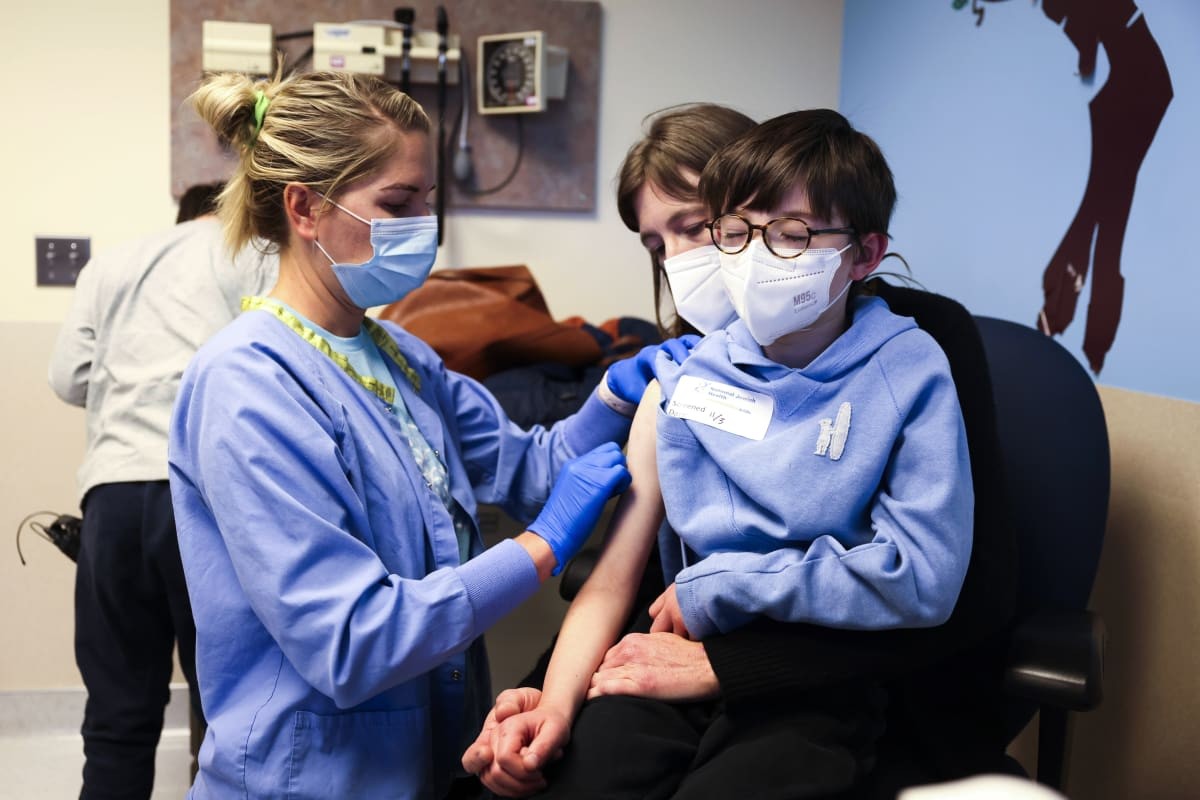
Image Source: Denver, Colorado.  (Photo by Michael Ciaglo/Getty Images)
Image Source: Denver, Colorado. (Photo by Michael Ciaglo/Getty Images)

The parents and extended family gathered in the hospital ward to bless Cartier were not used to seeing him in such a state. They had always seen him as an active and adventurous child. Destiny, a mother of seven, said, “I’m thinking, ‘How am I going to tell my kids I’m not bringing their brother home?’”

Representative Image Source: Pexels | vidalbalielojrfotografia

With no hope left, they clung to their faith and prayed for peace for their son. Then, miraculously, the Holter monitors attached to Cartier’s heart started beeping, showing signs of heartbeats. First one, then two, and suddenly, Cartier was breathing again. “His heart just restarted!” Dr. Aline Maddux, associate professor of pediatrics in the pediatrics ICU, and a part of Cartier’s medical team, told KDVR, “That was really an incredible thing that occurred.”


via GIPHY


Despite his heart regaining momentum, doctors feared that some of Cartier’s organs were damaged due to a lack of oxygen in parts of his brain. But they were wrong—his organs were functioning perfectly. “He’s been responding to us with head gestures and he’s able to move his upper body quite well. Amazing things are happening for him and we’re so blessed and very thankful,” Destiny wrote in an update on the GoFundMe page she has created along with Cartier’s aunt, Angela Maduro, to raise funds for Cartier’s medical care.

  • 10 boys and 10 girls were left alone in separate houses. The results were shockingly different.
    A girl plays with block while two young boys play a gamePhoto credit: Canva
    , , ,

    10 boys and 10 girls were left alone in separate houses. The results were shockingly different.

    Videos showed the children living normally for the first two days, but then the experiment took a chaotic turn.

    It sounds like the plot of William Golding’s Lord of the Flies, but in the mid-2000s, it was a very real, and very controversial, reality television experiment. Footage from the UK Channel 4 documentary “Boys and Girls Alone” is captivating audiences all over again, offering a fascinating—and chaotic—look at what happens when you remove parents from the equation.

    The premise was simple but high-stakes: 20 children, aged 11 and 12, were split into two groups by gender. Ten boys and ten girls were placed in separate houses and told to live without adult supervision for five days.

    While there were safety nets in place—a camera crew was present (though instructed not to intervene unless safety was at risk), and children could ring a bell to speak to a nurse or psychiatrist—the day-to-day living was entirely up to them. The houses were fully stocked with food, cleaning supplies, toys, and paints.

    As the resurfaced footage shows, the results between the two houses could not have been more different.

    In the boys’ house, the unraveling was almost immediate. The newfound freedom triggered a rapid descent into high-energy chaos. They engaged in water pistol fights, threw cushions, and in one memorable instance, a boy named Michael covered the carpet in sticky popcorn kernels.

    The destruction escalated to the walls, which the boys covered in writing, drawing, and paint. But the euphoria of freedom eventually crashed into the reality of consequences.

    “We never expected to be like this, but I’m really upset that we trashed it so badly. We were trying to explore everything at once and got too carried away in ourselves,” one boy admitted in the footage.

    Their attempts to clean up were frantic and largely ineffective, involving scraping paint and messily mopping floors. Nutrition also took a hit; despite having completed a cooking course, the boys survived mostly on cereal, sugar, and the occasional frozen pizza. By the end of the week, the house was trashed, the garden was littered with garbage, and the group had fractured into opposing factions.

    The girls’ house, however, looked like a different planet.

    In stark contrast to the mayhem next door, the girls immediately established a functioning society. They organized a cooking roster, with a girl named Sherry preparing their first meal. They baked cakes, put on a fashion show, and drew up a scrupulous chores list to ensure the house stayed livable.

    While their stay wasn’t devoid of interpersonal drama, the experiment highlighted a fascinating divergence in socialization. Left to their own devices, the girls prioritized community and maintenance, while the boys tested the absolute limits of their environment until it broke.

    This article originally appeared last year.

  • A ‘Severance’ fan with Stage 4 cancer made a ‘bucket list’ request. Ben Stiller’s reply is perfect.
    Ban Stiller with a quote card overlayedPhoto credit: Frank Sun via Wikimedia Commons
    , , ,

    A ‘Severance’ fan with Stage 4 cancer made a ‘bucket list’ request. Ben Stiller’s reply is perfect.

    After a fan reached out with a “bucket list” wish to meet the cast, Stiller’s immediate response proved the internet can still be a force for good.

    Due to their serialized format, terrific TV shows can create a real sense of community, sparking our imaginations in ways other mediums simply cannot. The very best, like Apple TV+’s mind-bending dystopian mystery series Severance, can also offer a comforting form of escapism.

    Ben Stiller, the show’s primary director and executive producer, was reminded of that fact over X, when a hardcore fan reached out with a seemingly long-shot request:

    “Hi @BenStiller! Severance is the best show my husband and I have ever seen,” wrote Emily Powell-Heaton. “I have stage 4 cancer. A great bucket list item to check off would be to meet you and any of the cast and crew from the show. We can fly anywhere. We live near Toronto, Canada. Would this be possible? Thanks for your help!”

    Stiller, who has 5.3 million followers on the platform as of this writing, responded on the same day, asking for a DM. While we don’t know the specifics of their conversation, it appears they made plans to meet up in some fashion—potentially even with other people involved in the acclaimed show.

    “Thank you so much @BenStiller and team for making my wish come true!” they wrote. “My husband and I are over the moon about meeting you and the many other incredible people who work together to create #Severance! I am so happy.” The filmmaker replied, “Look forward to meeting you xx.”

    While social media can be a dark, depressing, divisive place, this connection highlights how it can be harnessed for good. Even the replies to their exchange were disarmingly positive, with strangers praising Stiller’s kind gesture and sending well wishes to Powell-Heaton.


    – “What a good guy. Prayers up for you, Emily!”

    – “YES!!! Fantastic… when the internet works well it really does. Xx”

    – “He is a legend! He’s made such an important dream come true!”

    – “You’re the man @BenStiller”

    – “Good on you, Ben. Emily, I hope you enjoy all things good and wish you wellness. XO”

    After the interaction with Stiller went viral, Powell-Heaton reposted an article about the news, writing, “He is a legend! He’s made such an important dream come true!”

    Powell-Heaton, who, according to their X profile, is 34 and has metastatic breast cancer, shared a health update shortly after the interaction with Stiller: “The spinal surgery is a go. No date set up yet but it’s likely to be in April. The spinal surgeon has to consult with some ENT specialists and I have to get a [CT] scan done on my face and neck area. This will determine if the surgery will be done from the back of the spinal cord or the front. A metal cage will be placed around the crumbling part of my spine to strengthen it.”

    Metastatic breast cancer, according to the Cleveland Clinic, is a cancer “that’s spread from your breast to other areas of your body.” The article states that there is no cure, “but thanks to newer treatments, more people with metastatic breast cancer are living longer than ever before.”


    In a study published in February 2025 in Cancer Causes & Control, researchers from Columbia University’s Mailman School of Public Health analyzed data from all 50 U.S. states, concluding that breast cancer cases are increasing for women under 40. “From 2001 to 2020, breast cancer incidence in women under 40 increased by more than 0.50 percent per year in 21 states, while remaining stable or decreasing in the other states,” according to a news release about the study. “Incidence was 32 percent higher in the five states with the highest rates compared to the five states with the lowest rates.”

    Rebecca Kehm, PhD, the study’s co-author and an assistant professor of Epidemiology at Columbia Mailman School, wrote that these increases are “alarming” and cannot be solely explained by genetic factors or changes in screening practices.

    This article originally appeared earlier this year.

  • Aaron Paul recalls heartbreaking exchange with his daughter that made him rethink smartphone use
    Aaron Paul recalls how his daughter made him rethink his smartphone use. Photo credit: Gage Skidmore via Wikimedia Commons, Creative Commons Attribution-Share Alike 2.0

    If you own a smartphone and aren’t addicted to it, I sincerely salute you from afar. It’s so easy to grow obsessed with the passive dopamine rush of browsing internet headlines and scrolling our social feeds.

    In any brief moment of everyday silence—sitting in the dentist’s waiting room, riding in the passenger seat during an argument with my wife, even waiting for commercials to end during a TV show—I find my hand unconsciously reaching for my pocket. That feels…not normal, and I often think about the effect it must have on my relationships with friends and family. It’s not like magically rewinding the clock to the dial-up era would fix everything, but maybe certain situations call for leaving our phones undisturbed.

    Actor Aaron Paul, best known as the co-star of the acclaimed series Breaking Bad, explored this subject during a recent video interview with The Wall Street Journal. Paul recalls that he was checking his email via iPhone when his daughter excitedly entered the room—and their interaction (or, at least initially, lack thereof) led him to make a profound personal change.

    “I wanna say I’m sorry”

    “I try not to use my phone in front of my kids,” he said. “My daughter comes running in, and she’s asking me a question, something, and I’m trying to just finish this quick email. And then she stopped asking, and she kind of went and started playing. And she’s 7 [now]—this is when she was 6. And I put my phone down and I went to her. And I go, ‘You know, I wanna say I’m sorry for not being responsive to you…I wanna make a pact with you right now. I wanna promise daddy’s not gonna be on his phone when he’s with you anymore.’”

    Her “one-word response” wound up leveling him. “She looks at me and she goes, ‘Really?‘ You know, just, ‘really?‘” he recalled. “And it broke my heart, you know what I mean? It really did break my heart. I go, ‘I promise you I won’t.’ And she just jumped up and threw her arms around me like she won the biggest prize. We owe it to our kids to at least give it a shot…[With] technology as a whole, you can choose whether the technology controls you. You should control the technology.”

    Can smartphone usage impact parent-child relationships?

    It appears there’s some data to support these ideas. Robin Nabi, a professor of communication at UC Santa Barbara, led a study analyzing how parents’ various media usage—including smartphones—can impact the “emotional intelligence” of their children. The findings suggested there’s a link.

    “We know that how parents express, reflect, and talk about emotions with children influences their EI (emotional intelligence) development,” she said in 2023. “And we know how easy it is for parents to be absorbed in their own phones, which could limit the interaction and feedback they give to their children. So we thought it would be important to see what role parents’ screen time and phone use around their child might play in their child’s EI development.”

    The research, which involved 400 parents of children between the ages of 5 and 12, found that “parental use of cell phones” around their kids was the only activity associated with “lower child emotional intelligence.” Nabi noted, “Kids respond to their parents. And no matter what type of content a parent may be viewing on their phone, the outward appearance to the child is a lack of responsiveness.”

Explore More News Stories

Nation

10 boys and 10 girls were left alone in separate houses. The results were shockingly different.

Nation

A ‘Severance’ fan with Stage 4 cancer made a ‘bucket list’ request. Ben Stiller’s reply is perfect.

World

Aaron Paul recalls heartbreaking exchange with his daughter that made him rethink smartphone use

Local

Police pulled over an ’80s pop icon for speeding and it turned into a hilarious photo shoot