Earlier this month, children across the country celebrated the second annual Kids to Parks Day, a celebration created to combat declining attendance at America’s parks and increasing rates of child obesity. As founding chairman of The Children and Nature Network, Richard Louv has spent much of his career seeking to connect children with nature through Kids to Parks Day and other grassroots efforts. In his latest book, The Nature Principle: Reconnecting with Life in a Virtual Age, he details the threat of technology overload, ways to bring nature into the city, and his personal struggle with nature-deficit disorder.
GOOD: What exactly is nature-deficit disorder, and why is it so important that we overcome it?
RICHARD LOUV: In 2005, in [my earlier book] Last Child in the Woods, I introduced that term, not as a medical diagnosis, but as a way to describe the price we pay for alienation from the natural world. As children and adults spend less of their lives in natural surroundings, their senses narrow, physiologically and psychologically. Studies indicate that time spent in nature can stimulate intelligence and creativity, and can be powerful therapy for the toxic stress in our lives, and as prevention for such maladies as obesity, myopia, and depression. It has huge implications for the ability to self-regulate and for attention-deficit disorder.
GOOD: Why is it so important that we remove ourselves from technology?
LOUV: We hear every day how technology improves our lives. It does, in many ways. But we hear less about the cost of excessive use of technology. The info-blitzkrieg has spawned a new field called “interruption science” which addresses a new condition: continuous partial attention. Now, the point isn’t that information technology is bad, but that daily electronic immersion, without a force to balance it, can drain our ability to pay attention, to think clearly, to be productive and creative. But the two can coexist. By that I mean we live fully in both the digital and the physical world, so we should maximize our use of technology to process intellectual data, while also maximizing the use of our senses in the physical world, which in turn will stimulate all of our senses and accelerate our ability to learn, to feel, to creatively connect the dots. As we become aware of the advantages of meaningful contact with nature, we’ll choose to regularly leave the electronic nest to engage with the natural world. The more high-tech our lives become, the more nature we need.
GOOD: Do you have different suggestions for people living in urban areas than you do for people living in rural areas?
LOUV: There are differences, but we’re becoming increasingly urban. In 2008, for the first time in human history, more than half the world’s population lived in cities and towns – and by 2030, two-thirds of human beings may live in urban areas. What that means is that if human beings are going to have a meaningful relationship with the natural world, that relationship will likely take place in urban areas—and this will require new kinds of cities and towns. Cites can become incubators of biodiversity. We can achieve that through biophilic architecture and urban design. In urban and suburban neighborhoods, thousands of redundant or decaying shopping centers could be replaced by mixed-use ecovillages, with both higher residential density and more habitat for nature. And we can begin at home, whether we’re building a new house or retrofitting an existing home and garden.
GOOD: How did you get your children to go outdoors?
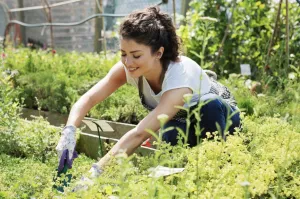
LOUV: I took them fishing every chance I had, and sometimes hiking, or camping in our old van. Though we lived in the city, our house was on a wooded canyon when the boys were smaller, and we encouraged them to build forts and explore behind our house. When I conducted interviews that involved the outdoors, I often tried to think of ways to bring one of my sons along. One of the new trends emerging is the family nature club, through which multiple families go hiking, gardening, or other outdoor activities together. In the U.K., families are forming “green gyms” to bring people of all ages together to do green exercise, which is a lot cheaper than joining indoor gyms. These new nature networks can extend deep into the surrounding community.
GOOD: Why is this issue so important to you?
LOUV: When I was a boy, the good times in my family were, more often than not, associated with nature; with fishing and gardening and exploring the woods and fields. In The Nature Principle, I tell a story about how I saw my father’s health deteriorate as he withdrew from nature. Was that the cause of his illness, or a symptom? Probably the latter. But as a boy, I must have sensed nature’s power to heal. I also sensed that my own experiences in nature were enriching my capabilities and spirit. The idea of an “ecological unconscious” now hovers above the crossroads of science, philosophy and theology—the notion that all of nature is connected in ways that we do not fully understand. I was surprised that so many religious figures, on the right and the left, were supportive of Last Child. I came to the conclusion that they intuitively understand that all spiritual life begins with a sense of wonder. Nature is our most immediate, shared window into wonder.
GOOD: What steps have you taken to disintegrate technology from your life in favor of nature?
LOUV: I have nature-deficit disorder, too. As I wrote in The Nature Principle, my office is a world of distraction and a tangle of wires, and I am still integrated into that world. These are the tools of my trade. I’ve been an early adopter of computer gear to make my work easier and, yes, I enjoy playing with electronics, too. I’m grateful for what these devices can do. But they’re a shadow of real life. Increasingly, I make a point of taking back yard breaks, discuss life with the fence lizards, and I get out in the backcountry when I can, with my wife or sons when they’re home, or out in a boat. And I now carry a camera more often than a fishing rod. It’s easier to e-mail a photo than a fish. When I travel I escape the hotel as often as possible, and go looking for nature on foot, and usually find it. And I take pictures of it with my iPhone, and send them to my wife.