
Science is always evolving and finding ways to empower and connect people. Thousands of incredibly creative, wondrous concepts, ideas, and specimens are available for exploration. The human brain is one such specimen that’s so remarkably complex, the mysteries behind it lead some people to seek answers for their entire lives.

One particular brain condition, autism spectrum disorder (ASD), has been baffling scientists since they first recognized it. Researchers at Stanford might have just unlocked a drug that could offer an extremely effective, therapeutic solution.

Science Advances published a 2025 study on ASD that found heightened activity in a specific region of the brain could be the underlying force behind the disorder’s behaviors. They believe drugs like Z944, which have a calming effect upon this overactive part of the brain, could be the fix to the problem.
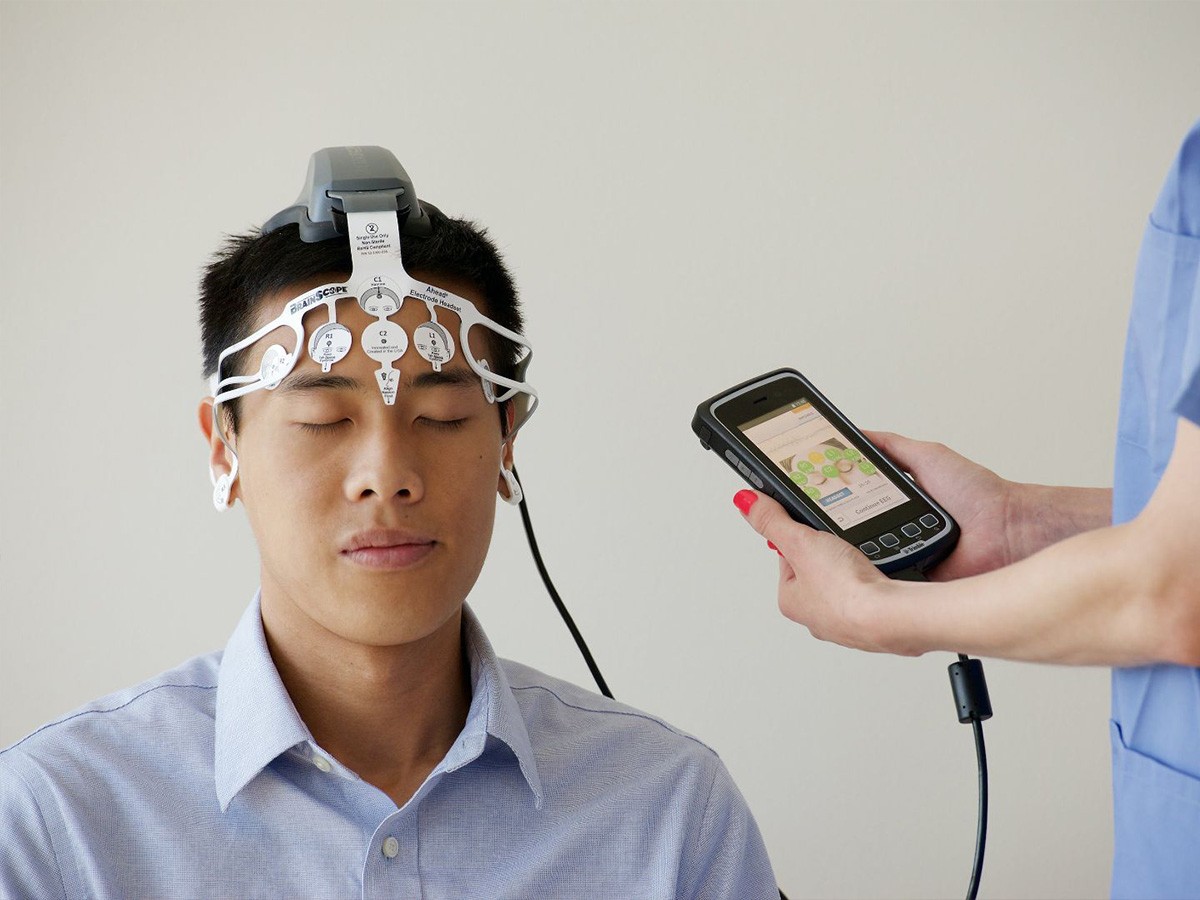
reticular thalamus, studying mice, seizaure medication, seizures, brain activity, hyperactive brain, families, children
Studying the brain Image via Canva – Photo by KOS Chiropractic Integrative Health

Understanding the study

There is a section of the brain called the reticular thalamus (RT). While studying mice whose brain’s RT neurons were firing too much and disrupting the normal pattern of activity in the brain, researchers were able to simulate signaling similar to human autism-like behaviors. Drug Z944, used to treat epilepsy, has a calming effect on this portion of the brain. The authors of the study wrote, “Our findings provide the evidence of RT hyperexcitability contributing to ASD-related behaviors and highlight the RT as a promising therapeutic target for managing ASD.” They continued, “Notably, individuals with ASD often exhibit sensory processing abnormalities, sleep disturbances, and seizures, implicating a potential role of the thalamocortical (TC) circuit, a key system governing these functions.”Let’s break that down with a simple analogy: think of this zone of the brain as a traffic signal, firing off red lights and green lights that happen faster than necessary. Scientists are looking for a way to slow the traffic lights down to run things smoothly and give motorists a safer way to travel through the light. In the same way, drug Z944 can slow down the hyperactive brain of the autistic person.

Z944, autism ASD, autistic, Autism Spectrum Disorder, therapy, science, social interactions
Autistic episode Image via Canva – Photo by Sergey Novikov

What is autism?

To better understand autism, a good place to look is the National Library of Medicine. A study on ASD listed out some of the challenges people face with the disorder. Autistic people are susceptible to meltdowns and sensory overloads due to loud noises, bright lights, crowded places, or even a simple change of routine. Autistic people struggle to navigate basic social interactions and often have difficulty with their communication skills. People with ASD experience a range of difficulties surrounding emotional and behavioral problems, including self-injury, temper tantrums, aggression toward others, and general non-compliance.

Parents of autistic children benefit from lots of help such as intensive daily therapies, speech therapy, and occupational therapy that can take hours of time and require consistency. Problems can happen in social interactions with peers, like bullying and social isolation. Finding suitable programs, inclusive classrooms, and extracurricular activities that meet the needs of the child’s abilities and comfort are all complicated challenges.

If you would like to learn more about autism, watch this helpful YouTube video just below:

A 2021 study on parenting children with Autism Spectrum Disorder published in the National Library of Medicine writes:”It is widely accepted that ASD has an important impact on the lives of parents and the family in an emotional and dynamic context, but also from an economic dimension. This aspect of additional costs was mentioned by families when referring to the diversity of therapies and support that the children needed, which is also important in the context of parenting. Economic difficulties are stressful and constitute a risk factors that families need to deal with, which affect the patterns of parent–child interactions.”As families learn to cope with the challenges of autism, the hope is that more discoveries like Z944 can help. Although recent studies have shown promising results, there is no current timeline for release, as research is still in the early stages.

  • Scientists have created a leather clothing alternative made entirely from mushrooms that looks and feels like the real thing
    Left: Mushrooms. Right: A model dressed in a leather jacket.Photo credit: Canva

    Austria’s scientists have created a leather made from mycelium. Growing mushrooms in low-oxygen chambers allows researchers to craft an alternative material that feels and looks like traditional leather. The finished textile is strong, flexible, and even fire-resistant.

    Manufacturers grow the material instead of harvesting it from animals. After it reaches the desired thickness, they apply non-toxic enzymes to keep it fully biodegradable. The vegetative part of the fungus grows into a dense mat over a matter of days. Above all, it avoids the environmental impact of traditional leather production.

    Alternative leather made from mushrooms

    This is not science fiction; fungal fabric has grown from a curiosity into reality. A 2025 report listed the benefits of mushroom leather as having a lower carbon footprint. It begins with a substantial reduction in water use. Growing mushrooms, compared to raising cattle, requires a fraction of the water.

    Secondly, the product breaks down naturally without microplastic contamination. Using enzymes that cross-link the fibers results in a material free of blended toxic materials.

    Moreover, by creating the right environment—a low-oxygen chamber with a nutrient-rich substrate—the mushroom mat can be grown in a matter of days.

    Lastly, mushroom leather is naturally fire-resistant. There’s no need for harmful chemicals to treat the textile. In addition, clean up requires mild soap and lukewarm water.

    A 2026 study in ScienceDirect confirmed the fungal mycelium as an eco-friendly alternative to traditional and synthetic leathers. It demonstrates structural integrity and favorable thermal stability.

    fungus, clothing materials,  environment, biodegradable, non-flammable, dense mat
    Mushroom leather.
    Photo credit: ThamaraGroenleer/ Wikimedia Commons

    Is the public ready for vegan leather?

    People have conflicting thoughts, as seen in the comments on the Instagram post. Some individuals are excited and encouraged by the possibilities. Others, however, are less impressed:

    “I’m ready for it. How do we buy it?”

    “Make it affordable and common!”

    “As long as the final product keeps being painted and coated with chemicals, the purpose of the product is merely green washing.”

    “bio degradable? sorry your shoes were eaten by mold after the rain.”

    “Where we can buy this leather?”

    “Unless we’re talking about aprons/gloves for welders or blacksmiths (which is a fairly niche market), flammability isn’t something most people that wear leather are concerned about.”

    fashion, sustainable materials, clothing, vegan leather, eco-friendly
    Materials and scissors.
    Photo credit: Canva

    Fashion looks for sustainable, yet affordable materials

    Fashion leaders are looking to incorporate more sustainable fabrics into their creations. A 2025 post on Open Forem explored material choices for leading industry fashion designers in 2025. For example, more familiar textiles like polyester, organic cotton, and wool made their traditional rounds. But there was an effort to use plant-based leathers, too.

    Mushroom mycelium leather was a hot choice for its low environmental impact, its short creation time, and its customizable texture and thickness.

    Other exotic materials included banana fibers, seaweed-based fabrics, and Piñatex, a natural, low-impact textile made from pineapple leaf fibre. Designers fashion the plant-based material into vegan handbags, shoes, and wallets.

    A 2026 article in Vogue revealed that Gucci seeks more sustainable ways to produce leather products. The luxury brand began a campaign for vegan alternative leather back in 2021.

    Despite commercial adoption remaining somewhat limited, mushroom leather continues to attract attention for its eco-friendly production and versatility. Grown on agricultural waste while remaining fully biodegradable are cornerstones of this remarkable material.

    You can watch this TED Talk on fashion made from mushrooms:

  • Scientists create environmentally friendly plastic replacement from shrimp shells
    Shrimp shells could become our new plastic.Photo credit: Canva

    Plastic waste has been a growing global issue for years. The United Nations Environment Programme says that 19 to 23 million metric tonnes of plastic waste leaks into lakes, rivers, and oceans each year. Given the threat microplastics pose to animal and human health, efforts to find green replacements have intensified—and they’re working. Scientists from Singapore and Spain have found a strong, potentially viable replacement for plastic made from shrimp shells.

    A research team based at the Singapore University of Technology and Design and the Institute for Bioengineering of Catalonia in Barcelona has made a biodegradable plastic alternative out of chitosan. Chitosan is a compound created by combining shrimp shells with trace amounts of nickel. It contains a structural molecule found in the shells of crustaceans and insect exoskeletons. Usually discarded as a waste byproduct of shrimp and crab processing, chitosan is commonly produced during seafood preparation and commercial fishing.

    The issue with chitosan, though, was that it weakens and dissolves in water. That is, until recently.

    How chitosan got stronger

    Dissolving chitosan flakes into a weak acetic solution and mixing them with dissolved nickel chloride and water produced surprising results. Scientists then poured the mixture into molds to dry. The process yields a thin, green-tinted film with the strength of commonly used plastics like polypropylene. Even better, when submerged in water, the film grows 50% stronger. This increased durability matches the characteristics of polycarbonate and PETG, plastics commonly used in commercial single-use water bottles.

    Researchers then stress-tested the chitosan material by molding it into cups and containers. They were able to confirm it could hold water without leaks. In terms of biodegradability, the chitosan material reached its half-life in four months in a standard soil burial test. By contrast, most commercial plastics can take centuries to decompose under similar conditions.

    Researchers found that this is not only a better biodegradable plastic alternative, but also one that produces zero waste during creation. When the chitosan/nickel film is submerged, about 87% of the nickel washes out. That wash water can then be reused again and again from one batch of chitosan to the next. According to the researchers, the nickel content of a single AAA battery would provide enough nickel to manufacture more than a dozen chitosan drinking cups.

    The potential future

    Rigorous testing to assess the material’s limits for medical use and consumption still needs to be done. That said, the Food and Drug Administration has already approved products containing chitosan and nickel individually in the past. Barring any troubling research about their combined safety, the outlook is quite positive for future use.

    Hopefully, seafood and battery waste can be reduced, helping lower plastic waste in a three-way win for the environment.

  • Scientists invent ‘smart’ underwear that tracks gut bacteria health through your farts
    Analyzing the times you pass gas helps scientists study gut bacteria.Photo credit: Canva

    In the United States, gut health is a big deal. According to a 2022 survey by the American Gastroenterological Association, 40% of Americans deal with digestive problems that disrupt their day-to-day lives. Many try different diets and supplements to assuage these issues, as well as use probiotics to improve overall digestion—but there might be a better way. Scientists may have found a way to analyze and pinpoint potential digestive problems; all you need to do is put on some special underwear and fart.

    Researchers at the University of Maryland wanted to find a better way to monitor and measure human gut bacteria in the name of microbiome research. While past methods allowed them to see what gut bacteria species are living in the human body, there was no accurate way to see what the gut bacteria was doing hour by hour. Well, they seem to have found a way: a pair of underwear with a tiny sensor clipped near the rear can now record data from a person’s flatulence.

    @wkoafm

    “Smart Undewear” as a Valentine’s gift? Don’t poo poo the idea! #lafayette #fart

    ♬ original sound – K-105

    This “Smart Underwear” measures the amount of hydrogen gas emitted each time a person passes gas, monitoring the gut bacteria’s activity within a person. Hydrogen gas is typically produced when certain gut bacteria breaks down undigested food. The whole thing may sound silly (and smelly), but early tests of this device have been able to detect dietary changes in people with 94.7% accuracy. This device and method of analyzing gut bacteria is better than most current tools that analyze stool samples, blood, or breath for such data. The Smart Underwear also has a battery that can last for a week without compromising comfort for the wearer.

    “The Smart Underwear comfortably attaches to the exterior of the user’s underwear near the perineal region via a snap system, in which a small plastic snap on the inside of the underwear fabric fits into a corresponding hole on the Smart Underwear on the opposite side of the underwear,” wrote Santiago Botasini and their colleagues in the study. “This sandwiches the fabric in place through friction, ensuring a stable but comfortable attachment of the Smart Underwear. Once attached, the Smart Underwear passively captures hydrogen concentration in flatus, as well as temporal dynamics including the frequency and duration of flatus events enabling longitudinal measurements of gut microbial metabolism.”

    While additional studies are needed, this current study of 38 participants seems to suggest this device could help doctors. The Smart Underwear could pinpoint specific food sensitivities and intolerances within their patients, which proves to be a much better and more accurate practice than relying on patients self-reporting via “food journals” to capture patterns.

    The study shows that self-reporting isn’t always accurate. For example, the device revealed that the participants farted 32 times per day on average, which is more than double the typically cited daily average of 14 incidents.

    It will be a while before gastrointestinal doctors start prescribing Smart Underwear to figure out what’s causing their digestive discomfort, but the research is promising. At any rate, whether the Smart Underwear will be used just for studies or becomes a widespread method to identify food intolerances, getting more information will ultimately lead to a sweeter smell of success over time.

Explore More Science Stories

Environment

Scientists create environmentally friendly plastic replacement from shrimp shells

Science

Scientists invent ‘smart’ underwear that tracks gut bacteria health through your farts

History

3D scanning and shape analysis help archaeologists connect objects across space and time to recover their lost histories

Science

New Arctic fossils could be the ancestor of all creatures that have jaws