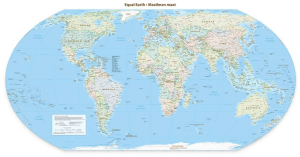
Following Fair Trade: Even the most locally minded eaters tend to consume some foods and beverages that only grow in distant regions—usually the hot and tropical ones—and many of those areas are also home to some of the world’s poorest populations. To ensure people at the origin of global supply chains receive just treatment, adequate pay, and access to health, education and a good quality of life, the Fair Trade standard was created. Fair Trade regulations often have positive environmental consequences, but at the root protects people—facilitating farming practices and trade relationships that empower farmers and their communities.
Bananas are one of the most widely consumed fruits on earth, eaten in many parts of the world as a starch, not a fruit, and therefore a staple element of basic diets. The banana industry is one of the more notorious in the global food trade for its historic mistreatment of plantation workers and for the relative monopoly that a handful of multinational corporations hold. In 2008, journalist Dan Koeppel published a book entitled Banana: The Fate of the Fruit That Changed the World, in which he revealed many of the troubling aspects of banana production and trade, including the agricultural narrowing process that has led to the cultivation of just one variety—the Cavendish banana—which is now at great risk of being wiped out in one fell swoop if a disease strikes plantation regions. The rise of fair trade practices and organic growing has the potential to redeem certain aspects of the banana industry, but just how much effect it will have depends on consumer demand.
Harvesting
Bananas are the most consumed fruit in the world. They are affordable, full of potassium, available any season, and conveniently pre-packaged. They are also one of the most controversial agricultural products of our day, laden with a history of colonialism and human exploitation. Today, bananas are grown both on large plantations and small holder farms that measure under five acres. Fair trade certified bananas can come from both types of farms, and the Fair Trade Labeling Organizations International (FLO) has established separate standards for the two.
One of the major issues on banana farms that fair trade aims to tackle is child labor. On family farms, children are often taught to treat and harvest plants at a young age, but the work can be extremely dangerous, both because of the use of chemical pesticides and the need for machetes to chop down heavy clusters of fruit and the trees themselves, which only produce one bunch of fruit in their lifetime. In addition, employing children on the farm means keeping them out of school.
Fair trade standards address these issues in direct and indirect ways—directly, they prohibit the use of certain pesticides and herbicides even on non-organic bananas; indirectly, price premiums for community development enable adult farmers to earn more so that their children can go to school. Fair trade also works to mitigate damage to native vegetation—a challenge on single-crop plantations. With the additional earnings and training that come through fair trade, farmers are enabled to cultivate bananas in more biologically diverse and wild setting, which contributes to ecological preservation.
Selling
While fair trade organizations often try to support smaller players in the market, bananas are one instance in which working with the mainstream corporate players has been a necessary step in keeping the fair trade banana market viable in the U.S. The “big three” —Dole, Chiquita and Del Monte—own many of the plantations in Central and South America, and small, independent banana farms are bound to sell into the corporate supply chain in order to get their product to market.
Bananas are sold by the box, rather than by weight, with around 40 pounds of fruit inside. Each box of fair trade bananas carries a premium of around $1 for community reinvestment. The cardboard boxes themselves, as well as the plastic bags into which banana clusters are wrapped straight from the tree, represent a significant additional cost to the grower. For this reason, bananas in particular are a business that depends on scale—large producers can procure materials at a cheaper price, while small producers are stuck paying high prices in order to sell their goods in the same condition as the big players.
Shipping/Distribution
Because bananas have a relatively short shelf life compared to coffee, tea or sugar, shipping is a very important phase of the supply chain, and the small producers have little choice but to go through the large shipping channels to get their bananas to the consumer in a timely manner. Various technologies and chemicals have been engineered in order to build in some leeway by slowing the ripening process and adding a few weeks to the stretch from farm to retail.
The ripening of a commercial banana is a stop-and-start process. Ethylene, the organic chemical that triggers ripening, is the enemy of long shipping journeys. Refrigerated cargo containers are generally sprayed with chemicals that inhibit the fruit’s natural production of ethylene. Once the bananas reach the distribution facility, workers drench them in ethylene to restart ripening so that the fruit begins to turn from green to yellow as it reaches the market and, eventually, your kitchen.
Image 1 (cc) by Flickr user Agapfel
Image 2 from Fair Trade USA