On December 30th, 2024, several men gathered with copies of their favorite fiction books for The Fiction Revival, a book club organized by Yahdon Israel, a Senior Editor at Simon & Schuster recently elected to the Center for Fiction Board of Directors. For nearly 10 years, Israel has also been running the Literaryswag Book Club.

Israel, who has become known for his openness about all aspects of book publishing on social media, recorded a video the previous July discussing the relationship between heterosexual men and fiction. He had recently read the essay “Why Are Americans Afraid of Dragons?” by renowned science fiction author Ursula K. LeGuin, originally published in 1974 and collected in her book The Language of the Night: Essays on Writing, Science Fiction, and Fantasy, re-released last year by Scribner. In the essay, LeGuin tries to understand why certain works of fiction hadn’t quite caught on in the U.S., and one of the conclusions she arrives at is that many men aren’t taught to read fiction. Broadly speaking, she believes, they’re not taught to embrace their imaginations, lest they be dismissed as “womanish” or “childish.” They are hardly taught to read for pleasure, she believes, but often taught to read for productivity.
books, book club, classics, novels, reading, fiction
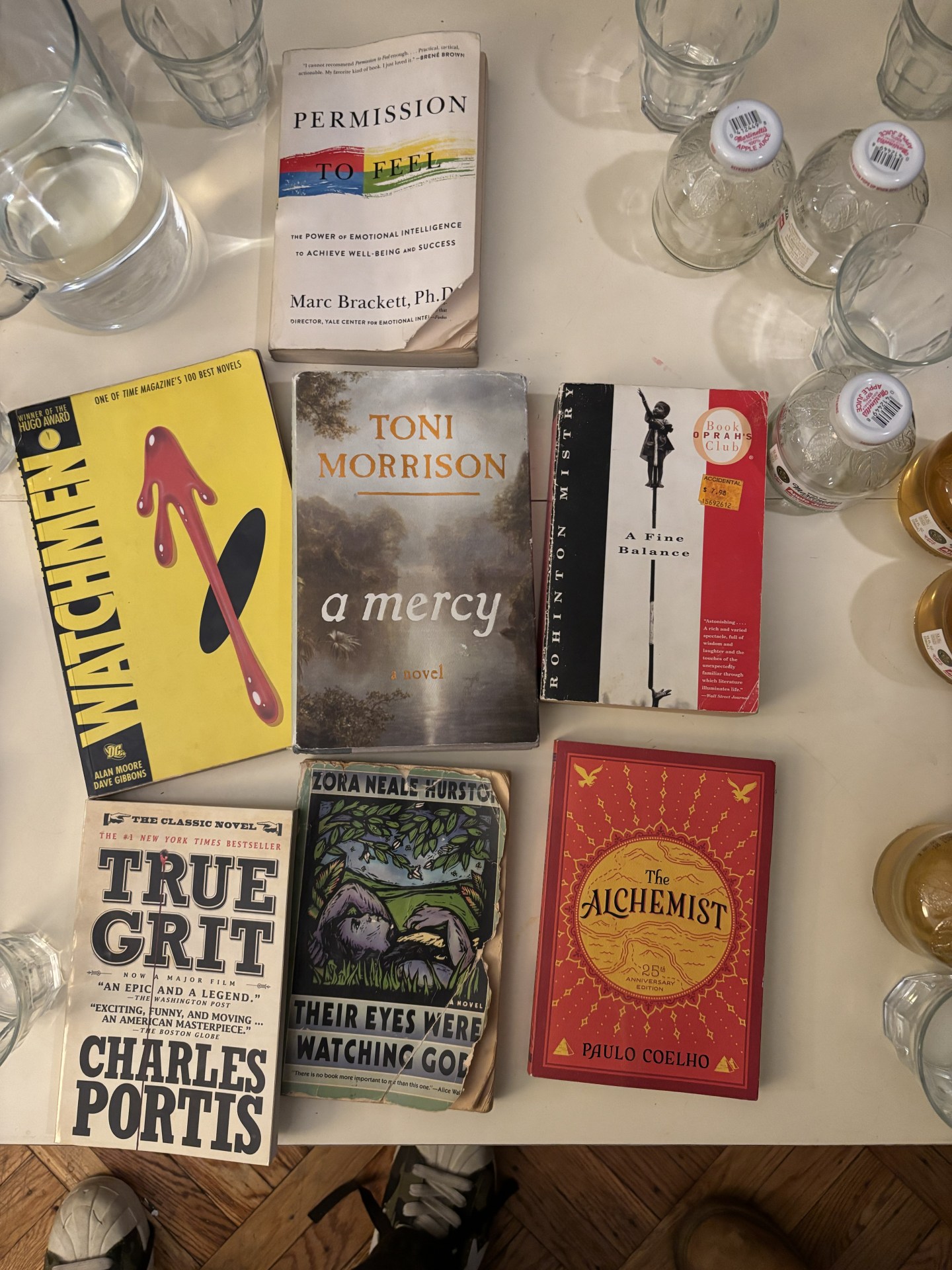
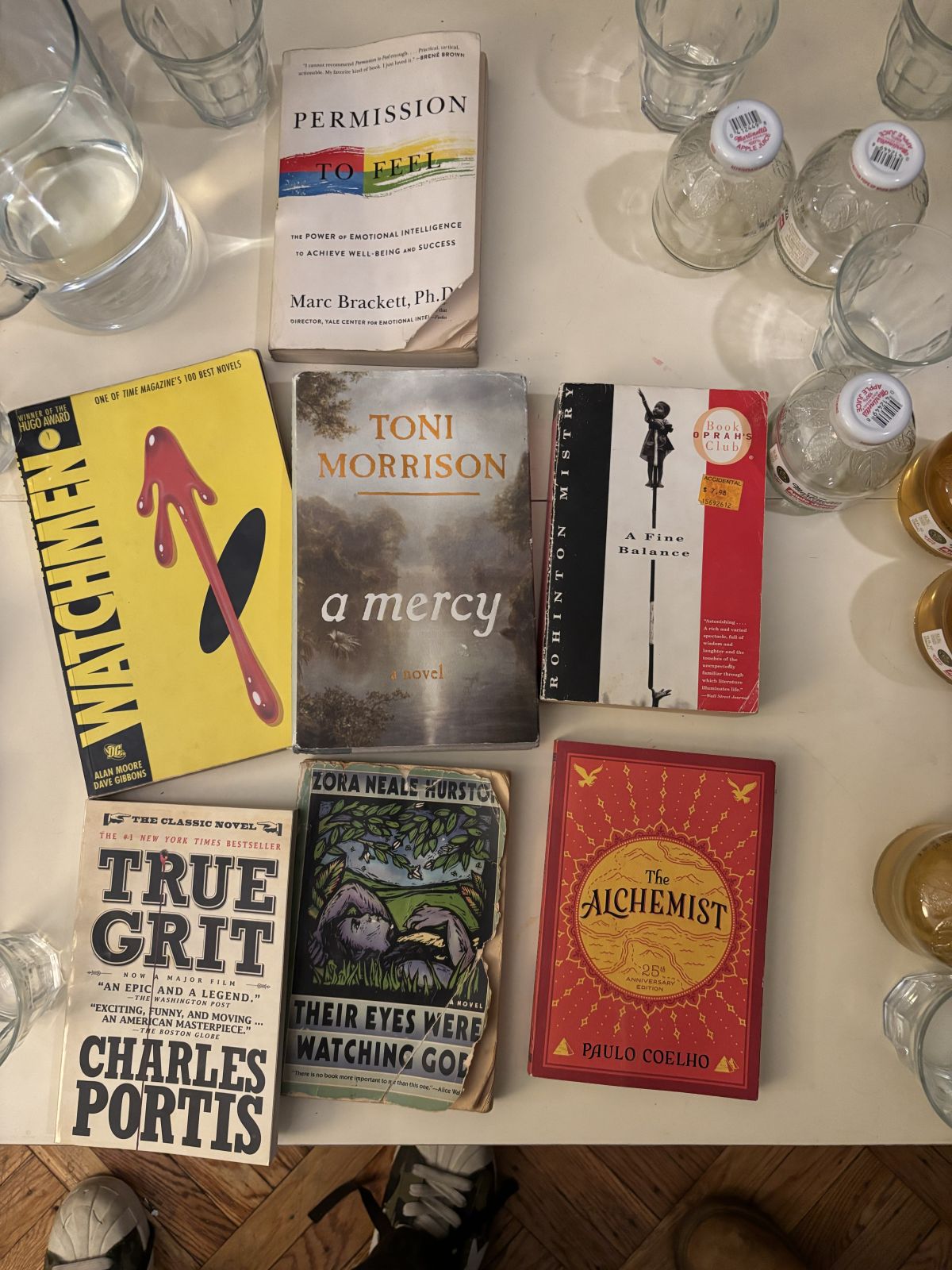
Books at the first meeting of the Fiction Revival book club Yahdon Israel

And while there are many exceptions, LeGuin’s ideas landed for Israel, who had felt this way himself. He remembered being amongst men as a young person, where a way you proved your worth was by what you knew, not what you could imagine. He saw this carry into adulthood, where as an editor he had more heterosexual men asking him for advice about nonfiction and self-help books than he did works of fiction. Indeed, the relationship between heterosexual men and fiction has been long-discussed, though often as a diagnosis rather than as a symptom. “Something that was coming up often in our meetings with marketing and publicity was how hard it was to break through to men [with fiction works], but specifically heterosexual men. When they would show demographics about what books were resonating with audiences, it was the most glaring disparity,” Israel says of surveys where people could self-identify. Based on the data he was seeing at work and in his own life, he wondered, how can straight men engage their imaginations through works of fiction, and then talk and think about what they feel? How would that affect the way they moved through the world?

By his own description, Israel doesn’t use fiction to escape, he uses it to question, to imagine different worlds. “What I love, and what I realized could be of use to heterosexual men, is reading books that challenged us to implore the muscle of curiosity as an entry point into compassion, into empathy and into a reimagining and a restructuring and a challenging of the assumptions of what it means for us to be men in a society that expects us to exist in one way,” he says. “There’s a necessary critique about how heterosexual men need to shift and reimagine the ways we inhabit our masculinity…There’s not a lot of compassion, and what that looks like is more of a hard critique of, well, patriarchy benefits men, and there’s this underlying assumption that men want to protect it.” Israel wanted to make the club in part to provide a way to not attack and critique and pathologize and blame, he says, but to answer the question, “What are we going to do to try to reverse harmful patriarchal thinking that hurts everyone, men included?” The Fiction Revival became a way in to reimagining what the future can look like for men. “Revival means to bring back to life. Men are dead inside, okay?” Israel says. “The imagination is going to bring us back to life. We’re going to bring ourselves back to life.”
men, men's club, book club, reading, community, fiction
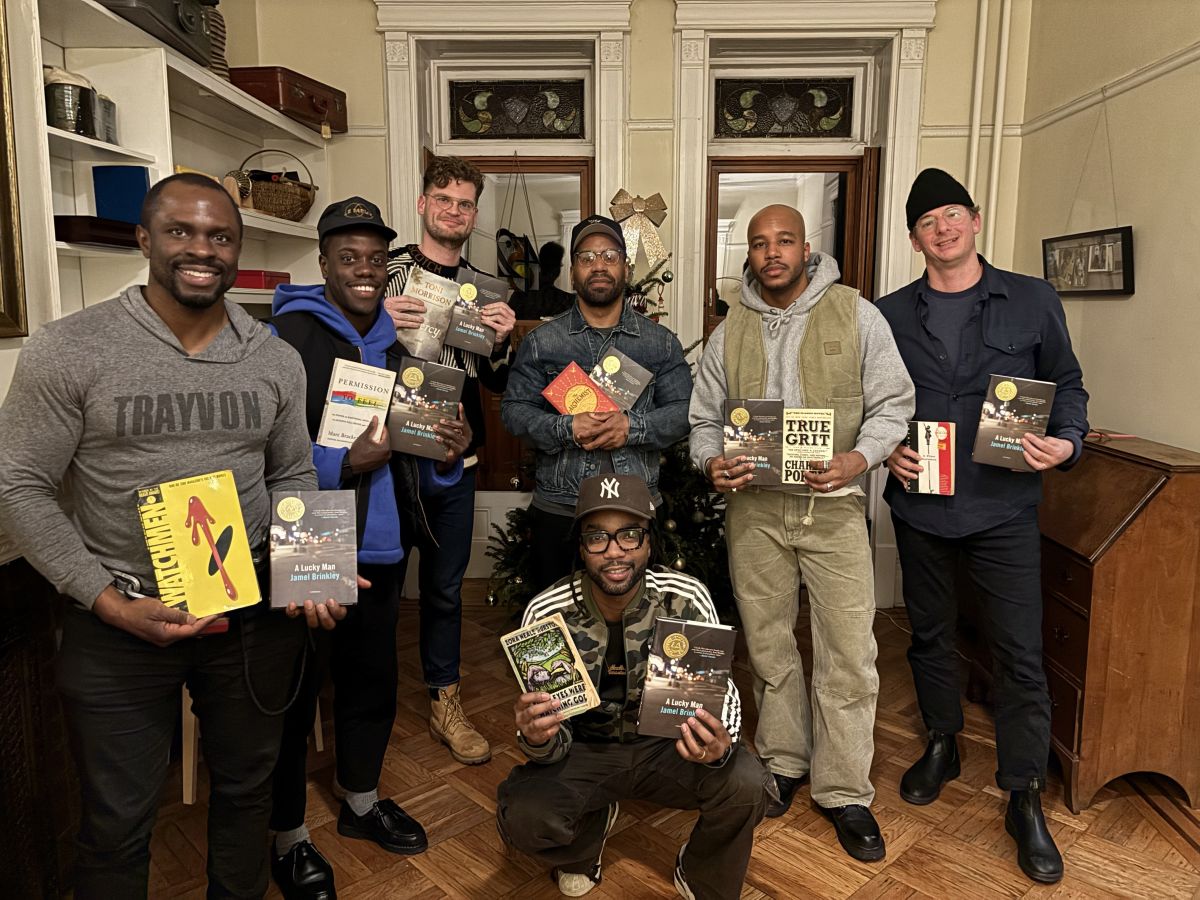
Attendees at the first Fiction Revival meeting. Yahdon Israel

At that first Fiction Revival meeting on December 30th, Israel asked everyone to bring their favorite work of fiction as a means of introduction. One man realized he didn’t have any fiction at his house, but wanted to contribute just the same. Throughout the first meeting, they discussed why they loved the works they brought, including books like Toni Morrison’s A Mercy, Zora Neale Hurston’s Their Eyes Were Watching God, Charles Portis’s True Grit, and more. They read their favorite sections and discussed the nature of men’s imaginations particularly, as Israel wrote on Instagram, “what we’ve lost, and continue to lose living in a society that makes us, as men, suspicious of our imaginations; and ultimately, what we stand to (re)gain in disciplining them. Not as punishment, but as practice.”

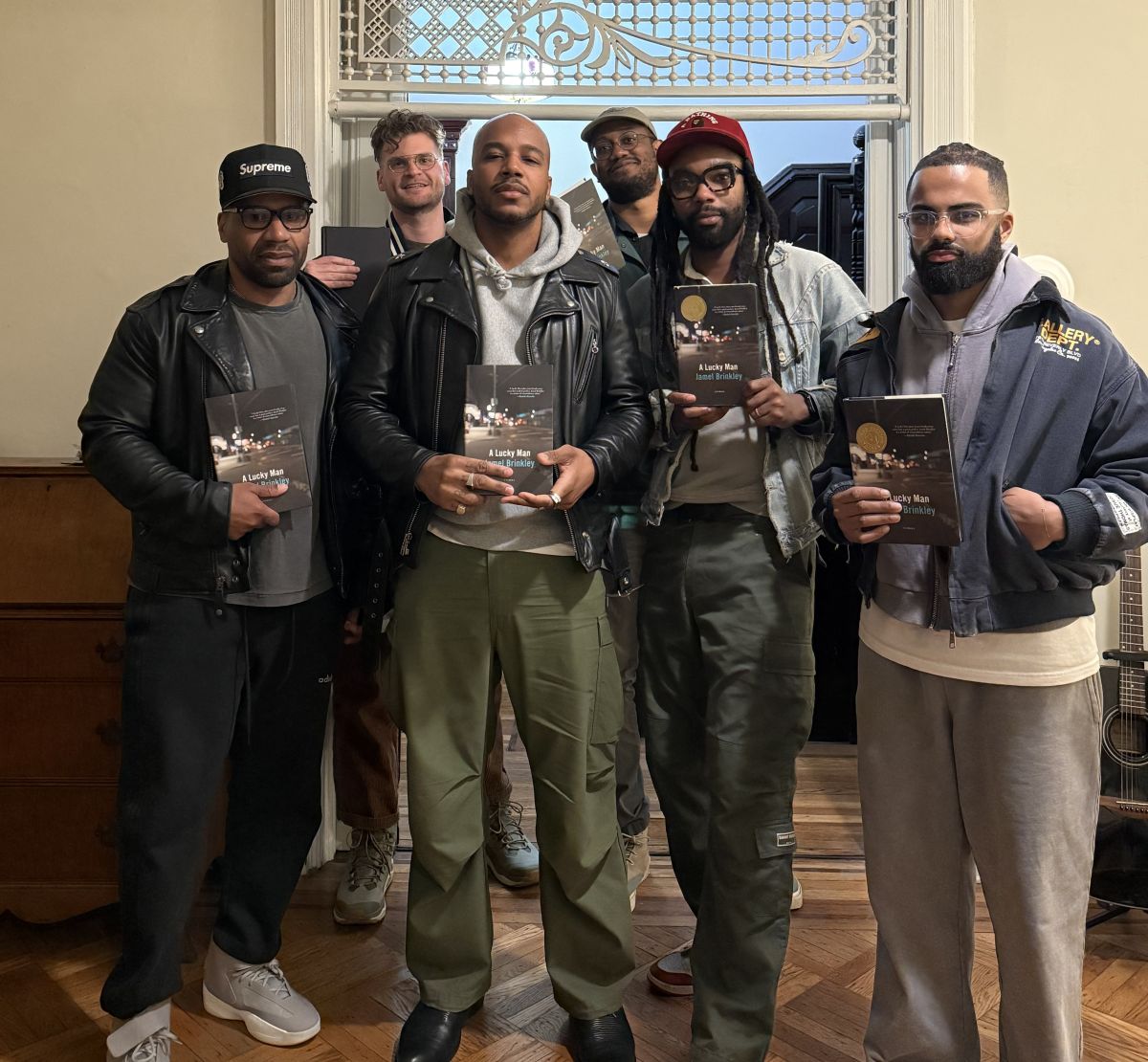
The second meeting took place on March 10th, and book club members read the short story collection A Lucky Man by Jamel Brinkley. At each meeting, Israel offers a prompt to start the meeting off. This time it was, “Which story resonated for you the most, and why?” Israel marveled at how eager participants seemed to be to connect with each other, to give each other space, and to respect the silence of a thoughtful moment.
book club, men's book club, men, fiction, books, reading
Attendees at the second Fiction Revival meeting. Yahdon Israel

The meeting arrived at what soon became a different point in Israel’s life. When we spoke for a second interview after the second meeting took place, he shared that in the days after it he experienced a mental breakdown and was diagnosed with severe depression. He wants me to run this in the piece about the book club, he says, because for him it’s an important part of why the club exists at all. He remembers a James Baldwin quote from the author’s essay collection Nobody Knows My Name: More Notes of a Native Son, published in 1961: “Though we do not wholly believe it yet, the interior life is a real life, and the intangible dreams of people have a tangible effect on the world.” For him, this is the role that fiction plays. “It reminds me, it helps me recognize the importance of my interior life, because so much of fiction is about the interiority of character,” he says, and for him, reading fiction can help men recognize this as well, to know that “those feelings are real. They matter. They have names, but they also have ramifications.” Down the line, Israel also sees the book club as potentially part of a larger network that offers mental health and career counseling. For now, the book club meets once a month, and interested parties can learn more about attending in New York on the club’s Instagram.

So yes, The Fiction Revival is about getting heterosexual men to read fiction, but it’s really about so much more than that. Instead of continually telling men that they’re broken, it instead offers them a place to try to begin to heal. “Fiction teaches you how to empathize with other people,” he says. “In the frame of the book club I’m doing, it’s going to help us recognize what’s in us.”

  • How one World Cup superfan bought a giant, rare FIFA soccer ball that barely fits in his car
    Photo credit: @kickballdad on YouTubeKickball Dad gets the ultimate World Cup ball.

    The 2026 FIFA World Cup brings out a wild streak in footie fans. For one fan though, his passion for the sport led him to pursue the ultimate piece of memorabilia for months. Then, it happened: to the envy of every FIFA fan, the fan was able to purchase a giant World Cup soccer ball.

    Kevin Cronin, better known as Kickball Dad online, was excited to see an Adidas Trionda Jumbo soccer ball. The massive 31.5-inch ball was part of a store’s display. 

    “We need one of those,” said Cronin.

    Upon seeing it, Cronin immediately asked if he could buy it. The store said it was for display only. The cost of the sold-out ball typically goes for $320.00, but would likely be higher in price since Cronin was lucky enough to find it in the secondary market. That didn’t stop him.

    The store management was unprepared for Cronin’s determination and fandom. For months, he would come in and visit the store, asking again and again if he could buy the incredibly large soccer ball. He was told again and again that it wasn’t for sale.

    Until it was.

    He got the ball!

    One day, Cronin found the right store manager willing to sell him the ball. Cronin excitedly checked out the ball at the cash register. In a video of the purchase, Cronin’s daughter Alyssa can be heard giggling the entire time as Cronin triumphantly lifts the ball into the air.

    “I’m like Atlas,” said Cronin. “I got the World Cup on my shoulders!”

    Buying the giant ball was one massive task, but soon came the next one: trying to fit the ball into Cronin’s small four-door car. This gave everyone, including Cronin, second thoughts. But Cronin’s will was strong.

    “Why did we buy this?” asked Cronin’s son.

    “Because we have W.C.F.,” Cronin replied. “World Cup Fever.”

    Cronin was able to squeeze the massive soccer ball into the backseat and drive it home. He pried the ball out of the car and into his house, where his wife greeted him with laughter.

    “We got it,” he said victoriously as he placed it on the kitchen counter.

    Soccer fans and brands alike congratulated him

    Cronin’s video went viral on Instagram with many soccer fans commenting on his determination:

    “This is a triumph a man dreams about.”

    “Never give up!!!!!!”

    “It’s meant to be 💞

    Even major brands reached out to give their kudos:

    “Some display pieces are just too awesome to leave behind.” said Lego.

    “The look on your wife’s face = priceless. What’s next? 🤣 quipped Adidas Football.

    “Mission accomplished 🏆 shared Dick’s Sporting Goods.

    Who is ‘Kickball Dad’?

    This isn’t the first time Kevin Cronin/Kickball Dad has made waves online. Cronin has become an avid content creator known for his fandom of most sports—specifically his kids’ sports games and Miami Dolphins football. Fans see videos of him shopping at the grocery store, going to sporting events, sharing his sports takes, and even birding. His daughter Alyssa shoots and edits the videos, leading to a fun family side hustle as content creators.

    As the 2026 World Cup starts, it’ll be fun to see fans all over the world show their enthusiasm whether it’s through loud cheers with their families or creating fun videos starring a hard-won giant soccer ball.

  • Actor shares with Harrison Ford that he was her late dad’s favorite actor. His reply was perfect.
    Photo credit: Apple TV on YouTubeMimi Fletcher acting next to her father's favorite actor.

    Mimi Fletcher has the prototypical origin of a successful working actor: moving out from the Midwest to Los Angeles to become a star. She got her start doing background gigs and now is doing recurring guest roles on television. However, one acting gig she’ll treasure forever was when she got to work with Harrison Ford.

    Ford is a part of the main cast of Shrinking, an Apple+ show starring him and Jason Segel. The show is about a therapist (Segel) who, motivated by grief, takes a more proactive and candid approach with his patients. Ford plays Paul, a senior therapist at the practice who suffers from Parkinson’s disease.

    When Fletcher met Ford

    In 2023, Fletcher got to do scenes with Ford and Segel. It would be one of the biggest highlights of her career so far. However, recently on Threads, Fletcher shared that it was also a highlight of her life that she’ll never forget.

    Fletcher shared that her father was a big fan of Harrison Ford. Her dad was also a big fan of his daughter and very encouraging of her acting dream. She shared how her father supported and believed in her, even when she made decisions that her dad wouldn’t approve of. Her dad passed away in 2005 before Fletcher truly “made it” as a Hollywood actor. She wishes she was able to make him proud.

    Before going on set, Fletcher was waiting in the holding room with both Harrison Ford and Jason Segel. As they were all waiting, Fletcher thought of her father. She approached Ford and said:

    “You know, Harrison, my Dad was a big fan of yours. I remember him taking me to see Witness when I was a little girl. I did some things that I know disappointed him, but he still supported me. He never got to see me do any professional acting, but I’d like to think that today, he’d be proud of me.”

    Harrison Ford’s perfect response

    Fletcher tried to keep it professional, but the tears she was holding back spilled out. Immediately, Ford rushed to give her a hug.

    “He wrapped me in his arms, and held me as I cried. He then kissed my forehead and said, ‘Your dad’s here, he sees you, and he’s proud of you.’”

    In sharing the story, Fletcher expressed her gratitude to Ford and everyone on Shrinking. Fletcher felt compelled to tell this story since her father passed away over twenty years ago this June. And since June is also when we celebrate Father’s Day, he’s been on her mind. While Fletcher still mourns her loss, she treasures this happy memory.

    Fletcher was able to get comfort from a person her father respected even when Ford didn’t have to do anything more than say, “Thanks for sharing.”

    “A little bit of my broken heart was healed that day, through the goodness of Harrison Ford…” she wrote. “I miss and love you, Dad.”

  • Voice actor explains why Americans instantly trust people with British accents, even if they’re lying
    Photo credit: CanvaA traditional town crier, left, and a happy, applauding audience, right.

    Americans have this strange love of British accents—so much so that even when someone is speaking absolute gibberish, we find ourselves transfixed and absurdly trusting them.

    Tawny Platis, a professional voice actor and content creator, expertly captured the phenomenon in her YouTube video, “Why Americans Love This Accent.” In the video, she analyzes why Americans find Billy Butcher’s voice so compelling despite the character’s violent and morally chaotic behavior on the TV show The Boys.

    Americans trust and love rough, working-class British masculinity

    “So Karl Urban is a New Zealander doing a Cockney, working-class, East End London accent,” Platis explained. Regardless of how well the actor nails the accent for his character, Butcher, Americans buy right into it anyway. “That’s because working-class English masculinity is coded in American media as authenticity,” she added.

    She goes on to give examples to help substantiate her point: “Every Guy Ritchie movie, British gangster film, and working-class antihero from Michael Caine to Tom Hardy has trained American audiences to hear that voice as unfiltered and honest.”

    A 2024 study published in SAGE Journals found that listeners unconsciously form social biases based on accents. People rapidly make assumptions about personality and identity.

    decision making, accents, familiarity, credibility
    A young businessman speaks into a microphone.
    Photo credit: Canva

    Make ordinary information sound important

    The accent becomes a shortcut the brain uses to make immediate decisions about intelligence, honesty, confidence, warmth, and even competence. When it comes to characters like Butcher, the key detail isn’t so much the “Britishness” itself—it’s the association.

    “Butcher is using the working-class Brit voice to showcase honesty,” Platis said. “Butcher is a liar who manipulates Hughie, hides things from his team, and is willing to take out children. But the audience keeps forgiving him because his voice sounds like a man who’s earned the right to do all that, when he very much hasn’t.”

    Psychologists believe part of this effect comes from something called “processing fluency.” A 2023 study published in Scientific Reports found that increased exposure to certain accents reduced listeners’ cognitive effort. As a result, people made more positive social judgments about the speaker.

    Accents that feel familiar after years of movies, television, and media unconsciously influence people. Audiences automatically attach credibility and trustworthiness to them. Simply put, people mistake familiarity for truth.

    A 2024 study found that Americans rate the standard British accent most positively, strongly associating it with traits like intelligence, status, and competence. The Northern English accent is viewed slightly less favorably. Scottish accents are considered strong and friendly. Meanwhile, the Welsh accent falls somewhere in the middle, depending on how well the listener recognizes it.

    factual, educated, casual interactions, performance
    Blocks spell out the words “fact” and “fake.”
    Photo credit: Canva

    Accent bias sways people’s opinions

    The same instinct that makes one accent sound “trustworthy” can also make another sound “unreliable.” In real-world interactions, working-class accents can be perceived as less intelligent or less educated. This can affect hiring decisions and even workplace promotions.

    A 2024 study focusing on “Americanness” found that accented speakers were perceived as “less American.” In simulated hiring scenarios, they were less likely to be hired, demonstrating that an accent can override other judgments.

    When a person speaks, people instantly begin building a story about who they are. Many decide whether a voice sounds trustworthy long before consciously realizing it. Platis points out that a lifetime of exposure to social media, movies, and television has shaped that perspective.

    “Butcher’s accent is the most effective because it’s the only one many viewers don’t even recognize as a performance,” Platis said. Which basically means somewhere out there right now, a confident British accent is talking nonsense that feels totally believable.

Explore More Culture Stories

Film & TV

Actor shares with Harrison Ford that he was her late dad’s favorite actor. His reply was perfect.

Culture

Voice actor explains why Americans instantly trust people with British accents, even if they’re lying

Internet

Italian man claims to be ‘human cheetah’ with lightning-fast reflexes

Culture

Despite all the likes, literallys and dropped g’s, English isn’t decaying before our eyes