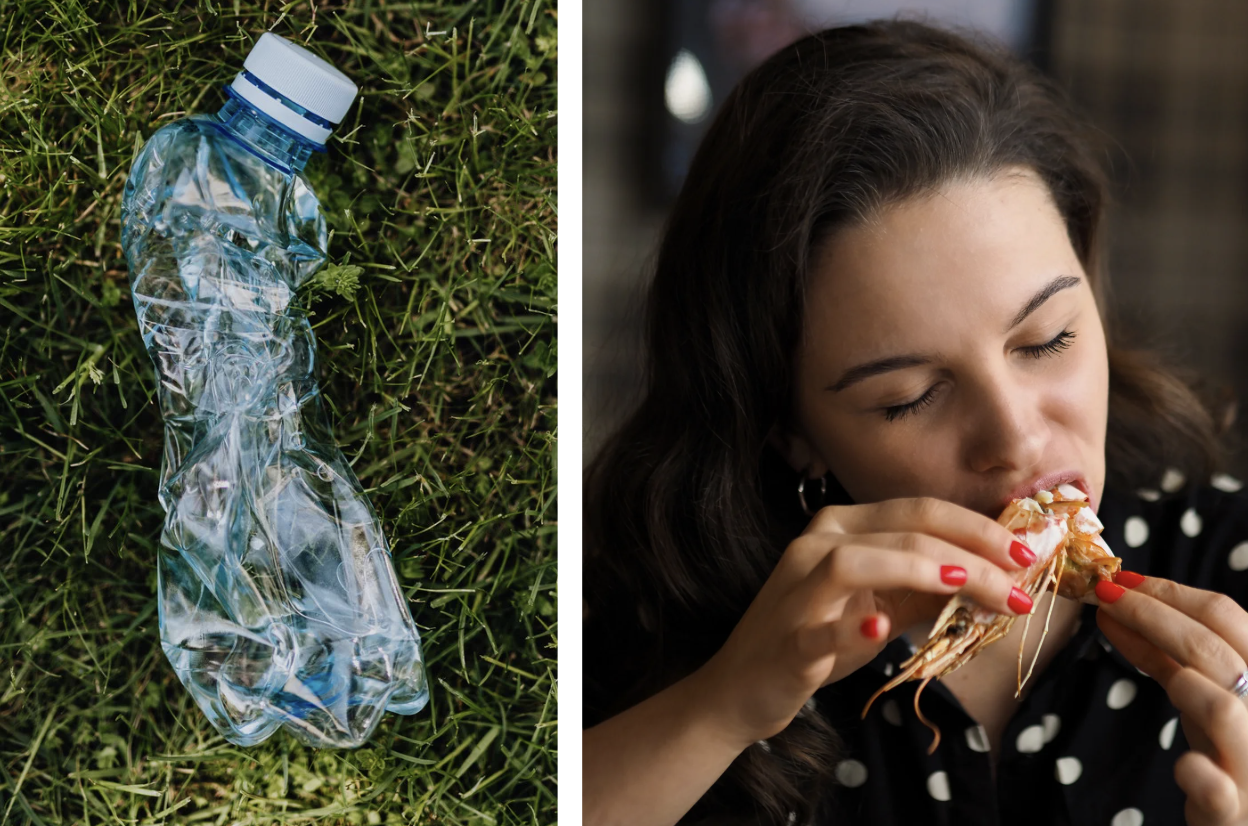
Plastic waste has been a growing global issue for years. The United Nations Environment Programme says that 19 to 23 million metric tonnes of plastic waste leaks into lakes, rivers, and oceans each year. Given the threat microplastics pose to animal and human health, efforts to find green replacements have intensified—and they’re working. Scientists from Singapore and Spain have found a strong, potentially viable replacement for plastic made from shrimp shells.
A research team based at the Singapore University of Technology and Design and the Institute for Bioengineering of Catalonia in Barcelona has made a biodegradable plastic alternative out of chitosan. Chitosan is a compound created by combining shrimp shells with trace amounts of nickel. It contains a structural molecule found in the shells of crustaceans and insect exoskeletons. Usually discarded as a waste byproduct of shrimp and crab processing, chitosan is commonly produced during seafood preparation and commercial fishing.
The issue with chitosan, though, was that it weakens and dissolves in water. That is, until recently.
How chitosan got stronger
Dissolving chitosan flakes into a weak acetic solution and mixing them with dissolved nickel chloride and water produced surprising results. Scientists then poured the mixture into molds to dry. The process yields a thin, green-tinted film with the strength of commonly used plastics like polypropylene. Even better, when submerged in water, the film grows 50% stronger. This increased durability matches the characteristics of polycarbonate and PETG, plastics commonly used in commercial single-use water bottles.
Researchers then stress-tested the chitosan material by molding it into cups and containers. They were able to confirm it could hold water without leaks. In terms of biodegradability, the chitosan material reached its half-life in four months in a standard soil burial test. By contrast, most commercial plastics can take centuries to decompose under similar conditions.
Researchers found that this is not only a better biodegradable plastic alternative, but also one that produces zero waste during creation. When the chitosan/nickel film is submerged, about 87% of the nickel washes out. That wash water can then be reused again and again from one batch of chitosan to the next. According to the researchers, the nickel content of a single AAA battery would provide enough nickel to manufacture more than a dozen chitosan drinking cups.
The potential future
Rigorous testing to assess the material’s limits for medical use and consumption still needs to be done. That said, the Food and Drug Administration has already approved products containing chitosan and nickel individually in the past. Barring any troubling research about their combined safety, the outlook is quite positive for future use.
Hopefully, seafood and battery waste can be reduced, helping lower plastic waste in a three-way win for the environment.