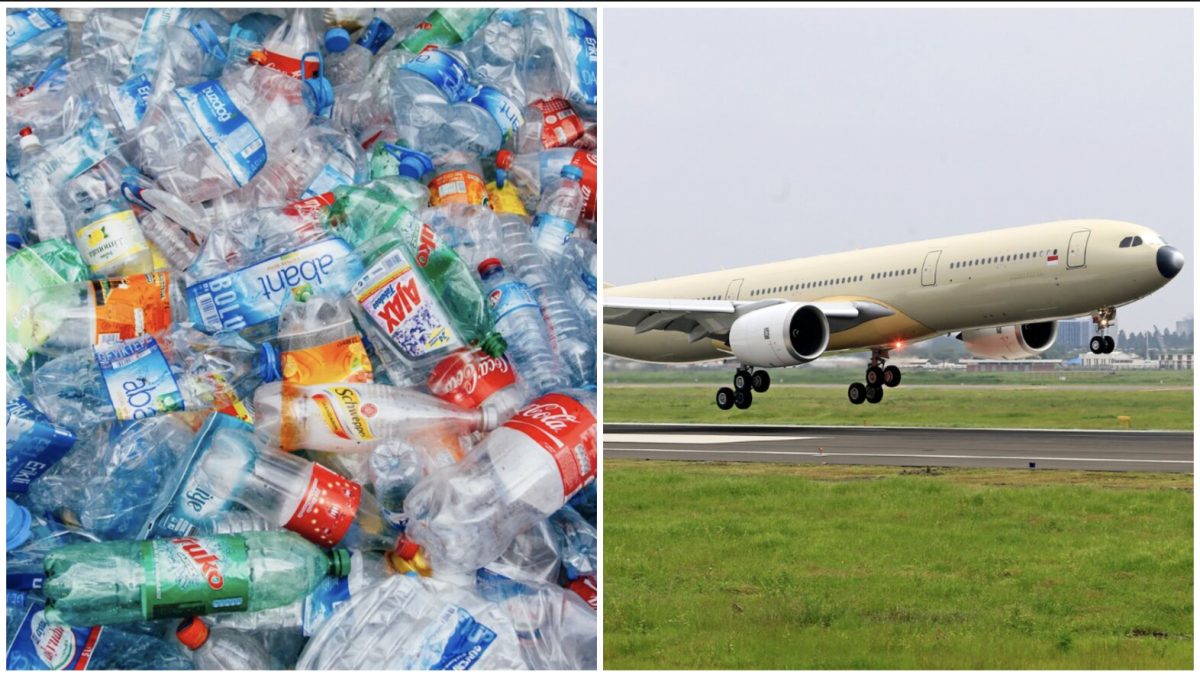
The world’s top environmental concerns come down to two basics: reducing waste and creating clean energy. Thanks to researchers at the University of Cambridge, we may be able to tackle both with a single solution.
Inspired by a previous solar-powered reactor the team created that turned carbon dioxide and plastic waste into fuel and useful chemicals, the researchers developed a new device that uses sunlight to break down plastic into hydrogen.
“Converting waste streams into valuable products using clean energy sources is…an attractive strategy to address both energy and environmental concerns,” the team wrote in Nature Chemical Engineering.
How does this device work?
The reactor is relatively simple compared to others of its kind. The researchers sprayed a light-absorbing material onto a glass panel. They then added a second layer of molecules containing zirconium and cobalt to act as the catalyst for the reaction. All told, the device measures about one square meter and was tested under natural sunlight.
Under sunlight, the device was able to extract hydrogen from sliced-up plastic bottles. It also extracted hydrogen from glucose and cellulose. This means the device can produce hydrogen from both plastic and plant waste.
Hit two problems with one device
This could help reduce a rapidly growing problem. The world produces more than 359 million tons of plastic each year, much of which ends up in landfills. Most modern plastics take 100 to 1,000 years to decompose. Much of the plastic polluting our land and oceans comes from food packaging, including water bottles. This device can turn those plastics into a cleaner fuel source. It could also help address the growing problem of microplastics contaminating drinking water and soil.
Hydrogen is a powerful fuel for trucks, ships, and airplanes, and demand for it is growing. Because it typically produces only water as a byproduct, it is a highly sought-after source of clean energy. While there are green methods for producing hydrogen using solar and wind power, a significant amount of the world’s hydrogen still comes from natural gas. In other words, while hydrogen itself is a clean source of energy, the way much of it is produced is not.
Could this device work realistically on a global scale?
The use of spray coating and relatively simple materials makes this new reactor easier to manufacture.
“What surprised me was, after all the optimization, just how simple it is,” researcher Ariffin Bin Mohamad Annuar said in a press release. “We just have this huge panel, we spray our catalyst on it, put it into our solution, put it under the sun, and it produces hydrogen and other valuable chemicals just from plastic waste. It’s just simple and scalable.”
The team says that before they can make the device commercially available, they hope to make it more durable and efficient. Time will tell whether it becomes a solution to both problems as it becomes more widely available.