
Assistant Professor of Management and Organizations, Boston College

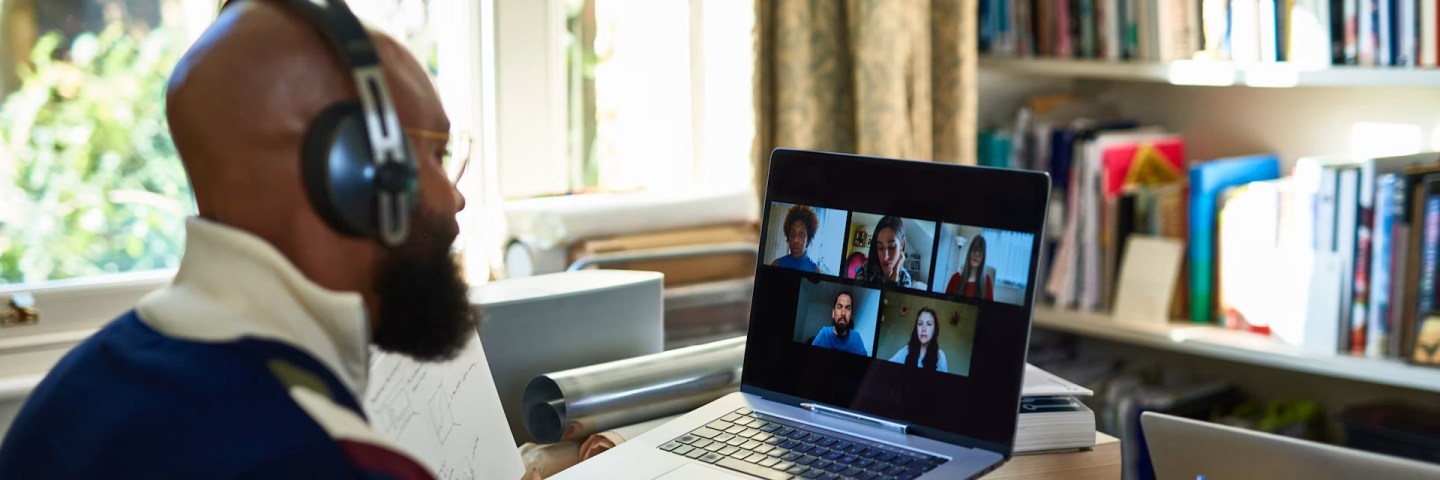
If you need to participate in video meetings for work, you’ve probably experienced more than one disruption, whether it’s kids darting around or home renovation noise.

Meetings that use Zoom and similar software are a fixture of remote work, which surged during the COVID-19 pandemic and remains prevalent. As of August 2026, 36% of American workers in management, professional and related occupations did at least some of their work from home, according to the U.S. Bureau of Labor Statistics.

I’m a management scholar who studies how, when and where people work. Before the pandemic began, I was studying a professional services company. That made it possible for me to follow how its staff transitioned from primarily working in person to mostly remote through 2024, which gave me more insight into how remote work has changed people’s lives.

The study included 275 interviews and about 330 hours of observation. Most people in the groups I followed ended up working from home four or five days a week, joining meetings by video. What I found was the opposite of what I expected.

Learning more about colleagues

Rather than pulling colleagues apart, remote work brought them closer and made them more willing to be open with one another. The findings were peer-reviewed and will be published in an upcoming issue of the management journal Organization Science.

Before the shift to remote work, I assumed – consistent with the predictions made by many prominent researchers of workplace relationships – that moving people out of the office would break down social connections. But I was wrong.

In the office, before the shift to remote work, I found that people primarily viewed one another as work colleagues rather than whole people. Reflecting this relationship, workers sometimes said they felt uncomfortable sharing with one another aspects of their lives that might limit their ability to do work.

For example, one worker I interviewed, Patrick, was afraid to tell his colleagues he could not work late one night because he was helping his mom. All the names I’m mentioning are pseudonyms to protect the privacy of the people involved and their employer.

“Even though you didn’t sleep last night, you’re expected to show up and smile and be fine,” said Tamara, an exhausted parent with two young children, when she was still commuting regularly to the office.

Surprisingly, people told me that they learned a lot more about one another once they began to work remotely instead of being together in an office. During my research, I heard about children yelling in the background and pets wandering in front of cameras. A spouse arriving home from work stopped to say hello on screen.

In team chat channels, people posted photos of their children, their animals and the meals they had cooked.

“Everyone has noises in the background, or they have something going on or whatever, and so we get to know each other quicker and on a deeper level than we would otherwise,” Tamara told me. In some cases, this increased sense of closeness happened to people who had known each other for years prior to switching to remote work.

Woman works from home with a candlestick chart on laptop and cat on her desk.
When you’re a remote employee, you may get more quality time with your pets. Moment/Getty Images

Growing psychological safety

Psychological safety is the sense that you can take an interpersonal risk at work, such as admitting a mistake, asking for help or raising a problem, without being judged negatively.

Decades of management research tie psychological safety to important outcomes for both workers and organizations, including learning, creativity and speaking up.

Over time, working remotely seemed to improve psychological safety for many of these co-workers.

People became “less afraid to talk about the interface of their personal and professional lives,” Leah said. Before, she added, no one would have volunteered that a breakup was affecting them and that they needed a day off to decompress.

After the company went remote, people told me they felt more comfortable sharing their own challenges as they tried to juggle their work and the challenges they faced in their personal lives.

Supporting work and nonwork activities

And as people started sharing these problems with their co-workers, they also told me they felt as if they could then better support one another.

When one worker’s father fell ill, his colleague, Brooke, took over the tasks the two had planned to do together.

“I’m just going to take this over for you right now,” Brooke told him. “And then, whenever you can, come back and swoop in.”

The colleague was able to dedicate time to caring for his father. And importantly, because help circulated this way, Brooke said, a task no longer “stopped dead in the water” when one person could not get to it.

This deeper collaboration did not seem to come at the expense of getting tasks completed. As an employee I’m calling Charles explained, having co-workers sharing details about their personal lives has “helped us to work more effectively in a lot of ways.”

Crucially, these improvements were experienced by people with many different living arrangements – young and old, those with and without kids or partners, men and women. And these benefits were positively reinforcing. For instance, sharing more meant learning more about others, which further reinforced psychological safety.

My findings suggest that remote work can be a benefit that employers and employees may overlook. Rather than treating time out of the office as a cost to social connection among employees, they might treat it as a way to grow personally and get to know co-workers better. This article originally appeared on The Conversation. You can read it here.

  • Dog parks are an antidote to the isolation and divisions that social media can fuel
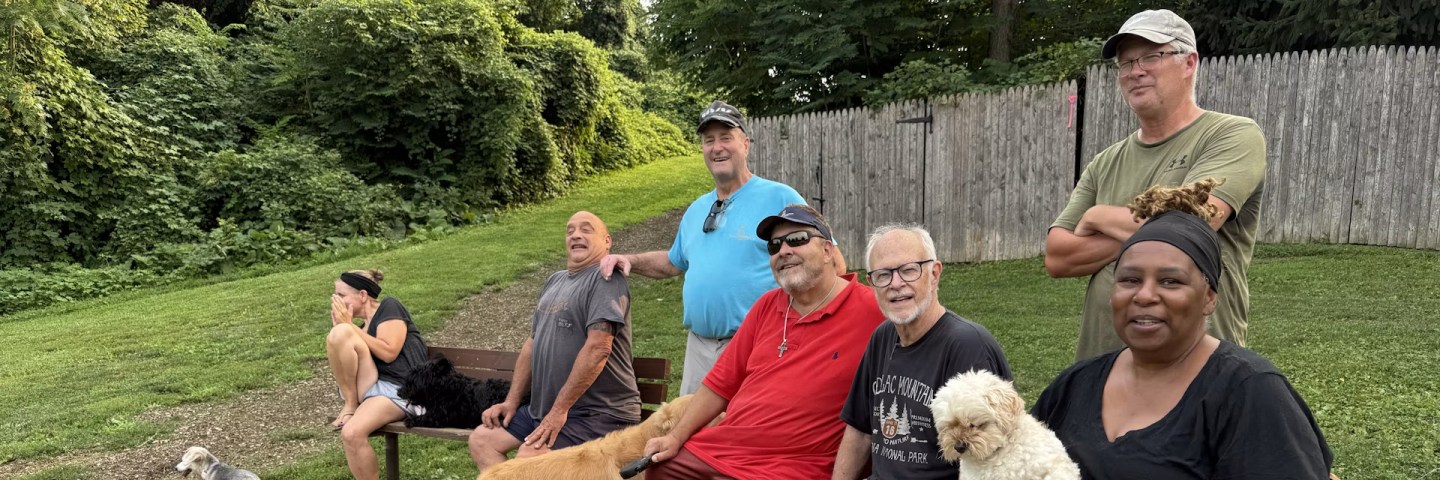
    A group of regulars meet at the Harford dog park in Radnor, Pa. Kevin B. Johnson, CC BY-NC-SA
    ,

    Dog parks are an antidote to the isolation and divisions that social media can fuel

    A shared patch of grass can bring people together across differences, one ordinary encounter at a time.

    Professor of Pediatrics, Biomedical Informatics and Science Communication, University of Pennsylvania

    The case against social media has gotten so well rehearsed that most people can easily merge it into ordinary conversation: It makes people lonely. It sorts them into camps. It hands them a room full of people who already agree with them and calls that a community.

    I’ve given this speech myself, with feeling, having read my phone notifications in the host’s powder room 11 minutes earlier.

    I am a pediatrician, health communicator and researcher at the University of Pennsylvania, and diagnosing is in my blood. Two decades of research, a surgeon general’s advisory on loneliness and Meta’s recent settlement of up to US$17 billion, pending court approval, all describe the same thing. What we recite are the symptoms. The more interesting question is what these symptoms diagnose.

    Simply put, our dependency on social media creates a deficiency disease. It’s not something toxic we’re ingesting; it is something our lives online have stopped us from receiving.

    I figured out that cost while standing in a field in Harford Park with a dog leash wrapped around my ankles.

    A man in sunglasses sits on park bench with small white dog standing on his lap
    The author sits with Chaz, his soft-coated Wheaten Terrier. Kevin B. Johnson, CC BY-NC-SA

    A corner bar without the alcohol

    Harford Park in Wayne, Pennsylvania, is 30 acres of rolling grass and mature trees the township designated for off-leash dogs in 1997.

    I go most afternoons. So do the same 15 or 20 people, which is how I ended up tangled in someone else’s very long leash on a Tuesday, concentrating hard enough on my own feet that I stopped talking and just listened.

    Two conversations were running at once. In one, a regular who is having a rough year was getting gently harassed about the weight he’d put on against his doctors’ advice — first by me, then by three other people who piled on uninvited. In the other, someone was arguing about Dr. Anthony Fauci, and the regulars chimed in on both sides. Gossip, complaints and dogs greeting dogs became the backdrop.

    As I worked to free my ankles, it clicked: The dog park, like the local knitting club or the Saturday pickleball group, does the job a corner bar used to do. There are regulars and running jokes, and once a person is known, a spot in the conversation is reserved for them.

    What makes these places work is that a shared focus on one small part of a life opens into something fuller. Regulars may share a taste in dog breeds or beer, but they are not colleagues, political soulmates or relatives. They differ on favorite restaurants, income, age, religion, values and beliefs. They are together because a golden retriever and a nervous rescue mutt need to run in the morning, and there is a field nearby.

    Chance encounters can increase empathy

    Sociologist Ray Oldenburg called places like this third places and defined them as “public places that host the regular, voluntary, informal, and happily anticipated gatherings of individuals beyond the realms of home and work.” Oldenburg noted the erosion of places that once manufactured accidental encounters, such as main streets, neighborhood pubs, general stores and even the drugstore soda fountain.

    Off-leash parks have been among the fastest-growing amenities in U.S. city park systems for two decades. A study in the Journal of Urban Affairs found dog park users reported higher social capital and neighborhood cohesion.

    The park is not a utopia. It’s a corner bar without the booze.

    Thomas Pettigrew and Linda Tropp’s meta-analysis of 515 studies provides the best evidence for why these accidental connections matter. They found that contact between groups generally reduces prejudice, but the quality and circumstances of that contact matter. The more interesting finding came later, when they tested how it works: The effect runs less through learning facts about the other group than through reduced anxiety, more empathy and more perspective.

    That is exactly what the park does. The man I disagree with about nearly everything hasn’t changed his mind, and neither have I. What changed is that his politics is now maybe the eighth thing I know and appreciate about him, behind his dog’s bad hip, his sense of humor, the awful year he had and his love of what Philadelphians call “wooder ice.”

    That shift, from opinions to a person, is why “just show people the other side” keeps failing online. When sociologist Christopher Bail and colleagues paid Republicans and Democrats to follow bots representing the views of the opposite party on Twitter, the Republicans came out substantially more conservative than they went in. Democrats shifted slightly left, though not significantly. Exposure to opinions is not the same thing as exposure to a person. The feed gave people arguments. The corner bar gives people other people.

    Two men sit on park bench with a dog behind them
    A dog park is a third place, like the neighborhood corner bar, where dogs instead of alcohol serve as a social lubricant. Kevin B. Johnson

    Making room for tolerance and trust

    If the places people gather shape their health, as a growing body of research suggests, then the shift from communities set by geography to communities assembled by algorithm creates a slow burn of intolerance and mistrust.

    There are now decades of research on social media and anxiety, and a growing body of experimental work about what algorithmic curation does to what people see. Almost none of it treats the encounter pattern as a health exposure.

    Social platforms have mastered what German American sociologist Herbert Gans called selective homogeneity. They sort people by interests, identities, tastes and grievances, then make it easy to stay among people who feel familiar.

    They are like virtual Levittowns – the postwar suburban developments outside Philadelphia, among other places in the Northeast, where thousands of identical houses went up on farmland and were sold to buyers screened by price. In early Levittowns, covenants barred Black families outright.

    In 1958, Gans moved into a Levittown in New Jersey and stayed two years doing research on its residents. He found that although original settlers and those who moved in by choice were happy, their rebellious teenage offspring, who had the fewest places to go and the least to do in those communities, were not.

    This was an early, real-life sorting of the type that algorithms would make all too common 60 years later.

    By contrast, repeated, low-stakes, in-person contact like the interactions between regulars at a dog park or corner bar creates room for tolerance and trust. People come back. They notice an absence. They share attention around a task, a place or a dog, rather than around presenting themselves or defending a position.

    Deficiency diseases are easily treatable. Nothing has to be taken away; instead, something has to be given back.

    Read more of our stories about Philadelphia and Pennsylvania, or sign up for our Philadelphia newsletter on Substack.

    This article originally appeared on The Conversation. You can read it here.

  • Gen Z communicates differently in the workplace, but older colleagues can still decode them
    Young workers often share values with older colleagues, but the environment where they learned about workplace behavior is different. Sebastian Herrmann on Unsplash, CC BY
    ,

    Gen Z communicates differently in the workplace, but older colleagues can still decode them

    The same text can mean consideration to one coworker and disrespect to another.

    Learning Facilitator for Online Master of Business Administration, Boston University

    For all the talk about generational differences at work, some of the biggest differences show up in surprisingly ordinary moments.

    Take being late for work. A Gen Z employee in her 20s I spoke with works at a small, locally owned café and restaurant run by an older Gen X owner. When she realized she was going to be late one day, she texted him. He was frustrated. To him, being late was serious enough to warrant a phone call, and a text felt too casual and impersonal.

    She saw the exact same interaction very differently.

    “He’s super busy, so I felt a call was going to take up too much time,” she told me. “So I texted. I thought it was more considerate.”

    Both thought they understood what respectful workplace communication looked like. They just had completely different definitions of it.

    I study workplace culture and communication, and I see this type of misunderstanding as increasingly common in multigenerational workplaces. And this is becoming more pronounced as Gen Z moves further into the workforce. The oldest members of Gen Z are now approaching 30, while the youngest are in college and high school.

    What’s distinctive about the older members of Gen Z is that many went through college, internships or their first jobs during the COVID-19 pandemic, when much of our communication moved online and masks often covered half our faces. And there’s a new twist now, as artificial intelligence changes how we communicate all over again.

    The result isn’t necessarily that Gen Z employees communicate better or worse with their bosses and colleagues than previous generations did. I argue that they have simply learned to do so in a very different environment.

    When a text means something more

    The café example is an easy one to dismiss as younger workers preferring texting and feeling that phone calls are for important occasions only.

    But that misses what I think is the more interesting point: The employee wasn’t trying to avoid her boss. She thought she was respecting his time.

    For her boss, by contrast, the phone call itself carried meaning. It communicated that she understood the seriousness of being late.

    Neither one had explained that expectation to the other.

    Managers shouldn’t assume employees attach the same meaning they do to a particular form of communication. If being late requires a phone call, they need to say so. A two-minute conversation about expectations can prevent both people from walking away from an interaction believing the other was disrespectful.

    Another common stumble concerns openness, which might feel like oversharing.

    One Gen Z worker I spoke with had recently started a job at a large New England company in a blue-collar industry. He was struggling with severe anxiety and decided to tell his baby boomer manager. The manager was sympathetic, but also uneasy.

    “It made me feel uncomfortable, if I’m being honest,” the manager told me. “I didn’t want to downplay his anxiety, but I’m not sure I needed to know.”

    That distinction matters. His reaction wasn’t that anxiety wasn’t real or that his employee should simply get over it. But he questioned how much of it belonged in their professional relationship.

    Many older workers learned that professionalism is about setting clear boundaries between personal and professional life. Members of Gen Z are coming of age during a period when conversations about mental health and personal well-being are considerably more public. What feels like honesty to one person can feel like oversharing to their boss.

    This doesn’t mean that managers have to become therapists, and employees don’t have to disclose everything happening in their lives. But both may need to recognize that their comfort level around disclosure isn’t universal.

    One young worker in a white and blue sweater grins while his colleague, a woman with long hair, puts her head in her left hand.
    What younger workers may see as honesty could be seen as oversharing by older colleagues, who tend to keep more boundaries over personal information. Aleksandra Sapozhnikova on Unsplash, CC BY

    Learning to read a room when the room disappeared

    Some workplace communication is never spoken at all. Think about how people traditionally learned to read a room. They watched faces around a conference table. They noticed a change in a manager’s tone. Someone caught them after a meeting and quietly explained what had just happened.

    Now think about someone who was 18 or 19 in 2020.

    At exactly the age when many young people would have been developing these skills in college, internships and early jobs, the room disappeared. Classes went online. Internships became remote. When people returned in person, masks sometimes made facial communication more difficult.

    That doesn’t mean members of Gen Z can’t read facial expressions, but we should be careful about assuming everyone had the same opportunities to learn the unwritten signals of professional life. If feedback matters, I believe managers should say it. A disappointed expression on a Zoom call is a poor substitute for a conversation.

    I thought that was understood

    Imagine a manager telling a young employee: “I need this by Friday.” The employee sends it back at 4:30 p.m. that Friday afternoon. The manager is annoyed because they intended to review it that morning, make changes and send it along to someone else.

    The employee is equally confused. The deadline was Friday, and they met it.

    This deadline mismatch gets at something I have repeatedly encountered in my research with Gen Z workers. In a survey I conducted of 250 Gen Z professionals across industries, clear structural expectations emerged alongside fairness and empathetic engagement as recurring themes.

    If an employee wants clarity, it shouldn’t automatically be confused with hand-holding. An employee can want autonomy and still want to know exactly what success looks like. “Friday” and “Friday by 10 a.m. because I need three hours to review this” communicate very different expectations.

    Artificial intelligence may make this issue even more important. We can now produce polished emails, summarize meetings and generate information faster than ever. But more communication does not guarantee more understanding.

    I believe that may be the larger lesson for every generation working together. We tend to mistake the workplace norms we learned for common sense. They aren’t. They were taught to us by the workplaces, technologies and moments in history in which we began our careers.

    Gen Z is learning theirs in a very different world.

    This article originally appeared on The Conversation. You can read it here.

  • Generous paternal leave policies improve maternal and newborn health, family finances and workplace equality
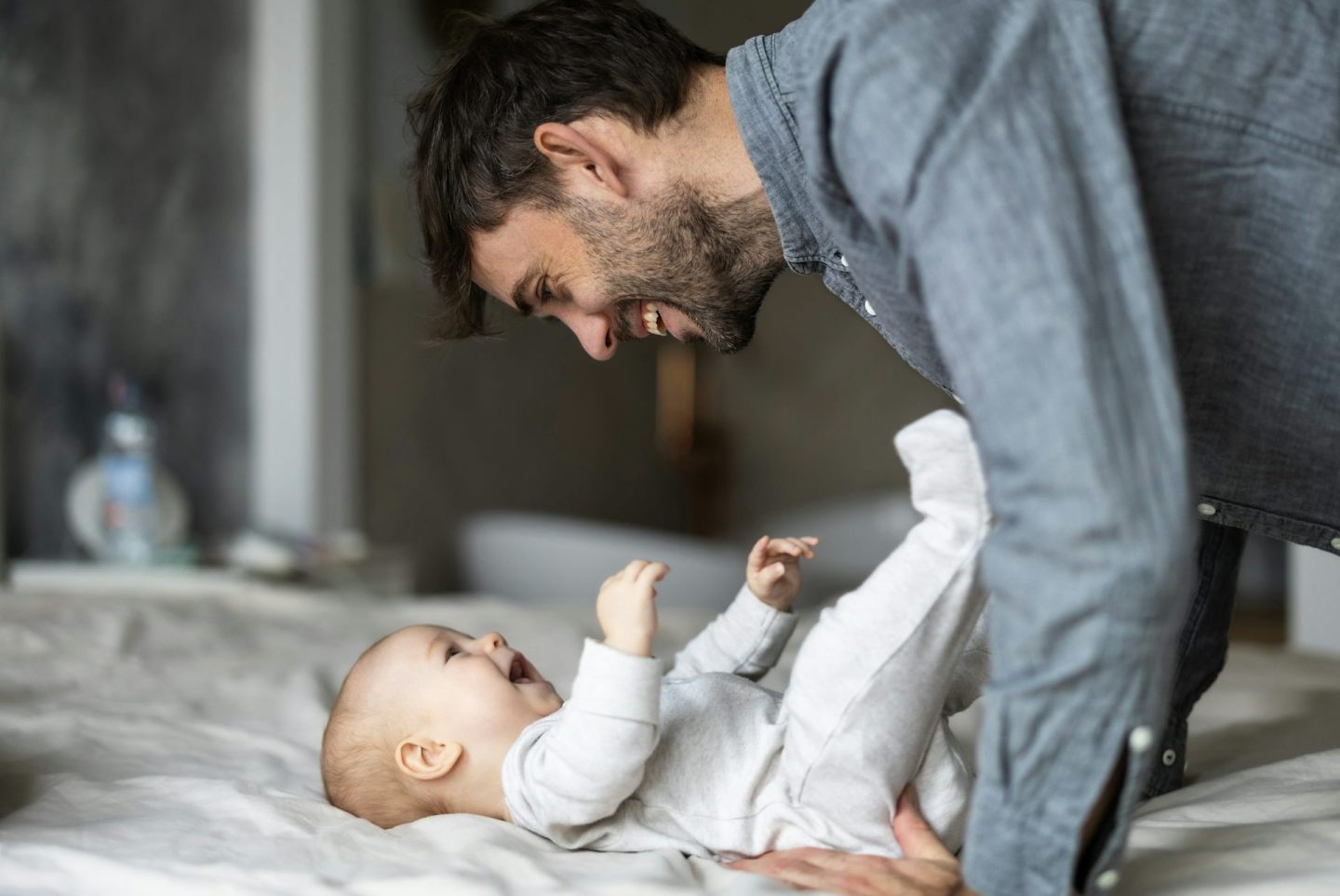
    Paid leave gives fathers time to bond with their children and improves their mental health. Piksel/iStock via Getty Images Plus

    Instructor of Family Science and Social Work, Miami University

    When our second child was born, my spouse had several weeks of paternity leave under his parental leave policy at work.

    I’m a certified family life educator, and parental leave comes up regularly in my teaching and community work. So I was aware of the benefits his leave could have for our family – in theory.

    Still, I could not have imagined how significantly his leave would end up affecting our family and our connections with community.

    During his leave time, my spouse took our oldest child to playdates and birthday parties. He quickly became connected with our small-town network of families with kids close in age. I witnessed my spouse becoming more comfortable being the “main” parent in public, going to kid-centered community events and connecting with other parents.

    Our family is still seeing the benefits of those few weeks 10 years later.

    Leave for supporting parents after the birth of a child isn’t standardized or required by law in most places in the U.S. Even countries with generous paid time off for the birthing parent don’t always offer similarly generous time for the non-birthing parent.

    This diversity in leave policies can make it hard to assess the impact of leave for the non-birthing parent. But existing research suggests that extended leave for birthing parents and moderate leave for non-birthing partners positively impact infant well-being and reduce postpartum mental health challenges.

    Maternal and newborn health

    Leave for both parents with the birth of a child can significantly benefit parental mental health overall and maternal mental health specifically. Paternity leave assists in the mother’s recovery and contributes to less of an increase in stress and depression than for mothers whose partners didn’t take leave.

    One Swedish study showed that flexibility within paternal leave policies, such as allowing new dads to take intermittent time off after the birth of a child, helped reduce the incidence of maternal postpartum health complications.

    Children also benefit from paternity leave. When a father takes significant leave – meaning at least two weeks – children report experiencing more father-child closeness and better communication in the relationship up to nine years later. And overall child health tends to improve when fathers take paternity leave.

    When paid leave policies are available for both mothers and fathers, breastfeeding is more likely to last longer. Longer breastfeeding is strongly linked to overall infant health and decreased infant mortality.

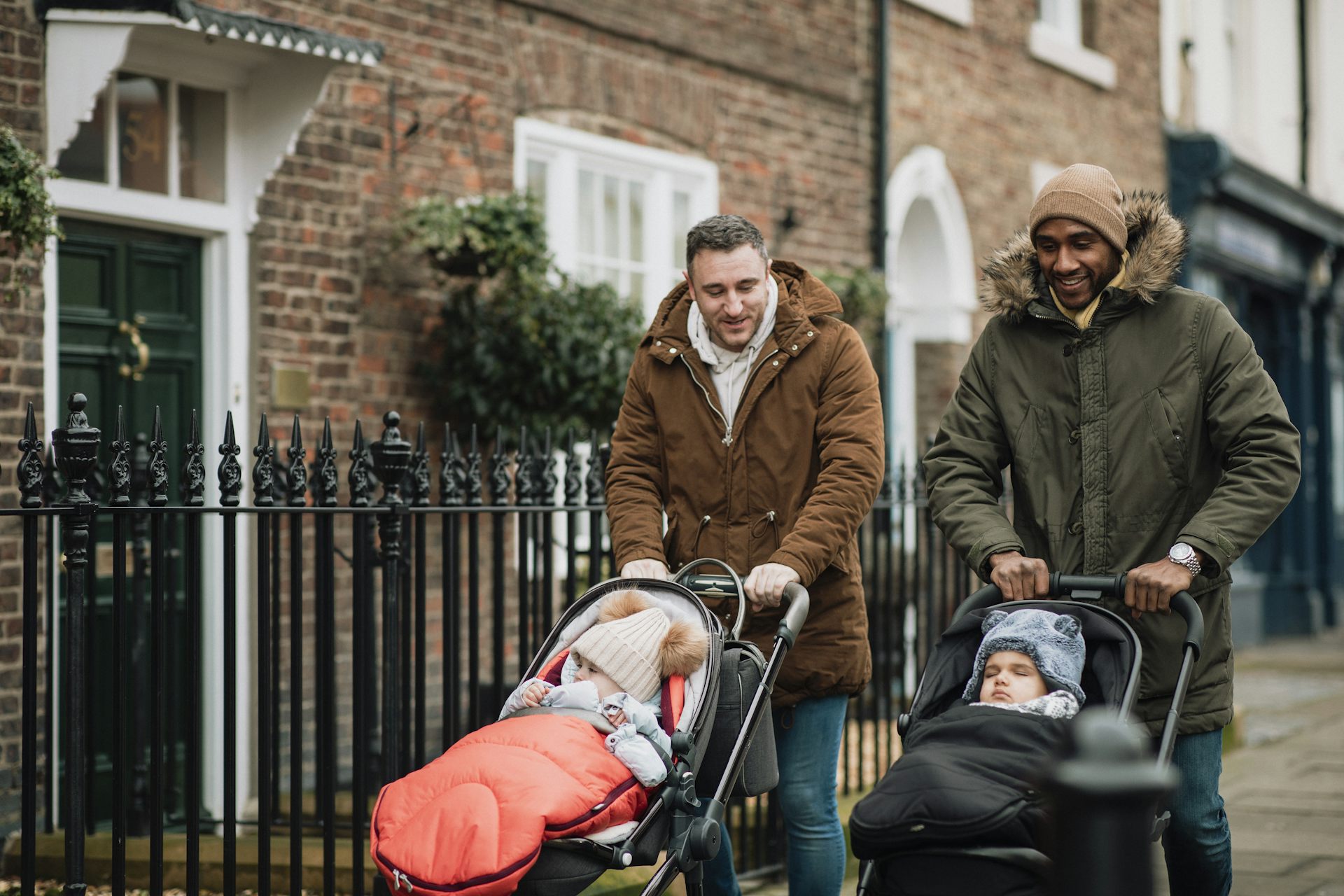
    two dads walking their babies in strollers
    Paternity leave is an opportunity for fathers to become comfortable in their parenting role and connect with other parents. SolStock/E+ via Getty Images

    Family balance

    Allowing both parents to have sufficient time off to bond and adjust to their new roles can also have longer-term benefits within the family unit and contribute toward more equity in child rearing. Even in 2026, mothers are often considered the “default” parent, with fathers taking a more secondary role.

    While fathers are more involved now than in previous generations, mothers are still more likely to be the first call from school. And even with an involved father, mothers continue to carry the invisible mental load of the family, an unseen burden of data, obligations and preemptive planning tasks. This overreliance on mothers comes with a price: Mothers report being more stressed and tired than fathers do.

    As I experienced in my own family, when fathers have ample time off, it sets up the dynamic to be more balanced between parents. This helps reduce the strain on recovering mothers and redistributes some of the care work that goes into raising children.

    Home economics

    What’s more, paid leave policies have been shown to help families’ financial health. Pay rates during leave can vary widely depending on your company, organization or country. Without full or close to full pay, many families cannot afford to take leave.

    In the U.S., for example, the Family and Medical Leave Act allows time off, but not in all circumstances, nor is that time required to be paid. Many families cannot afford to take the full allowable time off, using up sick or vacation time if available. Many parents in the U.S. end up going back to work sooner than seems healthy.

    New parents in the U.S. often find themselves in an economic bind – they can’t afford to take leave, nor can they afford to rely on a single income to have a parent stay home. But many also can’t afford the childcare rates for newborns, which tend to be particularly high. National averages for infant care at childcare centers are nearly US$200 more per month than toddler care. While rates vary significantly depending on where you live and what type of care you choose, infant care remains the most expensive.

    Despite the lack of a paid U.S. federal leave policy for parents, both domestic and multinational companies have noticed that their workers care about parental leave policies. Some have begun to offer leave for supporting parents in order to recruit and retain workers.

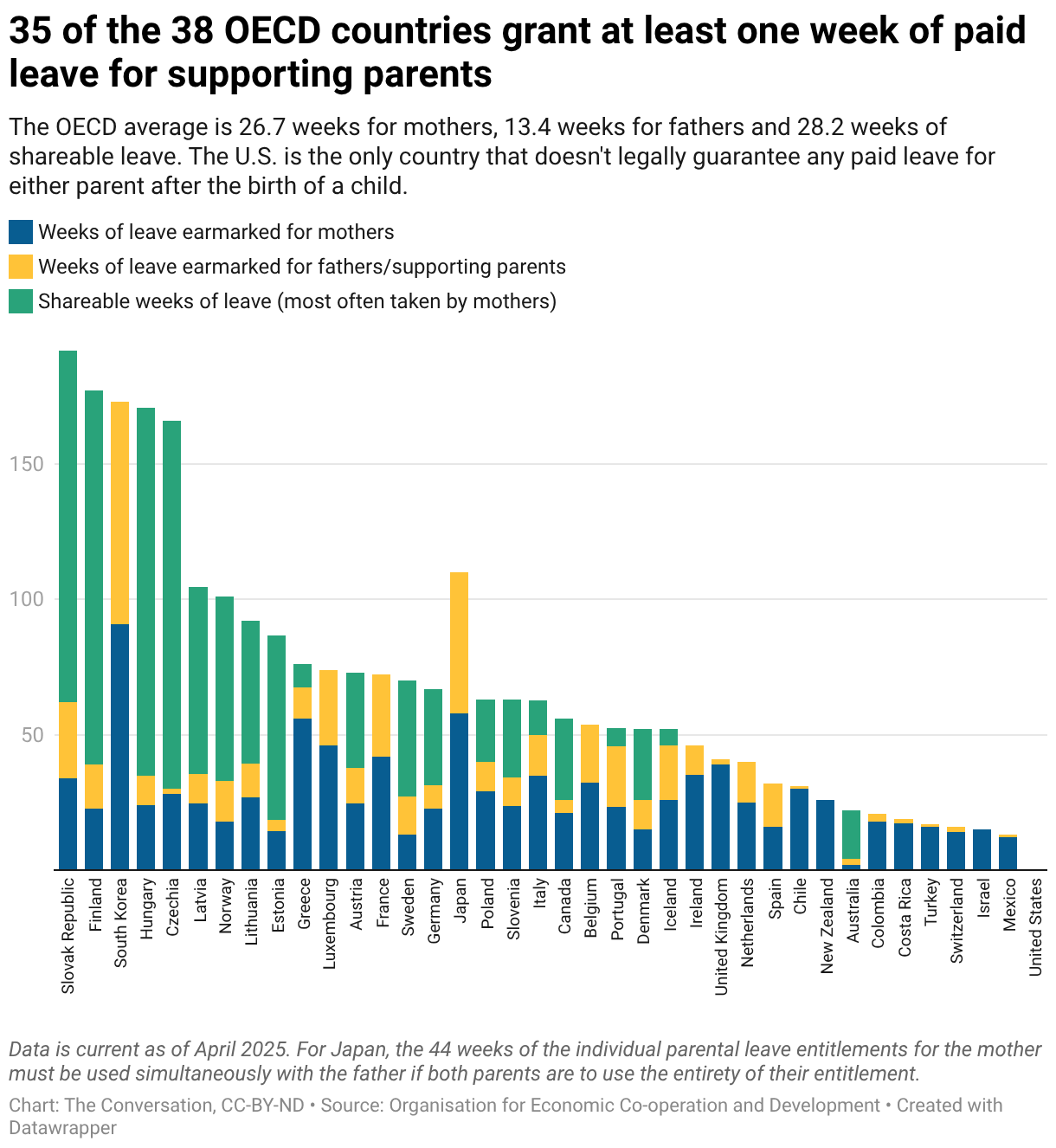
    Bar chart showing leave earmarked for mothers, fathers and shareable leave for each of the 38 OECD countries.
    Chart: The Conversation, CC-BY-ND. Source: Organisation for Economic Co-operation and Development. Data current as of April 2025.

    Outside the US

    U.S. leave policies consistently rank at or near the bottom when compared with other similarly developed countries, like the 38 members of the Organization for Economic Cooperation and Development, or OECD.

    Some countries follow a “use-it-or-lose-it” model of parental leave, where fathers in particular are encouraged to take a more substantial role in childcare. Sweden and Norway, for example, earmark 90 days of leave for each parent, and it cannot be transferred to or split with the other parent. This encourages both parents to take time off.

    There are many options across countries with parental leave policies. Flexibility and defined expectations seem to be key contributors to getting the most out of the parental leave that is offered.

    Cultural adoption

    When non-birthing parents are men, another barrier to taking leave is the perceived social acceptability within their communities. Even when paid paternity leave is available, many men struggle to take it because of how traditional gender roles and expectations of masculinity frame childcare as women’s work.

    To offset these kinds of social pressures, countries like Japan and Austria offer incentives such as bonus leave time for families when fathers actually take their available leave. Germany offers a similar bonus, and it has found improved couple relationship satisfaction when fathers take more of their leave time.

    Beyond improvements in maternal and infant health, both parents taking leave can create a more equitable workplace environment. Disparities and discrimination that come when only women take leave after birth can lessen when fathers and other supporting parents also take leave. Childbearing women are then less likely to be penalized, formally or informally, for taking parental leave.

    Paid parental leave policies that provide leave for all parents, regardless of gender, also can help reduce structural inequality in the workplace across race and class. In the U.S., Hispanic and Black workers often have less access to paid leave policies and may experience increased pressure to return to work earlier than their white counterparts.

    As more states, countries and corporations adopt more flexible and inclusive leave policies, researchers will continue to learn how parental leave benefits both parents and children. What they’ve found so far leads me to believe that, just like we’ve seen with prenatal care and early education programs, parental leave will prove to be an early investment in healthy children and families that pays dividends in the long term.

    This article originally appeared on The Conversation. You can read it here.
Explore More Society Stories

Society

Gen Z communicates differently in the workplace, but older colleagues can still decode them

Society

Generous paternal leave policies improve maternal and newborn health, family finances and workplace equality

Work

New York passes SAFE for Kids Act to protect children from social media addiction

Public Good

Oakland officials open ‘play-lending library’ to offset the cost of equipment for youth sports