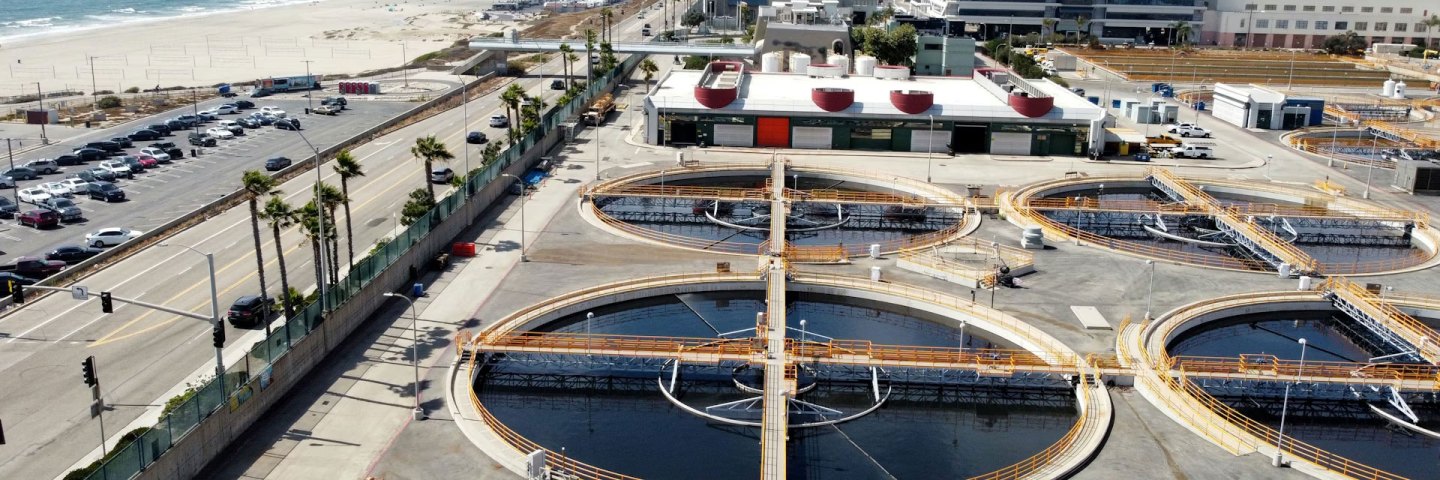

The world is looking for more clean water. Intense storms and warmer weather have worsened droughts and reduced the amount of clean water underground and in rivers and lakes on the surface.

Under pressure to provide water for drinking and irrigation, people around the globe are trying to figure out how to save, conserve and reuse water in a variety of ways, including reusing treated sewage wastewater and removing valuable salts from seawater.

But for all the clean water they may produce, those processes, as well as water-intensive industries like mining, manufacturing and energy production, inevitably leave behind a type of liquid called brine: water that contains high concentrations of salt, metals and other contaminants. I’m working on getting the water out of that potential source, too.

The most recent available assessment of global brine production found that it is 25.2 billion gallons a day, enough to fill nearly 60,000 Olympic-sized swimming pools each day. That’s about one-twelfth of daily household water use in the U.S. However, that brine estimate is from 2019; in the years since, brine production is estimated to have increased due to the continued expansion of desalination plants.

That’s a lot of water, if it could be cleaned and made usable.

How is brine disposed?

Today, most brine produced along the coastline is released into the ocean. Inland cities without this option typically leave brine in ponds to evaporate, blend it with other wastewater, or inject it into deep wells for disposal.

However, most of these methods require strict environmental protections and monitoring strategies to reduce harm to the environment.

For instance, the extremely high salt content in brine from desalination plants can kill fish or drive them away, as has happened increasingly since the 1980s off the coast of Bahrain.

Evaporation ponds require specialized liners to prevent the brine from leaching into the ground and polluting groundwater. And when all the water has evaporated, the remaining solids must be promptly removed to prevent them from blowing away as dust in the wind. This happens in nature, too: As the Great Salt Lake in Utah dries up, salty windblown dust has already contributed to significant air pollution, as recorded by the Utah Division of Air Quality.

Brine injected into the earth in Oklahoma, including into wells used for hydraulic fracking of oil and natural gas, was one of several factors that led to a 40-fold increase in earthquake activity in the five-year period from 2008 to 2013, as compared to the preceding 31 years. And wastewater has been documented to leak from the underground wells up to the surface as well.

A short video clip shows dust blowing over an area.
Plumes of dust rise from the bed of the Great Salt Lake in Utah in January 2025. Utah Division of Air Quality

Emerging treatment technologies

Researchers like me are increasingly exploring brine’s potential not as waste but as a source of water – and of valuable materials, such as sodium, lithium, magnesium and calcium.

Currently, the most effective brine reclamation methods use heat and pressure to boil the water out of brine, capturing the water as vapor and leaving the metals and salts behind as solids. But those systems are expensive to build, energy-intensive to run and physically large.

Other treatment methods come with unique trade-offs. Electrodialysis uses electricity to pull salt and charged particles out of water through special membranes, separating cleaner water from a more concentrated salty stream. This process works best when the water is already relatively clean, because dirt, oils and minerals can quickly clog or damage the membranes, reducing the performance of the equipment.

Membrane distillation, in contrast, heats water so that only water vapor passes through a water-repelling membrane, leaving salts and other contaminants behind. While effective in principle, this approach can be slow, energy-intensive and expensive, limiting its use at larger scale.

A trailer containing a small water reclamation system.
A trailer containing a small water reclamation system. Mervin XuYang Lim, CC BY-SA

A look at smaller, decentralized systems

Smaller systems can be effective, with lower initial costs and quicker start-up processes.

At the University of Arizona, I am leading the testing of a six-step brine reclamation system known as STREAM – for Separation, Treatment, Recovery via Electrochemistry and Membrane – to continuously reclaim municipal brine, which is salty water left over from sewage treatment.

The system combines conventional methods such as ultrafiltration, which removes particles and microbes using fine filters, and reverse osmosis, which removes dissolved salts by forcing water through a dense membrane, alongside an electrolytic cell – a method not typically employed in water treatment.

Our previous study showed that we can recover usable quantities of chemicals such as sodium hydroxide and hydrochloric acid at one-sixth the cost of purchasing them commercially. And our initial calculations indicated the integrated system can reclaim as much as 90% of the water, greatly reducing the volume of what remains to be disposed. The cleaned water in turn is suitable for drinking after final disinfection using ultraviolet or chlorine.

We are currently building a larger pilot system in Tucson for further study by researchers. We hope to learn if we can use this system to reclaim other sources of brine and study its efficacy in eliminating viruses and bacteria for human consumption.

We have partnered with other researchers from the University of Nevada Reno, the University of Southern California and the U.S. Army Corps of Engineers to help communities in the Southwest secure reliable water supplies by safely reusing municipal wastewater to serve everyday water use.

This article originally appeared on The Conversation. You can read it here.

  • Licensed therapist shares 6 signs you’re doing a lot better than you think you are
    Photo credit: CanvaA woman in quiet contemplation.

    For many people, it’s easy to overlook progress because it often lacks clear milestones. There can be increased anxiety and stress from feeling like they’re still catching up or even falling farther behind.

    In a recent Instagram post, licensed therapist Jeffrey Meltzer points out six signs that people are doing better than they think. He breaks down a pattern of achievements that tend to be easily missed. How individuals interpret their past, how they presently handle their relationships, and even asking simple questions, reveal a very different story about where they’re at in their lives and where they’re going.

    Surviving the unsurvivable

    Meltzer begins, “You’ve survived everything that once felt unsurvivable. Every hard season, every moment you thought you wouldn’t get through. You did. That is no small feat. Your brain forgets those victories the moment they pass, but they still count.”

    Learning how to cope with life isn’t just about “toughness.” Resilience is a measurable, multi-layered process tied to effective coping strategies. A 2025 study in Psychology Today points out that rising above adversity isn’t the simple solution. Having support systems that function well enough means you don’t have to.

    Becoming what we desperately want

    “You’ve changed in ways you once desperately wanted. Think back to who you were three or five years ago. Some of the growth you desperately wanted back then, you’re living it now.” Meltzer adds, “However, your brain likes to move the goal post without telling you.”

    People constantly face an adjustment to satisfaction because expectations rise over time. A 2024 study in Springer Nature Link explored the hedonic treadmill. Even after massive achievements, the boost of happiness doesn’t last as long as people expect.

    personal preference, dislikes, self-awareness, secure attachment
    She doesn’t like it.
    Photo credit Canva

    Knowing what we don’t like

    “You know what you don’t want.” Meltzer continues, “That might sound like a consolation prize, but it’s actually hard-earned clarity. A lot of people waste years chasing the wrong things. But knowing what drains you, what doesn’t serve you, what you won’t settle for anymore, that’s actual progress.”

    Psychology emphasizes that self-awareness leads to better behavior and stronger emotional regulation. A 2023 review in the Annual Review of Organizational Psychology and Organizational Behavior found that this process brings a clearer sense of who we are and who we are becoming.

    An easy relationship to navigate

    “You have at least one relationship that feels easy. You’re at least one person that doesn’t require a performance from you. Someone who you can be a little bit of a mess around. You don’t need to be perfect around them, and it feels easy.” Meltzer explains the value, saying, “That kind of connection is rarer than people like to admit.”

    Strong interpersonal relationships are key predictors of mental health and well-being. A 2024 study in the National Library of Medicine found that secure attachment helps people experience fewer of the symptoms associated with anxiety and depression. Even one stable, supportive relationship is linked to long-term well-being.

    neuroplasticity, achievement, growth mindset, motivation
    Feelings of achievement.
    Photo credit Canva

    Learning something new

    “You’ve learned something in the last year.” Meltzer explains, “Whether it’s a skill, a perspective, a hard lesson, all of it counts. Remember, a brain that’s still learning is a brain that’s still growing.”

    The human brain remains capable of learning and adapting throughout a person’s life. A 2025 study published in MDPI found that brain neuroplasticity allows traits such as emotional regulation and awareness to be reorganized and improved over time.

    Asking better questions

    Lastly, Meltzer offers, “You’re asking the right questions. The fact that you’re reflecting and trying to see your life more clearly, that’s a sign of someone who hasn’t given up.”

    Believing that change is possible shapes emotional recovery and motivation. A 2025 study in Springer Nature Link showed that a growth mindset leads to better psychological outcomes and improves a person’s ability to adapt to new situations.

    appreciation, gratitude, reflection, mental health
    A woman enjoys the sunlight on her face.
    Photo credit Canva

    People are doing better than they think

    These six signs shared by Meltzer helped viewers understand that they’re doing better than they think. As people flooded the comment section, some seemed to struggle with #4, having that one reliable friend. Still, most were just appreciative.

    “This made me feel so much better”

    “i don’t have number 4 unless my dog counts”

    “all I need now is the 4th one, I’m working towards it by socializing more it’s challenging but I’m learning”

    “I’m winning despite feeling defeated”

    “I needed this right now.”

    “Does Mom count for #4?”

    “I’ll give myself credit, it been rough recently, 5 out of 6 is better than I expected”

    “This made me remember how far I have become even tho I still work on things, it’s so good to get these reminders this genuinely made my day”

    Meltzer tries to help people reframe their perspectives. Often, things look like they’re “not enough” even though the actual evidence suggests otherwise. Psychology reveals growth is incremental and easy to miss. The fact that a person wants to do better is the clearest sign that personal growth is already underway.

  • ‘Bouncing back’ is a myth – resilience means integrating hard experiences into your life story, not ignoring them
    Photo credit: Anastasiia Voloshko/Moment via Getty ImagesInto each life some rain must fall.

    When Maria looked at herself in the mirror for the first time after her mastectomy, she stood very still.

    One hand rested on the bathroom counter. The other hovered near the flat space where her breast had been. The scar was raw and angry. The loss was quiet but enormous. Her body felt foreign.

    In moments like these, people are often urged to be resilient – which can feel like being told to show no weakness, to push through no matter what. Or they imagine resilience as bouncing back: returning somehow unscathed to be the person you were before.

    But standing in that bathroom, Maria knew there was no going back. And toughness wouldn’t change what had happened. The real question was how she could move forward, carrying this experience into her new reality.

    Maria’s story, one I came to know personally, is far from unique. Loss, trauma and illness often bring the same wrenching questions of identity and the painful uncertainty of what comes next.

    I’ve spent more than two decades studying resilience, particularly among individuals and families navigating these kinds of life-changing events. I am also a four-time cancer survivor and author of a new book, “Falling Forward: The New Science of Resilience and Personal Transformation.” If there is one myth I wish society would retire, it’s the idea that resilience means “toughness” or “bouncing back.”

    woman wearing hat seated in wheelchair looks outside
    Resilience doesn’t rely on relentless positivity in the face of traumatic challenges. pocketlight/iStock via Getty Images Plus

    Rethinking resilience based on research

    Moments like Maria’s reveal something important: The way people tend to talk about resilience often doesn’t match how people actually live through adversity.

    In popular culture, resilience is often equated with grit, toughness or relentless positivity. People celebrate the warrior, the fighter, the triumphant survivor.

    But across research, clinical practice and lived experience, resilience is something far more nuanced, raw and human.

    It’s not a personality trait that some people simply have and others lack. Decades of research show resilience is a dynamic process. It’s shaped by the small, everyday decisions and adjustments individuals make as they adapt to significant adversity while maintaining, or gradually regaining, their psychological and physical footing over time.

    And importantly, resilience does not mean the absence of distress.

    Research on people facing serious life disruptions shows that distress and resilience often coexist. For example, in my study of adolescent and young adult cancer survivors, participants reported being upset about finances, body image and disrupted life plans, while simultaneously highlighting positive changes, such as strengthened relationships and a greater sense of purpose.

    Resilience, in other words, is not about erasing pain and suffering. It is about learning how to integrate difficult experiences into a life that continues forward.

    How resilience really works

    At one point, Maria told me she had started avoiding mirrors, intimacy, even conversations that made others uncomfortable.

    “Well, you’re strong,” people would tell her. “Just stay positive. This too shall pass.”

    But strength, she said, felt like a performance.

    What ultimately shifted for Maria was not an increase in toughness. It was permission to grieve.

    She began speaking openly about the loss of her breast; not just as a medical procedure but as a symbolic loss tied to identity, sexuality and womanhood. She joined a support group. She allowed herself to feel anger alongside gratitude for survival.

    This kind of emotional processing turns out to be central to resilience.

    My colleagues and I have found that people who actively process loss, rather than suppress it, demonstrate better long-term adjustment. Tamping down negative feelings may provide short-term relief, but over time it is associated with greater stress on your body and more difficulty adapting.

    In other words, resilience is not about sealing the wound and pretending it no longer aches. It is about learning how to carry the wound without letting it consume your entire story.

    Neuroscience supports this integration model. When people engage in meaning-making – reflecting on their experiences and incorporating them into a coherent life narrative – brain networks associated with emotional regulation and cognitive flexibility become more active. The brain, quite literally, reorganizes as you adapt to new realities.

    Maria described the change simply.

    “I don’t like what happened,” she told me. “But I’m not at war with my body anymore.”

    That is resilience.

    Arms in sweater with hand writing in a journal
    Acknowledging what’s been lost can be part of the process of resilience. Grace Cary/Moment via Getty Images

    Practices that help build resilience

    If resilience is about integration rather than toughness and bouncing back, how can you cultivate it? Research across psychology, neuroscience and chronic illness points to several evidence-based strategies:

    • Allow emotional complexity: Resilient people are not relentlessly positive. They allow space for the full range of emotions, such as gratitude and grief, hope and fear. Paying attention to your feelings through strategies such as reflective writing or psychotherapy have been linked to improved psychological adaptation.
    • Build a coherent narrative: Human beings are storytellers. Trauma can shatter one’s sense of self, but constructing a narrative that acknowledges loss while identifying continuity and growth supports adaptation. The goal is not to spin suffering into silver linings, but to situate it within a broader life story. For example, someone might say, “Cancer derailed my plans and changed my body, but it also clarified what matters to me and how I want to move forward.”
    • Lean into connection: Isolation magnifies suffering. Social support is one of the strongest predictors of how well people are able to cope and move forward after illness or trauma. For Maria, connection with other women who had had mastectomies normalized her experience and reduced shame.
    • Practice deliberate pauses: Intentionally give yourself some time to breathe. Mindfulness and contemplative solitude can strengthen your ability to regulate emotions and recover from stress. Pausing allows experience to be processed rather than avoided.
    • Expand identity: Illness, loss and trauma reshape how you think of yourself. Rather than clinging to who you were, resilience often involves expanding who you are becoming. Research on post-traumatic growth shows that people often report deeper relationships, clarified priorities and renewed purpose – not because trauma was good, but because it forced reevaluation. Maria no longer describes herself simply as a breast cancer patient. She is a survivor, yes, but also an advocate, a mentor, a woman whose sense of femininity is self-defined rather than dictated by her anatomy.

    Moving forward

    We are living in a time of widespread burnout and rising mental health challenges, where cultural pressure to appear strong often leaves people silently struggling. An insistence on grit and relentless optimism can backfire, making people feel inadequate when they inevitably feel pain.

    Resilience is not about returning to who you were before illness, loss or trauma. It is about becoming someone new: someone who carries the scar, remembers the loss and still chooses to engage with life.

    Maria still pauses when she sees her reflection. But she no longer turns away.

    “This is my body,” she told me recently. “This is my story.”

    Resilience is not forged in the denial of vulnerability, but in its acceptance. Not in bouncing back, but in integrating what has happened into who you are becoming.

    And that, I believe, is where real strength lives.

    This article originally appeared on The Conversation. You can read it here.

  • Trauma patients recover faster when medical teams know each other well, new study finds
    Photo credit: SDI Productions/E+ Collection/via Getty ImagesWhen someone is badly hurt, their potential for survival often depends on what happens in the first minutes after they arrive at the hospital.

    When a trauma patient enters the emergency department, their potential for survival often depends on what happens within the first minutes after their arrival. After studying trauma resuscitation teams at UPMC Presbyterian in Pittsburgh, the largest major trauma center in Pennsylvania, it’s clear that trauma teams aren’t organized ahead of time – they’re formed on the fly. Some team members may have worked together many times before, while others may be meeting for the first time.

    Those minutes can be chaotic, fast-paced and high-stakes. The patient is usually rolled in on a stretcher, bleeding, barely breathing and surrounded by alarms and shouting. At the bedside are emergency physicians, anesthesiologists, surgeons, nurses and respiratory therapists – a large team of dedicated health care providers. Everyone has a job. Everyone is moving fast. When it works well, it looks almost effortless. When it doesn’t, small delays can have big consequences.

    Medical professionals often say that “teamwork matters” in health care. But only a few studies show how teamwork affects patient outcomes or point to concrete, practical ways to make teams work better together.

    This knowledge gap motivated us to get together to study this issue. One of us is an intensive care unit physician and the other is an organizational scientist who studies teams in a variety of settings. We based our approach on a classic concept from behavioral science called transactive memory systems.

    Traumatic injuries, such as car crashes, falls and gunshot wounds, are the leading cause of death for young people worldwide. Across all ages, trauma is one of the top killers. Because trauma is widespread, even small adjustments to how emergency teams coordinate can help save lives and shorten recovery periods for patients.

    Doctor wearing blue gloves prepares to intubate a male patient.
    Few studies assess how trauma teamwork affects patient outcomes. picture alliance/picture alliance collection via Getty Images

    This is where transactive memory systems, TMS, come in. TMS are a shared understanding within a team of who knows what and who is good at what. A team doesn’t succeed because everyone knows everything, but because people rely on one another’s expertise. The team works best when each person knows what they are responsible for, what other team members are experts in, and whom to turn to when a specific problem comes up.

    Team familiarity shapes outcomes

    Think of a group of friends playing basketball. The best basketball teams aren’t the ones where everyone has the same skills. They’re the ones where one person is great at rebounding, one person can shoot from a long distance, and another is good at dribbling the ball up the floor. Importantly, everyone knows each other’s skills, so when a certain skill is needed, they know whom to go to.

    In trauma care, this kind of knowledge could save lives. When seconds matter, the team needs to instantly know who would be best at placing a breathing tube and who would be best at reading the ultrasound. Strong TMS means fewer questions, less hesitation and smoother coordination.

    Black doctor in blue scrubs talks with medical team at nurse's station.
    The more often medical teams work together, the better they know each other’s skills and how they coordinate their tasks. FS Productions/Tetra images collection via Getty Images

    For each trauma patient, we measured three things: shared team experience, transactive memory systems and patient outcomes, based on how long patients stayed in the ICU and in the hospital overall. We were looking for teamwork that showed good coordination, trust in expertise and clear division of responsibility.

    The science behind ‘who knows what’

    Our results were striking. First, teams with more shared experience had stronger transactive memory systems. The more often people had worked together before, the better they seemed to know each other’s skills and coordinate their tasks. If you add up how many times two team members had worked together on a previous resuscitation and divide by the number of dyads, or pairs, on the team, the average in our study was 10 times. As that number increased, transactive memory systems became stronger.

    Second, stronger transactive memory systems were linked to better patient outcomes. These improvements were substantial: Patients cared for by teams that were well above average in their transactive memory systems stayed in the hospital about three fewer days and spent nearly two fewer days in the ICU.

    Third, TMS explained why shared experience mattered. It wasn’t just that experienced teams were better, but that shared experience helped teams build a clearer mental “map” of each other’s expertise. That map is what helped patients get better faster.

    Trauma care is unpredictable – you can’t always control who is on a team or how often people work together. But it may be possible to design training procedures and work schedules that help teams build transactive memory faster.

    More broadly, our study suggests that improving health care isn’t just about developing new technology or training better doctors. It’s about leveraging the power of teams, helping people quickly understand and trust each other’s strengths when it matters most. For us, one coming from the bedside and the other from organizational science, that’s the exciting next step: turning the science of teamwork into practical tools that help trauma teams save lives.

    This article originally appeared on The Conversation. You can read it here.

Explore More Health Stories

Well-being

‘Bouncing back’ is a myth – resilience means integrating hard experiences into your life story, not ignoring them

Health

Trauma patients recover faster when medical teams know each other well, new study finds

Care

Health care sticker shock has become the norm, but talking to your doctor about costs can help you rein it in

Well-being

Snoozing in bed is actually bad for you, but here’s how to get out of bed comfortably