




North America’s bee populations are in trouble, but don’t blame the honey bees. While some people argue that an overabundance of managed honey bees – those raised to help pollinate crops and produce honey – is causing native bees to disappear, the evidence doesn’t support the claim.

What is true is that populations of many species of bees, including honey bees, are struggling.

Half of all honey bee colonies die every winter in the United States, on average. Commercial beekeepers experienced their highest losses on record – more than 60% of their colonies – in the winter of 2024-25. Overall, one-fifth of pollinators in North America are considered to be at risk for extinction due in large part to habitat loss, rising temperatures, extreme weather, diseases and pesticides.

We study bees and other vital pollinators, and we can tell you that there are good reasons to love all the bees. In fact, they’re essential.

A bee on a flower
A honey bee collects pollen from a flower. Bob Peterson/FlickrCC BY

Why care about pollinators?

Bees help farmers grow the foods people love to eat, everything from apples to almonds.

Along with other pollinators – such as flies, butterflies and moths – bees help nearly 80% of flowering plants produce fruit and seeds, which in turn support birds and other wildlife.

About 75% of the world’s agricultural crops, including vegetables, fruits and tree nuts, benefit from pollinators. Additionally, pollinators contribute to production of feed for livestock and fiber crops, such as cotton.

In the United States, pollination by insects contributes $34 billion to the economy.

Among the pollinators, honey bees are the most important for agriculture crops. Managed honey bees, which beekeepers can move from field to field, are particularly essential in intensively farmed areas that lack the natural habitat to support wild bees.

So, why are people concerned about honey bees?

Honey bees were introduced to North America by European settlers in the early 1600s.

Since honey bees are not a native species, the most common concern you might hear is that they will outcompete wild bees for pollen and nectar. This is typically portrayed as a numbers game: If resources are limited, the more bees present on the landscape, the less food there is to go around.

Honey bees live in large social colonies and are adept at capitalizing on high-quality patches of flowers, leading to the concern that this species in particular may have a rapid, outsized effect on native bees that share the same food.

The queen bee is marked with nontoxic green paint to make her easy to find when examining the health of this Apis mellifera European honey bee hive in Maryland.
The queen bee is marked with nontoxic green paint to make her easy to find when examining the health of this Apis mellifera European honey bee hive in Maryland. David Illig via FlickrCC BY-NC-SA

Managed bees can also carry viruses and other pathogens that may infect native bee species. Because viruses are shared among colony members, viruses can persist in managed honey bee colonies and then be spread to other bees that forage on the same flowers.

Scientists and farmers also have a concern about economic sustainability if farms are too reliant on honey bees alone for crop pollination. Threats to honey bee health and high colony mortality in the United States could put crops at risk if other pollinators aren’t in the vicinity to do the job.

Why don’t studies find a honey bee impact on native bees?

Humans actually know little about bee interactions. The U.S. has more than 4,000 native bee species, but there is enough data to estimate population sizes and ranges for less than half of them. Meaningful data examining the effects of honey bees on other species are even more scarce.

In a recent analysis, we found that only 15% of 116 published studies on resource competition involving honey bees measure how competition from honey bees affects the survival, reproductive output and long-term population trends of native species.

A bee with its face in a flower.
Bee populations face several threats, including pesticides and losing habitat to urbanization and agriculture. Andony Melathopoulos

The majority of published studies on honey bee and wild bee competition address different versions of a narrow question: Do honey bees and native bees visit the same plants?

Because honey bees are “super generalists” that thrive worldwide well beyond their native range, most scientists would predict that the answer to this question is a resounding “yes.”

However, about half of the research suggests that honey bees don’t change the way native bees go about their day at all. From the perspective of a wild bee, the honey bees simply don’t exist in their world.

Different bee species can coexist with very little evidence of direct interaction. An analysis of bee communities measured across diverse agricultural, urban, grassland and forested environments found the abundance of honey bees and the abundance of native bees were positively associated about five times as often as they were negatively associated. In other words, rather than landscapes supporting one bee species at the expense of another, the same habitats support both.

A map shows bee species everywhere, but the most species in the Southwest and Midwest.
Bees species can be found just about everywhere in the U.S., as this map, modeled from 3,158 species found in museum collections, shows. But some regions, such as the Southwest deserts, are particularly rich in bee species, with the color scale representing the estimated number of species. Paige R. Chesshire, et al., 2023CC BY

Calls to restrict honey bees from certain locations also often miss a key reality: Native bee hot spots and urban and commercial beekeeping rarely overlap.

Beekeeping is anchored in agricultural lands. North America’s rarest bees thrive in environments like the Sonoran Desert – habitats that are poorly suited for managed colonies.

If competition occurs, it is typically the product of agriculture practices that strip the land of flowering plants that bees need.

Research that has artificially introduced hives into natural areas like the high Sierra – places beekeepers don’t typically go – has generated competition that left less pollen and nectar for the native bees. But frequently competition involves common native bees that are not under threat.

A chunky bee on a flower with pollen on its legs.
Bumble bees transport pollen on their legs as they move from flower to flower, bringing some of it home while pollinating plants in the process. Andony Melathopoulos

So, if honey bees aren’t to blame, what is?

The top drivers of pollinator declines are considered to be land use – the spread of cities and agriculture, as well as the way land is managed – along with rising temperatures, extreme weather and pesticide use.

Agriculture and urbanization reduce the amount and diversity of flowering plants, and droughts can reduce plant flowering and the resources bees rely on. Pesticides can reduce bees’ ability to lay eggs and care for their offspring, or they can kill bees outright.

The U.S. Geological Survey’s Native Bee Inventory and Monitoring Lab tracks bee populations in the U.S. mid-Atlantic region. Studies using its data have found that urbanization and weather changes have been the major drivers of changes in wild bee abundance and diversity in that region.

As temperatures rise, wild bee populations are expected to decline there. Warmer winters mean bees active in spring emerge earlier from their nests, and increased spring rain and temperature fluctuations can limit their ability to feed their offspring, meaning fewer bees.

The western bumble bee, Bombus occidentalis, was once widespread and abundant across western North America, but it has been in decline since the late 1990s. Long-term monitoring of its populations from 1998 to 2020 shows the primary reasons are land management changes, increasing temperature, drought and pesticide use.

What can you do to support pollinators?

The biggest threat to pollinators is the disappearing variety of flowering plants.

You can help reverse this by filling your garden with more flowering plants, trees and shrubs to give bees, butterflies and other pollinators a variety of food sources.

Three bees on a flower
Planting wildflower gardens in your yard can help many kinds of pollinators, including bees. Clare Rittschof

You can also advocate for bee-friendly behavior in your community, such as creating pollinator habitats in public and private spaces and reducing the use of harsh pesticides and herbicides. Planting more flowers in parks and along roadsides, and protecting wildlands where the rarest native bees live, can help keep these wonderful species thriving.

This article originally appeared on The Conversation. You can read it here.

  • Ancient teeth reveal clues to the environment humans’ early ancestors evolved in millions of years ago
    Photo credit: Zelalem BedasoChemicals in your tooth enamel record evidence of your diet that can last millions of years.

    Teeth are like tiny biological time capsules. They tell stories about ancient diets and environments long after their owners have died and landscapes have changed.

    After bones break down, tooth enamel stays hard and unchanged, even in fossilized teeth that have been buried under sediment and rock for millions of years and are now being uncovered by erosion or excavation.

    Tooth enamel forms when an animal is young, and it remains chemically stable for the rest of that animal’s life. The food an animal eats and the water it drinks during its youth leave chemical signals within the enamel.

    Because of that, hidden within the enamel of fossilized teeth, scientists can find traces of extinct forests, expanding savanna grasslands, shifting climates and evolving animal communities.

    A group of oryx, a type of antelope, on a dry landscape.
    A small group of oryx forage in the open savanna of Awash National Park in Ethiopia, with scattered acacia trees and dry grasses illustrating the park’s semi-arid environment. Zelalem Bedaso

    Over the past 30 years, my colleagues and I have been analyzing chemical traces in fossil teeth from Ethiopia’s Afar region in the East African Rift Valley – often referred to as the cradle of humanity – to uncover what animals ate there millions of years ago, around the time early human ancestors were evolving, and what the world looked like around them.

    These clues from ancient meals are enabling scientists to reconstruct pictures of entire ecosystems, including forests, wetlands and grasslands that existed at the time. It’s a reminder that in a very real sense, organisms are what they eat.

    Traces of ancient diets in fossil teeth

    To determine which plants ancient animals ate, my colleagues and I collect a small amount of enamel powder from fossilized teeth. We then analyze this powder in the laboratory using specialized instruments that detect chemical signals preserved in the enamel.

    Trees and grasses have different ways of using photosynthesis to convert sunlight into energy. These methods leave distinct chemical patterns in plant tissues, which then become incorporated into the teeth of animals that eat those plants.

    By examining these chemical patterns in tooth enamel, we can determine whether animals primarily fed on trees and shrubs or on grass, providing insight into the vegetation that once covered the ancient landscape.

    A scientist looks at a sample with layers of rock in the background.
    The author conducts fieldwork in the East African Rift, collecting samples from ancient lake and river deposits. Courtesy of Zelalem Bedaso

    We can then figure out how an environment changed over time by collecting fossil teeth from different rock layers. Each layer formed at a different time in the past, so teeth found in deeper layers are typically older than those closer to the surface.

    By analyzing tooth enamel from fossils across these layers, we can compare the chemical signals preserved in the teeth and see how animal diets and the plants growing in the landscape changed through time.

    Adding that knowledge to data from different types of fossils, we can track long-term shifts in vegetation, climate and ecosystems.

    A changing landscape in the last 4 million years

    Four million years ago, the Afar region looked very different from the dry landscape you will see there today.

    Fossils, including tooth enamel, reveal that the area supported a diverse range of environments. Rivers flowed through wooded areas, lakes were scattered across the landscape, and grassy plains stretched across the basin.

    A map of the East African Rift Valley
    Three tectonic plates are pulling apart at the Afar region, near the Red Sea. Val Rim/Wikimedia CommonsCC BY-SA

    Fossilized teeth from animals like antelopes, giraffes, pigs, horses, hippos and elephants show a wide range of diets. Some animals browsed on leaves and shrubs, while others grazed on grass in open habitats.

    The chemical signals in the teeth indicate that grasslands were expanding at the time, but forests still played an important role. They show that animals moved through this environment and adapted to the food sources around them.

    A dry valley landscape with layers in the rock.
    Ethiopia’s Afar Depression and Awash Valley, shaped by rifting and erosion, are among the world’s most important regions for fossil discoveries of human ancestors. Some of those fossils date back 3 million to 4 million years. Zelalem Bedaso

    Around 2 million to 3 million years ago, the environment shifted more drastically toward open grasslands.

    The East African Rift Valley gets its shape from three tectonic plates that have been slowly pulling apart. This tectonic activity has changed the landscape over time, altering the regional climate and drainage. Two to three million years ago, it helped shift environments from more wooded habitats to a mix of grasslands and open savannas.

    Animals that relied on grass flourished, and the populations of those that didn’t adapt declined. Horses and certain antelopes, for example, developed teeth that could grind tough, gritty plants. This adaptation is recorded on their enamel.

    Early humans in a mosaic world

    Early human ancestors, like the famous “Lucy,” whose skeleton was discovered in the Afar region, lived in this dynamic landscape.

    Fossil teeth from Australopithecus afraensis, an early human that lived in eastern Africa between about 2.9 million and 3.8 million years ago, indicate that early human relatives did not rely heavily on grass. Instead, the chemical signal in their enamel indicates mixed diets and dietary flexibility, which included fruits, leaves and roots, depending on what was available.

    In a landscape that combined woodland patches and open savanna, that adaptability may have been key to survival.

    This period of environmental change coincided with several important evolutionary developments and morphological changes in pre-humans. Early human ancestors were walking upright. Brain size also gradually increased, allowing for more complex behavior and problem-solving.

    During this time, early humans began making and using stone tools, marking a major step in technological innovation and helping them adapt to changing environments.

    Diet shapes destiny

    The dietary changes in the East African Rift Valley over the past 4 million years, documented through tooth enamel, are providing important clues for reconstructing the environment in which humans’ ancestors lived and how those environments changed.

    They also show that species that adjusted their diets as landscapes changed were the ones most likely to survive.

    This ongoing research helps explore profound questions of how environmental shifts shaped life on Earth, including human trajectories. And that is helping humanity unlock its collective past.

    This article originally appeared on The Conversation. You can read it here.
  • Scientists discover that a New York cemetery is the underground home for over 5 million bees
    Photo credit: CanvaThere is a good reason why so many bees thrive in cemeteries.

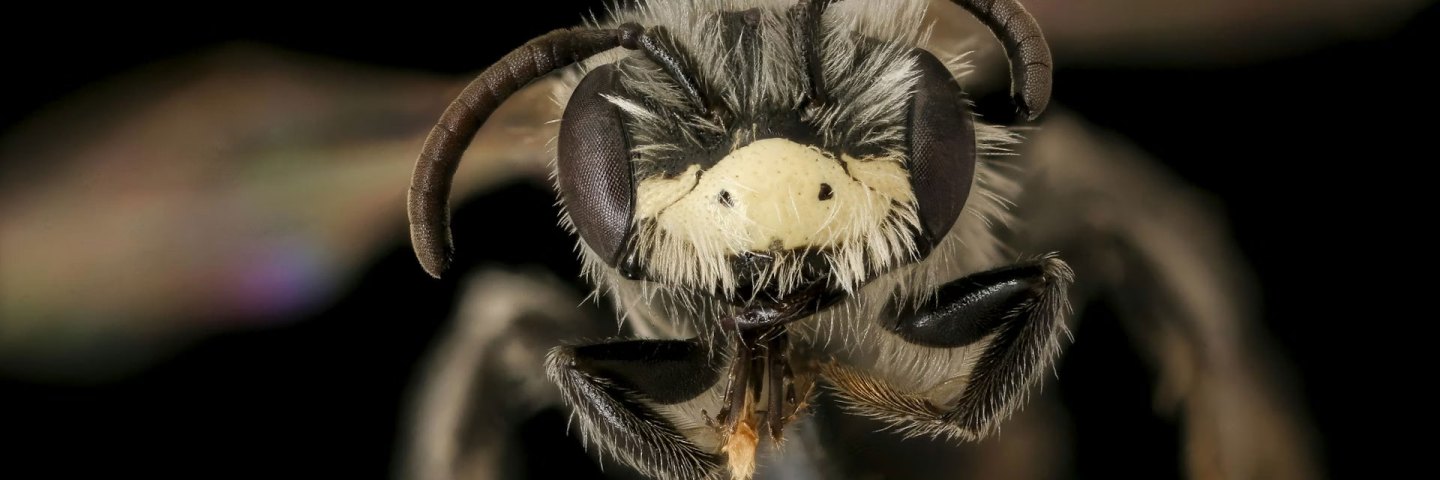
    East Lawn Cemetery in Ithaca, New York, is “home” to dozens of people who’ve been laid to rest. However, it is not just the home of departed humans. It is also the underground burrow housing over five million bees.

    While there have been records of bees emerging from the grounds of East Lawn Cemetery since 1935, it wasn’t until 2023 that a study of its scale was measured. In April of that year, a team at Cornell University began fieldwork by setting up 10 emergence traps made of tents over the bees’ nest. These traps collected insects in a plastic jar with a 70% ethanol solution. 

    @itsospooky

    There Are 5.6 Million Bees Living Beneath This Cemetery Beneath a quiet cemetery in New York, scientists discovered millions of bees living underground, building tunnels, pollinating, and surviving completely unnoticed for decades. While everything above changes, generations come and go, this hidden world continues without interruption, a reminder that life moves forward with or without us. #NatureMystery #DidYouKnow #HiddenWorld #ScienceFacts #creatorsearchinsights

    ♬ Sorrowful – Perfect, so dystopian

    By analyzing the number of bees caught in these traps, along with other data, they calculated that as many as 5.56 million bees live in the cemetery’s ground. To put it in perspective, the typical honeybee hive contains around 30,000 bees.

    “I was completely floored when we did the calculations,” Cornell University entomologist Bryan Danforth told Scientific American. “I have seen published estimates of bee aggregations in the hundreds of thousands. But I never really imagined that it would be 5.56 million bees.”

    Many might be puzzled about bees living underground rather than in a typical hanging hive. In actuality, though, the majority of bees live underground. The miner bees (Andrena regularis) found in the cemetery actually live solitary lives within burrows. They nest there during the winter months and emerge in the spring to pollinate, mate, and dig burrows for their larvae. For New Yorkers who enjoy apples and blueberries, these bees are responsible for helping them bloom and grow in the spring.

    “This species overwinters as adults, which is relatively rare, and that’s part of the reason why they come up out of the ground so early in spring, timed to the apple bloom,” said study author Steven T. Hoge.

    What are bees doing living at a cemetery?

    But why is the cemetery a popular living space for these bees?

    “The peacefulness, the lack of pesticides, and the fact that, overall, the ground is rarely disturbed, all make cemeteries good habitat for bees,” Danforth told Science Alert.

    Given the huge population, the Cornell University researchers state that the cemetery is actually very important for the area’s ecosystem. Should the cemetery grounds be disturbed or altered, it could impact the vegetation and crops in the surrounding areas. In fact, there are some cemeteries partnering up with beekeepers and other bee conservationists.

    Keeping the bees (and the dead) in peace

    Danforth and his colleagues have encouraged a global community science project to help the bees. The purpose is to study, protect, and conserve these ground-dwelling bees and their habitats.

    “These populations are huge, and they need protection,” Danforth said. “If we don’t preserve nest sites, and someone paves over them, we could lose in an instant 5.5 million bees that are important pollinators.”

    If you notice a bee coming out of the ground, leave it be and spread the word. It could be helping restock your grocery store or farmers market with quality produce.

  • City animals act in the same brazen ways around the world
    Photo credit: Saeed Khan/AFP via Getty Images A monkey swipes a soda in Thailand.
    ,

    City animals act in the same brazen ways around the world

    Why squirrels, monkeys and ibises get bolder in cities.

    The urban monkeys in New Delhi are so bold they’ll steal the lunch right off your plate. If you’ve spent time in New York, you’ve probably seen squirrels try to do the same. Sydney’s white ibises got the nickname “bin chickens” for stealing trash and sandwiches.

    This brazen behavior isn’t normal for most species in the countryside, yet it shows up in urban wildlife, and not just in these cities.

    Studies show that animals living in urban environments around the world exhibit common sets of behaviors. At the same time, these urban animals are losing traits they would need in the wild. This process of urban animals’ behavior becoming more similar is known as “behavioral homogenization,” and it accompanies the loss of species diversity with urbanization.

    A man reads his newspaper in New York's Central Park as a squirrel rifles through his bag on the bench beside him.
    Squirrels in New York’s Central Park have no qualms about rifling through your belongings and stealing your food. Keystone/Getty Images

    We study animals in urban settings to understand how humans can help wildlife thrive in an urbanizing world. In a new study, we explore the causes and the long-term consequences of these behavior changes for urban wildlife.

    What makes animals in cities similar?

    Cities, despite their local differences, share many of the same features worldwide: They are warmer than the surrounding countryside, noisy, polluted by light and, most importantly, dominated by people.

    New York’s squirrelsNew Delhi’s monkeysgulls in coastal cities of the U.K. and other urban wildlife have learned that people are a source of food. And because people typically don’t harm the animals, city-dwelling animals learn not to fear people.

    Cities drive evolution as well. Humans and the changes we’ve brought to cities have led to the survival of bolder animals, and those bolder animals pass on their traits to future generations. In genetics, scientists refer to this as the environment “selecting” for those traits.

    It’s not just sandwich-stealing that is more common among city wildlife; urban birds also sound more alike.

    Why? Cities are loud and filled with traffic noise, so those who can effectively communicate in that environment are more likely to survive and pass on those traits.

    For example, urban birds may sing louder, start singing earlier in the morning or at higher frequencies to avoid getting drowned out by low-frequency traffic noise.

    Cities select for smart individuals and species because that’s what it takes to survive.

    Animals may behave similarly in cities because they learn from each other how to exploit novel human food sources. For instance, the cockatoos in Sydney have learned to open trash bins. In Toronto, the raccoons are in a race to outwit humans as urban wildlife managers try to design animal-proof trash bins.

    The buildings and bridges in cities become home to batsbirds, and other urban dwellers, at the cost of learning to use more natural nesting sites. Roads and culverts modify how and where animals move.

    While rural animals may forage at a variety of places and eat a variety of foods, urban animals may concentrate on garbage bins or rubbish dumps where they know they can find food, but they end up eating a potentially unhealthy diet.

    Consequences of similar behaviors

    The loss of behavioral diversity is happening everywhere that humans increase their footprint on nature. This is worrisome on several levels.

    At the population level, behavioral variation may reflect genetic variation. Genetic variation gives species the ability to respond to future environmental change. For example, for animals that have evolved to breed at a specific time of the year, urban heat islands can select for earlier breeding.

    Reducing genetic variation leaves populations less able to respond to future changes. In that sense, having genetic variation resembles a diversified investment portfolio: Spreading risk across a variety of stocks and bonds lowers the risk that a single shock will wipe out everything.

    A large white bird with a black head and curved black beak picks through a trash bin along a waterfront area.
    An ibis picks through a trash bin in Sydney. Greg Wood/AFP via Getty Images

    Moreover, as animals become tamer, new conflicts between animals and humans may emerge. For instance, there may be more car crashes, animal bites, property damage and zoonotic disease transmission. Such conflicts cost money and may harm both the animals and humans.

    Losing behavioral diversity is also troubling for conservation.

    When a species loses behavioral diversity, it loses resilience against future environmental change in the wild, making reintroducing urban animals to the wild harder.

    Losing behavioral diversity also risks erasing socially learned, population-specific behaviors, such as local migration routes, foraging techniques, tool-use traditions or vocal dialects.

    For example, Australia’s regent honeyeater populations have been shrinking and are critically endangered. The isolation of having fewer of their own species around has disrupted normal song-learning behavior, making it harder for male birds to sing attractive songs that help them find mates and breed successfully.

    Ultimately, behavioral homogenization is making wildlife in cities such as Los Angeles, Lima, Lagos and Lahore behave in similar ways despite living in different environments and having different evolutionary histories.

    Many of these behaviors influence survival and reproduction, so understanding this form of diversity loss is important for successful wildlife conservation, as well as future urban planning.

    This article originally appeared on The Conversation. You can read it here.

Explore More Science Stories

Science

City animals act in the same brazen ways around the world

Science

20 enormously funny photos of animals in the wild

Science

Veterinary scientists develop a daily pill that’s giving senior dog owners hope

Science

How dolphins communicate – new discoveries from a long‑term study in Sarasota, Florida