Noise equals life, according to a recent study by researchers at the Division of Natural Sounds and Night Skies—an actual government program devoted to protecting, maintaining, and restoring soundscapes and night sky environments throughout the National Park System.
After recording 1.5 million hours of sounds—both natural and man-made—from around the United States, the resulting acoustical data was fed into an algorithm that discerned patterns and trends related to the level of noise in various locales across the country.
Out of that work came two “sound maps” of the contiguous United States, revealing America’s noisiest and quietest places. The first represents America’s soundscape essentially as-is (including noise from machines like aircraft or vehicles); the second strips man-made noise from the equation (focusing more on rushing water, rustling leaves, moving animals, etc.).
It turns out that either way, the eastern United States makes the most noise. And that’s likely because, throughout the ages, people have tended to set up camp near noisy natural resources like water, plants, and animals. The Grand Canyon may be gorgeous—but most of it is an uninhabitable desert (though not all).
The influence of silence on the human heart and mind has long been explored by philosophers and theologians (“Silence is the sleep that nourishes wisdom”—Francis Bacon). We can trace this back to the womb, where the human attraction to sound begins. A baby’s heartbeat synchronizes with its mother’s, and its developing ears instinctively listen and react to the mother’s heartbeats, breaths and voice. Many premature babies are born with underdeveloped hearing capabilities that can result in language challenges down the road. One experimental treatment method—a type of sound therapy in which preemies listen to recordings of their mothers’ voices and heartbeats—appears to boost infant brain growth.
Noise is so crucial to our safety that the National Highway Traffic Safety Administration (NHTSA) has proposed minimum sound requirements for hybrid and electric cars. Our ears have become accustomed to the sound of the common car’s internal combustion engine, making these next-generation vehicles too quiet. We’re less likely to hear them coming, which is dangerous for pedestrians and drivers alike. In response, the NHTSA has created sound samples based on the internal combustion engine that car manufacturers can use as guidelines for developing artificial automotive soundtracks.
The quietest place on Earth has had its sound artificially removed. Silence in this lab located in Minnesota is so absolute that background noise must be measured in negative decibels. Visitors have had trouble walking and even standing in the room, because human beings use sound to orient themselves in space. The negative sound actually amplifies the noises created by the human body; listening to every stomach gurgle, heartbeat, and knee creak has been said to drive visitors temporarily mad, generating hallucinations and other disturbing bodily phenomena. Only one reporter has managed to last 45 minutes in the room; most last a few minutes, and one violinist left after mere seconds.
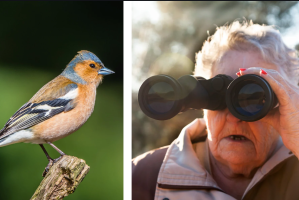
Though silence perturbs us, noise—which when officially defined is simply a sound that’s unwanted or disturbing in some way—is detrimental to the natural world. Noise can have cascading effects on entire ecosystems. Too much noise means hunting birds can’t hear the rustling of mice. Birds in urban areas can’t hear each other over the cacophony of the daytime city streets; they’ve taken to calling to each other at night. New underwater sonic booms used by the military can disorient or even kill whales. According to The Guardian, “A single ping of the new low-frequency technology can affect animals across 3.8 million square kilometres of water, roughly the size of the Pacific Ocean.”
And too much noise isn’t exactly great for us either. A few of the documented ill effects on humans: hearing impairment, hypertension, ischemic heart disease, sleep disturbance, tinnitus, and vasoconstriction. Some scientists have proposed that too much noise can lead to birth defects and changes in the immune system.
That could be a problem, since there aren’t many places in the world that are utterly devoid of noise. According to the BBC, an acoustic ecologist named Gordon Hempton was able to record noise from at least one or two aircraft every hour, even when 1,200 miles from the nearest city—smack in the middle of the Amazon rainforest, in fact.
Frustrated by his failure to find absolute silence (not even in Antarctica), Hempton established the United States’s only 100 percent natural noise-free zone. Located in Olympic National Park (at 47° 51.959N, 123° 52.221W, if you want to get precise about it), the protected area is a mere one square inch of land on top of a moss-covered log. The hope, according to the project’s website, is that “protecting [it] from noise pollution will benefit large areas of the park.”
A few rare individuals may be particularly drawn to such a quiet square inch—those with the neuropsychiatric disorder misophonia, in which common sounds can trigger a sometimes violent rage. But as far as the rest of humanity is concerned, most of us are so drawn to sound that we can actually name a favorite.
The Telegraph recently conducted a survey that resulted in a list of Great Britain’s top 50 sounds, most of them the kind included the National Park Service’s second map: sounds made by water, animals, and plants. Ocean waves crashing on the shore. Rain falling against the window. Leaves cracking beneath footsteps. Wind rustling leaves. An owl hooting. Bees buzzing. Thunder.
But many of those favorite sounds were generated in some way by people. Laughter. Applause. A fizzy drink being poured over ice. Popcorn popping. Bacon sizzling. Church bells. Fairground music.
Music, in fact, is one type of sound that has been proven to make us happy. Also sad, excited, thrilled, grief-stricken, and every other human emotion. When we listen to a favorite piece of music, dopamine floods our brains. And many scientists who study our evolutionary past see a strong connection between music and language.
Perhaps we’re drawn to music not because it’s a human invention, but because it comes naturally to us. Writer and musician David Rothenberg has proposed that we learned about rhythm, music, and synchronization from insect sounds. If we respond so powerfully to music, and if it can be considered the perfect hybrid of natural and man-made sound, maybe music is evidence that silence isn’t so golden, after all.
Illustration by Brian Hurst