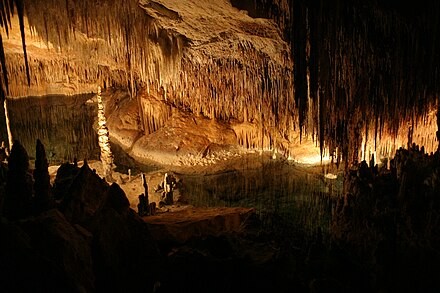
Imagine standing at the entrance of a dark, mysterious cave, its passages twisting deep underground. While the thought of sliding into the unknown might spook most, for thrill-seekers, it’s just another day of exploration. The @ActionAdventureTwins, a duo of cave explorers on YouTube, captured this eerie experience by dropping a GoPro into one of the deepest pits in the US. The video, now a viral hit, has left many viewers with chills.

The video, posted by James and Edward, the @ActionAdventureTwins, has racked up 362,000 views and nearly a thousand comments. It also features guests Nate and Ben, identical twins from Pennsylvania who run their own adventure channel, @DeepFreedom.

“We took a GoPro down into the deepest pit in the U.S, and are the first people to drop it down to the bottom of this cave,” the team claimed in the caption but it should be noted that the cave has been explored and mapped by several speleologists for decades before this team. The spot in question here is the Fantastic Pit in Ellison’s Cave, located in Walker County on Pigeon Mountain in the Appalachian Plateaus of Northwest Georgia. It is the deepest unobstructed underground pit in the country at 586 feet. Ellison’s Cave is 12 miles long and 1,063 feet deep, making it the 12th deepest cave in the United States.
GoPro drop, cave exploration, adventure twins, caving video, spelunking, YouTube explorer
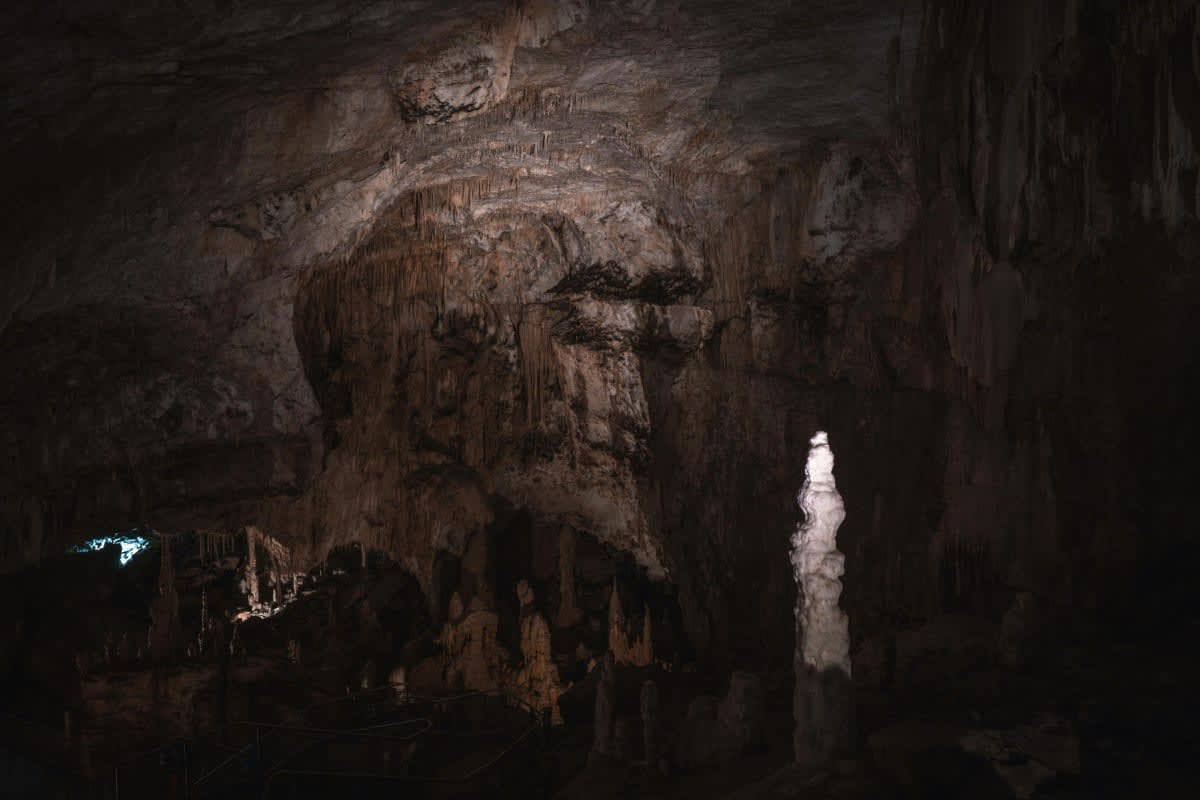
In the depths… Pexels | francesco ungaro

At the start of the footage, one of the twins explains, “We’re gonna rappel down like, 128 feet, and we’re gonna see the deepest cave in America, and we’re gonna drop a GoPro down it.” The duo stand at the rocky mouth of the pit, smeared with soil, tangled vines, thick bushes, and dried leaf mold.

The explorers drop the GoPro camera down the opening, sending it deep into the dark belly of the pit. The first drop is about 125 feet down. Then the GoPro is dropped down another pit with a depth of about 586 feet. The footage first depicts scenery of flying dust motes with the sounds of dripping water. The rope attached to the camera descends, cascading between the jagged rocky structures and craggy walls.
Pigeon Mountain, Georgia cave, deep descent, mysterious cave, viral video, underground footage
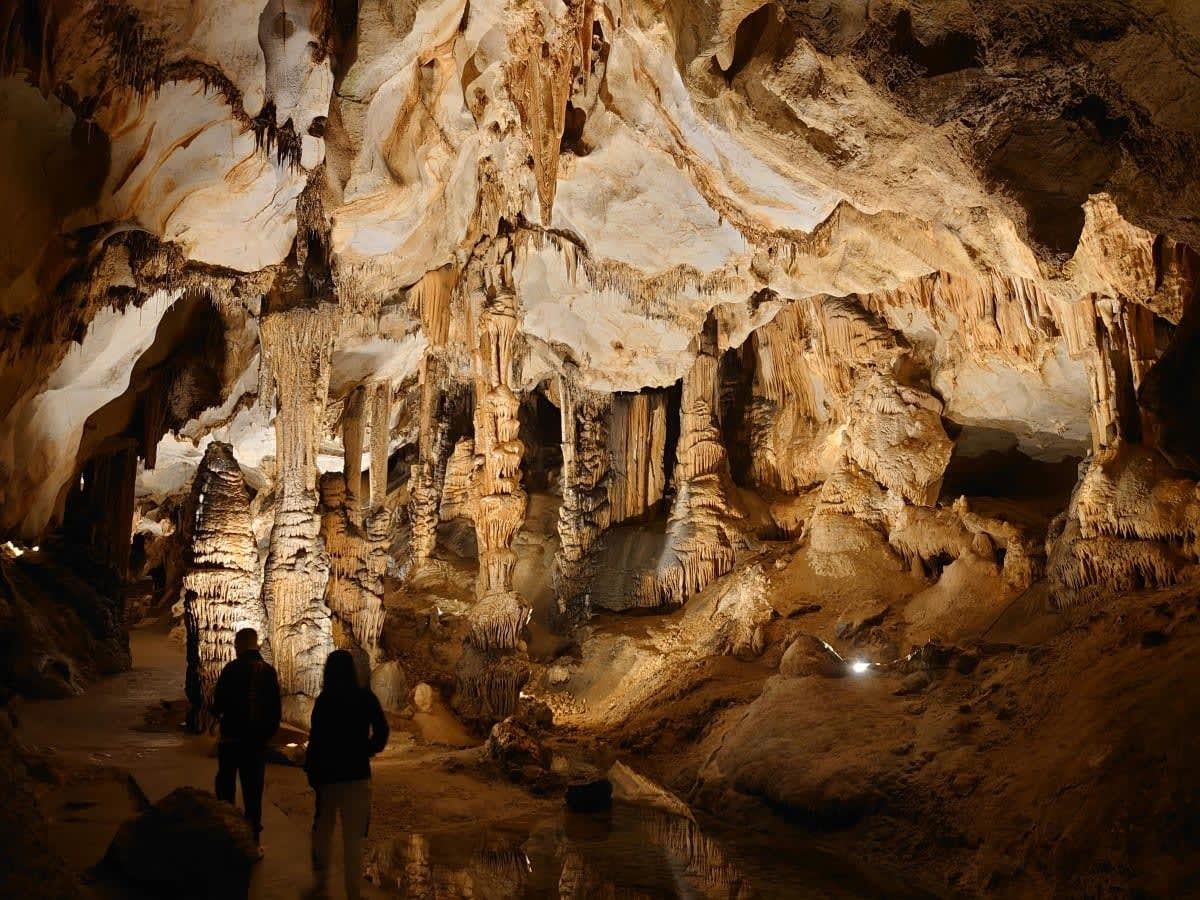
Hope the lights stay on. Pexels | parfait fongang

In a moment, the team sees a waterfall. “That’s cool,” they exclaim. As the camera goes deeper into the pit, the audio becomes muffled. The camera rotates in circular motion revealing the precipitous cave walls with monstrous accumulation of limestone formations and fractured gypsum rocks. The camera then flashes the bedrock of the cave mounded with stones and pebbles. At this time, the GoPro is 714 feet below the Earth’s surface.

https://youtube.com/watch?v=NJfOrznWmeA%3Fsi%3D2kmvvtQxNlwv-k9e

Finally, they pull the rope upwards from the black abyss. While pulling it back, they almost seem to lose the camera as it gets entangled in the axle of the drill. One of the twins says at the end of the footage, “I don’t know what this footage looks like but I am just surprised we got the GoPro back.”

Ellison's Cave, Fantastic Pit, deep cave, underground pit, GoPro drop

The footage of the shadowy chasm gave eerie vibes to several people. “I’m not going to lie, when it got to the bottom I was anxious for a second. I saw one of those white rocks and was like… omg is that a ghost,” commented @bombud1. @trilfiger448 added, “The muffled descending sound was terrifying! And the spinning…I was just waiting for something to jump-scare me.”

GoPro footage, twin explorers

@waya420 said, “Honestly surprised, the bottom wasn’t full of water. It must drain out somewhere even deeper. It would be fun to explore it with a drone if you could.”

limestone cave, Appalachian caves

The footage was also shared on Instagram where it has 371k views and over 10k likes.

If this wasn’t enough scary an experience, the pair of cavers twins descended the pit a second time in November 2023, this time going all the way down themselves. They spent 12 hours inside this cave, and narrated their experience in the caption, “We can’t believe we finally managed to drop down the pit after planning this for a long time. We will be back to this cave to see where it goes down there!”

https://youtube.com/watch?v=eULp72P0pNM%3Fsi%3DLIFr6wqz4ZCC44hd


This article originally appeared last year.
  • Solar-powered boat feasts on trash and could solve the ocean’s plastic waste problem
    Photo credit: Ocean Cleanup on YouTubeThe Interceptor boat-barge could significantly clean our waters.

    Our oceans have a plastic problem. While it’s difficult to put a 100% accurate number on it, scientists estimated about 4.8 to 12.7 million metric tons of plastic waste entered the ocean in 2010 alone according to the journal Science. This issue has caused scientists and engineers to create a boat-barge in Los Angeles that skims the oceans to gobble up the plastic we leave behind.

    Devised by the non-profit Ocean Cleanup organization, the garbage-gulping Interceptor boat-barge is actually a smaller platform nestled within a larger boat. A floating barrier moves collected trash into the device onto a conveyor belt. An automatic shuttle then collects the trash from the conveyor to send it to a separate barge where there are six dumpsters to hold it. The solar-powered system can hold up to 20,000 lbs. of garbage. The trash is then separated into different categories (plastics, metal, etc.) so they can be disposed of responsibly.

    Catching ocean trash from the source

    Ocean Cleanup hopes to make a dent cleaning the Great Pacific Garbage Patch in the Pacific Ocean. However, they decided to first attack the plastic ocean problem at its source: rivers. When it rains, a lot of trash from the hills and valleys washes down into the nearest river. While there is significant ocean trash taken from beaches, they have found that the lion’s share of garbage that floats into our oceans actually comes from rivers and tributaries that lead into it. Essentially, the plan is to get ocean trash before it even enters the ocean.

    “We have to turn the faucet off before we can scoop the ocean, or else all we’re doing is taking out legacy trash to replace it with new trash,” James Patterson, the operations manager of Ocean Cleanup said to The Guardian. “Before you can clean out the Great Pacific Garbage Patch, you really need to turn off the source.”

    How the Interceptor is helping Los Angeles and beyond

    There is an Interceptor already doing its work at the mouth of Ballona Creek in Culver City, California. Since 2025, the Interceptor has prevented 143,710 lbs. of trash from entering the ocean via the creek. As a bonus, the Interceptor’s trash sweeping has lowered government budgets for beach grooming. Since there is less trash, the beach doesn’t need to be cleaned as often.

    There are two more Interceptors planned to be at the mouths of the San Gabriel River and the Los Angeles River. This can help clean up the rivers for the upcoming 2028 Summer Olympics for aquatic events.

    There are currently 21 Interceptor systems throughout the globe. Countries using them include Indonesia, Vietnam, Jamaica, Guatemala, the Dominican Republic, and Malaysia.

    If this is an issue that speaks to you, you can help even if you don’t live near an ocean. There may be a nearby river or creek that could benefit from volunteer cleanups. Do some research to find an organization near you to volunteer. If you can’t locate one, groups like River Cleanup can help you organize your own group. Much like how a small drop contributes to a large ocean, a small pick-up can make a big difference.

  • As climate change causes flooding in London, experts found an effective, low-cost solution: beavers
    Photo credit: CanvaBeavers are solving several climate issues.

    West London’s Greenford Tube station had an ongoing problem. Due to climate change, the station would often flood during heavy rains. The rain would cause a nearby creek to overflow, flooding the ticket office and beyond. But in 2023, officials tried a natural method to help offset the flooding. All they had to do was bring back a vanished species to the area: beavers.

    A family of five beavers was released through the Ealing Beaver Project to act as “nature’s engineers” and help solve London’s flooding problem. Within weeks, the beavers built a dam in the creek, causing it to pool into a pond. Along with that, the beavers created new pathways and tributaries that further diverted water from the main creek. The small group of beavers not only built seven dams in their first year but also expanded biodiversity near populated areas.

    The combination of rerouting water and felling trees has brought new animals and species into the area. Some of the new additions inhabiting the creek are freshwater shrimp, two types of bats, a rare brownstreak butterfly species, and eight new species of birds. A whole new nature preserve is forming remarkably close to urban areas. In fact, the beavers are working just 100 meters behind a McDonald’s.

    What happened to the original beavers?

    The whole project is addressing the changing climate, but also undoing another man-made issue. The Eurasian beaver had been hunted to extinction in England and Wales more than 400 years ago. At the time, beavers were a valuable source of meat, fur for coats, and castoreum. Castoreum is a secretion from beavers that was used to enhance perfumes and flavor food. Had beavers still thrived, one could argue that the climate change-related flooding might not have occurred in the first place.

    The Ealing Beaver Project is one of several efforts to bring beavers back to the United Kingdom. One of the first attempts to repopulate beavers occurred in Scotland, where Norwegian beavers were introduced to Inverness-shire. Norwegian beavers were chosen because scientists determined they were the most genetically similar to the extinct U.K. beaver population.

    This beaver introduction hasn’t just solved a climate-related flooding problem, but it has also brought other benefits. Visitors and residents enjoy the newly biodiverse nature reserves by going on “beaver safaris” to see the creatures at work in person. Then there is the obvious benefit of the beavers solving these flooding problems effectively free of charge.

    Beavers are an international solution

    The U.K. isn’t the only place using beavers to address climate issues. Beavers were brought in to create dams and conserve river water during droughts in Utah. Similarly, beaver reintroduction into California’s streams and rivers was so beneficial that it was codified into state law.

    This shows that something as funny-looking as a swimming rodent with buck teeth and a paddle tail can make a huge difference in whether a place has enough natural water or too much. Humans just have to give a dam about them.

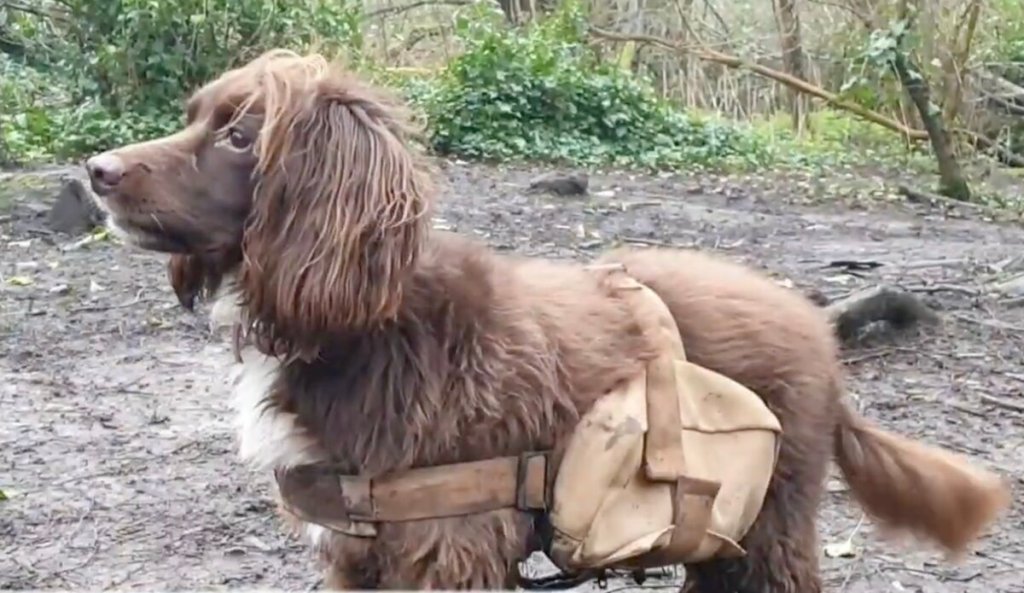
  • Wildlife reserves and gardens alike can be regrown thanks to dogs wearing backpacks with seeds
    Photo credit: Photo credt: @wilderlife8107 on YouTubeNative plants can be regrown thanks to dogs.

    Whether it’s a forest recovering from a wildfire or our own backyards, nature can use some help. Spreading seeds to ensure grass or wildflower growth can be a time-intensive process. However, there is one way that can be fun, quick, and help your dog get some exercise: strapping a backpack full of seeds onto them.

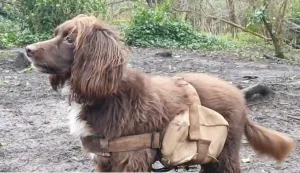
    The practice has been popularized internationally by sisters Francisca and Constanza Torres with their three dogs. Many forested areas of their native Chile were devastated by wildfires. The sisters came up with a plan to help reseed and regrow what had been burned down. The two would strap backpacks filled with grass and wildflowers seeds onto their border collies. The backpack had a small opening that would allow the seeds to fall out and spread as their dogs ran, jumped, and played throughout the area. 

    This helped the forests regrow while also providing the dogs exercise. The dogs were also able to walk into nooks and crannies human planters normally can’t access.

    An idea goes international

    The idea spread past countries and coastlines as a nature reserve in Lewes, East Sussex, England offered dog walkers backpacks with seeds. The walkers would strap the packs onto their furry friends as they went on nature walks to help rewild the area.

    “We’re really interested in rewilding processes, but they often involve reintroducing big herbivores like bison or wild horses,” said the project’s manager Dylan Walker to The Guardian in 2024. “In a smaller urban nature reserve it’s really hard to do those things. So, to replicate the effect that those animals have on the ecosystem we aimed to utilize the vast number of dog walkers that are visiting the nature reserve daily.”

    The concept itself was taken from nature. For centuries, wolves would have seeds caught in their fur. Over time, movement, and grooming, the seeds would be spread throughout other areas of the forest. The wolves acted as natural carriers for seeds much like bees are for pollen.

    Reseed your garden with Rover

    This technique doesn’t have to be reserved for wildfire recovery or regrowing public gardens. Your yard could benefit from it, too. While you could find a pack for your pup and fill it with seeds, there’s another way. Gardener Patrick Vernuccio suggests just filling a tea strainer with seeds and clipping it onto your dog’s collar. It should perform the same effect.

    If you have your dog help seed your yard, be sure that the plants you hope to grow are dog-friendly. Use non-toxic seeds for dogs such as roses, marigolds, and pansies among others. The ASPCA has a full list of plants that are unsafe for dogs to refer to when you’re unsure.

    Man’s best friend can also be man’s best gardening buddy.

Explore More Environment Stories

Environment

Solar-powered boat feasts on trash and could solve the ocean’s plastic waste problem

Environment

As climate change causes flooding in London, experts found an effective, low-cost solution: beavers

Environment

Wildlife reserves and gardens alike can be regrown thanks to dogs wearing backpacks with seeds

Environment

How the ‘fog harvesting’ women of Morocco are influencing how desert areas get drinking water