
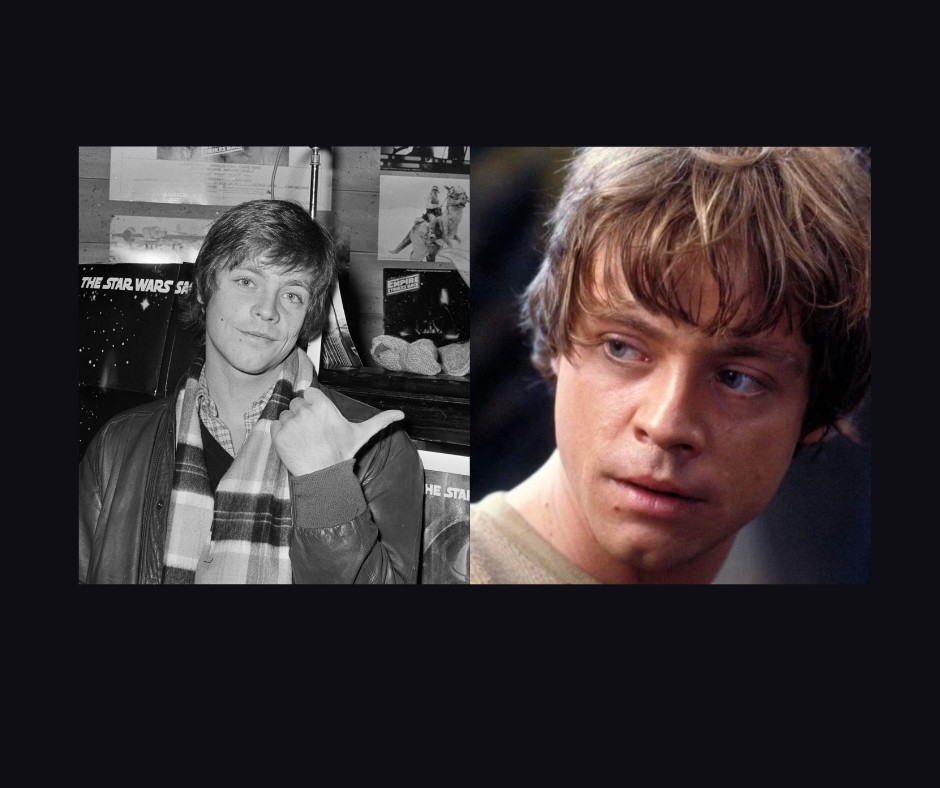
A debate among Star Wars fans has resurfaced online after a recent tweet from William Shatner, star of the original Star Trek TV series and films. It revolves around Mark Hamill, the actor who played Luke Skywalker in the storied sci-fi fantasy. In a 2016 interview, Hamill shared that he had a simple question that was asked of him by many fans: Is Luke Skywalker gay? Hamill gave an amazing response.
“Fans are writing and ask all these questions, ‘I’m bullied in school… I’m afraid to come out.’ They say to me, ‘Could Luke be gay?’ I’d say it is meant to be interpreted by the viewer. If you think Luke is gay, of course he is. You should not be ashamed of it. Judge Luke by his character, not by who he loves.”
Hamill’s reply was praised for its inclusivity and ability to let the character he had embodied for the majority of his adult life to be enjoyed by how anyone saw fit. However, in nearly equal measure, there was a toxic backlash by many fans who balked at the idea of Luke Skywalker being a homosexual. This was in part due to Hamill’s response being only partially quoted in major news and entertainment websites, as it was tapered off in headlines of publications like Vanity Fair and ScreenCrush that only highlighted the “Of course he is” portion of the quote. Regardless of true intention, it’s not uncommon for news sites, magazines, and other publications to omit portions of a quote to stir up controversy to attract additional readers.
What Shatner’s tweet actually said
This “Is Luke gay?” debate resurfaced when fellow sci-fi acting icon William Shatner tweeted out a misquoted headline and mistakenly confirmed Skywalker’s sexuality. Now, once again, this misquote has brought out toxic corners in the Star Wars fandom.
For those SWs fans who are trying to tell me Disney ruined everything: I assume you are referring to Mara Jade? Hamill actually ruined it for you when he revealed Luke was gay. ?? Mara, being struck from SWs Canon, was part of her annulment agreement from the Force. ? pic.twitter.com/lnQWpFRBN8— William Shatner (@WilliamShatner) February 13, 2025
This reactivated squabble among the fan community, but there are glimpses of nuance this time around.Star Wars Theory, one of the biggest Star Wars YouTubers, revisited Hamill’s original full quote to cut through the incitement and clickbait regarding Shatner’s tweet. He concludes by saying, “I don’t think he’s gay, nor do I think it matters.”
OutMagazine, a publication focused on LGBTQ+ issues, also looked at the quote fully in the recent past. The article points out that fans could interpret Luke as gay given Jedi take a vow not to have sexual or romantic partners, so having sexual interest with anyone isn’t in the cards for him. They also argue that Luke might even be asexual since the character showed no indication of any interest in men or women aside from a panicked kiss with his sister Leia.
How fans read Luke differently
This positive aspect of this ongoing debate highlights why Hamill’s response was so perfect. Straight men see themselves in Luke Skywalker. Gay men see themselves in Luke Skywalker. Women see themselves in Luke Skywalker. Non-binary people see themselves in Luke Skywalker. Children and grown people alike see themselves in Luke Skywalker. Everyone and anyone can see themselves in Luke Skywalker.
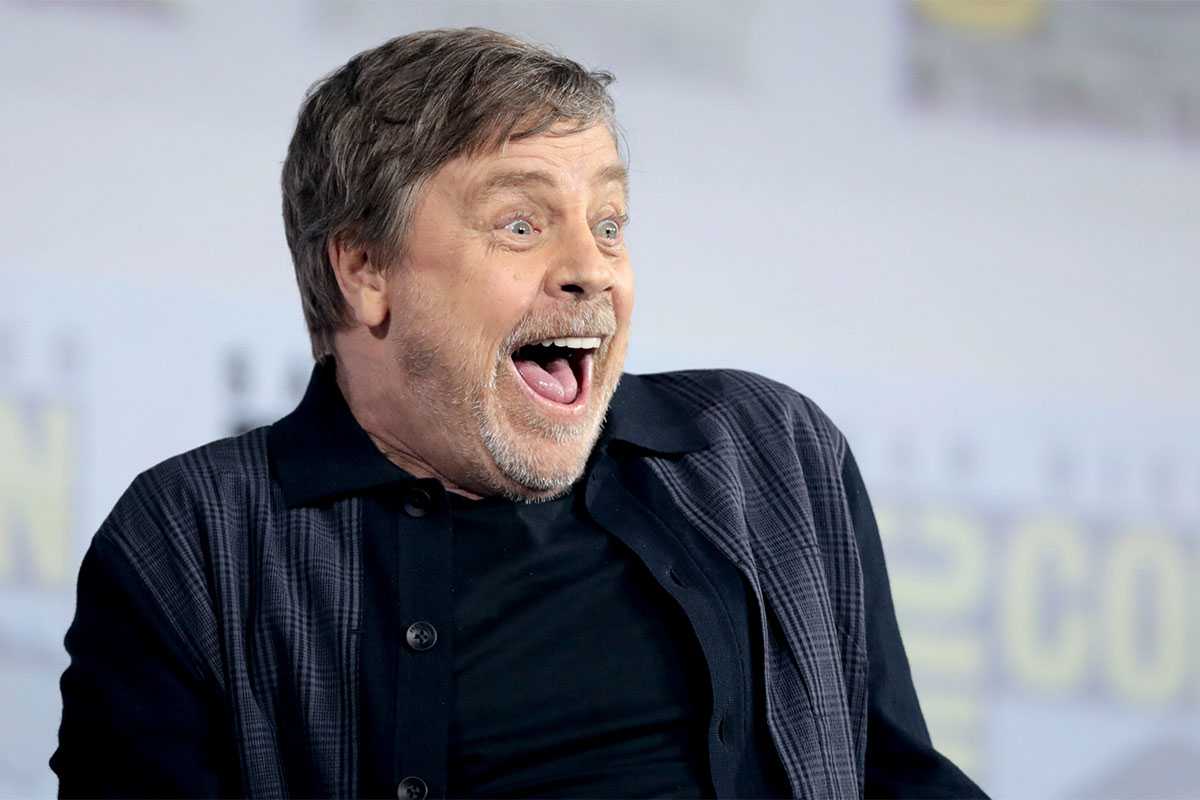
Mark Hamill speaking at the 2019 San Diego Comic Con. Gage Skidmore/Wikimedia Comments
Fandoms grow when many different people see themselves in the characters they love and their interpretations of them are a part of that fandom, whether other fans agree or not. It starts young when kids have their Luke Skywalker action figure fight a Teenage Mutant Ninja Turtle in a WWE toy ring with Batman as a referee even though any adult fan would say that wouldn’t happen. It then later evolves into fans writing fan fiction, shooting fan films, reimagining their favorite characters through artwork, and imagining crossovers of their favorite franchises. Sometimes those imagined fan crossovers become actualized.
The same can be said for performers and creators bringing themselves into a character, too. The late Kevin Conroy, a friend of Mark Hamill and frequent voice acting costar, took his experience as a prejudiced gay man into his portrayal of Batman, a character that has been mostly depicted as heterosexual. Conroy took the pain and two-sided nature of being a closeted man within a homophobic community to parallel it with Batman and Bruce Wayne.
Mark Hamill believes that characters can be whoever you want them to be. He doesn’t have ownership of them. Nor do you. Nor do I. In the end, they all belong to all of us.
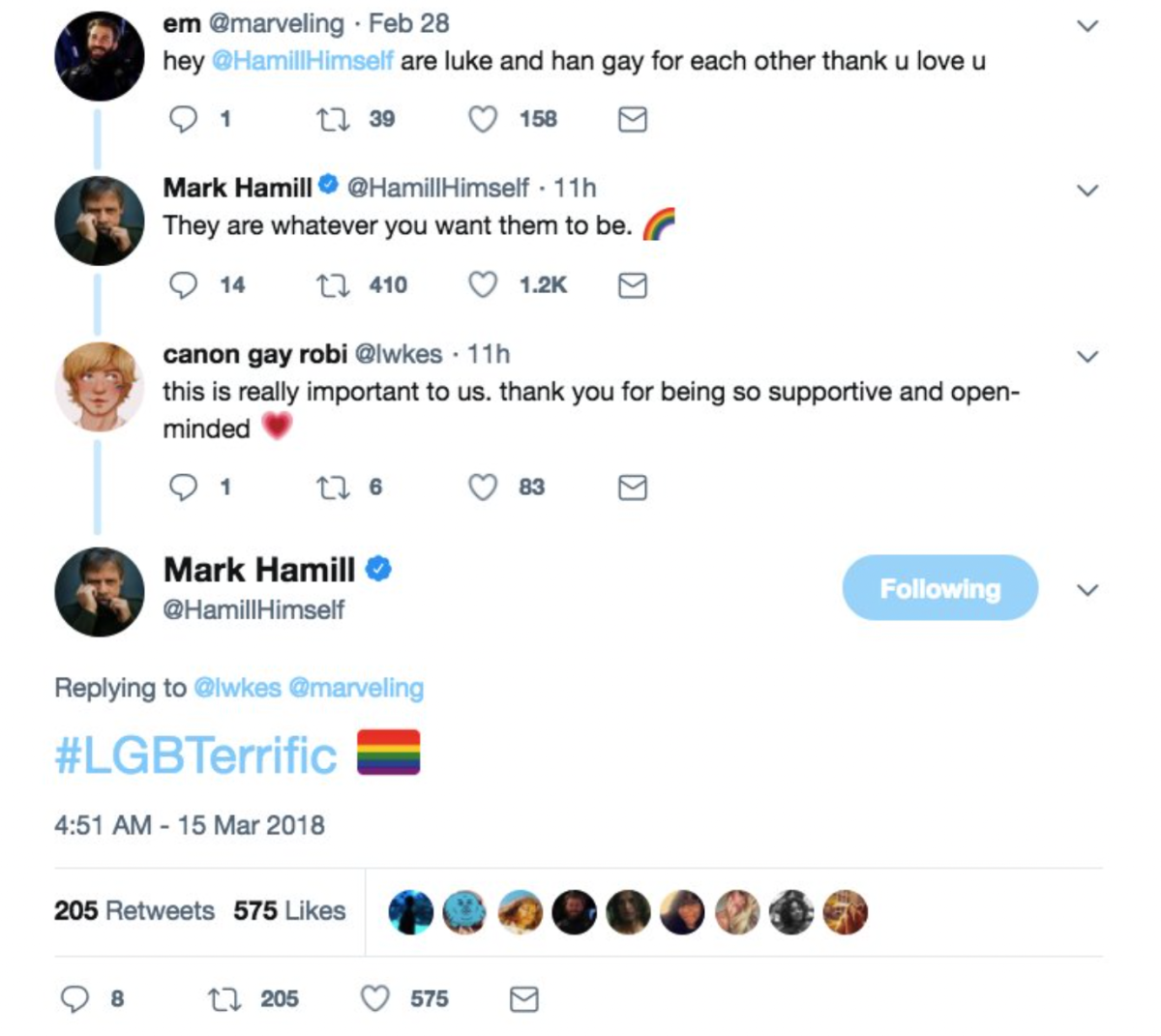
Mark Hamill sticks to the message. @HamillHimselfThis article originally appeared ealier this year.
Photo credit: Yasin Akgul/AFP via Getty Images – Children look at developed film in a darkroom during an analog photography workshop held in southeastern Turkey on June 14, 2026.
Film photography is experiencing a resurrection, summoned by unlikely conjurers: Gen Z.
It wasn’t too long ago that analog photography – which uses photographic film and chemical processing – was declaredall but dead, relegated to the province of niche hobbyists and professional artists.
Digital cameras had taken over nearly all areas of photographic production. Film industry titans like Polaroidand Kodak had shrunk dramatically from their heyday, becoming shells of their former selves. Darkrooms, where students learned how to manually develop and print film, shutteredat high schools and college campuses across the country, replaced by digital labs. For most people, the spirit of analog photography was mainly channeled through Instagram filters.
In 2025, 35% of the 42 million active film camera users worldwide were reported to be between the ages of 18 and 30. The year prior, online searches for analog photography saw a 41% rise.
Disposable camera sales have been steadily increasing since 2023. The photography journal PetaPixel went a step further and announced 2024 as “film’s best year in decades,” as major brands have introduced new cameras in response to renewed demand and revived classic models. More than 30% of respondents to a 2024 Ilford Photo survey on film photography were in the 25-34 age group.
As I’ve witnessed more and more of my undergraduate art and design students embrace analog photography, I’m not seeing this as a trend rooted in a nostalgic yearning for the past. Instead, I’m seeing it as young people rejecting algorithms, breaking free from the alienation of social media and reacting to childhoods spent on Zoom and TikTok – a deliberate move to redefine the future of art, social connection and engagement with the world.
Pining for a ‘third place’
In my work as a historian of photography and lecturer at the University of Southern California, I’ll often ask my students about how they take photos – whether they’re using digital cameras their smartphones or analog devices.
This year, for the first time, some of my students discussed images they’d printed and the physical photography albums they’d put together of their friends and family. They talked about how they’d also been sending postcards, writing letters and tacking photographs to their bedroom walls.
New York Knicks forward OG Anunoby snaps a photo with a disposable film camera during the team’s victory rally on June 18, 2026, after winning the NBA Finals. Craig T. Fruchtman/Getty Images
This was a rhetorical move by social media companies, likely designed to help people feel as though they were in a familiar terrain of social connection. Yet the underlying business model of these platforms depended more on maximizing engagement and advertising revenue than on nurturing authentic relationships.
Everyone knows what happened next: The more connected young people became online, the more isolated and detached they started to feel. The COVID-19 lockdown pushed social life online even further, and researchers are only now starting to see how the combination of increased screen time and isolation negatively affected adolescents’ mental health. By 2023, 51% of American teenagers reported they spend at least four hours a day on social media.
I see the attraction of analog photography as a response to life lived through screens, a pathway toward community engagement and the desire for what sociologists call “a third place.”
Coined by sociologist Ray Oldenburg in his 1989 book “The Great Good Place,” third places are meant as a space separate from home and work. They offer a reprieve for the in-between, generating the conditions needed for creative cross-pollination. They might include a local cafe, a neighborhood writing group, a weekly Magic: The Gathering game or a college fraternity – any space that allows for social interaction and personal growth.
These spaces also combat loneliness. They get people out of their heads and into a community. Oldenburg also referred to them as “havens of sociability,” places or gatherings where people can arrive alone to join others, and the atmosphere is “democratic and festive.”
Analog communities IRL
In April 2026, the inaugural AnalogCon took place in Los Angeles. Organized by the Los Angeles Center of Photography, where I serve as executive director and chief curator, it was a festival for all things analog photography. It didn’t just serve as a third place for photography enthusiasts; it also showed how analog photography – as a practice, ritual and community – is flourishing.
Vendors, industry leaders, artists and teachers participated in the two-day event, which included exhibitions, panels, demonstrations and guided photography tours around Little Tokyo. The excitement and thirst for similar events was palpable.
Photography now joins a broader trend of a generational preoccupation with physical cultural objects and media. Although music streaming represents 82% of revenues generated in the music industry, vinyl records sales have been rising for over a decade, crossing the US$1 billion threshold in the U.S. in 2025.
But beyond that, record stores and video rental shops have become third places in their own right. There’s a big difference between selecting a film to stream from your bed and getting out of the house, going to a store and talking about movies with a clerk and fellow film enthusiasts.
Think about the sound a tape cassette makes when you open and close it, or the vibrant graphics on the covers of DVDs or VHS tapes. Think about rewinding or making a mixtape for your recent crush. These are objects of belonging that signal specific cultural moments, rituals and aesthetics, and many young people today are starting to experience them for the first time.
Now, think about gently inserting a roll of film into a camera. Think about choosing an angle carefully when snapping a photo, because the number of frames is limited and you want to make them count. Think about the thrill of discovery when the pictures finally emerge as objects on paper.
To me, these are more than fleeting trends. They signal a push against a digital culture that is designed to cultivate envy and reward outrage, insults and humiliation.
Instead, armed with rolls of film, more and more Gen Zers appear to be opting out of their algorithmic feeds in favor of experiencing life in ways that feel more deliberate, personal and tangible.
Photo credit: Heather Diehl/Getty Images – A stretch of Route 66 in Albuquerque, N.M., pictured on June 7, 2026. Towns and cities located along the highway are gearing up to celebrate the iconic road’s centennial.
Working in concert, the American Association of State Highway Officials and the Bureau of Public Roads adopted a uniform highway numbering system and corresponding map on November 11, 1926. The numbering system and map replaced the confusing patchwork of highways and trails, like the Lincoln Highway or the Old Trails Road, with an official network of numbered highways sanctioned by federal and state highway authorities.
Since then, a small group of these highways have attained the status of cultural icon. There’s Route 1, which snakes all the way from Maine to Florida. Route 101 is celebrated for its majestic views of the Pacific Ocean, while Route 6 was immortalized in “On the Road,” Jack Kerouac’s classic novel.
The most famous, though, is arguably Route 66, nicknamed the “Main Street of America” and the “Mother Road.”
Yet as the towns that dot the highway prepare to celebrate its centennial, I’ve found myself wondering what it is, exactly, that’s being celebrated.
As a historian of Route 66, I’ve written about how there are really two versions of this 2,448-mile (3,940-kilometer) stretch of pavement.
There’s the actual highway, which reflected the 20th-century expansion of the nation’s infrastructure. Then there’s the mythic highway – a cultural icon imbued with nostalgia for a specific, 20th-century idea of romance, adventure, freedom and the American West.
There was almost no 66
As state highway commissioners in the 1920s wrangled over the specifics of the nation’s new highway system, they prized highway numbers that ended in zero, since they indicated a cross-country route. The thinking went that these routes would get the most traffic and, with it, the most business.
Oklahoma State Highway Commissioner Cyrus Avery had been a big booster for a Chicago-to-Los Angeles road in order to juice highway traffic through the Midwest. He suggested calling it Route 60, claiming a coveted cross-country number.
But commissioners from Kentucky and Virginia objected, noting that Avery’s proposed road didn’t go from coast to coast. As an alternative, they suggested 62. Avery countered with a number that he thought had a better ring to it: 66.
With the numbering controversy settled, the map of America’s first highway system was approved. But another 12 years would pass before Route 66 was fully built out, making it the first U.S. highway to be paved end to end.
In this detail of the official highway system map adopted in 1926, Route 66 winds through New Mexico and Arizona before ending in Southern California. United States Geological Survey/Wikimedia Commons
Adventure, redemption and reinvention
While it took over a decade for the full, physical stretch of road to be completed, the making of the Route 66 myth began almost immediately.
Construction of the road had barely begun when Avery, John T. Woodruff and other prominent civic leaders along the highway’s path convened in January 1927 to form the U.S. Highway 66 Association to promote travel along the route.
The association began advertising Route 66 as the best West Coast travel route and even trademarked a slogan for the road, “The Main Street of America.” The association also sponsored spectacles like the Trans-American Footrace to help publicize Route 66.
The race, which started on March 4, 1928, in Los Angeles, received widespread media coverage. Reporters breathtakingly described the epic struggles of the racers, coupled with vivid descriptions of the Southwest landscape. The effect was a marriage of Route 66 to ideas of adventure and romance in America’s collective subconscious.
During the Great Depression and Dust Bowl years, thousands of migrants from the Great Plains and Midwest traveled west along Route 66, hoping to rebuild their lives in California.
Author John Steinbeck dubbed Route 66 the “Mother Road” in “The Grapes of Wrath,” likening it to an umbilical cord that delivered Oakie refugees fleeing the Dust Bowl in the Oklahoma Panhandle to a new life in California. Working for the New Deal-era Farm Security Administration, photographer Dorothea Lange documented the same Oakies fictionalized by Steinbeck. Her 1938 photograph “Family on the Road” captured a husband, wife and their two young children hitchhiking on Route 66 near Weatherford, Oklahoma, after losing their farm.
For families devastated by the Great Depression and the Dust Bowl, Route 66 served as a conduit for redemption and reinvention, inspiring author John Steinbeck to call it ‘The Mother Road.’ Bettmann/Getty Images
Together, Steinbeck and Lange helped imbue Route 66 with new layers of meaning tied to loss and redemption. Then, after World War II, Route 66 came to mythologize the postwar boom.
Bobby Troup’s 1946 song “(Get Your Kicks) on Route 66,” first recorded by the Nat King Cole Trio, cast the road as a postwar rite of passage. Millions of Americans went on to take family vacations to the American Southwest via Route 66, staying at roadside mom-and-pop motels, grabbing burgers at neon-lit diners and posing beside oversized roadside landmarks.
Myth versus reality
But the iconic imagery and myths of Route 66 are often at odds with the reality of the road.
I’ve come to see Troup’s song as encapsulating the tension between these two versions of Route 66.
In 1946, when Nat King Cole recorded “(Get Your Kicks on) Route 66,” Cole and his band were unable to get their own “kicks” on Route 66. That’s because few businesses located along Route 66 were willing to serve them. Jim Crow-era copies of the Green Book – a directory of businesses that would accommodate Black road trippers – show just how few options there were.
‘(Get Your Kicks on)’ Route 66’ helped immortalize the highway in American culture. Al Drago/Getty Images
It would take passage of the Civil Rights Act of 1964 – and subsequent enforcement efforts by the Justice Department – for the travel amenities and services along Route 66 to be equally available to all Americans, regardless of their race.
Yet by the time the highway’s motels, diners, auto repair shops and gas stations were open to all travelers, Route 66’s downturn had already begun.
In contrast to older mom-and-pop businesses, national corporate chain motels, restaurants and gas stations dominated the new interstate highway exits. Rather than risk exposing themselves to Justice Department Civil Rights scrutiny, they made it known that they welcomed all travelers, further enticing drivers away from older establishments.
Now, as Route 66 turns 100, there’s a gap between how the road is remembered by some and how it functioned for most. Free and easy travel on the road and “getting your kicks” were limited to white Americans. Much of Route 66’s iconography emerged from early highway association marketing efforts aimed at white Americans. Few African American or Latino travelers likely feel the same nostalgia.
Today, a lot of Route 66 nostalgia has a “back to the 1950s” vibe that celebrates pre-Civil Rights America as a purer, simpler, more authentic era. This faux-authentic America better reflects the place some Americans today wish they could live in – a less complicated, less diverse land of adventure, romance and opportunity, rather than the nuanced, complicated America they actually inhabit today.
Oversized neon signs, like at this Route 66 motel, enticed weary drivers to stop and stay, but these establishments were not available to all travelers. Al Drago/Getty Images
Everyone has a favorite sandwich, often prepared to an exacting degree of specification: Turkey or ham? Grilled or toasted? Mayo or mustard? White or whole wheat?
We reached out to five food historians and asked them to tell the story of a sandwich of their choosing. The responses included staples like peanut butter and jelly, as well as regional fare like New England’s chow mein sandwich.
Together, they show how the sandwiches we eat (or used to eat) do more than fill us up during our lunch breaks. In their stories are themes of immigration and globalization, of class and gender, and of resourcefulness and creativity.
A taste of home for working women
Megan Elias, Boston University
The tuna salad sandwich originated from an impulse to conserve, only to become a symbol of excess.
In the 19th century – before the era of supermarkets and cheap groceries – most Americans avoided wasting food. Scraps of chicken, ham or fish from supper would be mixed with mayonnaise and served on lettuce for lunch. Leftovers of celery, pickles and olives – served as supper “relishes” – would also be folded into the mix.
Join 1,724 readers who give monthly to fund research-based journalism
I’ll pitch in
The versions of these salads that incorporated fish tended to use salmon, white fish or trout. Most Americans didn’t cook (or even know of) tuna.
Around the end of the 19th century, middle-class women began to spend more time in public, patronizing department stores, lectures and museums. Since social conventions kept these women out of the saloons where men ate, lunch restaurants opened up to cater to this new clientele. They offered women exactly the kind of foods they had served each other at home: salads. While salads made at home often were composed of leftovers, those at lunch restaurants were made from scratch. Fish and shellfish salads were typical fare.
When further social and economic changes brought women into the public as office and department store workers, they found fish salads waiting for them at the affordable lunch counters patronized by busy urban workers. Unlike the ladies’ lunch, the office lunch hour had time limits. So lunch counters came up with the idea of offering the salads between two pieces of bread, which sped up table turnover and encouraged patrons to get lunch to go.
When canned tuna was introduced in the early 20th century, lunch counters and home cooks could skip the step of cooking a fish and go straight to the salad. But there was downside: The immense popularity of canned tuna led to the growth of a global industry that has severely depleted stocks and led to the unintended slaughter of millions of dolphins. A clever way to use dinner scraps has become a global crisis of conscience and capitalism.
I like mine on toasted rye.
East meets West in Fall River, Massachusetts
Imogene Lim, Vancouver Island University
“Gonna get a big dish of beef chow mein,” Warren Zevon sings in his 1978 hit “Werewolves of London,” a nod to the popular Chinese stir-fried noodle dish.
During that same decade, Alika and the Happy Samoans, the house band for a Chinese restaurant in Fall River, Massachusetts, also paid tribute to chow mein with a song titled “Chow Mein Sandwich.”
Chow mein in a sandwich? Is that a real thing?
I was first introduced to the chow mein sandwich while completing my doctorate at Brown University. Even as the child of a Chinatown restaurateur from Vancouver, I viewed the sandwich as something of a mystery. It led to a post-doctoral fellowship and a paper about Chinese entrepreneurship in New England.
The chow mein sandwich is the quintessential “East meets West” food, and it’s largely associated with New England’s Chinese restaurants – specifically, those of Fall River, a city crowded with textile mills near the Rhode Island border.
The sandwich became popular in the 1920s because it was filling and cheap: Workers munched on them in factory canteens, while their kids ate them for lunch in the parish schools, especially on meatless Fridays. It would go on to be available at some “five and dime” lunch counters, like Kresge’s and Woolworth – and even at Nathan’s in Coney Island.
It’s exactly what it sounds like: a sandwich filled with chow mein (deep-fried, flat noodles, topped with a ladle of brown gravy, onions, celery and bean sprouts). If you want to make your own authentic sandwich at home, I recommend using Hoo Mee Chow Mein Mix, which is still made in Fall River. It can be served in a bun (à la sloppy joe) or between sliced white bread, much like a hot turkey sandwich with gravy. The classic meal includes the sandwich, french fries and orange soda.
For those who grew up in the Fall River area, the chow mein sandwich is a reminder of home. Just ask famous chef (and Fall River native) Emeril Lagasse, who came up with his own “Fall River chow mein” recipe.
And at one time, Fall River expats living in Los Angeles would hold a “Fall River Day.”
On the menu? Chow mein sandwiches, of course.
A snack for the elites
Paul Freedman, Yale University
Unlike many American food trends of the 1890s, such as the Waldorf salad and chafing dishes, the club sandwich has endured, immune to obsolescence.
The sandwich originated in the country’s stuffy gentlemen’s clubs, which are known – to this day – for a conservatism that includes loyalty to outdated cuisine. (The Wilmington Club in Delaware continues to serve terrapin, while the Philadelphia Club’s specialties include veal and ham pie.) So the club sandwich’s spread to the rest of the population, along with its lasting popularity, is a testament to its inventiveness and appeal.
A two-layer affair, the club sandwich calls for three pieces of toasted bread spread with mayonnaise and filled with chicken or turkey, bacon, lettuce and tomato. Usually the sandwich is cut into two triangles and held together with a toothpick stuck in each half.
Some believe it should be eaten with a fork and knife, and its blend of elegance and blandness make the club sandwich a permanent feature of country and city club cuisine.
The club sandwich: A perfect blend of elegance and blandness. Alena Haurylik
As far back as 1889, there are references to a Union Club sandwich of turkey or ham on toast. The Saratoga Club-House offered a club sandwich on its menu beginning in 1894.
Interestingly, until the 1920s, sandwiches were identified with ladies’ lunch places that served “dainty” food. The first club sandwich recipe comes from an 1899 book of “salads, sandwiches and chafing-dish dainties,” and its most famous proponent was Wallis Simpson, the American woman whom Edward VIII abdicated the throne of Great Britain to marry.
Nonetheless, an 1889 article from the New York Sun entitled “An Appetizing Sandwich: A Dainty Treat That Has Made a New York Chef Popular” describes the Union Club sandwich as appropriate for a post-theater supper, or something light to be eaten before a nightcap. This was one type of sandwich that men could indulge in, the article seemed to be saying – as long as it wasn’t eaten for lunch.
New York City’s Union Club served an early version of the club sandwich that was a hit. Gryffindor, CC BY-SA
‘The combination is delicious and original’
Ken Albala, University of the Pacific
While the peanut butter and jelly sandwich eventually became a staple of elementary school cafeterias, it actually has upper-crust origins.
In the late-19th century, at elegant ladies’ luncheons, a popular snack was small, crustless tea sandwiches with butter and cucumber, cold cuts or cheese. Around this time, health food advocates like John Harvey Kellogg started promoting peanut products as a replacement for animal-based foods (butter included). So for a vegetarian option at these luncheons, peanut butter simply replaced regular butter.
One of the earliest known recipes that suggested including jelly with peanut butter appeared in a 1901 issue of the Boston Cooking School Magazine.
“For variety,” author Julia Davis Chandler wrote, “some day try making little sandwiches, or bread fingers, of three very thin layers of bread and two of filling, one of peanut paste, whatever brand you prefer, and currant or crabapple jelly for the other. The combination is delicious, and so far as I know original.”
The sandwich moved from garden parties to lunchboxes in the 1920s, when peanut butter started to be mass produced with hydrogenated vegetable oil and sugar. Marketers of the Skippy brand targeted children as a potential new audience, and thus the association with school lunches was forged.
The classic version of the sandwich is made with soft, sliced white bread, creamy or chunky peanut butter and jelly. Outside of the United States, the peanut butter and jelly sandwich is rare – much of the world views the combination as repulsive.
Andrew P. Haley, University of Southern Mississippi
The Scotch woodcock is probably not Scottish. It’s arguably not even a sandwich. A favorite of Oxford students and members of Parliament until the mid-20th century, the dish is generally prepared by layering anchovy paste and eggs on toast.
Like its cheesier cousin, the Welsh rabbit (better known as rarebit), its name is fanciful. Perhaps there was something about the name, if not the ingredients, that sparked the imagination of Miss Frances Lusk of Jackson, Mississippi.
Inspired to add a little British sophistication to her entertaining, she crafted her own version of the Scotch woodcock for a 1911 United Daughters of the Confederacy fundraising cookbook. Miss Lusk’s woodcock sandwich mixed strained tomatoes and melted cheese, added raw eggs, and slathered the paste between layers of bread (or biscuits).
As food historian Bee Wilson argues in her history of the sandwich, American sandwiches distinguished themselves from their British counterparts by the scale of their ambition. Imitating the rising skylines of American cities, many were towering affairs that celebrated abundance.
But those sandwiches were the sandwiches of urban lunchrooms and, later, diners. In the homes of southern clubwomen, the sandwich was a way to marry British sophistication to American creativity.
For example, the United Daughters of the Confederacy cookbook included “sweetbread sandwiches,” made by heating canned offal (animal trimmings) and slathering the mashed mixture between two pieces of toast. There’s also a “green pepper sandwich,” crafted from “very thin” slices of bread and “very thin” slices of green pepper.
Such creative combinations weren’t limited to the elites of Mississippi’s capital city. In the plantation homes of the Mississippi Delta, members of the Coahoma Woman’s Club served sandwiches of English walnuts, black walnuts and stuffed olives ground into a colorful paste. They also assembled “Friendship Sandwiches” from grated cucumbers, onions, celery and green peppers mixed with cottage cheese and mayonnaise. Meanwhile, the industrial elite of Laurel, Mississippi, served mashed bacon and eggs sandwiches and creamed sardine sandwiches.
Not all of these amalgamations were capped by a slice of bread, so purists might balk at calling them sandwiches. But these ladies did – and they proudly tied up their original creations with ribbons.