Every year on the first Monday in May, the Met Gala captures both imaginations and the news cycle. Celebrities of all stripes take to the Metropolitan Museum of Art for their annual fundraising fête benefitting The Costume Institute while showcasing opulent ensembles that embody each year’s theme.

This year’s theme, “Superfine: Tailoring Black Style,” was based on a book of the same name by scholar Monica L. Miller, which focused on “a cultural and historical examination of Black style over three hundred years through the concept of dandyism,” the Met shared. “Superfine” became “the first exhibition to focus on designers of color and only the second show dedicated to menswear,” The Hollywood Reporter wrote. And while the gorgeous styles on view as guests arrived were feats of fashion innovation, the best part was learning the stories behind them and the way they honored the legacy of Black style and design.

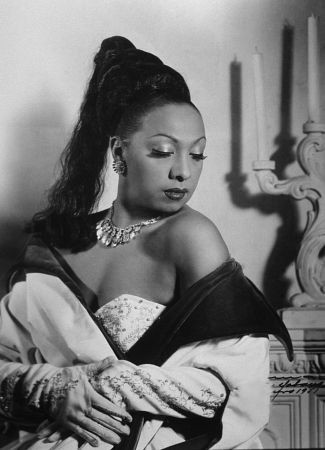
For example, several guests arrived embodying the style of legendary cabaret artist and performer Josephine Baker. The lauded performer became the toast of Paris from the time she arrived in the City of Lights from the United States in the 1920s, and was eventually so beloved she was known as “La Baker.” More importantly, though, she was an early 20th-century symbol of what Black women’s autonomy could look like, something she exercised not just as a civil rights activist but through the way she dressed, as CR Fashion Book writes.

Wearing an ensemble created by fashion designer Grace Wales Bonner, singer and actress FKA Twigs wore a bejeweled, 1920s-style gown with feather trim and feathered wrap that was explicitly inspired by Baker. As Twigs told Vogue, in Baker’s spirit, there was “space for glory and outrage, and that, I think, is what being a dandy is all about: Having the confidence to stand there and trigger and enlighten and confuse and amaze through style. There is no diamond that could have outshone the one inside Josephine’s chest.”

Rapper Megan Thee Stallion also wore a ponytail inspired by Baker, chronicled upon Baker’s appearance in Cuba in 1951; the rest of Megan’s look, by Michael Kors, was of a similarly 1950s glamour that Baker exuded.

Fashion historian Cassidy Zachary of the Dressed podcast also documented several looks of the night on her Instagram, sharing their relationship to fashion history, some of which are below.

Model Gigi Hadid appeared in a Miu Miu gown resembling one that Josephine Baker had worn, but the ensemble was actually a salute to the Black designer Zelda Wynn Valdes, according to Zachary. Valdes was “a designer beloved by sirens of the stage and screen. She was a true maestro of cut and fit with gowns that clung to the wearer’s curves like a second skin,” Zachary wrote. Hadid also discussed Valdes’s influence with Vogue Australia upon arriving, sharing that Valdes “grew up working in her uncle’s men’s tailoring shop, and really brought that to her own dressmaking shop in Washington Heights,” when she opened it in 1948. “She really took the art of tailoring that she learned and applied it to the female form.”

Actress Jodie Turner-Smith’s Burberry ensemble was inspired by a Black British equestrian named Selika Lazevski, “who lived during the Belle Époque in Paris and was photographed by Paul Nader in 1891,” as Burberry shared, according to Town & Country. Selika’s biography is much more of a mystery, however. As scholar Susanna Forrest wrote in The Paris Review, she had been looking for solid information about Lazevski for years, finding only semblances of facts. Among them, she writes, is that Lazevski “was a horsewoman who rode haute école [an “equestrian ballet”]—the most prestigious role for a female performer—at the fashionable Nouveau Cirque on the rue Saint-Honoré.” If this were true, she would have been “among the first women to undertake this most masculine and prestigious of equestrian sports as professionals,” Forrest continues. Turner-Smith embodying Lazevksi at the Met Gala gives Lazevksi an ongoing voice and presence.

Singer and actress Teyana Taylor worked with Oscar-winning costume designer Ruth E. Carter (Malcolm X, Black Panther, Amistad) to create an ensemble that incorporated several layers of Black fashion history, from the 19th century to the 1930s to the present. For starters, Taylor carried a whiskey stick, a walking stick often carried by 19th-century gentlemen that sometimes could be filled with a swig of liquor. Carter also created a zoot suit for Taylor, which was a suit reflective of Black and Latino culture in the 1930s and 1940s.

“With its super-sized shoulder pads, sprawling lapels and peg leg pants, the zoot suit grew out of the ‘drape’ suits popular in Harlem dance halls in the mid-1930s,”Smithsonian Magazine shared. “By the ’40s, the suits were worn by minority men in working-class neighborhoods throughout the country.” The zoot suit became a powerful example of street shaping the fashion industry instead of the other way around. That it did this as a style pushed forward by people of color at the time was even more groundbreaking. Carter and Taylor added a durag to the ensemble, bringing it further into the modern era. The look overall was a nod to Taylor’s Harlem roots.

Vogue writer Christian J. Allaire also brought history into his ensemble, which was a custom suit by Indigenous designer Justin Jacob Louis. Louis and Allaire were influenced by the book Black Indians by William Loren Katz, a history of “the Native American and African American alliance that for four centuries challenged the European conquest and slavery.” Allaire, who chronicled his own relationship to fashion as an Ojibwe writer in his book From the Rez to the Runway: Forging My Path in Fashion, wrote on Instagram that images in Black Indians of “Black-Ojibwe men wearing the most beautiful and slick suits, some adorned with beadwork” inspired his look, which was a “three-piece pinstriped suit [that] features Indigenous-style beadwork throughout.”

So while it’s exciting to see some of the brightest stars of the entertainment, design, and media worlds converge on what was this year a blue carpet, sometimes the most exciting part is what you don’t see. But that’s really the point–to honor the past in the present and tell a story, through fashion, about how we became who we are.


  • Students go for a world record with group drumming rendition of “Beggin”
    Photo credit: CanvaA music teacher plays drums with a student.

    Drum instructor Patrick Abdo doesn’t simply direct a children’s recital—he launches into a full-body celebration of music. In an Instagram post gaining widespread attention, he leads 10 children, ages 5 to 10, in a drumming rendition of the Måneskin song “Beggin’.”

    As the kids bang the drums in rhythmic unison and parents watch, beaming with pride, the room pulses with energy. But what makes the performance all the more magnetic isn’t simply the precision of the young drummers—it’s Abdo’s infectious excitement.

    Abdo guides kids to an impressive musical moment

    In the video, captioned “A record like no other!,” the 10 kids each have their own drum kit arranged in a circle around a large room. As the music starts, Abdo takes the lead, instructing the young musicians and wildly raising his arms to the rhythm. He keeps perfect time with his air drumming, and the kids follow.

    These young drummers do a fantastic job, fully committed and bringing the focus and skill needed to pull off such a high-octane song. Yet it’s nearly impossible not to have your attention drawn to the teacher. Abdo radiates an infectious belief in every child in the room.

    This type of wholehearted encouragement feels increasingly rare, and it’s wonderful to watch. As proud parents smile from the sidelines, he moves through the room, connecting with each student. With each burst of encouragement, the recital transforms into something special.

    There is little publicly available information about Abdo’s background. His breakout visibility appears tied to short-form drum lesson videos posted on his Instagram page. His profile lists Dubai as his location, and his bio reads, “My dream is to recreate School Of Rock MENA [Middle East North Africa] version.”

    The good-vibes energy inspires people

    The video quickly became impossible to scroll past. Views steadily increased, and so did the comments. The appreciation for both the synchronized performance and Abdo’s teaching style offers a moving example of mentoring at its best. As much as viewers loved the kids’ musical showcase, many seemed even more inspired by Abdo’s uplifting and engaging style:

    “They shut it down for real !!!The instructor deserves an applause”

    “I love the teacher !! So enthusiastic, motivating and you can tell he loves these kids!!!”

    “well done to that teacher and all the children — luv this”

    “This teacher has incredible enthusiasm which inspires all the kids to work so hard to get it!”

    “Wow, the instructor’s patience and passion for his work are truly admirable!”

    “This is called perfection.”

    “The teacher’s passion! The talented, focused kids!”

    Great teachers and mentorship matter

    There is simply no denying the value of great teachers and mentors. Everyone benefits from guidance and encouragement, especially young people. Research in 2025 found that mentored youth were 20% more likely to attend college, earn higher incomes, and exhibit better behavior. A 2023 trial conducted by Big Brothers Big Sisters of America found measurable improvements in social and emotional well-being.

    A 2022 study found that mentorship increased retention and promoted success. The benefits extend to mentors as well, offering opportunities to build enduring relationships that evolve and provide value over time.

    The music recital had the Internet buzzing over its great energy and the joy of watching kids go for it. Inspiring mentorship may be the real power behind Abdo’s musical instruction. Whether viewers remember a beloved teacher or recognize the one they wish they’d had, the right mentor can stay with a child long after the music stops.

  • A BBC crew broke ‘cardinal rule’ of nature documentaries to save trapped penguins
    Photo credit: CanvaPenguins jumping off a glacier into the water.
    ,

    A BBC crew broke ‘cardinal rule’ of nature documentaries to save trapped penguins

    Even the show’s narrator, David Attenborough, supported the controversial decision to step in.

    Nature documentaries operate on a single, golden rule: observe, record, but never interfere. The goal is to capture the raw, unscripted reality of the natural world, even when that reality is brutal. But during the filming of the BBC Earth series Dynasties, a situation arose that was so dire, the crew felt compelled to break that cardinal rule.

    The incident, which took place in November 2018, involved a colony of Emperor penguins in Antarctica. A massive storm had hit, dropping temperatures to minus 50 degrees Celsius (minus 76 degrees Fahrenheit) and trapping a large group of mothers and chicks in a steep, icy ravine.

    Separated from the safety of their rookery, the birds were helpless. The mothers, cradling their chicks, were unable to climb the slick, vertical slopes.

    Emperor penguins, BBC Earth, David Attenborough, Antarctica, nature documentary
    Penguins march across the ice. Photo credit: Canva

    The situation was desperate. Some chicks had already been abandoned and frozen to death in the gully, while predators circled the survivors. The emotional toll on the crew was immense. As one cameraman told Country Living, “I know it’s natural, but it’s bloody hard to watch.”

    Faced with the potential extinction of the entire group, the team made a controversial choice.

    “It was not a straightforward decision by any stretch of the imagination,” director Will Lawson explained in an interview with Lorraine. “You just have to look at the facts that are in front of you before you make a decision like that.”

    Once the storm broke, the crew decided to intervene, but they did so “passively.” They didn’t lift the birds; instead, they used their tools to dig a shallow ramp into the ice, creating a path the penguins could potentially use to escape on their own.

    “Once we’d dug that little ramp, which took very little time, we left it to the birds. We were elated when they decided to use it,” Lawson told Country Living, noting that there is simply no “rule book” for such extreme scenarios.

    The footage of the penguins waddling up the man-made ramp to safety became a defining moment for the series. Even Sir David Attenborough, a staunch defender of non-intervention, backed the move.

    “It’s very rare for the film crew to intervene. But they realize that they might be able to save at least some of these birds, simply by digging a few steps in the ice,” Attenborough said.

    Producer Mike Gunton agreed, framing it as a moral imperative rather than a documentary breach. “We have a rule that interfering is a very dangerous thing to do. But these penguins were going to die through a freak act of nature if nothing happened,” he said. “How would this conversation be going if you said you saw them there and did nothing? I think you have to do it.”

    The intervention was passive, but the result was profound. The colony survived, and the crew walked away with clear consciences. As Attenborough concluded, “To have done anything else would only make matters worse and distort the truth.” 

    This article originally appeared two years ago. It has been updated.

  • Therapist shares why Justin Bieber’s duet with 13-year-old self was so incredibly moving
    Photo credit: Wikimedia Commons & FlickrJustin Bieber performs onstage (left) and at a Nintendo store in 2009 (right).

    Taking the stage at Coachella, singer Justin Bieber gave fans something unique: singing along to a YouTube video of himself at just 13, he harmonized on songs like “Baby,” “Never Say Never,” “With You,” and others.

    Blake Roberts, a licensed therapist and self-proclaimed “dude,” shared his perspective on Bieber’s performance. While reactions to the appearance may be mixed, Roberts found it courageous.

    Therapist finds Bieber’s performance incredibly moving

    “From the perspective of a therapist and dude, I have to talk about this Justin Bieber-Coachella thing,” Roberts said in an Instagram Reel. “If you’ve ever done any amount of inner child work, you can appreciate what that moment was.”

    “That little boy was artistic and creative. Just doing his thing. Probably got made fun of a bunch, and then he gets thrown into this industry. And he loses parts of himself, and people probably take advantage of him,” he added.

    Roberts turned the performance into a learning experience, discussing a form of therapy known as inner child work:

    “Like we watched this man’s trauma, and yet he still shared a moment with us. Like a peek inside what it looks like to do inner child work. What looks like to look back at the younger versions of ourselves who have been rejected, who have been abused, who we ourselves have left behind. And to look at them with compassion and see them from the purity that they were.”

    Mixed reactions to Coachella performance

    Bieber’s performance relied heavily on nostalgia and early-career callbacks. A review in Entertainment Weekly described the set as “lacking some swag.” For much of the performance, Bieber sat at a desk onstage, scrolling through viral videos of himself.

    Despite negative feedback on his set, some fans appeared to be very appreciative of Bieber. One fan commented on Roberts’ Instagram post, saying, “I loved it so so much, aaaand now I’m crying again.”

    Regardless of whether people admire what the artist did, Roberts saw an opportunity to highlight recovery and the value of therapy. Bieber’s duet with his younger self could be seen as a meaningful act of openness and vulnerability. Roberts reflected, saying, “I thought it was pretty crazy. I could feel it.”

    Bieber’s challenges scrutinized by the public

    For those unfamiliar with Bieber’s personal life, he has faced some rough patches, as rumors have circulated about a struggling marriage and financial difficulties.

    The obstacles began to appear in 2017, when Bieber pulled out of a world tour due to mental exhaustion. In 2022, he posted on Instagram about the challenges of dealing with Ramsay Hunt syndrome. The illness occurs when the chickenpox virus reactivates later in life, causing facial weakness. Bieber said he was experiencing facial paralysis on his right side, which led him to cancel his tour again.

    There have also been allegations, including claims of drug use and questions about Bieber’s friendship with Sean “Diddy” Combs dating back to his youth. Clips have resurfaced showing Bieber as a teenager spending time with the music mogul. However, Bieber has not made any clear, on-the-record statements about that time.

Explore More Culture Stories

Music

Therapist shares why Justin Bieber’s duet with 13-year-old self was so incredibly moving

Culture

25 hilarious signs proving some messages just can’t be taken seriously

Design

Indie coffee shops are meant to counter corporate behemoths like Starbucks – so why do they all look the same?

Culture

It’s never too late to learn a language – adults and kids bring different strengths to the task