The Marsden Farm study, published just this October in the open access journal PLOS One, presents a potentially revolutionary new approach to farming that is surprisingly simple.

Using an approach called Integrated Pest Management (a blend of methods and tools from both organic and industrial farming) and increased diversity of crops in rotation, the 22-acre experiment at Marsden Farm in Iowa was able to demonstrate increased yields and decreased chemical usage with stable profits.

According to the study’s abstract:

“We hypothesized that cropping system diversification would promote ecosystem services that would supplement, and eventually displace, synthetic external inputs used to maintain crop productivity.”


To test their hypothesis, the team at Marsden Farm divided 22 acres into three plots and planted each with different rotations of crops.

The first plot followed a two year rotation of corn and soybeans, the typical rotation for the region. This plot also received conventional herbicide and pesticide application.

The second plot had a three year rotation with corn, soy and oats and the addition of red clover cover crops planted during the winter. The clover serves as a sort of “green manure” to maintain soil health. It is able to absorb nitrogen during the winter so that when it’s plowed over in the spring it serves as a nitrogen rich compost for the new crops.

On a third plot, the researchers substituted red alfalfa as a fourth year crop instead of the red clover and then used the products as animal feed. The animal manure was then added back to the soil before the next crop rotation.

Herbicides and pesticides were still used on the second and third plots, but not in the usual way that they are routinely applied over the whole field as a matter of course. Instead, they were applied only as necessary. Matt Liebman, lead researcher and Iowa State University agronomist, told Wired magazine, “We use low-dose products in the smallest quantities possible. We’re not against their use. What we’re arguing for is using them as carefully deployed tactical options.”

In fact, having different crops with different life cycles rotating on the land made it harder for weeds to grow and less chemicals were required as a result. The low pesticide use and added cover crops provided a habitat for pest-eating bugs and birds.

Over an eight year period, the plots with three and four year crop rotations used 8 times less herbicides than the conventional plot. The clover and alfalfa cover crops also meant 86 percent less synthetic fertilizer had to be used, and freshwater toxicity of the more diverse plots was two orders of magnitude lower than the conventional system.

Best of all, the experimental plots produced the same amount of biomass and were just as profitable as the conventional plot despite the need for increased labor to evaluate and apply herbicides judiciously. This is because the decrease in herbicide and pesticide use represented a significant savings.

So just imagine, less chemicals needed, more jobs created for rural communities, and consistently high food yields.

From the report:

“Results of our study indicate that more diverse cropping systems can use small amounts of synthetic agrichemical inputs as powerful tools with which to tune, rather than drive, agroecosystem performance, while meeting or exceeding the performance of less diverse systems.”

The potential reverberations from this study are incredible. More diverse crop rotations are more resilient in the face of climate stresses like this past year’s damaging drought. They also allow farmers to bring livestock back into the farming cycle rather than relegating livestock to CAFO’s (Concentrated Animal Feeding Operations) which generate large amounts of waste.

It is clear that the future of agriculture requires innovations like those discovered at Marsden Farm—ideas that incorporate the best of industrial and organic farming in fresh and novel ways to produce more resilient, scalable, hybrid methods of food production.

To feed the future, we will need to find more efficient, less fuel-intensive farming methods. With a growing population and food systems at near maximum operating capacity, we will need to devise inventives to ways to grow more food and waste less food on the consumer’s end. We must also learn to farm closer to market in order to reduce the amount of fuel used in transportation—known as food miles. We applaud these sorts of efforts which are core to our mission of creating a more Sustainable America.

Photo via (cc) Flickr user Martin Fisch

  • How to be grateful to someone – even when you really don’t want to
    Photo credit: Focus Pixel Art/Moment via Getty ImagesAt times, feeling personally grateful to someone can feel like a big ask – but there are other forms of gratitude.
    ,

    How to be grateful to someone – even when you really don’t want to

    A change in perspective can make gratitude easier.

    There are few greater feelings than the sense of heartfelt gratitude to another human being who has done you a solid. Sincere thanks and reciprocation are part of the glue that binds us in human relationships.

    But sometimes you’re just not feeling it. You know that you have benefited from what someone has done for you, but you don’t really feel grateful to them for doing it. Most teenagers go through this period with their parents. Maybe you take your partner or colleague for granted.

    For me, 14 years ago, it was my mother-in-law. She had upended her life to move from South Dakota to California to live with my wife and me to assist with childcare after our daughter was born; no other source of childcare fit with our demanding work schedules and my commute. She made a huge sacrifice that transformed our lives, but there were moments when I really struggled to feel grateful.

    Since that time, I’ve come to devote much of my research as a philosopher to studying how the way that we interpret each other as people shapes our relationships. That work has helped me to understand why I struggled to be grateful – and taught me a little bit about how to do better.

    Personal gratitude

    I’ve found that the hardest part of feeling grateful to someone is the “to” part. It is one thing to be impersonally grateful that something happened and another thing to be personally grateful to someone for doing it. These are not the same.

    Both forms of gratitude require seeing something as a benefit. And they both require a humble recognition of how easily things could have been otherwise. When the rain ends a drought, an atheist can feel grateful that the tomatoes will survive. But the atheist isn’t grateful “to” anyone for the rain.

    A line of around a dozen men wearing white sarongs stand in waist-high water, holding their hands up in prayer.
    Priests offer prayers to Varuna, the Hindu god of rain, as they stand in the Osman Sagar on the outskirts of Hyderabad, India, on July 16, 2013. AP Photo/Mahesh Kumar A

    Personal gratitude requires more than impersonal gratitude. It is an example of what the philosopher Peter Strawson calls a “participant” attitude: an attitude that we have toward people, but not toward things. And a large theme in my work is that participant attitudes such as gratitude involve giving someone credit for what the attitude responds to.

    But which benefits we give people credit for is complicated. As philosophers such as Tony Manela have argued, actions motivated primarily by money, self-interest or insecurity don’t merit personal gratitude, even when they benefit you. Actions motivated by love, generosity or concern, on the other hand – or other “pro-social” motives – do.

    Sometimes people fail to feel gratitude because they take someone for granted, not noticing how easily they could have done otherwise. This wasn’t my problem with my mother-in-law. It was obvious that she didn’t have to move across the country to live with us.

    But it was hard to avoid noticing that she had always wanted to live in California. Sometimes it is hard to feel grateful because of how we interpret someone’s motives. They could have done otherwise, but we don’t think their action was really “about us.”

    Bad motives are easy to find

    Sometimes ungenerous motives can help people to be generous. Your child’s kindergarten teacher isn’t a volunteer. They may be a naturally generous person – but still, they probably wouldn’t be working with your child on spelling, arithmetic and handling adversity if they weren’t getting a paycheck.

    It’s still appropriate to be grateful to them. Their financial incentive to show up for work enables their generosity, rather than competing with it.

    A row of young children sit on the floor, clapping, as they face a seated teacher in a striped yellow shirt.
    Your child’s teacher might be generous, but their job enables them to act on that generosity every day. svetikd/E+ via Getty Images

    Elementary school teachers are not alone. After all, people’s decisions are often driven by many factors: some that merit gratitude and others that don’t. So if you go looking for selfish motives, you are bound to find some.

    Take your partner, for example. They do something that benefits you: buying you flowers, filling your tank with gas or finally taking their turn to wash the dishes. They are partly motivated by generosity, love or communal spirit. But, as in any close relationship, sometimes they may be hoping to get something out of it: reciprocation, maybe, or getting you off their back.

    It matters which of these you interpret as their “true” motive: Seeing it one way opens you up to gratitude, while the other precludes it.

    What are ‘true’ motives?

    The distinction between someone’s “true” motive and the other motives that enable it looks like the distinction between causes and enabling conditions. For example, when you drop a wine glass, the fragility of the glass enables the drop to cause the break, but it isn’t itself a cause of the break – the drop is.

    In the case of the falling glass, there’s a clear, objective answer to what caused the break and what merely enabled it. But I believe that relating to people is deeply different than understanding physical things.

    The key question in whether to be grateful to someone isn’t about which motives count as “causes.” It is about which cause we need to bring into focus in order to see the other person more clearly for who they are.

    See it their way

    In other words, it’s at least partly a matter of perspective. If someone does you a favor, but you know they’re hoping for something in return, you can see that as their “true” motive. But you don’t have to see it that way. Instead, you could see that motive as the condition they need for their generosity to thrive.

    Shifting perspectives isn’t easy. When you’re doubting someone’s motives, their lack of generosity can feel obvious. But it helps to remember that people tend to believe they’re acting generously. If you want to respond with gratitude, try seeing them as they see themselves.

    What if that doesn’t work?

    Well, the next best thing to being grateful to someone is being grateful for them. Starting there is a good way to remind yourself of why you value this relations

    This article originally appeared on The Conversation. You can read it here.

  • America’s friendliest states
    Photo credit: New Africa // ShutterstockA young couple talking to a friendly elderly neighbor.
    ,

    America’s friendliest states

    Mountain West states lead the nation in community connection.

    The ways in which Americans connect vary widely by state. A range of factors contribute to a place’s overall character, but the time residents spend socializing, volunteering and helping people outside their own homes can shape how friendly it feels.

    SmartAsset analyzed the 50 states by the number of minutes per day residents spend on these three “friendly activities,” using time and action as measures of how communities connect. The results offer a behavioral snapshot of where residents spend the most time engaging with others in their communities.

    Key Findings

    • The Mountain West leads the rankings. Montana (No. 1), Utah (No. 2), and Wyoming (No. 3) took the top spots in the study, with residents of Montana averaging a nation-leading 95 minutes per day socializing, volunteering and helping others.
    • Mountaineers are the most likely to help others. Although West Virginia ranked No. 24 overall, its residents spent more time than any others providing unpaid help to people outside their own homes, about 30 minutes per day.
    • Rankings challenge some stereotypes. Despite its reputation for “Minnesota Nice,” Minnesota ranked No. 11, just outside the top 10. Washington, home to Seattle and its “Seattle Freeze” reputation, ranked No. 10.
    • Three Northeast states in the top 20. Although residents of Northeastern states are not always seen as especially warm by outsiders, three states in the region made the top 20: Rhode Island, Massachusetts and Maryland.
    Table listing the top 20 friendliest states in America.

    The 20 Friendliest States

    1. Montana
    • Average Minutes Spent Socializing (daily): 43.36
    • Average Minutes Spent Volunteering (daily): 35.62
    • Average Minutes Spent Helping Others (daily): 15.89
    1. Utah
    • Average Minutes Spent Socializing (daily): 38.24
    • Average Minutes Spent Volunteering (daily): 32.46
    • Average Minutes Spent Helping Others (daily): 20.95
    1. Wyoming
    • Average Minutes Spent Socializing (daily): 35.57
    • Average Minutes Spent Volunteering (daily): 40.49
    • Average Minutes Spent Helping Others (daily): 7.07
    1. Oregon
    • Average Minutes Spent Socializing (daily): 53.74
    • Average Minutes Spent Volunteering (daily): 14.85
    • Average Minutes Spent Helping Others (daily): 12.36
    1. Illinois
    • Average Minutes Spent Socializing (daily): 32.37
    • Average Minutes Spent Volunteering (daily): 14.12
    • Average Minutes Spent Helping Others (daily): 28.43
    1. Rhode Island
    • Average Minutes Spent Socializing (daily): 52.15
    • Average Minutes Spent Volunteering (daily): 5.33
    • Average Minutes Spent Helping Others (daily): 17.35
    1. Nebraska
    • Average Minutes Spent Socializing (daily): 39.3
    • Average Minutes Spent Volunteering (daily): 11.08
    • Average Minutes Spent Helping Others (daily): 24.06
    1. North Dakota
    • Average Minutes Spent Socializing (daily): 35.5
    • Average Minutes Spent Volunteering (daily): 24.61
    • Average Minutes Spent Helping Others (daily): 12.88
    1. Missouri
    • Average Minutes Spent Socializing (daily): 43.44
    • Average Minutes Spent Volunteering (daily): 16.05
    • Average Minutes Spent Helping Others (daily): 11.86
    1. Washington
    • Average Minutes Spent Socializing (daily): 30.59
    • Average Minutes Spent Volunteering (daily): 24.04
    • Average Minutes Spent Helping Others (daily): 14.92
    1. Minnesota
    • Average Minutes Spent Socializing (daily): 30.33
    • Average Minutes Spent Volunteering (daily): 11.75
    • Average Minutes Spent Helping Others (daily): 25.18
    1. Massachusetts
    • Average Minutes Spent Socializing (daily): 35.38
    • Average Minutes Spent Volunteering (daily): 9.63
    • Average Minutes Spent Helping Others (daily): 20.91
    1. Wisconsin
    • Average Minutes Spent Socializing (daily): 36.51
    • Average Minutes Spent Volunteering (daily): 8.46
    • Average Minutes Spent Helping Others (daily): 20.86
    1. Colorado
    • Average Minutes Spent Socializing (daily): 27.08
    • Average Minutes Spent Volunteering (daily): 16.82
    • Average Minutes Spent Helping Others (daily): 20.31
    1. Maryland
    • Average Minutes Spent Socializing (daily): 26.05
    • Average Minutes Spent Volunteering (daily): 25.72
    • Average Minutes Spent Helping Others (daily): 12.39
    1. Michigan
    • Average Minutes Spent Socializing (daily): 38.9
    • Average Minutes Spent Volunteering (daily): 11.21
    • Average Minutes Spent Helping Others (daily): 12.98
    1. Tennessee
    • Average Minutes Spent Socializing (daily): 33.82
    • Average Minutes Spent Volunteering (daily): 9.45
    • Average Minutes Spent Helping Others (daily): 19.53
    1. South Dakota
    • Average Minutes Spent Socializing (daily): 41.61
    • Average Minutes Spent Volunteering (daily): 0.21
    • Average Minutes Spent Helping Others (daily): 20.61
    1. Hawaii
    • Average Minutes Spent Socializing (daily): 26.3
    • Average Minutes Spent Volunteering (daily): 14.84
    • Average Minutes Spent Helping Others (daily): 20.98
    1. Virginia
    • Average Minutes Spent Socializing (daily): 38.96
    • Average Minutes Spent Volunteering (daily): 10.92
    • Average Minutes Spent Helping Others (daily): 11.97

    Methodology

    This study uses data from the U.S. Bureau of Labor Statistics’ American Time Use Survey, extracted from IPUMS, over the most recent available four-year period. For each state, SmartAsset calculated the average daily minutes residents spent socializing, volunteering, and helping people outside the household. Those three measures were then equally weighted and summed to produce a total time value used to rank the states. Source data providers are not affiliated with, and do not endorse or sponsor, this study or its findings.

    Citation: Sarah M. Flood, Liana C. Sayer, Daniel Backman and Annie Chen. American Time Use Survey Data Extract Builder: Version 3.3 dataset. College Park, MD: University of Maryland and Minneapolis, MN: IPUMS, 2025. https://doi.org/10.18128/D060.V3.3

    This story was produced by SmartAsset and reviewed and distributed by Stacker.

  • One man’s bad day led to a legacy of love from the ‘Kissing Tree’ for the whole Victoria community
    Photo credit: CanvaSneak a kiss while walking the sidewalk.

    There is a spot dedicated to love in Victoria, British Columbia. In it, a billowing tree grows from a woman’s yard into the sidewalk with an arch-like opening. For decades, couples have shared sweet moments under the shady green privacy of the “Kissing Tree.” Not only that, but children have been making wishes and new parents bring their babies to enjoy the quiet tranquility under the tree. Oddly enough, though, the creation of the Kissing Tree wouldn’t have happened if not for a violent riot.

    The story of Victoria’s Kissing Tree actually starts in New York City. In 1972, Bronx native Brian O’Reilly got his car stuck in the middle of a crowd waiting for a Rolling Stones concert. A riot broke out, forcing O’Reilly to protect himself with the only thing he had in his car: a tape recorder.

    “I wasn’t recording on purpose,” O’Reilly explained to CTV News. “I just had the microphone in my hand, and I had my arm up like this to defend myself and I was asking why he was hitting me.”

    Moving toward love

    O’Reilly was so upset at the encounter that he moved away from the United States to settle in British Columbia. That was where he met and befriended Bonnie. Over the years, the two became close. Then, Brian made his move.

    “He said, ‘I don’t want to date you. I want to marry you,’” Bonnie recalled to CTV News. “It felt amazing and wonderful because I had fallen in love with him.”

    They embraced under what is now known as the Kissing Tree.

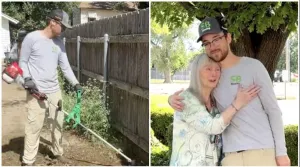
    That one bad day in New York turned into 38 years of marriage in Victoria. While Brian has passed away, Bonnie has kept the tree the two of them enjoyed kissing under ready and available to all.

    “If you can come here and have an ‘aha!’ moment, isn’t that wonderful? Wouldn’t you like to do that for everyone?” Bonnie said.

    tree, foliage, British Columbia
    Screenshot

    The legacy of the Kissing Tree

    Over the last few decades, the Kissing Tree’s branches have created a natural arch from Bonnie’s yard over the sidewalk. After seeing several couples make a stop to kiss under the privacy of nature, Bonnie hung some lights under the tree to create a more intimate, cozier space.

    Thanks to the O’Reillys, couples have gotten engaged under the tree. Many resident couples have spent years making it a point to kiss under the tree whenever they pass through. That love has extended to children whispering wishes to the tree’s trunk. Pet lovers and new parents also have a nice quiet place for their dogs and babies to enjoy the shade.

    Other ‘Kissing Trees’ in North America

    There are other legendary “Kissing Trees” throughout North America, labeled as such for different reasons. In San Marcos, Texas, a large oak was dubbed “The Kissing Tree” after Sam Houston kissed the cheeks of the women who stitched him the state flag as a gift when he was running for governor.

    The Kissing Trees/Love Trees of St. Augustine, Florida have a legend of their own. These trees are typically an oak and a palm tree that grow intertwined together, symbolizing connection. Legend has it that if you were to kiss under one of these trees, your love will last forever.

    Whether it is imprinting magic onto a landmark or not, it is great to see how something as simple as a tree can connect people across time.

Explore More Stories

Research

Scientists find that Japanese frog gut bacteria destroys cancer tumors in a single treatment

Film & TV

European Broadcasting Union offers guide to reduce sexualizing camera angles of Olympic women athletes

Culture

The summer concert state rankings: Which states pack more festivals, shows, and tours in 2026

Everyday Economics

The states with the highest rates of uninsured drivers and what it costs everyone else