With the dizzying stream of headlines detailing law enforcement slayings of black and brown citizens, most recently exemplified by the Department of Justice’s damning report on the Ferguson Police Department’s racist culture, it seems that the other end of the spectrum, white vigilante “justice” has faded into the background. Victims of civilians taking the law, and human lives, into their own hands—Jordan Davis, Renisha McBride, Trayvon Martin, and others—live on as reminders of how devastating both toxic fear and little gun control can be. Yes, our police on overdrive are symptomatic of a violent, gun-obsessed culture. Yet, as a black male, I have as much reason to fret over being shot dead just for walking on someone’s porch to ask for help, like Renisha McBride did, as I do getting the wrong cop on a routine traffic stop.


The common American delusion that a gun is the key to safety in an inherently unsafe world (despite all signs pointing to a decrease in violent crime), is not only fallacious; it’s dangerous. When NRA executive vice president Wayne LaPierre said the only way to stop a bad guy with a gun is a good guy with a gun (in response to the Sandy Hook shootings), one can’t help but consider who gets to determine who is good and who is bad in his scenario. Surely if urban blacks, or Arab Muslims for that matter, started clamoring for guns in the same manner as rural, white men, there’d be great outcry and antagonism in Gun Nation.

And yet, when an armed white man shoots a person of color dead, as Craig Stephen Hicks did in mid-February when he murdered neighbors Deah Barakat, his wife Yusor Mohammad Abu-Salha, and her sister Razan Mohammad Abu-Salha execution-style, the official narrative almost never questions the intersection of a weaponized culture and institutional racism. Hicks had 12 guns, and his views on religion, particularly on the Muslim faith that his victims observed, are well known by now. Nevertheless he was mainly cast as a “lone wolf” angry over a “parking dispute.” Having found ourselves on the wrong side of white fear and living to tell about it, be it as a victim of a hate crime or of the frequent micro-aggressions we must trudge through in our daily lives, those of us on the so-called margins know that the carefully honed narrative of a guy upset over a parking space, upset enough to take three young lives, is total bullshit.

Sadly, inaction on the gun problem affects us all. As has been demonstrated all too frequently across the country, the reality is that Americans of all races, colors, and creeds have a reasonable expectation of being touched, profoundly and permanently, by this inane type of violence. Not unlike with the subject of race, a “dialogue” opens every time someone walks into a presumably safe space and opens fire. Yet there is even more resistance from the gun crowd to an honest discussion on how out of control and dangerous our gun culture is than there often is to, say, one on white supremacy’s impact on black lives or hate crimes against Muslims.

Be it a rampage in a high school in Colorado, an Arizona congresswoman getting shot in the forehead during a speaking engagement, a small child accidentally killing himself with an Uzi while on a gun range, or the Sandy Hook nightmare, where 20 white schoolchildren, our most infallible symbol of American innocence, were cut down by a gunman’s Bushmaster assault rifle, there is seemingly no incident horrifying or bleak enough that warrants a true dialogue, let alone legislation, in the minds of Gun Nation. This is in no small part due to the python-like squeeze the NRA has on Congress. The same way the dialogue on race can be shut down by the need to maintain white dominance, the needed dialogue on gun control, something so obvious to a great many of us, is willfully silenced by one of the nation’s most powerful lobbying organizations.

Politicized in response to Lyndon B. Johnson’s gun control measures following the political assassinations of the 1960s, the NRA has consistently fed the beast that keeps ours a gun culture, reliant on fear of our own government and ultimately of each other for its very survival. And though the organization does not release official demographics of its membership, #NRASoWhite could easily be a hashtag on Twitter. The NRA and its ilk like to hoot and holler about American Exceptionalism. Yet, the intersection of white male persecution complex, the mentally ill falling through the crevasses in our healthcare system, and a false correlation between more guns and increased safety truly makes us exceptional in the regard that no other large, developed nation experiences as many homicides-by-gun as we do.

That “Stand Your Ground” laws exist and work to the advantage of white males who kill black people simply because they feel threatened, is a no-brainer. In my mind, there is no question who the “Your” in “Stand Your Ground” pertains to. Just like there’s no doubt as to who’s being described as “All People” in the Declaration Of Independence. The cis-hetero white male, whose life is set on the easiest difficulty setting, has protections to make an already rigged game even easier, at the expense, of course, of the rest of us.

When Wayne LaPierre repeatedly declared in the wake of Sandy Hook: “This has nothing to do with guns, it has everything to do with freedom,” he sure as shit doesn’t mean my freedom, and certainly not that of the slain children. And nice try, NRA, suggesting that American gun control laws are racist in origin, maybe it would be more convincing if your organization addressed the post-bellum measures that the NRA itself helped to implement to keep blacks from owning firearms. To the group branding the second amendment as “America’s First Freedom,” my vote for that title still goes to the First Amendment, but whatever.

Members of hate groups like the KKK, whose lynching campaigns were self-described as a Christian crusade, are easy for our society to write off as fanatics. We are less eager, however, to view those with stockpiles of ammo and guns as more than just lone actors, but rather, as members of a population that is scared of its own shadow. Those who live by the gun in America are not self-radicalized. They are radicalized by a system that empowers them, placing them and their lives above this country’s many “others.”

As much as gun culture relies on the fear of the unknown in the form of terrorist groups like ISIS, it also feeds on the fear of blacks as being superhuman, as Darren Wilson tried to argue in defense of his shooting of Mike Brown, and as white citizens in the Deep South tried to argue decades before in the form of the “negro cocaine fiend” hypothesis. In the so-called patriot’s pursuit of freedom and sovereignty and love of country, there is a gross deficit of love for those who do not fit the mold of their decrepit vision of what America should be. The gun being a symbol of freedom is not a new idea, but with a black president, white America’s fear of governmental tyranny (read: because President Obama “goes for the guns”) has led to a marked increase in gun and ammo sales. I don’t believe in coincidences. And while those who claim an almost divine right to gun ownership stump for the right to bear arms, many of us are still fighting for the right to exist in peace, living under the yoke of biased police and suspicious neighbors with their fingers hovering over the trigger, blinded by fear masquerading as righteousness.

  • ‘But you already helped me’: Elderly woman floored as landscaper reveals $625K GoFundMe in her name
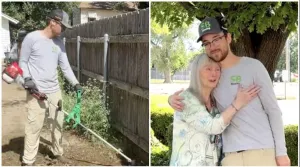
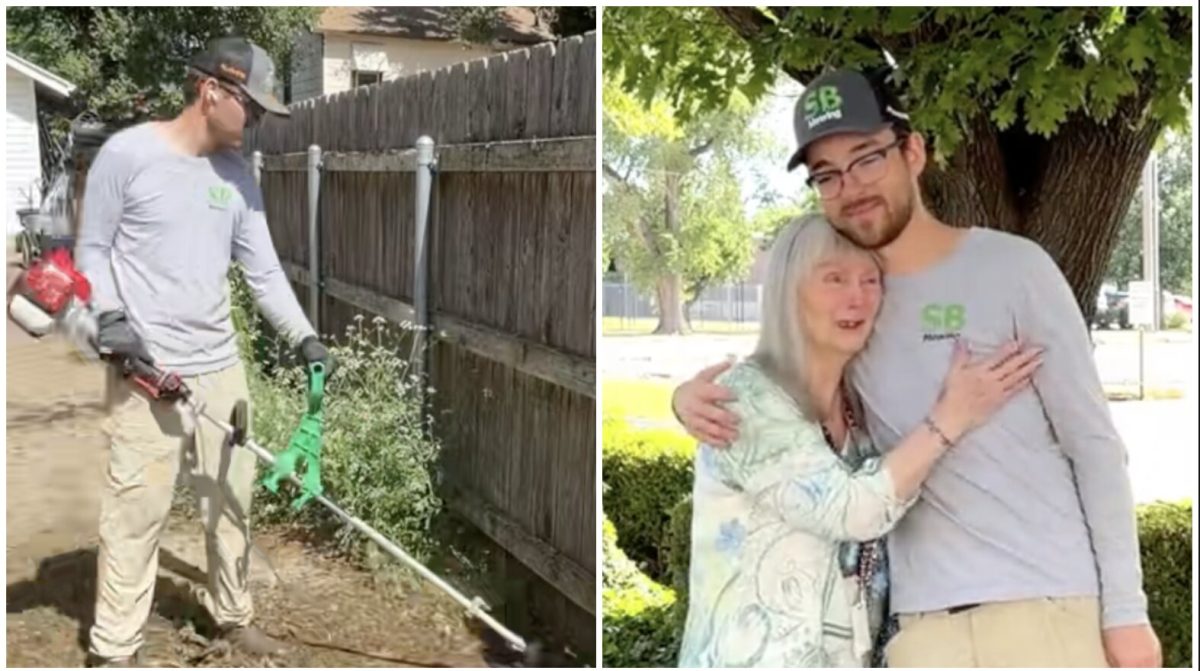
    Photo credit: Photo credt: SB Mowing – Spencer mowed her lawn for free and changed her life.

    An elderly woman in Wichita, Kansas who was experiencing hard times has now found hope in the kindness of others. It first started when a local landscaper decided to mow and clean up her overgrown lawn for free. Since then, she’s been given $625,000 in donations (and counting!) to help address her needs and raise her spirits.

    It all started with Spencer B. of SB Mowing, a lawn care and pressure washing company. Spencer (who wishes his last name be omitted) runs his business both as a mower and as a content creator. He often offers his services for free to the elderly and veterans who cannot afford the upkeep of their lawns.

    Spencer visited the elderly woman, Debbie, after Zach, her Uber driver, contacted him. Zach had seen how much she was struggling on her own and wanted to help. As Spencer and his dad cut Debbie’s lawn and cleared debris, they heard her story. 

    Debbie’s grief and relief

    Debbie had been the full-time caregiver for her ailing husband until he died from stage four pancreatic cancer. Since then, her grief and other factors had prevented her from keeping up her home, lawn, and her own health. Struggle upon struggle was placed upon her.

    “While she was grieving, she was also being taken advantage of,” Spencer wrote on Debbie’s GoFundMe. “A contractor took a $2,000 deposit for tree work and never showed up. A neighbor wrecked her car and didn’t pay for it. She fell three months behind on rent, put off dental and health care she genuinely needs, and there were days when she and her dogs went without food because she simply couldn’t afford it.”

    Aside from free lawn care, Spencer decided to help Debbie get back on track. He and his dad bought everything from Debbie’s yard sale and donated it all to Habitat for Humanity to get her some cash in hand. Spencer also paid three months of Debbie’s back rent through his non-profit organization SB Mow It Forward.

    Strangers donated to Debbie

    Spencer then set up a GoFundMe for Debbie and shared her story. Within three days, friends and strangers alike donated over $625,000. Donations continue to roll in as of this writing. All of the money will be put into a trust for Debbie to use for essentials, medical care, dental care, and to help her transition to a senior living community when she is ready.

    Spencer shared a video of him telling Debbie this news. She was floored when she found out that around 40 million people had seen the video of Spencer cleaning up her yard, and she had no idea he had set up a GoFundMe.

    “I thought you already helped me,” Debbie said, welling with emotion. “I can’t believe it. How can people be so generous to help a stranger?”

    With tears in her eyes, Debbie thanked Spencer, Zach, and all the 13,000 people who had donated to help her. Spencer even made a video to highlight Zach, as he was the one who brought Debbie’s troubles to Spencer’s attention.

    SB Mowing’s history of helping neighbors

    This isn’t the only time Spencer’s deeds have made headlines. In 2024, he had raised $242,000 for a pet rescue that treated a cat he found while mowing a lawn. In 2025, he raised $850,000 to help Beth, an elderly woman in need of financial aid and accessibility care.

    A lot of good can happen if we check in on our neighbors (and maybe offer to cut their lawns) every once in a while.

    This article originally appeared 3 months ago. It has been updated.

  • Earth’s missing continent rediscovered 375 years after sailors first set foot there
    Though mostly submerged now, Zealandia is a real place.
    ,

    Earth’s missing continent rediscovered 375 years after sailors first set foot there

    Long overlooked and mostly underwater, Zealandia is rewriting what we know about Earth’s continents.

    Earth still holds remarkable secrets beneath its surface—and sometimes beneath its oceans. In 2017, scientists confirmed the existence of a hidden continent beneath the South Pacific. Now known as Zealandia, this mostly submerged landmass was found hiding in plain sight and has since been dubbed “the eighth continent.” A study published in Tectonics helped solidify its status, offering a new perspective on Earth’s ever-evolving geography.

    The long search that began in the 1600s

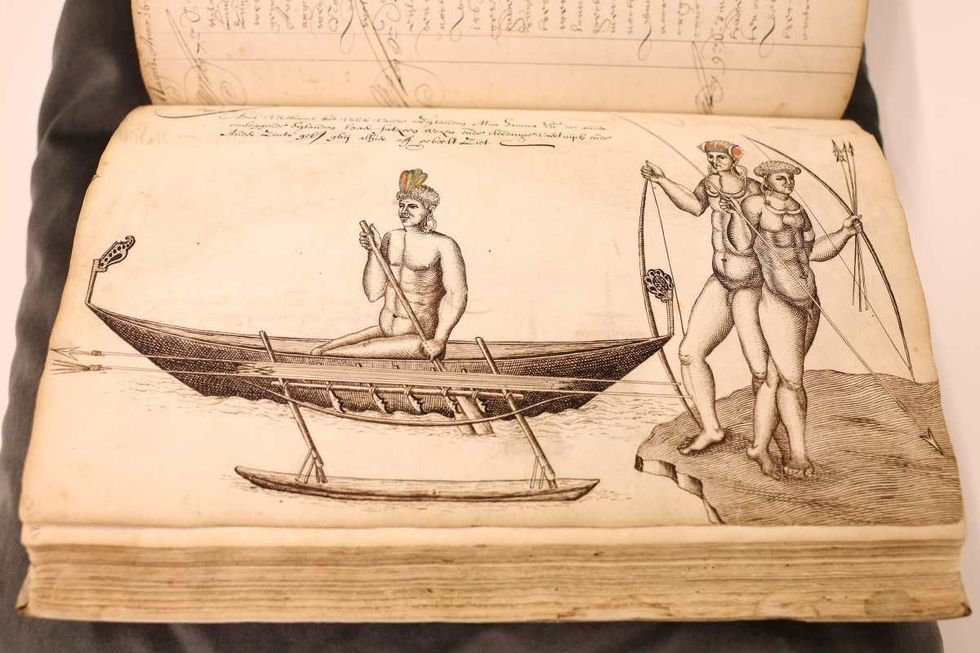
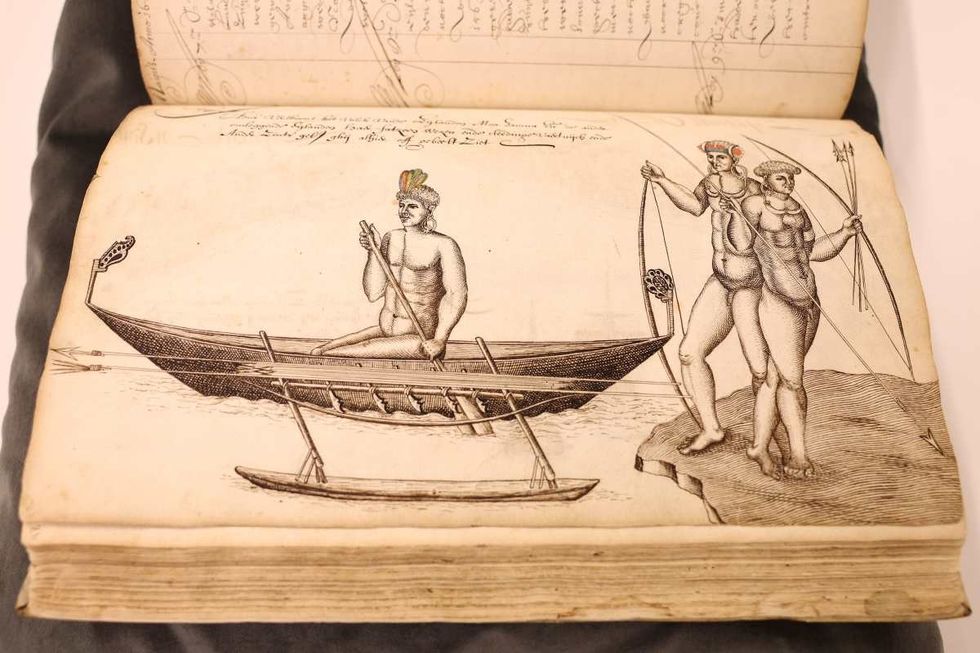
    Although the researchers discovered this new continent in 2017, the hunt began almost 400 years ago. In 1642, Dutch captain Abel Tasman (seen in the above portrait), serving the East India Company, was ordered to explore a Southern Continent. On August 14, 1642, Tasman departed from Batavia with two ships sailing west to Mauritius in the Indian Ocean, according to Princeton University Library.

    zealandia, logbook, lost continent
    A detailed view of the logbook of navigator Abel Tasman (Dutch East India Company) from 1642 Dean Mouhtaropoulos/Getty Images

    Tasman named the location “Moordenaers (Murderers) Bay,” and sailed home, never to return to this land, although he did believe that he had discovered a great new continent.

    Naming and defining Zealandia

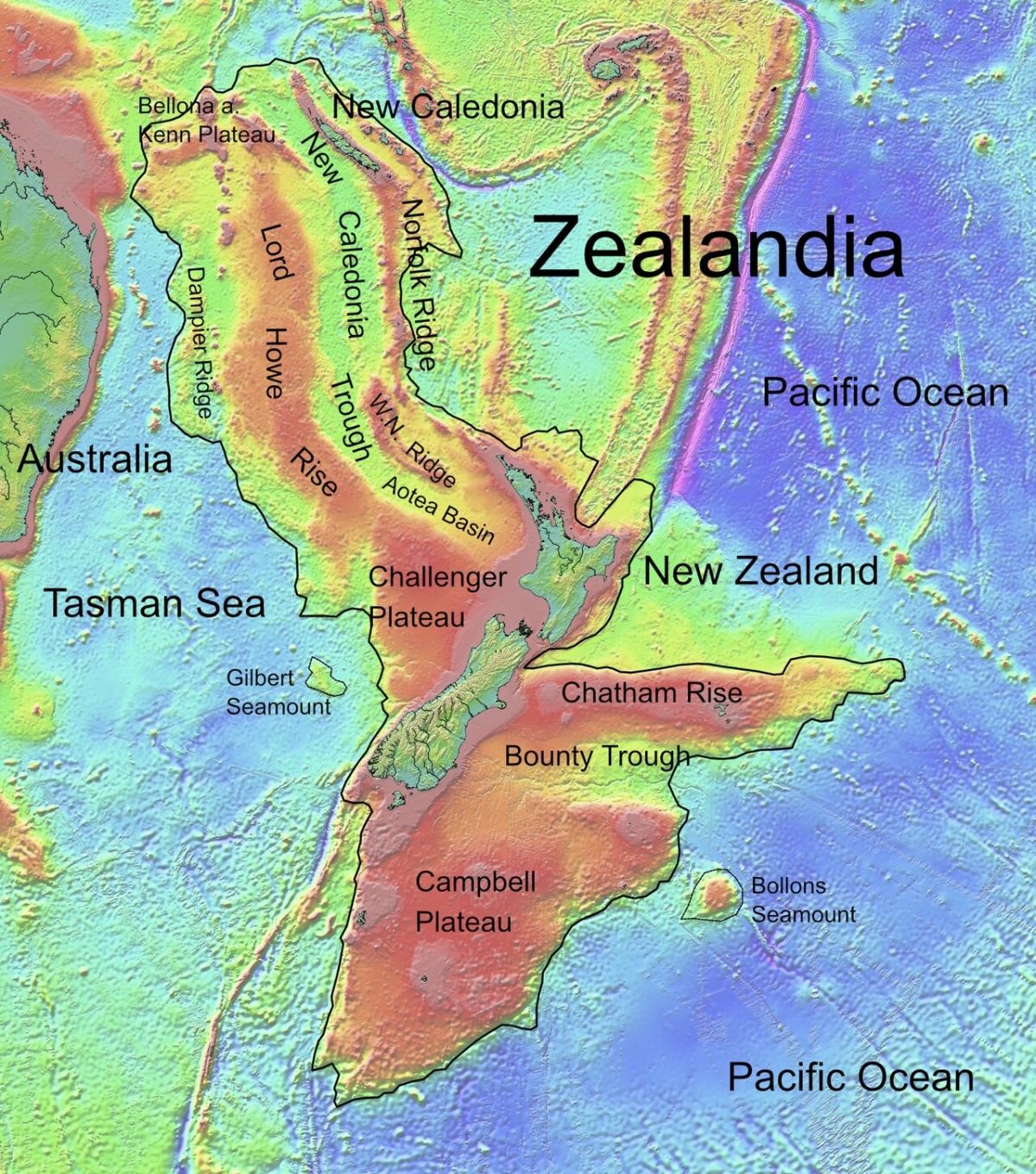
    It was nearly 375 years after Tasman’s voyage that geologists stumbled upon this mainland. They announced the discovery by naming it “Zealandia,” based on the suggestion of American geophysicist Bruce Luyendyk who described this region in 1995. Zealandia is translated to “Te Riu-a-Māui” in the Māori language.

    Zealandia lies mostly submerged off the east coast of Australia Public Domain

    In a paper, researchers from GNS Science of New Zealand documented that they had to dredge rock samples from the Fairway Ridge to the Coral Sea to analyze the rock geochemically and understand the underwater makeup of Zealandia. Led by Nick Mortimer, they scanned the northern two-thirds of the submerged area, where they unearthed pebbly and cobbley sandstone, fine-grain sandstone, mudstone, bioclastic limestone, and basaltic lava from a variety of periods as concluded by their radiocarbon dating.

    Ancient rocks with a story to tell

    The rocks and stones were found to be roughly 95 million years old, from the Late Cretaceous period. The granite and volcanic pebbles were estimated to be 130 million years old, the Early Cretaceous period. The basalts however were newer, probably about 40 million years old, and from the Eocene period. “It is kind of cool,” said Mortimer, per BBC. Andy Tulloch, a geologist at the New Zealand Crown Research Institute GNS Science, who was part of the research team, added, “This is an example of how something very obvious can take a while to uncover.”

    Mostly submerged, yet massive

    Although Zealandia is a vast continent that spans an expanse stretched for 4.9 million square kilometers, around six times the size of Madagascar, most of it is submerged under the South Pacific Ocean. Only the area at the Ball’s Pyramid on Lord Howe Island rises above the water’s veil. It is the smallest, thinnest, and youngest of all known continents.

    Usually, the continental crust is about 40 kilometers deep, thicker than the oceanic crust which is about 10 kilometers. The researchers proposed that since Zealandia ended up stretched too much, its crust became thinner, around 20 kilometers, and finally disappeared under the sea. With 95 percent of its territory submerged beneath the ocean’s depths, Zealandia prowls on planet Earth as a lair possessing an enigmatic charm of mysterious historical elements and ancient stories.

    This article originally appeared last year.

    This article originally appeared 1 year ago. It has been updated.

  • Compared to driving, flying is extraordinarily safe – but why doesn’t it feel that way?
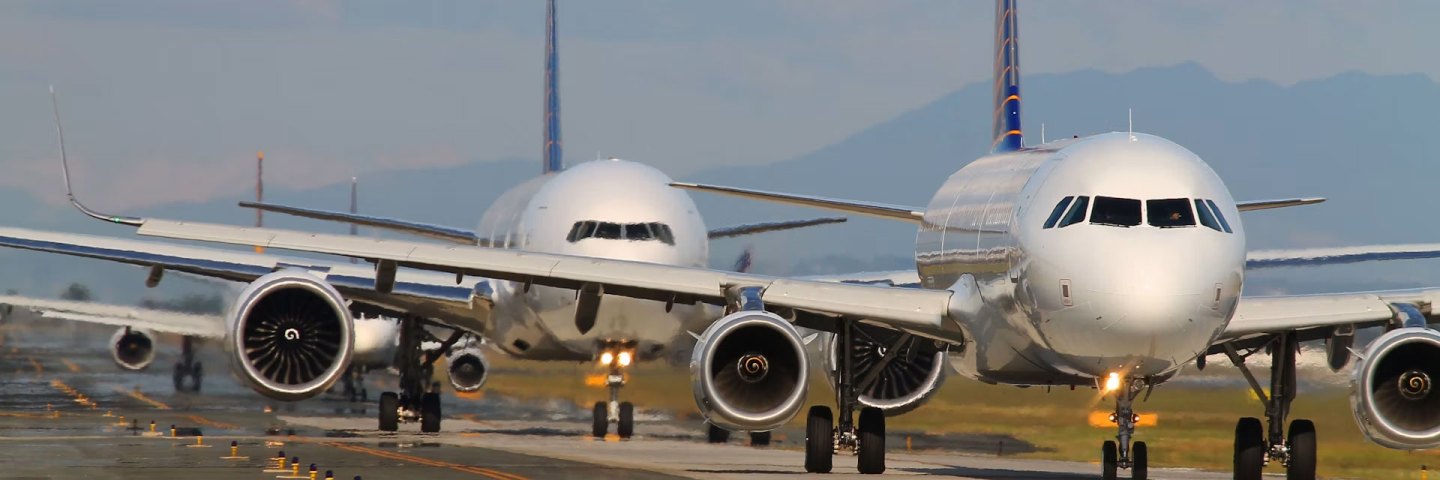
    Photo credit: RM Bulseco/Flickr, CC BY – Millions of people fly safely every day, but when plane crashes do happen, they can be catastrophic.

    A commercial airplane crash can change how people behave long after the immediate tragedy. News outlets replay the images, people affected share their harrowing stories, and an extraordinarily rare event becomes easy to imagine. Some travelers cancel trips; others drive to their destination instead.

    These choices may feel cautious. Statistically, the alternatives people switch to may come with greater risk.

    Commercial airline crashes command attention because they are rare, catastrophic and beyond a passenger’s control. But the choice to avoid flying does not eliminate risk. As a new report from our research team at Embry-Riddle Aeronautical University outlines, skipping a flight and opting to drive instead is typically much riskier, even if it doesn’t feel like it.

    Airline travel is safer than headlines suggest

    People tend to respond strongly to events that are vivid, while paying less attention to familiar hazards – the risks of which manifest more frequently but less visibly. As a result, efforts to avoid one danger can create another.

    In our recent peer-reviewed report, prepared with support from Embry-Riddle Aeronautical University’s Boeing Center for Aviation and Aerospace Safety, we compared fatality risk in U.S. commercial aviation with other transportation modes, recreational activities, household hazards and occupational risks. While the Boeing Center receives some funding from The Boeing Company, it operates independently.

    We focused on commercial Part 121 airlines operating in the U.S. and analyzed data from 2016 through 2025. Part 121 carriers generally include large U.S. airlines and regional carriers that operate scheduled passenger service. Because fatal accidents are so rare, data from a single year would not have provided a stable risk estimate.

    Across several measures of risk exposure, including distance traveled, individual boardings, hours spent traveling, annual risk and lifetime odds, the data consistently shows that U.S. commercial aviation is exceptionally safe.

    For the same distance traveled, we estimated the fatality risk as about 626 times higher in a passenger car or truck than on a commercial airline. The risk associated with motorcycle travel was more than 22,000 times higher than commercial airline travel. Even highway bus travel, itself a relatively safe option, carried about nine times the risk of commercial airline travel over the same distance.

    When risk is measured per passenger boarding, the numbers remain striking. From 2016 through 2024, the long-run estimate was approximately one passenger fatality per 97.7 million boardings on commercial airlines.

    These numbers do not mean flying is risk-free, just that the risk is small enough that researchers need many years and enormous amounts of exposure to estimate it. Across the 10-year study period, 73 people died in accidents involving commercial airline travel in the United States.

    These findings complement earlier research. A peer-reviewed 2013 study comparing U.S. transportation modes examined data from 2000 through 2009 and also identified commercial aviation as the safest way to travel. A 2018 study using data from the same period similarly ranked commercial aviation as the safest mode.

    More recently, a 2022 study analyzed U.S. news coverage, travel patterns and accident data from 1996 through 2017. It found that increased news coverage of aviation accidents was associated with more road traffic and more fatal road accidents in subsequent months.

    The 9/11 aftermath and the risk of avoiding risk

    The aftermath of the Sept. 11, 2001, terrorist attacks provided a powerful example of how behavior can shift risk from one setting to another. Air travel declined sharply after the 9/11 attacks. Subsequently, researchers were able to investigate whether fear of flying led to additional deaths on the road.

    Psychologist Gerd Gigerenzer analyzed traffic patterns for the final three months of 2001 and estimated 353 excess road deaths nationwide. He characterized many people’s decision to drive rather than fly as an attempt to avoid a “dread risk”: a low-probability event in which many people could die at once.

    Four lanes of traffic on a highway
    After a high-profile plane crash, road traffic can increase. AP Photo/LM Otero, File

    Transportation researchers Michael Sivak and Michael Flannagan later reanalyzed the period. They used road fatality trends from the first eight months of 2000 and 2001 to estimate how many deaths would normally have occurred during the final three months of 2001. They then compared that estimate with the number actually recorded in the past three months and calculated 1,018 additional road fatalities from October 2001 through December 2001.

    But their findings complicated the idea that people who avoided flying merely drove to the same distant destinations. Much of the increase occurred on local roads, not interstate highways, and pedestrians and bicyclists experienced a disproportionate share of fatalities. This pattern suggests that travel behavior may have changed more broadly after the attacks, perhaps because people canceled longer trips, stayed closer to home or changed their daily routines.

    It is hard to pin down how much of this increase was related to people changing their travel patterns in response to the 9/11 attacks, since these studies cannot track each individual’s transportation decisions.

    But both studies suggest that a collective effort to avoid a highly visible danger can increase exposure to ordinary hazards whose victims are less visible. When more people choose to drive rather than fly, the roads become busier and the number of traffic deaths can rise.

    The question shapes the risk estimate

    One reason discussions about risk become confusing is that there is no single way to measure it. The answer to the question “Is it safe?” depends on what you measure.

    How much risk does a person face for each mile traveled? What is the risk of one trip? How much risk accumulates during one hour of travel? What is the chance of dying from this cause in a year or over a lifetime?

    These are legitimate questions, but to make a valid comparison, you need to look at the same measure of risk for both types of transportation. Comparing the risk of one flight with the annual risk of driving, for example, mixes unlike quantities.

    A traveler deciding whether to fly or drive between two cities can compare the two modes over the same trip or distance. This comparison provides a clearer perspective than comparing a highly visible plane crash with a familiar daily routine.

    Time matters too. In our estimates, an hour in a passenger car or truck carried about 74 times the fatality risk of an hour aboard a commercial aircraft.

    Feeling in control is not the same as safety

    Driving gives people a steering wheel, a brake pedal and the belief that their skill can protect them. Flying asks passengers to place control in the hands of pilots, airlines, regulators, air traffic controllers and a complex technical system. Psychological research has linked a stronger sense of agency – the feeling that people control their actions and their outcomes – with greater risk-taking. That difference in perceived control helps explain why a rare aviation disaster can feel more threatening than routine road travel.

    A shadowed traveler pulling a suitcase through an airport, with the tail of an airplane visible out the window.
    Airline passengers don’t have the same sense of control over their vehicle as drivers, so flying can feel more uncertain and dangerous. AP Photo/Susan Walsh

    Media attention also matters. A major airplane crash is treated as news of national or international importance. Road deaths occur across many locations and at different times, so the public does not see the cumulative toll.

    The emotional intensity of coverage does not mean journalists are wrong to cover crashes. It just means audiences need context alongside the images.

    Crafting better risk communication

    Telling anxious travelers that flying is “safe” is rarely enough. Research on risk perception shows that people do not judge danger through statistics alone. Fear and vivid images also shape how risky an event feels. But providing more context about the risks from other forms of transportation can still help.

    Effective communication about risk does not minimize tragedy or dismiss the real fear people may feel. But it can help people understand that when millions of travelers shift from one type of transportation to another, the risk moves with them.

    For travelers, the practical question is not whether an option has zero risk. No option does. The question is whether a choice reduces their total exposure to risk or merely replaces a frightening, highly visible risk with a greater one that feels routine.

    To put the rarity of fatal airline events into perspective, an average of 2.48 million travelers passed through TSA screening each day in 2025. Modern commercial aviation in the United States has achieved a safety record that is difficult to grasp precisely because fatal events are so unusual.

    When fear leads people away from that system, the safest-feeling decision may not be the safest decision at all.

    This article originally appeared on The Conversation. You can read it here.

Explore More Stories

Science

‘Star Trek’ and NASA have intertwined legacies – the show championed diversity and inspired generations of real space scientists

Money

Should paper checks be abolished like the penny?

Work

New York passes SAFE for Kids Act to protect children from social media addiction

Research

New Russian research suggests that the human lifespan could be up to 156 years