‘PayPal Galactic’ Launches So You Can Buy Stuff in Space
There’s a lot of buzz these days about space tourism—even space colonization someday. It’s coming. In many ways, it’s already here. Wealthy adventurers have paid millions to orbit Planet Earth, and forward-thinking firms are designing hotels for the final frontier. Someday, regular Joe Schmos will be vacationing on the moon, buying astroid souvenirs, staying at…
There’s a lot of buzz these days about space tourism—even space colonization someday. It’s coming. In many ways, it’s already here. Wealthy adventurers have paid millions to orbit Planet Earth, and forward-thinking firms are designing hotels for the final frontier.
Someday, regular Joe Schmos will be vacationing on the moon, buying astroid souvenirs, staying at the swanky Milky Way Hotel.
Rest assured when that day comes, Paypal will be ready. In a wildly optimistic move (or publicity stunt, depending on how cynical you are), the company has announced Paypal Galactic, a forthcoming service for extraterrestrial e-commerce.
It’s not as crazy as it sounds. If and when space travel does blow up—PayPal President David Marcus predicts “in a decade or so”— someone will have to facilitate the inevitable subsequent cosmic-commercialization. And, as Marcus put it, “We want to make sure that PayPal is the preferred way to pay from space and in space.”
So far, they are leading the market. OK they are the market—maybe because PayPal jumped the gun on this by nearly a decade. Still the company, now owned by eBay, is pulling out all the stops. It’s partnering with the Search for Extraterrestrial Intelligence (SETI) Institute, the Space Tourism Society, and even got Buzz Aldrin to make a statement for the announcement.
The rich and famous have their sights set on space. Visiting Mars is the life dream of Elon Musk, who, fittingly, was a cofounder of PayPal before founding SpaceX. Silicon Valley stars like Larry Page, Sergey Brin and Jeff Bezos are throwing money behind the quest to go to the final frontier, while Hollywood stars like Brad Pitt, Justin Bieber, and Ashton Kutcher are lining up to take the voyage. First come the celebs, then the commerce.
It will interesting to see how this plays out. A virtual currency? Cosmic coins? Simply an interplanetary infrastructure for charging credit cards? PayPal itself doesn’t have the answers, but you have to give them credit for asking the questions.
“The one thing that’s very clear is that you’re not going to be using cash in space,” a spokesperson told Mashable. “There’s not going to be security shuttles picking up notes and change.”
For more insight into what on earth (or, not on Earth, as it were) PayPal is thinking, check out the announcement video:
There is nothing wrong with politeness and a particular point of view, unless, of course, your interpretation of kindness is different from everyone else’s. Case in point? Boomers and every other generation.
What is it about Boomer energy that can just rub people the wrong way sometimes? It’s quite common for different age groups to have different needs and habits, and perhaps the Boomers you know may find 20% tips an absolute must, yet the concept of a service fee infuriating. Maybe they feel there is only one perfect way to load a dishwasher. Maybe job loyalty does have value. Whatever the topic, Boomers are likely to have a certain opinion about it that they feel is the best.
Finding ways to communicate and connect are important dynamics to building community and bridging the generation gap, and sometimes understanding what Boomer actions bother the other generations can help start a dialogue. VegOut Magazine described seven habits that may seem thoughtful to Boomers, but are actually emotionally taxing to younger generations.
Calling whenever they want
Boomers largely grew up in an age of landline phones that often ran unexpectedly. Instead of the horror that Millennials experience from an unsolicited phone call, Boomers find them normal and inviting. A reach out to say “Hello!” means they care and are interested in your life.
Younger generations feel it’s an uninvited threat. Where’s the heads up text? Nothing triggers anxiety like an unexpected ring.
Solution: How about everyone just chill? Older people can learn to text first. Younger people can acknowledge they don’t have to answer the phone, and often don’t anyway.
The unexpected visit
Boomers grew up in an age of the unannounced visit. There was a time when neighbors just rang a doorbell and offered up some extra muffins, freshly baked. Today, people guard their homes with intensity. A doorbell ring is terrifying, especially if pizza hasn’t been ordered.
Solution: Boomers, just send a text first. It’s not that complicated. Younger generations, you can always hide in the closet and pretend you’re not home.
Comments on personal appearance
Into today’s world, unsolicited comments on someone’s appearance seem a bit risky. And yet, Boomers never seem afraid to comment on someone’s weight loss or ask questions like, “Why aren’t you smiling?” These questions and comments were once considered tools of connection. It showed interest and concern for the mental and physical health of friends and people in general.
Younger people guard all aspects of “self” and “body image.” It’s dangerous territory leading toward hurt feelings and possible backlash.
Solution: If you don’t have anything to say nice, don’t say it. Even if you do, probably don’t say it.
With age comes wisdom, yet sometimes nobody wants to hear it. Knowledge acquired over time and experience is valuable and should be passed on, but in certain contexts. Younger people often find unsolicited advice to be a rude personal attack, so be careful about offering a note no one asked for.
Solution: I had a friend who used to always ask, “Do you want to hear my opinion?” before they shared it. It was a pretty amazing quality that gave me time to prepare for what might be coming. In the end, it’s best to get permission. Simple.
Chain messages
Breaking chains. Image via Canva – Photo by Merydolla
There’s nothing quite like the inspirational chain meme your grandma found. Especially when it was making the rounds eight months ago. Like everyone else, older people benefit from feeling connected. They’re just attempting to get in the digital meta. It’s easy to point out who’s out of the loop when you’re in it.
Solution: Can we all cut one another some slack? Instead of attacks, reconnect and appreciate the meme or image you already saw months ago. Replying with, “Ha, that’s a good one” isn’t that much of a stretch, and it isn’t that much to ask when given an opportunity to share love instead of disdain. I have an aunt who gets concerned when those chain mails say, “Pass this on to 10 people…” I told her to send them my way, because I’m not afraid to dump them in the digital garbage.
Lengthy conversations for business
Boomers have worked networking and building relationships into their business model. A chat about what’s trending is a great way to ease into an important conversation. It’s a way to be polite and build-up camaraderie before the deal is done.
Younger generations don’t want to waste time. A “thumbs up” emoji can be enough to get things going.
Solution: Acumen took a look at getting generations to learn how to connect with one another. They found that “common ground” was crucial for networking. Younger people can work on patience and respecting the time offered by older generations, and Boomers can learn to fire a quick text instead of dragging every conversation into a “life lesson.”
Checking and rechecking replies
Boomers may not be totally confident in how the whole digital world works. It’s not uncommon to receive texts and emails asking, “Did you get that email…” or “Curious on your thoughts of the text I sent.” These follow-ups were designed to show interest and thoroughness. Younger people can just find them bothersome.
Solution: Boomers can learn to not treat texting and emails like a personal journal. It’s okay to be brief and to the point. A short message doesn’t mean someone is being short with you.Speak with People suggested that younger generations can give Boomers the “benefit of the doubt.”
The wrap up
Everyone is trying to fit in the best they can. It can be difficult to adapt and move with the times. Some day, younger people will be a little out of touch with the next generation.
Philosopher and theologian Martin Buber wrote, “All real living is meeting.” The more we can learn to help each other connect, the better. Learning to be curious about other people and their generation instead of dictating will build deeper and more mutual connections.
This article originally appeared 1 year ago. It has been updated.
The test was introduced in a 2005 paper in the Journal of Economic Perspectives by Yale professor Shane Frederick. It’s designed to test your ability to override a quick, intuitive gut reaction and engage in deeper, more analytical thought.
Want to try it yourself?
Woman sits in front of her computer thinking Canva
Here are the three questions:
A bat and a ball together cost $1.10. The bat costs $1.00 more than the ball. How much does the ball cost?
If it takes five machines five minutes to make five widgets, how long would it take 100 machines to make 100 widgets?
In a lake, there is a patch of lily pads. Every day, the patch doubles in size. If it takes 48 days for the patch to cover the entire lake, how long would it take for the patch to cover half of the lake?
The Answers and Why They’re So Tricky
If you answered 10 cents, 100 minutes, and 24 days, you’re in the majority—and you’ve fallen for the trap. Those are the common intuitive answers. The correct answers are 5 cents, 5 minutes, and 47 days.
Woman proudly shows testy results Canva
Here’s the breakdown:
The Bat and Ball: If the ball cost 10 cents, the bat (at $1.00 more) would cost $1.10, for a total of $1.20. The correct math shows the ball is 5 cents and the bat is $1.05.
The Widgets: The rate of production is one widget per machine every five minutes. Therefore, 100 machines can produce 100 widgets in the same five-minute timeframe.
The Lily Pads: Since the patch doubles in size every day, it must have been half its final size just one day before it covered the whole lake—on day 47.
The Science of Your Brain
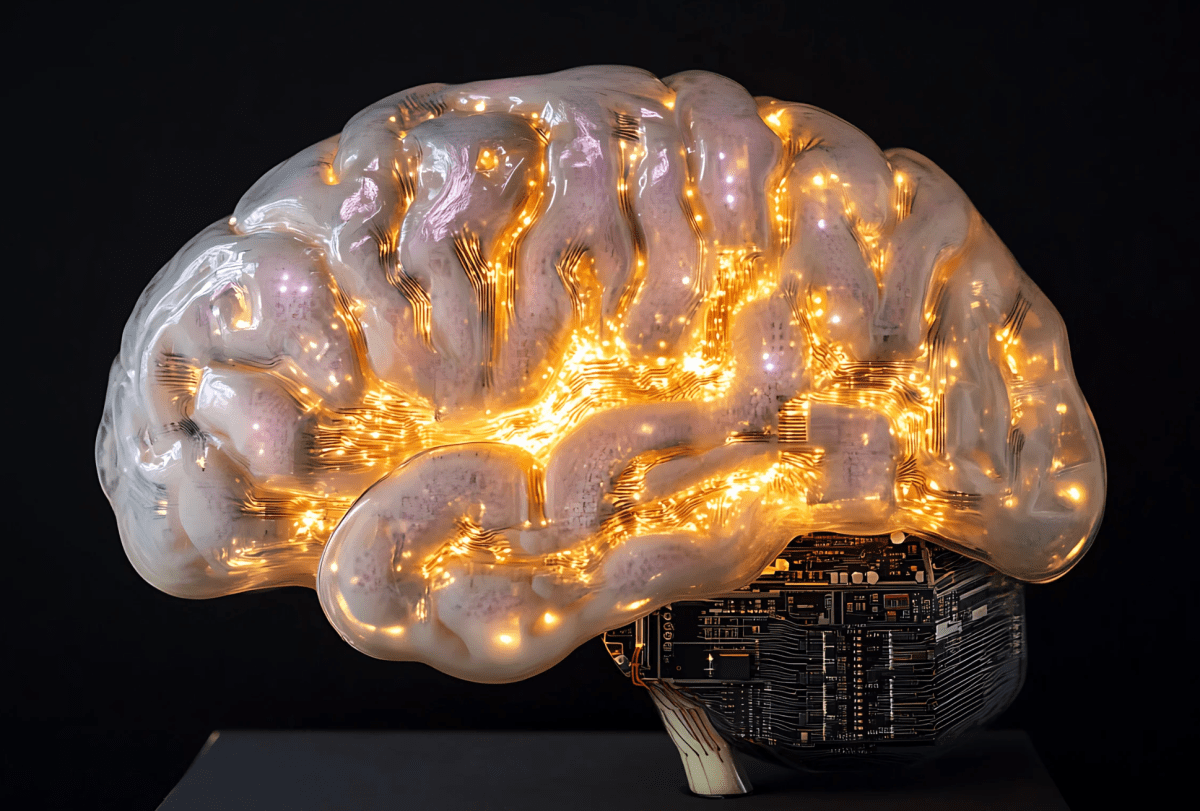
An artistic representation of the brain Canva
This test brilliantly illustrates the two modes of thinking identified by Nobel Prize-winning psychologist Daniel Kahneman.System 1 is our fast, automatic, intuitive thinking, which gives us the quick (but wrong) answers.System 2 is our slower, more deliberate, and analytical thinking, which is required to solve the puzzles correctly.
As Frederick explains, the test measures how we make decisions based on instinct versus analysis. “System 1 thinkers respond spontaneously, often making mistakes, while System 2 thinkers engage in effortful thought processes,” he wrote.
Frederick’s research found that those with stronger cognitive reflection skills (System 2 thinkers) tend to be more patient and willing to take calculated risks. His work aims to understand the real-world impact of our cognitive styles, noting, “Despite the diversity of phenomena related to IQ, few have attempted to understand—or even describe—its influences on judgment and decision making.”
So, whether you passed the test or not, it offers a fascinating glimpse into the constant tug-of-war between gut reaction and careful thought that happens inside our brains every day.
This article originally appeared earlier this year.
This article originally appeared [time-difference] ago. It has been updated.
An elderly woman in Wichita, Kansas who was experiencing hard times has now found hope in the kindness of others. It first started when a local landscaper decided to mow and clean up her overgrown lawn for free. Since then, she’s been given $625,000 in donations (and counting!) to help address her needs and raise her spirits.
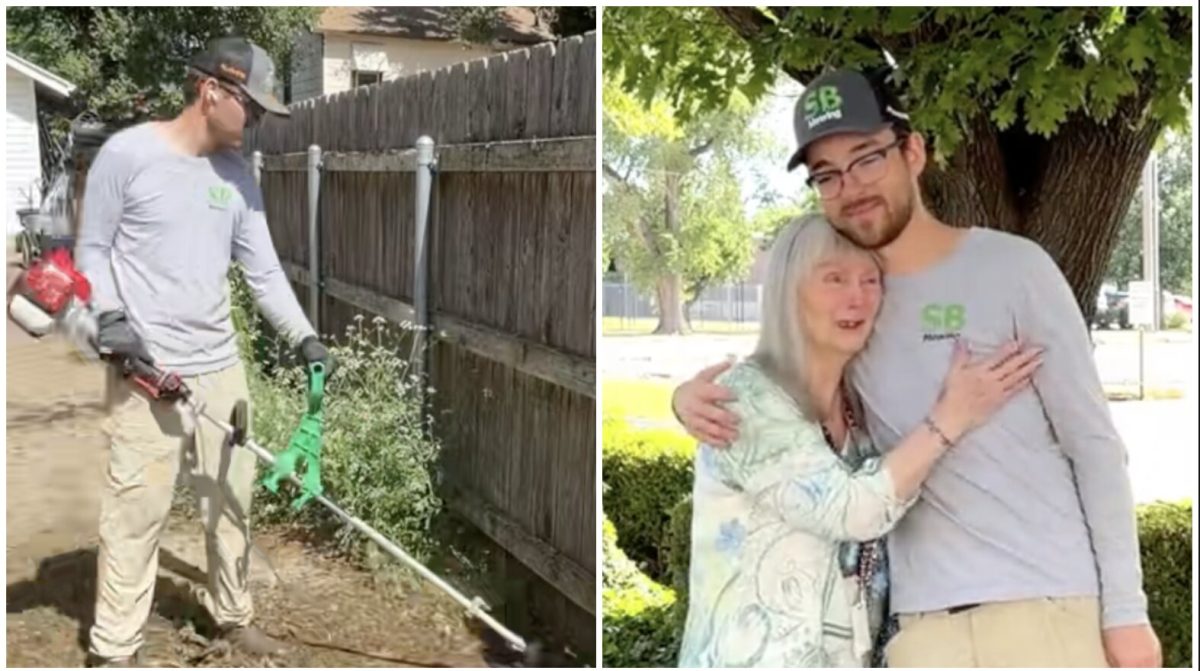
It all started with Spencer B. of SB Mowing, a lawn care and pressure washing company. Spencer (who wishes his last name be omitted) runs his business both as a mower and as a content creator. He often offers his services for free to the elderly and veterans who cannot afford the upkeep of their lawns.
Spencer visited the elderly woman, Debbie, after Zach, her Uber driver, contacted him. Zach had seen how much she was struggling on her own and wanted to help. As Spencer and his dad cut Debbie’s lawn and cleared debris, they heard her story.
Debbie’s grief and relief
Debbie had been the full-time caregiver for her ailing husband until he died from stage four pancreatic cancer. Since then, her grief and other factors had prevented her from keeping up her home, lawn, and her own health. Struggle upon struggle was placed upon her.
“While she was grieving, she was also being taken advantage of,” Spencer wrote on Debbie’s GoFundMe. “A contractor took a $2,000 deposit for tree work and never showed up. A neighbor wrecked her car and didn’t pay for it. She fell three months behind on rent, put off dental and health care she genuinely needs, and there were days when she and her dogs went without food because she simply couldn’t afford it.”
Aside from free lawn care, Spencer decided to help Debbie get back on track. He and his dad bought everything from Debbie’s yard sale and donated it all to Habitat for Humanity to get her some cash in hand. Spencer also paid three months of Debbie’s back rent through his non-profit organization SB Mow It Forward.
Strangers donated to Debbie
Spencer then set up a GoFundMe for Debbie and shared her story. Within three days, friends and strangers alike donated over $625,000. Donations continue to roll in as of this writing. All of the money will be put into a trust for Debbie to use for essentials, medical care, dental care, and to help her transition to a senior living community when she is ready.
Spencer shared a video of him telling Debbie this news. She was floored when she found out that around 40 million people had seen the video of Spencer cleaning up her yard, and she had no idea he had set up a GoFundMe.
“I thought you already helped me,” Debbie said, welling with emotion. “I can’t believe it. How can people be so generous to help a stranger?”
With tears in her eyes, Debbie thanked Spencer, Zach, and all the 13,000 people who had donated to help her. Spencer even made a video to highlight Zach, as he was the one who brought Debbie’s troubles to Spencer’s attention.
This isn’t the only time Spencer’s deeds have made headlines. In 2024, he had raised $242,000 for a pet rescue that treated a cat he found while mowing a lawn. In 2025, he raised $850,000 to help Beth, an elderly woman in need of financial aid and accessibility care.
A lot of good can happen if we check in on our neighbors (and maybe offer to cut their lawns) every once in a while.
This article originally appeared 3 months ago. It has been updated.