
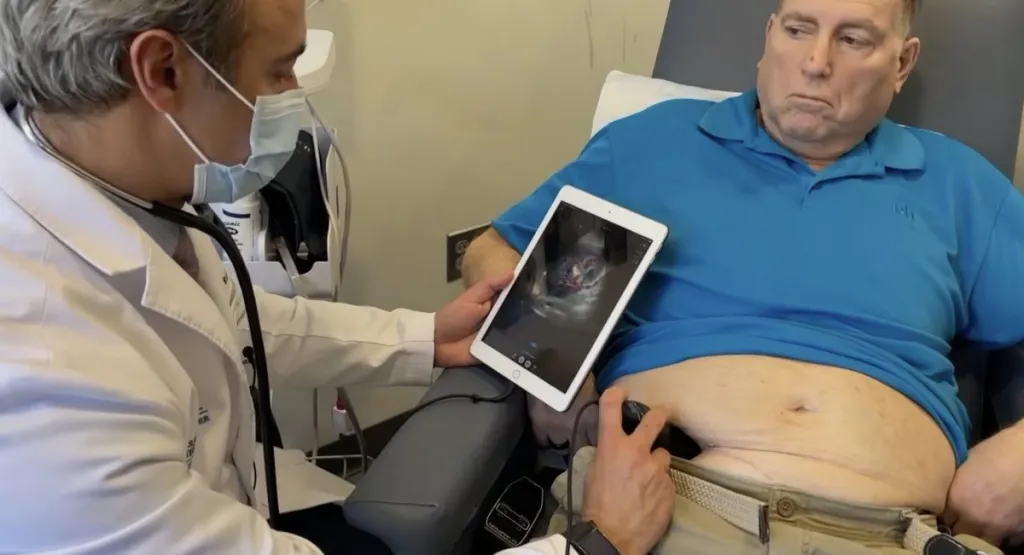
Like over 101,000 people in the United States, retired grocery store manager Tim Andrews needed a kidney transplant. He had stage 3 kidney failure and had a heart attack after nine months of dialysis. In short, he was dying and was told it would take five years until he was at the top of the list for a kidney transplant.
He found that doctors needed a willing patient for an experimental surgery. Andrews eagerly volunteered. That’s how Andrews went under the knife to replace his failing organ with a pig kidney.
Andrews would be testing a xenotransplantation operation, a procedure that replaces human organs with modified animal ones. The animal organ is gene-edited to prevent the human immune system from rejecting the transplant. Andrews would be the fourth person to undergo a procedure to see if a gene-edited pig kidney would effectively keep him alive.
Andrews’ life-changing decision
To him, the decision to undergo this experimental operation was easy. He mostly slept between dialysis appointments, unable to walk or keep food down. He figured that he had little to lose by becoming a test subject.
“I’m gonna die anyways, why wouldn’t I do something for all these [other people with kidney disease] that are suffering?” Andrews told USA Today. He recalled telling his doctor, “I don’t care if I die the next day as long as you learn something.”
Andrews figured that, at best, this procedure would buy him some time; his physicians felt the same. Surviving the operation was a success, but Andrews did more than that. He thrived.
The pig kidney gamble paid off
After recovering from surgery, Andrews started to regularly cook and vacuum his home. He went on long walks with his dog. He even got the opportunity to throw the first pitch at a Boston Red Sox game with his family. Andrews wasn’t just surviving; he was living.
“I was alive, and I hadn’t been in a long time,” Andrews told CNN.
Andrews blew past all previous records for surviving a pig kidney transplant, just shy of nine months. Unfortunately, the immunosuppressive drugs Andrews took to help his body tolerate the pig kidney no longer worked. He would have to have it removed and return to dialysis.
While a person could obviously feel discouraged, Andrews was grateful for the additional time he was given off dialysis. He was also grateful to the pig and the organ, both of which he affectionately nicknamed “Wilma,” for being a partner. He praised the pig for not only extending his life but also helping create medical history.
“Wilma the genetically edited pig is a major part of this medical breakthrough and a major part of my soul as long as I live,” Andrews wrote on Facebook, according to CNN. “I LOVE YOU WILMA! Donate a Kidney and be a HERO!”
A new donor renews hope
This could have been where Andrews’ story ends, but Wilma bought him enough time for another chapter. Andrews got to the top of the kidney transplant recipient list, and his doctors found a perfect human match. Andrews was just as grateful for the human kidney transplant as he was to Wilma.
“When a human has to die for you to live, that’s a lot of responsibility,” he told USA Today.
While approaching life with humor, Andrews has promised to “preach” for organ donation for the rest of the days he is given. He’s grateful to continue on for a while longer, enjoying life with his family.
Thanks to Andrews taking the chance and potentially sacrificing whatever life he had left, scientists are closer to having permanent pig organ transplants when human donations are scarce. For now, though, there is consideration of using xenotransplantation as a bridge between dialysis and human kidney transplants in the near future.
If you want more information about becoming an organ donor, you can find answers to questions and sign up through the Health Resources & Services Administration.