ProPublica is a nonprofit newsroom that investigates abuses of power. Sign up to receive our biggest stories as soon as they’re published.

This article was produced in partnership with the MLK50: Justice Through Journalism, a member of the ProPublica Local Reporting Network.

MEMPHIS, Tenn. — On Aug. 20, 2018, the first day of a federal police surveillance trial, I discovered that the Memphis Police Department was spying on me.

The ACLU of Tennessee had sued the MPD, alleging that the department was in violation of a 1978 consent decree barring surveillance of residents for political purposes.

I’m pretty sure I wore my pink gingham jacket — it’s my summer go-to when I want to look professional. I know I sat on the right side of the courtroom, not far from a former colleague at the city’s daily newspaper. I’d long suspected that I was on law enforcement’s radar, simply because my work tends to center on the most marginalized communities, not institutions with the most power.

One of the first witnesses called to the stand: Sgt. Timothy Reynolds, who is white. To get intel on activists and organizers, including those in the Black Lives Matter movement, he’d posed on Facebook as a “man of color,” befriending people and trying to infiltrate closed circles.

Projected onto a giant screen in the courtroom was a screenshot of people Reynolds followed on Facebook.

My head was bent as I wrote in my reporter’s notebook. “What does this entry indicate?” ACLU attorney Amanda Strickland Floyd asked.

“I was following Wendi Thomas,” Reynolds replied. “Wendi C. Thomas.”

I sat up.

“And who is Wendi Thomas?” Floyd asked.

She, he replied, used to write for The Commercial Appeal. In 2014, I left the paper after being a columnist for 11 years.

It’s been more than a year since a judge ruled against the city, and I’ve never gotten a clear answer on why the MPD was monitoring me. Law enforcement also was keeping tabs on three other journalists whose names came out during the trial. Reynolds testified he used the fake account to monitor protest activity and follow current events connected to Black Lives Matter.

My sin, as best I can figure, was having good sources who were local organizers and activists, including some of the original plaintiffs in the ACLU’s lawsuit against the city.

In the days since cellphone video captured white Minneapolis police officer Derek Chauvin squeezing the life out of George Floyd, a black man, residents in dozens of cities across the country have exercised their First Amendment rights to protest police brutality.

Here in Memphis, where two-thirds of the population is black and 1 in 4 lives below the poverty line, demonstrators have chanted, “No justice, no peace, no racist police!”

The most recent protests were sparked by the killings of Floyd and of Breonna Taylor, a black woman gunned down in her home by Louisville, Kentucky, police in March. But in Memphis, like elsewhere, the seeds of distrust between activists and police were planted decades ago. And law enforcement has nurtured these seeds ever since.

A Long History of Spying

In the mid-1960s, the MPD launched a domestic intelligence unit to spy not just on activists, but also on teachers’ meetings, a college black student union and labor organizers. That included Martin Luther King Jr., who came to Memphis in the spring of 1968 to stand in solidarity with underpaid and mistreated black city sanitation workers.

The police surveillance wasn’t conducted just with wiretaps and long lenses, but with snitches planted within local organizations, including spies planted by then-Mayor Henry Loeb, an anti-union segregationist, among sanitation workers who wanted to join a union.

In the iconic photo taken just moments after a gunman shot King on the Lorraine Motel balcony, several people are seen pointing in the direction from which the bullet came. Crouched over King’s body is a man holding a towel to the gaping wound on King’s face. The man, rarely identified in photos, is Marrell “Mac” McCollough, a Memphis cop who was assigned to infiltrate a militant activist group hated by Memphis police. There’s no evidence he was involved with King’s assassination.

Some, including members of King’s family, have long speculated that the assassination was not the work of a lone gunman but orchestrated by federal law enforcement agencies (the FBI famously monitored and harassed King). Both a U.S. House committee independent review in 1979 and a Department of Justice review in 2000 found no basis for this. Still, in 2002, the National Civil Rights Museum, which sits where the motel was, added to its permanent exhibits “Lingering Questions,” which contains hundreds of pieces of evidence, including the bullet plucked from King’s body. One of the questions (that the exhibit does not definitively answer): “Was the Memphis Police Department part of the conspiracy?”

In 1976, the ACLU of Tennessee sued the city, alleging it had violated residents’ First Amendment rights by maintaining records that “contained unverified information and gossip which related exclusively to the exercise of lawful and peaceful activities,” and, according to the complaint, “served no lawful or valid law enforcement purpose.”

A judge agreed and in 1978 signed the Kendrick consent decree, the first such decree in the country, which barred law enforcement from surveilling protesters for political purposes.

Many of today’s protesters know about that ruling, because in 2017 the ACLU of Tennessee sued the city, alleging that police were violating the consent decree by again illegally spying on residents who were exercising their First Amendment rights.

In 2016, protesters had a series of high-profile demonstrations including a May protest at the Memphis Zoo, a spontaneous protest against police brutality in July in which hundreds blocked traffic on the Interstate 40 bridge and a December “die-in” in the mayor’s front yard. After those, according to the lawsuit, the city started a blacklist of residents barred from City Hall without an escort.

It contained the names not just of those who had been arrested at demonstrations, but many who had not, including the mother of Darrius Stewart, a black teen police shot and killed in 2015 following a traffic stop, and a white grandmother who’d made it through a security blockade outside Graceland while black protesters were held back.

Reynolds’ sleuthing made up a good part of the joint intelligence briefings, which were shared with law enforcement agencies and some of the city’s largest corporations, such as FedEx and AutoZone, at the businesses’ request. (Facebook told the MPD it violated the social platform’s terms of service by creating fake accounts and impersonating others.)

In court, the city argued that the surveillance — videotaping demonstrations, using social media collators to sweep up posts about police and Black Lives Matters supporters — was necessary to protect public safety.

But while joint intelligence briefings and internal reports were ostensibly to keep track of potential threats, they were littered with unfounded rumors, misidentified photos of activists and surveillance reports of events that posed no clear threat, such as a black food truck festival.

And while it’s true that the pen is mightier than the sword, there’s nothing about me that screams threat, unless critical reporting on public policy and public officials, including Mayor Jim Strickland, counts.

In 2017, MLK50: Justice Through Journalism covered the anniversary of the bridge protest, but when I tried to get an interview with the mayor, I was rebuffed.

“Objectivity dictates if the mayor does one on one interviews,” wrote Ursula Madden, the city’s chief communications officer in an email. “You have demonstrated, particularly on social media, that you are not objective when it comes to Mayor Strickland.”

I replied that I was disappointed and asked her to point me to any errors of fact I’d made in my coverage. She did not respond.

Nagging Suspicions

I’ve worked as a journalist in Memphis for the last 17 years. I’ve never been a victim of police brutality, but few of my interactions with police have inspired confidence.

In 2014, while I was at The Commercial Appeal, a reader threatened by email to rape me after a column I wrote about Confederate Gen. Nathan B. Forrest. I reluctantly reported the threat to police, but the investigation felt lackluster and no suspect was ever identified.

It nagged at me, and years later, when I tried to learn more about what steps the detective assigned to my case had taken, department officials refused to share any information, even the details of their interview with me.

In July 2015, I covered the demonstrations that followed Stewart’s death by police. I interviewed the teen’s father and posted the video on Instagram.

A few days later, a cousin I hadn’t seen in years stopped by. He wanted to take a quick tour through downtown Memphis. It was dark and rainy. He’s black with long locks and a beard.

I wanted to be a good host, but before I left the house, I tweeted my hesitation: “My cousin is in town for work, leaving tomorrow. He wants to see Downtown. My 1st thought: Do I want to risk an encounter w/ police?”

My fear was not without cause: Less than two weeks earlier, Sandra Bland, a 28-year-old black woman, had been forced out of her car by an aggressive Texas cop who’d stopped her for failing to signal while changing lanes. A dashboard camera video caught her arrest and three days later, she was found dead in a jail cell. Authorities said she died by suicide.

I was thinking about what happened to Bland and what had happened to Stewart, who had been shot to death by police following a traffic stop the same month.

Just a few miles from home, flashing lights filled my rearview mirror. I pulled over, heart pounding.

I hit record on my cellphone and placed it on the dashboard. You can’t see the officer’s face in the video, which I still have, but you can hear our voices over the windshield wipers. The officer, who was black, asked for my license. I handed it to him and asked why I’d been stopped.

He said my driver’s side headlight was out, but when he leaned over to tap it, he said it was back on.

“I’m not trying to be Sandra Bland tonight,” I told the officer.

The Memphis officer said he was trying to be a nice guy. “You think I want to stand out here in the rain?” he can be heard saying on video.

“Ms. Thomas,” he said, reading my license. “Ms. Wendi Thomas.” I wondered if he recognized my byline. I offered to show him what I had just tweeted but he declined. “Your headlights are working now,” he said. “You be safe, OK?”

“Yeah, but what happens when somebody else pulls me over?” I asked.

“I don’t know what somebody else is gonna do,” he said, “but I know that if you do the right things, if you’re doing the right things, then nothing else can happen but good.”

I now wonder if the police had been following me. The police department did not answer questions for this story.

But at the time, I was paralyzed by fear and wanted to avoid being pulled over again.

I took side streets home.

Why Were You Following Me?

After Reynolds left the stand after naming me as someone he had followed, the judge took a short recess. I headed outside the courtroom and saw Reynolds headed to the elevator.

I followed him. When the doors closed, I stuck out my hand and introduced myself. I asked: Why were you following me on social media?

Although it was chilly in the courtroom, Reynolds was sweating. He said he couldn’t talk about it.

Two days after Reynolds’ testimony, I filed a public records request with the city of Memphis, asking for all joint intelligence briefings, emails or other documents that referenced me or any of the three other journalists that the MPD was following on social media.

Four hundred and thirty three days later, the city produced the records — and I still don’t understand what would make police see me as a threat worthy of surveillance in the name of public safety.

Contained in the documents: A screenshot of a Facebook post that I made on Jan. 28, 2016, while I was on a fellowship at Harvard University. I’d shared a notice about a grassroots coalition meeting to be held that day.

In a joint intelligence briefing was a screenshot of a tweet I’d been tagged in. The original tweet, which at the time police captured it had 11 likes and one retweet, was itself a screenshot of an offensive image a Memphis police officer had allegedly posted on Snapchat.

In another police email was a February 2017 tweet I sent about an upcoming protest, which had been announced on Facebook. It got two likes.

The city of Memphis is pushing back against the judge’s ruling. Its lawyers have asked the court to modify the consent decree, contending that the city can’t participate in a Trump administration public safety partnership if it isn’t allowed to share intelligence with federal agencies.

My battles with the city of Memphis didn’t end with the lawsuit, unfortunately.

In 2018, I was trying to figure out which corporations had answered the mayor’s call to financially subsidize police operations by funneling $6.1 million to the city through a secretive nonprofit, the Memphis Shelby Crime Commission.

Strickland wouldn’t divulge the companies’ identities, but he realized that public records I’d requested would. So the mayor’s staff, in conjunction with the Crime Commission and another secretive nonprofit, came up with a plan to release the companies’ names to local journalists before releasing the records to me, I learned through emails released in conjunction with a 2018 public records lawsuit against the Crime Commission.

And this year, I was forced to sue the city after it refused to include me on its media email advisory list despite repeated requests.

The city of Memphis did not respond to a request for comment for this story.

My experiences have shaped the way my newsroom has covered more recent protests, including those in Memphis since Floyd’s death.

A guide on covering protests from the Racial Equity in Journalism Fund at Borealis Philanthropy notes, “Understand how police use news coverage to surveil black communities. Don’t allow police to use you, or your coverage, to do their jobs.”

We applied these principles to our recent coverage of a civil disobedience training that drew more than 350 people. While we know the names of the people we talked to, if participants weren’t comfortable using their whole name or showing their entire face, we protected their identity.

After all, I know how it feels to know that the police are watching you.

  • Teacher chaperones a kindergarten field trip and shares 3 moments that perfectly capture how little kids think
    (LEFT) Curious kindergartener and (RIGHT) teacher caught off-guard.Photo credit: Canva
    ,

    Teacher chaperones a kindergarten field trip and shares 3 moments that perfectly capture how little kids think

    A middle school teacher, Mr. Lindsay, chaperoned his son’s kindergarten field trip to the zoo. He explains in his TikTok video 3 funny moments that perfectly capture how little kids think. If you ever need proof that young kids see the world a little differently, just listen to what they have to say on this…

    A middle school teacher, Mr. Lindsay, chaperoned his son’s kindergarten field trip to the zoo. He explains in his TikTok video 3 funny moments that perfectly capture how little kids think.

    If you ever need proof that young kids see the world a little differently, just listen to what they have to say on this field trip. From a silly animal mix-up to a candid family comment, this recap by Lindsay captures why kindergarteners are some of the funniest storytellers on earth.

    Excited To See The Leprechauns

    Lindsay describes the first experience, “A kid walks up to me, and he goes, ‘Mr. Lindsay, I can’t wait to see the leprechauns.’” Lindsay responds that the zoo doesn’t have leprechauns, to which the kindergartener says, “No, I’m serious, the leprechauns. The ones with the spots.” The child was talking about the leopards.

    A pretty cute mistake that commonly occurs with younger children. They often reshape unfamiliar words to fit sound patterns they already know. A 2023 study of speech-sound substitution in the National Library of Medicine explained that the near matches of words can be termed “markedness.” The simple mistakes gradually end after they gain better control of their mouth.

    kindergarteners, funny conversations, childhood, cute mistakes
    Boy plays in a kindergarten playground tunnel.
    Photo credit Canva

    My Stepdad Is Much Younger

    In the second story, a kindergartner walks up saying that he is thirsty. Lindsay suggests getting some water when the kid suddenly stops, stares, and says, “My one dad is 53, but my other dad, who’s my stepdad, is 21.” Lindsay offers a surprised look to the camera after recounting the unexpected honest exchange.

    A 2024 study in Nature Human Behaviour reported that researchers studied kindergarten students to see whether trust would encourage honesty. They found that kids who were shown trust cheated less often. The research suggests that when adults instill trust in young people, they can encourage greater honesty.

    field trip, hygiene, healthy habits, education
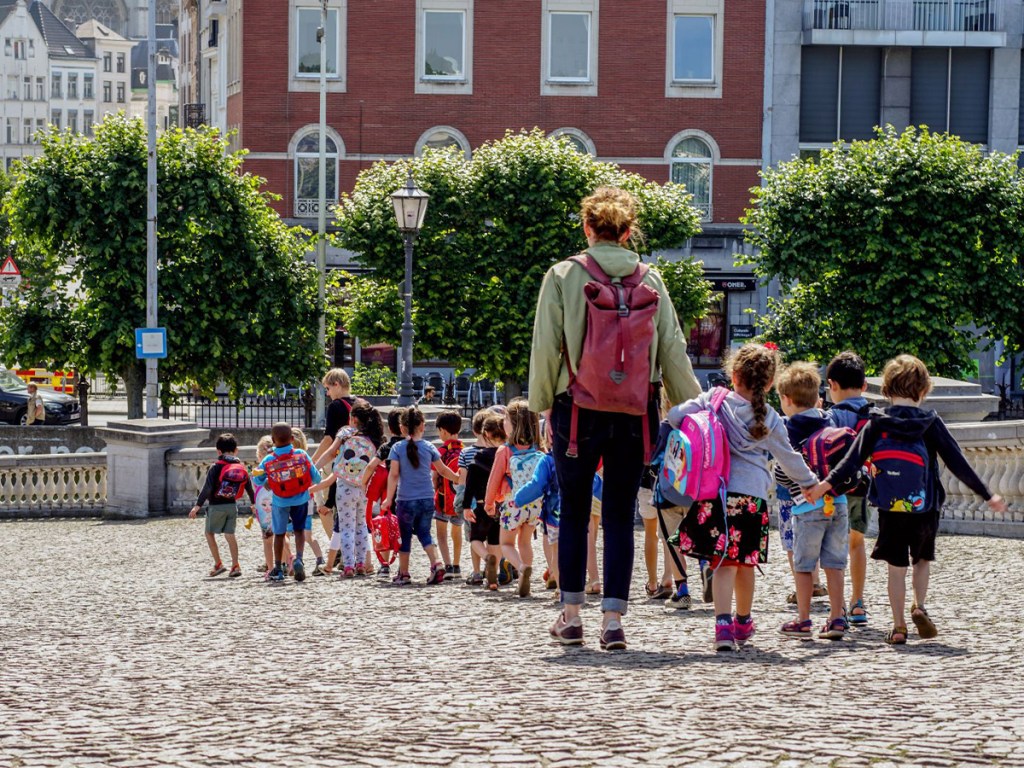
    Kids on a field trip walk in a straight line.
    Photo credit Canva

    Gross And Unfortunately Familiar

    In the third story, when he catches one of the kindergartners picking his nose, Lindsay tells the child not to do that. The kid then wipes the booger on the ground and exclaims, “Well, I wiped it on the ground. It’s natural.” Yikes. Lindsay wraps the video saying, “So, not much different than teaching middle schoolers, but some good moments.”

    Kindergarten-aged kids are still learning basic hygiene habits. A 2024 review in the National Library of Medicine found kids were especially vulnerable to infections because of poor hygiene. Teaching healthy practices like hand washing, body hygiene, and oral care in school helped children stay healthier.

    kids, honest communication, trust, stories, school
    Cute little girl smiles.
    Photo credit Canva

    Kids Speak Their Truth

    There were some cute comments from fellow TikTokers who appreciated the stories and added a few of their own:

    “My son started kindergarten in the fall of 2020 so it was it all virtual on google meets. There was a kid in his class that would occasionally pop on camera in a Batman costume and say ‘I’m Batman.’ It was hilarious.”

    “Bless Kindergartner teachers- hardest job of them all!”

    “And this is why I teach kindergarten.”

    “One of my pre-k students came over to me during indoor recess, I thought the kid need help or someone hit him, he was making a face, when I asked ‘What’s wrong’ he gave a serious look and proceeds to tell me ‘I just needed to fart’ it was a nasty one”

    “Yup, sounds like kindergarteners! “

    Kindergarteners may not always know the right thing to say, but they certainly can say the honest thing. It’s a good reminder that teaching young kids means being ready for absolutely anything. Lindsay’s video offers a fun way to remind us.

  • 13 heartbreaking and hilarious voicemails people refuse to delete
    Do you have any treasured voicemails?Photo credit: Canva
    ,

    13 heartbreaking and hilarious voicemails people refuse to delete

    Most voicemail messages are often immediately deleted after a person listens and gets the gist. “Remember to get milk.” “Calling to check on your assignment.” “You are pre-qualified for a personal loan.” Quick and disposable. However, there are some voicemails that are too good or too important to delete. A poster on Reddit asked the…

    Most voicemail messages are often immediately deleted after a person listens and gets the gist. “Remember to get milk.” “Calling to check on your assignment.” “You are pre-qualified for a personal loan.” Quick and disposable. However, there are some voicemails that are too good or too important to delete.

    A poster on Reddit asked the question:

    “Does anyone else keep voicemails? I have so many I can’t delete. My favorite is my son in 2016 telling me in the sweetest little boy voice that he took a Lunchable out of the fridge and ate it even though it wasn’t lunch time. It may be the best voicemail I have ever heard.”

    Funny or heartbreaking, each voicemail was important to the recipient

    The commenters jumped in to discuss the important voicemails in their life that they’ll keep for as long as possible:

    “I have one of my grandma and grandpa wishing me a happy birthday. I’m never deleting that.”

    “I still have one from my friend’s little brother who left me a voicemail just to say he missed me. I was sick and stuck at home at the time and it genuinely made my whole day.”

    “One of mine is just my friend laughing uncontrollably at something dumb I said and I refuse to delete it because it still makes me smile every time I hear it.”

    @taragiordano2

    10/10 recommend saving voicemails from those you love❤️ 8 years today. Listening to this voicemail never gets easier, but it reminds me of how loved I was by you, Dad. What i’d give for just one more moment with you. #griefjourney #grief

    ♬ original sound – Tara Giordano

    “I have one from the sheriff’s office when my brake line blew somewhere down a mountain in Kentucky and my phone was dying, and my friend was frantically trying to help me 😂 Makes me laugh.”

    “I have one from a friend who just came out of surgery, still doped up, demanding I help her acquire a pet duck. It was too random to delete.”

    “My mom died two years ago. I have a voicemail of her singing “Soft Kitty” from Big Bang Theory. I can’t bring myself to listen to it but I’ll be damned if I ever delete it.”

    “I have a birthday call from my Uncle Lyn, my parents’ best friend. It was the last birthday message I got from him before he passed away, and though I’m still sad I missed his call, at this point I’m glad I missed it too, cuz now I have it on a recording forever.”

    “I’ve saved all the voicemails from my mom. They’re mostly her telling me what food she’s cooked and that I should come over and pick some up. She was taken off life support three days ago.”

    “I have multiple voicemails from my mom 15 years ago. She had dementia and it just says, ‘It’s your mom, if you’re there pick up… Pick up, pick up, pick up. Okay well I love you, call me, bye.’”

    Little kid voicemails are worth keeping

    “My favorite voicemail that I refuse to delete is from my youngest child. Been saving it since June 2021. Any time I want I get to hear that darling voice say, ‘OK mom I just wanted to ask if I can have a cheese stick and also I have a song – music and lyrics by me. It’s called ‘The Cheese Song’. Pizza mozza-rella, pizza mozza-rella, la la la la la la. Pizza mozza-rella, pizza mozza-rella, la la la la la la. OK, love you. Have a great day. Byeeee.’ 🥹 That baby can have all the cheese sticks forever!”

    “I have one saved from my son when he was five: ‘Daddy? When is… when you back from work? And you know what? I… I will always be there for you.’ And one of my three year old daughter meowing to herself (recorded over the babyphone) long after bed time.”

    “I have one saved from my daughter from a couple of years ago. She starts the message by singing MAMA OOH OOOOH in the tune of ‘Bohemian Rhapsody’ and then asks if she should leave the heating on because she’s going out soon.”

    How can I save my voicemails permanently?

    Many of the commenters lamented about losing some treasured voicemails, wishing they had known how to keep them. Fortunately, there are ways to help permanently save voicemails as back-ups. It’s good to do in case you lose your phone, switch cell phone providers, or delete them from your phone by accident. Depending on your device, you can save voicemails in the cloud, transfer them to a computer or other hard drive, or email them to yourself, too.

    Among all of the voicemails from work or telemarketers, there are some “audio photographs” worth keeping. Whether it’s of a specific person or event that you wish to revisit and hear again. I can be important to hold onto them, especially if the recorded voice on the other end is someone that is no longer with us or a time capsule of a younger version of someone you love.

  • Overpackers love this simple ‘5-4-3-2-1’ packing rule that makes travel way easier
    An obvious overpack for travel.Photo credit: Canva
    ,

    Overpackers love this simple ‘5-4-3-2-1’ packing rule that makes travel way easier

    When it comes to travel, packing efficiently is a skill acquired through experience. Lifestyle and content creator Alison Lumbatis shares a helpful 5-4-3-2-1 method designed to take the stress out of packing for both seasoned travelers and first-timers. Trying to pack light while still remembering everything you need can feel a little daunting. A simple…

    When it comes to travel, packing efficiently is a skill acquired through experience. Lifestyle and content creator Alison Lumbatis shares a helpful 5-4-3-2-1 method designed to take the stress out of packing for both seasoned travelers and first-timers.

    Trying to pack light while still remembering everything you need can feel a little daunting. A simple trick is knowing exactly what’s necessary, making your bag lighter and more practical.

    @alisonlumbatis

    Calling all overpackers—this one’s for you! ✈️🧳 The 5-4-3-2-1 packing method is one of my favorites because it’s totally customizable. Prefer dresses? Swap a top and bottom for a dress. Love skirts? Sub them in for pants! These pieces should last you 1-2 weeks, depending on your access to laundry. 🔗’s to everything in bio! #outfitformulas #packinglight #styleconfidence #wardrobemadeeasy #travelcapsule #dailyoutfits #closetconfidence #vacationstyle #fashionover40 #smartstyle

    ♬ original sound – Alison Lumbatis

    Putting The ‘5-4-3-2-1 Packing Method’ Into Action

    In her trending TikTok post, Lumbatis shares a packing system she claims to be “as easy as it sounds.” Here are the basics of the 5-4-3-2-1 packing method:

    • 5 TOPS
    • 4 BOTTOMS
    • 3 SHOES
    • 2 LAYERS
    • 1 MISCELLANEOUS

    Lumbatis explains, “So all you got to do is pick out 5 tops, 4 coordinating bottoms, 3 pairs of shoes, 2 layering pieces, and 1 of anything else. Like a dress, pajamas, a hat, a belt, or any other accessories that you might need. And then of course pack as many undergarments and toiletries as you need.”

    The strategy isn’t just about simplifying and maximizing the number of items you bring on a trip. It’s also about function. “The key is to pick versatile pieces that can mix and match so you can pair them up for whatever activities you have planned for your trip.”

    minimalism, versatile pieces, functionality, packing
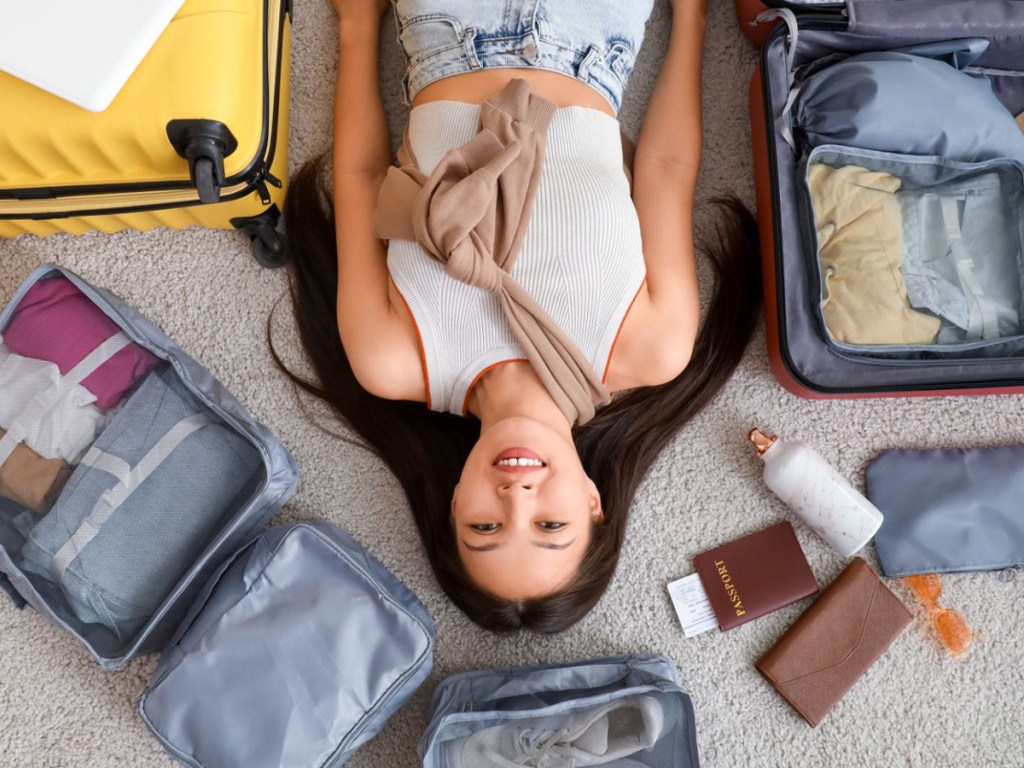
    Packing the necessary items
    Photo credit Canva

    Taking Pictures Can Help Plan Ahead

    Another helpful step is taking photos of your outfits to remember how everything fits together. Lumbatis offers, “You can even take pictures of the outfits with you wearing them or flat lays of the pieces and keep them on your phone or in your Notes App — So you can refer back to it on your trip.”

    Is the 5-4-3-2-1 packing method effective? These were some of the thoughts in the comments from readers hopeful to put the plan into action:

    “Great tip for me. Hate packing and never wear all the clothes I bring.”

    “Heading to Japan and I was just going to my closet to put it together. I overpack so this is sooo helpful.”

    “I’m dreading how to not over pack for such a variety of occasions, heat, and limited washing facilities. Ugh.”

    “I struggle with under packing so this is super helpful!”

    travel, adventure, alleviate stress, preparation
    Soaking up the adventure.
    Photo credit Canva

    The Science Behind Good Preparation

    Traveling is a great way to alleviate the stress and burdens of our daily lives. A 2025 study in Springer Nature Link showed travel helped people improve their long-term resilience by creating positive emotions while ecouraging self reflection. National Geographic found the benefits of travel begin even before the trip begins.

    However, preparation can have a powerful effect on the simple stresses a person might acquire during traveling. A 2025 study revealed that planning reduced anxiety and helped people prepare for delays or unexpected changes. Research in 2025 reported by AP News found that even making a simple checklist reduced anxiety and helped make for smoother trips.

    Lumbatis claims, “If you struggle with overpacking and want to create a great capsule wardrobe packing list, you’ve got to try this method.”

    People hope that traveling will relieve stress more than generate it. The 5-4-3-2-1 packing method offers a clear and simple way to pack just what you need. Careful preparation helps prevent last-minute chaos and produces a more enjoyable trip. Hopefully, this method can help you spend less time worrying and more time soaking in the adventure.

    Watch this YouTube video on incredible vacation destinations to inspire your next trip:

Explore More Culture Stories

Culture

A woman complained to her upstairs neighbor about a strange noise in the middle of the night. His wholesome response was perfect.

Culture

He threw a message in a bottle into the ocean as a teen. It washed up 49 years later with a response.

Culture

Restaurant owner turns a fake 1-star tamale review into a social media frenzy

Well-being

These seven simple phrases could be the secret to deepening trust and romance in your relationship