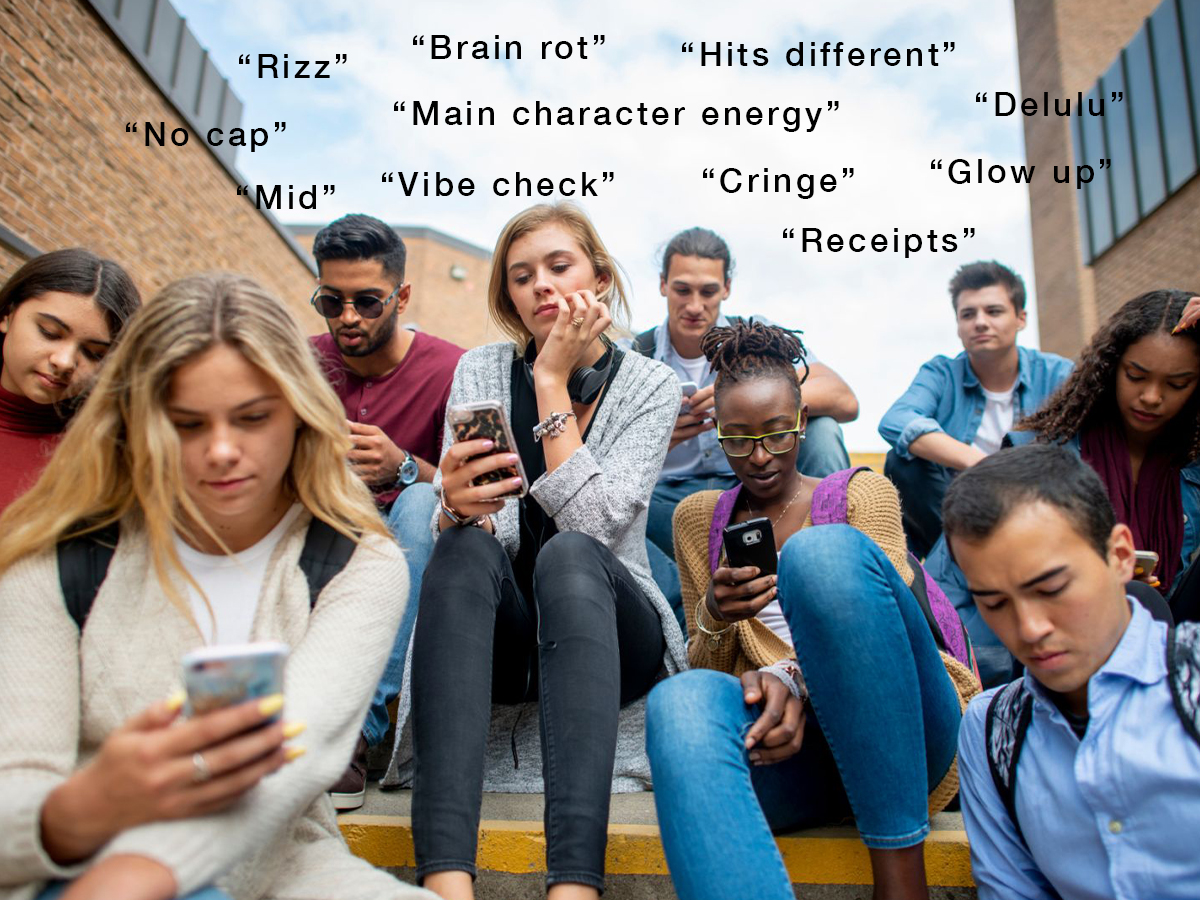
Phrases like “that’s mid” or “no cap, sus” are common forms of slang used by Gen Z. Even when words might be technically familiar, conversations with teenagers can feel like there’s a real barrier to entry.
According to Duygu Balan, a psychotherapist and mother of a teen, Gen Z slang is harder for many adults to decode because the language is emotionally layered and evolves rapidly online. In a recent story for Psychology Today, Balan explained that slang serves as a social signal separating one generation from the previous one, but digital culture has accelerated the process.

Photo credit Canva
Slang evolving in real time
Every age group develops informal language to signal belonging and shared cultural understanding. But the way slang spreads and functions today has changed dramatically.
Digital platforms like TikTok, Instagram, Discord, YouTube, and Snapchat have language transforming in real time. A phrase can appear in a viral post, be remixed by thousands of users, and shift definition within days. By the time it navigates to general consumption, the meaning might have evolved again.
Speed is only part of the story
The way slang quickly changes is only part of the story. What makes Gen Z slang even harder to decode is that it often compresses emotional meaning into short phrases. These terms do more than describe something. They signal how it feels.
“In fast-moving digital environments, where attention spans are short and communication happens through texts and memes, this kind of conversation becomes incredibly efficient,” shared Balan.
A 2024 study in Springer Nature Link explained that with shrinking attention spans and the evolution of reaction-based commentary, complex messages are conveyed through shorter expressions.
Gen Z slang compresses emotional reactions
Young people use digital shorthand to express emotion quickly. Social media relies on fast interpretation, and specific slang allows people to share tone, identity, and attitude instantly.
“Many of these phrases are used to compress complicated feelings such as discomfort, anxiety, longing, sadness, and skepticism into bite-sized constructs that can be communicated in seconds,” Balan adds.
Irony plays a major role in Gen Z slang. Expressions can blur sincerity, making it difficult to tell what is meant literally and what is meant playfully. A phrase can carry real emotional weight framed as a joke, allowing the speaker to maintain distance.
The phrase “brain rot” captures how it feels when the mind becomes overly stimulated. “Delulu” is short for delusional, and it’s a playful way to describe a person’s hopeful thinking. Another common slang term, “low-key,” allows someone to agree without fully committing.
Trying to interpret these terms can take time and patience since context means so much with them.
“These phrases are not meant to be clearly translated, so they aren’t. They stem from experiences that someone who wasn’t born with an iPhone in their hand will never fully understand,” explains Balan.

Photo credit Canva
Slang that signals peer approval
Historically, slang remained consistent long enough for people outside a generation to eventually understand. Today’s slang is far more situational, shaped by online culture and social context. Words like “radical” once meant something was cool. Meanwhile, a term like “sick” not only signals it’s good, but also conveys social meaning, such as admiration from peers.
This helps explain why adults often find Gen Z slang harder to decode. The challenge is not only vocabulary, but the combination of context, irony, emotional layering, and rapid evolution. Slang words now mean looking past the surface of the reference and paying more attention to the weight of the feelings underneath.