On September 5, thousands of people flooded into Kinigi, a tiny town in Rwanda’s northern Musanze district. Many were locals, but many were foreigners as well—not just tourists but dignitaries and members of the international press. Even Paul Kagame, the notoriously efficient (and perennially controversial) president of Rwanda, showed up. They’d all converged on the village for Kwita Izina, a festival in which officials read out the names of 24 mountain gorillas born in the nearby national park over the previous year while around two dozen youths danced around in rubber gorilla suits. At first, Kwita Izina sounds like a cute ceremony, but not one that would captivate the world, given its remote location and simple premise. But the festival has been a huge success for over a decade now, naming more baby gorillas, generating more funds, and gaining more attention every year—in large part because it embodies and promotes the extraordinary and instructive (though slightly controversial) success of Rwanda’s radical, interventionist mountain gorilla conservation and ecotourism program.
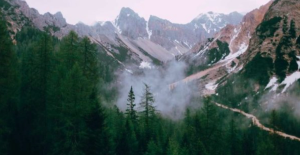
For much of the 20th century, it seemed impossible that any country in the region could create an effective mountain gorilla conservation program. Since 1902, when European explorers first encountered this unique species of gorilla in their mountain forest homelands (on the border of the modern Democratic Republic of Congo, Rwanda, and Uganda), these animals’ habitat and population has dwindled steadily. Between hunting, poaching, environmental degradation linked to precious metal and oil extraction, and the general chaos from decades of regional conflict, mountain gorillas had been driven into two very remote highland regions—about 175 square miles of the transnational Virunga massif, and 125 square miles of Uganda’s Bwindi Forest. Exposed to species-hopping human diseases, and continually pushed into higher altitudes and more remote areas, natural mortality rates started to fall rapidly as well. By 1981, researchers estimated that there were as few as 254 mountain gorillas in the Virunga area, and 540 in the world. Given all the pressures, alongside their long and fragile infancies (mountain gorillas have about a 26 percent infant morality rate even in the best circumstances), their extinction seemed all but guaranteed.
But in recent years, newfound attention to the gorillas’ plight, driven by the work (and unsolved murder) of primatologist Dian Fossey in the ‘80s, has led to an explosion of conservation initiatives that have helped mountain gorillas bounce back. Today, mountain gorilla populations are estimated at about 900 worldwide; a 2011 study found that between 1967 and 2008 the apes had experienced an average population growth of about 4 percent, making them the only primate species in the world whose numbers are increasing. It’s an amazing regional success story. But the most amazing work has been done in Rwanda, where a 2010 gorilla census put the local annual growth rate at 26.3 percent. Some observers in the country think that this count may actually even be low—the 2010 census claims that Rwanda’s Volcanoes National Park (their chunk of the Virunga massif) is home to 302 mountain gorillas, but officials and commentators venture to guess that the 2015 number could be as high as 500.
Some of Rwanda’s exceptional conservation success stems from the general increased attention, funding, and physical protection now afforded these gorillas in the wider region. From the 1980s onwards, Fossey’s research center and its progeny have established effective tracking programs, allowing nations to set clear borders for gorilla territory and efficiently allocate guards to discrete, targeted regions. Combined with education programs and a healthy amount of local and international attention, local rangers—not just in Rwanda but also in the DRC and Uganda—say they’ve managed to drastically reduce poaching.
But even within this general heightened push for preservation, it’s Rwanda’s program that manages to stand out, using researchers’ tracking and research data to enable proactive veterinary interventions in the local mountain gorilla population. The country’s Gorilla Doctors, a force of about 15 (mostly local) veterinarians, basically hear about any gorilla showing signs of illness or caught in a hunting snare (a common accident) and immediately show up to treat them. They handle about 18 cases per year and, according to that 2011 gorilla population report, these interventions may account for up to 40 percent of Rwanda’s exceptional conservation success.
[youtube ratio=”0.5625″ position=”standard” ]
Rwanda has also managed to sell gorillas to the nation as a collective economic asset more valuable than poaching or the land upon which the animals live. Key to this is Rwanda’s exceptional gorilla-tracking tourism program, where rangers tracking the apes take up to 10 groups of up to eight people a day to visit their primate charges. Locals pay just $50 for a trip, while resident foreigners pay about $375 and tourists pay $750. The pricing is deliberately high for outsiders to keep their numbers manageable while milking them for funds to sustain the preservation program. The results have been good as well—as of 2014, 27,000 gorilla tourists generated $15 million for the country. That’s a small chunk of the nation’s annual $252 million tourism revenue—but it’s a growing chunk, up from 20,000 visitors generating $8 million in 2008, and rising steadily.
Many nations and organizations tout the idea of making conservation economically attractive, but they sometimes encounter pitfalls when that money doesn’t make it back to populations living in protected areas, who then have incentives to poach or hack away at endangered species’ lands. That sort of defection is a big concern in the Virunga region, which is one of the most densely populated rural landscapes in the world and also fairly poor and hard to police. But Rwandan officials have taken special care to make sure that everyone living around the mountain gorillas is both philosophically onboard with conservation, and economically benefitting from it. Five percent of all proceeds made on gorilla tourism go back into community projects—that’s $1.83 million in the past decade, which has funded 57 schools and 360 community projects, from infrastructure to agriculture. The National Park authorities employ 800 locals directly in conservation efforts, and Gorilla Doctors makes sure to primarily include local (rather than international) doctors, who provide free health services to humans and livestock in nearby towns both as a matter of goodwill and to prevent regional disease outbreaks. By employing locals and providing clear-cut economic benefits, the program creates dedicated conservation acolytes—something the DRC and Uganda have not managed to emulate in any meaningful way.
There are a lot of moving parts and complex programs involved in Rwanda’s conservation operation, but many of them unite in the Kwita Izina gorilla-naming celebration, a tradition started in 2005 and inspired by traditional Rwandan naming ceremonies. The ceremony is only possible thanks to close tracking of mountain gorilla families, allowing officials to name and mark the birthday of every single new ape in Volcanoes Park. Meanwhile, the gaggle of performers and celebrities it attracts, as well as the cute spectacle of it all, is (as The Guardian labeled it this year) “canny tourist bait,” generating a ton of income for Kinigi, one of the main villages neighboring the gorillas. The naming ceremony is extremely successful at highlighting the benefits of local conservation while raising awareness and empathy for the baby gorillas, who are then humanized in reports that refer to them as individuals. And like the conservation program at large, thanks to the spectacle, precision, and beneficial buy-in around the festival, it’s grown every year, attracting more and more attendees and celebrating more and more births in an attention-grabbing upward spiral—this year’s 24 babies was the highest number ever named in one go.
The only problem facing Rwanda, Kwitna Izina, and the conservation program it represents is the fact that not all conservationists buy into the basic premise behind the project. Traditional conservationism holds that it’s best to leave animals alone, rather than habituating them to humanity through veterinary interventions, tourist treks, and giving them people names. Dian Fossey herself fell into this group of naturalist skeptics, who worry that even positive attention and fund-raising tours can be dangerous.
Yet even wary conservationists can’t deny the success of Kwitna Izina and what it embodies. Studies of Rwanda’s proactive and comprehensive program suggest that while reducing human contact with mountain gorillas to zero would be ideal, it is functionally impossible given the distribution of people and the size of existing ape habitats. Given existing conditions, the Rwandan model of intervention, habituation, humanization, hype, and directly experienced benefits may be the best model we have—and a good guide for other nations struggling with how to revamp their failing national conservation programs.