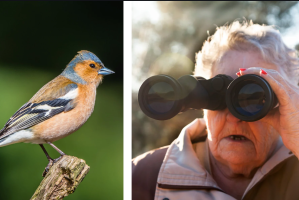
Andrew Sullivan is known for his articulate, well-thought-out responses to nearly everything. But when a reader wrote in to ask why, despite his advocacy for animals rights, the famed blogger still ate meat, Sullivan didn’t have much to say for himself.

“I don’t really have a defense…I eat meat because I really like it,” he offered. “I’m a sort of protein kind of guy… I’m not a big carb kind of guy… Without meat I don’t know what I’d do.”


Sullivan’s response touches on a major reason why more people don’t eat vegetarian: Most people like meat too much to give it up. I was a vegetarian for five years before pastrami lured me back to the ranks of meat-eaters. My younger sister crossed over for bacon. When I was a vegetarian, people would always ask me why. No one questions the power of pastrami.

Now I make a concerted effort to eat less meat, a dietary strategy that disarms even dedicated carnivores. Americans are coming around to this way of eating: As food writer Mark Bittman pointed out earlier this week, Americans’ meat consumption has been declining for years, and the Department of Agriculture is projecting that the country will eat even less beef and chicken in 2012. Beef industry watchers blame rising costs forced by drought, ethanol production, and increased demand from countries like China, where incomes are rising. Bittman suggests that some consumers simply have chosen to eat vegetarian occasionally.

In fact, eating vegetarian occasionally could be a smarter environmental choice than eating no meat at all. The diet of those who eschew only red meat could have a smaller carbon footprint than that of dairy-loving vegetarians: A serving of chicken has a lower carbon impact than a serving of hard cheese. The real advantage, though, is that eating less meat opens up conversations about food choices with meat-eaters, while vegetarianism often shuts them down.

Environmental-minded lifestyle choices don’t mean much unless a large percentage of people commit to them. These movements need a virality to them in order to succeed in diminishing greenhouse gas emissions, and potential recruits to the less-meat diet vastly outnumber those interested in going vegetarian altogether. When Vegetarian Times went looking for vegetarians in 2008, it found three times as many people who followed a “vegetarian-inclined” diet than strict vegetarians. As awareness about the health and environmental impacts of a meat-heavy diet have grown, the ways to eat ethically have multiplied beyond the diets espoused by the trinity of meat-lovers, vegetarians, and vegans. A friend who lives in Missoula, Montana, told me recently about “Montana vegetarians,” who eat only meat raised by themselves or close friends. Bittman suggests “semi-veganism,” a diet in which meal or so a week contains no meat or dairy.

When I was a vegetarian, my answer to the eternal “why” was that I just didn’t like meat, a relatively common justification. Also available is the Jonathan Safran Foer answer: It’s morally problematic to eat animals. Both these responses tend to meet with blank stares. Like Sullivan, most people know that meat isn’t the healthiest option, and many agree that what goes on in commercial feeding operations is horrifying. Yet they really like meat.

By eating less meat, I bypass these stalled conversations and get to jump into longer, more pleasant discussions about the glories of a quinoa patties or the surprising satisfactions of eggless egg salad. (It’s really good.) I can be as fanatical about kale salad as Sullivan is about steak-and-kidney pie. And instead of trying to argue the merits of a good steak, now the meat-lovers in my life just ask for recipes.

Photo via (cc) Flickr user SweetOnVeg

  • Man’s dog suddenly becomes protective of his wife, Internet clocks the reason right away
    Dogs have impressive observational powers.Photo credit: Canva

    Reddit user Girlfriendhatesmefor’s three-year-old pitbull, Otis, had recently become overprotective of his wife. So he asked the online community if they knew what might be wrong with the dog.

    “A week or two ago, my wife got some sort of stomach bug,” the Reddit user wrote under the subreddit /r/dogs. “She was really nauseous and ill for about a week. Otis is very in tune with her emotions (we once got in a fight and she was upset, I swear he was staring daggers at me lol) and during this time didn’t even want to leave her to go on walks. We thought it was adorable!”

    His wife soon felt better, butthe dog’s behavior didn’t change.

    pregnancy signs, dogs and pregnancy, pitbull behavior, pet intuition, dog overprotection, Reddit stories, viral Reddit, dog instincts, canine emotions, dog owner tips
    Otis knew before they did. Canva

    Girlfriendhatesmefor began to fear that Otis’ behavior may be an early sign of an aggression issue or an indication that the dog was hurt or sick.

    So he threw a question out to fellow Reddit users: “Has anyone else’s dog suddenly developed attachment/aggression issues? Any and all advice appreciated, even if it’s that we’re being paranoid!”

    The most popular response to his thread was by ZZBC.

    Any chance your wife is pregnant?

    ZZBC | Reddit

    The potential news hit Girlfriendhatesmefor like a ton of bricks. A few days later, Girlfriendhatesmefor posted an update and ZZBC was right!

    “The wifey is pregnant!” the father-to-be wrote. “Otis is still being overprotective but it all makes sense now! Thanks for all the advice and kind words! Sorry for the delayed reply, I didn’t check back until just now!”

    Redditors responded with similar experiences.

    Anecdotal I know but I swear my dog knew I was pregnant before I was. He was super clingy (more than normal) and was always resting his head on my belly.

    realityisworse | Reddit

    So why do dogs get overprotective when someone is pregnant?

    Jeff Werber, PhD, president and chief veterinarian of the Century Veterinary Group in Los Angeles, told Health.com that “dogs can also smell the hormonal changes going on in a woman’s body at that time.” He added the dog may “not understand that this new scent of your skin and breath is caused by a developing baby, but they will know that something is different with you—which might cause them to be more curious or attentive.”

    The big lesson here is to listen to your pets and to ask questions when their behavior abruptly changes. They may be trying to tell you something, and the news may be life-changing.

    This article originally appeared last year.

  • Throughout history, women have stood up and fought to break down barriers imposed on them from stereotypes and societal expectations. The trailblazers in these photos made history and redefined what a woman could be. In doing so, they paved the way for future generations to stand up and continue to fight for equality.

  • ,

    Why mass shootings spawn conspiracy theories

    Mass shootings and conspiracy theories have a long history.

    While conspiracy theories are not limited to any topic, there is one type of event that seems particularly likely to spark them: mass shootings, typically defined as attacks in which a shooter kills at least four other people.

    When one person kills many others in a single incident, particularly when it seems random, people naturally seek out answers for why the tragedy happened. After all, if a mass shooting is random, anyone can be a target.

    Pointing to some nefarious plan by a powerful group – such as the government – can be more comforting than the idea that the attack was the result of a disturbed or mentally ill individual who obtained a firearm legally.


Explore More Articles Stories

Articles

Man’s dog suddenly becomes protective of his wife, Internet clocks the reason right away

Articles

14 images of badass women who destroyed stereotypes and inspired future generations

Articles

Why mass shootings spawn conspiracy theories

Articles

11 hilarious posts describe the everyday struggles of being a woman