

For the past 42 years, August 13 has been International Left-handers Day. It was first observed by Dean R. Campbell, founder of the Lefthanders International, Inc., to celebrate their uniqueness and highlight the health and educational issues they face.

It’s also a day to honor left-handed people who overcame their struggles to achieve great things, including Bill Gates, Marie Curie, Oprah Winfrey, Babe Ruth, Napoleon Bonaparte, Leonardo da Vinci, and Jimi Hendrix as well as the long list of left-handed presidents that have graced the Oval Office since the dawn of the 20th century: James Garfield, Herbert Hoover, Harry Truman, Gerald Ford, Ronald Reagan, George H.W. Bush, Bill Clinton, and Barack Obama. And, of course, the greatest lefty-rights advocate of our times, Ned Flanders.

To help spread awareness about the unique issues affecting left-handed individuals, here’s GOOD’s list of the 11 struggles that only left-handed people truly understand.

1. Scissors

Most left-handed people don’t truly realize they’re different until they reach pre-school and realize it’s impossible to use right-handed scissors. If the teacher doesn’t have a left-handed pair, they’re forced to either cut right-handed and risk damaging their artwork or turn the scissors upside down, potentially leading to premature arthritis.

scissors, left-handed people, artwork, cutting things, hands
A pair of scissors. Canva

2. Ink

Life is tough for lefties who write in a language that reads left to right. Especially if they’re writing in ink. If a lefty uses a pen with slow-drying ink, they’re bound to smear it with the palm of their left hand.

3. Playing sports

Physical education classes can be particularly challenging for left-handed individuals. They better hope their teacher has enough left-handed baseball gloves or they’re stuck on the sidelines. Plus, most coaches are righties, so left-handed people have to learn to do everything in reverse.

4. Can openers

If it weren’t for the advent of left-handed can openers, most of them would have starved.

can opener, left-handed people, small appliances, can, tin can
A can opener opening a tin can. Canva

5. Guitars

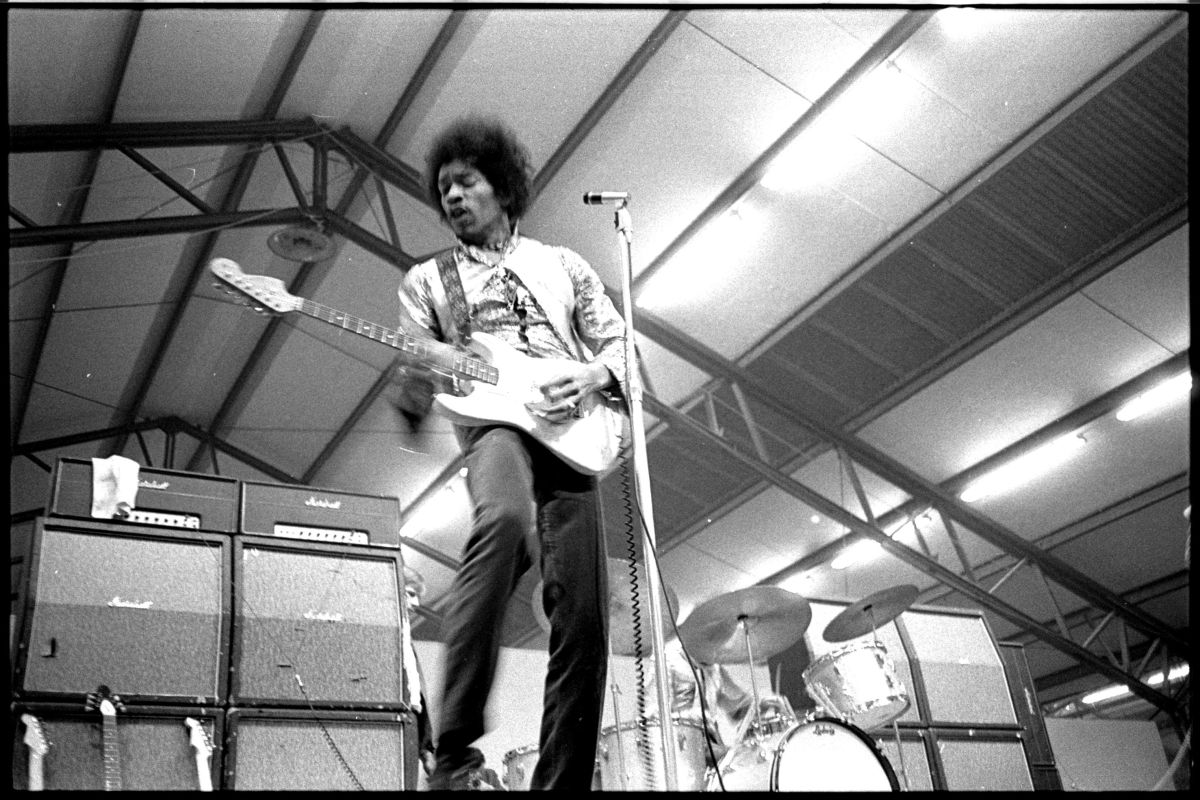
For a left-handed person to play a right-handed guitar, they have to flip the thing over and then restart it the opposite way. The left-handed god of living in a right-handed world has to be Jimi Hendrix. He became one of the greatest guitar players ever by playing a right-handed guitar upside down.
jimi hendrix, the '60s, hendrix guitar, hendrix on stage, jimi
Jimi Hendrix playing on stage. Public Domain

6. Cameras

Left-handed photographers and videographers often face a significant disadvantage due to the shutter button’s typically right-hand placement.

7. Lower pay

According to a study published in the Journal of Economic Perspectives, lefties make about 10 to 12% less than righties. Joshua Goodman, an economist at Harvard’s Kennedy School, claims the wage gap is because left-handed people have more emotional and behavioral problems, have more learning disabilities such as dyslexia, complete less schooling, and work in occupations requiring less cognitive skill.

money, dollar bills, two ten-dollar bills, hands, cash, 20 dollars
A man handing over $20 in cash. Canva

8. Poor health

According to ABC, left-handed people are more likely to be schizophrenic, alcoholic, delinquent, dyslexic, and have Crohn’s disease and ulcerative colitis, as well as mental disabilities. This dark fact shows that left-handed people not only have to put up with minor annoyances, but they’re more likely to get a serious illness.

9. Tools

The labels, handles, and switches are always on the right-hand side of any tool or machine. While it seems like a minor nuisance, this puts lefties who use dangerous equipment in peril.

power tools, power saw, saws, sparks, gloves, tools
A person using a power saw. Canva

10. Dinner tables

Left-handed people aren’t free to sit wherever they like at the dinner table. They have to find a spot where they’re not bumping elbows with the person sitting next to them. Which means they’re sometimes stuck sitting next to the person no one wants to eat beside.

11. Spiral notebooks

It’s amazing more left-handed people don’t have calluses on the palms of their left hands after rubbing them against the edge of spiral notebooks during school. The only alternative is turning the notebook upside down so the pages look funny or buying an overpriced left-handed notebook.

Trending in the right, or maybe the left, direction

It’s not all bad news, though. Recently, there has been a growing movement to make the world more left-leaning. Schools are more likely to stock left-handed scissors and desks, workplaces are embracing ambidextrous tools, and even tech companies are designing devices with customizable controls. Research is also flipping the script, showing that left-handed people often excel in creativity, problem-solving, and out-of-the-box thinking—traits that are finally being celebrated rather than sidelined. Sure, spiral notebooks are still a pain, but being a lefty is starting to look a lot more like a superpower.

This article originally appeared seven years ago.
  • These seven simple phrases could be the secret to deepening trust and romance in your relationship
    A happy couple enjoys coffee togetherPhoto credit: Canva
    , , ,

    These seven simple phrases could be the secret to deepening trust and romance in your relationship

    If you want a more secure relationship a Harvard expert recommends using these seven phrases.

    Maintaining a deep sense of connection and trust in a long term relationship is often easier said than done. Even for couples who have been together for years, the daily grind can sometimes dull the spark of romance. However, Dr. Cortney Warren, a psychologist trained at Harvard Medical School, has identified a specific set of verbal habits that distinguish highly successful, trusting couples from those who struggle.

    Dr. Warren recently shared seven phrases that secure partners use every day to reinforce their commitment. These small shifts in language are designed to foster vulnerability, safety, and a sense of shared purpose.

    The first few phrases focus on the core of any partnership: the belief that your partner is on your side.

    @drcortneywarren

    Feeling that twinge of jealousy or insecurity in your relationship? It happens to all of us, but how you respond can make all the difference. Instead of immediately reacting, try this: pause and ask yourself: What does my reaction to this situation say about me? Is it about fear of being unloved? A belief that you’re “not enough”? Often, our strongest emotional reactions are more about our own insecurities than about our partner’s actions. Taking the time to reflect on your triggers, where they come from, and how you can strengthen your self-esteem can help you communicate with your partner in a healthier, more productive way. This clip is from my recent conversation with Shanenn Bryant on the Top Self Podcast. #SelfAwareness #EmotionalIntelligence #HealthyRelationships #JealousyTriggers #TopSelfPodcast #RelationshipAdvice

    ♬ original sound – DrCortneyWarren – DrCortneyWarren

    1. “I trust you.”

    Simple, to the point, and clear. This communicates that you know your partner and that you believe they have your best interest in heart, even if you get into an argument. It also allows them to feel safe making some decisions on both of your behalf.

    2. “You see me as I am.”

    This not only tells your partner that they know all there is to know about you without fear of hiding parts of yourself, but that you’re comfortable being vulnerable should a difficult subject come up. It communicates that you trust your partner will respond with compassion, not judgment, while implying that they can trust you to do the same in return.

    Dr. Cortney Warren, relationship advice, Harvard psychologist, building trust, healthy communication, romance tips, non-verbal cues, marriage success, intimacy, partnership
    A couple on a romantic date. Credit: Canva

    3. “We’ll get through this.”

    Arguments, fights, and conflicts happen in even the most solid relationships. However, saying this phrase reinforces that while things still need to be sorted out, there is no intention of breaking the relationship over the disagreement. It allows more open communication and reiterates that it is you and your partner against the problem, not each other.

    4. “Go have fun with your friends/Thanks for giving me space!”

    If your relationship is solid, time apart shouldn’t be a threat. Alone time is natural and, frankly, healthy. Respecting your partner’s independence in turn respects yours.

    Dr. Cortney Warren, relationship advice, Harvard psychologist, building trust, healthy communication, romance tips, non-verbal cues, marriage success, intimacy, partnership. Credit: Youtube

    5. “I miss you.”

    As a counterbalance to the previous phrase, “I miss you” isn’t an indicator of being too clingy unless you’re not offering your partner the trust to have space. It’s just a nice way of saying that you look forward to being together and builds upon that when you reunite, whether it’s after a long business trip or later in the evening after work.

    6. “Let’s make a plan!”

    A growing relationship means mutually planning and investing in each other’s futures to further turn “your plans” and “my plans” into “our plans.” This phrase relays to your partner that you want them around for the long haul.

    7. “Can we talk?”

    Communication issues are one of the primary reasons relationships fail. Asking this simple and direct question accompanied with the previous phrases as foundations in your relationship will allow trust for you to ask and be asked when something troubling occurs with either of you.

    While verbal communication is important in sustaining relationships, it’s good to incorporate non-verbal gestures of support, love, and trust, too.

    Now, pairing these loving wordless gestures that expertscounselors, and psychologists recommend with the previous seven phrases could help your relationship develop deeper connection and trust.

    1. Eye contact

    Seeing eye-to-eye literally helps you both see eye-to-eye better when discussing a difficult topic or when you want to express loving attention to your partner.

    2. Smile

    Smiling is a nonverbal cue to reiterate that your partner’s presence is welcomed and safe. It also reminds your partner that you’re both okay, too.

    3. Supportive touch

    Caressing a shoulder, a peck on the forehead, holding hands, or a tight hug—any of these and all of these are ways to provide comfort and reassurance along with your words. It could also be a way to indicate your interest in further intimacy.

    4. Mirroring

    Matching your partner’s posture and pose helps foster connection while also indicating you’re absorbing what they’re verbally communicating to you. So, when you adjust your posture to meet theirs when they’re discussing something important to them, they’ll know you think it’s important, too. On the other end, if you match their relaxed pose, they’ll in turn feel more relaxed, too.

    5. Enjoy quiet time together

    Being able to enjoy the silence in the same room bolsters feelings of safety and comfort. It shows that you and your partner don’t feel panicked or stressed about the other feeling bored, awkward, and you don’t cary the pressure of needing to be entertained/entertaining. Shared silence is precious in a relationship.

    6. Handwritten notes

    Okay, this might be a cheat technically, but written notes and letters can be left for your partner to find when they wake up after you have left for work early, on the kitchen table, or on a bathroom mirror as ways to express those previous seven phrases. For some people, written communication is much easier for them than speaking, too, so there’s that factor to consider.

    7. Acts of service

    This is a bit of a grab bag as what acts of service are depends on who you are in the relationship with. It could be making them coffee each morning the way they like it so they don’t have to. It could be doing a chore they hate doing. It could be cooking them their favorite food after finding out that they had a long day. These acts remind your partner that they’re known and safe with you.

    This article originally appeared last year.

  • Local governments provide proof that polarization is not inevitable
    Local officials get to participate in events such as ribbon cuttings, celebrating projects they may have helped make happen.Photo credit: NHLI/Eliot J. Schechter via Getty Images
    ,

    Local governments provide proof that polarization is not inevitable

    From potholes to parks, shared priorities are bringing people together where they live.

    When it comes to national politics, Americans are fiercely divided across a range of issues, including gun control, election security and vaccines. It’s not new for Republicans and Democrats to be at odds over issues, but things have reached a point where even the idea of compromising appears to be anathema, making it more difficult to solve thorny problems.

    But things are much less heated at the local level. A survey of more than 1,400 local officials by the Carnegie Corporation and CivicPulse found that local governments are “largely insulated from the harshest effects of polarization.” Communities with fewer than 50,000 residents proved especially resilient to partisan dysfunction.

    Why this difference? As a political scientist, I believe that lessons from the local level not only open a window onto how polarization works but also the dynamics and tools that can help reduce it.

    Problems are more concrete

    Local governments deal with concrete issues – sometimes literally, when it comes to paving roads and fixing potholes. In general, cities and counties handle day-to-day functions, such as garbage pickup, running schools and enforcing zoning rules. Addressing tangible needs keeps local leaders’ attention fixed on specific problems that call out for specific solutions, not lengthy ideological debates.

    By contrast, a lot of national political conflict in the U.S. involves symbolic issues, such as debates about identity and values on topics such as race, abortion and transgender rights. These battles are often divisive, even more so than purely ideological disagreements, because they can activate tribal differences and prove more resistant to compromise.

    When mayors come together, they often find they face common problems in their cities. Gathered here, from left, are Jerry Dyer of Fresno, Calif., John Ewing Jr. of Omaha, Neb., and David Holt of Oklahoma City. AP Photo/Kevin Wolf

    Such arguments at the national level, or on social media, can lead to wildly inaccurate stereotypes about people with opposing views. Today’s partisans often perceive their opponents as far more extreme than they actually are, or they may stereotype them – imagining that all Republicans are wealthy, evangelical culture warriors, for instance, or conversely being convinced that all Democrats are radical urban activists. In terms of ideology, the median members of both parties, in fact, look similar.

    These kinds of misperceptions can fuel hostility.

    Local officials, however, live among the human beings they represent, whose complexity defies caricature. Living and interacting in the same communities leads to greater recognition of shared interests and values, according to the Carnegie/CivicPulse survey.

    Meaningful interaction with others, including partisans of the opposing party, reduces prejudice about them. Local government provides a natural space where identities overlap.

    People are complicated

    In national U.S. politics today, large groups of individuals are divided not only by party but a variety of other factors, including race, religion, geography and social networks. When these differences align with ideology, political disagreement can feel like an existential threat.

    Such differences are not always as pronounced at the local level. A neighbor who disagrees about property taxes could be the coach of your child’s soccer team. Your fellow school board member might share your concerns about curriculum but vote differently in presidential elections.

    Mayors can find themselves caught up in national debates, as did Minneapolis Mayor Jacob Frey over the Trump administrationu2019s immigration enforcement policies in his city. AP Photo/Kevin Wolf

    These cross-cutting connections remind us that political opponents are not a monolithic enemy but complex individuals. When people discover they have commonalities outside of politics with others holding opposing views, polarization can decrease significantly.

    Finally, most local elections are technically nonpartisan. Keeping party labels off ballots allows voters to judge candidates as individuals and not merely as Republicans or Democrats.

    National implications

    None of this means local politics are utopian.

    Like water, polarization tends to run downhill, from the national level to local contests, particularly in major cities where candidates for mayor and other office are more likely to run as partisans. Local governments also see culture war debates, notably in the area of public school instruction.

    Nevertheless, the relative partisan calm of local governance suggests that polarization is not inevitable. It emerges from specific conditions that can be altered.

    Polarization might be reduced by creating more opportunities for cross-partisan collaboration around concrete problems. Philanthropists and even states might invest in local journalism that covers pragmatic governance rather than partisan conflict. More cities and counties could adopt changes in election law that would de-emphasize party labels where they add little information for voters.

    Aside from structural changes, individual Americans can strive to recognize that their neighbors are not the cardboard cutouts they might imagine when thinking about “the other side.” Instead, Americans can recognize that even political opponents are navigating similar landscapes of community, personal challenges and time constraints, with often similar desires to see their roads paved and their children well educated.

    The conditions shaping our interactions matter enormously. If conditions change, perhaps less partisan rancor will be the result.

    This article originally appeared on The Conversation. You can read it here.

  • His memory resets every 30 seconds. A look inside his 1990 diary shows what he never forgot.
    An older man writes in his journalPhoto credit: Canva
    ,

    His memory resets every 30 seconds. A look inside his 1990 diary shows what he never forgot.

    He was a brilliant musician until a viral infection left him with a memory span of only 30 seconds.

    In 1985, the life of British musicologist Clive Wearing changed forever. After contracting herpesviral encephalitis, a rare virus that attacked the memory-forming regions of his brain, Wearing was left with what is considered the most extreme case of amnesia ever recorded. For four decades, his life has been lived in a loop lasting between seven and 30 seconds.

    Recently, a page from Wearing’s diary dated January 13, 1990, surfaced online via Diaries of Note, offering a haunting and beautiful look into a mind that cannot retain the past. The diary is filled with entries made just minutes apart, each one declaring that he has just woken up for the very first time.

    At 7:46 am, he wrote, “I am awake for the first time.” Just one minute later, at 7:47 am, he crossed that out and wrote again, “This illness has been like death till NOW. All senses work.” Because he cannot trust his own handwriting or remember writing the previous line, his diary is a chaotic map of scratched-out sentences and desperate attempts to grasp consciousness.

    A Rare Neurological Intersection

    Wearing’s condition is unique in the world of neurology because he suffers from both retrograde and anterograde amnesia simultaneously. According to Study.com, most patients only experience one form. Because he cannot retain any new information (anterograde) and has lost most of his past (retrograde), he lives in a perpetual state of confusion.

    Currently residing in an assisted living facility, Wearing understands his immediate surroundings but has no idea how he arrived there. Tragically, while he knows he has children, he cannot remember their names or faces. He knows he was a musician, yet he cannot recall ever playing or hearing a single piece of music—though, remarkably, his muscle memory remains intact, allowing him to play the piano and conduct with the same brilliance he possessed before the illness.

    The Bond That Defied Science

    While the virus destroyed his ability to form new memories, it failed to erase his connection to his wife, Deborah. Through decades of “restarting” his conscious mind, his first instinct upon seeing her is always one of pure joy and recognition.

    Deborah has documented their life in her memoir, Forever Today: A Memoir Of Love And Amnesia. She describes their relationship as a “story of a marriage, of a bond that runs deeper than conscious thought.” According to Historic Flix, she has worked closely with the Amnesia Association to help the NHS develop better rehabilitation protocols for those with severe brain injuries.

    In an interview with The Guardian, Deborah shared a perspective that challenges our traditional understanding of the human brain. She explained that even when her husband was in his most acute state, his love for her remained the one constant.

    “I realized that we are not just brain and processes. Clive had lost all that and yet he was still Clive,” she told the publication. “Even when he was at his worst… he still had that huge overwhelming love for me. That was what survived when everything else was taken away.”

    This article originally appeared two years ago.

Explore More Culture Stories

Culture

Local governments provide proof that polarization is not inevitable

Culture

How business students learn to make ethical decisions by studying a soup kitchen in one of America’s toughest neighborhoods

Culture

This Gen Zer just shared their budget on a full-time job, and millennials are losing it in pure rage

Culture

A daycare teacher lost her job after a dad caught her repeatedly lying about a show featuring cartoon vegetables