

For the past 42 years, August 13 has been International Left-handers Day. It was first observed by Dean R. Campbell, founder of the Lefthanders International, Inc., to celebrate their uniqueness and highlight the health and educational issues they face.

It’s also a day to honor left-handed people who overcame their struggles to achieve great things, including Bill Gates, Marie Curie, Oprah Winfrey, Babe Ruth, Napoleon Bonaparte, Leonardo da Vinci, and Jimi Hendrix as well as the long list of left-handed presidents that have graced the Oval Office since the dawn of the 20th century: James Garfield, Herbert Hoover, Harry Truman, Gerald Ford, Ronald Reagan, George H.W. Bush, Bill Clinton, and Barack Obama. And, of course, the greatest lefty-rights advocate of our times, Ned Flanders.

To help spread awareness about the unique issues affecting left-handed individuals, here’s GOOD’s list of the 11 struggles that only left-handed people truly understand.

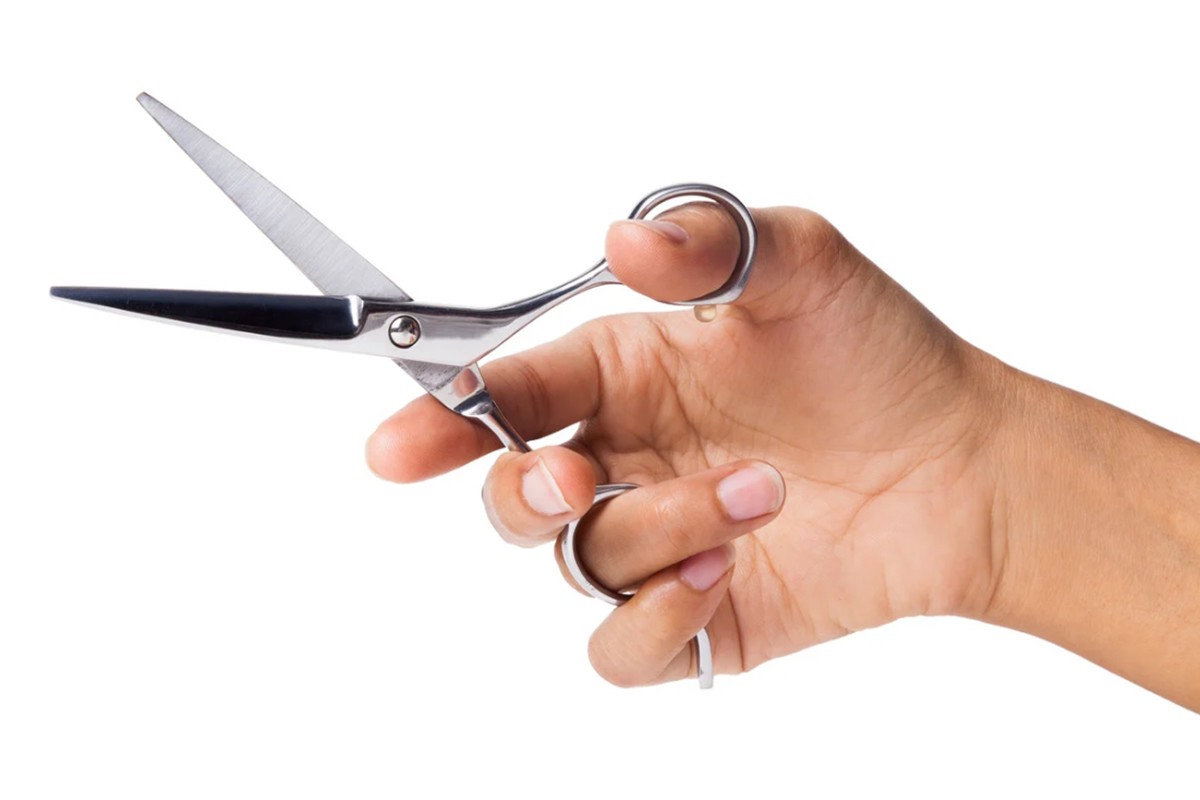
1. Scissors

Most left-handed people don’t truly realize they’re different until they reach pre-school and realize it’s impossible to use right-handed scissors. If the teacher doesn’t have a left-handed pair, they’re forced to either cut right-handed and risk damaging their artwork or turn the scissors upside down, potentially leading to premature arthritis.
scissors, left-handed people, artwork, cutting things, hands
A pair of scissors. Canva

2. Ink

Life is tough for lefties who write in a language that reads left to right. Especially if they’re writing in ink. If a lefty uses a pen with slow-drying ink, they’re bound to smear it with the palm of their left hand.

3. Playing sports

Physical education classes can be particularly challenging for left-handed individuals. They better hope their teacher has enough left-handed baseball gloves or they’re stuck on the sidelines. Plus, most coaches are righties, so left-handed people have to learn to do everything in reverse.

4. Can openers

If it weren’t for the advent of left-handed can openers, most of them would have starved.

can opener, left-handed people, small appliances, can, tin can
A can opener opening a tin can. Canva

5. Guitars

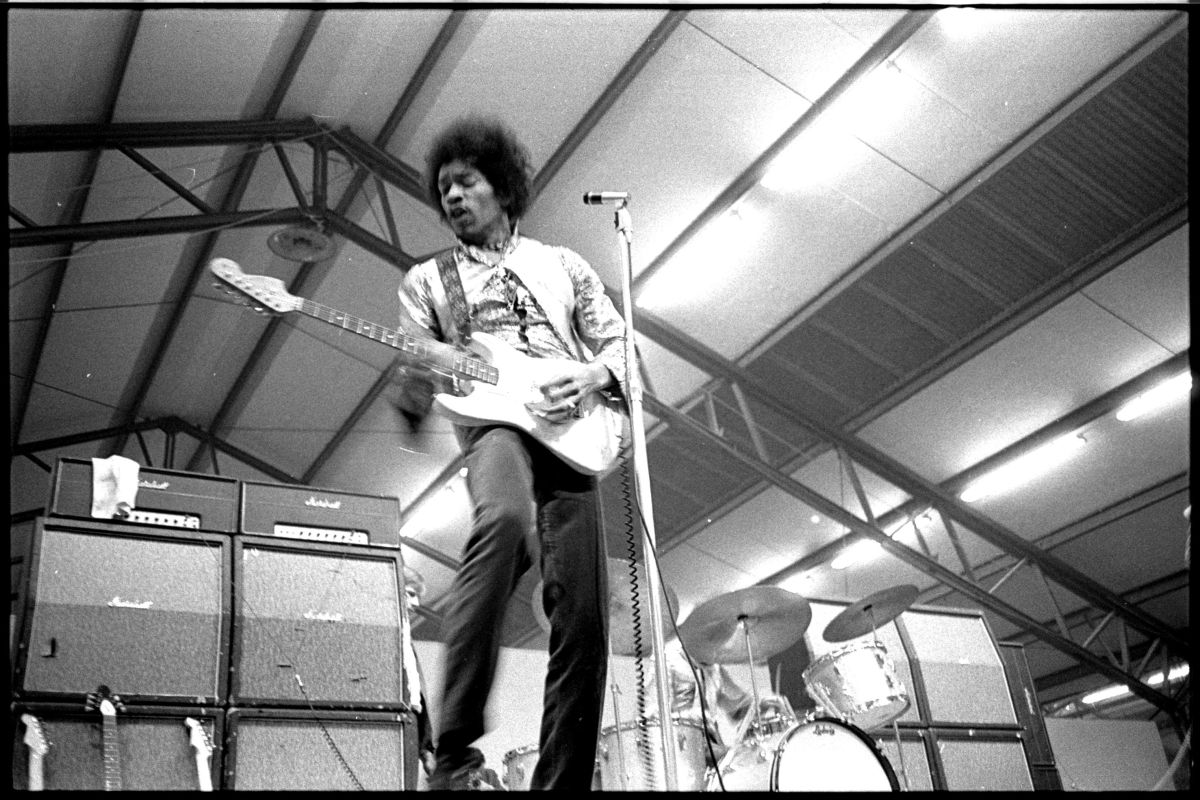
For a left-handed person to play a right-handed guitar, they have to flip the thing over and then restart it the opposite way. The left-handed god of living in a right-handed world has to be Jimi Hendrix. He became one of the greatest guitar players ever by playing a right-handed guitar upside down.
jimi hendrix, the '60s, hendrix guitar, hendrix on stage, jimi
Jimi Hendrix playing on stage. Public Domain

6. Cameras

Left-handed photographers and videographers often face a significant disadvantage due to the shutter button’s typically right-hand placement.

7. Lower pay

According to a study published in the Journal of Economic Perspectives, lefties make about 10 to 12% less than righties. Joshua Goodman, an economist at Harvard’s Kennedy School, claims the wage gap is because left-handed people have more emotional and behavioral problems, have more learning disabilities such as dyslexia, complete less schooling, and work in occupations requiring less cognitive skill.

money, dollar bills, two ten-dollar bills, hands, cash, 20 dollars
A man handing over $20 in cash. Canva

8. Poor health

According to ABC, left-handed people are more likely to be schizophrenic, alcoholic, delinquent, dyslexic, and have Crohn’s disease and ulcerative colitis, as well as mental disabilities. This dark fact shows that left-handed people not only have to put up with minor annoyances, but they’re more likely to get a serious illness.

9. Tools

The labels, handles, and switches are always on the right-hand side of any tool or machine. While it seems like a minor nuisance, this puts lefties who use dangerous equipment in peril.

power tools, power saw, saws, sparks, gloves, tools
A person using a power saw. Canva

10. Dinner tables

Left-handed people aren’t free to sit wherever they like at the dinner table. They have to find a spot where they’re not bumping elbows with the person sitting next to them. Which means they’re sometimes stuck sitting next to the person no one wants to eat beside.

11. Spiral notebooks

It’s amazing more left-handed people don’t have calluses on the palms of their left hands after rubbing them against the edge of spiral notebooks during school. The only alternative is turning the notebook upside down so the pages look funny or buying an overpriced left-handed notebook.

Trending in the right, or maybe the left, direction

It’s not all bad news, though. Recently, there has been a growing movement to make the world more left-leaning. Schools are more likely to stock left-handed scissors and desks, workplaces are embracing ambidextrous tools, and even tech companies are designing devices with customizable controls. Research is also flipping the script, showing that left-handed people often excel in creativity, problem-solving, and out-of-the-box thinking—traits that are finally being celebrated rather than sidelined. Sure, spiral notebooks are still a pain, but being a lefty is starting to look a lot more like a superpower.

This article originally appeared seven years ago.
  • Students go for a world record with group drumming rendition of “Beggin”
    Photo credit: CanvaA music teacher plays drums with a student.

    Drum instructor Patrick Abdo doesn’t simply direct a children’s recital—he launches into a full-body celebration of music. In an Instagram post gaining widespread attention, he leads 10 children, ages 5 to 10, in a drumming rendition of the Måneskin song “Beggin’.”

    As the kids bang the drums in rhythmic unison and parents watch, beaming with pride, the room pulses with energy. But what makes the performance all the more magnetic isn’t simply the precision of the young drummers—it’s Abdo’s infectious excitement.

    Abdo guides kids to an impressive musical moment

    In the video, captioned “A record like no other!,” the 10 kids each have their own drum kit arranged in a circle around a large room. As the music starts, Abdo takes the lead, instructing the young musicians and wildly raising his arms to the rhythm. He keeps perfect time with his air drumming, and the kids follow.

    These young drummers do a fantastic job, fully committed and bringing the focus and skill needed to pull off such a high-octane song. Yet it’s nearly impossible not to have your attention drawn to the teacher. Abdo radiates an infectious belief in every child in the room.

    This type of wholehearted encouragement feels increasingly rare, and it’s wonderful to watch. As proud parents smile from the sidelines, he moves through the room, connecting with each student. With each burst of encouragement, the recital transforms into something special.

    There is little publicly available information about Abdo’s background. His breakout visibility appears tied to short-form drum lesson videos posted on his Instagram page. His profile lists Dubai as his location, and his bio reads, “My dream is to recreate School Of Rock MENA [Middle East North Africa] version.”

    The good-vibes energy inspires people

    The video quickly became impossible to scroll past. Views steadily increased, and so did the comments. The appreciation for both the synchronized performance and Abdo’s teaching style offers a moving example of mentoring at its best. As much as viewers loved the kids’ musical showcase, many seemed even more inspired by Abdo’s uplifting and engaging style:

    “They shut it down for real !!!The instructor deserves an applause”

    “I love the teacher !! So enthusiastic, motivating and you can tell he loves these kids!!!”

    “well done to that teacher and all the children — luv this”

    “This teacher has incredible enthusiasm which inspires all the kids to work so hard to get it!”

    “Wow, the instructor’s patience and passion for his work are truly admirable!”

    “This is called perfection.”

    “The teacher’s passion! The talented, focused kids!”

    Great teachers and mentorship matter

    There is simply no denying the value of great teachers and mentors. Everyone benefits from guidance and encouragement, especially young people. Research in 2025 found that mentored youth were 20% more likely to attend college, earn higher incomes, and exhibit better behavior. A 2023 trial conducted by Big Brothers Big Sisters of America found measurable improvements in social and emotional well-being.

    A 2022 study found that mentorship increased retention and promoted success. The benefits extend to mentors as well, offering opportunities to build enduring relationships that evolve and provide value over time.

    The music recital had the Internet buzzing over its great energy and the joy of watching kids go for it. Inspiring mentorship may be the real power behind Abdo’s musical instruction. Whether viewers remember a beloved teacher or recognize the one they wish they’d had, the right mentor can stay with a child long after the music stops.

  • A BBC crew broke ‘cardinal rule’ of nature documentaries to save trapped penguins
    Photo credit: CanvaPenguins jumping off a glacier into the water.
    ,

    A BBC crew broke ‘cardinal rule’ of nature documentaries to save trapped penguins

    Even the show’s narrator, David Attenborough, supported the controversial decision to step in.

    Nature documentaries operate on a single, golden rule: observe, record, but never interfere. The goal is to capture the raw, unscripted reality of the natural world, even when that reality is brutal. But during the filming of the BBC Earth series Dynasties, a situation arose that was so dire, the crew felt compelled to break that cardinal rule.

    The incident, which took place in November 2018, involved a colony of Emperor penguins in Antarctica. A massive storm had hit, dropping temperatures to minus 50 degrees Celsius (minus 76 degrees Fahrenheit) and trapping a large group of mothers and chicks in a steep, icy ravine.

    Separated from the safety of their rookery, the birds were helpless. The mothers, cradling their chicks, were unable to climb the slick, vertical slopes.

    Emperor penguins, BBC Earth, David Attenborough, Antarctica, nature documentary
    Penguins march across the ice. Photo credit: Canva

    The situation was desperate. Some chicks had already been abandoned and frozen to death in the gully, while predators circled the survivors. The emotional toll on the crew was immense. As one cameraman told Country Living, “I know it’s natural, but it’s bloody hard to watch.”

    Faced with the potential extinction of the entire group, the team made a controversial choice.

    “It was not a straightforward decision by any stretch of the imagination,” director Will Lawson explained in an interview with Lorraine. “You just have to look at the facts that are in front of you before you make a decision like that.”

    Once the storm broke, the crew decided to intervene, but they did so “passively.” They didn’t lift the birds; instead, they used their tools to dig a shallow ramp into the ice, creating a path the penguins could potentially use to escape on their own.

    “Once we’d dug that little ramp, which took very little time, we left it to the birds. We were elated when they decided to use it,” Lawson told Country Living, noting that there is simply no “rule book” for such extreme scenarios.

    The footage of the penguins waddling up the man-made ramp to safety became a defining moment for the series. Even Sir David Attenborough, a staunch defender of non-intervention, backed the move.

    “It’s very rare for the film crew to intervene. But they realize that they might be able to save at least some of these birds, simply by digging a few steps in the ice,” Attenborough said.

    Producer Mike Gunton agreed, framing it as a moral imperative rather than a documentary breach. “We have a rule that interfering is a very dangerous thing to do. But these penguins were going to die through a freak act of nature if nothing happened,” he said. “How would this conversation be going if you said you saw them there and did nothing? I think you have to do it.”

    The intervention was passive, but the result was profound. The colony survived, and the crew walked away with clear consciences. As Attenborough concluded, “To have done anything else would only make matters worse and distort the truth.” 

    This article originally appeared two years ago. It has been updated.

  • Therapist shares why Justin Bieber’s duet with 13-year-old self was so incredibly moving
    Photo credit: Wikimedia Commons & FlickrJustin Bieber performs onstage (left) and at a Nintendo store in 2009 (right).

    Taking the stage at Coachella, singer Justin Bieber gave fans something unique: singing along to a YouTube video of himself at just 13, he harmonized on songs like “Baby,” “Never Say Never,” “With You,” and others.

    Blake Roberts, a licensed therapist and self-proclaimed “dude,” shared his perspective on Bieber’s performance. While reactions to the appearance may be mixed, Roberts found it courageous.

    Therapist finds Bieber’s performance incredibly moving

    “From the perspective of a therapist and dude, I have to talk about this Justin Bieber-Coachella thing,” Roberts said in an Instagram Reel. “If you’ve ever done any amount of inner child work, you can appreciate what that moment was.”

    “That little boy was artistic and creative. Just doing his thing. Probably got made fun of a bunch, and then he gets thrown into this industry. And he loses parts of himself, and people probably take advantage of him,” he added.

    Roberts turned the performance into a learning experience, discussing a form of therapy known as inner child work:

    “Like we watched this man’s trauma, and yet he still shared a moment with us. Like a peek inside what it looks like to do inner child work. What looks like to look back at the younger versions of ourselves who have been rejected, who have been abused, who we ourselves have left behind. And to look at them with compassion and see them from the purity that they were.”

    Mixed reactions to Coachella performance

    Bieber’s performance relied heavily on nostalgia and early-career callbacks. A review in Entertainment Weekly described the set as “lacking some swag.” For much of the performance, Bieber sat at a desk onstage, scrolling through viral videos of himself.

    Despite negative feedback on his set, some fans appeared to be very appreciative of Bieber. One fan commented on Roberts’ Instagram post, saying, “I loved it so so much, aaaand now I’m crying again.”

    Regardless of whether people admire what the artist did, Roberts saw an opportunity to highlight recovery and the value of therapy. Bieber’s duet with his younger self could be seen as a meaningful act of openness and vulnerability. Roberts reflected, saying, “I thought it was pretty crazy. I could feel it.”

    Bieber’s challenges scrutinized by the public

    For those unfamiliar with Bieber’s personal life, he has faced some rough patches, as rumors have circulated about a struggling marriage and financial difficulties.

    The obstacles began to appear in 2017, when Bieber pulled out of a world tour due to mental exhaustion. In 2022, he posted on Instagram about the challenges of dealing with Ramsay Hunt syndrome. The illness occurs when the chickenpox virus reactivates later in life, causing facial weakness. Bieber said he was experiencing facial paralysis on his right side, which led him to cancel his tour again.

    There have also been allegations, including claims of drug use and questions about Bieber’s friendship with Sean “Diddy” Combs dating back to his youth. Clips have resurfaced showing Bieber as a teenager spending time with the music mogul. However, Bieber has not made any clear, on-the-record statements about that time.

Explore More Culture Stories

Music

Therapist shares why Justin Bieber’s duet with 13-year-old self was so incredibly moving

Culture

25 hilarious signs proving some messages just can’t be taken seriously

Design

Indie coffee shops are meant to counter corporate behemoths like Starbucks – so why do they all look the same?

Culture

It’s never too late to learn a language – adults and kids bring different strengths to the task