How we navigate our work week definitely affects our over all mental health and wellness. The concepts behind the 9 to 5 job, being the diligent worker in the proper suit or work uniform, and celebrate your life on your own time are being challenged by successful, young entrepreneurs.

29-year-old Liat Aharon, founder and CEO of a social media marketing agency called Socialista Queen, has implemented some company ideas that could be deemed controversial. She’s sought to create an amazing work environment, because she believes we spend a majority of our lives there.


On her Instagram page, socialistaqueen, she posted a video expressing some philosophies and habits she finds to be very beneficial to her team. She says, “As a millennial boss (dancing lady emoji) here are supposedly controversial things that I allow at my company!(Martini and star emoji)”

Here are 5 things she’s doing that some could deem controversial:

The end of the 9 to 5 workday

work schedule, work hours, flexible schedule, 40 hour work week, 8 hour work day, employee schedule, 9 - 5
This is not a 9 tou00a05 job. Image via Canva – Phot by Olaser

“I allow my team to start their day whenever they want. Wether it’s 6am or 10 am I don’t care as long as you get in the full 8 hours.”

Studies have shown that a flexible work week reduces stress and anxiety and allows employees to actually work more. In a Future Forum survey, they found employees without the freedom to adjust their schedules had stress levels 4.6 times higher than those that did. Flexible scheduling decreases burnout and promotes a healthy work environment.

Using a hybrid schedule

hybrid schedule, work from home, casual work week, Zoom calls, internet, work day
On a Zoom call from home. Image via Canva – Photo by Drazen

“I set up a hybrid schedule. Not because it’s necessary, but because I personally don’t want to come into work every day so I’m assuming that they don’t either.”

It’s a modern world where technology allows us to get amazing work accomplished at home too. A study at Stanford found that hybrid work had zero effect on productivity and dramatically boosted employee retention rates. There also appears to be less turnover of workers in general.

Wear literally whatever you want

casual work week, casual Fridays, work uniform, mental health, personal expression
The same comfortable outfit choice. media2.giphy.com

“In our office you can wear literally whatever you want. I could not care less as long as you’re comfortable and if no clients are coming in, then truly it doesn’t matter.

Employee uniforms quite simply, smother self expression. Employers risk undermining employee morale which can lead to resentment and disinterest. Also, what some might consider to be professional attire for one person, might not be culturally appropriate for another. Keeping employees relaxed and attentive brings a more energetic and productive work environment.

Unlimited not paid and stay home days

mental health day, day off work, unpaid workday, personal freedom, flexible hours, vacation pay, vacations
At the park with the doggies. Image via Canva – Photo by gradyreese

“I allow unlimited not paid days as long as I get asked ahead of time, and everything is planned for clients.”

Employee burnout comes when people feel overworked. It causes emotional, mental, and physical exhaustion and stems often from prolonged exposure to stress. Giving workers an opportunity to step away and recharge is beneficial for the company too. These are not paid holidays, just personal days. As long as work is being managed properly, a day off here and there serves the individual, the team, and the company.

Celebrate the days that matter as a company policy

birthdays, work celebrations, company card, cake, gifts, staff party, employee party, natal brithday
Work birthday party. Image via Canva – Photo by South_agency

“I take birthday celebrations very seriously. We us a company card for up to a certain amount to be able to buy cake, gifts, and all the fun stuff for each employee’s birthday to make sure it’s the best day ever.”

A report by snappy found that over 90% of people prefer to recognize a coworker’s birthday than their own. A work birthday party allows a company to acknowledge an employee and boost overall morale. Things like a cake or small gifts are great. However, a card, personal video message, an e-card, even a simple email can cultivate a positive work environment and promote a team atmosphere.

These seem like some pretty basic concepts that can be included in most business plans. Enabling workers to feel strong in their roles and appreciated by the company is just good business.


  • How to be grateful to someone – even when you really don’t want to
    Photo credit: Focus Pixel Art/Moment via Getty ImagesAt times, feeling personally grateful to someone can feel like a big ask – but there are other forms of gratitude.
    ,

    How to be grateful to someone – even when you really don’t want to

    A change in perspective can make gratitude easier.

    There are few greater feelings than the sense of heartfelt gratitude to another human being who has done you a solid. Sincere thanks and reciprocation are part of the glue that binds us in human relationships.

    But sometimes you’re just not feeling it. You know that you have benefited from what someone has done for you, but you don’t really feel grateful to them for doing it. Most teenagers go through this period with their parents. Maybe you take your partner or colleague for granted.

    For me, 14 years ago, it was my mother-in-law. She had upended her life to move from South Dakota to California to live with my wife and me to assist with childcare after our daughter was born; no other source of childcare fit with our demanding work schedules and my commute. She made a huge sacrifice that transformed our lives, but there were moments when I really struggled to feel grateful.

    Since that time, I’ve come to devote much of my research as a philosopher to studying how the way that we interpret each other as people shapes our relationships. That work has helped me to understand why I struggled to be grateful – and taught me a little bit about how to do better.

    Personal gratitude

    I’ve found that the hardest part of feeling grateful to someone is the “to” part. It is one thing to be impersonally grateful that something happened and another thing to be personally grateful to someone for doing it. These are not the same.

    Both forms of gratitude require seeing something as a benefit. And they both require a humble recognition of how easily things could have been otherwise. When the rain ends a drought, an atheist can feel grateful that the tomatoes will survive. But the atheist isn’t grateful “to” anyone for the rain.

    A line of around a dozen men wearing white sarongs stand in waist-high water, holding their hands up in prayer.
    Priests offer prayers to Varuna, the Hindu god of rain, as they stand in the Osman Sagar on the outskirts of Hyderabad, India, on July 16, 2013. AP Photo/Mahesh Kumar A

    Personal gratitude requires more than impersonal gratitude. It is an example of what the philosopher Peter Strawson calls a “participant” attitude: an attitude that we have toward people, but not toward things. And a large theme in my work is that participant attitudes such as gratitude involve giving someone credit for what the attitude responds to.

    But which benefits we give people credit for is complicated. As philosophers such as Tony Manela have argued, actions motivated primarily by money, self-interest or insecurity don’t merit personal gratitude, even when they benefit you. Actions motivated by love, generosity or concern, on the other hand – or other “pro-social” motives – do.

    Sometimes people fail to feel gratitude because they take someone for granted, not noticing how easily they could have done otherwise. This wasn’t my problem with my mother-in-law. It was obvious that she didn’t have to move across the country to live with us.

    But it was hard to avoid noticing that she had always wanted to live in California. Sometimes it is hard to feel grateful because of how we interpret someone’s motives. They could have done otherwise, but we don’t think their action was really “about us.”

    Bad motives are easy to find

    Sometimes ungenerous motives can help people to be generous. Your child’s kindergarten teacher isn’t a volunteer. They may be a naturally generous person – but still, they probably wouldn’t be working with your child on spelling, arithmetic and handling adversity if they weren’t getting a paycheck.

    It’s still appropriate to be grateful to them. Their financial incentive to show up for work enables their generosity, rather than competing with it.

    A row of young children sit on the floor, clapping, as they face a seated teacher in a striped yellow shirt.
    Your child’s teacher might be generous, but their job enables them to act on that generosity every day. svetikd/E+ via Getty Images

    Elementary school teachers are not alone. After all, people’s decisions are often driven by many factors: some that merit gratitude and others that don’t. So if you go looking for selfish motives, you are bound to find some.

    Take your partner, for example. They do something that benefits you: buying you flowers, filling your tank with gas or finally taking their turn to wash the dishes. They are partly motivated by generosity, love or communal spirit. But, as in any close relationship, sometimes they may be hoping to get something out of it: reciprocation, maybe, or getting you off their back.

    It matters which of these you interpret as their “true” motive: Seeing it one way opens you up to gratitude, while the other precludes it.

    What are ‘true’ motives?

    The distinction between someone’s “true” motive and the other motives that enable it looks like the distinction between causes and enabling conditions. For example, when you drop a wine glass, the fragility of the glass enables the drop to cause the break, but it isn’t itself a cause of the break – the drop is.

    In the case of the falling glass, there’s a clear, objective answer to what caused the break and what merely enabled it. But I believe that relating to people is deeply different than understanding physical things.

    The key question in whether to be grateful to someone isn’t about which motives count as “causes.” It is about which cause we need to bring into focus in order to see the other person more clearly for who they are.

    See it their way

    In other words, it’s at least partly a matter of perspective. If someone does you a favor, but you know they’re hoping for something in return, you can see that as their “true” motive. But you don’t have to see it that way. Instead, you could see that motive as the condition they need for their generosity to thrive.

    Shifting perspectives isn’t easy. When you’re doubting someone’s motives, their lack of generosity can feel obvious. But it helps to remember that people tend to believe they’re acting generously. If you want to respond with gratitude, try seeing them as they see themselves.

    What if that doesn’t work?

    Well, the next best thing to being grateful to someone is being grateful for them. Starting there is a good way to remind yourself of why you value this relations

    This article originally appeared on The Conversation. You can read it here.

  • Men were stunned when asked the same types of career questions women regularly face
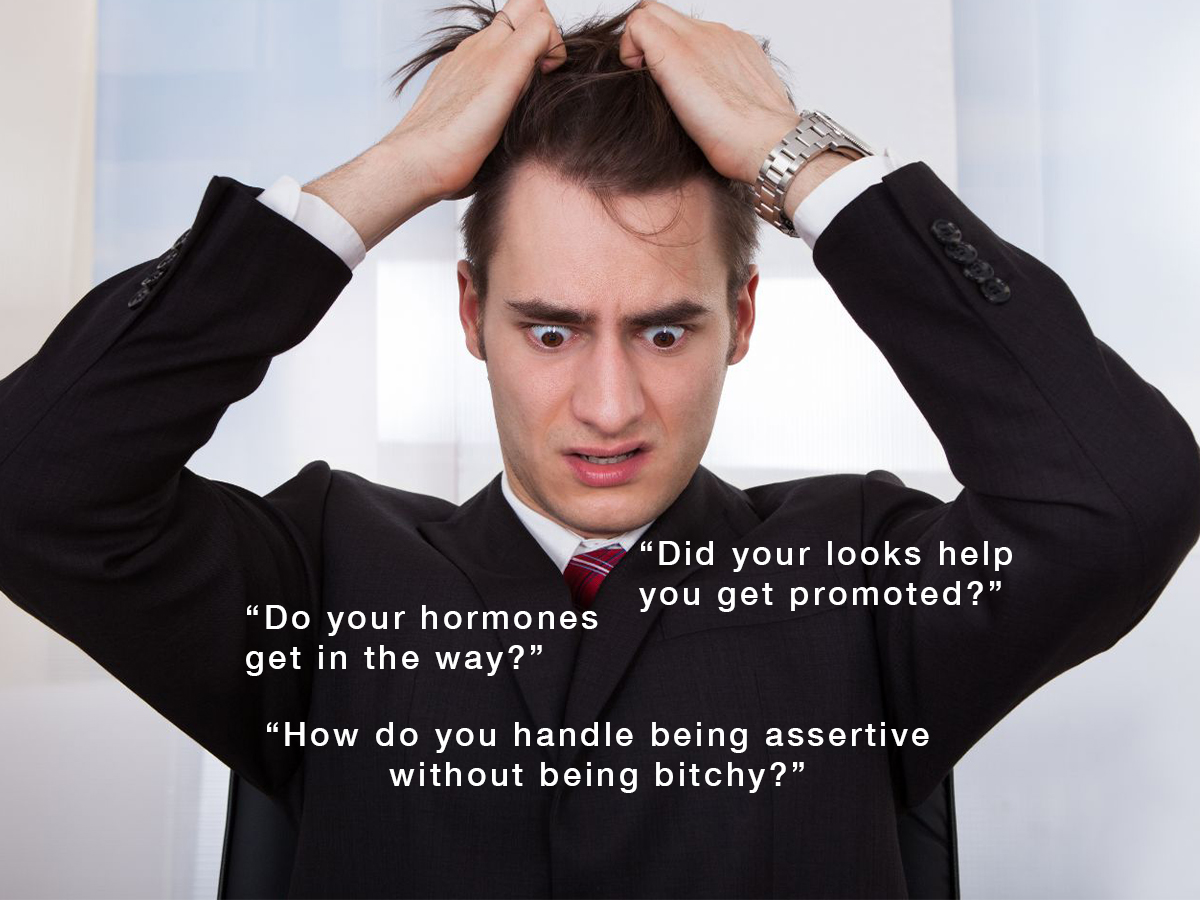
    Photo credit: CanvaUncomfortable man gets questions women often face during a job interview.

    “How much do you think your looks helped you get promoted to your position?” Unfortunately for many women, this isn’t a shocking question. Interviews, performance reviews, and typical professional interactions can reveal a double standard and workplace bias.

    In a social-experiment-style reel by lifestyle creator @bol.lifestyle, these questions were instead asked of men. Their discomfort and disbelief reveal why the standards women face regarding credibility are impossible to ignore.

    An experiment to reveal a double standard

    In the video, men are placed in an interview-style setup and asked a series of questions. Hearing these skewed questions for the first time, their expressions shift quickly from curious to confused and uncomfortable.

    Host: Have you ever been asked to just smile and look pretty or smile and say nothing in a meeting with a customer?

    One man appears somewhat shocked and uncomfortable. He quickly responds, almost dismissive at even being asked the question, “No.”

    Host: Do you think that your looks helped you getting promoted or moving up to your current position?

    Another man reflects and appears unable to answer the question.

    Host: Looking so good. By the way, I do love the shoes. Are these designer or your particular brand that you really like?

    A third man awkwardly smiles and vents some air, almost as if the ridiculous question doesn’t feel fitting at all. He doesn’t answer.

    Host: Do your hormones sometimes get in the way?

    A fourth man responds, “Hormones?” He awkwardly laughs and adds, “I don’t, I don’t know.”

    Host: Do you sometimes wonder whether you’ve been chosen for this position because you’re a man?

    Man 2 responds definitively, “No, not because I was a man.”

    Host: How do you handle in your job being assertive without being perceived as aggressive or bitchy?

    Man 1 tilts his head back and reflects on the question. “That’s uh, that’s a question that I find it very hard to relate to.” He then adds, “Because it’s not a situation I’ve been in.”

    women, career questions, role reversal, double standards
    Many microphones are held in front of a man.
    Photo credit Canva

    Real questions women face

    After this first series of questions, the video presents titles claiming: These were real questions asked to our female leaders throughout their careers.

    The host goes on to ask the men how they feel about this particular line of questioning. Their response is predictable.

    “It really, really, really feels uncomfortable. And I also feel it in my body,” said Man 3.

    “When hearing these things still happen, it makes me also feel that, hey, maybe I am more privileged than I thought I was,” added Man 1.

    At the end of the interview, the men seemed a little upset and surprised by the double standard. They collectively hoped for change, and some suggested they themselves were responsible for helping things get better.

    change, equality, career advancement, bias
    A man writes the word “change.”
    Photo credit Canva

    People advocate for change

    People seemed to really respond to the video. With over 6,000 comments, there was a consensus confirming the experience and advocating for change.

    “Men, our male privilege is real. How we use it is up to us, and hopefully we use it to protect and improve the experience of the women in our workplace.”

    “If you have sons, please prepare them to improve the way the world treats women.”

    “The man that felt it in his body… welcome to the life of a woman”

    “Perhaps the greatest privilege is never having to notice your own privilege.”

    “Oh my God. I have heard ALL of these questions. And more.”

    “Well done. We have to show a different way and we can do it with grace! We have to do it different.”

    “It’s not what we perceive , it’s what is .”

    “THIS experiment should be undertaken in workplaces all over the world…”

    perspective shift, workplace culture, office bias, normalized
    Women and men working together.
    Photo credit Canva

    It’s not about finger-pointing

    It can be easy to get lost in finger-pointing. Although at times the comments might feel like a pile-on, the success of the video lies in its simple setup. It takes a familiar experience and shifts the perspective so that people might hear it a little differently.

    Certain assumptions or expectations can become so normalized that people, maybe mostly men, stop noticing them altogether. Is it possible for workplace conversations to be more thoughtful, fair, and aware than they have been or, in some circumstances, still are?

    The intent of the video seemed less about provoking a fight. It demonstrated that some basic reflection and small shifts of awareness can lead to better experiences for everyone. There’s a familiar proverb that comes to mind: walk a mile in my shoes. These men seemed to gain some real perspective from the opportunity.

  • Young boy struggles through painful stutter until his singing videos change everything 
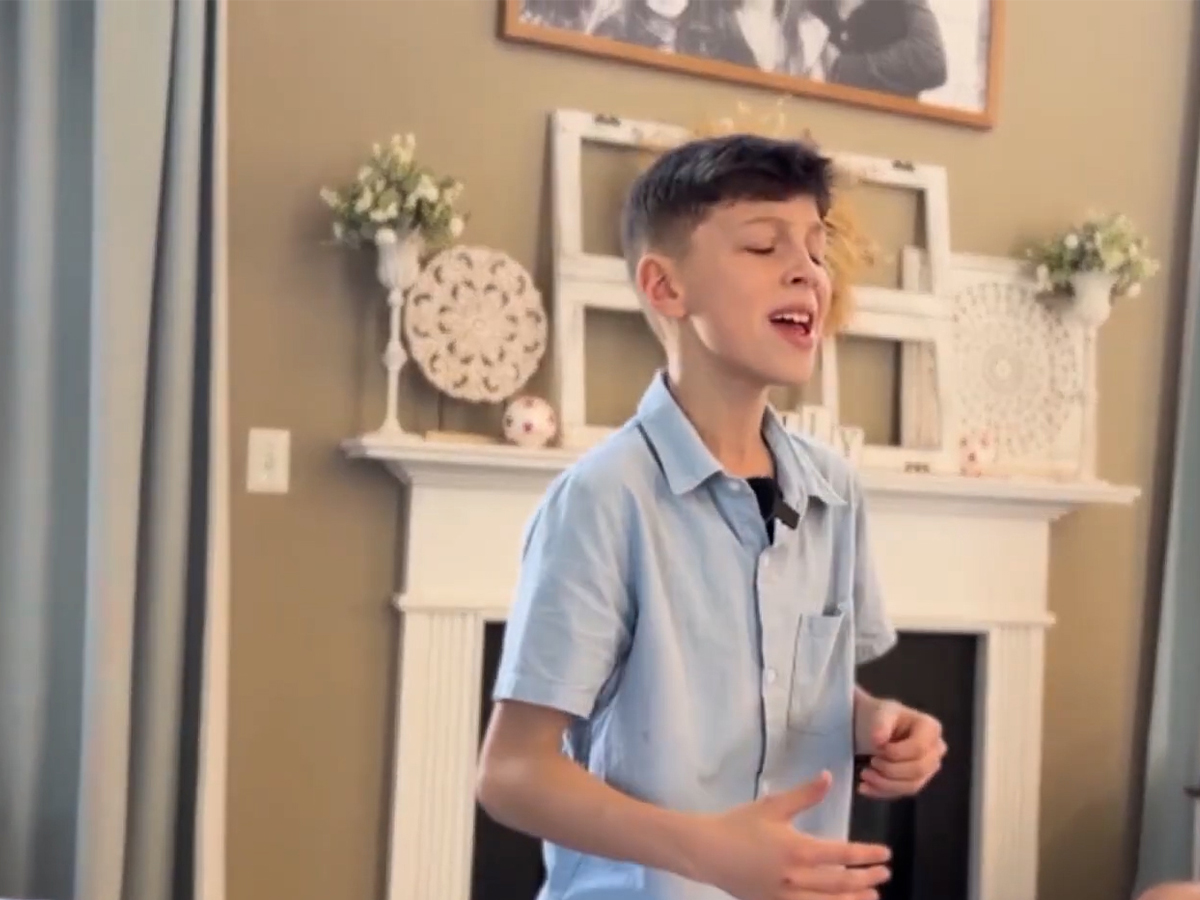
    Photo credit: WQAD News 8/YouTubeLando sings.
    ,

    Young boy struggles through painful stutter until his singing videos change everything 

    “One kids courage to show up, speak up, and sing his voice free.”

    A boy named Lando is gaining attention online after people started sharing and liking the two very different kinds of videos he creates. In one, he candidly speaks with a severe stutter. In the other, he sings smoothly, without the same pauses and repetitions that appear when he talks.

    Perhaps it’s the dramatic contrast that has people liking and clicking. For whatever reason, as Lando shares on his website, #stutterfreelando, he’s created an awareness movement around stuttering “born from one kid’s courage to show up, speak up, and sing his voice free.”

    The young entertainer is easy to like

    Finding a young person navigating his speech difficulties so charismatically and confidently is admirable. He’s not wavering under the spotlight. He’s shining.

    His family shares about their experience and the methods they’ve found helpful with his stutter on their website:

    “This is a family journey. We’re one of millions of families around the world navigating stuttering to learn what works, what doesn’t, and figuring it out as we go. Some of what we share helps Lando. Some might not. We’re learning that every stutterer is different. No more hiding.”

    Facing a severe stutter can be more complicated than practicing with a speech therapist.

    Traditional therapy hasn’t given us the breakthroughs we need. Therapists are trying. We are trying. But we refuse to sit quietly and hope it clicks. So we built this, a movement where our family shares what we’re learning out loud. Real strategies. Real techniques. Lando’s good days and the hard ones. Not a highlight reel. Not a gofund me. Real life.”

    It feels good to join a winning team

    After watching any of his videos, it’s clear why so many people keep coming back.

    In one clip, Lando talks about reaching 50,000 followers on Instagram and an upcoming interview with a local news outlet. The message expressed with gratitude and happiness is simple, but it takes time for him to get there. That process draws people in.

    “Congratulations on your followers, add one more”

    “Great work buddy!”

    “Ah Lando, I’m really enjoying your videos”

    “That excitement is so cute! I love how supportive everyone has been!”

    “Great job little man keep it going. You inspire a lot of people with the same problem.”

    “thankyou for sharing, your super cool.”

    Singing allows his words to come out in a continuous flow

    The difference isn’t subtle. In speech, words can stall and be difficult to get out. In song, they move by the rhythm that reduces stops. These are some of the comments you can find on just one of his singing videos posted above:

    “GOD BLESS YOU LANDO!!!!! YOU ARE ABSOLUTELY AMAZING!!!!!”

    “The eyebrows at the end was fire.”

    “You are an inspiration”

    “Brilliant buddy”

    “… sounding smooth.”

    “Lando with the great voice!!!”

    “Now … this kid has charisma!!!”

    A courageous little showman

    Lando’s videos stand out not just for singing or stuttering, but because both are available, openly shared, without one being hidden or edited out of view. There’s no attempt to turn it all into a single narrative of struggle or success. Instead, what people see is a boy using his voice as it is.

    There is something instinctive about the way people rally around a kid like Lando. Sharing the hard parts and the moments that come more easily gives everyone a clear way to respond. Cheering him on, leaving a positive comment, or even just watching and listening allows each of us to take a small part in that effort.

    It’s less about celebrating the win and more about recognizing the work and the courage to keep going. Lando is talking and singing it out loud.

Explore More Ideas Stories

Ideas

How to be grateful to someone – even when you really don’t want to

Impact

Men were stunned when asked the same types of career questions women regularly face

Voices

Young boy struggles through painful stutter until his singing videos change everything 

Ideas

Homeowners swear by this simple ice cold hack that thoroughly makes your toilets cleaner