
Men and women often have different approaches to similar situations or social skills. Hunter, who goes by @hd33333 on TikTok, recently posted a video showing how her male and female colleagues arrive at work each day. The hilarious video quickly went viral. When a viewer, @gilbertgothamgrim, commented, “You should compare the women’s keys to the guys’ keys, big difference,” she couldn’t resist. This led to another interesting video capturing the differences in how men and women store their keys, with hilarious results.
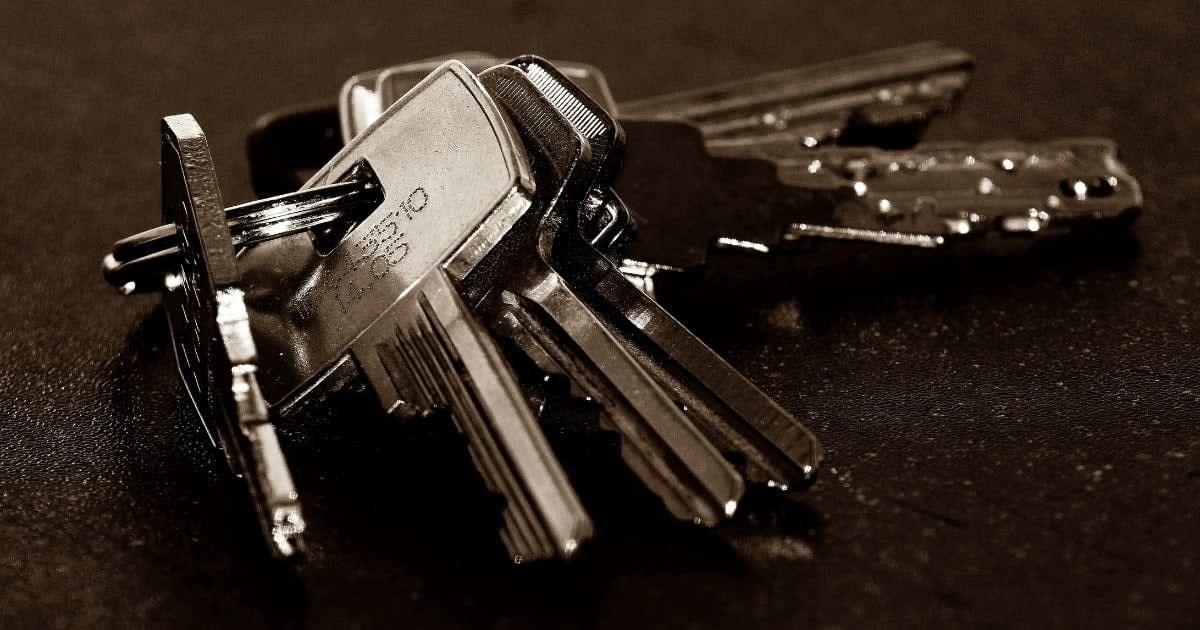
Representative Image Source: Pexels I Photo by George Becker

n the opening frames of the clip, Hunter approaches a female co-worker and asks to see her keys. The colleague instantly agrees and pulls out a huge bunch of keys. As the video progresses, Hunter moves on to other female colleagues, who also show off their large key rings while smiling and laughing. The sight of large keychains is a common theme among her female colleagues.

Representative Image Source: Pexels I Photo by ThisIsEngineering
Representative Image Source: Pexels I Photo by This is Engineering

The second part of the video gets even more interesting for the audience as Hunter shifts the focus to her male colleagues. Momentarily, we see her approach a guy sitting at his desk and she asks him to take out his keys. In reply to Hunter’s request, the male colleague acts surprised for a brief moment but quickly pulls out his keys from his pocket. In a quick transition of the clip, we see the colleague popping a single key and sliding it across the table. The light key fob draws Hunter’s attention as she is seen laughing from behind the camera.

Representative Image Source: Pexels I Photo by  Anna Shvets
Representative Image Source: Pexels I Photo by Anna Shvets

For the rest of the clip, Hunter goes up to each male colleague asking them to show their keys. One colleague was even spotted popping out a single car key fob with only three keys attached to it. The number of keys showcased by the male counterparts revealed a stark contrast when compared to the females. 


via GIPHY


The video captioned “Comparing men vs women keys in the office” has received almost 2 million views on TikTok with over 180,000 comments. While many viewers appreciated her for showing the stark difference between both genders, some pointed out that bulky keychains would affect the ignition of the vehicles. @murled commented, “Oh those poor ignition cylinders… and on a random morning, their car won’t start anymore.” @maldangaming pointed out, “Too many keys on the keychain can break the ignition on the car because of the weight…that is but one reason I barely have any keys.”


Image Source: TikTok I @beforemidnightgaming

Image Source TikTok | @courtneymantyka

@hexastore hilariously pointed out why women keep the keys stacked together by saying, “If I had pockets for my keys I also wouldn’t bulk them up lol, but bulk makes them easier to find in the purse void.” @jolannhj added another reason why women keep so many keys. She commented, “We know keys make a good weapon.” Resonating with her, @tessaabbott commented, “Ok but a lot of those keychains are protection lol.”


@hd33333

Replying to @gilbertgothamgrim Comparing MEN vs WOMEN keys in the office? What do you want to see next? #foryoupage❤️❤️ #fyp #fypage #officelife #officehumor #officelife #officetiktok #menvswomen #officetiktok ♬ Married Life (From “Up”) – Gina Luciani


You can follow Hunter on TikTok for more lifestyle, gardening and corporate life-related content.


  • A connection to nature fuels well‑being worldwide, according to a study of 38,000 people
    Photo credit: nymphoenix/iStock via Getty Images PlusAcross cultures, languages and economic systems, feeling connected to the natural world is consistently linked to living a more hopeful, purposeful and resilient life.
    ,

    A connection to nature fuels well‑being worldwide, according to a study of 38,000 people

    Why we understand ourselves better through our closest friends

    When life feels overwhelming, many people instinctively turn to nature. A walk in a park. Sitting by the ocean. Watching a sunset. Is this just a pleasant feeling, or is there something deeper at work?

    A multitude of studies have linked spending time in nature with different aspects of mental health and wellness. For example, immersing oneself in outdoor natural spaces seems to lift depression and influence brain activity patterns. The effect may be especially relevant in children. But most research on this question has looked at people living in so-called WEIRD societies – Western, educated, industrialized, rich and democratic.

    As environmental psychologists based in the U.S. and in Germany, we were part of a team of more than 100 researchers who set out to examine this phenomenon on a global scale and determine how consistent it is around the world.

    Across countries as diverse as Brazil, Japan, Nigeria, Germany and Indonesia, we saw a clear pattern: People who felt more connected to nature also reported higher well-being.

    Worldwide oneness with nature

    Researchers who study people’s relationship with the natural world often use the term “nature connectedness.” This phrase doesn’t simply mean going hiking or visiting a park. Nature connectedness refers to the extent to which people see nature as part of who they are – whether they feel an emotional bond with the natural world and experience a sense of oneness with it.

    Someone who has a high degree of nature connectedness might agree with statements like, “My relationship to nature is an important part of who I am.” It reflects identity and meaning, not just exposure.

    We drew on data collected between 2020 and 2022 from more than 38,000 participants through a large international collaboration that was established to gauge how people responded to the COVID-19 pandemic. Participants came from 75 countries and were on average in their teens, 20s or 30s. They completed questionnaires that explored the link between people’s bond with nature and several aspects of well-being.

    The questionnaires probed people’s sense of purpose in life; their feelings of hope, life satisfaction and optimism; their sense of resilience and their ability to cope with stress they felt; as well as whether they practice mindfulness as they go through their everyday life.

    Across this large international sample, we found that people who felt more connected to nature consistently reported higher levels of well-being and mindfulness. This was true not just for feeling satisfied with life but also for deeper aspects of flourishing, such as having a sense of direction and meaning. And these associations held even when accounting for age and gender.

    Does national context matter?

    We also explored whether specific characteristics of a country strengthen the benefits of feeling connected with nature.

    For example, we looked at things such as how well countries take care of their air, and water systems and ecosystems, as well as whether citizens have equal access to education, democratic participation, and other key social and financial resources, and whether cultures tend to prioritize collective well-being over individual priorities. There were some differences, but the main takeaway was pretty clear: A connection with nature and well-being shows up across a wide range of economic, cultural and environmental contexts.

    In other words, the psychological benefits of feeling connected to nature do not appear to be limited to wealthy Western nations or specific cultural worldviews.

    A child plays with sand in in front of a rock formation in Monument Valley
    Bonding with nature may make people more resilient. Mike Tauber/Tetra Images via Getty Images

    Why might connection matter?

    One reason why feeling a connection with nature may be linked to well-being is that nature connectedness fosters mindfulness – the ability to be present and attentive.

    In our data, people who had a stronger sense of nature connectedness tended to have a higher degree of mindfulness, which is itself strongly linked to mental health.

    Another possibility is that bonding with nature may also make people more resilient. People who feel connected to something larger than themselves may find it easier to cope with stress and uncertainty. A sense of belonging – even to the natural world – can provide psychological grounding in a world characterized by stressors. There may also be a feedback loop: Feeling better may encourage people to engage more deeply with nature, strengthening the bond over time.

    Implications for policy and everyday life

    These findings matter beyond academic debates. Around the world, policymakers are increasingly recognizing the links between human health and environmental sustainability. International agreements such as the Convention on Biological Diversity, a landmark treaty signed by 196 countries in 1992, emphasize the importance of restoring humanity’s relationship with nature.

    These policy actions seek to protect Earth’s ecosystems, but our results suggest they may also benefit people’s psychological well-being. Similarly, designing cities with accessible green spaces, incorporating nature-based experiences into schools and supporting community engagement with local environments may do more than beautify neighborhoods – they may also help people flourish.

    Across cultures, languages and economic systems, feeling connected to the natural world is consistently linked to living a more hopeful, purposeful and resilient life. At a time when mental health challenges are rising globally, reconnecting with nature is not a luxury but a fundamental – and widely shared – human need.

    This article originally appeared on The Conversation. You can read it here.

  • Making good choices when life gets messy – practical wisdom relies on human judgment, not rules
    Photo credit: Cavan Images/Cavan via Getty ImagesThis virtue helps you figure out when and how to apply the other virtues in real, varying situations.

    A few semesters into my teaching career as a psychology professor, I uncovered a cheating ring. I determined who the ringleader was and called him to my office.

    He admitted that he had illicitly obtained a copy of the exam and shared it with other students. He began to cry, telling me he was from a single parent family, the first in his family to go to college, and that his mother would be crushed if he was dismissed from the university for academic dishonesty.

    I did not know what to do. I was angry at what he had done, but I also felt sorry for his situation. For reasons I still don’t fully understand, I decided to call his mother. When I told her what he had done, she apologized repeatedly, then said coldly, “Let me speak to him.”

    I don’t know what she said, but as the color drained from his face and he was reduced to repeatedly saying, “Yes, ma’am,” I assumed he was being read the riot act. After he hung up, he headed home to, I suspect, more severe punishment than the university could have given. He received a “0” on the exam and an official reprimand in his student file, but I’m willing to bet that the most important lesson he learned didn’t come from the university or me.

    Though I didn’t yet know the word, the decision to call his mother was an example of phronesis, an ancient Greek word usually translated as “practical wisdom.” It refers to the ability to make good decisions in real-life situations, especially when there are no clear rules or easy answers.

    black-and-white engraving of an ancient Roman man standing in chariot holding reigns of four horses
    Like a charioteer steering the horses, phronesis guides you in how to apply the other virtues, like courage, justice and generosity. pictore/DigitalVision Vectors via Getty Images

    Charioteer of the virtues, guiding them all

    Phronesis provides you with the ability to deliberate well about what is good and bad in specific circumstances. Unlike theoretical knowledge (sophia) or technical skill (techne), phronesis is about judgment – how to choose the right action at the right time for the right reasons.

    When you think about wisdom, maybe you imagine a philosopher pondering big questions or a scientist unlocking the secrets of the universe. But phronesis is a different kind of wisdom, one that is less about abstract ideas and more about navigating the messy, unpredictable realities of everyday life. Phronesis helps you live well, not by following rules, but by making wise choices in the face of complexity. It’s what allows you to turn knowledge into action that is then beneficial.

    Phronesis is a central component of the virtue approach to character development and morality first described by Aristotle. Virtues like courage, generosity, justice and temperance tell you what goals you should aim for, but they don’t tell you how much, when or in what way you should act in a specific situation. Phronesis helps you think through and decide the right means to achieve the right ends in the moment.

    Aristotle called phronesis “the charioteer of the virtues” because it provides the guidance system that ensures the other virtues are applied correctly in real life. As he put it, “It is impossible to be good in the strict sense without practical wisdom.”

    Let’s take the example of courage. Everyone wants to be brave and stand up for their values. However, without phronesis, too much courage may become recklessness, or too little courage could result in cowardice. Phronesis allows you to know when to take a risk and when to hold back.

    Or consider justice, the virtue of treating others fairly. Phronesis allows you to choose what is fair in a specific situation. Virtues set the goals – for instance, “be courageous” or “be just” – but phronesis determines the right way to achieve them.

    Practice phronesis in the face of complexity

    Developing phronesis takes time and effort. It requires experience, reflection and careful reasoning. Because phronesis is social, it thrives in environments where people share their perspectives and challenge each other’s assumptions.

    You don’t have to be a philosopher or a scientist to practice phronesis. Modern life is full of complexity. We are regularly faced with questions that don’t have clear answers.

    child, woman and man in pajamas seated on couch looking out of frame
    Staying up past bedtime to watch a big game as a family has value that a strict adherence to rules would overlook. AzmanL/E+ via Getty Images

    Picture a parent who must decide whether to enforce bedtime or allow a child to stay up for a special family occasion. The rule says bedtime is nonnegotiable, but practical wisdom reminds us of the value of shared family experiences.

    Or consider a manager who notices an employee missing deadlines. Instead of simply reprimanding them, they might ask what’s going on and discover a family emergency. They could adjust expectations and offer support, balancing fairness with compassion.

    These kinds of decisions reflect practical wisdom because they anticipate future needs, not just rules or consequences.

    In a world obsessed with data and efficiency, phronesis reminds us that human judgment still matters. Algorithms can optimize processes, but they can’t weigh moral values or capture the subtleties of human relationships. Whether in education, health care, business or politics, decisions that affect lives require more than technical expertise. They require wisdom.

    Phronesis counters the illusion that life’s problems have simple, one-size-fits-all solutions. It helps us realize that good judgment takes time, empathy and reflection. So, the next time you face a tough decision, pause and ask: What’s the wise thing to do?

    This article originally appeared on The Conversation. You can read it here.

  • Professional speaker offers 5 polite yet effective ways to prevent people from interrupting you
    Photo credit: CanvaGet a word in and stay in control of the conversation.

    Whether it’s at work or at the dinner table, no one likes being interrupted. It’s an awkward situation in which you’re left to either let it pass to keep the peace or stand your ground at the risk of seeming aggressive. It can feel like a no-win scenario. However, a communication expert offers five methods that could help.

    Vinh Giang is a public speaking coach who knows what it’s like to be interrupted and has found some great ways to help you maintain the floor and the flow of conversation. Better yet, these methods give you confidence and control without making you seem like a jerk.

    1. Set clear boundaries

    The best way to stop interruptions is to prevent them ahead of time. Simply starting with, “Hey, let’s be mindful and allow everyone to complete their thought before weighing in,” can be enough. By setting ground rules at the start of a meeting, or even during a friendly conversation, everyone is reminded of basic manners.

    Even if this doesn’t prevent interruptions, it can still help. These established boundaries give everyone the ability to say, “Excuse me, I’m not finished,” without looking like a bully.

    2. Learn and use “bridging phrases”

    Some folks get interrupted by accident because those around them mistake a pause for a sip of a drink or a breath for the end of a thought. Giang says a good way to work around this is to use “bridging phrases.”

    Bridging phrases are quick sayings that indicate there’s more to come after a pause. Some examples include:

    • “Let me add to that…”
    • “Before I finish…”
    • “Continuing on…”
    • “In addition…”
    • “And another thing…”

    Those are just a few examples, and there are many more to choose from. Using them can buy you time to collect your thoughts or take a sip of water while keeping everyone’s attention. It also helps to pause mid-gesture to signal nonverbally that you intend to continue.

    @askvinh

    If you want to stop being interrupted when you pause, the key is to be “mid-gesture” when you pause. Most people when they talk, they look and sound “done”. So when people interrupt you, it’s not because they’re being mean, they actually think you finished your sentence and that they can start talking. So the key to fixing this is to be gesturing mid-sentence or when you pause so you signal to people that you’re still going!

    ♬ original sound – Vinh Giang – Vinh Giang

    3. Make your presence known

    Giang says many people are easy to interrupt because they don’t assert themselves physically or vocally in a conversation. Speaking softly, meekly, or mumbling can make it difficult for others to maintain attention. Speaking upright, clearly, and with open hand gestures, on the other hand, makes your presence known and harder to interrupt.

    If you have trouble speaking confidently, there are classes, videos, and articles that can help you improve your public speaking.

    4. Acknowledge the interruption and keep the floor

    If the previous preventative measures don’t work and you’re interrupted, you can still keep your speaking time. Giang and other professionals say it’s best to acknowledge the interruption. If you let it go, you risk ceding the floor and might not get it back.

    It doesn’t have to be aggressive. It can be enough to say, “I would like to finish my thought, and then I’d love to hear your opinion. Is that okay?” This acknowledges the interruption while letting the other person know their opinion is still valued. Everyone can move forward.

    5. If the interrupter’s point is valid, integrate their thoughts into your own

    While interruptions may be rude, there are times when a good point is made. It’s a case of “good point, bad timing.” In these situations, that interruption can actually strengthen your ideas.

    When this happens, Giang recommends taking the interrupter’s point and incorporating it into your response when you regain the floor. Say something like, “I hear that, and it’s a big part of the rest of my point…” or “I’m confident the rest of my thought will address that question.” This allows you to acknowledge the interruption without disrupting your flow.

    Hopefully, these tips can help you feel heard and reduce interruptions while keeping the peace.

Explore More Ideas Stories

Ideas

Making good choices when life gets messy – practical wisdom relies on human judgment, not rules

Ideas

Professional speaker offers 5 polite yet effective ways to prevent people from interrupting you

Ideas

Why Americans give: New research finds 5 distinct profiles for generosity

Ideas

Persuasion expert shares the one strategy that’s actually effective at changing people’s minds