As a founding director of the Solutions Journalism Network, a strategist for the new $1,000,000 TED Prize, and a journalist myself, it is my job to pay attention to the kinds of creative responses that people all over the world are pioneering to address some of the world’s most difficult problems.
Whether I’m speaking to students creating the first microfunding initiative at a high school or researching one of the 2,000 nominees we received this year for TED Prize this year or co-curating an exhibition on public interest design, I’m looking through a lens of solutions—what’s working and how is it working? How do we know? Where else might it work? At what scale?
After doing this kind of work in one form or another for a decade, I realize that I am most useful to the world as a pattern keeper. I listen and watch as setbacks, techniques, and sentiments pop up repeatedly, in disparate locales, among people who would never know they have anything in common. As I witness and note these synchronicities, it helps me understand the nature of the moment we are all sharing.
Here’s what I noticed this year…
Listening is a cutting-edge technology.
An epidemiological approach to violence, as demonstrated by the “interrupters” of inner city Chicago, is all about listening in order to prevent urban strife. At IDEO.org, “human-centered design” (basically listen first, then iterate) is lauded as the centerpiece of their approach. The explosive success of Susan Cain’s book Quiet and her TED talk on the same topic (over 3 million views to date) are further evidence that people are ready to reclaim the power of being quiet, of reflective practice, and of listening to others instead of waiting for the next opportunity to talk.
Entrepreneurship has gone wonky.
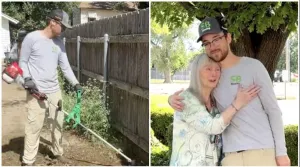
The hottest sector in entrepreneurship wasn’t about reinventing markets, as in years past, but about reinventing the political process. Code for America, the “Peace Corps for geeks,” leads the charge, but they’re not alone. POPVOX, Elect Next, Ultraviolet, and dozens of other such platforms designed and poised to revitalize neighborhoods are among those making civics cool again. Purpose’s unPAC campaign attempted to “get money out, get people in” and even venture capitalists, like those who are a part of New Media Ventures, are getting in on the game.
Everything mobile.
Whether you’re a farmer in rural India who needs crop predictions (Grameen Foundation’s Community Knowledge Worker program) or a snack-stand owner in urban Africa who needs to transfer money to your bank account (MPESA) or an American teen who wants to get involved in community service (Dosomething.org), your cell phone is your most powerful tool.
This is only the beginning, of course. According to MIT Technology Review, “Of the world’s six billion mobile-phone subscriptions, 73 percent are now in the developing world, even though those countries account for just 20 percent of the world’s GDP.”
The West doesn’t know best.
Among the most enlightened changemakers and entrepreneurs in the West, there’s been a great humbling. This is more than just realizing that “dead aid,” ala Dambisa Moya, is equivalent to “giving a fish.” It’s about realizing that those in the Global South might actually teach Westerns how to fish in the first place.
Through the process of building a breathtaking hospital in collaboration with local laborers in Rwanda and Paul Farmer’s Partners in Health, humanitarian architects, MASS Design Group, realized that the medical centers stateside could use a lesson or two from those in the “developing world.” This is happening across so many sectors, where Westerners are realizing that we have a lot to learn about craftsmanship, community building, and cultural change—among so much else.
Design isn’t just for rich people.
There have long been designers dotted across the country who care about “the other 90 percent”—as the much-loved Cooper-Hewitt National Design Museum exhibits have dubbed it, but this year was a watershed moment for the bourgeoning public interest design movement. The 1 percent pro-bono service program of nonprofit Public Architecture eclipsed 1,000 firms. The U.S. Pavilion at the elite Venice Architecture Biennale showcased “Spontaneous Interventions: Design Actions for the Common Good,” where DIYers ended up stealing the show. Even the Clinton Global Initiative made this year’s theme “Designing for Impact.”
Keep an eye on growing attention to the design of products and systems, not just environments, and the invasion of non-designers into the design professions.
The personal is political when it comes to data.
A steep rise in excitement over data coincides with the creation of platforms that promise to aggregate, curate, and make it truly useful. Whether it’s your DNA (Personal Genome Project), your prescription drug side effects (RxRisk.org), or even your experiences of street harassment (Hollaback!), the accumulation of data can reveal critical learnings about both our personal choices but also our government policies.
At the Solutions Journalism Network, we’re especially excited about uncovering “positive deviance”—aka bright spots—in data sets like the Global Burden of Disease Study, a new version of which was just released last week.
Stories are still magic.
Whether it’s Imagine Better, inspiring young people to alleviate hunger via their love of The Hunger Games, or DREAMers, like Jose Antonio Vargas and Gaby Pacheco, “coming out” as undocumented and inspiring a nation of support, or even the highly critiqued KONY2012 video—stories still make the world go round. No matter how much data we have, no matter how much technology we leverage, no matter how well designed our interventions are, there will never be a thing as magical as authentic, compelling storytelling.
Photo via Code for America.